
What Are the Key Advantages of Log Periodic Microstrip Antenna Design?






2026-01-20 22:41:59
When radar systems fail to detect critical targets across multiple frequency bands, or when communication equipment requires constant retuning between operations, engineers face significant operational challenges. The Log Periodic Microstrip Antenna emerges as a transformative solution, delivering consistent performance across ultra-wide frequency ranges from VHF to millimeter-wave bands. This innovative antenna design combines the frequency-independent characteristics of log-periodic geometry with the compact, lightweight advantages of microstrip technology, enabling seamless multi-band operation without sacrificing reliability or precision in mission-critical applications.
Understanding the Fundamental Design Principles of Log Periodic Microstrip Antenna
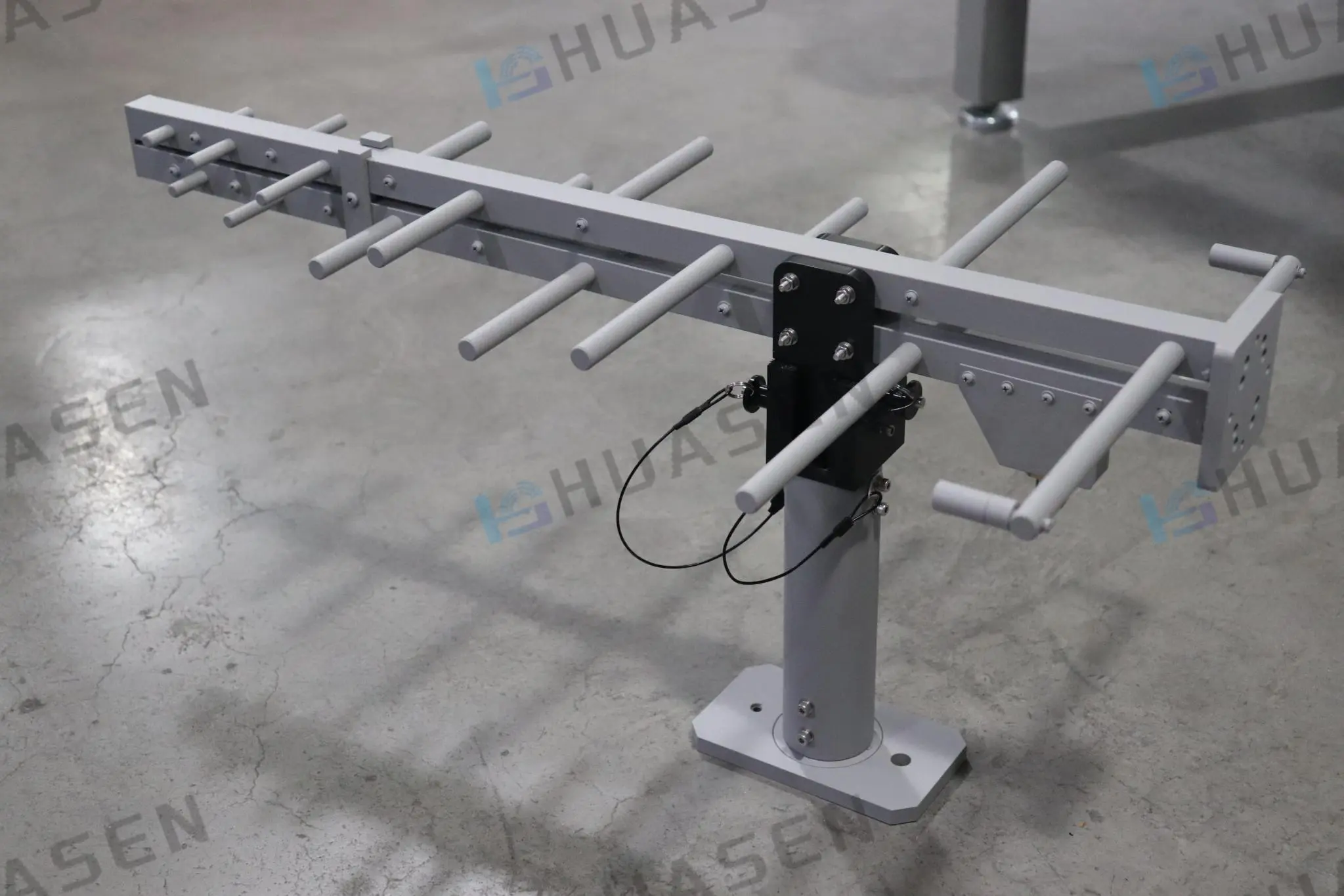
The architectural foundation of a Log Periodic Microstrip Antenna represents a sophisticated fusion of traditional log-periodic array theory and modern planar circuit technology. Unlike conventional dipole arrays that operate efficiently only within narrow frequency ranges, the log-periodic configuration employs a self-similar geometric progression where element dimensions and spacing follow logarithmic ratios. This mathematical relationship ensures that as the operating frequency changes, different sections of the antenna structure become active, maintaining consistent radiation characteristics throughout the operational bandwidth. The microstrip implementation translates these principles onto a printed circuit board substrate, where radiating elements are precisely photo-etched on dielectric materials, creating a low-profile antenna system that preserves the broadband capabilities of wire-based log-periodic designs while dramatically reducing size and weight.
The scaling factor and spacing factor define the critical geometric relationships within the structure. These parameters determine how rapidly element lengths decrease from the longest to the shortest dipole, directly influencing bandwidth coverage and gain performance. Advanced fabrication techniques enable manufacturers to achieve tolerances measured in micrometers, ensuring that the logarithmic progression remains accurate across all frequency ranges. The substrate material selection plays an equally vital role, as the dielectric constant affects wave propagation velocity and impedance matching characteristics. High-quality substrates with stable dielectric properties across temperature variations guarantee reliable operation in demanding aerospace and defense environments where the Log Periodic Microstrip Antenna frequently serves.
Microstrip Technology Integration Benefits
Transitioning log-periodic concepts to microstrip format unlocks numerous practical advantages that traditional wire antennas cannot provide. The planar construction allows for conformal mounting on curved surfaces such as aircraft fuselages, missile bodies, or satellite panels, where aerodynamic considerations prohibit protruding structures. Manufacturing processes leverage established printed circuit board fabrication infrastructure, enabling cost-effective mass production with exceptional repeatability. Each antenna element emerges from the same photolithographic process that creates millions of electronic circuits daily, ensuring consistent electrical characteristics across production runs. The elimination of discrete wiring and mechanical assembly reduces failure points, enhancing overall system reliability in high-vibration environments like unmanned aerial vehicles or military ground vehicles.
The compact profile of Log Periodic Microstrip Antenna designs delivers significant advantages in space-constrained applications. Where traditional log-periodic dipole arrays might extend several meters in length, microstrip versions achieve equivalent performance within dimensions measured in centimeters. This miniaturization proves essential for portable communication systems, handheld spectrum analyzers, and compact radar installations where every cubic centimeter carries premium value. The reduced weight further benefits aerospace applications where fuel efficiency and payload capacity directly correlate with mission success. Huasen Microwave's implementation achieves remarkable compactness, with minimum dimensions of just seventy-five by one hundred eighteen millimeters while maintaining operational capability from four hundred megahertz through eighteen gigahertz.
Ultra-Wideband Performance and Frequency Independence Characteristics
The paramount advantage distinguishing Log Periodic Microstrip Antenna technology from alternative designs lies in its exceptional bandwidth capabilities spanning multiple frequency octaves. Engineers can specify a single antenna to cover frequency ranges from VHF through Ku-band, eliminating the need for multiple narrowband antennas or complex switching networks. This wideband operation stems from the fundamental physics of the log-periodic structure, where the geometric scaling creates resonant conditions across a continuous spectrum. As transmission frequency varies, the electrical length of different dipole elements reaches optimal resonance, effectively shifting the active region along the array. The result is remarkably flat gain response and consistent radiation patterns across bandwidths exceeding ten-to-one ratios, with some advanced designs achieving twenty-to-one coverage or greater.
Frequency-independent impedance characteristics represent another critical performance metric where log-periodic microstrip designs excel. The antenna maintains stable input impedance across its operational bandwidth, typically exhibiting voltage standing wave ratios below two-to-one throughout the specified frequency range. This impedance stability simplifies integration with transmitters and receivers, as matching networks require minimal adjustment across the frequency spectrum. For software-defined radios and cognitive radio systems that dynamically switch between frequency bands, this characteristic proves invaluable, enabling instantaneous frequency hopping without retuning delays or performance degradation. The consistent impedance also reduces signal reflections that could interfere with sensitive electronic warfare receivers or precision measurement instruments.
Gain and Directivity Performance Across Operating Bands
Log Periodic Microstrip Antenna designs deliver directional radiation patterns with moderate to high gain values that remain remarkably consistent across their operational bandwidth. Typical implementations achieve gain levels between five and nine decibels, with Huasen Microwave's products specifically engineered to deliver this performance range. While not matching the peak gain of narrowband designs like parabolic reflectors or large phased arrays, the log-periodic configuration provides sufficient directionality for most communication, radar, and electronic warfare applications while maintaining its wideband advantage. The front-to-back ratio typically exceeds fifteen decibels across the operational spectrum, effectively suppressing interference from rear hemisphere sources and improving signal-to-noise ratios in cluttered electromagnetic environments.
The adjustable beamwidth capability offered by sophisticated Log Periodic Microstrip Antenna implementations adds operational flexibility unavailable in fixed-pattern antennas. By modifying element spacing and scaling factors during the design phase, engineers can tailor the antenna's beam characteristics to match specific application requirements. Narrow beamwidths ranging from thirty-five degrees provide high angular resolution for precision direction-finding and radar applications, while wider beamwidths approaching one hundred twenty-five degrees enable broad coverage monitoring systems and communication links requiring wide angular diversity. This design flexibility ensures that a single antenna architecture can address diverse mission requirements through parameter optimization rather than complete redesign, significantly accelerating development timelines and reducing engineering costs.
Manufacturing Excellence and Quality Assurance in Production
The fabrication of high-performance Log Periodic Microstrip Antenna systems demands sophisticated manufacturing capabilities that combine precision machining, advanced materials processing, and rigorous quality control protocols. Huasen Microwave Technology Co., Ltd. leverages over three decades of specialized experience in microwave component manufacturing to deliver antennas meeting the stringent requirements of aerospace, defense, and telecommunications sectors. The company's advanced production facilities encompass more than three thousand square meters of dedicated manufacturing space, housing computer numerical control machining centers, electrical discharge machining equipment, and specialized waveguide processing capabilities that ensure every antenna component meets exacting dimensional tolerances.
Precision etching processes form the foundation of microstrip antenna manufacturing, where photolithographic techniques pattern copper layers on substrate materials with feature resolution measured in micrometers. The accuracy of these etched patterns directly determines antenna electrical performance, as even minor dimensional variations can shift resonant frequencies or distort radiation patterns. Huasen Microwave's technical office continuously researches and formulates optimized production processes, drawing upon extensive databases of material properties and electromagnetic modeling results. The machining workshop complements etching capabilities with mechanical fabrication for mounting structures, connectors, and housing components, employing CNC lathes and milling machines to achieve tolerances essential for maintaining phase relationships between antenna elements.
Testing and Verification Capabilities
Comprehensive testing infrastructure separates manufacturers capable of delivering mission-critical antennas from those producing commercial-grade products. Huasen Microwave operates three calibrated microwave anechoic chambers ranging from five to twenty-one meters in length, enabling far-field radiation pattern measurements across frequencies from five hundred megahertz through two hundred twenty gigahertz. These anechoic chambers eliminate environmental reflections that would contaminate measurement data, providing the electromagnetic silence necessary for accurate characterization of antenna gain, pattern shape, sidelobe levels, and polarization purity. Two-dimensional positioning systems within each chamber allow automated pattern acquisition across complete spherical coordinates, generating comprehensive datasets that verify compliance with design specifications.
Advanced measurement instrumentation complements the anechoic chamber facilities, with Huasen Microwave maintaining an inventory exceeding sixty specialized test instruments. Forty vector network analyzers provide the backbone for reflection and transmission measurements, characterizing antenna impedance, return loss, and insertion loss parameters across frequency. These analyzers extend operational ranges through one hundred ten gigahertz, supporting millimeter-wave antenna development for emerging applications in automotive radar and fifth-generation wireless systems. Signal generators and spectrum analyzers enable active antenna testing under realistic power levels, while planar near-field scanning systems capture detailed amplitude and phase distributions across antenna apertures. This measurement capability operating from eight hundred megahertz through forty gigahertz supports complex array characterization and diagnostic troubleshooting during development phases.
Application Versatility Across Defense and Commercial Sectors
The inherent wideband characteristics and compact form factor of Log Periodic Microstrip Antenna technology enable deployment across an extraordinary range of applications spanning military, aerospace, telecommunications, and scientific research domains. In defense electronic warfare systems, these antennas serve as critical components for signals intelligence receivers that must detect and analyze threat emissions across vast frequency ranges. The antenna's ability to maintain consistent sensitivity from VHF through millimeter-wave frequencies allows a single receiver system to monitor communications, radar, and datalink signals without gaps in coverage. Electronic support measures platforms installed on aircraft, ships, and ground vehicles rely on log-periodic microstrip designs to achieve the compact installation footprints essential in space-limited military platforms while preserving the bandwidth needed for comprehensive electromagnetic environment awareness.
Radar system applications benefit significantly from the multi-band capabilities inherent in Log Periodic Microstrip Antenna designs. Modern radar architectures increasingly employ frequency diversity techniques to enhance target detection in challenging environments, where operating across multiple frequency bands provides complementary information about target characteristics and improves resistance to jamming. Weather radar systems utilize wideband antennas to characterize precipitation particles through dual-frequency measurements, deriving rainfall rates and particle size distributions from differential reflectivity data. Synthetic aperture radar installations on unmanned aerial vehicles demand lightweight antennas that can accommodate the wide instantaneous bandwidth required for high-resolution imaging, making compact microstrip log-periodic designs ideal candidates for these weight-sensitive platforms.
Telecommunications and Wireless Infrastructure
Communication system designers increasingly specify Log Periodic Microstrip Antenna technology for applications requiring operation across multiple frequency allocations. Base station test equipment monitoring cellular networks must cover frequencies from eight hundred megahertz LTE bands through five gigahertz fifth-generation allocations, along with intermediate three-G and four-G services. A single log-periodic microstrip antenna replaces multiple narrowband antennas and switching networks, simplifying installation and reducing maintenance requirements. The consistent gain characteristics across the operational bandwidth ensure measurement accuracy remains uniform regardless of tested frequency, critical for regulatory compliance verification and quality assurance procedures. Satellite communication ground terminals employ these antennas for link monitoring and backup communication paths, where the wideband coverage provides operational flexibility as satellite constellations evolve and frequency allocations change.
Spectrum monitoring applications for regulatory authorities and commercial spectrum management operations demand antennas capable of scanning vast frequency ranges while maintaining calibrated sensitivity. Log Periodic Microstrip Antenna systems fulfill these requirements by delivering predictable gain across the monitored spectrum, enabling accurate field strength measurements essential for interference investigation and license enforcement. The directional characteristics assist in locating unauthorized transmitters through direction-finding techniques, where the moderate beamwidth balances angular resolution against search speed. Mobile monitoring vehicles integrate compact microstrip antennas on retractable masts, benefiting from the reduced wind loading compared to traditional wire log-periodic arrays while achieving equivalent electrical performance across the specified frequency range.
Customization Capabilities and Engineering Support Services
Recognizing that optimal antenna performance demands tailored solutions matching specific application requirements, Huasen Microwave Technology Co., Ltd. offers comprehensive customization services throughout the design and manufacturing process. Engineering teams collaborate with customers to analyze operational scenarios, environmental conditions, and performance specifications, translating these requirements into optimized Log Periodic Microstrip Antenna configurations. Customization parameters include frequency range selection, gain optimization for specific bands, beamwidth adjustment, polarization orientation, connector selection, and mechanical interface design. This consultative approach ensures that delivered antennas integrate seamlessly with existing systems while meeting or exceeding performance expectations across all critical metrics.
The customization process begins with detailed electromagnetic modeling using advanced simulation software that predicts antenna behavior before physical prototyping. Engineers adjust scaling factors, element counts, substrate materials, and feed network configurations to optimize performance for customer-specified operating conditions. Thermal analysis ensures that high-power applications maintain acceptable component temperatures, while mechanical stress modeling verifies structural integrity under vibration and shock loads encountered in mobile and airborne installations. Prototype fabrication and testing validate simulation predictions, with measurement data informing iterative refinements that converge toward optimal designs. This rigorous development methodology minimizes risk and accelerates fielding of mission-critical antenna systems where reliability cannot be compromised.
Installation Flexibility and System Integration
Standardized interface designs incorporated into Huasen Microwave's Log Periodic Microstrip Antenna products facilitate rapid integration with diverse equipment platforms. Industry-standard coaxial connectors including SMA, N-type, and TNC variants accommodate connection to most transmitters, receivers, and test instruments without requiring custom adapters or interface hardware. Mounting hole patterns follow established conventions compatible with tripod systems, vehicular installations, and rack-mount configurations, reducing installation time and engineering effort. The lightweight construction typical of microstrip designs, with some models weighing less than one hundred grams, eliminates the need for reinforced mounting structures while simplifying portable and handheld applications where operator fatigue becomes a consideration during extended field operations.
Environmental protection features ensure reliable operation across the temperature, humidity, and contamination conditions encountered in real-world deployments. Conformal coating processes protect circuit traces from moisture ingress and corrosive atmospheres, extending operational life in marine environments and industrial settings. Radome enclosures shield antenna elements from physical damage while maintaining electromagnetic transparency across operational frequencies, with hydrophobic surface treatments preventing water accumulation that could detune resonant structures. Huasen Microwave subjects all production units to comprehensive environmental testing including temperature cycling, humidity exposure, vibration screening, and salt spray exposure, verifying compliance with military standards and ensuring consistent performance throughout specified service life intervals regardless of deployment environment severity.

Quality Management Systems and After-Sales Support
Commitment to delivering consistently superior products drives Huasen Microwave Technology Co., Ltd. to maintain rigorous quality management systems certified to international standards. ISO nine thousand one certification validates the company's documented processes for design control, production workflow, inspection protocols, and corrective action procedures, ensuring that every Log Periodic Microstrip Antenna undergoes identical manufacturing and testing sequences. This systematic approach eliminates variability that could compromise performance, delivering antennas with electrical characteristics closely matching design specifications and maintaining uniformity across production lots. Documented traceability links each manufactured unit to specific material lots, calibrated test equipment, and qualified operators, enabling rapid investigation of anomalies and continuous process improvement initiatives.
Environmental compliance certifications including RoHS and REACH demonstrate the company's commitment to sustainable manufacturing practices and international regulatory requirements. These certifications verify that antenna materials contain no prohibited substances such as lead, mercury, or restricted flame retardants, enabling exports to markets with stringent environmental regulations. The certifications also facilitate integration into larger systems requiring documented environmental compliance throughout supply chains, eliminating potential obstacles in aerospace and defense procurement processes. Periodic surveillance audits by independent certification bodies verify ongoing compliance and drive continuous improvement in environmental management practices beyond minimum regulatory requirements.
Warranty Coverage and Technical Support
Comprehensive warranty programs protect customer investments while demonstrating manufacturer confidence in product reliability. Huasen Microwave backs Log Periodic Microstrip Antenna products with one-year warranty coverage addressing materials defects and workmanship issues, with options for extended protection plans supporting critical applications where downtime carries significant operational consequences. Dedicated after-sales support teams provide responsive technical assistance, addressing installation questions, troubleshooting performance anomalies, and recommending optimization techniques for specific deployment scenarios. This support extends beyond warranty periods, as Huasen Microwave maintains long-term relationships with customers through ongoing technical consultations and upgrade pathway discussions as technology evolves and operational requirements change.
Packaging and shipping procedures reflect the care invested throughout the manufacturing process, ensuring antennas arrive at customer facilities in pristine condition ready for immediate installation. Custom foam inserts cradle antenna assemblies within rigid shipping containers, isolating components from shock and vibration during transportation. Moisture-resistant barrier materials protect against humidity exposure that could affect substrate properties or corrode metallic elements during extended storage or transit through varied climate zones. Discrete shipping options accommodate customers requiring confidential handling of sensitive projects, with documentation minimized and exterior markings generic to avoid drawing attention to valuable or classified equipment shipments.
Conclusion
Log Periodic Microstrip Antenna designs deliver unmatched ultra-wideband performance in compact, lightweight packages suitable for demanding aerospace, defense, and telecommunications applications. The frequency-independent characteristics, consistent gain, and manufacturing versatility position this technology as the optimal solution for multi-band systems requiring reliable operation across extensive frequency ranges without performance compromise.
Cooperate with Huasen Microwave Technology Co., Ltd.
Founded in 1993, Huasen Microwave Technology Co., Ltd. stands as a premier China Log Periodic Microstrip Antenna manufacturer and supplier offering cutting-edge solutions for high-frequency applications. Our National High-Tech Enterprise status and three-decade industry experience position us as your trusted China Log Periodic Microstrip Antenna factory delivering exceptional quality and competitive Log Periodic Microstrip Antenna prices. With ISO-certified production facilities spanning over three thousand square meters and comprehensive testing capabilities including calibrated anechoic chambers operating through two hundred twenty gigahertz, we manufacture High Quality Log Periodic Microstrip Antenna systems for sale worldwide. Our expertise encompasses waveguide components, millimeter-wave antennas, and coaxial devices serving telecommunications, radar, aerospace, and defense sectors. As a leading China Log Periodic Microstrip Antenna wholesale provider, we offer customization services, one-year warranty coverage, and dedicated technical support ensuring your project success. Contact our engineering team at sales@huasenmicrowave.com to discuss your specifications and discover why discriminating customers worldwide choose Huasen Microwave for mission-critical antenna solutions. Save this page for quick reference whenever antenna selection challenges arise.
References
1. DuHamel, R. H., & Isbell, D. E. (1957). "Broadband Logarithmically Periodic Antenna Structures." IRE International Convention Record, Part 1.
2. Carrel, R. L. (1961). "Analysis and Design of the Log-Periodic Dipole Antenna." University of Illinois Antenna Laboratory Technical Report.
3. Hall, P. S., & James, J. R. (1986). "Multioctave Bandwidth Log-Periodic Microstrip Antenna Array." IEE Proceedings H - Microwaves, Antennas and Propagation.
4. Balanis, C. A. (2016). "Antenna Theory: Analysis and Design." John Wiley & Sons, Fourth Edition.
5. Kumar, G., & Ray, K. P. (2003). "Broadband Microstrip Antennas." Artech House Antennas and Propagation Library.
Send Inquiry
Related Industry Knowledge
- How Does a Waveguide Seal Window Achieve Air/Thermal Seal While Transmitting RF/Microwave Signals?
- What Affects Crossguide Couplers’ Phase Stability? Factors to Control in System Design
- What are the types and application scenarios of waveguide rotary joints?
- Flexible Twistable Waveguides vs. Traditional Rigid Waveguides: A Performance Comparison
