Waveguide Twist Function in Polarization Control






2026-04-20 22:25:24
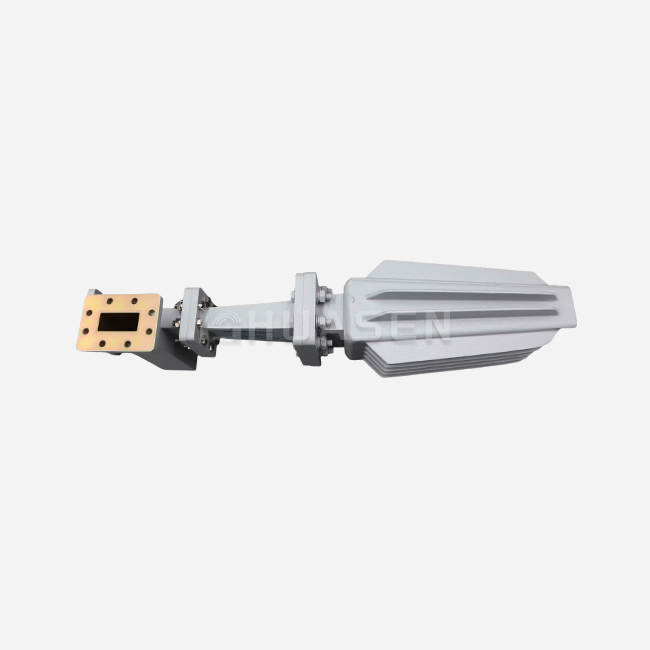
A waveguide twist is a precise passive microwave part that is designed to change the direction of polarization of electromagnetic waves moving through transmission line assemblies. By mechanically rotating the waveguide's cross-sectional profile in 45° or 90° steps, this device makes sure that signal sources and receiving elements are properly lined up. This fixes polarization mismatch without lowering the signal quality. In tough places where limited space doesn't allow normal routing, waveguide twists make it possible for small RF paths to be used while keeping impedance continuity and reducing reflections through precise internal geometries.
Understanding Waveguide Twist and Its Role in Polarization Control
In high-frequency transmission systems, where polarization alignment has a direct effect on signal quality and system efficiency, waveguide twists are essential parts. These special parts make it easier to switch between orthogonal waveguide sections, which solves some of the most important problems in complex RF architectures.
Fundamental Mechanism of Polarization Rotation
The main idea behind how it works is that the waveguide's rectangular cross-section physically rotates along its longitudinal axis. The electric field vector rotates at the same rate as the dominant TE10 mode as it moves through the twisted structure. This keeps the integrity of the waves during the transformation. This mechanical solution gets rid of the need for mode converters and external polarizers, making the design of the system easier while keeping the signal pure. In continuous designs, the rotation happens slowly, while in compact configurations, it happens in discrete steps. Each method has its own performance trade-offs that make it better for certain deployment scenarios.
Critical Performance Parameters
When system engineers look at waveguide twists, insertion loss is the main thing they care about. Losses in high-end designs are usually less than 0.05 dB across standard frequency bands, so they have almost no effect on overall link budgets. Measurements of return loss, shown as VSWR (Voltage Standing Wave Ratio), show how well the impedance matches. Professional-grade twists keep VSWR below 1.15:1 throughout their working range. In phased array applications and precision measurement systems, where temperature changes or mechanical stress can't cause phase shifts that are hard to predict, phase stability is very important. All of these factors work together to show if a certain twist design meets the strict needs of radar front-ends, satellite payloads, or lab calibration setups.
Operating Frequency Ranges and Bandwidth Considerations
Modern waveguide twists cover frequency ranges from L-band (1-2 GHz) to W-band (75-110 GHz). Each standard waveguide size (WR-430 through WR-10) can handle a different frequency window. Broadband designs get 20-30% fractional bandwidth, which is enough for most business uses. Custom narrowband twists made for single-frequency operations have better insertion loss and power handling. The procurement teams need to make sure that the frequency coverage of the chosen twist matches their system's operational spectrum. This includes any guard bands and possible future frequency reassignments.
Types and Design Principles of Waveguide Twists
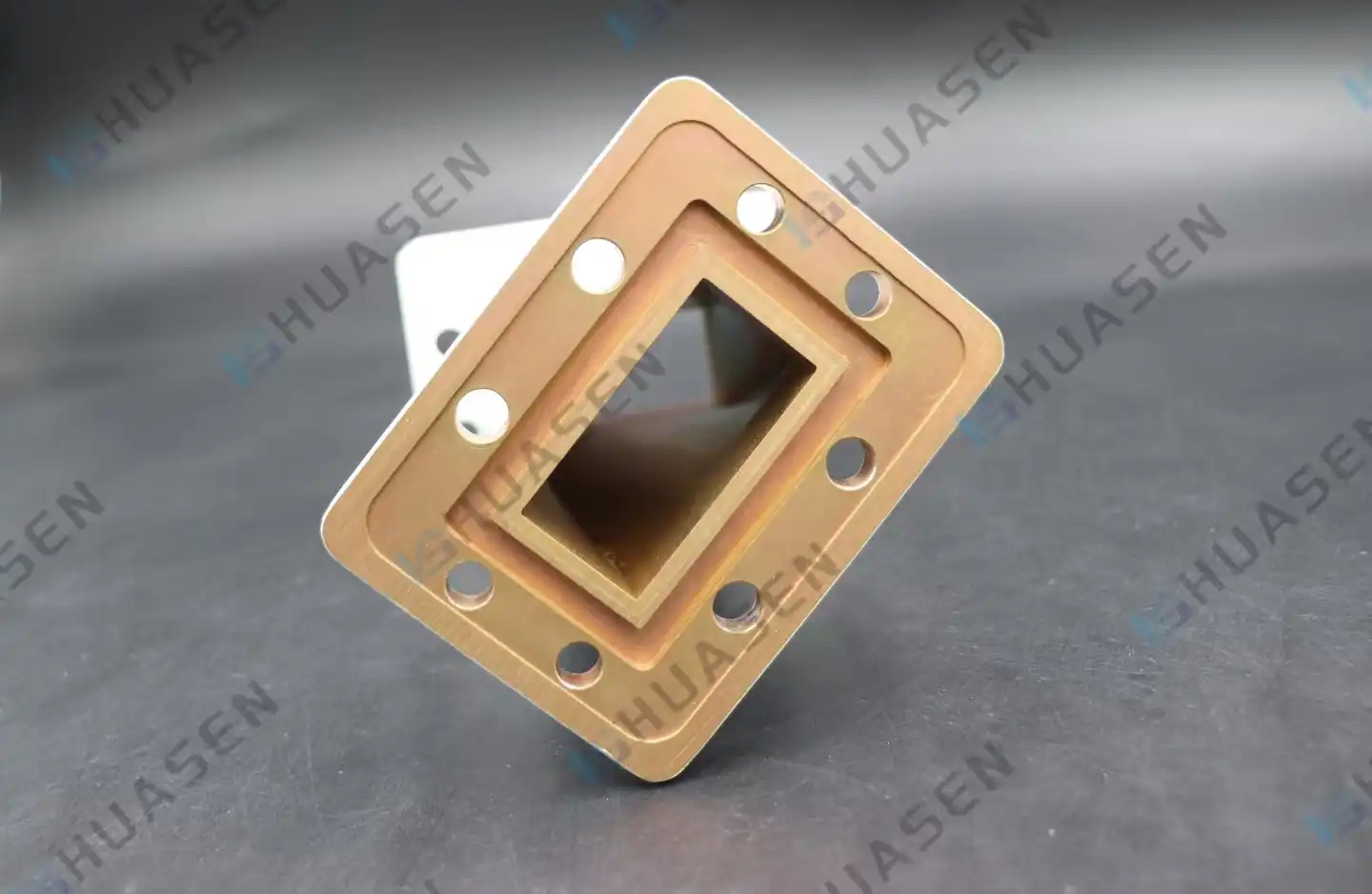
Knowing the differences in architecture between Waveguide Twist designs helps you make smart buying decisions that meet your specific needs and installation limitations.
Step Twist Versus Continuous Twist Construction
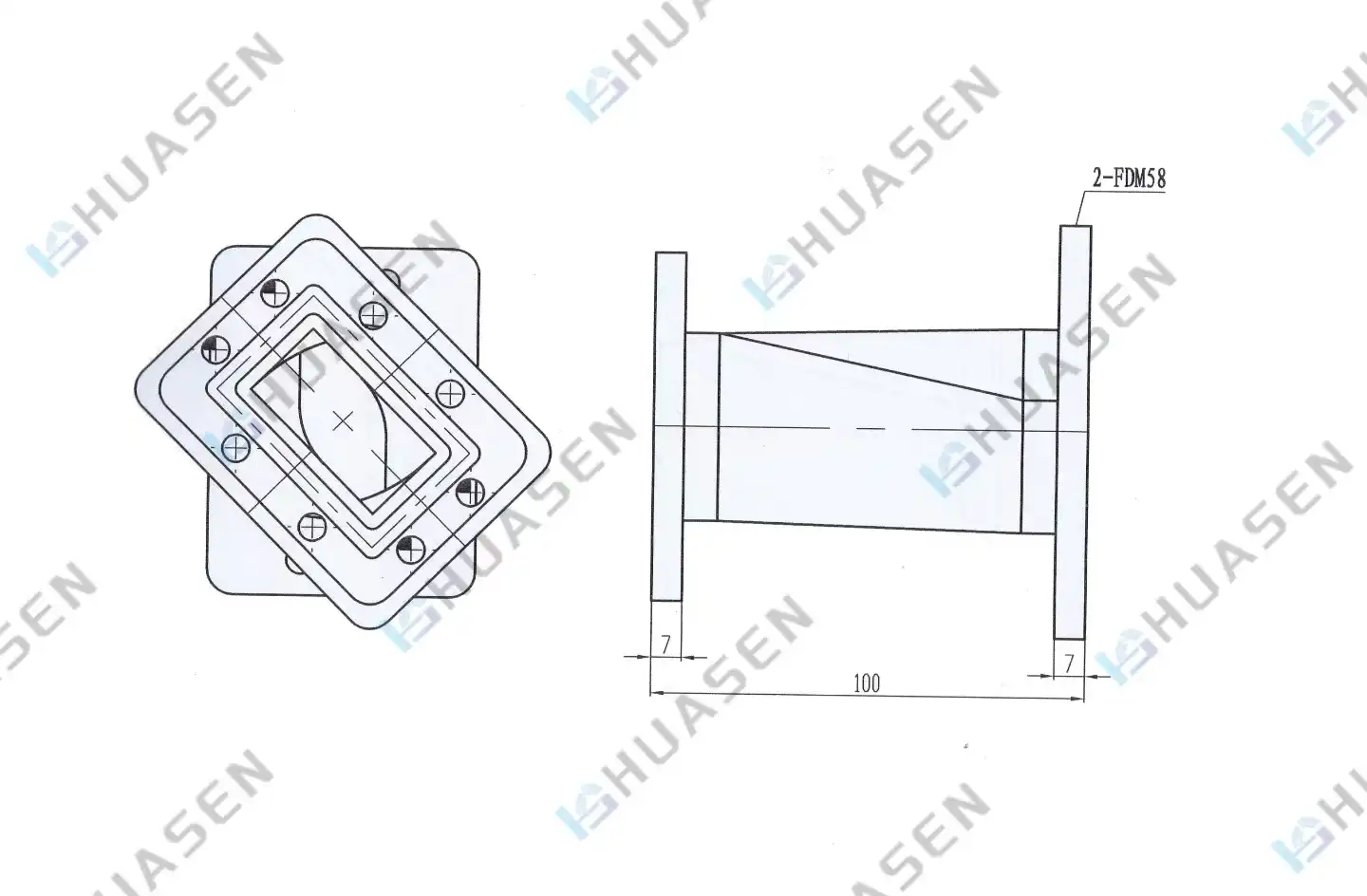
Step twists use discrete internal impedance transitions to rotate the polarization within small physical envelopes. This makes them perfect for installations with limited space, like radar systems in the air or equipment racks with a lot of equipment. Because they are shorter than continuous options, they have a slightly narrower operational bandwidth and can't handle as much peak power. In continuous twists, the waveguide profile rotates slowly and smoothly along long lengths. This tapered shape spreads out field changes evenly, getting rid of any areas with high field concentrations that might cause voltage breakdown when running at high power levels. Continuous designs work best in situations that need to cover a wide range of frequencies and handle a lot of power. Examples include satellite earth stations that send out kilowatts of RF energy or medical linear accelerators that send out megawatt-level pulses.
Standard Rotation Angles and Custom Options
Standard configurations in the industry include 90° twists for switching between E-plane and H-plane orientations and 45° twists for making diagonal polarization changes. These angles work for most system integration needs, especially when connecting flanges that are mounted at right angles to each other or getting specific polarization states in dual-polarized antenna feeds. Angles that aren't standard, like 30°, 60°, or any other custom specification, need special ways to be made, like CNC machining or electroforming. Even though these custom solutions require more time and money for tools, they are necessary in certain mechanical layouts where standard angles can't align the flanges correctly without putting stress on the parts that are connected.
Material Selection and Durability Factors
The conductivity-to-weight ratio of aluminum alloys is very high, which makes them ideal for aerospace applications where mass budgets are tight. Anodized or chromate-converted finishes protect against corrosion in both marine and land environments. Copper that doesn't contain oxygen has better electrical performance and less insertion loss, which is why it is used in laboratory instruments and high-precision measurement systems. When you silver-plate copper substrates, you increase the power that can be handled while lowering the surface resistance loss. Choosing the right material has a direct effect on how much it expands and contracts when it comes to temperature, which is very important when waveguide runs are installed outside or in spacecraft environments that change quickly with temperature. To make sure the right materials are chosen, the procurement specifications should clearly state the conditions of environmental exposure.
Comparison with Rotary Joints
There is a big difference between waveguide twists and rotary joints. Rotary joints allow antenna sections to move and stay connected electrically while they are mechanically rotating. Twists offer fixed polarization rotation without any moving parts. This makes them more reliable over time and gets rid of the need for maintenance that comes with choke joints and bearing assemblies. When antennas need to physically rotate while they're working, like when tracking radar dishes or scanning communication terminals, they need rotary joints. When procurement teams know the difference between these two functions, they can choose the right parts for each application based on whether it needs static polarization adjustment or dynamic mechanical rotation.
Applications and Benefits of Waveguide Twists in B2B Contexts
Satellite Communication Ground Infrastructure
To get the best signal reception and the least amount of cross-polarization interference from nearby satellites, earth station hub assemblies need to be precisely managed in terms of polarization. Waveguide twists placed between block upconverters and antenna feed assemblies make sure that the polarization is aligned correctly within the hub structure's strict plumbing limits. This makes sure that cross-polarization discrimination (XPD) works well, which directly boosts signal-to-noise ratios and channel capacity. Because passive twist components are reliable, they get rid of the possible failure points that come with active polarization switching mechanisms. This lowers the cost of maintenance and increases the system's availability for commercial teleport operators.
Radar Systems in Defense and Aviation
Radar installations in the air have to deal with strict volumetric limits inside radomes and fuselages. With a 90° twist, rectangular waveguide twists allow transmitter modules to be mounted horizontally while antenna assemblies scan vertically. This makes the best use of space without sacrificing electromagnetic performance. In the same way, marine navigation radar systems benefit because rectangular waveguide twist enables them to route high-power magnetron outputs through deck-mounted pedestals instead of straight runs, which would be physically impossible. Multiple twists are used in military phased array systems to spread signals across array faces while keeping exact phase relationships, and rectangular waveguide twists are used there as well. This is important for beamforming accuracy and the ability to tell the difference between targets.
Microwave Testing and Calibration Laboratories
Precision measurement systems need RF connections that work every time, even when the equipment is set up differently. With waveguide twists, lab technicians can physically position test fixtures and devices being tested without introducing measurement error due to polarization misalignment. In antenna pattern ranges, twists make it easier to position the probe at any angle with respect to the test antenna. This makes it possible to fully characterize the pattern across all polarization states. Laboratory-grade twists have very little insertion loss and excellent return loss, which means that measurement results accurately show how well the device works and not how the test fixture works.
High-Power Industrial Applications
Medical linear accelerators and industrial microwave heating systems send kilowatts to megawatts through waveguide networks that connect power sources to applicators or structures that speed things up. To get these high-power signals around mechanical problems, twists make sure they can carry enough current to avoid arcing and thermal damage. Adding nitrogen or SF₆ gas to the system increases its voltage standoff, which lets it work safely at very high power levels. Since continuous twist designs don't have any sharp internal breaks, there aren't any field concentration hot spots that could cause failures that keep happening.
Market Insights: Comparing Waveguide Twist Solutions for Procurement
To find the right supplier, you need to know what makes one performance different from another and how to use business factors that affect the total cost of ownership.
Performance Metrics Across Leading Products
Premium waveguide twists from well-known brands always have insertion losses of 0.03-0.08 dB and return losses of more than 23 dB across standard waveguide bands. Power handling specs vary a lot. Small step twists can usually handle an average of 1-3 kW of continuous power, while continuous designs can handle 5-10 kW or more, and in pulsed applications, they can handle hundreds of kilowatts of peak power. Frequency bandwidth requirements range from 15% for economy designs to 30% or more for wideband models. This has a direct effect on how flexible the system is when it has to work with different frequency allocations.
Pricing Structures and Volume Considerations
Waveguide twists that are ready to ship in common sizes like WR-90 or WR-75 cost between $800 and $2,500 each, depending on the performance grade and the number of units ordered. For custom designs that need non-standard angles, rare materials, or special coatings, engineering fees of $3,000 to $8,000 are added to the cost of each unit. When you buy more than 10 units, the volume pricing starts to matter, and production orders often get discounts of 15 to 30 percent. For standard catalog items that distributors keep in stock, lead times are 4 to 6 weeks. For custom designs that need tooling and qualification testing, lead times are 10 to 16 weeks.
Alternative Component Comparisons
Coaxial cable assemblies are flexible and easy to install, but they have much higher insertion losses—usually 1-3 dB per meter at X-band frequencies—than rigid waveguide systems, which have almost no losses. Waveguide bends can change the direction of a signal but not its polarization, which makes them less useful in situations where the field vectors need to be aligned in a certain way. Rotary joints let machines keep turning, but they are 3-5 times more expensive and need to be serviced regularly, so they can't be used in situations where passive reliability is more important than rotational needs.
Procurement Guide: How to Choose and Order the Right Waveguide Twist?
Systematic specification development and supplier engagement make sure that the results of the procurement meet both technical and financial needs.
Defining Technical Requirements
The frequency range is the basic specification that determines the size and shape of the rectangular waveguide twist inside. System engineers have to figure out not only the main frequency, but also any necessary guard bands and any possible future growth that might need wider bandwidth coverage. The twist angle depends on how the connected waveguide sections are physically oriented. Accurate mechanical drawings that show where the flanges are placed clear up any confusion and stop expensive ordering mistakes. Power handling needs to take into account both peak and average power levels, along with safety margins for voltage standoff and thermal management. Material choices and finish requirements are based on environmental factors such as temperature range, humidity exposure, vibration profiles, and resistance to corrosion.
Ordering Process Navigation
The buying process usually starts with sending a technical question to potential suppliers, along with any available mechanical drawings and system requirements. Within three to five business days, suppliers respond with preliminary suggestions, datasheets, and price quotes that fit your budget. Once the choices are narrowed down, procurement teams ask for formal quotes that include unit prices, lead times, payment terms, and minimum order quantities (which are usually 1 to 5 units for standard items and could be higher for customs). When you're planning to make a lot of something, getting samples to test your prototype is helpful, but sample costs rarely go down. When it comes to international logistics, things to think about are how to classify exports under ITAR or EAR rules for defense-related uses, the best way to ship (ocean freight for cost-effectiveness vs. air freight for speed), and the paperwork that is needed for customs.
Supplier Credibility Assessment
Certifications are direct proof of the quality of the production process and control. ISO 9001 shows dedication to quality management systems, and AS9100 shows compliance with aerospace standards. RoHS and REACH certifications show that environmental rules are being followed, which is becoming more and more important for European markets. Looking at a supplier's track record by using industry references and case studies of similar projects helps you trust that they can do what they say they can do. Technical support, such as design advice before the sale, help with troubleshooting after delivery, and the quality of the documentation, is often what sets one supplier apart from another, beyond just product specifications. Warranty provisions that cover manufacturing flaws and performance guarantees protect procurement investments. Reliable suppliers offer coverage for 12 to 36 months and easy return processes.
Conclusion
Waveguide twists are necessary for controlling polarization in many high-frequency systems. They do this by precisely manipulating electromagnetic fields to send signals as efficiently as possible. Knowing the different types of designs, like compact step configurations and broadband continuous architectures, helps procurement teams match the features of parts with the needs of each application. Performance factors like insertion loss, return loss, and power handling have a direct effect on how well and how long the system works. A good procurement process balances technical requirements with business concerns like cost, lead time, and supplier abilities. This makes sure that parts are delivered on time and work properly throughout their operational lifetime. The best results for complicated RF system integration projects come from having strategic relationships with suppliers that are based on open communication and a shared understanding of the needs of the application.
FAQ
1. What frequency ranges do standard waveguide twists support?
Standard waveguide twists work with frequency ranges from L-band (1-2 GHz) to W-band (75-110 GHz). Each waveguide size is best for a certain frequency range. The WR-90 twists work well in the X-band (8.2-12.4 GHz), and the WR-75 twists work well in the Ku-band (10-15 GHz). Broadband designs usually get 20 to 30 percent fractional bandwidth around the waveguide's normal operating frequency. Depending on the needs of the application, custom designs can fit ranges that are narrower or wider.
2. Can waveguide twists handle high power transmission?
Yes, continuous twist designs work great in high-power situations. They can handle 5-10 kW of continuous average power and peak powers over 100 kW in pulsed radar systems. Power handling depends on how smooth the internal geometry is, how well the material conducts heat, and how much pressure is applied. Because of field concentrations at impedance discontinuities, compact step twists have a slightly lower power capacity. Pressurizing with dry nitrogen or SF₆ gas greatly improves the voltage standoff capability for high power levels in medical accelerators and industrial heating applications.
3. What customization options are available for specialized applications?
Manufacturers can work with custom twist angles other than 45° and 90°, waveguide sizes that aren't standard, unusual material requirements like beryllium copper for space applications, special coatings like gold plating to protect against oxidation, and unique flange configurations that fit with existing system interfaces. Custom designs need to be reviewed by engineers, which could add 10 to 16 weeks to the normal lead time. For custom orders, the minimum order quantity is usually between 5 and 25 units, but prototype quantities may be able to be lowered for certain uses.
Partner with Huasen Microwave for Precision Waveguide Solutions
At Huasen Microwave, we bring 30 years of experience in microwave engineering to every waveguide twist project. This way, we can make sure that your polarization control needs are met with solutions that work reliably in the toughest conditions. Our factory in China uses advanced CNC machining and strict quality control procedures to make parts that meet international standards, such as MIL-STD specifications for defense applications. Whether you need standard catalog items that can be deployed quickly or custom-engineered designs that work with your system's specific requirements, our technical team can help you with everything, from reviewing your initial specifications to helping you integrate the products after delivery. As a well-known waveguide twist manufacturer that works with customers in the aerospace, defense, and telecommunications industries around the world, we can offer competitive prices without lowering the quality of performance your systems need. Contact our engineering team at sales@huasenmicrowave.com to talk about your specific polarization control problems and find out how our waveguide twist solutions can help you get the most out of your RF system while staying within your budget and time frame.
References
1. Pozar, David M. Microwave Engineering, 4th Edition. Wiley, 2011.
2. Balanis, Constantine A. Advanced Engineering Electromagnetics, 2nd Edition. Wiley, 2012.
3. Saad, Theodore S. Microwave Engineer's Handbook, Volume 2. Artech House, 1971.
4. Marcuvitz, Nathan. Waveguide Handbook. McGraw-Hill, 1951 (Reprinted by IET, 1986).
5. Silver, Samuel. Microwave Antenna Theory and Design. MIT Radiation Laboratory Series, 1949.
6. IEEE Standard 149-2021. IEEE Recommended Practice for Antenna Measurements. Institute of Electrical and Electronics Engineers, 2021.
Send Inquiry