Parabolic Antenna Performance in Satellite and Wireless Systems






2026-04-14 21:33:53
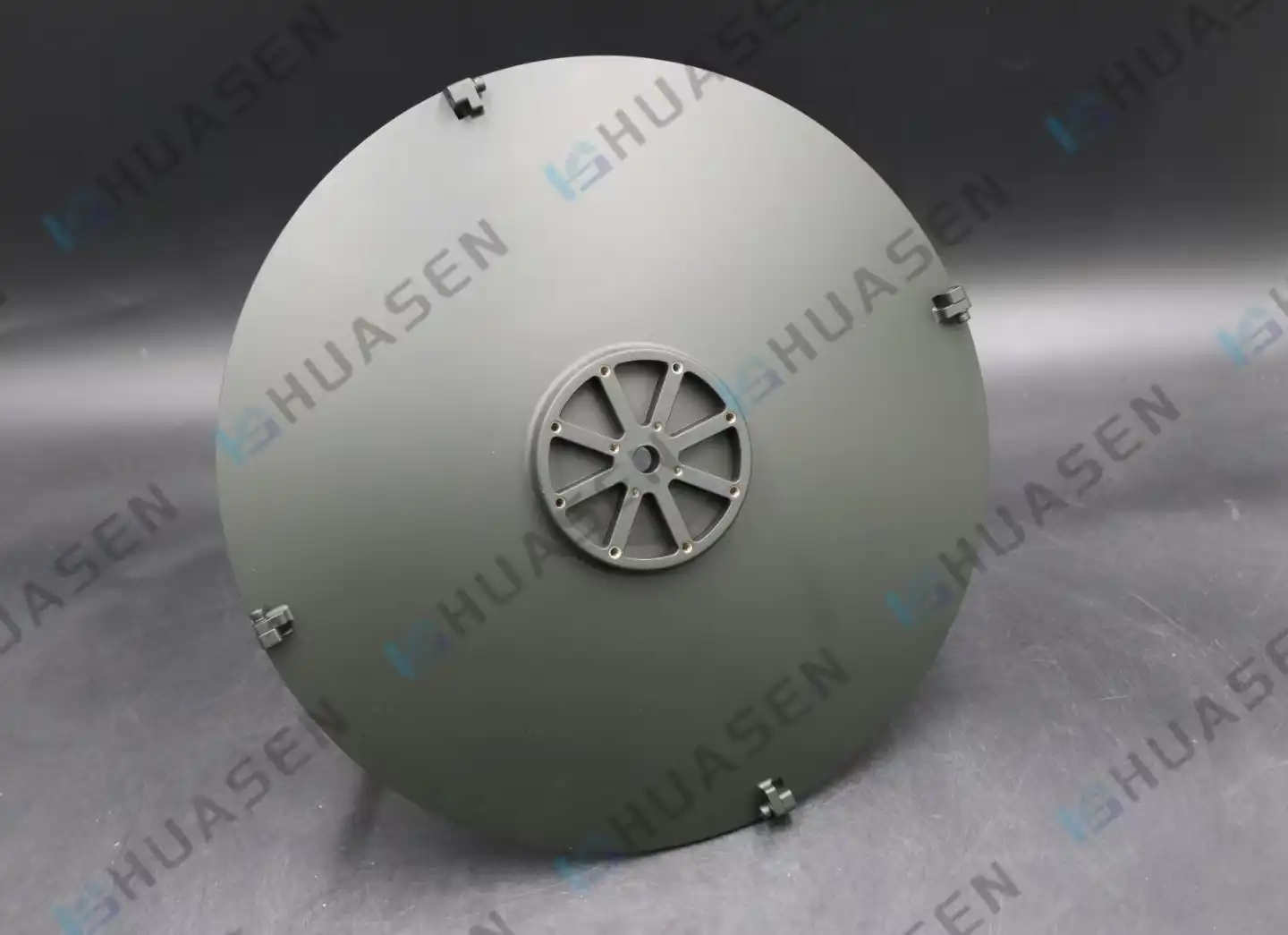
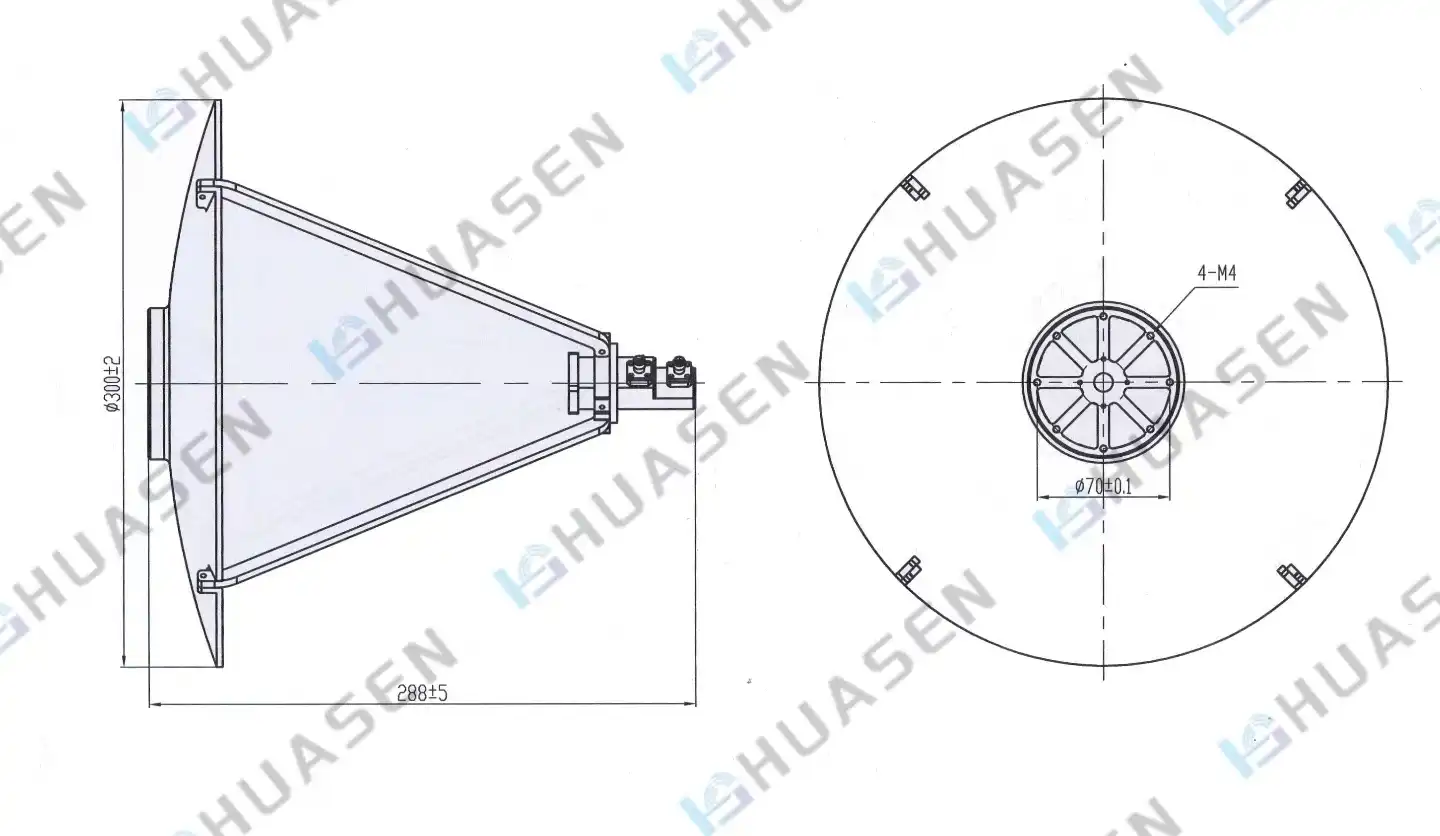
When it comes to high-performance wireless contact over long distances, parabolic antennas are the best way to send and receive signals accurately. These reflector-based devices,Parabolic Antenna,use a parabolic shape to focus electromagnetic waves, turning spherical wavefronts into beams that are focused and collimated. This basic feature gives the device a very high gain—often more than 30 to 50 dBi depending on the diameter and frequency—while keeping the beamwidths narrow. This keeps interference to a minimum and maximises spectrum efficiency for radar, microwave backhaul, and satellite uplinks.
Understanding Parabolic Antennas: Principles and Performance
The clever thing about parabolic reflector antennas is that they can turn radio waves that are travelling in different directions into ones that are travelling in parallel. There is a feed horn or dipole element at the center of the parabolic dish. This element either sends energy outward during transmission or receives messages. The curved reflector surface changes the path of these waves based on exact geometric rules. This makes sure that all of the reflected rays move in phase, which boosts the signal strength without using active electronic amplification.
Core Design Features and Operational Theory
Careful attention to the accuracy of the reflecting surface is what makes parabolas work so well. The root mean square (RMS) surface error needs to stay below a certain percentage of the working wavelength. For best gain, this is usually less than µ/16. Materials like spun aluminium or stretch-formed aluminium with protective powder coatings offer both structural rigidity and corrosion resistance. This is especially important for outdoor installations that are exposed to harsh conditions like salt spray, temperature extremes, and mechanical stress from wind loading. These antennas produce very directional radiation patterns. Most of the power that is sent or received goes through the main lobe. The sidelobes and back lobes are turned off to avoid interaction with systems nearby. This directly leads to better link budgets, which let system designers increase contact ranges or lower the amount of transmitter power that is needed.
Frequency Bands and Gain Characteristics
For different uses, different frequency bands are needed. C-band systems (4-8 GHz) have great penetration and rain fade resistance, which makes them good for maritime communications and satellite broadcasts. Ku-band (12–18 GHz) and Ka-band (26.5–40 GHz) systems can handle more data, but because the wavelengths are shorter, they need bigger apertures to keep the same gain levels. The equation for the relationship between gain, diameter, and wavelength is G = 10 log₁₀(η (πD / λ)²), where η is aperture efficiency, D is diameter, and λ is wavelength. In properly made units, aperture efficiency usually falls between 55% and 70%. This measurement takes into account the losses caused by a blocked feed, surface flaws, spillover effects, and light taper. Higher efficiency means better use of the physical aperture, which means more gain without making the antenna bigger or heavier, which is important for situations where mounting options are limited or loading limits apply.
Comparative Advantages Over Alternative Antenna Types
Broadband performance and easy feed structures are good things about horn antennas, but they can't match the gain levels that can be reached with parabolic reflectors of the same size. Yagi-Uda arrays have a modest gain at lower frequencies, but as the number of elements increases, they become harder to handle mechanically, and their bandwidth gets smaller. Even though flat-panel phased arrays can electronically steer beams, they usually cost a lot more per unit gain and use a lot more power while they're working. Parabolic dishes, on the other hand, are great when you need the most gain for the least amount of money; they can work passively without using power, and they have been reliable for decades in the field. Because they are mechanically simpler than active phased arrays, they have fewer possible failure points. Also, their frequency-independent shape lets them work across wide bandwidths with the right feed design, which is very helpful when the system needs to change or frequency allocations shift.
Optimizing Performance: Installation and Signal Quality
Even the highest-quality antenna hardware delivers suboptimal performance without proper installation and alignment. Precision mounting and aiming procedures directly impact link margins, signal-to-noise ratios, and overall system capacity. Understanding installation best practices enables procurement teams and field engineers to realize the full potential of their antenna parabolic reflector antennainvestments.
Precise Alignment and Mounting Best Practices
In order to get the strongest signal, both the azimuth (horizontal plane) and elevation (vertical plane) must be aligned correctly. To get the most accurate on-axis pointing, professional setups use alignment tools like spectrum analysers, received signal strength indicators (RSSI), or satellite signal meters. Misalignments as small as one or two degrees off-target can lower received power by several decibels, wasting antenna gain and lowering link quality. Mounting structures must be stable against loads from the surroundings. Large-aperture dishes are affected by wind in a big way, causing both static pressure and dynamic movements. Based on local climate data, structural engineers figure out wind survival ratings that make sure mounts can survive extreme weather events without permanently changing shape. It doesn't matter what kind of foundation you have; the loads must be spread out evenly on any concrete pads or roof penetrations so that the foundation doesn't settle or tilt over time.
Environmental Considerations and Signal Degradation Prevention
Systems that work above 10 GHz have the most trouble with rain fade. Water drops take in and spread out radio frequency energy. When there is strong rain or higher frequencies, the attenuation goes up. Choose the right frequency bands and plan for link margins to help keep service uptime percentages at a good level, even though antenna design can't fully stop atmospheric losses. Hydrophobic radome coatings keep water from filming over protection covers when they get wet. This makes signal loss even less likely. An antenna's electrical and mechanical parts can both be changed by changes in temperature. The expansion of heat can shift focus points or put more stress on the mounting gear in some places. Good builders know about these effects and choose materials with similar thermal expansion coefficients. They also add mechanical features that can handle changes in size without changing how well the thing works. Parts made of hot-dip galvanised steel and stainless steel don't rust, and their torque values stay the same even when the weather changes.
Interference Mitigation and Maintenance Guidelines
Spectrum congestion in cities requires antennas with better sidelobe reduction. The European Telecommunications Standards Institute (ETSI) uses classifications to describe radiation patterns. Antennas in Classes 3 and 4 have tighter sidelobe control than those in Classes 1 and 2. In areas with a lot of people and a lot of microwave links, it's important to choose higher-class antennas to avoid co-channel interference and stay in compliance with regulations. Regular maintenance also increases the antennas' useful life and keeps their performance specs. During visual inspections, damage to the structure, signs of corrosion, loose fasteners, and the stability of the radome should all be checked. Vector network analysers (VNA) are used to check the electrical performance and show that return loss and VSWR are still within acceptable limits, usually less than 1.3:1 for professional systems. After big storms or earthquakes, realignment may be needed if RSSI levels drop suddenly, showing that the points are no longer looking at the same angles as before.
Market Landscape: Selecting the Right Parabolic Antenna Solution
Navigating the global antenna marketplace requiresunderstanding manufacturer capabilities, product differentiation, and supply chain considerations. The 2024 market reflects ongoing trends toward lighter materials, improved environmental sealing, and enhanced manufacturing precision driven by 5G backhaul expansion and satellite constellation deployments.
Leading Global Manufacturers and Suppliers
Professional antenna markets are dominated by well-known brands from North America, Europe, and Asia. Suppliers based in the US often stress meeting military-grade standards and following MIL-STD environmental testing procedures, which makes them attractive to defence contractors and people who run critical infrastructure. European companies usually stress that their products are compliant with ETSI and have a lot of certifications that cover telecommunications regulations in many different countries. Chinese companies, like Huasen Microwave Technology Co., Ltd., have become major players by offering competitive prices, raising quality standards, and growing their technical capabilities. Companies like Huasen have been making waveguide components, millimeter-wave antennas, and integrated devices since 1993. They have decades of experience in RF engineering. Their manufacturing scale allows for both mass production of standard models and custom engineering for specific uses that need different frequency coverage, polarisation configurations, or mechanical connections.
Performance Metrics and Pricing Structures
When making purchases, people weigh the total cost of ownership against the technical ability. Gain, beamwidth, front-to-back ratio, cross-polarization discrimination (XPD), and power handling ability are some of the most important performance indicators. For basic point-to-point links, single-polarized antennas work fine. However, dual-polarized configurations using orthomode transducers (OMT) can effectively double capacity by reusing frequencies on orthogonal polarisation planes. This is done with aparabolic reflector antennausing a technique called XPIC (Cross-Polarization Interference Cancellation), and prices vary a lot depending on the specifications. Custom-engineered solutions need special testing and approval and are much more expensive than standard off-the-shelf models for common frequency bands. When buying in bulk, you can usually arrange discounts, especially when you want to work with the same supplier for a long time. Total landed costs are affected by logistics factors such as shipping costs, lead times, and the availability of local technical help. These factors should be taken into account when choosing a supplier, along with unit pricing.
Innovation Trends and Logistical Considerations
Composite materials that are light are slowly replacing traditional aluminium buildings. This lowers the cost of shipping and makes installation easier on structures that can't hold much weight. Modern ways of making things, like computer numerical control (CNC) cutting and laser-guided assembly, make the surfaces more accurate and consistent across production runs. These new ideas improve electrical performance while keeping prices low. Reliable providers offer a lot of information, like mechanical drawings, electrical test data, and installation manuals. Before they are sent out, testing certificates check that the measures of gain, pattern characteristics, and return loss meet the requirements. Post-sale support includes technical advice for planning the installation, help with troubleshooting during commissioning, and the availability of replacement parts throughout the product lifecycle. These are especially helpful for large-scale deployments where downtime costs a lot of money.
Decision-Making Framework for Parabolic Antenna Procurement
Successful procurement aligns technical specifications with operational requirements and budgetary constraints. Systematic evaluation frameworks guide decision-makers through complex trade-offs, ensuring selected solutions deliver optimal value across system lifecycles.
Use Case Categorization and Requirements Definition
For Ku-band and Ka-band VSAT terminals in particular, satellite ground stations put a high value on surface accuracy and high-frequency performance. For these systems to work, the focal point must be precisely located, and they may include tracking systems for satellite groups that aren't in orbit around the Earth. Microwave backhaul links that connect cell phone base stations focus on sidelobe suppression to avoid interference in crowded spectrum areas, along with a tough mechanical design for putting outside. Radar systems need certain pattern characteristics that are tailored to their detection algorithms and scanning methods. Antenna selection is based on understanding the particular needs of the application. A maritime communication terminal has to deal with salt spray and the movement of ships, which don't happen at fixed sites on land. Broadcasting applications may choose wide coverage areas over maximum gain, which means they can handle wider beamwidths to serve bigger areas. Defence and aerospace systems often have to follow strict rules for environmental testing and supply chain security that consumer-grade sources don't have to follow.
Evaluation Criteria and Technical Specifications Balance
Link budget estimates that take into account path loss, system noise levels, modulation schemes, and needed bit error rates come up with the gain requirements. Higher gain makes link margins better, but it also narrows beamwidths and makes pointing more sensitive. These are trade-offs that need to be balanced with the features of the installation site and the way the system is used. Frequency compatibility is more than just covering the basic frequency bands. It also takes into account things like filter rolloff characteristics, out-of-band rejection, and harmonic suppression. Durability specifications take into account the facts of the operational environment. Temperature ratings must include both the working and storage ranges that are likely to be present at the installation site. When figuring out wind loads, the local climate and rising height exposure factors are taken into account. Connector types and waveguide interfaces need to match the infrastructure that is already in place or the designs that are planned for the system. This way, you can avoid having to buy expensive adapters or make changes to the field that hurt the electrical performance.
Custom Solutions and Procurement Confidence Building
Catalogue goods that are all the same work well for many uses, but custom engineering is often better for more specific needs. Huasen Microwave Technology can create waveguide components, coaxial devices, and active subsystems. This lets them make integrated solutions that are perfect for each customer's needs. Custom frequency tuning, unique mounting provisions, or specialised radome materials can make a system perform better in competitive deployments. Customer success stories show how knowledgeable and reliable a provider is. Case studies that show difficult installation conditions, tight delivery schedules, or complicated performance requirements are real proof of engineering skills and factory quality. Trust in supplier partnerships grows when they offer full after-sales support, such as calibration data, test reports, and quick expert help. This is especially important for complicated B2B projects with many procurement stakeholders and long implementation timelines.
Future Trends and Innovations in Parabolic Antennas
Technology evolution continues to reshape antenna design and manufacturing. Staying informed about emerging trends enables procurement professionals to make forward-looking investment decisions that accommodate future system upgrades and changing operational requirements.
Emerging Technologies and Material Advances
Composite materials for reflectors that are made of carbon fibre,Parabolic Antenna,or fibreglass reduce weight without lowering the stiffness of the structure. Cutting down on weight makes the mounting structure easier to use and lowers the cost of installation. This is especially helpful for installations on rooftops or towers that can only hold a certain amount of weight. Adaptive reflector designs that use mechanical or electronic adjustments to improve performance across wider bandwidth ranges are made possible by advanced surface treatments that make them less likely to rust and require less upkeep. Using digital filtering, built-in signal processing methods in feed assemblies make it easier to get rid of interference and boost signal-to-noise ratios. The lines between inactive antenna structures and active RF subsystems are blurred by these new ideas. They provide benefits to the whole system that separate parts can't provide on their own.
5G Deployment and IoT Expansion Impacts
Fifth-generation cellular networks need backhaul capability that has never been seen before. This is what is driving the use of millimeter-wave frequencies and the need for higher-gain antennas. Parabolic dishes that work in the E-band (71–86 GHz) can handle multiple gigabit data rates, which are needed for plans to make cities denser and for better mobile broadband services. Large-aperture installations can't be used on roofs because of worries about visual impact. As the Internet of Things grows, it creates a need for point-to-multipoint distribution systems that serve sensor networks and machine-to-machine communication infrastructures. High-gain directional antennas don't usually work in this way, but hybrid designs that combine parabolic reflectors with electronically switched feeds can cover larger areas with better range and capacity than omnidirectional antennas. For these applications, it's important that the provider is flexible and can make changes that support new deployment scenarios.
Strategic Procurement and Lifecycle Management
Long-term value is best achieved when procurement teams and providers work together. Setting up relationships with chosen vendors gives you access to product roadmaps, early warnings of problems with products going out of date, and priority handling during supply chain disruptions. With volume commitments, you can get better prices and make sure that the product is always available for phased rollout schedules that span multiple fiscal periods. Planning for technology transitions and upgrade paths is part of lifecycle management. Modular feed designs let you change the frequency band without having to update the whole antenna. As traffic needs increase, mounting devices that can accommodate different antenna sizes help increase capacity. These things make infrastructure investments pay off more quickly and lower the total cost of ownership over many decades, rather than just one buying cycle.
Conclusion
Parabolic antenna technology is a mature but still-evolving answer for difficult satellite and wireless transmission problems. Understanding basic performance principles, best practices for installation, how the market works, and what the future holds helps people make smart purchasing choices that balance technical needs with available funds. Quality suppliers with wide ranges of products, the ability to customise, and ongoing technical help give the most value over the entire lifecycle of a system. When installing communication infrastructure like satellite ground stations, microwave backhaul networks, or specialised radar systems, it's important to choose the right antennas and have them set up by professionals so that the infrastructure works reliably in all kinds of operating environments and as service needs change.
FAQ
1. Which parabolic antenna model suits satellite communication best?
Satellite applications typically require antennas sized for adequate gain at operational frequencies—C-band systems use 2.4m to 4.5m dishes, while Ku-band terminals often employ 1.2m to 2.4m diameters. Surface accuracy becomes critical above 10 GHz, demanding RMS errors below λ/20. VSAT terminals serving maritime or remote locations benefit from rugged mechanical construction and hydrophobic radome treatments, minimizing rain fade impacts.
2. How do I overcome common installation challenges?
Precise alignment tools, including spectrum analyzers or GPS-aided pointing systems, reduce commissioning time and maximize performance. Proper grounding prevents lightning damage and static buildup. Mounting structures must account for wind loading calculations specific to local climate conditions. Professional installers verify polarization orientation matches system requirements and confirm feed focal point positioning before finalizing mounting hardware torque specifications.
3. Can parabolic antennas be customized for unique applications?
Reputable manufacturers maintain engineering teams capable of modifying standard designs to meet specialized requirements. Custom frequency tuning, unique mounting provisions, specialized connector types, or environmental ratings beyond catalog specifications represent common customization requests. Providing detailed technical requirements early in procurement processes enables accurate quotations and realistic delivery timeline estimates supporting project planning activities.
Partner with Huasen Microwave for Superior Antenna Solutions
Our engineering team at Huasen Microwave Technology brings over three decades of RF and microwave expertise to every project. As an established parabolic antenna manufacturer, we deliver precision-engineered reflector systems, waveguide components, and integrated subsystems across telecommunications, aerospace, and defense sectors. Whether specifying standard catalog products or requiring customized solutions tailored to unique operational requirements, our technical specialists provide consultation support from initial design through post-installation commissioning.
We maintain rigorous quality control standards throughout Parabolic Antenna manufacturing processes, ensuring each antenna meets specified electrical performance and mechanical durability requirements. Certifications covering environmental testing, material compliance, and international telecommunications standards demonstrate our commitment to delivering reliable products suitable for critical infrastructure deployments worldwide.
Contact our sales team at sales@huasenmicrowave.com to discuss your parabolic antenna requirements, request technical specifications, or explore customization possibilities. We offer competitive pricing structures for volume procurement, flexible delivery schedules supporting phased deployment timelines, and comprehensive after-sales support ensuring your communication systems achieve optimal performance throughout operational lifecycles.
References
1. Balanis, Constantine A. (2016). Antenna Theory: Analysis and Design, 4th Edition. Wiley-Interscience, New York.
2. Milligan, Thomas A. (2005). Modern Antenna Design, 2nd Edition. IEEE Press, Hoboken.
3. Stutzman, Warren L. and Thiele, Gary A. (2012). Antenna Theory and Design, 3rd Edition. John Wiley & Sons, Hoboken.
4. ETSI EN 302 217 Series. Fixed Radio Systems; Characteristics and Requirements for Point-to-Point Equipment and Antennas. European Telecommunications Standards Institute, Sophia Antipolis.
5. IEEE Standard 145-2013. IEEE Standard for Definitions of Terms for Antennas. Institute of Electrical and Electronics Engineers, New York.
6. Kraus, John D. and Marhefka, Ronald J. (2002). Antennas: For All Applications, 3rd Edition. McGraw-Hill Education, New York.
Send Inquiry