Waveguide Screw Installation Guide






2026-06-18 17:10:34
Installing waveguide screws correctly is fundamental to maintaining signal integrity in RF and microwave systems. These specialized fasteners differ significantly from standard machine screws—they demand precise torque control, proper thread engagement, and careful attention to material compatibility. Whether you're assembling 5G base station components, satellite payloads, or radar systems, understanding the nuances of waveguide screw installation ensures optimal electrical performance, prevents passive intermodulation distortion, and extends component lifespan. This guide walks you through industry best practices that system integrators and equipment manufacturers rely on daily.
Understanding Waveguide Screw Specifications Before Installation
Before you even pick up a screwdriver, understanding the technical specifications of your waveguide fasteners sets the foundation for successful assembly. Unlike wood screws or generic metal screws, waveguide screws are precision-engineered components with strict dimensional tolerances.
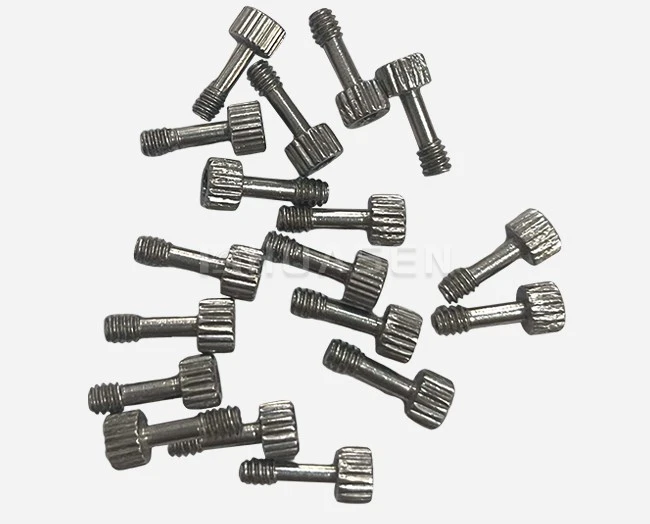
Material composition plays a crucial role in electromagnetic performance. Free-cutting brass provides excellent conductivity, while stainless steel variants offer superior corrosion resistance for maritime communications installations. Some aerospace applications require Invar alloy fasteners due to their near-zero thermal expansion coefficient—critical when frequency stability cannot drift across temperature ranges from -40°C to +85°C.
Surface treatments deserve equal attention. Silver plating with a minimum thickness of 5 μm minimizes skin-effect losses at microwave frequencies. Gold-plated options excel in harsh outdoor environments where saltwater exposure threatens long-term reliability. Laboratory users evaluating electronic components often prefer passivated finishes that prevent galvanic corrosion when mating dissimilar metals.
Thread specifications directly impact mechanical stability. Ultra-fine thread pitches—sometimes exceeding 100 threads per inch—enable the sub-micron positional accuracy required in tuning applications. Thread class limits of 2A/3A or 6g/6H reduce lateral play, which is essential when coupling coefficients must remain stable under vibration conditions typical of aircraft or drone installations.
Essential Tools and Preparation for Waveguide Assembly
Proper tooling transforms a challenging installation into a repeatable process. System integrators working on wireless bridging equipment or point-to-multipoint communications recognize that inappropriate tools cause more field failures than component defects.
Torque-limiting screwdrivers are non-negotiable. Over-tightening deforms waveguide flanges, creating impedance discontinuities that degrade return loss performance. Under-tightening allows mechanical movement that generates intermodulation products. Digital torque drivers with data logging capabilities help communications system integrators meet MIL-STD documentation requirements while maintaining consistent assembly quality across production runs.
Hex drivers with magnetic bit holders prevent dropped fasteners inside complex assemblies. Base station builders working at tower heights appreciate this seemingly minor feature. Choose bits harder than the screw head—hardened steel or titanium-nitride-coated bits prevent cam-out damage that mars plating and creates potential PIM sources.
Thread gauges verify compatibility before assembly begins. Go/No-Go gauges quickly identify counterfeit or out-of-specification fasteners that might have infiltrated your supply chain. This verification step takes seconds but prevents hours of troubleshooting when VSWR measurements fail acceptance criteria.
Cleanliness protocols cannot be overlooked. Lint-free wipes and isopropyl alcohol remove machining oils and particulates from threaded holes. Instrument manufacturers conducting RF testing know that contamination between mating surfaces introduces unpredictable capacitance that skews calibration data. Establish a clean assembly area separate from general fabrication zones.
Step-by-Step Installation Process for Maximum Signal Integrity
The actual installation sequence follows a methodical approach that experienced radar system technicians execute instinctively. Each step builds upon the previous one to achieve the low insertion loss and robust environmental performance your application demands.
Thread Inspection and Preparation
Examine both male threads on the bolt and female threads in the waveguide flange under adequate lighting. Look for burrs, cross-threading damage, or plating defects. A thread file removes minor imperfections without compromising dimensional accuracy. This inspection catches manufacturing anomalies before they propagate into expensive assembly failures.
Dry-Fitting Verification
Hand-thread the screw into its mating hole without tools. Rotation should feel smooth and consistent throughout the engagement length. Binding or sudden resistance indicates misalignment or debris. Never force a fastener past resistance—remove it, re-inspect, and identify the root cause. Electronic countermeasures equipment operating in contested environments cannot tolerate field failures from rushed assembly.
Torque Application Sequence
Apply fasteners in a star pattern when multiple screws secure a single flange. This distributes clamping force evenly and prevents warping. Start at 30% of specified torque, proceed to 60%, then finish at 100%. Multi-stage tightening allows materials to settle and ensures gaskets compress uniformly.
Specified torque values typically range from 3-8 inch-pounds for small waveguide interfaces to 25-40 inch-pounds for larger assemblies. Consult manufacturer documentation—these values balance adequate clamping force against thread stripping risk and flange distortion.
Lock Mechanism Engagement
Self-locking fasteners with nylon patches activate friction elements during final tightening. Split-stator designs create radial pressure that eliminates backlash without separate lock nuts. These mechanisms are critical for spacecraft applications where vibration environments exceed what jam nuts can reliably secure.
Traditional lock washers have limited utility in precision waveguide work. They introduce additional interfaces that can generate unwanted intermodulation. Equipment manufacturers serving telecommunications infrastructure increasingly specify integrated locking features within the fastener itself.
Common Installation Mistakes That Degrade RF Performance
Even experienced communications testing professionals occasionally encounter assembly errors that compromise measurement accuracy. Recognizing these pitfalls helps you implement preventive measures.
Cross-threading occurs when fasteners engage at an angle. The first two thread rotations are most vulnerable. If initial rotation requires more than fingertip force, stop and restart. Cross-threaded assemblies leak electromagnetic energy and create standing wave patterns that invalidate antenna gain measurements.
Mixed plating systems accelerate galvanic corrosion. Silver-plated screws paired with gold-plated flanges create electrochemical cells in the presence of moisture. Maritime communications equipment fails prematurely when material compatibility receives insufficient attention during component selection.
Contaminated threads from cutting oils or silicone compounds alter dielectric constants in the immediate vicinity. While these substances seem harmless, they absorb moisture and change electrical properties over thermal cycles. Point-to-point wireless communications links in outdoor environments suffer slow performance degradation as organic films accumulate.
Reusing fasteners with deformed threads or depleted plating introduces variability. While cost pressures tempt reuse, research institutions conducting repeatable experiments recognize that fastener condition directly impacts measurement uncertainty. Single-use policies for critical assemblies eliminate this variable.
Quality Verification and Performance Testing Post-Installation
Installation completion is merely the beginning of your quality assurance process. Verification confirms that the mechanical assembly translates into the expected electrical performance.
Visual inspection under magnification reveals plating breakthrough, burr creation, or flange deformation. A 10x loupe suffices for most work, though base station builders may employ digital microscopes with image archiving for traceability. Look particularly at screw heads for tool slip marks indicating excessive torque application.
Return loss measurements quantify impedance discontinuities introduced by improper installation. A Vector Network Analyzer sweep across your operating bandwidth identifies resonances that shouldn't exist. VSWR degradation often traces to uneven flange contact pressure from improper torque sequencing.
Passive intermodulation testing verifies low-PIM assembly practices. Two high-power carriers combined through the device under test reveal nonlinear junction behavior. Acceptable PIM performance confirms proper surface contact and absence of loose metal particles. Aerospace applications typically require -150 dBc or better, while commercial base stations may accept -140 dBc thresholds.
Mechanical retention testing validates lock mechanism effectiveness. Calibrated vibration testing per MIL-STD-810 profiles confirms assemblies withstand transportation and operational environments. Communications security systems cannot tolerate fastener loosening that shifts frequency response outside specified bands.
Environmental Considerations and Long-Term Reliability
Installation quality determines component longevity in demanding operational environments. System designers working on electronic component evaluation understand that laboratory conditions differ dramatically from deployed reality.
Thermal cycling imposes expansion and contraction cycles that test thread engagement integrity. Invar fasteners minimize differential expansion when securing dissimilar materials. Broadcasting equipment experiencing daily temperature swings benefits from matched coefficient pairs that maintain clamping force across seasons.
Moisture ingress accelerates corrosion in coastal installations. While waveguide assemblies typically incorporate gaskets, capillary action draws water into thread valleys. Conformal coatings or specialized thread sealants provide additional protection without introducing dielectric materials into the RF path. Satellite ground stations in tropical climates implement these measures as standard practice.
Vibration environments in mobile platforms demand special attention. Drone-mounted communications systems experience rotational and linear accelerations that exceed what self-locking features alone can resist. Secondary locking methods like safety wire or chemical thread lockers become necessary, applied carefully to avoid contaminating RF surfaces.
Advanced Techniques for Specialized Applications
Some installations demand techniques beyond standard practices. Equipment manufacturers serving niche markets develop specialized procedures addressing unique challenges.
Differential torque application for screw fastening compensates for thermal gradients in high-power systems. Waveguide sections operating at significantly different temperatures require adjusted torque values that account for thermal expansion states at operating conditions rather than ambient assembly temperature. Radar systems with kilowatt-level transmitters routinely implement these calculations.
Removable installations for maintenance access require fasteners supporting hundreds of insertion cycles. Standard silver plating fails after 50-100 removals. Hard gold over nickel underplating extends cycle life tenfold while maintaining low contact resistance. Laboratory users swapping test fixtures appreciate this durability.
EMI shielding effectiveness depends on contact impedance at every junction. Conductive grease formulations specifically designed for RF applications reduce surface resistance without the viscosity migration issues of petroleum-based products. Test equipment calibration maintains traceability when contact resistance remains stable over time.
Conclusion
Waveguide screw installation bridges mechanical assembly and electromagnetic performance. Precision in material selection, torque control, and quality verification directly translates to system reliability across 5G infrastructure, satellite communications, and radar applications. The techniques outlined here—from thread inspection through long-term environmental protection—represent industry consensus developed through decades of field experience. System integrators and equipment manufacturers who implement these practices achieve the low insertion loss, superior VSWR, and extended operational life that their customers demand. Proper installation protects your investment while ensuring signal integrity remains uncompromised throughout the product lifecycle.
Partner With Huasen Microwave for Precision Waveguide Solutions
Huasen Microwave stands as your trusted waveguide screw supplier, bringing three decades of manufacturing expertise to every precision fastener we produce. Our RF components meet stringent MIL-STD and ISO requirements demanded by aerospace, telecommunications, and defense sectors worldwide. Contact our engineering team at sales@huasenmicrowave.com to discuss custom screw specifications tailored to your exact frequency, power, and environmental parameters.
References
1. IEEE Standard for Waveguide Components and Assemblies (2019). Mechanical Interface Specifications for Rectangular Waveguides, IEEE Press.
2. Pozar, D.M. (2021). Microwave Engineering: Fourth Edition, Chapter 3: Transmission Lines and Waveguides, John Wiley & Sons.
3. MIL-HDBK-454 (2018). Standard General Requirements for Electronic Equipment: Fastening and Joining, Department of Defense Handbook.
4. European Telecommunications Standards Institute (2020). ETSI EN 302 217: Fixed Radio Systems - Passive Intermodulation Testing, ETSI Publications.
5. Maury Microwave Corporation (2017). Application Note: Best Practices for Waveguide Assembly and Maintenance, Technical Documentation Series.
6. Society of Automotive Engineers (2022). ARP 1917: Fastener Installation and Torque Specifications for Aerospace Applications, SAE International Standards.
Send Inquiry