Waveguide Probe Coupler Performance Testing for RF and Radar Systems






2026-06-11 21:05:07
Waveguide probe couplers need to be tested for performance to make sure they work reliably in RF and radar systems, where signal integrity directly affects mission-critical uses. As the electromagnetic bridge between coaxial transmission lines and waveguide structures, these precise components need to be thoroughly tested for things like coupling accuracy, VSWR, and insertion loss. Engineers can find impedance mismatches and signal degradation before putting a system into use by following the right testing methods. This protects system performance in areas like defense, aircraft, and telecommunications, where even small losses can make operations less effective.
Understanding Waveguide Probe Couplers: Theory and Design Principles
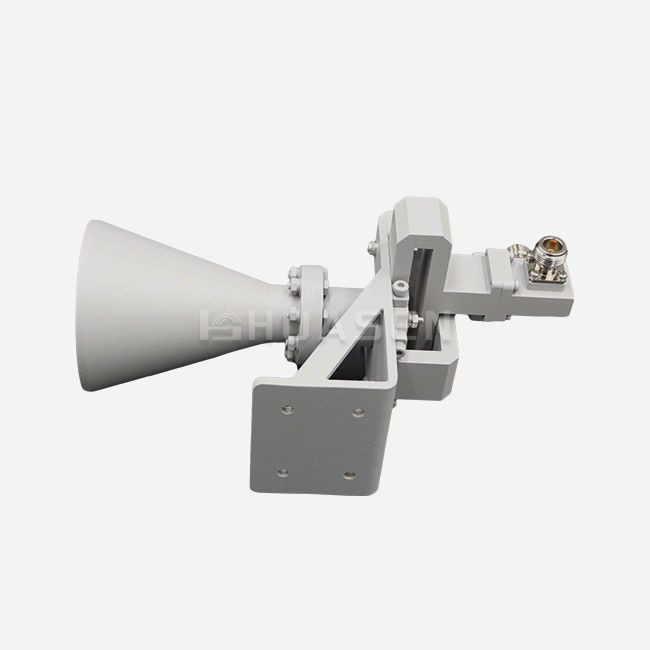
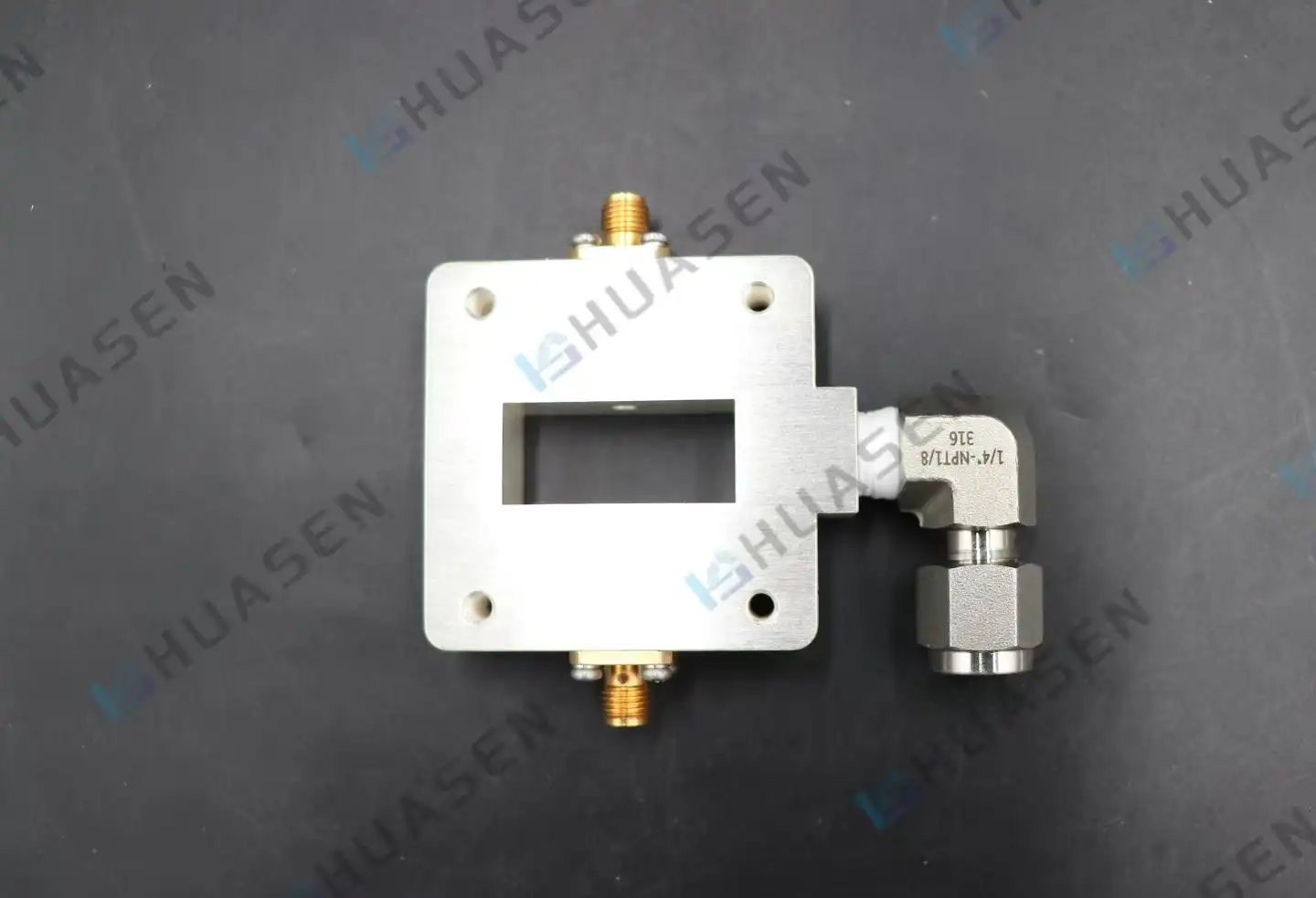
Waveguide Probe Couplers are very important parts of microwave systems because they let energy move between different types of transmission lines. At their core, these parts use a metal probe element that goes into the waveguide hole and couples electromagnetic energy like a tiny antenna. The probe is placed in the waveguide in a way that makes it work as a quarter-wave monopole and excites or pulls out the main transmission mode.
Fundamental Operating Principles
Accurate electromagnetic field contact is needed for the process to work. The probe changes the TEM mode into the waveguide's TE10 mode for rectangular shapes when a signal comes in through the coaxial input. The size and placement of the probe, as well as the backshort distance, which is usually set at about a quarter wavelength from the probe tip, are very important to this conversion process. This quarter-wave spacing makes a reacting standing wave pattern that transfers energy most efficiently while reducing echoes to a minimum.
Key Design Parameters
The coupling factor shows how much power is taken out of the main waveguide channel. In widely available units, this factor usually falls between 10 and 60 dB. Lower coupling values (10–20 dB) work well for high-power sampling tasks, while higher values (40–60 dB) let you watch signals more closely without interfering too much with the main transmission line. Insertion loss, or the power lost during connection, should be kept as low as possible, usually below 0.2 dB for good components. The choice of material is very important here. Silver-plated brass is better at conducting microwave waves than regular copper, but silver needs protective coats to keep it from tarnishing in damp places.
Fixed Versus Adjustable Architectures
There are two main design variations that meet different operating needs. Fixed couplers (WTC) have backshort points that are permanently set and are factory-optimized for high performance across normal waveguide frequency bands. These units are easy to use and have stable mechanics, making them perfect for long-term installs in base stations or satellite ground ports. Adjustable couplers (WVTC) have backshort mechanisms that can be moved. This lets field engineers tune the standing wave pattern manually for best narrowband performance. This flexibility is very helpful when characterizing something in the lab or when aiming at specific frequency slices within larger radar bands, but it adds to the complexity of the mechanism and could cause it to move over time as the temperature changes.
Key Performance Metrics and Testing Methods
To accurately describe performance, you need to measure a lot of different factors that are all connected to each other. Vector network analyzers (VNAs) are used in modern testing methods to get full S-parameter data across operational frequency bands. This shows small changes in performance that can't be seen with scalar measures.
Critical Performance Specifications
VSWR measures how well the resistance matches at the coaxial link. Values below 1.5:1 are thought to be good for most uses. If the VSWR is low, energy is reflected back toward the source. This lowers the coupling efficiency and could lead to signal confusion. Isolation measures how much loss there is between coupled and through ports, which is very important in directional coupler uses where stopping reverse signals is important. Frequency flatness measures how much the coupling changes across the working frequency. Tighter flatness requirements (±0.5 dB) make wideband systems like 5G huge MIMO arrays perform predictably.
Laboratory Testing Protocols
To start professional testing, the VNA is carefully set up using SOLT (Short-Open-Load-Thru) standards that are compatible with the types of connectors that are available. While putting the waveguide probe coupler in a thermally stable test device, we make sure that the flange is flat enough to meet the 0.02 mm tolerance needed for accurate readings to be taken again and again. Full two-port S-parameter sweeps measure the coupling factor, insertion loss (S21), and return loss (S11) over a certain frequency range. Testing for mechanical stability over a range of temperatures is very important, especially for outdoor telecom sites that see temperature changes every day from -40°C to +60°C.
Common Testing Challenges and Solutions
Impedance differences usually show up as resonant spikes in the S-parameter trace. This is usually because of mistakes made when placing the probes during production. It only takes a probe error of 0.05 mm to change the center frequency by several hundred megahertz in Ka-band uses. Cleaning the connector contact has a big effect on how accurate measurements are. Even tiny dirt on the center pin can change VSWR readings by adding inductive reactance. To fix this, we use lint-free brushes and high-purity isopropyl alcohol to clean very carefully, and then we dry them with compressed air to stop dust from forming.
Performance Comparison: Waveguide Probe Coupler vs. Alternatives
There are pros and cons to each connection technology that affect the choice of components for certain system designs. Knowing these differences helps buying teams match the features of a gadget with the needs of an application.
Functional Distinctions Across Coupling Technologies
Slot couplers move energy through holes machined into the broad wall of the waveguide. They have great directivity but need fine mechanical tolerancing. These devices work great in high-power radar receivers that can handle more than 100 kW of power, but they can't be used in frequency-agile systems because they only work in a narrow band. Hybrid couplers divide power evenly and clearly describe phase relationships, which is necessary for phased array feed networks, but doesn't let you change the coupling ratio. Waveguide Probe Couplers are in a unique middle ground because they offer flexible coupling ratios in small packages while still being able to handle enough power for most communications and monitoring radar uses.
Material Impact on Operational Characteristics
At X-band frequencies, silver plating lowers wire losses by about 15% compared to raw brass. This means that insertion loss is better. But silver oxidizes when it comes into contact with sulfur chemicals in salty seas, so expensive gold flash coatings or passivation processes are needed. Dielectric support materials for the probe unit need to have low loss tangent values and stay the same size even when the temperature changes a lot. PTFE (Teflon) is still the most common choice because it has a tan δ value below 0.0004 and doesn't expand much when heated. However, special ceramics can handle more power in military radar uses where the average power is more than 500 watts.
Waveguide probe coupler designs usually have a ±0.8 dB coupling accuracy range over the working band, which is good enough for signal monitoring but not as exact as some slot coupler implementations. This trade-off is reasonable when you think about how small the waveguide probe coupler is—often 40% smaller than similar slot designs—which is very important in aircraft or UAV installations with limited room.
Procurement Insights: Selecting and Purchasing Specifications
It takes a lot of technical and business knowledge to carefully match coupler specs to system needs. Procurement teams have to find a balance between the need for success, the budget, and the facts of the supply chain.
Aligning Technical Requirements
Frequency matching is the main factor used for choosing a waveguide coupler. Standard waveguide bands (X, Ku, and Ka) have clear size guidelines, but custom radar systems may work at frequencies that aren't standard, which means they need unique designs. The choice of coupling degree depends on the application. For example, signal tracking uses 20–30 dB coupling to sample enough power for spectrum analysis without overworking the main channel. On the other hand, directional power measurement may need stronger coupling at 10–15 dB. When writing power handling specs, you need to think about both average and peak power levels. In radar applications, where rapid peak power can reach kilowatts even though average levels are low, you need to pay extra attention to pulse width and duty cycle.
Supplier Landscape and Sourcing Considerations
Well-known companies that make RF components keep huge catalogs of standard waveguide probe couplers, and the lead time for ready-to-use parts is usually between 2 and 4 weeks. When you add in the time it takes to validate the design and make the tools, custom configurations that meet specific frequency ranges or installation needs can make shipping take 8 to 12 weeks. Prices go up a lot with frequency. For example, Ka-band units cost about 2.5 times as much as X-band units because they have to be machined to tighter tolerances and need more expensive test tools for confirmation.
The quality of technical help changes a lot between suppliers. The best makers offer thorough S-parameter files, 3D CAD models for mechanical integration, and application notes that cover common problems that come up during integration. This paperwork cuts down on the time engineers have to spend on system design and on unnecessary and expensive redesign processes. For military or aerospace uses, suppliers must have AS9100 or ISO 9001 quality systems and full tracking paperwork. This limits the number of suppliers available but makes sure that parts will work reliably in mission-critical situations.
Enhancing Performance Through Optimization Strategies
For couplers to work at their best, they need to be installed correctly and calibrated in a way that takes into account how they will be used in real life.
Identifying Performance Bottlenecks
Electrical efficiency is directly affected by the strength of the flange interface. Micro-gaps between connecting flanges cause unwanted echoes that lower VSWR. This is especially bad above 18 GHz, where wavelengths get close to millimeter levels. We use dial markers to make sure the flanges are flat and make sure the right amount of pressure is applied during assembly (usually 35 to 45 inch-pounds for normal UG-type flanges) so that the metals touch closely. Mismatches in thermal expansion between the waveguide system and the mounting frame can put stress on the coupler assembly over time as the temperature changes. This can cause the mechanical alignment to break down and the electrical performance to change. For outdoor applications, this drift can be lessened by choosing mounting tools with matched thermal expansion factors.
Advanced Calibration Techniques
Probe position setting on models that can be adjusted lets you get the best performance for certain frequency cuts. By moving the backshort button and watching the VSWR on a VNA, you can find the resonant point where impedance matching is at its best. This manual setting fixes any flaws in the way the coupler was made and adjusts it to the real system impedance, which might be different from 50 ohms because of connection reflections that build up in complicated RF chains. By writing down the best places for the plungers at different operating frequencies, you can quickly change their settings when doing repairs in the field.
Protocols for verification should include more than just measuring S-parameters of the waveguide coupler; they should also include high-power tests with real-life signal conditions. Measurements with a low-power VNA can't show heat effects or multipaction effects that only happen at full power. Putting the coupler into a typical part of the system and testing it with staged power ramps helps find possible failure modes before the whole system is put into use.
Conclusion
Waveguide probe couplers go through a lot of tests to make sure they work well in difficult RF and radar situations where dependability can't be compromised. When engineering teams understand how design factors, testing methods, and installation procedures affect each other, they can choose parts that really meet system requirements. With coupling ranges from 10 to 60 dB and set and changeable versions, these devices can be used in a wide range of situations, from telecommunications infrastructure to aerospace platforms. As microwave systems move toward higher frequencies and tighter integration, systematic validation procedures become more important to keep the performance gaps that separate working systems from failures in the field.
FAQ
1. What determines the bandwidth of a probe coupler?
The main things that determine useful bandwidth are the probe diameter and the backshort distance. Standard single-probe designs cover about 20 to 30 percent of the center frequency. However, specialty stepped, or ridge-loaded probes cover the whole waveguide band by managing the capacitive reactance in a controlled way.
2. How does connector selection affect power handling?
The cable connection usually limits the amount of power that can be sent. Because their center wire is so small, SMA connections can only be used for low-power tasks. On the other hand, N-type or 7/16 DIN connectors can handle much higher continuous wave power before they break down due to heat.
3. Can these devices operate in space environments?
Yes, but they need to be hermetically sealed or have limited openings. When the product is made, air spaces that don't have vents can escape in a vacuum, which could lead to a deadly corona discharge when the internal pressure drops as it rises to orbital altitudes.
4. Why choose silver plating over gold?
At microwave frequencies, silver is a slightly better conductor than gold, which lowers insertion loss by amounts that can be measured. But silver turns black when it comes into contact with sulfur in the air, so many designs put a thin gold flash over it to make it more resistant to rust while still allowing it to carry electricity.
Partner with Huasen Microwave for Precision Waveguide Solutions
Huasen Microwave has been making high-frequency parts for more than 30 years and has a lot of experience with difficult uses in the radar, aerospace, and telecoms industries. Our Waveguide Probe Couplers give mission-critical systems the consistent performance they need, and they come with full documentation of their S-parameter validation and weather testing. In addition to having a large stock of standard setups, we also offer quick custom design services for specific frequency bands or interface needs. Our professional team is here to help you make the right choice, whether you need off-the-shelf parts that can be shipped right away or engineered solutions that are made to fit your special system requirements. Email our application engineers at sales@huasenmicrowave.com to talk about your unique needs or to get full datasheets that you can look over. As a well-known company that makes Waveguide Probe Couplers, we can promise you quality, dependability, and quick help with your RF system projects.
References
1. Pozar, David M. Microwave Engineering, 4th Edition. Wiley, 2011.
2. Collin, Robert E. Foundations for Microwave Engineering, 2nd Edition. IEEE Press, 2001.
3. Saad, Theodore S. Microwave Engineers' Handbook, Volume 1. Artech House, 1971.
4. Matthaei, George L., Leo Young, and E.M.T. Jones. Microwave Filters, Impedance-Matching Networks, and Coupling Structures. Artech House, 1980.
5. IEEE Standard 149-1979. IEEE Standard Test Procedures for Antennas. Institute of Electrical and Electronics Engineers, 1979.
6. Marcuvitz, Nathan. Waveguide Handbook. McGraw-Hill, 1951. Republished by IET, 1986.
Send Inquiry