Waveguide Probe Coupler Coupling Degree Testing in Millimeter Wave Bands






2026-05-25 22:28:45
Millimetre wave testing requires waveguide probe couplers to extract a tiny amount of signal power from waveguide transmission lines for monitoring and measurement. Accurate coupling degree testing is crucial at frequencies over 30 GHz, as it determines the ratio of sampled to main signal strength in decibels. Proper coupling degree testing provides system calibration accuracy, power monitoring in 5G base station frontends, and radar performance verification in aerospace applications where signal integrity is critical.
Understanding Waveguide Probe Couplers in Millimetre Wave Bands
Core Operating Principles in High-Frequency Applications
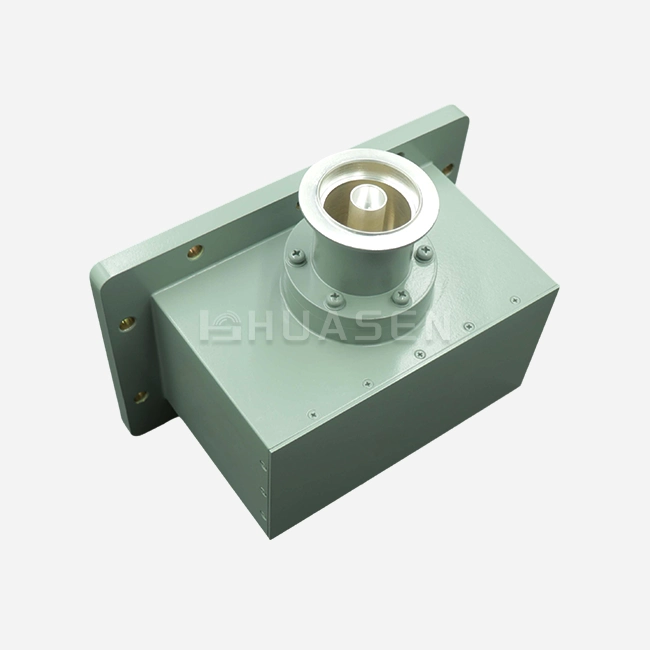
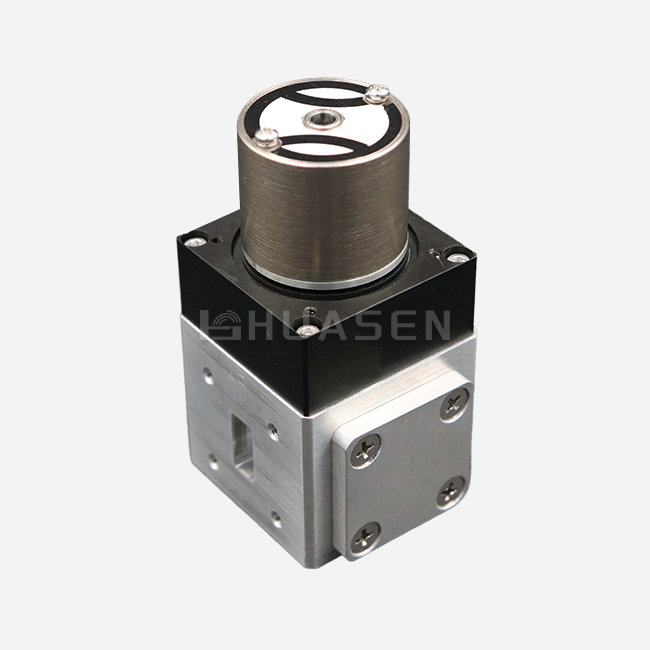
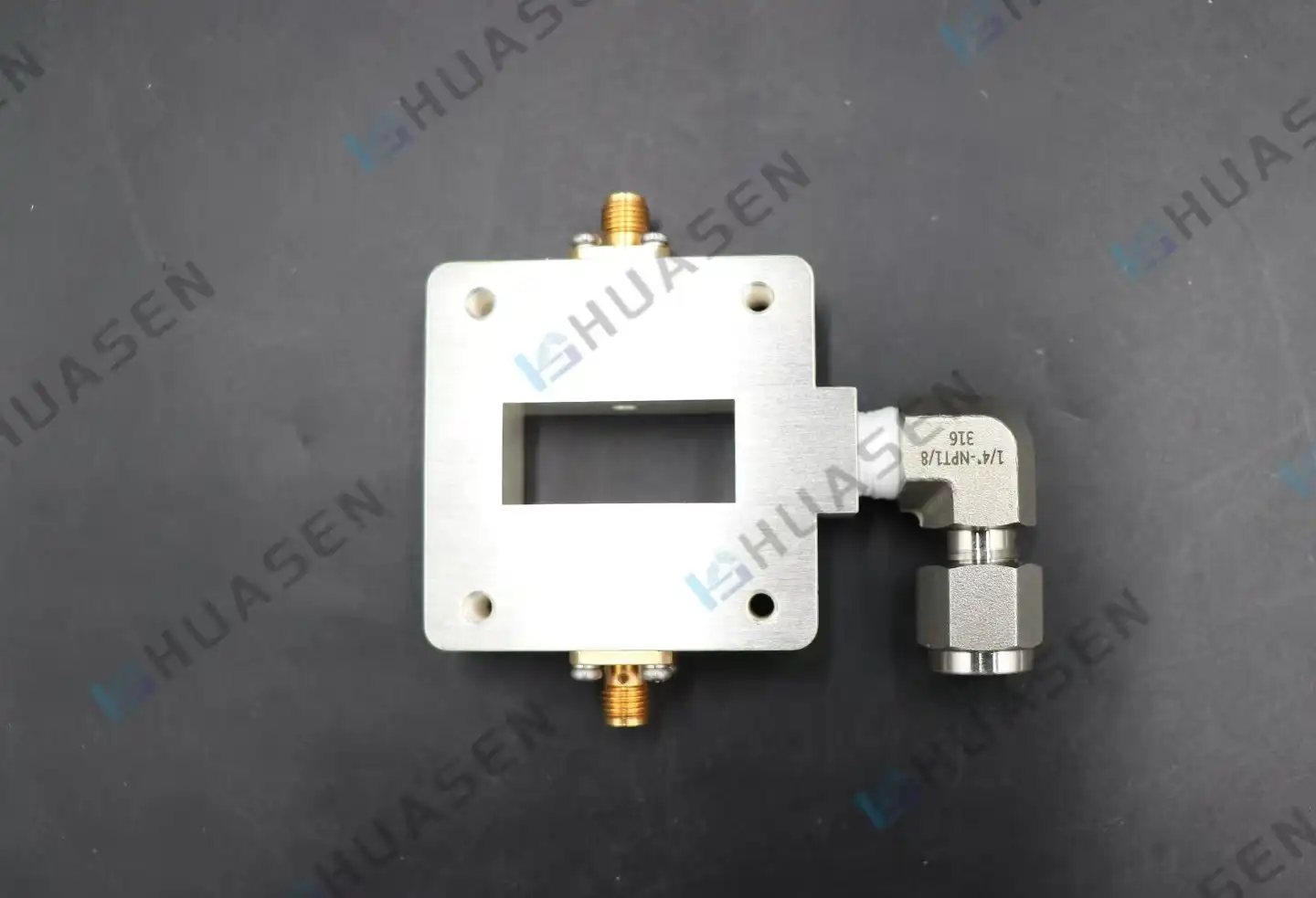
Waveguide probe couplers insert a metallic probe element through a rectangular waveguide's wide wall. This probe converts a regulated percentage of the dominating TE10 electromagnetic field into a coaxial measuring system-compatible TEM mode signal. The coupling technique uses electromagnetic field interaction instead of direct electrical contact to preserve the main signal integrity and provide proportionate sample output. In millimetre wave bands (30 GHz to 300 GHz), non-intrusive sampling is essential because standard couplers contribute high insertion loss or fail to sustain performance during broad frequency sweeps.
Probe penetration depth and waveguide electric field maximum location determine the coupling degree. Adjustable models offer real-time adjustment to meet test needs, while fixed variations improve manufacturing repeatability. Both topologies extract measurement signals without affecting the primary transmission line, which is crucial in satellite communication uplinks, where every 0.1 dB loss reduces connection margin.
Structural Advantages for mmWave Integration
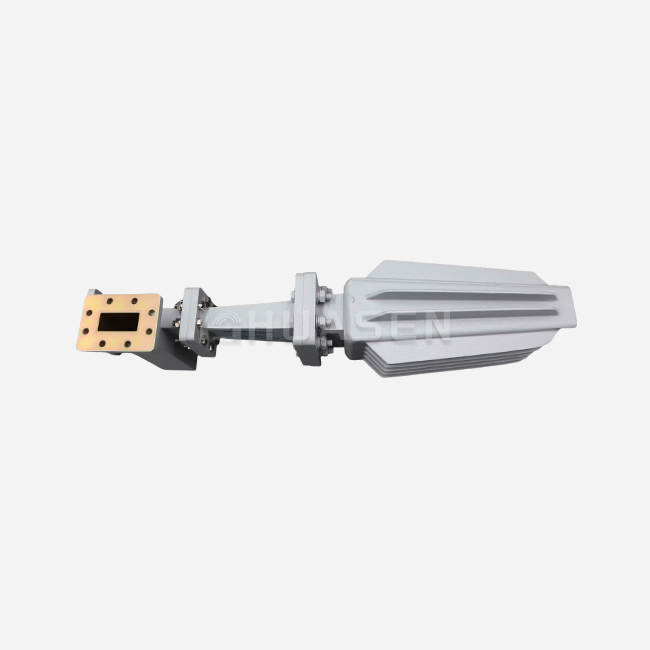
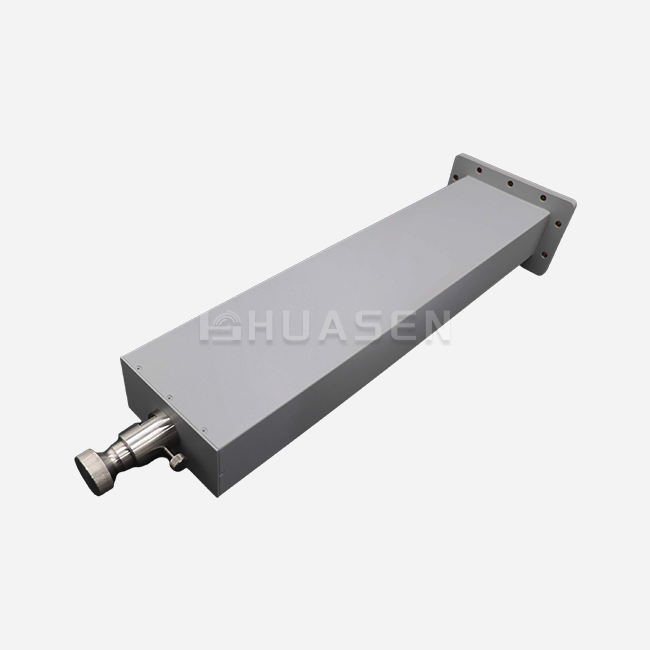
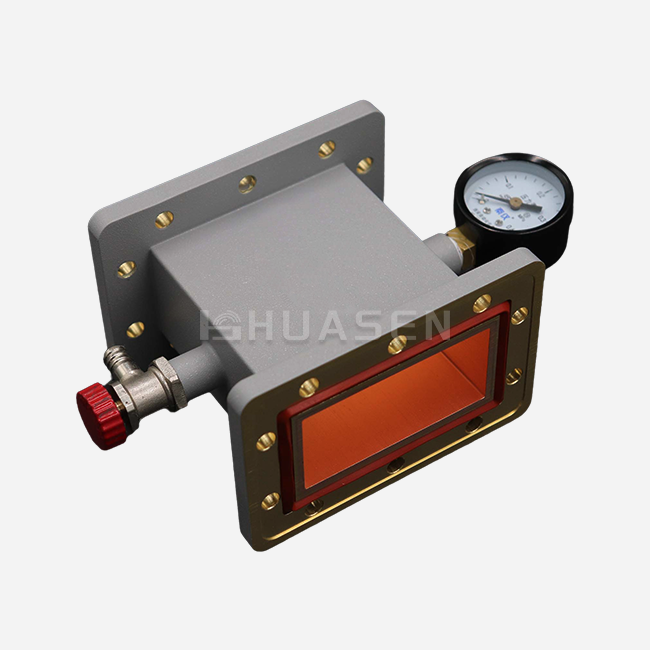
Contemporary waveguide probes are tiny for space-constrained locations. A rectangular waveguide enclosure with WR-28 or WR-15 flange connectors for Ka and V bands and a precision-machined probe assembly are usual. Mechanical simplicity allows antenna feed networks to be lighter, integrated into waveguide lines, and manufactured more simply than hybrid couplers.
In phased array radar systems with hundreds of channels to monitor, the compact construction is useful. A compact probe coupler allows dense packing behind each radiating element while retaining thermal management clearances. Quality couplers retain coupling coefficients from -40°C to +85°C, addressing the environmental needs of outdoor base stations and flying platforms.
Challenges and Principles of Coupling-Degree Testing for Millimetre Wave Bands
Measurement Accuracy Obstacles at High Frequencies
Testing the coupling degree at mmWave frequencies presents technological challenges not seen at microwave bands. Because signal attenuation grows exponentially with frequency and transmission line length, even small cable lengths between the coupler output port and measuring device contribute uncertainty. If improperly calibrated, a 30 cm coaxial cable at 60 GHz may lose 3 dB, distorting coupling degree data.
Noise floor concerns are also significant. High coupling degrees (50-60 dB) when sampled power approaches instrument sensitivity limitations make it difficult for vector network analysers to distinguish actual coupled signals from system noise. For reproducible results, shielded test enclosures are needed since neighbouring equipment radiation might overpower the modestly coupled signal. Uncontrolled settings can cause measurement differences of ±2 dB, which is inappropriate for systems requiring ±0.5 dB tolerance.
Calibration Standards and Environmental Controls
Traceable accuracy needs multi-tier calibration using recognised reference standards. Full two-port calibration of the measuring device begins with precision attenuators and waveguide interface-matched terminations. This creates a coupler port measurement reference plane, reducing connection and adapter inaccuracies. After power metre calibration with NIST-traceable sources, absolute power level accuracy is verified over the frequency spectrum.
Thermal drift is prevented via temperature stabilisation throughout measurement campaigns. Temperature changes waveguide diameters, cutoff frequencies, and characteristic impedance, affecting coupling coefficients. Professional test facilities maintain ±1°C ambient control, while portable rigs rely on temperature soak periods for component equilibrium before data capture. Measurement electronics and calibration standard stability are affected by humidity control; however, waveguide systems are less affected than coaxial systems.
Design Parameters Influencing Test Results
The waveguide probe coupler, in addition to probe geometry—diameter, length, and surface finish—determines bandwidth coupling uniformity. A probe tuned for 40 GHz centre frequency has ±1.5 dB coupling degree changes throughout 33-50 GHz, whereas poorly designed probes have ±4 dB ripple, rendering them unsuitable for wideband assessment. Impedance matching between the probe structure and output connection eliminates standing wave reflections that affect signal amplitude and phase.
Backshort distance (space between probe and waveguide termination) is another changeable coupler tuning variable. Quarter-wavelength location increases design frequency coupling but causes harmonic nulls. Understanding these frequency-dependent patterns helps engineers identify coupler performance features from device-under-test attributes in test data. Validating components for 5G millimetre wave systems with 24-43 GHz multi-band operation requires this understanding.
Comparative Analysis: Waveguide Probe Coupler vs. Other Coupler Types
Performance Characteristics Across Coupler Architectures
Multi-hole apertures in the common wall between two parallel waveguides provide broadband performance in waveguide slot couplers. These have reduced insertion loss (0.05 dB) compared to probe kinds (0.15-0.3 dB) but need greater volumes and no field adjustment. Microwave branch-line couplers are impractically tiny at mmWave bands when quarter-wavelength sections decrease to millimetres, complicating manufacture and installation.
Directional couplers with dispersed coupling methods have 30-40 dB more directivity than probe couplers, which are usually non-directional. Directivity reduces bandwidth: a Ka-band directional waveguide coupler covers 26.5-40 GHz, whereas a probe coupler covers 18-110 GHz by modifying the waveguide housing. Probe couplers are ideal for frequency-agile test instruments due to their bandwidth.
Application-Specific Selection Criteria
Waveguide probe couplers excel in compact integration and operating flexibility. Communications test laboratories can swiftly describe components across several bands with a single device, lowering equipment inventory costs. Adjustable variations (WVTC models) provide real-time coupling degree optimisation during system alignment, which is useful during prototype development when needs change.
Fixed probe couplers (WTC series) fit production situations where repeatability trumps adaptability. Testing 5G base station filters using fixed-coupling devices ensures constant testing conditions across thousands of units. High-power transmitter monitoring (loose coupling prevents detector saturation) and sensitive receiver measurements (tight coupling preserves signal levels) are possible with coupling degrees from 10 to 60 dB. Uplink power monitoring by satellite ground stations balances sample signal intensity with minimal main route disturbance with 20 dB coupling.
Coaxial couplers are useful below 40 GHz because of their smaller size and reduced cost. Waveguide solutions are needed when coaxial connection repeatability and insertion loss increase over this level. Probe couplers are the default sampling method for 77-94 GHz defence radar systems, which use waveguide topologies.
Best Practices and Solutions for Coupling Degree Testing
Systematic Test Setup and Procedure
Proper coupling-degree measurement starts with uncertainty-reducing instrument setup. Connect the main waveguide ports to a calibrated signal source and power metre to set the reference power. Use the shortest cable to connect a second power metre to the coupler's sample port. Perform a three-point frequency sweep (band edges and centre) to test system operation before characterisation.
Zero and calibrate both power metres with the source off, then set the source to a mid-range power level (usually +10 dBm) to minimise detector compression or noise floor closeness. Record P_main and P_coupled at each frequency point. Use C = 10 * log₁₀(P_main / P_coupled) to calculate the coupling degree in decibels. Measure three times and average to decrease random error.
Environmental preparedness goes beyond temperature. Avoid metal structures that might cause room waves near the test setup. An orient waveguide runs to reduce flange gravitational stress and air gaps that affect measurement reproducibility. For flange connections, use torque wrenches with manufacturer-specified values (4-8 Nm for WR-28 hardware) to maintain contact pressure without destroying precision-machined surfaces.
Leveraging Advanced Measurement Technology
Modern test automation greatly increases data quality and measurement throughput. Software-controlled switching matrices provide quick multi-port characterisation without cable reconnections, reducing human test handling problems. Programmable attenuators shield sensitive detectors from power transients during device-under-test switching.
Waveguide coupler-integrated temperature-compensated power sensors with inbuilt calibration factors minimise measurement error from ±0.5 dB to ±0.15 dB by continually adjusting for environmental fluctuations. Without human involvement, these sensors modify data using frequency-specific calibration tables. The system is especially useful for lengthy test sessions with ±3°C temperature variations from laboratory HVAC cycles.
Real-World Implementation Example
A major aerospace contractor enhanced satellite payload testing with 17-31 GHz tunable probe couplers. For the frequency range, previous slot coupler solutions needed repeated device exchanges, taking 45 minutes per payload module. Using WVTC-series adjustable probe couplers decreased test time to 12 minutes and increased coupling degree accuracy from ±1.8 to ±0.4 dB. The small footprint allowed incorporation into existing test racks without a mechanical interface change, speeding deployment. Waveguide probe coupler technology is chosen for its dependability and repeatability, as shown by over 200 flight units tested using this method.
Procurement and Supplier Guidance for Waveguide Probe Couplers
Key Purchasing Considerations and Evaluation Criteria
Stock catalogue waveguide probe couplers take 4-8 weeks, whereas unique combinations take 10-16 weeks, depending on intricacy. Some manufacturers accept single-unit orders for typical items, while unique designs frequently require 5-10 pieces to justify tooling costs. The typical WR-28 fixed probe coupler costs $800-1,500 per unit in single quantities and $600-900 for orders over 25 pcs.
Additional customisation possibilities exist beyond the coupling degree. Procurement teams should explore suppliers' custom flange types (CPR, UG, or proprietary patterns); housing materials (aluminium versus brass for weight reduction); and surface treatments (passivation for marine environments or gold plating for low-PIM applications). Specifying output connection types (SMA, 2.92 mm, 2.4 mm) that match the test infrastructure prevents expensive adaptor chains that compromise measurement accuracy.
Application industry quality assurance documentation needs vary. Defence and aerospace customers want material certificates, dimensional inspection reports, and environmental test findings, whereas commercial telecoms buyers accept basic performance test data. By eliminating testing overhead, clarifying documentation needs during the enquiry saves delivery delays and acquisition costs.
Navigating the Supplier Landscape
Probe couplers are part of sophisticated measuring systems from established test equipment manufacturers. Their applications engineering assistance helps with system-level integration and provides loaner equipment for assessment. Their devices are expensive but come with performance guarantees and calibration services that lower laboratory lifetime expenses.
RF component manufacturers who specialise in passive waveguide devices can offer low prices due to economies of scale. While less thorough, their technical support is sufficient for experienced procurement teams with established test methods. Prototype development programmes like these vendors because they provide smaller batch sizes and faster bespoke variation turnaround.
Organisational competencies and project needs determine supplier type selection. Full-service companies provide complete solutions and technical support to organisations with minimal RF experience. Component experts use internal knowledge to properly articulate requirements and reduce hand-holding costs for experienced teams running mature test programmes.
Order Lifecycle Best Practices
Technical queries about frequency range, coupling degree, waveguide size, and output connection preferences start a successful purchase. Application context—explaining whether the device will monitor base station transmitters or describe antenna feeds helps vendors identify suitable configurations. Before ordering manufacturing, get coupling flatness and VSWR data sheets to ensure product compliance.
Integration of a new supplier or unproven product variation requires sample requests before bulk orders. Most manufacturers provide discounted evaluation units with production credit. Testing samples in your working environment shows compatibility concerns like thermal expansion mismatches and electromagnetic interference susceptibility that datasheets cannot.
Delivery coordination involves clear lead time expectations and scheduling flexibility, including waveguide coupler considerations. Rush orders cost 25-40% more but can shorten project critical paths. Accepting longer lead times for lower prices makes sense for long-term planning if budget optimisation trumps schedule reduction.
Conclusion
Millimetre wave coupling degree testing requires specialised equipment that combines performance, dependability, and operational practicality. Wideband frequency responsiveness, flexible coupling degree, and small mechanical integration make waveguide probe couplers ideal for these needs. Understanding measurement problems, comparative technological benefits, and procurement concerns helps engineering teams build robust test solutions for 5G infrastructure rollout, satellite communication systems, and advanced radar applications. With correct test procedures and quality components from dependable vendors, measurement precision improves system performance and reduces field failures.
FAQ
1. What frequency ranges do waveguide probe couplers cover in mmWave applications?
Different waveguide diameters allow waveguide probe couplers to cover the millimetre wave spectrum. WR-28, WR-15, and WR-10 housings cover 26.5-40, 50-75, and 75-110 GHz, respectively. Instead of narrow-range resonant couplers, a single probe design can work over the waveguide bandwidth. Broad coverage minimises test equipment inventory and facilitates multi-band system characterisation.
2. How does insertion loss affect coupling degree measurements?
For probe designs, insertion loss is 0.15–0.3 dB, the coupler's major transmission line power loss. When using power ratios at the same frequency, this loss doesn't affect coupling degree measurements. However, significant insertion loss reduces system efficiency, especially in cascaded measurement configurations. High-quality couplers reduce parasitic loss with precise machining and tailored probe shapes that limit field disturbance.
3. Can the coupling degree be customised for specific applications?
Probe size and location are used to modify coupling degrees during manufacturing. Adjustable couplers allow continuous adjustment from 10-40 dB, whereas fixed couplers have preset settings of 10, 20, 30, 40, 50, or 60 dB. In certain situations, a 35 dB coupler may maximise dynamic range for a receiver test. Supplier input during specification development ensures goods meet application needs without overengineering.
Partner with Huasen Microwave for Precision mmWave Test Solutions.
Huasen Microwave's 30 years of millimetre-wave component experience help engineering teams find reliable waveguide probe couplers for coupling degree testing. Our WTC and WVTC series couplers provide 10-60 dB coupling degrees over Ka through W-bands for 5G infrastructure validation, satellite ground station calibration, and aerospace radar research. From prototype to volume manufacturing, each item is factory-tested with traceable calibration data to ensure performance consistency.
Our proactive engineering staff provides application-specific assistance for complicated measurement issues, and Huasen Microwave's tiny probe coupler designs fit into space-constrained test racks and aerial platforms. We can customise frequency optimisation, coupling degree parameters, and mechanical interface adjustments to match your infrastructure. We stock waveguide probe couplers for worldwide telecommunications, defence, and research, allowing 4-6 week delivery on typical configurations.
Sales@huasenmicrowave.com may discuss coupling degree testing needs. We give technical advice, sample test results, and prices to help you buy millimetre wave measuring systems.
References
1. Pozar, D.M. (2011). Microwave Engineering, 4th Edition. Hoboken: John Wiley & Sons, Chapter 7: Power Dividers and Directional Couplers.
2. Balanis, C.A. (2016). Advanced Engineering Electromagnetics, 2nd Edition. Hoboken: John Wiley & Sons, Section 9.4: Waveguide Discontinuities and Modal Analysis.
3. IEEE Standard 149-2021. IEEE Standard for Test Procedures for Antennas. Institute of Electrical and Electronics Engineers, Antenna Measurement Section.
4. Collier, R.J. & Skinner, D.P. (2007). Microwave Measurements, 3rd Edition. London: Institution of Engineering and Technology, Chapter 5: Power and Attenuation Measurements.
5. Anritsu Corporation (2019). Technical Note: Millimeter Wave Measurement Challenges and Solutions. Morgan Hill: Anritsu Company Application Engineering.
6. Saad, T.S. (Ed.). (2018). Handbook of Microwave Component Measurements, 2nd Edition. Hoboken: John Wiley & Sons, Chapter 12: Directional Coupler Characterization.
Send Inquiry