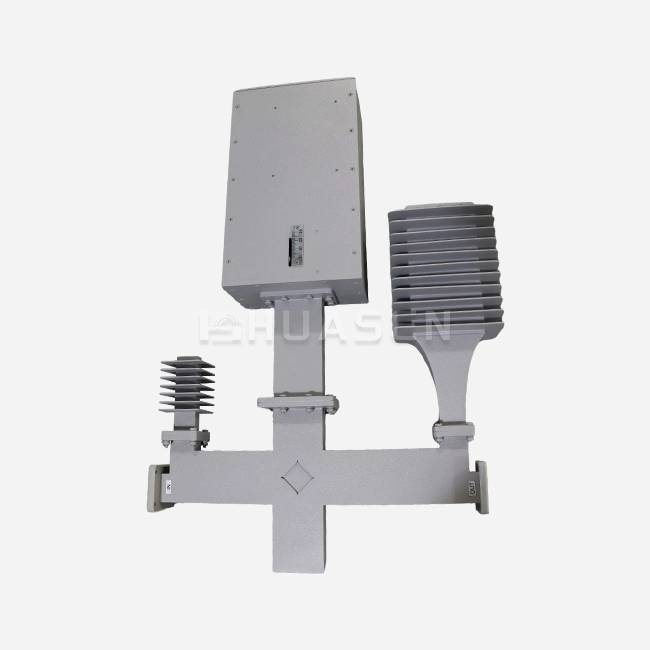
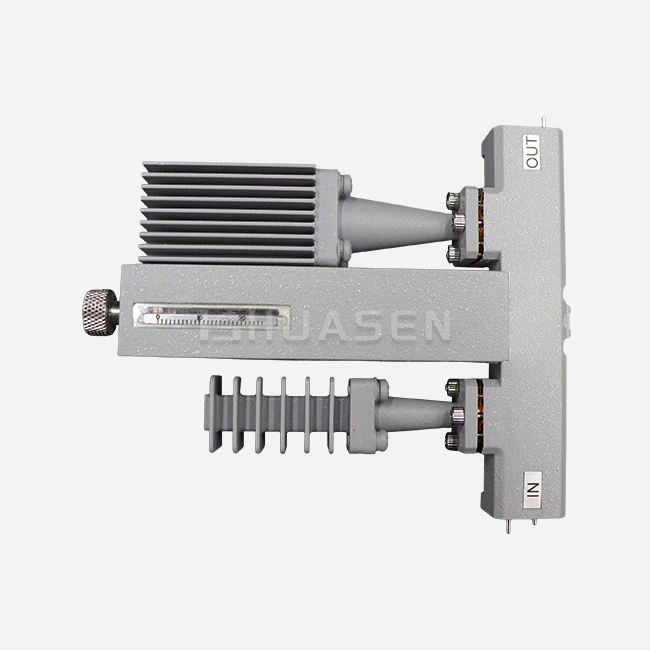
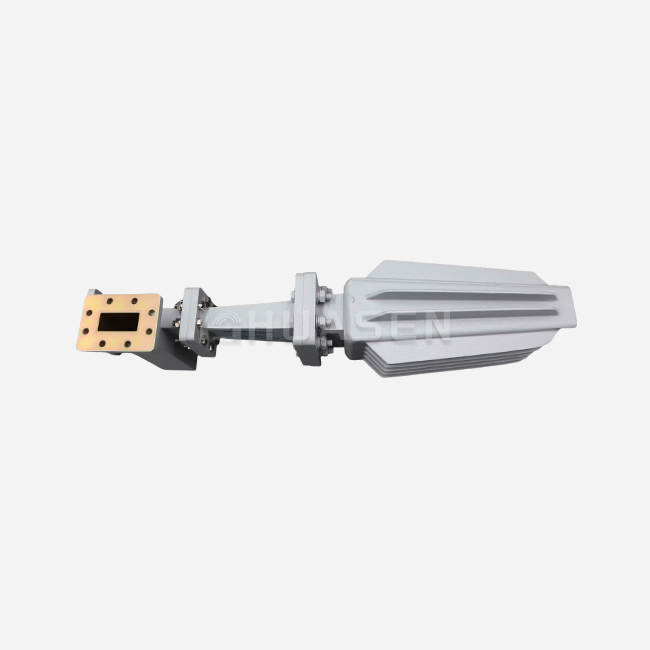
Waveguide Matching Load for Broadband Systems






2026-04-29 21:01:23
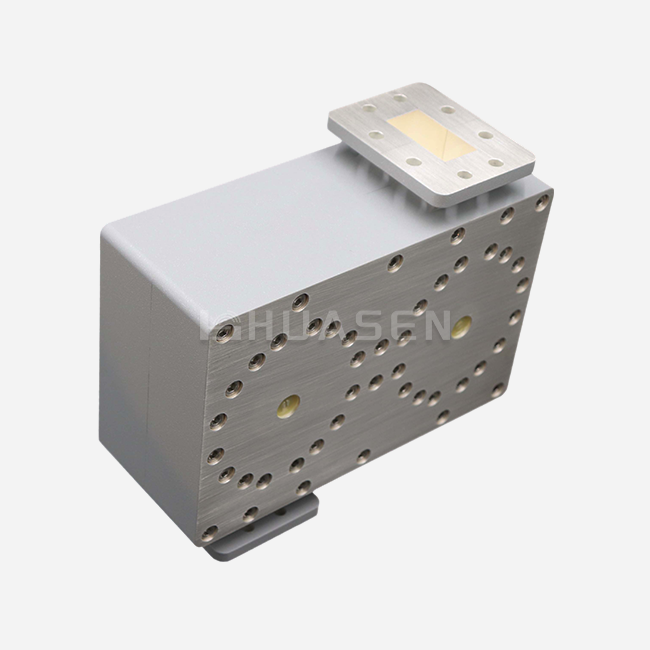
A waveguide matching load is an important passive microwave part that ends waveguide transmission lines by absorbing electromagnetic energy with little reflection. These carefully made gadgets solve important problems in broadband systems, like signal reflection, impedance mismatch, and safely getting rid of extra RF power while testing. Waveguide loads, unlike coaxial terminators, work well in high-power settings with frequencies from 0.32 to 330 GHz. This makes them essential for radar systems, satellite communications, and precise test equipment that can't risk signal integrity.
Understanding Waveguide Matching Loads in Broadband Systems
The Core Function of Waveguide Terminations
RF engineers all know that waveguide ports that aren't terminated create standing waves that hurt the performance of a system. A properly designed waveguide matching load takes in electromagnetic waves that are moving through the waveguide structure. It turns RF energy into heat while showing the transmission line's characteristic impedance. Signal reflections could damage sensitive transmitter parts or cause measurement errors in calibration routines. This absorption mechanism stops them.
Components for modern broadband systems need to work the same way across a wide range of frequencies. When vibration stress is put on traditional sheet-type loads, they often break mechanically. This is especially true in aerospace and mobile communication applications. Huasen Microwave gets around this problem with bulk absorption materials that make the structure stronger. Our waveguide loads keep the VSWR specifications below 1.10:1 across all waveguide bandwidths. This means that even in tough operational conditions, the return losses are better than 26 dB.
Types of Waveguide Loads and Their Broadband Applications
There are many different types of waveguide termination designs because modern RF systems have many different needs. Standard Waveguide Matched Loads (WL) work with all waveguide frequencies, which makes them perfect for use in 5G base stations and satellite ground terminals where more than one frequency is needed. These gadgets have tapered absorbing parts that change impedance slowly, so there aren't as many breaks that cause reflections.
Short-Size Waveguide Matched Loads (WLS) are the best way to solve problems in narrowband applications where installation space is limited. Because they are so small, they are very useful in equipment racks and portable test systems that are already full. Waveguide Sliding Matched Loads (WSL), on the other hand, let you change the reflection phases and act as accurate calibration standards in vector network analyzer setups. These sliding loads are used by metrology labs to get measurement errors below 0.02 dB.
The Dual-Ridge Waveguide Matched Loads are a more advanced design that works with circular, rectangular, and dual-ridge waveguide structures. This makes it easier for system integrators who work with a lot of different frequency bands and waveguide standards to keep track of their inventory. The dual-ridge geometry makes the frequency range usable wider than with regular single-mode waveguides. This makes it possible for electronic warfare systems that work across octave bandwidths to be used.
Performance Benefits in High-Frequency Systems
Choosing the right termination has a direct effect on how reliable the whole system is. Low VSWR standards make sure that the power being sent to the load doesn't bounce back to the source. Even a VSWR of 1.15:1 can cause voltage peaks big enough to cause arcing inside the waveguide in high-power radar applications. Our bulk absorption technology spreads thermal stress out evenly, so there aren't any hot spots that slow things down over time.
As power levels rise, thermal management becomes more and more important. Based on frequency and size, Huasen Microwave's waveguide loads can handle continuous wave power from 0.3W to 20W. The thermal conductivity of the absorbing material and the outside housing work together to get rid of heat through natural convection. This method of passive cooling gets rid of the problems and points of failure that come with forced air or liquid cooling systems.
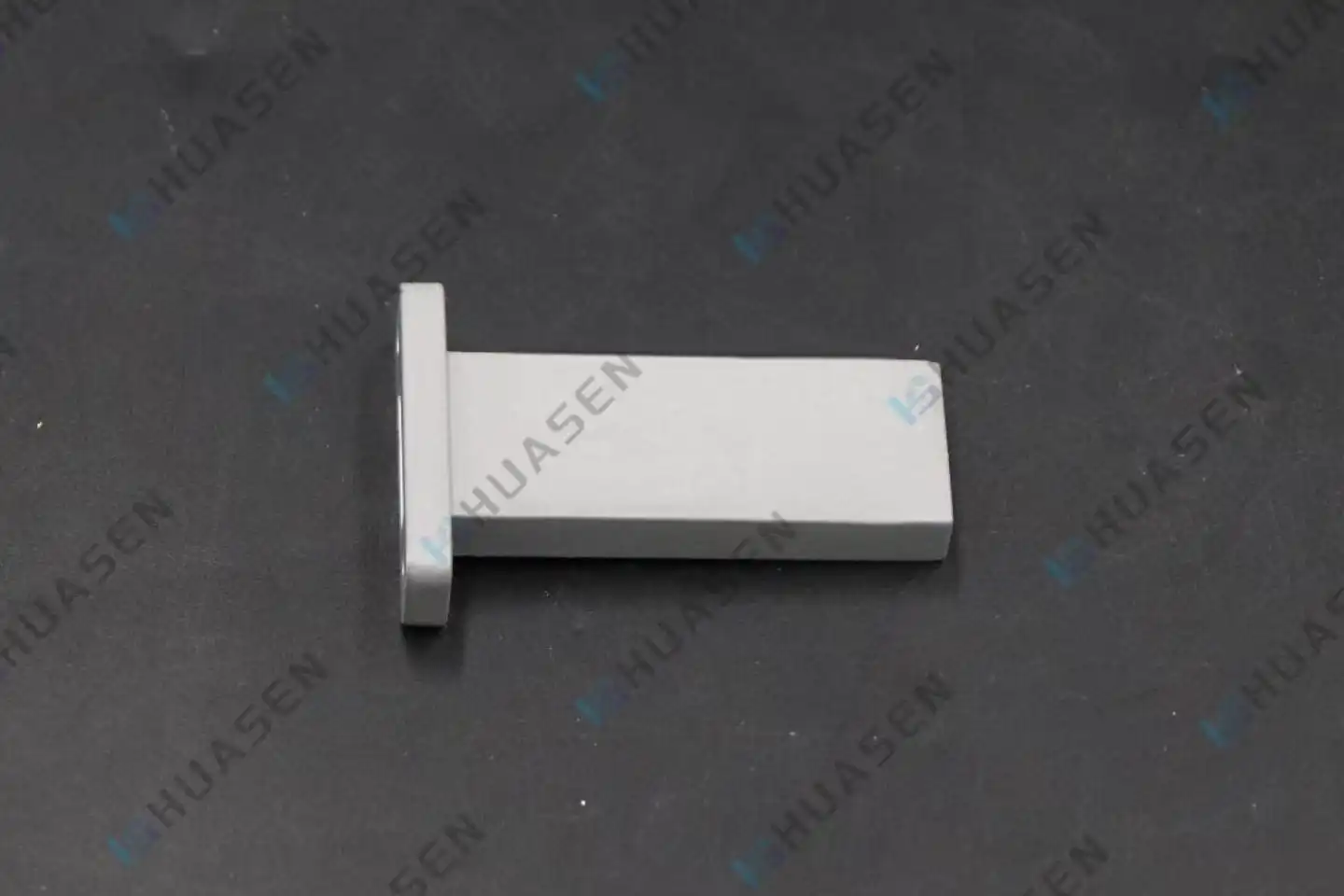
How to Choose the Right Waveguide Matching Load for Your Broadband System?
Defining Your System Requirements
Clear technical specifications are the first step in making procurement decisions. The frequency range is the most important thing to consider when choosing a waveguide component. Waveguides of standard sizes, such as WR-90, WR-62, and WR-28, can only support certain frequency bands based on their cross-sectional sizes. For X-band (8.2-12.4 GHz) systems, a WR-90 load is needed, while for Ka-band satellite links, WR-28 or smaller structures are needed.
The ability to handle power must take into account both the average and peak power levels. Continuous wave applications in test equipment usually need low power ratings. Pulsed radar systems, on the other hand, produce kilowatt-level peaks that need special high-power designs, such as a waveguide matching load. To find the right thermal margins, engineers should figure out the duty cycle and pulse width. The environment also plays a role in the choice. For example, outdoor installations need weatherproofing and coatings that don't rust, and spacecraft parts need materials that can work in a vacuum and don't release too much gas.
Material and Design Considerations
Choosing between carbon-based and ceramic absorbers has a big effect on how well they work. Silicon carbide absorbers are very good at moving heat and power, and their electrical properties stay stable over a wide range of temperatures. These materials work really well in military and space applications that need to be reliable in harsh conditions. It is cheaper to use carbon-loaded epoxy absorbers in commercial settings, and they work well enough in controlled environments.
Standardizing flanges makes sure that they can work with existing infrastructure. The FDP (flat plate), FBP (flat base plate), and FUGP (universal groove plate) configurations are all industry standards that Huasen Microwave supports. Custom flange designs can be made to fit the specific mounting needs of proprietary systems. Our engineering team works with clients to choose hole patterns, mounting orientations, and surface finishes that make integration easier.
Procurement Insights for B2B Buyers
Assessing a supplier's skills goes beyond checking that they can meet product requirements. Stable supply chains make sure that parts are available for long-term projects. Huasen Microwave keeps common waveguide sizes in stock and can speed up production for custom designs. Depending on how complicated they are, our lead times range from 48 hours for stock items to 4 to 6 weeks for custom-engineered solutions.
The quality of documentation shows how mature the manufacturing process is. Full datasheets should have VSWR readings for the whole frequency range, power derating curves versus temperature, and mechanical drawings with tolerances. We offer S-parameter files that work with electromagnetic simulation tools. This lets engineers simulate how the system will work before putting it together physically. Different uses have different certification needs. For example, RoHS compliance may be needed for commercial telecommunications, while MIL-STD qualification testing is needed for defense contracts.
Installation and Application Best Practices for Waveguide Matching Loads
Step-by-Step Installation Guidelines
A pre-installation inspection is the first step in a proper installation. Check the load's flange surface for damage or scratches that could make the RF seal less effective. Use isopropyl alcohol and lint-free cloths to clean both mating surfaces and get rid of any machining oils or particles that are still there. Use precision gauges to check the waveguide aperture for accurate measurements, especially after shipping, since impacts can deform structures with thin walls.
Connection quality is based on how well the parts are lined up. Make sure the load's flange is parallel to the waveguide's flange, and don't move it in a way that makes gaps. Place the fasteners in a star pattern and gradually tighten each one to even out the clamping force. For small waveguides, torque specs are usually between 10 and 20 inch-pounds, and for larger ones, they go up to 40 inch-pounds. Flanges can bend if they are over-tightened, and RF can leak if they are not torqued enough.
Check the quality of the installation by measuring the VSWR after the connection. A sudden rise in VSWR compared to the load's datasheet is a sign of problems with the installation, like dirty or misaligned parts or gaskets that aren't working right. Our loads come with test data that shows how well they worked as measured, so you can use it as a starting point for comparison. Monitoring the temperature during the first few hours of use proves that the system is properly removing heat, especially for high-power uses.
Real-World Application Scenarios
Waveguide loads are used in signal chains all the way through telecommunications infrastructure. In 5G millimeter-wave base stations, loads close off antenna ports that aren't being used in beamforming arrays. This stops reflections that mess up signals on different channels. Because these loads are broadband, they can combine carriers across multiple frequency bands, which makes designing base stations easier. The loads in maritime satellite terminals are sealed to protect them from moisture and salt spray, so they keep working well for tens of years.
Electronic warfare systems are hard to use because matching loads have to handle a lot of peak power and work across eight-octave bandwidths. Our two-ridge designs work with frequency-agile radar systems that can quickly switch between surveillance bands. The bulk absorption design stops shocks and vibrations that can happen when an airplane is maneuvering or when moving a vehicle. In labs, sliding loads are used as accurate standards for calibration, and measurement labs at research institutions depend on the ability to change the phase to describe other microwave parts.
A case study from a company that runs a satellite ground station operator demonstrates measurable benefits. Over the course of six months, the facility saw a 30% drop in calibration drift after replacing old sheet-type loads with Huasen's bulk absorption WL series. Because the mechanical stability was better, it wasn't necessary to recalibrate every month. This cut down on costs and increased confidence in the measurements. Unexpected system failures caused by vibrations stopped, making the system more available.
Maintenance and Troubleshooting
Routine inspection protocols make equipment last longer. External corrosion can be seen every six months, especially in rough environments where the flanges are exposed. Every year, tighten the connections on flange fasteners again because changing temperatures can make them loosen. Watch how VSWR changes over time; slow loss of strength could mean that the absorber is getting old or that moisture is getting into designs that aren't sealed.
Common troubleshooting deals with problems that happen during installation. Most of the time, contamination or misalignment, not load defects, cause high VSWR readings right after installation. Before putting the connection back together, check the alignment of the mating surfaces again and take it apart again. Any sudden changes in VSWR while the device is working could mean that it has been damaged by too much power or a mechanical shock. Get in touch with technical support with measurement data and a history of how the system has been used to figure out how it failed and whether it should be fixed or replaced.
Comparing Market Solutions: Selecting Your Optimal Waveguide Matching Load Supplier
Global Market Landscape
There are many suppliers in the microwave component market, and each one specializes in a different area. Established brands are known to be reliable, while niche manufacturers offer unique skills. MegaWave Corporation focuses on high-power military applications and provides water-cooled loads that can run continuously at kilowatt levels. Their product line is mostly for defense contractors who have to meet strict requirements. RF Industries specializes in commercial telecommunications and offers loads at reasonable prices for large base station deployments. Because TE Connectivity makes a lot of products, it can offer standard catalog items with short lead times.
Each supplier has its own strengths. Program managers on multinational projects like those big multinational companies have global distribution networks and well-established quality systems. When you want to push the limits of performance, it's helpful to work with manufacturers that have a lot of technical knowledge about certain frequency ranges or applications. Regional suppliers may offer lower prices and quick local help, especially for projects in the United States where people want to buy locally.
Evaluating Supplier Value Propositions
When suppliers are competing, their ability to customize sets them apart. Standard catalog loads meet most needs, but solutions that are made to fit complex systems are often needed. Huasen Microwave is very good at custom engineering, which includes changing the types of flanges, making frequency response better for certain sub-bands, and adding thermal management features for hard installations. From the first idea to the finished product, our design team works together, making sure that the final product meets the needs of the application without having to make compromises around standard parts.
Durability is directly related to the quality of the materials used. Our waveguide loads are made of aerospace-grade aluminum alloys that have their thermal properties carefully controlled. Strict quality control checks are done on absorbents, such as microstructure analysis and thermal cycling validation. Different types of surface treatments, from basic anodizing to chemically resistant coatings, keep metals from rusting in marine and industrial settings. Longer service life and lower total cost of ownership are two ways that these material investments pay off.
Project schedules are affected by how well deliveries go, including matching load. We keep a strategic stock of common waveguide sizes so that standard configurations can be shipped the same week. Custom projects have clear production schedules that keep track of milestones. There are "rush" options for meeting urgent needs, and engineering and production can be sped up when needed. Our logistics partners offer reliable international shipping, taking care of export paperwork and getting goods through customs for clients in other countries.
Conclusion
Waveguide Matching Load units are important parts of broadband RF systems because they protect sensitive equipment and make measurements more accurate. To choose the right terminations, you have to weigh the project's requirements against electrical performance, mechanical robustness, and environmental compatibility. Traditional designs have problems with durability, but Huasen Microwave's bulk absorption technology fixes those problems. It works reliably in demanding applications like 5G infrastructure and satellite communications.
We have a wide range of products that cover frequencies from 0.32 GHz to 330 GHz and power levels from 0.3 W to 20 W continuous wave. Standardized and custom flange options make sure that they work with a wide range of waveguide architectures. With decades of experience making things and engineering support that is focused on the customer, we are a strategic partner for companies that need precise microwave components.
FAQ
1. What frequency ranges do waveguide matching loads typically support?
Waveguide loads are made to fit certain waveguide sizes, and each one can handle a certain frequency range. Standard rectangular waveguides, such as the WR-90, work in the X-band (8.2-12.4 GHz), while smaller guides can reach millimeter waves and even sub-millimeter waves above 100 GHz. Huasen Microwave makes loads that work with frequencies from 0.32 GHz to 330 GHz. They can also make custom designs for specific needs. How the wave travels through the waveguide and its physical dimensions are directly related to the frequency range.
2. How do I know when I need a custom waveguide load rather than a standard product?
Custom loads become necessary when your application has non-standard flanges, unique frequency sub-bands that need optimized VSWR, harsh environmental conditions, or specific needs for handling power. Custom engineering is also helpful for projects that need waveguide structures that are unique, physical dimensions that can't be changed during integration, or military qualification standards. Our technical team looks at your needs and tells you whether standard products will do or if custom development is a better value.
3. What distinguishes a waveguide matching load from a dummy load or terminator?
People often use these terms to mean the same thing, but there are some small differences. A waveguide matching load focuses on matching impedance to reduce VSWR, which is very important in precision applications. Dummy loads are usually power-absorbing gadgets that are used when testing transmitters, where the ability to get rid of energy is more important than perfect matching. A "terminator" is a general term for any device that cuts off a transmission line. In real life, high-quality waveguide loads do all of these things because they match well and can handle enough power.
Partner with a Trusted Waveguide Matching Load Manufacturer
Since 1993, Huasen Microwave Technology has provided high-precision radio frequency (RF) parts to customers in the research, aerospace, defense, and telecommunications industries. Our Waveguide Matching Load solutions take advantage of tried-and-true bulk absorption technology and allow for easy customization to meet the specific needs of broadband systems. Whether you need standard WR-series loads right away or custom-engineered solutions for unique uses, our team has the technical know-how and manufacturing skills to meet the needs of your project. Email our engineering team at sales@huasenmicrowave.com to talk about your specific needs. We offer free design consultations to help you choose the best components for your system's performance. Within 48 hours, our streamlined quote process gives you full details on specs, prices, and delivery times.
References
1. Pozar, D.M. (2011). Microwave Engineering, 4th Edition. Hoboken: John Wiley & Sons.
2. Saad, T.S. (1971). Handbook of Microwave Ferrite Materials. San Diego: Academic Press.
3. Marcuvitz, N. (1986). Waveguide Handbook. London: Peter Peregrinus Ltd.
4. Montgomery, C.G., Dicke, R.H., & Purcell, E.M. (1948). Principles of Microwave Circuits. New York: McGraw-Hill.
5. IEEE Standard 1785.1-2012. Waveguides - Part 1: Rectangular Waveguides. New York: Institute of Electrical and Electronics Engineers.
6. Ramo, S., Whinnery, J.R., & Van Duzer, T. (1994). Fields and Waves in Communication Electronics, 3rd Edition. New York: John Wiley & Sons.
Send Inquiry