Waveguide Loop Coupler Selection Guide for Aerospace and Defense RF






2026-02-09 21:40:10
Selecting the right waveguide loop coupler for aerospace and defense applications demands careful consideration of power handling, environmental durability, and precision performance parameters. These critical RF components enable non-intrusive signal monitoring in high-power radar systems, satellite communications, and military electronic warfare platforms. Understanding coupling factors, VSWR requirements, and mechanical constraints ensures optimal system integration while maintaining signal integrity. This comprehensive guide addresses key selection criteria, helping engineers navigate complex technical specifications and environmental standards essential for mission-critical applications.

Understanding Loop Coupler Technology in Defense Systems
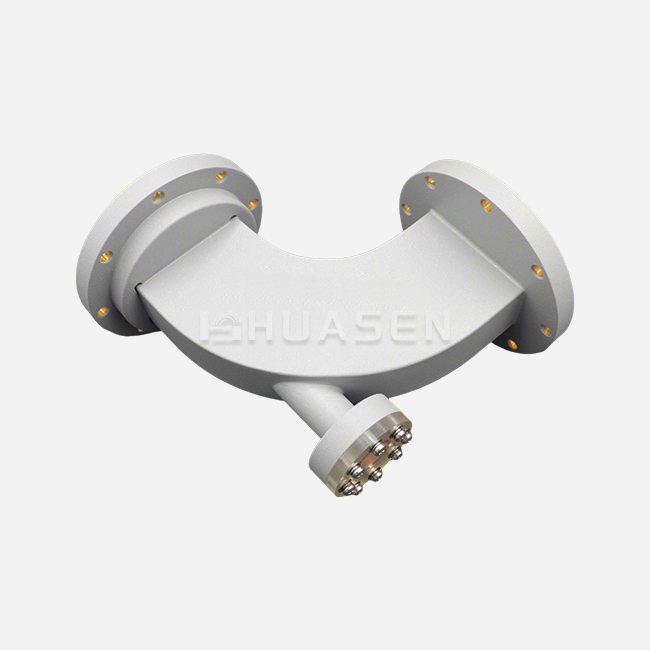
Loop couplers represent a sophisticated approach to RF signal sampling, utilizing electromagnetic field coupling principles rather than traditional power division methods. The fundamental mechanism involves a small loop antenna positioned within the waveguide structure, intercepting magnetic field components without significantly disrupting main transmission paths. These devices excel in high-power environments where traditional coupling methods might fail due to voltage breakdown or thermal stress. The loop configuration inherently provides better power handling capabilities since the sampling mechanism operates in the H-field region, avoiding the high electric field intensities that cause arcing in other coupler designs. Defense applications particularly benefit from the compact form factor these components offer. Unlike multi-hole directional couplers that require extended physical lengths, loop-based designs achieve equivalent performance within dramatically reduced footprints - crucial for space-constrained airborne and naval platforms. The adjustable nature of many loop coupler implementations provides field-tunable coupling values, addressing the dynamic calibration requirements common in defense systems. Engineers can modify coupling factors during installation or maintenance without replacing entire assemblies, reducing logistics burden and improving operational flexibility.
Critical Performance Parameters for Military Applications
Bandwidth specifications directly impact system versatility and cost-effectiveness. Modern defense platforms increasingly demand broadband capabilities to support multiple communication protocols and frequency-agile radar operations. Quality loop couplers typically maintain coupling flatness within ±1 dB across 15-20% bandwidth ranges, though specialized designs can achieve broader coverage.VSWR performance becomes paramount in high-power applications where reflected energy can damage expensive transmitter components. Military-grade loop couplers maintain main line VSWR below 1.1:1, waveguide loop couplers with auxiliary port specifications typically under 1.25:1. These stringent requirements ensure minimal impact on primary signal paths while providing accurate sampling characteristics. Coupling factor selection depends heavily on monitoring system sensitivity and dynamic range requirements. Defense applications commonly utilize coupling values between 20 dB and 60 dB, with 30 dB and 40 dB representing popular choices for radar power monitoring. Higher coupling values (50-60 dB) suit sensitive measurement applications where minimal signal extraction is desired. Directivity specifications determine the ability to distinguish forward and reflected power components - essential for VSWR protection systems and transmitter efficiency monitoring. Quality implementations achieve directivity values exceeding 20 dB, with premium units reaching 25-30 dB across operational bandwidths. Power handling capabilities must accommodate both average and peak power levels encountered in defense applications. Pulse radar systems present particular challenges with instantaneous power levels potentially reaching megawatt ranges, requiring careful thermal and voltage breakdown analysis during selection processes.
Environmental Resilience and Mechanical Considerations
Aerospace and defense environments subject RF components to extreme temperature variations, vibration, shock, and corrosive atmospheres. Loop coupler selection must account for these harsh operating conditions through appropriate material choices and mechanical design features. Temperature stability affects both electrical performance and mechanical integrity. Quality implementations utilize materials with matched thermal expansion coefficients, preventing mechanical stress and maintaining electrical contact integrity across temperature extremes. Operating ranges from -55°C to +125°C are common requirements for military applications. Vibration and shock resistance specifications follow military standards such as MIL-STD-810, ensuring components survive artillery fire, aircraft maneuvers, and naval operations. Proper mechanical design includes robust mounting provisions and internal component securing to prevent resonance-induced failures. Sealing and environmental protection prevent moisture ingress and contamination that could degrade performance or cause catastrophic failures. IP65 or better protection ratings are typical requirements, waveguide loop couplers with pressurized systems demanding additional attention to seal integrity and leak rates. Corrosion resistance becomes critical in maritime and coastal environments where salt spray accelerates material degradation. Surface treatments such as silver plating or specialized coatings extend component life while maintaining electrical conductivity requirements.
Frequency Band Selection and Waveguide Compatibility
Frequency band selection drives fundamental waveguide size requirements and determines available power handling capabilities. Standard waveguide bands from L-band (WR650) through millimeter-wave frequencies (WR28 and beyond) each present unique coupling design challenges and performance trade-offs. Lower frequency bands offer higher power handling capabilities due to larger waveguide cross-sections and reduced current densities. However, mechanical size constraints may limit applicability in space-restricted installations. Conversely, higher frequency implementations provide compact solutions but require careful attention to manufacturing tolerances and power limitations. Waveguide flange compatibility ensures proper system integration and maintains electrical performance standards. Common military specifications include UG-series and CPR-series flanges, each designed for specific frequency ranges and power levels. Flange selection affects both mechanical mounting requirements and high-power performance characteristics. Multi-band system requirements may drive selection toward broadband designs or multiple single-band implementations. Cost and complexity trade-offs must consider not only component pricing but also installation complexity, maintenance requirements, and spare parts logistics.

Integration Strategies for Complex Defense Systems
System integration encompasses mechanical mounting, electrical interfacing, waveguide loop couplers, and thermal management considerations. Successful implementation requires early coordination between RF design teams and mechanical engineers to ensure compatibility with platform constraints and operational requirements. Coaxial output interface selection affects both performance and system compatibility. SMA connectors suit laboratory and low-power applications, while N-type and TNC interfaces handle higher power levels and provide superior environmental sealing. Connector selection must align with system cabling and measurement equipment requirements. Cable routing and electromagnetic interference (EMI) considerations become critical in dense electronic environments typical of modern defense platforms. Proper shielding and grounding practices prevent interference between monitoring systems and primary RF paths. Calibration and test access requirements influence physical placement and orientation decisions. Maintenance procedures must accommodate periodic verification and alignment activities without compromising system availability or requiring extensive disassembly.
Quality Assurance and Certification Standards
Military applications demand rigorous quality control processes and certification compliance to ensure reliable operation in critical missions. Understanding applicable standards and verification procedures guides appropriate supplier selection and acceptance testing protocols. MIL-STD specifications cover various aspects of component design, testing, and qualification procedures. Common requirements include temperature cycling, vibration testing, humidity exposure, and salt fog resistance evaluation. Compliance verification requires comprehensive documentation and test reports from qualified laboratories. Manufacturing quality systems such as AS9100 aerospace certification provide additional assurance of consistent production processes and quality control procedures. These standards address design controls, supplier management, and configuration control procedures essential for defense applications. Traceability requirements ensure component history and performance verification throughout operational life cycles. Proper documentation includes material certifications, test data, calibration records, and maintenance history - essential for failure analysis and reliability improvement efforts.
Partner with Huasen Microwave for Superior Loop Coupler Solutions
Huasen Microwave delivers precision-engineered waveguide loop couplers specifically designed for demanding aerospace and defense applications. Our manufacturing expertise, combined with comprehensive technical support and rapid prototyping capabilities, ensures optimal solutions for your mission-critical RF systems. Contact our technical team at sales@huasenmicrowave.com to discuss your specific requirements with a trusted waveguide loop coupler manufacturer.
References:
1. Pozar, David M. "Microwave Engineering, Fourth Edition." John Wiley & Sons, 2012. Chapter 7: Power Dividers and Directional Couplers.
2. IEEE Standard 149-2021. "IEEE Recommended Practice for Antenna Measurements." Institute of Electrical and Electronics Engineers, 2021.
3. Balanis, Constantine A. "Advanced Engineering Electromagnetics, Second Edition." John Wiley & Sons, 2012. Section 8.4: Waveguide Discontinuities and Coupling Mechanisms.
4. MIL-STD-810H. "Department of Defense Test Method Standard: Environmental Engineering Considerations and Laboratory Tests." U.S. Department of Defense, 2019.
5. Ragan, Gerald L. "Microwave Transmission Circuits, MIT Radiation Laboratory Series Volume 9." McGraw-Hill Book Company, 1948. Chapter 9: Directional Couplers and Hybrid Circuits.
6. IEC 61000-4-3:2020. "Electromagnetic Compatibility (EMC) - Part 4-3: Testing and Measurement Techniques - Radiated Radio-Frequency Electromagnetic Field Immunity Test." International Electrotechnical Commission, 2020.
Send Inquiry