Signal Integrity Control in Broadband Coaxial Power Combiner Units






2026-07-05 16:54:52
Signal Integrity Control in Broadband Coaxial Power Combiner Units represents a critical engineering discipline that directly impacts system performance across telecommunications, radar, and aerospace applications. A coaxial power combiner functions as a passive RF component that sums multiple RF signals into a unified high-power output while preserving signal fidelity across expansive frequency ranges. Maintaining signal integrity becomes paramount when operating across DC to 40GHz bandwidths, where even minor impedance mismatches or phase imbalances can degrade system efficiency, introduce intermodulation products, and compromise the reliability of mission-critical installations.
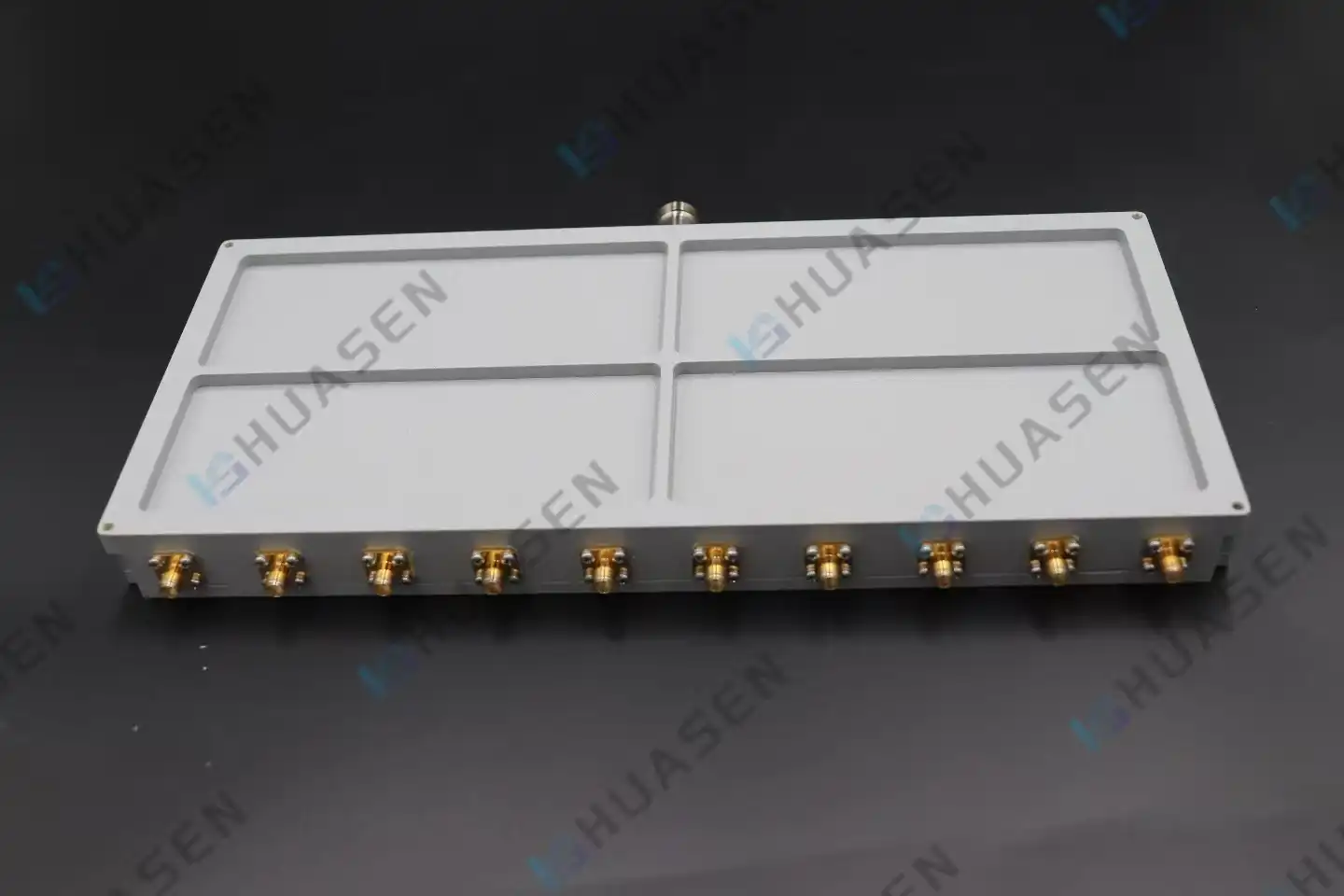
Understanding Broadband Coaxial Power Combiners and Signal Integrity
The way we think about RF system design has changed because of broadband power combining technology. Broadband combiners take data from several sources and combine them into one signal. They work the same way across a wide range of frequencies. Broadband combiners have to balance different design needs across octaves of bandwidth, which is different from narrowband devices that are optimized for particular frequencies.
Fundamental Operating Principles
The coaxial power combiner design is better than planar arrangements in many ways. The sealed wire arrangement naturally blocks electromagnetic interference, making it less likely that interference from outside sources will happen, while also keeping radiated emissions in check. This protected area is especially helpful in setups with a lot of equipment, since crosstalk between systems can bring in unwanted messages.
When the outputs of more than one amplifier come together at a combined node, the device needs to make sure that each source has the right resistance. The reactions between these things are controlled by transmission line theory. Quarter-wave transformers and carefully calculated branch-line structures keep the amount of power that is reflected to a minimum. Combining efficiency is the ratio of the total output power to the total input power. In well-designed units, this ratio usually goes over 95%.
Signal Integrity Fundamentals
Signal integrity is a group of measured factors that together decide how well a system works. Insertion loss measures how much power is lost during transfer. In good devices, this loss is usually kept below 0.3 dB per combining step. Return loss shows how well the device fits the system impedance. Values above 20 dB are considered good across all operating bandwidths.
Isolation between input ports keeps one source from changing the way other sources work. If an amplifier breaks or its impedance changes, the other units will not be affected by the reflected energy as long as there is enough separation. Instead of letting harmful echoes happen, passive isolation networks take in uneven power and turn it into heat.
Design Factors Influencing Performance
The choice of material has a huge effect on internet performance. Copper or aluminum with a high conductivity is used for the main structure. Silver or gold treatment is often used to reduce skin effect losses at microwave frequencies. The dielectric materials that separate the wires must have stable electrical qualities across a wide range of temperatures and frequencies. Because they are temperature stable and have a low loss slope, PTFE-based materials are the most common choice for high-performance uses.
Impedance matching is more than just connecting 50-ohm ends. For broadband to work, the resistance must stay the same over many decades of frequency. This goal can be reached with tapered changes and multi-section transformers, but they are bigger. The boundaries of what can be designed are set by the trade-offs between bandwidth, insertion loss, and actual size.
Common Signal Integrity Challenges and Their Root Causes
Even though the design was carefully thought out, problems with signal integrity happen during production, installation, and use. Knowing about these problems helps procurement teams come up with the right answers and set reasonable goals for success.
Reflections and Standing Waves
When there are changes in impedance, echoes happen that go back to the signal sources. Connectors, PCB lines, and device borders are just a few of the places where small errors can add up over multiple interfaces. This effect can be measured by the Voltage Standing Wave Ratio (VSWR), and numbers close to 1.0:1 mean that the two devices are perfectly matched. Most rules for telecommunications say that VSWR must be less than 1.5:1 across all operating bands.
Coaxial Power Combiner Along transmission lines, standing waves cause changes in magnitude. These changes impact the delivery of power and can focus voltage stress in certain areas, which speeds up the aging of components. In high-power situations, voltage peaks may be higher than the breaking point of the insulation, leading to a catastrophic failure.
Intermodulation Distortion
Nonlinearities create intermodulation products at sum and difference frequencies when multiple signals fill a coaxial power combiner at the same time. Passive Intermodulation (PIM) happens when there are flaws in the material, dirty surfaces, or mechanical joints with nonlinear contact resistance. To keep the receiver from losing its sensitivity, modern cell phones need PIM performance of more than -150 dBc.
Common PIM sources are shown by connector connections. Mating cycles that happen over and over wear down plate surfaces, revealing base metals that make micro-junctions that behave in a way called "rectification." Changes in temperature and vibrations in the environment make these effects worse, which lowers PIM levels over time.
Thermal Effects on Stability
When power is lost in combiners, temperature differences are made that change the way electricity works. Temperature changes dielectric factors, which change the impedance of a communication line. In cavity-based systems, resonant frequencies are changed by conductor expansion, which changes the actual dimensions. Isolation resistors need to get rid of uneven power without causing temperatures to rise too much, which could damage nearby parts.
Thermal control is very important for base station systems that work in temperatures ranging from -40°C to +85°C. Aluminum housings are good at absorbing heat while still being mechanically sound. Using thermal analysis during design makes sure that hot spots stay within safe working limits even in the worst situations where power loss happens.
Optimizing Signal Integrity: Principles and Practical Approaches
Getting better signal quality requires combining different areas of engineering. The following tactics are the best that the industry has come up with over many years of deploying RF systems.
Impedance Control Techniques
The shape of the transmission line is the first step in precise resistance control. Along the data path, coaxial structures keep the center wire width and dielectric thickness the same. When switching between types of connectors, estimated tapers are used to keep reflection coefficients below -30 dB across all operating bands.
Radial line coaxial power combiner technology is used by Huasen Microwave in their products, which makes them very stable at high frequencies from DC to 40 GHz. Power splitting rates of 1:2, 1:3, 1:4, 1:8, and 1:10 can be used with this method, so it can be used with a variety of system designs.
Minimizing Insertion Loss
Every decibel of entry loss makes the system less effective. In a 1kW transmission system, a 0.5 dB loss loses 50 watts as heat and lowers the power that is sent. Link costs quickly get worse when losses add up across many devices. Choosing the right materials is the first line of defense; high-purity copper with the right finishing reduces resistance losses the most. At high frequencies, when the skin layer drops to micrometers, the quality of the finish on the surface changes how the current flows.
You should pay extra attention to connection ports. Precision-machined threads and set torque values make sure that the contact resistance is always the same. Connectors have spring-loaded center pins that keep the pressure on even when the temperature changes. Standard adapter types, such as N-Type, SMA, 2.92mm, and 2.4mm, have been shown to work well when used correctly. Standard plugs from Huasen Microwave, such as N-K, SMA-K, 2.92-K, and 2.4 mm types, make sure that their products can work with existing systems.
Managing Isolation and Phase Balance
Most isolation networks use resistors, which soak up reflected power. The frequency response is affected by where the resistors are placed. Networks with many smaller resistors often work better than networks with a single big component. When you build a resistor that isn't inductive, you avoid reactance that could break high-frequency separation.
Phase balance is what affects how well a combination works. Vector addition works less well when signals come in out of phase, turning power into heat. Manufacturing flaws in the lengths of branch lines have a direct effect on phase matching. ±5° phase balance is achieved across multiple octave bands through precise cutting and assembly methods. Before shipping, speed is confirmed by measuring it with vector network analyzers.
Emerging Multi-Band and 5G Requirements
Fifth-generation wireless systems need bandwidth and frequency flexibility that has never been seen before. Combiners that handle more than one band at the same time must keep the frequency groups separate while giving each band low loss. When you combine networks, the deplexer and multiplexer features work together to make small units that make the system simpler.
Massive MIMO designs use a lot of antenna parts, and each one needs its own signal line. Adding networks together can handle these numbers of ports while keeping phase synchronization across groups of coaxial power combiners. Accurate beamforming relies on the RF distribution system keeping the exact relationships between amplitude and phase.
Comparing Coaxial Power Combiners: Choosing the Right Solution for Your Needs
When making choices about purchases, it helps to know about the trade-offs in architecture. "Best" is a word that depends on the situation because different combiner designs work best in different situations.
Wilkinson vs. Radial Architectures
A binary tree structure in Wilkinson coaxial power combiners lets them work well across a wide range of frequencies. Each merging stage can handle two inputs, and stages that are stacked on top of each other can handle more ports. The design can handle bandwidths of more than one octave, but insertion loss builds up through steps that are connected to each other. There are two steps needed for four-way merging, which usually results in a total loss of about 0.6 dB.
Radial designs put inputs in a circle around a combined joint. All of the inputs come together at one node, which makes path lengths uniform and phase control easier. Radial designs work best in high-power situations where the spread-out plan helps heat escape. The design can easily handle 16 or more inputs without adding extra steps. Huasen Microwave uses radial line combiner technology to make their products more stable at high frequencies and able to handle a wide range of power-splitting ratios in small packages.
Power Handling Considerations
The application's fit is based on the average and peak power values. Continuous wave (CW) devices, such as radio transmitters, work at constant power levels where heat loss is the main effect. Pulse radar systems produce very high peak powers during short duty cycles, which puts more emphasis on voltage breakdown limits than heat capacity.
Power limits are often set by the connector you choose. At lower microwave frequencies, Type-N connections can take hundreds of watts, but above 10 GHz, they lose a lot of power. In base station settings, 7/16 DIN connections can handle kilowatt amounts of power. Waveguide transitions get rid of all the power limits that come with connectors for very high-power systems.
Frequency Range and Physical Size
Structures need to be proportionally bigger for lower frequencies. At 100 MHz, quarter-wave parts are almost one meter long, which means that small designs are not possible. On the other hand, millimeter-wave wavelengths make it possible to make things smaller but tighten the tolerances for production. A 30 GHz quarter-wave section is only 2.5 mm long, so it needs to be machined very precisely to keep its dimensions correct.
From DC to 40 GHz, Huasen Microwave's product line covers a wide range of uses, from high-frequency transmission to Ka-band satellite links. This frequency range helps many different types of businesses, like 5G infrastructure, radar systems in space, and marine communications. The wide range lets system designers get parts for many frequency bands from a single approved provider. This makes buying easier and makes sure that quality standards are always met.
Supplier Evaluation Criteria
Established makers have been making products for decades and have a track record of trust. Mini-Circuits was the first company to offer cataloged RF components and standard goods quickly. Pasternack has a large inventory for needs that need to be met quickly. MACOM focuses on making high-power gadgets for use in defense. Each supplier has its own place in the market, which is based on the types of products they offer, how much they can customize them, and how much expert help they offer.
Specifications that are clear boost trust. Full datasheets of coaxial power Combiners have recorded S-parameters for all temperature and power ranges, not just the usual numbers. Test data and program notes from a third party show how well it works in the real world. Technical support that responds quickly helps with choosing criteria and answering questions about integration during the planning process.
Conclusion
Controlling the purity of signals in broadband Coaxial power combiner units are a difficult technical problem with many aspects that affect the performance and dependability of the system. Procurement teams can make smart choices when they understand basic ideas like impedance matching, insertion loss control, and temperature stability. Choosing between Wilkinson, radial, and mixed designs depends on the frequency range, power handling, and number of ports needed for the application. Procurement risk can be kept to a minimum by carefully evaluating suppliers based on their manufacturing skills, technical clarity, and customer service after the sale. Precision-engineered joining networks play a bigger and bigger part in meeting design goals and staying ahead of the competition as wireless systems move toward higher frequencies, wider bandwidths, and more complexity.
FAQ
1. What causes signal degradation in broadband power combiners?
There are several things that can cause a signal to weaken: impedance mismatches that cause echoes; resistive losses in wires and dielectrics; and poor separation that lets signals crosstalk between ports. These basic limits are made worse by differences in how they are made, the quality of the connectors, and changes in temperature.
2. How do I verify combiner performance before integration?
Testing the vector network analyzer gives a full picture of what it is. Check the insertion loss, return loss, and separation of the S-parameters over the whole frequency range. Thermal stability is proven by tests with high power at stated amounts. Passive stability for sensitive receiver uses is confirmed by PIM testing.
3. Can combiners operate as power splitters?
Yes, most coaxial power combiners can also be used as splitters. Power rates, on the other hand, change depending on the direction. As a combiner, the output connection limits show how much power can be sent. As a splitter, the input connector's size limits what it can do. In breaking setups, isolation resistors are under less stress unless the output ports don't match up very well.
4. What maintenance do installed combiners require?
When placed correctly, combiners don't need much upkeep. Mechanical integrity is maintained by checking connection contacts on a regular basis. Vibration doesn't cause opening because of the torque proof. Long-term performance is protected by looking for corrosion or contamination in harsh settings. Monitoring performance with system data finds declines before they become problems.
Partner with Huasen Microwave for Superior Signal Integrity Solutions
In broadband merging uses, getting the best signal integrity requires more than just picking parts from datasheets. You need to work with an experienced Coaxial Power Combiner maker who knows what your system needs and can give you options that have been shown to work. Huasen Microwave Technology Co., Ltd. has been making high-frequency microwave and millimeter-wave parts for 30 years and works with companies all over the world in the defence, aircraft, communications, and radar industries. Our wideband combiners work from DC to 40GHz and can handle a lot of power. They use cutting-edge radial line combiner technology to make them very stable. With standard connectors like N-K, SMA-K, 2.92-K, and 2.4mm types and power splitting ratios ranging from 1:2 to 1:10, our devices fit right into existing architectures and meet strict performance standards. Get in touch with our expert team at sales@huasenmicrowave.com to talk about your unique needs and find out how our flexible solutions can improve the performance and reliability of your system.
References
1. Pozar, D. M. (2011). Microwave Engineering, Fourth Edition. John Wiley & Sons, Hoboken, New Jersey.
2. Kurokawa, K. (1965). "Design Theory of Balanced Transistor Amplifiers," Bell System Technical Journal, Vol. 44, No. 8, pp. 1675-1698.
3. Wilkinson, E. J. (1960). "An N-Way Hybrid Power Divider," IRE Transactions on Microwave Theory and Techniques, Vol. 8, No. 1, pp. 116-118.
4. Bahl, I. J. (2003). Lumped Elements for RF and Microwave Circuits. Artech House, Boston, Massachusetts.
5. Russell, K. J. (1979). "Microwave Power Combining Techniques," IEEE Transactions on Microwave Theory and Techniques, Vol. 27, No. 5, pp. 472-478.
6. Saleh, A. A. M. (1989). "Planar Electrically Symmetric n-Way Hybrid Power Dividers/Combiners," IEEE Transactions on Microwave Theory and Techniques, Vol. 28, No. 6, pp. 555-563.
Send Inquiry