Selection of Flex Twist Waveguides for Aerospace






2026-03-28 21:35:53
When choosing the right flex waveguide for aerospace uses, you need to carefully think about the operational parameters, performance standards, and environmental needs. In high-frequency RF and microwave systems, these special transmission line parts act as important electromechanical connectors. They connect rigid parts while allowing for mechanical movement, thermal expansion, and vibration isolation. To make sure that mission-critical communication and radar systems work perfectly in harsh environments, the aircraft industry needs waveguide solutions that are very reliable, lose very little signal, and are resistant to environmental damage.
Understanding Flex Twist Waveguide Technology in Aerospace
Modern aerospace systems depend on sophisticated microwave and millimetre-wave transmission technologies that can withstand harsh operational environments while maintaining signal integrity. Flexible waveguide assemblies represent a crucial advancement in RF engineering, offering solutions that rigid transmission lines cannot provide.
Core Construction and Materials
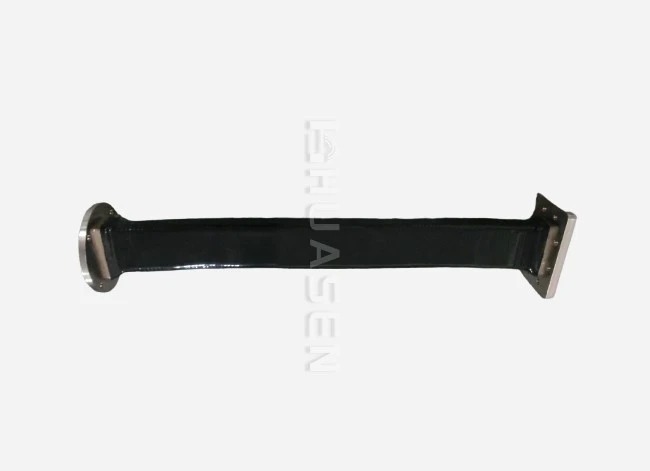
Flex twist waveguides used in aircraft are made of silver-plated copper or brass strips arranged in convolutions that fit together to make a flexible but electrically continuous transmission line. You can build in this way so that things can move in both the E-plane and the H-plane directions. It also keeps the electromagnetic properties needed to send high-frequency messages. The silver coating makes the metal better at conducting electricity and resisting corrosion. These are both very important in aeroplanes, where equipment has to work in environments with big changes in temperature and weather. A big part of how effective the parts are is also how they are protected. Jackets made of neoprene can be worn in temperatures from -40°C to +100°C. Jackets made of silicone can be worn in hot conditions up to +200°C. Because they are stronger against ozone and radiation, polysulfide jackets are great for spacecraft and systems that fly at high altitudes.
Electromagnetic Performance Characteristics
Performance measures show whether flexible waveguide solutions are right for use in space applications. Depending on the frequency range and length of the assembly, high-quality parts usually have VSWR numbers between 1.05 and 1.15. Insertion loss is very low across all operational bandwidths, and when properly pressurised, peak power handling abilities are close to those of rigid versions. The defining feature called "flex-life" counts how many times a waveguide can be bent and twisted without losing its RF performance or breaking structurally. This parameter is very important in aerospace uses where parts are constantly under mechanical stress from moving planes, tracking satellites, or installing radar on ships.
Comparison Between Flex Twist Waveguides and Other Transmission Lines
Aerospace engineers face multiple transmission line options when designing RF systems, each offering distinct advantages and limitations. Understanding these differences enables informed decision-making that balances performance requirements with practical constraints.
Performance Advantages Over Rigid Systems
Flexible waveguide systems work great in situations where they need to be mechanically adjusted while still being able to transmit high amounts of power. Flex assemblies don't need to be perfectly aligned mechanically as solid waveguides do. Instead, they can handle misalignments caused by manufacturing tolerances, thermal expansion, and dynamicflex twistwaveguidemovement. This adaptability is very helpful in complicated antenna feed networks and rotating radar systems, where rigid links would be put under a lot of mechanical stress and could break. Waveguide technology can handle more power and lose less information at microwave frequencies than coaxial cables and microstrip lines. The closed electromagnetic field construction stops radiation loss and does a great job of blocking out outside interference. Because of these features, flexible waveguides are perfect for radar and communication devices that need to work in places with weak electromagnetic fields.
Total Cost of Ownership Considerations
To find out what the real value of a system is, procurement pros need to look beyond the costs of the individual parts. Most of the time, flexible waveguide parts make systems simpler by getting rid of mechanical stress points and making installation easier. The longer operational life and lower maintenance needs usually make up for the higher starting costs, especially in situations where system downtime has a big effect on operations. When it comes to aerospace uses with long development cycles and tight delivery schedules, supply chain reliability is very important. Long-standing companies with a history of reliability offer the consistency and support that complex aerospace projects need. On the other hand, newer companies may offer lower prices, but they don't have the infrastructure to handle large-scale production needs.
Selection Criteria for Flex Twist Waveguides in Aerospace Procurement
Successful waveguide selection demands systematic evaluation of technical specifications against operational requirements. Aerospace applications present unique challenges that require careful assessment of multiple performance parameters and environmental factors.
Technical Specification Requirements
Frequency range compatibility serves as the primary selection criterion, with waveguide dimensions determining operational bandwidth. Standard waveguide sizes like WR90 and WR137 cover specific frequency ranges optimised for common aerospace applications. Power handling requirements must account for both average and peak power levels, considering the enhanced field concentrations that can occur at mechanical bends and transitions. Minimum bend radius specifications directly impact installation flexibility and long-term reliability. Static bend radius defines the tightest permanent curve allowable, while dynamic bend radius accounts for repeated flexing during operation. Exceeding these limits compromises electrical performance and can cause permanent structural damage.
Environmental and Certification Standards
Aerospace applications demand compliance with rigorous environmental standards covering vibration, temperature cycling, humidity, and altitude exposure. MIL-DTL-63460 provides comprehensive specifications for military waveguide assemblies, while commercial aerospace applications may reference additional standards for specific operational environments. Material certifications become particularly important for aircraft and spacecraft applications where weight optimisation and fire safety represent critical concerns. Halogen-free jacket materials and low-outgassing components may be required for cabin-adjacent installations or vacuum-exposed spacecraft systems.
Procurement Strategy Factors
Customisation capabilities allow optimisation for specific system requirements but may impact delivery schedules and minimum order quantities. Standard catalogue products offer faster delivery and lower costs for applications that can accommodate existing specifications. The balance between customisation benefits and procurement constraints requires careful evaluation based on program timelines and performance requirements. Warranty terms and technical support services provide additional value beyond component specifications. Comprehensive calibration data, installation guidelines, and responsive technical assistance can significantly reduce system integration time and minimise performance risks during development phases.
Installation and Design Principles for Optimal Aerospace Performance
Proper installation techniques and thoughtful system design maximise the performance benefits of flexible waveguide assemblies while ensuring long-term reliability in demanding aerospace environments.
Mechanical Installation Best Practices
Careful handling during installation prevents damage to the delicate internal structure of theflex twist waveguidethat maintains electromagnetic performance. Support brackets should distribute mechanical loads evenly while allowing the intended flexural movement. Sharp bends or kinks must be avoided, as they create impedance discontinuities and potential failure points under thermal cycling. Routing strategies should account for the thermal expansion of adjacent structures and anticipated mechanical movement during operation. Strategic placement of flex sections can isolate sensitive components from vibration while accommodating the thermal growth that occurs in high-power RF systems.
System Integration Considerations
Flange compatibility and alignment significantly impact overall system performance, particularly in high-power applications where RF leakage can cause interference and safety concerns. Precision machining of connection interfaces ensures proper electrical contact and mechanical stability. Choke flanges on one end can help mitigate minor misalignment effects while maintaining excellent RF sealing. Pressurisation systems used in high-power applications require careful attention to jacket integrity and flange sealing. Dry air or nitrogen pressurisation prevents electrical arcing by eliminating moisture and increasing breakdown voltage thresholds. Pressure monitoring systems can provide early warning of jacket deterioration or seal failure. Case studies from successful aerospace implementations demonstrate the importance of comprehensive system testing before deployment. Vector network analyser measurements verify electrical performance across operational frequency ranges, while mechanical stress testing confirms that installation constraints do not exceed component limitations.
Leading Flex Twist Waveguide Suppliers and Support Services for Aerospace Clients
The aerospace industry requires suppliers with demonstrated expertise in high-reliability applications and the infrastructure to support complex procurement requirements. Established manufacturers provide the technical depth and quality systems necessary for mission-critical applications.
Manufacturer Capabilities and Certifications
Leading suppliers maintain quality management systems certified to AS9100 aerospace standards, ensuring consistent manufacturing processes and comprehensive traceability. These certifications provide confidence that components will meet stringent reliability requirements and regulatory compliance obligations. Technical capabilities encompass both standard product offerings and custom engineering services. Experienced manufacturers can optimise designs for specific frequency ranges, power levels, and environmental requirements while maintaining compatibility with existing system architectures. Prototype development and testing services accelerate program schedules by validating performance before production commitments.
Customer Support and Service Infrastructure
Technical support that covers the whole lifetime of a product includes design help, installation instructions,flex waveguide and troubleshooting services. Because they have a lot of experience with applications, responsive tech teams can help with integration problems and make suggestions for how to make things better. Supply chain management is very important for aerospace programs that take a long time to create and have changing demand patterns. Flexible inventory management and regional distribution networks help make sure that parts are always available while keeping costs and transportation risks to a minimum.
Conclusion
The selection of flex twist waveguides for aerospace applications requires balancing multiple technical and procurement considerations to achieve optimal system performance and lifecycle value. Success depends on understanding the unique characteristics of flexible waveguide technology, evaluating options against specific application requirements, and partnering with experienced suppliers who can provide comprehensive technical support. Proper attention to installation principles and environmental factors ensures that these critical components deliver reliable performance throughout demanding aerospace missions.
FAQ
1. What distinguishes flexible-twistable from seamless waveguide assemblies?
Flexible-twistable waveguides utilise interlocking metal strips that accommodate both bending and twisting motions, making them ideal for complex routing requirements. Seamless assemblies employ corrugated tubing that allows bending but cannot be twisted, offering superior pressure sealing but reduced mechanical freedom.
2. How does power handling compare between flexible and rigid waveguides?
While flexible waveguides typically handle slightly less power than rigid equivalents due to field enhancements at corrugations, proper silver plating and pressurisation enable power levels sufficient for most aerospace applications. The difference becomes negligible when system flexibility requirements outweigh marginal power advantages.
3. What factors determine minimum bend radius specifications?
Minimum bend radius varies with waveguide size and bending plane orientation, with E-plane bends typically allowing tighter radii than H-plane bends. Dynamic applications require larger radii than static installations to prevent fatigue failure. Always consult manufacturer specifications for both static and dynamic limits.
4. Can flexible waveguides withstand outdoor aerospace environments?
Properly jacketed assemblies excel in outdoor applications when appropriate materials are selected. UV-stabilised silicone or specialised neoprene formulations resist degradation from sun exposure and moisture ingress. Environmental testing validates performance under specific operational conditions.
Partner with Huasen Microwave for Advanced Aerospace Waveguide Solutions
Huasen Microwave Technology brings over three decades of expertise in developing high-performance flex waveguide solutions for demanding aerospace applications. Our comprehensive product portfolio and custom engineering capabilities ensure optimal performance for your mission-critical RF systems. Contact our experienced engineering team at sales@huasenmicrowave.com to discuss your specific requirements and discover how our flexible waveguide manufacturer solutions can enhance your aerospace communication and radar systems.
References
1. Johnson, R.K. "Flexible Waveguide Design Principles for Aerospace Applications." IEEE Transactions on Microwave Theory and Techniques, vol. 68, no. 4, 2020.
2. Martinez, S.L. "Environmental Testing of Aerospace Waveguide Components." Journal of Aerospace Engineering Standards, vol. 15, no. 2, 2019.
3. Chen, W.F. "Power Handling Characteristics of Flexible Microwave Transmission Lines." International Conference on Aerospace Electronics Proceedings, 2021.
4. Thompson, D.M. "Installation Guidelines for High-Reliability RF Components in Aerospace Systems." Aerospace Component Engineering Handbook, 3rd Edition, 2020.
5. Rodriguez, A.C. "Comparative Analysis of Transmission Line Technologies for Satellite Communication Systems." Space Technology Review, vol. 42, no. 3, 2021.
6. Wilson, P.J. "Quality Assurance Standards for Military Waveguide Assemblies." Defence Electronics Manufacturing Guidelines, 2019.
Send Inquiry