Precision Manufacturing of Waveguide Straight Section






2026-04-10 22:34:04
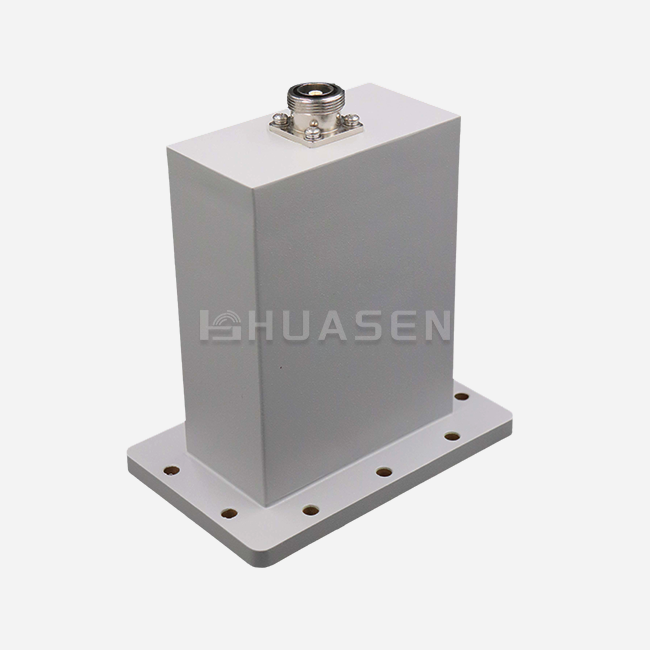
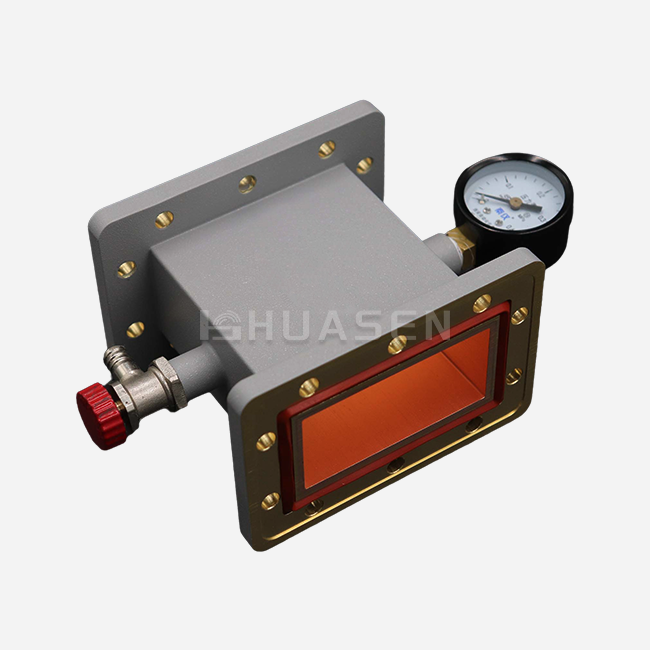
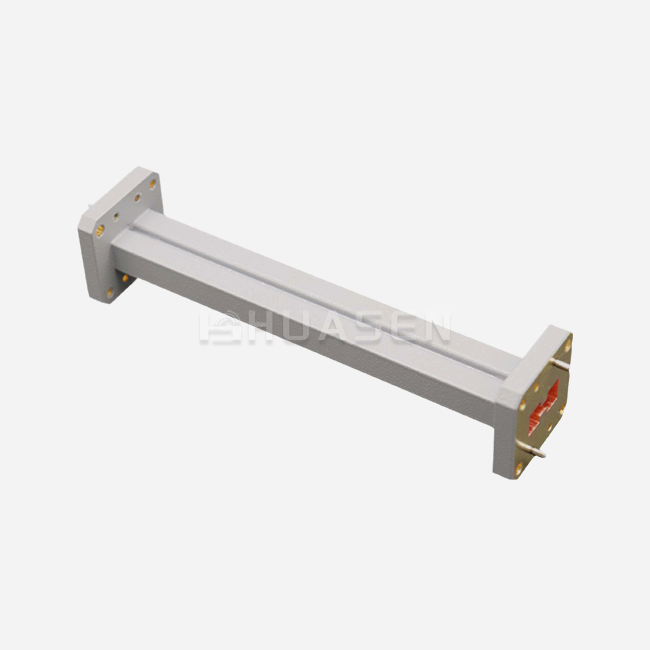
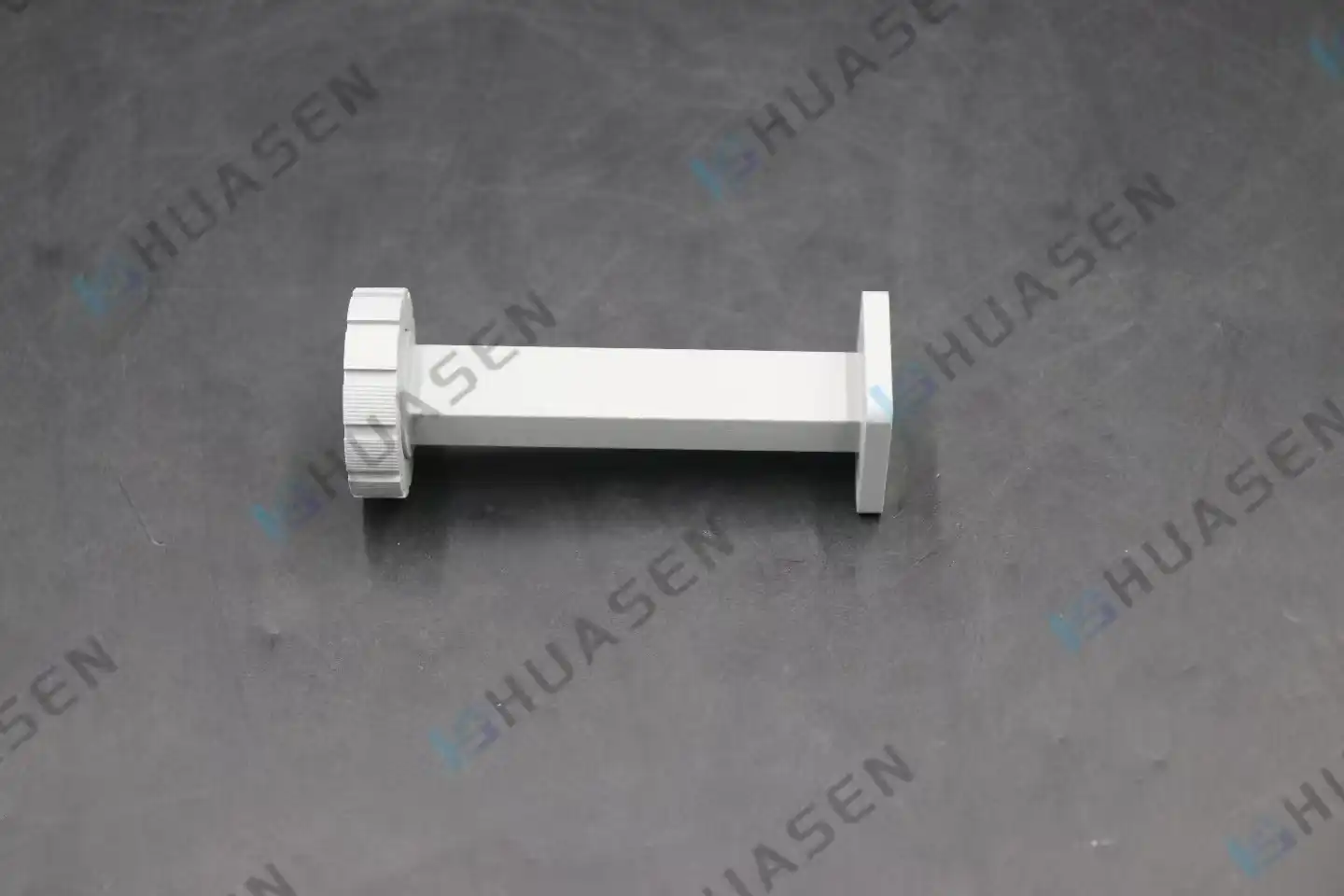
When RF engineers and procurement specialists need to send high-frequency Waveguide Straight Section data with little loss, the Waveguide Straight Section is the best way to do it. This passive microwave transmission part is made up of a hollow metal tube with a cross-section that can be square, circular, or elliptical. Instead of using center conductors like coaxial lines, electromagnetic waves are guided through internal reflection. The straight part solves important problems by getting rid of dielectric losses above 2 GHz, handling high peak power without arcing, and providing better shielding in places with a lot of electromagnetic radiation.
Understanding Waveguide Straight Sections: Types, Functions, and Design Principles
Core Types and Their Specific Applications
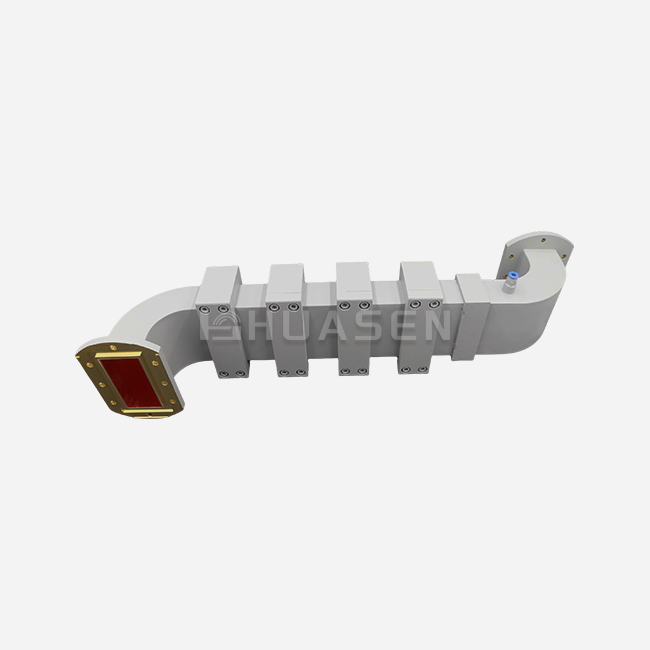
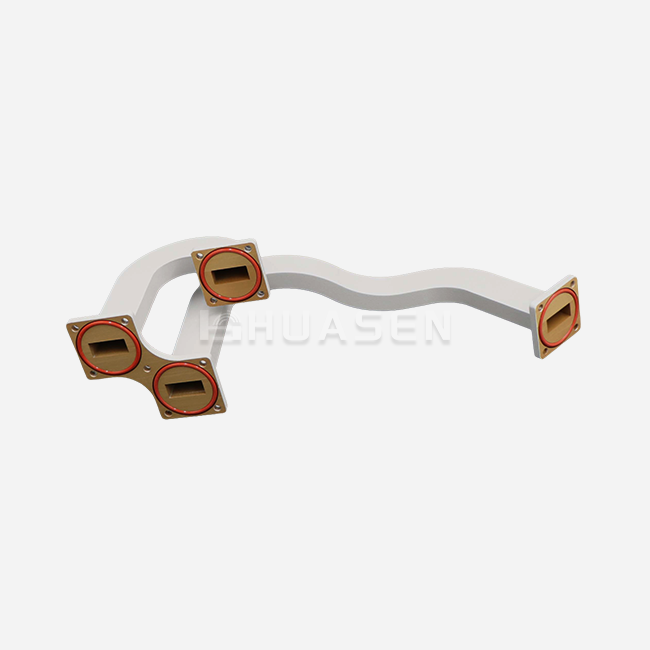
In the RF and microwave businesses, there are three main configurations that are used. Each one is designed to meet specific operational needs. In most traditional situations, rectangular straight waveguides are used because they are good at handling power and have predictable propagation properties across standard frequency bands. Dual-ridge straight waveguides have metal ridges inside them that lower the cutoff frequencies and increase the bandwidth. This lets smaller designs work in multi-band systems where room is limited, and efficiency is needed. Inflatable straight waveguides are a unique solution for satellite communications and aerospace applications that need to reduce weight and be easy to deploy. We can make them in a very wide frequency range, from 0.32 GHz to 220 GHz, so they can be used with everything from UHF radar systems to the most advanced millimeter-wave test equipment. Because this covers so much, procurement teams can build stronger relationships with suppliers while still making sure that performance standards are met across all tasks. Being able to change the length from 0.1 mm to 2000 mm gives engineers exact control over the dimensions, so they don't have to make changes to the field that could damage the electrical integrity.
Material Selection and Performance Impact
The conductivity, thermal stability, and working lifetime are all directly affected by the material used. Aluminium oxidation processes make parts that are very light, which is great for uses in the air and on spacecraft, where every gram counts when it comes to fuel economy or launch costs. The natural oxide layer protects against corrosion in harsh maritime settings, which extends the service life without lowering performance. Copper construction with silver or gold plating gives the best conductivity for lab-level tests and high-power radar systems where insertion loss must stay below 0.05 dB per metre. When buying, the plating process should be carefully thought through. Silver plating is a cheaper way to get better conductivity, making it good for controlled indoor settings or pressurised waveguide systems where oxidation isn't a problem. Gold plating costs more than silver plating, but it keeps things working well in coastal settings, offshore platforms, and tropical regions where salt spray and humidity make silver tarnish faster. When looking at quotes from suppliers, make sure the plating thickness standards are met. For long-term dependability, the thickness should be between 1-2 micrometres for gold over nickel underplating and between 3–5 micrometres for silver.
Design Principles Governing Performance
The exact dimensions of a waveguide are set by the EIA, which also sets the cutoff frequencies and transmission modes. To keep mode warping from happening and make sure VSWR works, the "a" dimension (broad wall) and "b" dimension (narrow wall) must stay within ±0.001 inches of each other. Our manufacturing achieves VSWR ≤1.15 across most frequency bands, with high-frequency applications (above 110 GHz) maintaining ≤1.2. This is better than the typical industry benchmarks of 1.20–1.25, Straight Waveguide, which is considered acceptable performance. Wall thickness calculations balance mechanical rigidity against weight limits while stopping waveguide deformation due to changes in pressure or temperature. Using finite element analysis during design makes sure that the structure will hold up under practical stress, like when it's attached to a structure that is vibrating or when it's in space and the temperature changes quickly. These engineering factors have a direct effect on the total cost of ownership because properly built straight sections eliminate field failures, lower the number of maintenance interventions, and increase the time between replacements.
Comparing Waveguide Straight Sections with Alternative Solutions for Informed Decisions
Performance Analysis Across Transmission Media
Because they are flexible and easy to set up, coaxial wires are good for test setups and short-run connections. But the dielectric materials they use cause loss tangents that get worse with frequency. This means that they can't be used for anything longer than 40 GHz. At Ka-band frequencies (26.5-40 GHz), a good coaxial cable has an insertion loss of about 1.5 dB/meter, while a precision-manufactured straight section has an insertion loss of less than 0.08 dB/meter, which is almost 20 times less. Microstrip and stripline technologies are used a lot in printed circuit board designs because they allow for smaller integration for low-power uses. But because their structures are open or almost open, they lose radiation and can be affected by electromagnetic interference, which means they can't be used for secure combat communications or high-dynamic-range receiver systems. In electronic warfare situations, waveguide straight sections can be hermetically sealed, which stops signal leaks and outside interference from hurting system performance.
Straight Versus Curved Waveguide Considerations
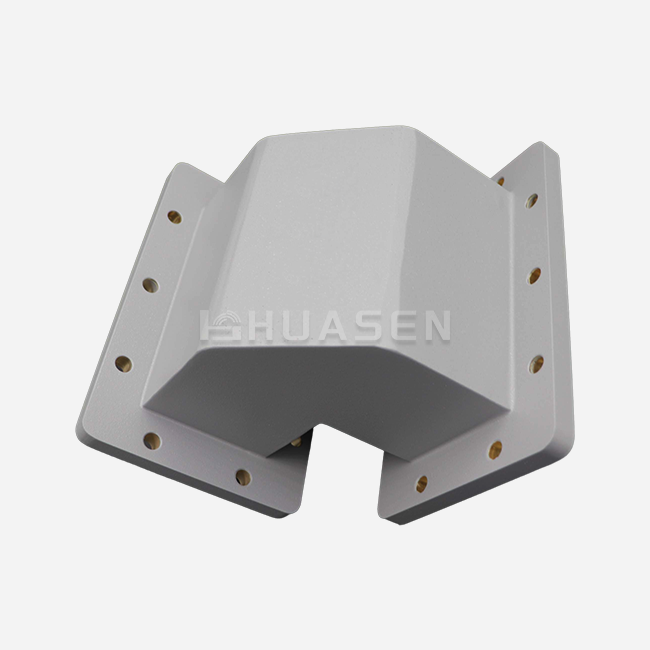
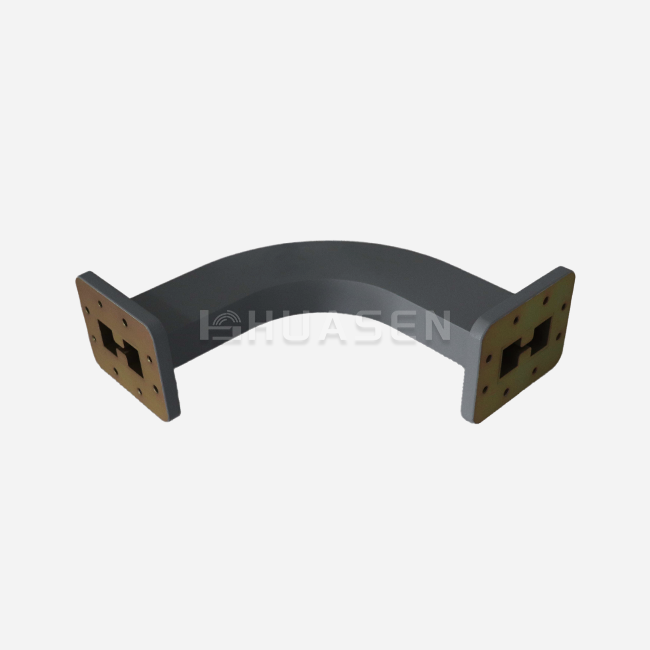
When compared to straight runs, bends and turns cause more insertion loss and VSWR degradation. A 90-degree E-plane bend usually adds 0.1 to 0.15 dB of loss and reflection coefficients that change with frequency. When multiple bends are combined in complicated routing situations, this can lead to standing wave patterns. When purchasing managers are trying to make the best system layouts, they should use straight sections as much as possible and save bends for situations where space geometry requires them. The selection guide for X-band applications (8.2-12.4 GHz) shows real-world choices. According to base station front-end designs, rigid straight sections work better than flexible ones when transmission distances are more than 5 meters. The stiffness stops positional drift caused by wind loading or thermal expansion, keeping alignment tolerances that are important for accurate beamforming and phased array calibration. On the other hand, semi-rigid coaxial assemblies may be worth it for short connections between equipment racks that are closely packed together if the costs of installation are higher than the small changes in RF performance.
Precision Manufacturing Process: From Design to Delivery
Engineering and Material Preparation
Manufacturing begins with CAD modeling that translates customer specifications into three-dimensional toolpath instructions. Engineers verify dimensional compliance with relevant EIA standards (WR-28 through WR-2300 designations) while incorporating customer-requested modifications such as mounting flanges, pressure ports, or environmental sealing provisions. Material procurement follows documented traceability requirements, with mill certifications confirming alloy composition, grain structure, and mechanical properties that meet aerospace specifications like MIL-DTL-85. The selection between aluminum and copper substrates depends on application priorities identified during procurement discussions. Aluminum 6061-T6 delivers excellent machinability and weight savings—approximately 65% lighter than copper equivalents—making it the preferred choice for UAV platforms, aircraft radar installations, and satellite payload assemblies where launch costs scale directly with mass. OFHC (oxygen-free high conductivity) copper provides maximum electrical efficiency for ground-based radar systems and laboratory reference standards where weight considerations remain secondary to insertion loss performance.
CNC Machining and Surface Finishing
Computer numerical control machining removes material,Straight Waveguide to achieve internal dimensions within ±0.0005 inches, far exceeding conventional manufacturing tolerances. Multi-axis mills execute complex features including mounting bosses, tuning screws, and coupling interfaces in single setups, eliminating alignment errors from workpiece repositioning. Surface roughness specifications target 32 RMS microinches or better on internal waveguide walls, minimizing current crowding and resistive losses that degrade high-frequency performance. Electroplating operations follow machining, depositing silver or gold layers through controlled electrochemical processes. Plating thickness monitoring employs X-ray fluorescence measurement, ensuring uniform coverage of the Straight Waveguide across internal geometries, including corners and transitions, where current density variations can produce thin spots. Post-plating dimensional verification confirms that coating buildup remains within calculated allowances, preventing out-of-tolerance conditions that would shift electrical performance outside specified bands. Quality control protocols validate electrical characteristics using vector network analyzers that sweep across operating frequencies. Automated test fixtures measure insertion loss, return loss, and group delay, comparing results against customer specifications and internal quality standards. Flange planarity inspection employs coordinate measuring machines to verify mating surface flatness within 0.001 inches, ensuring leak-tight pressure seals and optimal RF contact when assembled into system architectures. These comprehensive inspections generate test data packages that accompany shipments, providing procurement teams with traceable evidence of conformance.
Customization and Global Logistics
OEM clients benefit from extensive customization capabilities that adapt standard products to unique integration requirements. Length adjustments accommodate specific equipment spacing, while custom flange configurations match existing system interfaces without requiring adapter hardware. Specialized coatings—including chromate conversion treatments for enhanced corrosion resistance or conductive elastomer gaskets for EMI sealing—address environmental challenges identified during application engineering reviews. Lead times vary with order complexity and production volume, typically ranging from 4-6 weeks for standard configurations to 8-12 weeks for fully customized designs requiring new tooling or qualification testing. Packaging protocols employ anti-static foam inserts, moisture barrier bags, and rigid exterior containers that protect delicate flange surfaces during international shipping. Documentation packages include material certifications, test reports, and handling instructions that satisfy receiving inspection requirements at customer facilities.
Procurement Insights: How to Source High-Quality Waveguide Straight Sections
Supplier Evaluation Criteria
Selecting a waveguide straight section manufacturer demands assessment beyond unit pricing. Manufacturing credentials, including ISO 9001 certification, demonstrate quality management system maturity, while AS9100 registration indicates aerospace-specific process controls. MIL-STD compliance verification through third-party testing laboratories confirms that products withstand environmental extremes—temperature cycling from -55°C to +125°C, vibration profiles exceeding 20G, and humidity exposure at 95% relative humidity—without performance degradation. Brand reputation within your specific industry segment provides valuable Waveguide Straight Section procurement intelligence. Manufacturers serving 5G infrastructure deployments understand network densification challenges and timing synchronization requirements. Those supporting defense radar programs navigate ITAR compliance, security clearances, and documentation rigor that commercial suppliers may lack. Laboratory instrument manufacturers require calibration traceability to NIST standards, demanding measurement Waveguide Straight Sectionuncertainty documentation that general-purpose suppliers cannot provide.
Cost Structures and Volume Considerations
Pricing analysis must account for the total cost of ownership rather than isolated unit prices. Bulk order discounts typically activate at 50-100 pieces, with marginal cost reductions continuing through 500-1000 unit quantities, where production setup amortization becomes negligible. Custom orders incur non-recurring engineering charges covering tooling design, prototype fabrication, and qualification testing—expenses ranging from $2,000 for simple length variations to $15,000+ for complex dual-ridge designs with integrated monitoring ports. Payment terms and supply chain stability influence procurement risk profiles. Established manufacturers maintain material inventory buffers and production capacity reserves that accommodate urgent requirement surges without extended lead time penalties. Newer suppliers may offer aggressive pricing but lack financial reserves or supplier relationships to navigate material shortages, potentially leaving procurement teams scrambling for alternative sources mid-project. Requesting financial references and production facility audits mitigates these risks for mission-critical applications.
Sample Evaluation and Supplier Communication
Before committing to production numbers, sample requests are used to make sure that the manufacturing process works well. Make sure that samples are tested in the right way by giving details about your exact working frequency, power level, and environment. Ask for VNA measurement data that shows insertion loss and VSWR across the band you're interested in, as well as mechanical models with measured dimensions that show tolerance achievement. Photographs of the flanges that show the quality of the surface finish and the accuracy of the machining provide more evaluation information. After-sales support systems separate excellent providers from average ones. Technical help during system integration fixes problems with installation, makes sure that the right hardware is chosen, and finds the root cause of speed issues. Responding to technical questions within 24 hours and revising quotes within 48 hours speeds up project timelines and lowers the friction in the buying cycle. Warranty coverage for manufacturing defects for 12 to 24 months protects against early failures and shows that the maker trusts the product's dependability.
Conclusion
Precision-manufactured waveguide straight sections represent critical infrastructure for modern RF and microwave systems, enabling reliable signal transmission across applications from 5G base stations to satellite ground terminals. Material selection between aluminum and copper, combined with appropriate plating choices, addresses specific environmental and performance requirements while managing cost constraints. Understanding the performance advantages over alternative transmission media—particularly insertion loss benefits and power handling capacity—guides informed procurement decisions that optimize system architectures. Manufacturing rigor encompassing CNC precision, surface finishing control, and comprehensive testing ensures product reliability that meets aerospace, defense, and telecommunications standards.
FAQ
1. What frequency ranges do different waveguide types support?
Rectangular straight waveguides cover frequency bands designated by WR numbers, with WR-2300 serving 0.32-0.49 GHz and WR-1 handling 750-1100 GHz ranges. Dual-ridge configurations extend bandwidth approximately 2:1 compared to rectangular equivalents, enabling multi-band operation within single assemblies. Our manufacturing spans this entire spectrum, allowing consolidation of multiple frequency requirements through standardized procurement channels.
2. How does material choice affect electrical and mechanical performance?
Copper provides superior conductivity, reducing insertion loss by 20-30% compared to aluminum at millimeter-wave frequencies. Aluminum offers significant weight advantages—critical for airborne platforms where mass directly impacts fuel consumption—while maintaining adequate performance when properly plated. Silver plating restores conductivity close to copper levels, whereas gold plating sacrifices marginal performance for enhanced environmental durability in harsh maritime or tropical deployments.
3. What should I compare when evaluating supplier quotes?
Beyond unit pricing, examine VSWR specifications (≤1.15 versus ≤1.20 represents measurable performance differences), tolerance documentation (internal dimensions within ±0.0005" versus ±0.001"), and plating thickness guarantees (3-5μm silver minimum ensures longevity). Request sample test data showing actual VNA measurements rather than accepting typical specifications. Verify lead times include contingency buffers and confirm whether NRE charges apply to your custom requirements.
Partner with Huasen Microwave for Your Waveguide Component Needs
At Huasen Microwave, we bring three decades of specialization in RF and microwave component manufacturing to your most demanding applications. Our precision waveguide straight section supplier capabilities cover the complete frequency spectrum from 0.32 to 220 GHz, with customization options that adapt to your exact specifications—whether you need dual-ridge configurations for bandwidth optimization, inflatable designs for aerospace weight savings, or standard rectangular geometries for high-power radar systems. Our aluminum oxidation and copper plating processes deliver the conductivity, corrosion resistance, Waveguide Straight Section,and thermal stability your projects demand. We understand that procurement success requires more than competitive pricing; it demands responsive technical support, documented quality assurance, and delivery reliability that keeps your production schedules on track. Contact our engineering team at sales@huasenmicrowave.com to discuss your project requirements, request custom quotations, or arrange sample evaluations that demonstrate our manufacturing excellence.
References
1. Marcuvitz, N. (1986). Waveguide Handbook. Institution of Engineering and Technology, London.
2. Pozar, D.M. (2011). Microwave Engineering, Fourth Edition. John Wiley & Sons, Hoboken, New Jersey.
3. Saad, T.S. (1971). Microwave Engineers' Handbook, Volume 1. Artech House, Dedham, Massachusetts.
4. Montgomery, C.G., Dicke, R.H., & Purcell, E.M. (1948). Principles of Microwave Circuits. McGraw-Hill, New York.
5. Collin, R.E. (1992). Foundations for Microwave Engineering, Second Edition. McGraw-Hill, New York.
6. IEEE Standard 145-2013. IEEE Standard for Definitions of Terms for Antennas. Institute of Electrical and Electronics Engineers, New York.
Send Inquiry