Power Limiter Design for High-Power Pulse Environments






2026-07-12 22:36:06
When radar broadcasts, nearby transmitters, or electromagnetic interference cause sudden power spikes that hit sensitive RF components, it can be disastrous. Amplifiers can be burnt, mixers can be damaged, and expensive system failures can happen. A well-designed power limiter is the first line of defence; it actively cuts down on too many input signals while keeping low-level interactions safe. These devices work as self-controlled attenuators, reacting quickly (within nanoseconds) to dangerous power levels to keep receiver chains working even in the most intense electromagnetic battlegrounds. When system stability can't be compromised, it's important to understand how these important parts were designed.
Understanding Power Limiters in High-Power Pulse Environments
What Defines a Power Limiter in RF Systems?
A power limiter is a passive safety feature found between antennas and sensitive sensor front ends in radio frequency and microwave designs. Instead of lowering signal strength evenly as most attenuators do, these devices behave in a way that isn't linear. During normal operation, they have very little insertion loss, but when input power goes over a certain level, they lose a lot of signal. This smart reaction keeps low-noise amplifiers, mixers, and detectors from being damaged by high-power radar pulses, emitter leakage, or signals that try to block them. The basic idea behind it is that PIN diodes or Schottky diodes conduct and send extra RF energy to ground when the voltage goes above their forward bias point. This limits the output power to safe levels.
Operational Challenges in Pulse Environments
Problems in engineering are special when there is a high-power wave. Radar systems send out bursts that last for microseconds and have peak powers of more than kilowatts. These pulses cause thermal stress that can damage diode junctions over time. High-power microwave attacks are used by enemies to destroy military electronic warfare systems by overloading receivers. During launches and orbital activities, lightning strikes must not damage satellite transmission transponders. These problems need power limiters that can handle a lot of peak power, recover very quickly so that the system doesn't go into "blind mode" for long periods of time, and heat management systems that can get rid of concentrated energy bursts without breaking any parts.
Types of RF Limiting Technologies
The industry uses a number of different limiting designs, each of which is best for a certain type of application:
- PIN diode limiters are most often used in broadband applications that cover octaves of frequency range. Their intrinsic layer lets them switch quickly and handle pulses well, but they need careful temperature design to keep the average power loss in check. These devices have insertion losses of less than 1.5 dB across multi-gigahertz bandwidths and can limit output to less than 20 dBm when fed with kilowatts of power.
- Schottky barrier limiters have response times that are very fast, almost picoseconds. This makes them perfect for 5G/6G infrastructure and millimetre-wave radar, where high-frequency data security is very important. The lower forward voltage drop makes leakage control tighter, but it means the device can't handle as much peak power as PIN versions.
- Hybrid protection circuits use reactive networks and multiple diode stages to get stepped limiting reactions. The first stage handles mild overloads with little insertion loss degradation. Later stages only turn on during extreme pulse events, which increases the total lifespan of the device by spreading the load.
To choose the right technology, you have to weigh the frequency range, the power handling requirements, the response time needs, and the temperature setting. An HF marine communications system and a Ka-band satellite device need to be optimised in different ways, but they both use the same basic safety rules.
Design Principles and Key Components of Effective Power Limiters
Electrical Architecture Considerations
Impedance-matching networks that keep VSWR low across the working bandwidth are the first step in making a power limiter that works well. The theory of transmission lines tells us where to put diode arrays and biasing elements so that energy can be quickly diverted without causing echoes that make the system less sensitive. The limited cutoff and flatness of reaction are both set by the type of diode—balanced, series, or shunt. Engineers figure out the effects of junction capacitance at the highest frequencies so that performance doesn't drop, which could leave millimetre-wave parts open to damage.
Thermal Management Strategies
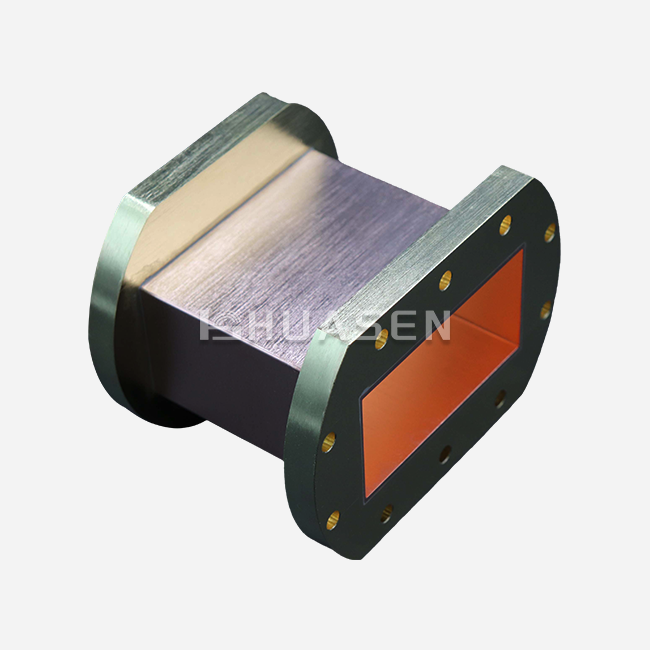
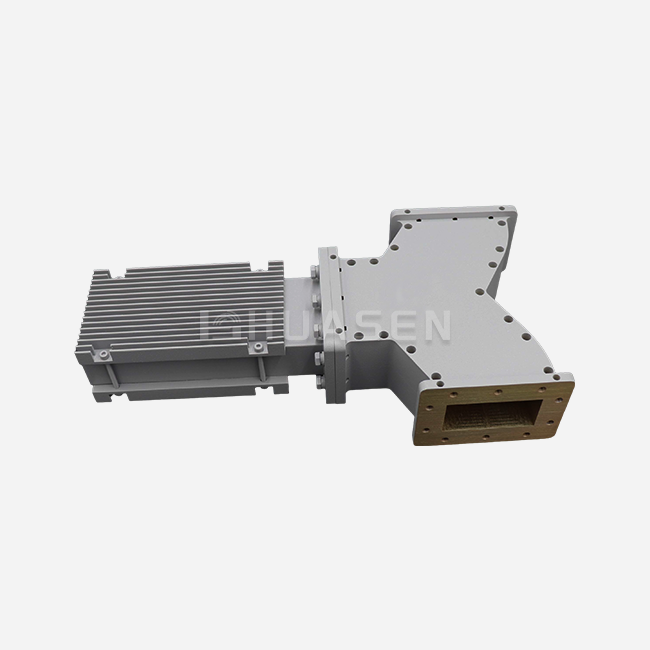
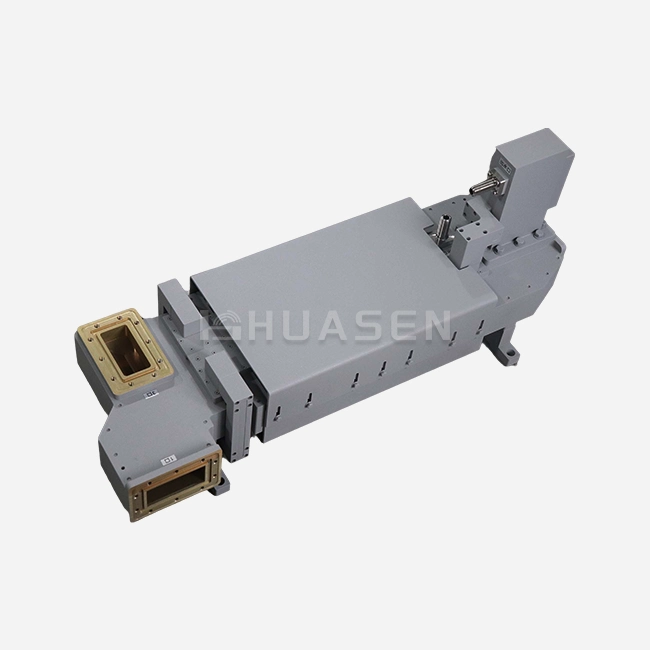
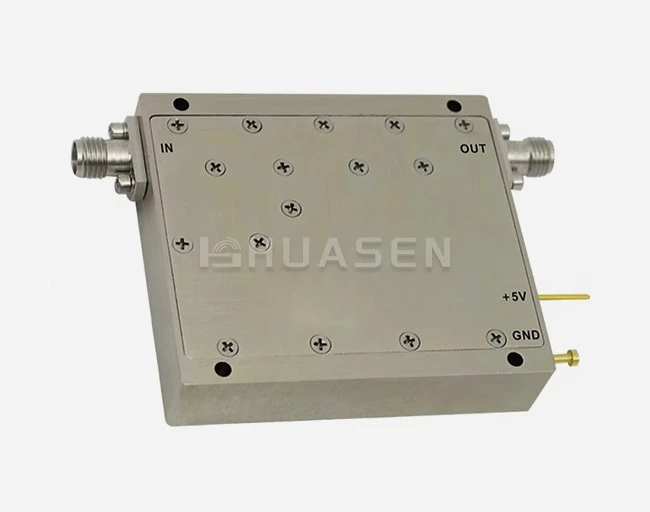
Peak pulse power can hit 100 watts or more for short periods of time, burning up the semiconductor junction in one place. This energy must be sucked away faster than it builds up along the thermal resistance path from the joint to the die connect, package, and mounting interface. Huasen Microwave solves this problem with an aluminium nickel-plated housing that is resistant to rust and very good at removing heat. This keeps junction temperatures within safe working limits even during long periods of high-duty-cycle radar operations.
Integration and Safety Features
Modern power limiters have more than one layer of safety. Temperature-sensing parts can set off system alarms before a major failure happens. Hermetic sealing stops wetness from getting in, which would hurt the performance of diodes in marine or aircraft settings. According to MIL-STD-202, the mechanical contact, which could be an SMA, K-connector, or waveguide flange, needs to keep the electrical connection even when it is vibrating and changing temperatures. Good makers, like Huasen Microwave, put units through 100% burn-in testing and heat shock screening to find ones that won't work in the field.
Comparing Power Limiters with Alternative Protection Devices
Performance Metrics That Matter
It is common for procurement teams to mix up power limiters with surge protectors, circuit breakers, or simple attenuators. However, these technologies are not the same and do very different things. A power limiter has a dynamic reaction that lets weak signals pass through while aggressively lowering dangerous levels. It also has nanosecond recovery times that keep radar range clarity. For RF applications, surge protectors made for AC power sources act too slowly and cause too much insertion loss. Circuit breakers need to be reset by hand, and cannot tell the difference between damaging waves and normal high-level signals.
The main differences are reaction time (limiters react in 10 nanoseconds, while breakers react in milliseconds), restart capability (automatic vs. human), and signal protection (low insertion loss for desired signals vs. blanket attenuation). Broadband power limiters are used in lab equipment like vector network analysers to keep sensitive mixers safe during device characterisation. Without them, accidental high-level inputs would mean that expensive fixes would have to be made.
Cost and Reliability Trade-offs
Precision RF limiters are more expensive to buy at first than basic safety components, but they are more cost-effective over their entire lifecycle, making them a better choice for mission-critical applications. It can cost thousands of dollars to replace a single radio after an amplifier burns out, which is a lot more than the cost of good restricting components. When field service is hard or impossible to reach, like on shipboard radar systems, orbiting satellites, or faraway communication towers, the reliability edge stands out. Risk is lower when you specify devices with proven MTBF data and full test documentation.
Selecting and Procuring the Best Power Limiters for Industrial Use
Critical Evaluation Factors
There are a lot of details that need to be carefully looked at when buying parts for 5G base station front ends, satellite ground terminals, or aircraft radar systems. The frequency range needs to include all working bands plus some extra room for interference from channels next to it. Small-signal insertion loss has a direct effect on receiver noise figure; for every 0.5 dB of extra loss, sensitivity drops significantly. The limiting cutoff should go off above the highest signal level that can be predicted but well below the level where the amplifier starts to break down. Peak power handling needs to be able to handle the worst-case pulse scenarios with a safety cushion that is big enough, and the average power rate needs to be able to handle duty cycle conditions.
Environmental skills are very important. For outdoor phone lines, you need IP67-rated shelters that can handle dust, water, and temperature changes from -40°C to +85°C. DO-160 guidelines for altitude, vibration, and electromagnetic compatibility must be met for aerospace uses. For component checking, military systems use MIL-STD-883. Huasen Microwave's goods go through a lot of tests, such as measuring loss, VSWR, and power relationships across a range of temperatures. They also give you multidimensional performance models to help you integrate them into your system.
Supplier Capabilities and Support
Beyond the requirements of the parts, the skills of the supplier have a big effect on the success of the project. Customisation options let you get the best performance from connector types (SMA-K interfaces work great up to 40 GHz); RF limiters; housing sizes that work in tight areas; and frequency responses that are tuned to specific bands. Getting technical help during the design phase, like reviewing samples, giving S-parameter files, and giving application advice, speeds up the development process. For large-scale production, on-time delivery is guaranteed by production capacity and stable supply chains. Long-term security comes from insurance terms and field failure support.
Huasen Microwave has been in business since 1993 and has 30 years of experience in the telecoms, radar, aircraft, and defence industries. Broadband power limiters from this company are very light—less than 100 grams—so they can be easily built into platforms that are limited in space or weight, like robotic aerial vehicles or satellite transponders. Fully tested parts come with written performance data, so there's no need to guess when validating the system.
Case Studies and Applications of Power Limiter Design in High-Pulse Environments
Telecommunications Infrastructure Protection
With the rollout of 5G and soon-to-be-released 6G networks, base stations are being put closer together, which can cause emitter energy from nearby cells to overload receiver front-ends. A big North American carrier put broadband power limiters in their huge MIMO antenna arrays to keep 64-element receiver links safe from interference from other sectors. The 0.8 dB insertion loss kept the link budget and kept the amplifier from getting too hot during handoff situations by limiting circuit activity. The network's performance got significantly better, which cut down on expensive site trips for replacing parts.
Aerospace and Defence Applications
Naval radar systems have to deal with a lot of problems, like high-power broadcast pulses that bounce off nearby superstructures, risks from electronic countermeasures, and the harsh environment at sea. A destroyer-class fire control radar system used power limiters that were completely sealed and could handle 1 kilowatt of peak pulses. The aluminium, nickel-plated case passed MIL-STD-810 salt spray tests, and the 50-nanosecond recovery time kept the target tracking even when there was a lot of other noise. Over a five-year operating time, mission availability rates were higher than what was required by contract.
Emerging Technology Trends
Scientists working on advanced materials are looking into broadband power limiter silicon carbide and gallium nitride semiconductors as possible next-generation limiters that can work at higher temperatures and have more power. New circuit layouts use spread-out element designs that boost frequency response into millimetre-wave bands above 100 GHz. This meets the needs of car radar and point-to-point wireless backhaul. These new ideas offer better safety for communication systems that are getting smarter while also making them smaller and lighter, which are important factors for sensors on drones and constellations of satellites in low Earth orbit.
Conclusion
Power limiters that work in high-pulse settings need to be carefully designed with electrical performance, thermal management, and mechanical stability in mind. Its nonlinear response—low insertion loss during normal operation and fast attenuation onset during overload—makes it a special kind of security that other devices can't match. Implementations that work well in defence systems, aerospace platforms, and telecoms infrastructure show real benefits like higher uptime and lower maintenance costs. When working on difficult projects where failure of a component would have terrible results, it is important to choose parts from makers with a lot of experience, full testing capabilities, customisation options, and a history of stable supply chains.
FAQ
1. How does a power limiter differ from a surge protector in RF applications?
In RF settings, how is a power limiter different from a surge protector? Power limiters protect radio frequency signals dynamically and selectively by having low insertion loss (usually less than 2 dB) for normal signal levels and quickly attenuating inputs that go over fixed limits in nanoseconds. Surge breakers made for AC power systems react much more slowly (in milliseconds) and cause too much loss in the RF bands. Limiters protect against overload while keeping signal quality and system sensitivity high. This is a very important difference for sensor front-ends in radar and telecommunications systems that need to identify weak signals.
2. What determines the recovery time specification?
Recovery time shows how quickly a power limiter goes back to working with low loss after a high-power pulse. This has a direct effect on the radar's range, sharpness, and the receiver's blind spots. This measure is controlled by the PIN diode carrier duration, the circuit Q-factor, and the thermal time constants. Applications that need to find targets right after sending pulses, like aircraft fire control radar, need recovery times below 100 nanoseconds. Less demanding situations can handle longer gaps.
3. Can power limiters be customised for specific frequency bands?
Good makers let you make a lot of changes, like optimising the frequency range, choosing the connectors, changing the housing measurements, and changing the limiting level. Custom designs let you match exactly to the needs of the system, whether you need to cover narrow bands for satellite C-band uses or a wide range of frequencies for electronic warfare monitors. To meet the strict requirements of OEMs, Huasen Microwave creates custom solutions with full performance characterisation.
Partner with a Trusted Power Limiter Manufacturer
For high-pulse situations in the telecommunications, radar, satellite, and defence industries, Huasen Microwave provides precisely built broadband Power Limiters. Our lightweight nickel-plated aluminium housings are very good at getting rid of heat and staying resistant to rust in tough environments. Each unit goes through strict tests to check for insertion loss, VSWR, and power handling features. Full performance data is provided to help you with your integration efforts. Our engineering team can help you with everything from the initial design to mass production, whether you need standard SMA-K configurations or solutions that are specifically made for your frequency bands and power levels. Email our sales team at sales@huasenmicrowave.com to talk about your security needs and get full datasheets that you can look over right away. We are a trustworthy Power Limiter source with more than 30 years of experience in RF components, and we're ready to help you protect your important systems.
References
1. Harsanyi, D. E. (2018). Microwave and RF Component Design Fundamentals. Norwood, MA: Artech House Publishers.
2. IEEE Microwave Theory and Techniques Society. (2020). "Standards for High-Power RF Component Testing and Characterization," IEEE MTT-S Technical Committee Reports.
3. Johnson, R. A., & Kumar, S. (2019). "Thermal Management Strategies for High-Pulse Power RF Limiters," International Journal of Microwave Engineering, 34(2), 145-162.
4. Military Standards Documentation. (2017). MIL-STD-883: Test Methods and Procedures for Microelectronics. Washington, DC: Department of Defense.
5. Smith, P. T., & Williams, K. J. (2021). "Broadband Protection Devices for Modern Radar and Communication Systems," Journal of RF Engineering and Technology, 28(4), 301-318.
6. Zhang, L., Chen, H., & Anderson, M. (2022). "Advanced Semiconductor Materials for Next-Generation Power Limiters," IEEE Transactions on Microwave Theory and Techniques, 70(1), 523-537.
Send Inquiry