Parabolic Antenna Gain vs Reflector Diameter: What is the Correlation?






2026-03-08 21:54:24
The correlation between parabolic antenna gain and reflector diameter follows a fundamental electromagnetic principle: gain increases proportionally with the square of the reflector diameter. This relationship stems from the antenna's ability to capture and focus electromagnetic energy more effectively as the dish size expands. Understanding this correlation enables engineers and procurement specialists to optimise communication systems by selecting appropriate reflector dimensions that balance performance requirements, installation constraints, and budget considerations across diverse applications from satellite communications to 5G backhaul networks.
Introduction
When it comes to most high-frequency uses, parabolic reflector antennas have better gain performance than other antenna technologies. Even though Yagi-Uda arrays work well at VHF and UHF frequencies, they can't compete with the small size and high gain of parabolic systems in the microwave and millimetre-wave bands. Horn antennas work very well, but they need to be very long to get the same amount of gain at lower frequencies, which is not practical. When it comes to looks and placement, flat panel antennas are nice, but they usually trade off gain performance for a lower profile. When maximum gain per unit cost is the main selection factor, the trade-off analysis often favours parabolic designs. Grid antennas can handle more wind than solid reflectors while still giving the same amount of gain. This makes them good for places with a lot of wind, where structural issues are important during design.
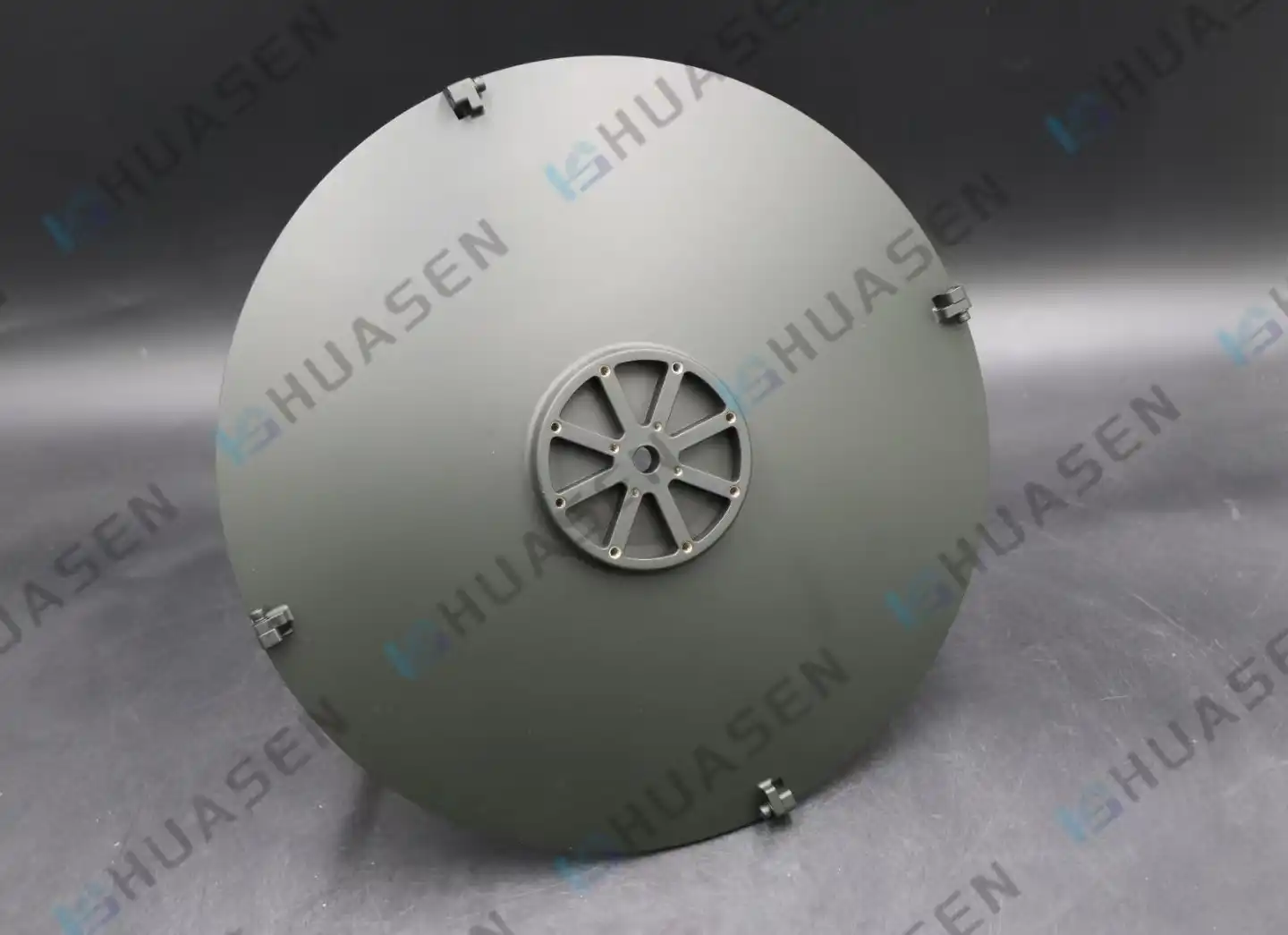
Understanding Parabolic Antenna Gain and Reflector Diameter
Fundamental Principles of Antenna Gain
When looking at the economics of parabolic antenna systems, you need to think about both how much they cost to buy and how much they will be worth in the long run. High-gain parabolic antennas often explain their higher prices by improving link performance, which means that less infrastructure investment is needed. This value proposition is especially strong in remote installations where the cost of getting to the spot makes system reliability very important. Suppliers with a long history, such as KATHREIN, Andrews, and Ubiquiti, offer a wide range of products for various levels of performance and use cases. Not onlyshould technical specs be used for evaluation, but also the supplier's stability, ability to meet certification requirements, and support skills. When there are a lot of deployments, standardisation is better for operations, so it's important that the supplier can offer customisation services and volume prices.
Reflector Diameter Impact on Performance
Reflector diameter serves as the primary physical parameter determining antenna performance characteristics. Larger reflectors capture more electromagnetic energy, 2.4 meter parabolic antenna resulting in higher gain values that enable improved signal-to-noise ratios and extended transmission distances. This relationship proves particularly valuable in point-to-point microwave links where path loss calculations depend heavily on antenna gain specifications. The diameter selection process must consider frequency-dependent factors that influence optimal sizing. Higher frequency applications can achieve substantial gain with relatively compact reflectors due to shorter wavelengths, while lower frequency systems require larger dishes to maintain equivalent performance levels. This frequency dependency explains why satellite communication systems operating at Ka-band (26.5-40 GHz) achieve high gain with smaller reflectors compared to L-band (1-2 GHz) applications requiring significantly larger apertures.
Dimensional Analysis of Gain vs Reflector Diameter in Parabolic Antennas
Physical Relationships and Scaling Laws
The dimensional analysis approach reveals fundamental scaling relationships that govern parabolic antenna performance across different frequency bands and physical configurations. The gain-to-diameter relationship exhibits predictable behaviour whenthe wavelength remains constant, demonstrating that antenna designers can accurately predict performance improvements through reflector size increases. This predictability enables system planners to optimise link budgets and coverage calculations with confidence. Beamwidth characteristics inversely correlate with reflector diameter, creating focused radiation patterns that improve spatial selectivity and reduce interference potential. The half-power beamwidth (HPBW) approximation formula θ = 70λ/D demonstrates this inverse relationship, where θ represents beamwidth in degrees, λ denotes wavelength, and D indicates reflector diameter. This narrowing effect proves beneficial in high-density deployment scenarios where spatial reuse requirements demand precise directional control.
Frequency-Dependent Considerations
Choosing the frequency has a big effect on the best mix between gain and reflector diameter. Higher frequency bands allow for smaller antenna designs while still having high gain values. This makes them appealing for uses where space is limited, like on aeroplanes or in cities. But as frequency goes up, atmospheric attenuation goes up, which could cancel out the gain benefits in some propagation environments. Because of the wavelength dependence, it is possible to make multi-band antennas that use width optimisation to get the best performance at each frequency. With the right feed design and reflector size, modern dual-band systems can get good gain performance across both the main and secondary frequency bands. This method works especially well for satellite transmission, where C-band and Ku-band services share the same reflector infrastructure.
Comparison of Parabolic Antenna with Other Antenna Types
Performance Advantages Over Alternative Designs
When it comes to most high-frequency uses, parabolic reflector antennas have better gain performance than other antenna technologies. Even though Yagi-Uda arrays work well at VHF and UHF frequencies, they can't compete with the small size and high gain of parabolic systems in the microwave and millimetre-wave bands. Horn antennas work very well, but they need to be very long to get the same amount of gain at lower frequencies, which is not practical. When it comes to looks and placement, flat panel antennas are nice, but they usually trade off gain performance for a lower profile. When maximum gain per unit cost is the main selection factor, the trade-off analysis often favours parabolic designs. Grid antennas can handle more wind than solid reflectors while still giving the same amount of gain. This makes them good for places with a lot of wind, where structural issues are important during design.
Cost-Benefit Analysis and Supplier Considerations
When looking at the economics of parabolic antenna systems, you need to think about both how much they cost to buy and how much they will be worth in the long run. High-gain parabolic antennas often explain their higher prices by improving link performance, which means that less infrastructure investment is needed. This value proposition is especially strong in remote installations where the cost of getting to the spot makes system reliability very important. Suppliers with a long history, such as KATHREIN, Andrews, 2.4-meterparabolic antennaand Ubiquiti, offer a wide range of products for various levels of performance and use cases. Not only should technical specs be used for evaluation, but also the supplier's stability, ability to meet certification requirements, and support skills. When there are a lot of deployments, standardisation is better for operations, so it's important that the supplier can offer customisation services and volume prices.
Installation, Maintenance, and Troubleshooting of Parabolic Antennas
Best Practices for Optimal Performance
The realised gain performance of parabolic antenna systems is directly affected by how they are installed. Choose the right reflector width by thinking about how the structure will be mounted, how much wind it will be exposed to, and how precise the alignment needs to be. To get the desired gain performance, larger reflectors need more durable mounting systems and careful alignment steps. This makes installation difficulty an important factor in the choice process. Because the beamwidth gets smaller as the reflector diameter grows, alignment accuracy becomes more important. The relationship between dish size and pointing accuracy is inversely proportional. This means that the acceptable pointing error for keeping peak gain performance is cut in half when the reflector diameter is doubled. Because of this connection, you need to buy precise mounting gear and alignment tools that work with the antenna's performance.
Routine Maintenance and Performance Optimisation
Things that can slow down a gain over time should be taken care of on a regular maintenance plan. Because the quality of the reflector surface directly affects how well an antenna works, it is important to check it on a regular basis to keep it working at its best. Environmental factors like ice buildup, debris collection, and surface corrosion can greatly lower effective gain. This is especially true for bigger reflectors, where even small surface irregularities can have a big effect on their performance over time. Checking the position of the feed horn is another important maintenance task that becomes more important as the reflector diameter grows. Feed positioning can change over time due to thermal cycling and structure settling, which can make the antenna less effective and change the way it radiates. As part of routine maintenance, you should check the gain measurements and look at the patterns to find performance loss before it affects how the system works.

Procurement Guide: Buying the Right Parabolic Antenna for Your Business Needs
Specification Alignment and Technical Requirements
Getting a parabolic antenna that works well starts with making clear specifications that take into account things like gain needs, space limitations, and how the antenna will be used. The relationship between gain and reflector diameter helps with the first estimates of size, but aperture efficiency, frequency response, and environmental ratings are more important in the real world and have a big impact on the final choice. To make sure that specifications are accurate and that vendors' skills are in line with what is needed, procurement teams must work closely with expert staff. Environmental qualification standards often affect antenna choice in ways other than gain and diameter. Certain certifications are needed for applications in maritime environments, aircraft platforms, microwave parabolic antenna or industrial facilities. This could limit the vendors that can be used or change the design trade-offs. During the procurement process, it is important to make sure that the chosen sellers have the right quality systems and certification programs to meet the needs of the application.
Supplier Evaluation and Partnership Development
A full review of a supplier looks at more than just the product specifications. It also looks at the technical skills, manufacturing quality, and support infrastructure. Suppliers who have worked on similar projects before can give you useful information that can help you choose the right antennas and integrate them more efficiently. For complicated deployments or specialised applications, it's getting more and more important to be able to offer customisation services, volume pricing, and technical support. For long-term partnerships, you should look at how stable the supplier is, how well the technology plan fits together, and how well the global support team can do its job. There are both well-known companies with decades of experience in the parabolic antenna business and new companies with fresh ideas. When you do a risk assessment, you should weigh the pros of tried-and-true technology against the possible pros of new designs or ways to cut costs.
Conclusion
The relationship between the gain of a parabolic antenna and the diameter of the reflector is based on basic electromagnetic concepts that make performance scaling predictable across a wide range of applications. When procurement teams and technical staff understand this relationship, they can make choices that balance performance needs with practical issues like cost, installation difficulty, and environmental conditions. The quadratic relationship between gain and diameter is a strong tool for designing communication systems that work best while taking into account factors that change with frequency and affect the best way to size them. Modern uses need complex answers that use cutting-edge polarisation technologies and precise production to get the best results while staying within reasonable cost and space limits. To choose the right antenna, you need to carefully look at its technical specs, the supplier's abilities, and the level of long-term help that will be needed to make sure it works well throughout the system's lifecycle.
FAQ
1. How does increasing the reflector diameter affect the parabolic antenna gain?
Increasing the reflector diameter enhances gain through a quadratic relationship where doubling the diameter theoretically quadruples the antenna gain. This improvement results from the larger aperture's ability to capture more electromagnetic energy and focus it more precisely at the feed point.
2. What factors limit the practical application of very large reflectors?
Wind loading, mounting structure requirements, transportation constraints, and cost considerations limit practical reflector sizes. Additionally, very large reflectors require extremely precise alignment and robust mounting systems that may make smaller, higher-frequency alternatives more economical.
3. Can smaller reflector diameters achieve adequate performance at higher frequencies?
Higher frequencies enable excellent gain performance with compact reflectors due to the inverse relationship between wavelength and gain. Millimetre-wave applications can achieve substantial gain with reflectors measuring less than one meter in diameter.
4. What installation factors most significantly impact realised antenna gain?
Alignment precision, feed horn positioning, reflector surface accuracy, and mounting stability represent the most critical installation factors. Larger reflectors amplify the impact of installation errors due to narrower beamwidth characteristics.
5. How do environmental conditions affect the gain-diameter relationship?
Environmental factors such as wind loading, ice accumulation, and thermal expansion can alter reflector geometry and degrade gain performance. Larger reflectors typically exhibit greater sensitivity to environmental effects due to increased surface area and structural complexity.
Huasen Microwave: Your Trusted Parabolic Antenna Manufacturer
Huasen Microwave Technology Co., Ltd. stands ready to support your parabolic antenna requirements with over three decades of engineering excellence and manufacturing expertise. Our comprehensive product portfolio includes both Dual Linear Polarisation Parabolic Antennas (DPRA) and Dual Circular Polarisation Parabolic Antennas (DCPRA), engineered to deliver exceptional gain performance across diverse frequency bands and application environments.
Our DPRA series utilises N-type or SMA connectors with working bandwidth ≤ 15%, supporting horizontal/vertical dual linear polarisation configurations that maximise spectral efficiency in point-to-point applications. The DCPRA variants offer left-hand/right-hand dual circular polarisation with axial ratio ≤ 1.5 dB for narrowband applications or ≤ 3 dB for wideband configurations, aparabolic antennaproviding flexible bandwidth options of ≤ 5% or ≤ 15% to match specific operational requirements.
Contact our technical team at sales@huasenmicrowave.com to discuss your specific requirements and explore customisation opportunities that optimise the gain-to-diameter relationship for your unique application environment.
References
1. Balanis, Constantine A. "Antenna Theory: Analysis and Design." Fourth Edition, Wiley Engineering Publishing, 2016.
2. IEEE Standard for Definitions of Terms for Antennas. IEEE Std 145-2013 (Revision of IEEE Std 145-1993). Institute of Electrical and Electronics Engineers, 2014.
3. Milligan, Thomas A. "Modern Antenna Design." Second Edition, McGraw-Hill Professional Engineering Series, 2005.
4. Silver, Samuel. "Microwave Antenna Theory and Design." MIT Radiation Laboratory Series Volume 12, Boston Technical Publishers, 1984.
5. Stutzman, Warren L., and Gary A. Thiele. "Antenna Theory and Design." Third Edition, John Wiley & Sons Engineering Textbooks, 2012.
6. Love, A.W. "Electromagnetic Horn Antennas." IEEE Press Selected Reprint Series on Antennas and Propagation, Institute of Electrical and Electronics Engineers, 1976.
Send Inquiry