OEM Waveguide Rotary Joint Solutions for Custom RF and Radar Systems






2026-06-02 20:44:43
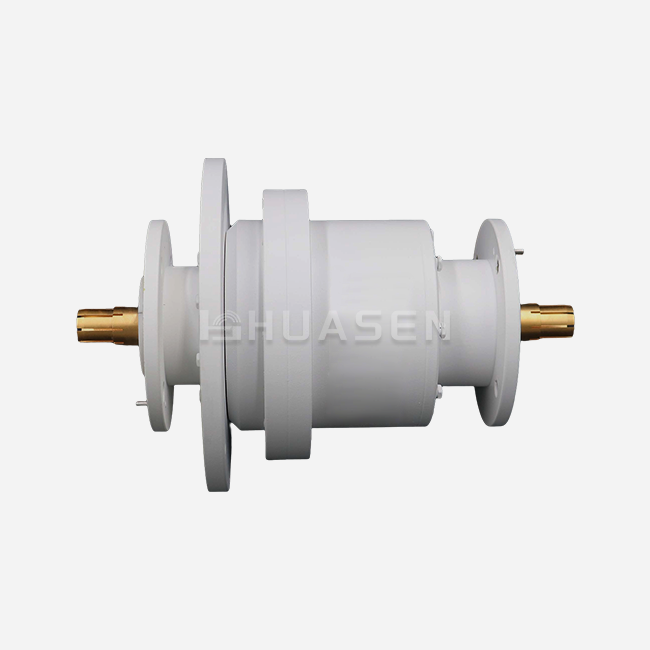
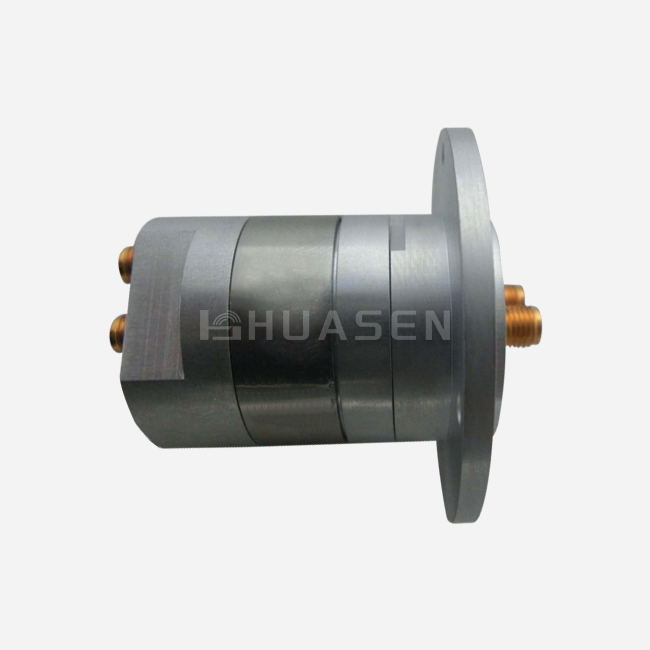
A waveguide rotary joint is what makes it possible for radar stations to send high-power signals while spinning all the time or for satellite terminals to follow moving objects across the sky. These carefully made parts solve a basic problem: how to send microwave and radio frequency signals between fixed equipment and moving platforms without messing up the signals or getting the cables tangled up. Defense radar, aerospace communication systems, and advanced 5G/6G infrastructure all rely on waveguide rotary joints because, unlike traditional slip rings, they keep exceptional signal integrity even under constant spinning. If you choose the right OEM partner, your custom RF and radar systems will work well, be reliable, and hold their value over time.
Understanding Waveguide Rotary Joints: Principles and Applications
Waveguide rotary joints work on the idea of electromagnetic field continuity, which lets signals travel across a spinning surface without stopping. The stator part stays still while the rotor part spins. This keeps an exact air gap or contacting surface that keeps the phase and amount of the electromagnetic wave. This design gets rid of the "cable wrap" problem that comes with spinning systems. In those systems, wires would twist and break after a certain number of turns.
Core Operating Mechanisms
At the heart of every waveguide rotary joint is a transition that was carefully designed to keep impedance matching while allowing for rotation. The gadget usually uses circular or helical waveguide modes that are rotationally symmetric, which means that the electromagnetic field pattern stays the same no matter what angle it is viewed from. More advanced versions with two channels use concentric waveguide structures or mode-transducing methods to split two different frequency bands along a single axis of spin. Cross-talk between send and receive routes is stopped in multi-function radar systems by this architecture's channel isolation of more than 60 dB.
Critical Technical Specifications
Performance factors tell us how well these parts work in challenging situations. Insertion loss stays below 0.3 dB per channel most of the time, so signals aren't weakened too much during transfer. VSWR values stay below 1.25:1, which guarantees the best power transfer efficiency. To keep the signal stable during constant movement, the "WOW" specification—which means change in insertion loss during rotation—must be kept to less than 0.05 dB. High-quality aluminum or copper metals that are often silver-plated have lower ohmic losses and can handle peak powers of up to a megawatt and normal powers of up to a kilowatt.
Primary Industry Applications
For defense radar grids to find targets and control fire, these joints are necessary. Antennas must watch out for dangers while sending out high-power pulses. In these situations, the joints can handle high vibrations and temperature changes between -40°C and +85°C. They can also handle different polarization channels for accurate rejection of junk. They are used in Satcom-on-the-Move (SOTM) systems for maritime satellite communication devices, which need to keep the antenna stable even when the ship is pitching and rolling to keep the satellite link. The joints can handle both high-power uplinks and sensitive downlinks at the same time, and they work reliably in salt-fog conditions.
Broadband double-ridge waveguide rotary joints that cover multiple octaves are used in airborne electronic warfare systems. This lets jammer antennas quickly turn and track enemy frequencies. Base station front-ends for 5G backup links work better with single-channel designs that let you move the beam mechanically instead of using electronic phased arrays. This makes the system simpler and cheaper. Ground stations that support groups of low-earth-orbit satellites need rotary joints that can track satellites quickly so they can accommodate satellites that move across the sky in minutes.

Comparing Waveguide Rotary Joint Types and Technologies
Before you can choose between waveguide rotary joints, slip rings, and fiber optic rotary joints, you need to know how they work differently. Each technology has a different way of dealing with certain system needs, weather conditions, and frequency limits.
Performance Factor Analysis
When data quality can't be compromised, waveguide rotary joints work great in high-frequency, high-power situations. They keep the insertion loss below 0.5 dB from the X-band to the Ka-band, while slip rings usually have a loss of 1-3 dB and add noise from the brush contact. Fiber optic rotary joints don't let electromagnetic interference happen, but they need to be changed from optical to electrical, which makes them more complicated and means they can only handle signal-level power transfer.
Different technologies have very different frequency powers. Waveguide designs easily work with microwave and millimeter-wave bands from L-band (1.0–2.0 GHz) to W-band (75–110 GHz), which is what radar and satellite systems need. Due to parasitic capacitance and inductance, slip rings have trouble above a few gigahertz. Fiber optic systems can handle baseband frequencies through optical carrier frequencies, but they need extra hardware for RF uses.
Material and Construction Impact
Material choice has a direct effect on how much power it can handle and how long it will last in different environments. Copper alloy design is better at conducting electricity for high-power radar uses. It can handle peak powers of more than 100 kilowatts with the right amount of pressurization using SF6 or dry nitrogen to keep the voltage from dropping. Aluminum versions are lighter for platforms that will be used in the air, but they still work well enough for communication-level power needs. By lowering surface resistance, silver plating cuts down on ohmic losses that cause heat during high-duty cycle operations.
The choice of dielectric element affects the amount of spinning friction and the steadiness over time. For a waveguide rotary joint, modern plastics can be rotated continuously for years without breaking down, and ceramic insulators offer better temperature stability in harsh settings. Seal designs with O-rings or gaskets keep internal parts safe from water, dust, and harmful atmospheres. They meet IP67 or MIL-STD-810 standards, which are needed for installs on ships and in the outdoors.
Choosing the Best OEM Waveguide Rotary Joint for Custom RF and Radar Systems
There's more to choosing an OEM partner than just looking at datasheets. Whether a provider is a strategic partner or a buying headache depends on how well they can integrate systems, get certified, and provide long-term support.
Decision Criteria for Procurement Managers
The frequency range has to be exactly in line with the working bands of the machine. A radar that needs to do both S-band spying and X-band tracking at the same time needs to be built with two channels and the right filters to keep them from interfering with each other. For tracking purposes, the rotational speed is important. For example, satellite ground stations may need constant rotation at 10 to 30 RPM, while phased array radars need slower setting speeds with high angular accuracy.
When figuring out power output, you need to look at both the normal and peak power levels. A continuous-wave transmission link with an average power of 10 watts needs different design factors than a weather radar that sends 100-kilowatt pulses with a 0.1% duty cycle. The environment affects the choice of materials and the level of sealing needed. For example, salt spray and changes in temperature can kill parts that aren't properly covered within months on offshore wind turbine communication lines.
Customization Options and Standards
How possible a mechanical coupling is depends on how well the interfaces work together. Standard flange types (WR-series waveguide, CPR, or PDR) must match current system parts, or adapter designs that are made just for the system will have to be made. Because of limited room, airborne or space-based platforms need small designs that keep their electricity performance even though they are smaller. During the design process, connector standards for coaxial ports, such as SMA, N-type, or K-type, need to be specified to make sure they work with test tools and system interfaces.
Different types of applications have different certification needs. For military systems, qualification tests must be MIL-STD-202 or MIL-STD-810. For business telephony equipment, RoHS compliance and maybe FCC or CE marking are needed. Space-qualified versions are tested for outgassing according to ASTM E595, and their radiation hardness is confirmed. Getting these certificates from your OEM provider gives you peace of mind that the parts meet legal standards without adding to the work of qualifying your final product.
Lead Times and Volume Considerations
Standard catalog items usually ship between 4 and 6 weeks, but unique designs need 12 to 16 weeks for engineering, testing, and approval. Costs per unit drop a lot after 100 pieces, which is what economies of scale mean for high-volume production runs. Setting up blanket buy orders with staged deliveries is a good way to keep track of supplies and get good deals. OEM providers that can make things in the United States often have faster wait times and better customer service than offshore options, but the differences in cost need to be carefully considered.
Innovative OEM Solutions: Enhancing Performance and Reliability
Custom-engineered waveguide rotary joints can solve problems that can't be solved with stock-store parts. Custom designs make the best use of mechanical envelopes, include multiple frequency bands, and add tracking features that make the system more reliable and easy to manage.
Tailored Engineering for Complex Systems
Dual-band air traffic control radar systems are an example of a custom approach. One channel handles high-power S-band search pulses, and the other handles IFF (Identification Friend or Foe) signals, which need to be completely separate to avoid fake targets. The concentric waveguide design keeps the separation at more than 70 dB while still fitting into the base assembly's mechanical limits. Multi-function marine radars that combine surface search, air search, and gun control functions into a single rotating antenna system also have problems with integration.
Testing and Validation Procedures
VSWR measurements across the entire frequency range confirm the quality of the impedance matching for the rotary waveguide joint/waveguide joints, and automatic network analyzer runs record performance at various rotational points to measure WOW characteristics. Using pulse sources that look like real radar patterns, high-power testing confirms that thermal management and corona prevention work well under operational stress for the rotary waveguide joint/waveguide joints. As part of environmental stress testing, temperatures are changed from -55°C to +125°C, vibrations are tested according to MIL-STD-810 profiles, and salt fog is exposed for marine uses for the rotary waveguide joint/waveguide joints. These confirmation steps make sure that parts can work in real-world situations and don’t break down too soon in the field.
Emerging Technology Trends
New materials, such as graphene-enhanced wires, offer lower insertion loss and better thermal conductivity, which will allow designs with more power density. Advanced cutting techniques are used in the effort to make things smaller. These techniques make small parts for UAVs and small satellite platforms, where every gram counts. Temperature sensors and rotational position encoders are built into smart tracking integration. This allows for predictive maintenance that stops breakdowns before they happen. Condition-based maintenance methods can be used with wireless telemetry systems that send health data from moving platforms without the need for extra slip ring contacts.
Practical Guide: Procuring Waveguide Rotary Joints for Your Business Needs
To easily go through the buying process, you need to know how prices work, how to communicate, and how to build relationships in a way that leads to success. The buying process starts with a thorough technical questionnaire that lists frequency bands, power levels, weather conditions, and interaction needs. Giving OEM engineers system block models and mechanical envelope limits helps them come up with the best solutions instead of general ones. After the initial design approval, samples are looked at, and units are put through lab tests to make sure they work properly electrically and mechanically before production numbers are committed.
The pricing plans take into account how complicated personalization is and how much is promised. Standard catalog items have prices that are listed in books, and there are breaks in the prices for larger orders. Non-recurring engineering (NRE) fees cover design, tooling, and quality testing for custom designs. These fees usually range from $5,000 to $50,000, based on how complicated the design is. Unit prices go down a lot as the number of items ordered goes up. For example, a special waveguide rotary joint might cost $3,500 for 10 pieces, but only $1,200 per unit for 100 pieces. You can save more money and get priority manufacturing slots by negotiating volume promises across multiple projects or making long-term deals.
After the sale, assistance is what sets great OEM partners apart from average sellers. Full test data sets with VSWR plots, insertion loss measures, and isolation descriptions across temperature ranges give inspectors a place to start when they come in, particularly for rotary waveguide joints/waveguide joints. Usually, warranties last between 12 and 24 months and cover problems with the way the product was made, but not damage caused by improper installation or use beyond the recommended specs. When fixing problems with system integration, how quickly technical help responds is important. Having access to application experts who know both the component and how it works speeds up the problem-solving process.
Conclusion
Waveguide rotary joints are an important part of modern RF and radar systems because they allow the system to keep rotating while keeping the signal's purity even when conditions are tough. By reviewing technology options, understanding performance factors, and choosing qualified OEM partners, you can make sure that your custom system meets design goals without having to be redesigned or failing before it's supposed to. Buying well-designed rotary joints is a smart move because they last longer, work reliably, and need less upkeep in a wide range of situations, from military radar to 5G base station infrastructure and satellite ground stations.
FAQ
1. What frequency ranges can waveguide rotary joints support?
Waveguide rotary joints are available in a wide range of frequencies, from L-band (1.0–2.0 GHz) to W-band (75–110 GHz), and can be designed to fit the needs of any application. Weather radar and military tracking systems use S-band and X-band versions, while Ka-band versions help satellite transmission base stations. Broadband double-ridge designs cover a wide range of frequencies, making them useful for electronic warfare systems that need fast wideband coverage. The best frequency range relies on the task at hand, the size limitations of the waveguide, and the amount of power that needs to be handled.
2. How do dual-channel designs maintain signal isolation?
To physically split data lines, dual-channel waveguide rotary joints use either concentric waveguide structures or mixed waveguide-coaxial designs. Isolation levels higher than 60–70 dB are possible with careful mode control and reduction methods that stop channels from coupling. This feature lets radar systems send and receive signals at the same time, or it lets communication terminals use two bands at the same time without cross-talk interference that lowers system sensitivity or creates false targets.
3. What maintenance procedures extend operational life?
Regular checking of seals and bearings keeps the surroundings from getting dirty, and lubricating the bearing surfaces on a regular basis keeps the spinning smooth with little friction. For pressurized systems, you have to keep an eye on the gas pressure and add more dielectric gas if it leaks. Using network analyzers to check the electrical performance finds slow decline before problems affect how the system works. When you put something correctly by following the torque specs and alignment steps, you avoid mechanical stress that speeds up wear.
Partner with Huasen Microwave for Precision-Engineered Rotary Joint Solutions
With more than 30 years of experience making high-frequency microwave and millimeter-wave parts, Huasen Microwave has been a reliable partner in the military, aircraft, communications, and radar industries. Our custom waveguide rotary joint systems work very well over a wide range of difficult frequency ranges and meet strict standards for power handling and the environment. We provide full technical help from the initial design meeting to full-scale production, making sure that your RF and radar systems work together perfectly. Get in touch with our engineering team at sales@huasenmicrowave.com to talk about your unique needs and find out why top system integrators choose Huasen Microwave as their waveguide rotary joint manufacturer of choice.
References
1. Skolnik, M.I. (2008). Radar Handbook, Third Edition. McGraw-Hill Education, New York.
2. Pozar, D.M. (2011). Microwave Engineering, Fourth Edition. John Wiley & Sons, Hoboken, New Jersey.
3. IEEE Standard 149-2021. IEEE Standard for Waveguide and Coaxial Transmission Line Systems. Institute of Electrical and Electronics Engineers, New York.
4. Chattopadhyay, G. (2013). Technology, Capabilities, and Performance of Low Power Terahertz Sources. IEEE Transactions on Terahertz Science and Technology, 3(1), 33-53.
5. Sarabandi, K. & Koh, I.S. (2001). A Complete Physics-Based Channel Parameter Simulation for Wave Propagation in an Inhomogeneous Medium. IEEE Transactions on Antennas and Propagation, 49(4), 535-547.
6. MIL-STD-810H (2019). Environmental Engineering Considerations and Laboratory Tests. United States Department of Defense, Washington, D.C.
Send Inquiry