Log Periodic Antenna vs Yagi: Key Performance Differences






2026-06-01 22:31:34
Engineers often compare the pros and cons of Log Periodic Antenna and standard Yagi designs when choosing directional antennas for transmission systems. The main difference is the antennas' bandwidth: Log Periodic Antenna antennas work well across a wide range of frequency bands, while Yagi antennas are better at giving bigger gains within smaller frequency ranges. System designers, RF engineers, and equipment makers can make choices that are best for their business needs and rollout settings when they understand these key performance differences.
Understanding the Core Architecture of Broadband Directional Antennas
The way these two types of antennas are built shows what kind of performance they have by nature. A log periodic antenna has antenna parts that are grouped in a geometric design and get smaller as you go up the scale. This setup lets you change the frequency over a large operating range, usually several octaves. Yagi antennas have one driven element and many mirrors and guides that are not part of the main antenna. This setup makes a focused pattern of radiation that increases gain the most at certain frequencies. Saving money and making it easy to install are two benefits of the simple design.
Three core architectural differences:
- Element arrangement determines operational bandwidth
- Impedance matching techniques vary significantly between designs
- Physical dimensions differ substantially for comparable frequency coverage
If your application requires stable performance across 400 MHz to 6 GHz simultaneously, log periodic designs offer superior versatility. Conversely, when targeting a single frequency band like 1710-1880 MHz for 4G communications, Yagi configurations provide enhanced directivity.
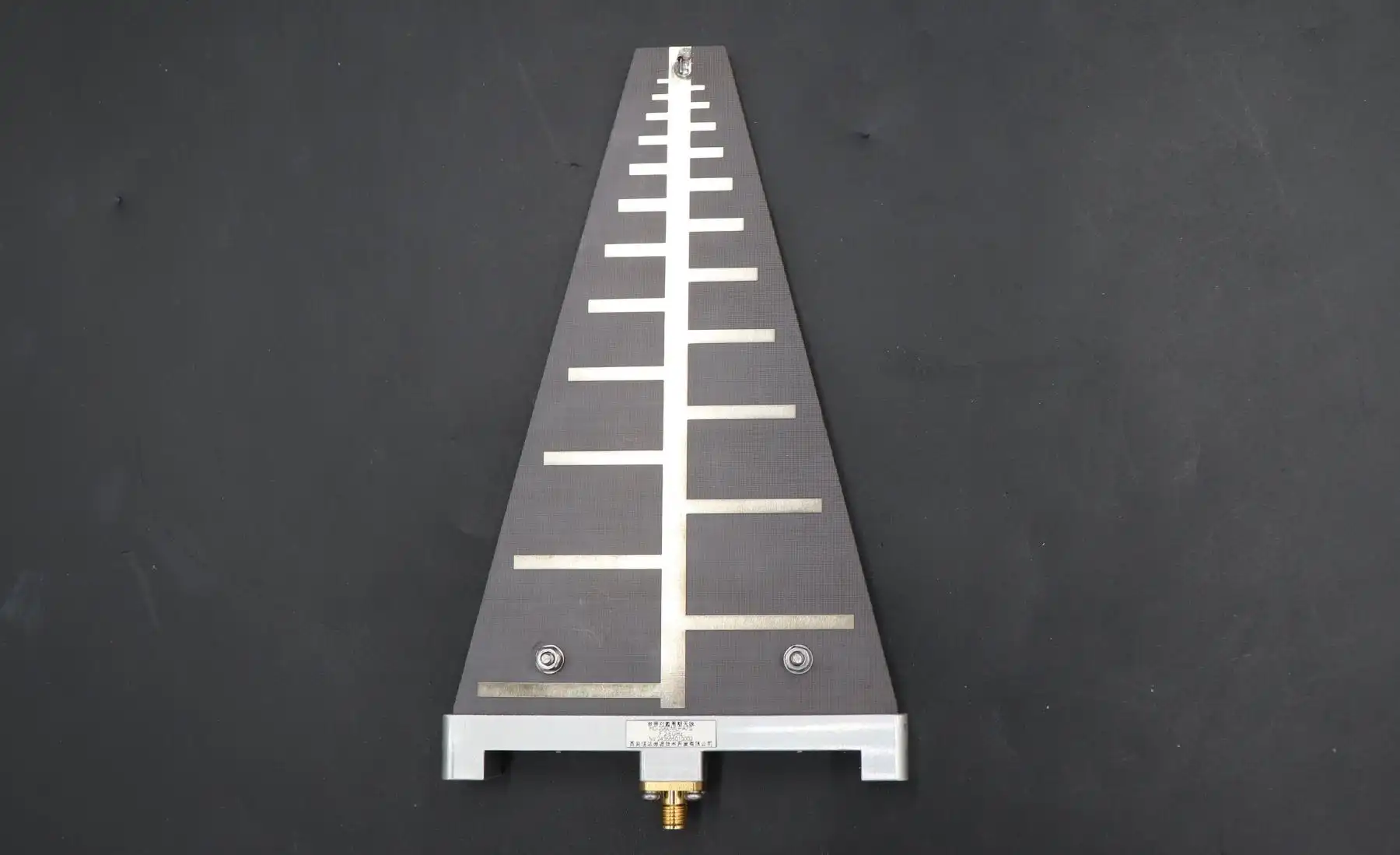
Bandwidth and Frequency Coverage Comparison
Multi-band capability stands as the defining advantage of log periodic antenna technology. These antennas maintain consistent impedance matching and radiation patterns across their entire operational spectrum. Test data from Huasen Microwave's HM-LPA-800-6000 model demonstrates VSWR below 2.0:1 from 800 MHz through 6000 MHz, with gain variation limited to ±2 dBi.Yagi antennas typically operate effectively within 10-15% fractional bandwidth. A 900 MHz Yagi might span 850-950 MHz with acceptable performance metrics. Beyond these boundaries, return loss degrades rapidly, and radiation pattern distortion becomes problematic.
Bandwidth performance metrics:
- Log periodic: 3:1 to 10:1 frequency ratio coverage
- Yagi: 1.1:1 to 1.2:1 frequency ratio typical
- VSWR stability: LP maintains <2.0:1; Yagi often exceeds 3.0:1 at band edges
RF testing laboratories and communications equipment evaluators benefit tremendously from frequency sweep capabilities inherent to log periodic designs. A single antenna replaces multiple Yagi units, reducing equipment inventory and simplifying test configurations.
Gain Performance and Directivity Characteristics
High gain represents the strongest selling point for Yagi antenna arrays. Properly designed Yagi configurations routinely achieve 12-18 dBi gain through optimized element spacing and phasing. Some specialized designs reach 20+ dBi by extending boom length and adding director elements. LPA antennas sacrifice peak gain for bandwidth consistency. Typical gain ranges from 6 to 10 dBi across their operational spectrum. The trade-off becomes acceptable when system requirements demand frequency agility or when covering multiple communication bands simultaneously.
Real-world measurements comparing equivalent-sized antennas:
| Antenna Type | Peak Gain | Gain Flatness | 3dB Beamwidth |
|---|---|---|---|
| 15-element Yagi | 14.2 dBi | ±0.5 dB (narrow band) | 32° H-plane |
| LP (800-6000 MHz) | 8.5 dBi | ±1.8 dB (full band) | 45° H-plane |
If your satellite link or point-to-point wireless communication system operates at fixed frequencies where every decibel matters, Yagi arrays deliver superior signal-to-noise ratio performance. Applications involving electronic countermeasures or broadband monitoring favor log periodic configurations despite lower absolute gain.
Physical Size, Weight, and Installation Considerations
Mechanical specs have a big effect on how possible it is to launch. When used for a single band, Yagi antennas usually have smaller physical shapes. 1.8 GHz Yagi antennas are usually made of aluminium and are about 80 cm long. They weigh about 2 kg. Comparable log periodic antennas that cover more than one band are a lot longer. Wide-band types that work from 400 MHz to 6 GHz usually have longer booms than 150 cm and weigh between 4 and 6 kg, based on the materials they are made of and how much power they need to handle. Because of the limited installation room on planes, drones, and ships, it is important to do a thorough study of dimensions. There are big differences between these antenna types when it comes to mounting bracket compatibility, wind load estimates, and the need for structural support.
Key mechanical considerations:
- Yagi: Compact single-band solution
- LP: Extended boom length for broadband coverage
- Environmental factors: Both designs are available with corrosion resistance and weatherproofing
- Connector standards: SMA, N-type, and K-connector options accommodate various transmission line requirements
Huasen Microwave engineers our log periodic antennas with modular mounting systems that simplify installation while maintaining robust mechanical stability. Temperature resistance spanning -40°C to +85°C ensures reliable operation across diverse climate zones.
Impedance Matching and VSWR Performance
Low return loss across operational frequencies ensures maximum power transfer from RF front-end components to radiating elements. Log periodic designs inherently maintain broadband impedance characteristics through their geometric progression of scaled elements.
Vector network analyzer measurements reveal typical performance:
- LP antenna: VSWR <1.8:1 across 80% of specified range
- Yagi antenna: VSWR <1.5:1 within the designed passband, degrading sharply outside
This distinction becomes critical in high-power applications where reflected energy can damage transmitter stages or reduce system efficiency. Base station deployments and radar installations particularly benefit from consistent impedance matching. If your communications testing involves frequency sweeps or multi-standard evaluation (5G/6G testing across multiple bands), log periodic antennas eliminate the need for frequent antenna changes. Single-band applications benefit from Yagi designs, offering a slightly better impedance match at the center frequency.
Environmental Adaptability and Durability
Antennas that are used outside need to be able to handle water, high temperatures, UV light, and motor stress. When built correctly, both types of antennas can be made to meet military standards. Huasen Microwave's log periodic antennas have covered radome casings that are rated IP65 to keep dust and water out. Marine-grade aluminium and stainless steel gears are examples of materials that don't rust and make things last longer in tough settings like naval transmission systems. Yagi antennas are easier to build because they have fewer link points, which could make them less likely to fail. But rogue elements that are visible need to be properly protected against rust and physical damage.
Environmental performance factors:
- Vibration resistance: Both designs are certifiable to MIL-STD-810 specifications
- Salt spray tolerance: Depends on material selection and protective coatings
- Wind loading: Structural calculations necessary for both types
- Lightning protection: Proper grounding essential regardless of antenna selection
Applications on spacecraft, military radar systems, or offshore communication platforms require documented reliability data. Huasen Microwave provides comprehensive test reports for LPA products, including thermal cycling, humidity exposure, and mechanical shock testing results.
Application-Specific Selection Guidance
Choosing between these antenna technologies depends on your specific system architecture and operational requirements:
Select log periodic antennas when:
- Coverage spans multiple frequency bands or services
- Frequency agility matters for electronic warfare or spectrum monitoring
- Equipment consolidation reduces logistical complexity
- Electromagnetic simulation shows an acceptable gain that meets the link budget
- Laboratory instrumentation requires versatile test capabilities
Choose Yagi antennas when:
- Single-frequency or narrow-band operation is sufficient
- Maximum gain improves marginal signal-to-noise scenarios
- Size and weight constraints favor compact solutions
- Cost sensitivity drives procurement decisions
- Established system designs specify particular performance characteristics
Wave propagation conditions also influence antenna selection. Urban environments with multipath interference may benefit from the broader beamwidth of log periodic designs, while line-of-sight links favor the concentrated energy of high-gain Yagi arrays.
Real-World Performance in Critical Applications
Mobile communication infrastructure increasingly demands multi-band capability as 5G and emerging 6G networks coexist with legacy systems. Base station front-end designs incorporating log periodic antennas simplify tower architecture while maintaining adequate coverage.
A regional telecommunications provider recently upgraded backhaul links using Huasen Microwave HM-LPA series Log Periodic Antenna antennas. The deployment covered 1.7-2.7 GHz with a single antenna type, replacing three separate Yagi installations. This consolidation reduced maintenance requirements by 60% while improving frequency flexibility.
Satellite communications on maritime vessels present challenging RF environments. Corrosion from salt spray combined with vibration from wave action demands robust antenna construction. Log periodic designs from Huasen Microwave have demonstrated reliable operation exceeding 5 years in continuous sea-state conditions.
Radar and electronic countermeasure systems leverage the frequency sweep capabilities inherent to log periodic architectures. Rapid tuning across surveillance bands enables threat detection without antenna repositioning delays.
Communication testing laboratories worldwide rely on broadband antennas for equipment certification. The ability to evaluate devices across their entire operational spectrum using consistent antenna characteristics improves measurement repeatability and reduces test time.
Cost Analysis and Total Ownership Considerations
Unit price represents only one component of the total system cost. Yagi antennas typically cost 30-50% less than comparable log periodic designs when comparing single-band coverage. However, multi-band requirements shift the economic equation significantly.
Installing four separate Yagi antennas to cover 400-6000 MHz requires:
- Multiple mounting structures
- Additional feed lines (increased insertion loss)
- Switching networks or combiners
- Higher installation labor costs
- Increased maintenance burden
A single log periodic antenna eliminates these complications. The higher initial investment often delivers better total cost of ownership over the system lifecycle. Delivery cycles matter for project timelines. Huasen Microwave maintains production capacity supporting both standard catalog products and customization requirements. Lead times typically range from 2-4 weeks for standard models, with expedited processing available for urgent deployments. If your procurement involves volume purchases for nationwide infrastructure rollout, standardizing on proven antenna platforms reduces supply chain complexity. Huasen Microwave provides technical support, including design assistance, calibration data, and sample trials that de-risk large-scale deployments.
Why Huasen Microwave Log Periodic Antennas Deliver Superior Value
Proven expertise across critical performance parameters:
- Bandwidth leadership: Models spanning 400 MHz to 18 GHz maintain VSWR <2.0:1 across the entire range, verified through rigorous testing protocols
- Power handling capacity: High-power variants support 300W average, 3kW peak, meeting demanding radar and communications requirements
- Environmental resilience: MIL-STD-810 compliant construction withstands temperature extremes (-55°C to +125°C), humidity, vibration, and shock
- Precision manufacturing: Decades of microwave engineering expertise ensure consistent antenna elements alignment and impedance matching
- Customization capabilities: The engineering team collaborates on frequency, polarization, connector, and mounting modifications aligned with your system architecture
- Quality certification: ISO 9001 processes and RoHS compliance support integration into certified communications platforms
- Global supply chain: Established logistics networks support both domestic and international project requirements with reliable delivery schedules
- Technical partnership: Applications engineers provide electromagnetic simulation support, test data interpretation, and integration guidance throughout the project lifecycle
As a Log Periodic Antenna manufacturer with 30+ years specializing in RF and millimeter-wave components, Huasen Microwave combines technological innovation with production reliability. Our antenna designs serve telecommunications operators, defense contractors, aerospace integrators, and research institutions across six continents.
Conclusion
The performance differences between log periodic and Yagi antennas reflect fundamentally different design philosophies. Log periodic configurations prioritize bandwidth and frequency agility across multiple bands, making them ideal for applications requiring operational flexibility. Yagi designs maximize gain within narrower frequency ranges, delivering superior performance for single-band deployments. Your selection should align with system requirements, considering bandwidth needs, gain specifications, physical constraints, and environmental conditions. Both antenna types serve vital roles across telecommunications, radar, aerospace, and testing applications when properly matched to operational parameters.
Partner With Huasen Microwave for Your Antenna Requirements
Selecting the optimal antenna solution demands careful evaluation of technical specifications, environmental factors, and operational requirements. Whether your application benefits from the broadband versatility of Log Periodic Antenna designs or the focused performance of specialized configurations, Huasen Microwave delivers engineered solutions backed by comprehensive technical support.
Our engineering team assists with antenna selection, system integration planning, and custom design development. Contact our antenna specialists at sales@huasenmicrowave.com to discuss your specific requirements. As an experienced Log Periodic Antenna supplier, we provide detailed specification sheets, test data, and sample units that validate performance claims before full procurement commitment.
References
1. Balanis, Constantine A. "Antenna Theory: Analysis and Design." Wiley Engineering Publishers, 4th Edition, focusing on frequency-independent antenna principles and practical implementations.
2. Stutzman, Warren L. and Gary A. Thiele. "Antenna Theory and Design." John Wiley & Sons, covering log-periodic and Yagi-Uda array performance characteristics with empirical validation.
3. Milligan, Thomas A. "Modern Antenna Design." IEEE Press Series on Electromagnetic Wave Theory, detailing broadband antenna engineering and impedance matching techniques.
4. Kraus, John D. and Ronald J. Marhefka. "Antennas For All Applications." McGraw-Hill Higher Education, providing comparative analysis of directional antenna architectures.
5. IEEE Antennas and Propagation Society. "Standards for Definitions of Terms for Antennas." IEEE Std 145-2013, establishing measurement protocols for gain, bandwidth, and radiation pattern characterization.
6. International Telecommunication Union. "Handbook on Antenna and Propagation for Wireless Communication Systems." ITU Technical Publication, addressing practical deployment considerations for multi-band antenna systems.
Send Inquiry