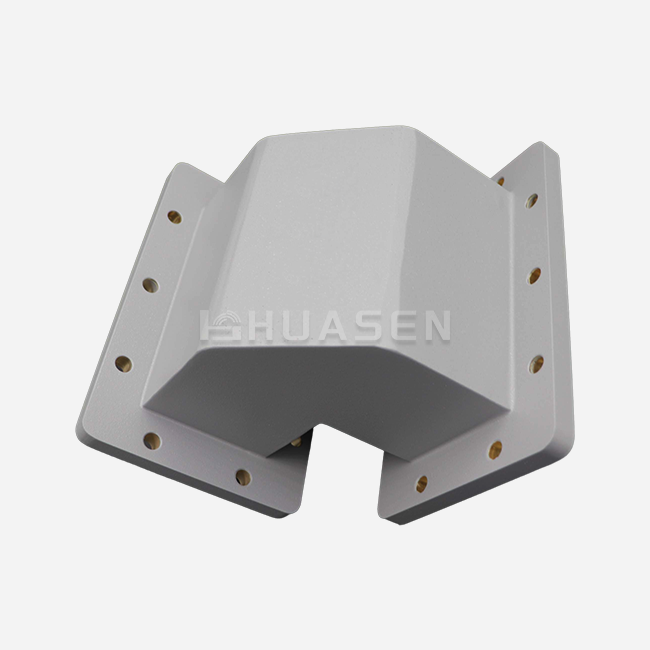
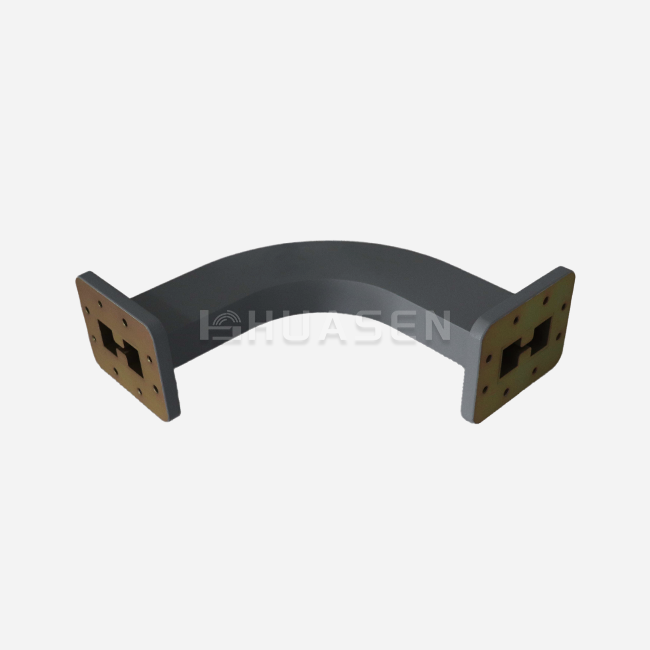
OEM Waveguide Power Divider Solutions for Custom RF Systems






2026-07-02 21:00:11
When your RF architecture demands precision signal distribution across multiple channels without compromising power integrity or phase coherence, Waveguide Power Dividers become the engineering choice that separates successful deployments from costly failures. These passive components split electromagnetic energy traveling through hollow metallic structures, delivering superior performance in high-frequency, high-power environments where coaxial and planar alternatives simply cannot survive. At Huasen Microwave, we've spent over three decades refining OEM and ODM capabilities to deliver custom waveguide power dividers that solve the exact challenges system integrators, equipment manufacturers, and research institutions face daily.
Understanding OEM and ODM in the Context of Waveguide Power Dividers
The distinction between Original Equipment Manufacturing and Original Design Manufacturing matters significantly when sourcing critical RF components. OEM partnerships allow you to specify every parameter—frequency range, port configuration, flange type, power rating, and enclosure design—while we handle manufacturing to your exact blueprints. This approach works perfectly when your engineering team has finalized designs but lacks the specialized machining facilities and RF testing infrastructure.
ODM collaboration takes the partnership deeper. Our RF engineers work alongside your team from the concept phase, contributing electromagnetic simulation expertise, material selection guidance, and mechanical design optimization. We've co-developed Magic Tee configurations for monopulse radar systems, engineered thermally-optimized housings for satellite ground stations operating in extreme climates, and created compact multi-way splitters for phased array installations where space constraints seemed impossible to overcome.
System integrators building 5G infrastructure across diverse geographies need power dividers that handle environmental extremes while maintaining insertion loss specifications below 0.3 dB. Defense contractors developing electronic countermeasure systems require peak power handling exceeding 5 kW with port-to-port isolation surpassing 35 dB. Laboratory instrument manufacturers demand phase balance within ±1.5 degrees across the operational bandwidth. Standard catalog products rarely address these intersecting requirements, making customization not optional but essential.
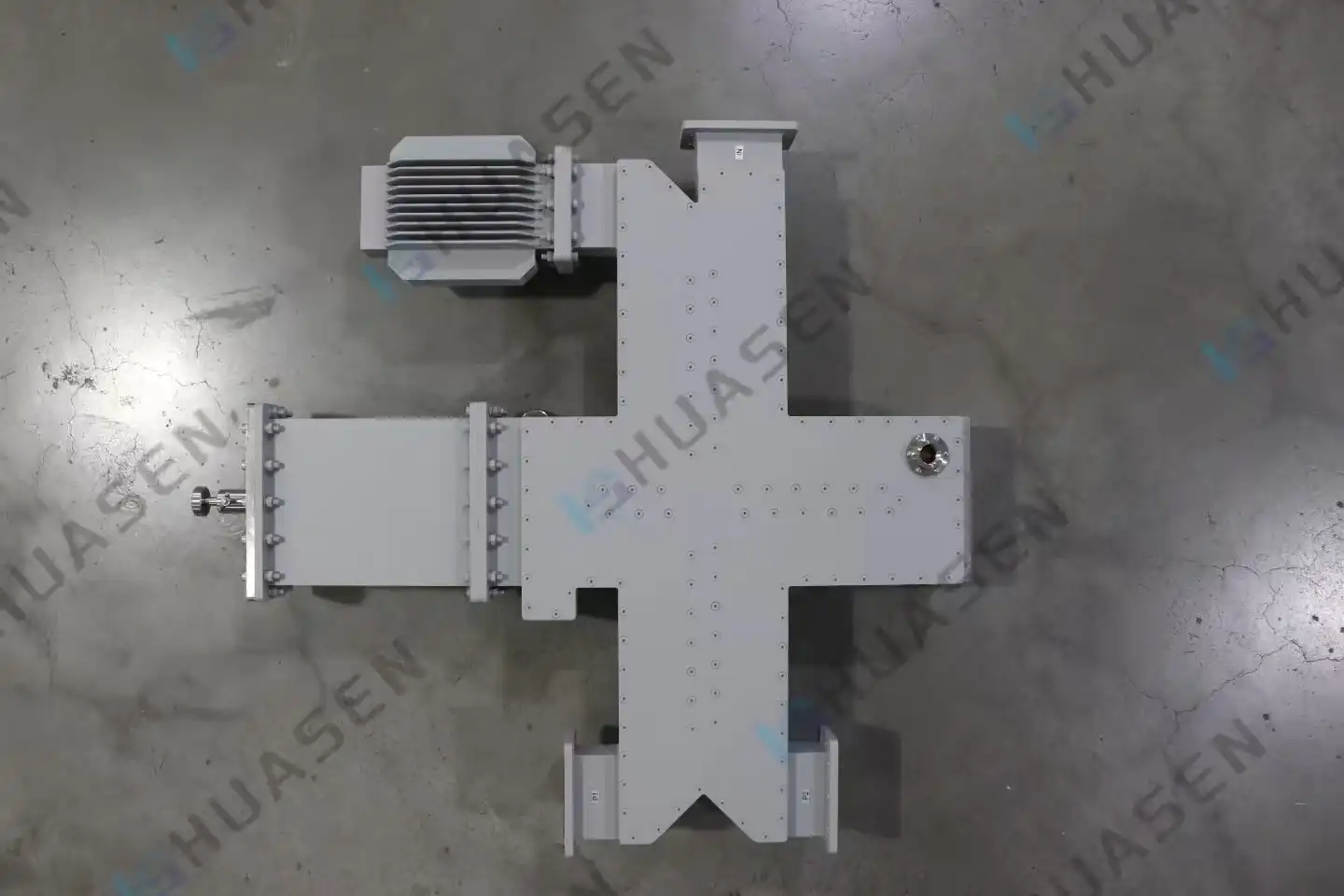
Our OEM and ODM Strengths for Waveguide Power Divider Manufacturing
Huasen Microwave's RF power divider is manufactured at a facility that houses precision CNC machining centers capable of maintaining tolerances within ±0.02 mm on waveguide apertures—critical for preventing passive intermodulation that plagues base station front-ends. Our electroplating lines apply silver coatings with controlled thickness, optimizing skin effect losses, while our proprietary rhodium flash prevents tarnishing without degrading conductivity.
The electromagnetic simulation laboratory runs CST and HFSS software, modeling field distributions inside complex junctions before any metal gets cut. This capability reduced one aerospace client's prototype iteration cycle from eight months to eleven weeks, accelerating their satellite payload qualification schedule significantly.
Quality assurance begins with incoming material verification using X-ray fluorescence spectroscopy, confirming the copper purity exceeds 99.95%. Vector Network Analyzers from Keysight and Rohde & Schwarz measure S-parameters across the full waveguide bandwidth, capturing insertion loss, return loss, and isolation data that accompany every shipped unit. Environmental stress screening subjects sample units to thermal cycling between -55°C and +125°C, followed by vibration testing per MIL-STD-810 protocols.
Our supply chain relationships with waveguide flange manufacturers across Germany, Japan, and domestic suppliers ensure we access UG-387, UG-599, and custom flange patterns without lead time penalties. When a European telecommunications provider needed 1,200 Ka-band dividers within a six-week window for a network rollout, our dual-source material strategy and flexible production scheduling met the deadline while maintaining full traceability documentation.
Scalability infrastructure supports both prototype quantities of three units for university research labs and production runs exceeding 5,000 pieces for equipment manufacturers. The transition from low-volume to high-volume manufacturing happens seamlessly because our process documentation captures every dimensional specification, plating parameter, and testing threshold from the initial prototype phase.
Comprehensive Customization Options for Your Waveguide Power Divider
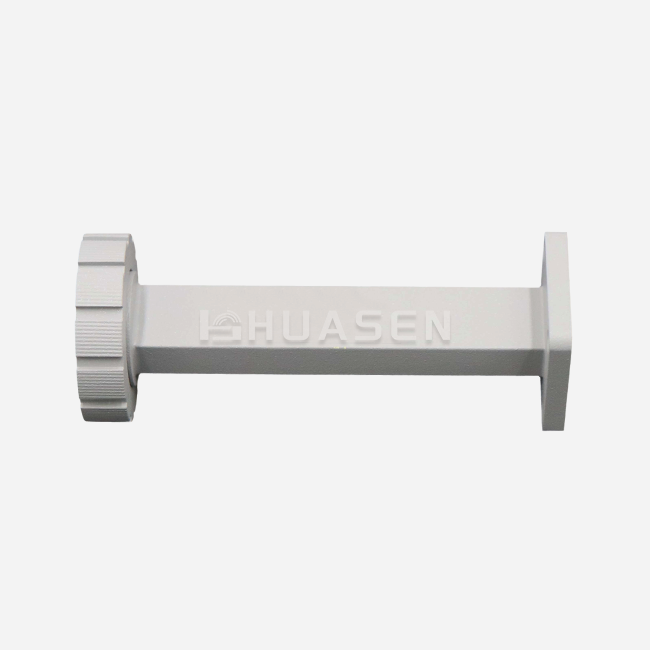
Physical design flexibility starts with waveguide standard selection. We manufacture dividers for BJ22 through BJ320 waveguides, covering frequencies from 0.32 GHz up to 112 GHz. Beyond standard rectangular waveguides, double-ridge configurations extend bandwidth performance, enabling a single divider to cover operational ranges that would otherwise require multiple standard-waveguide units—directly addressing the inventory reduction and system simplification goals procurement teams prioritize.
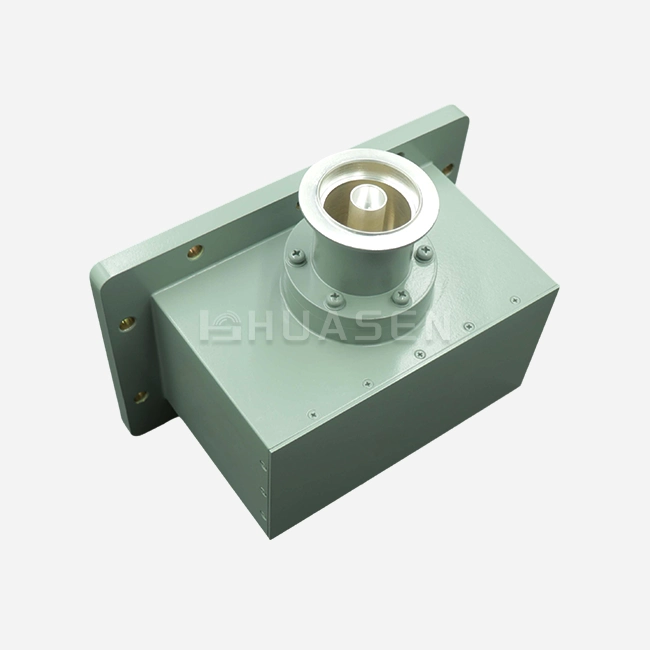
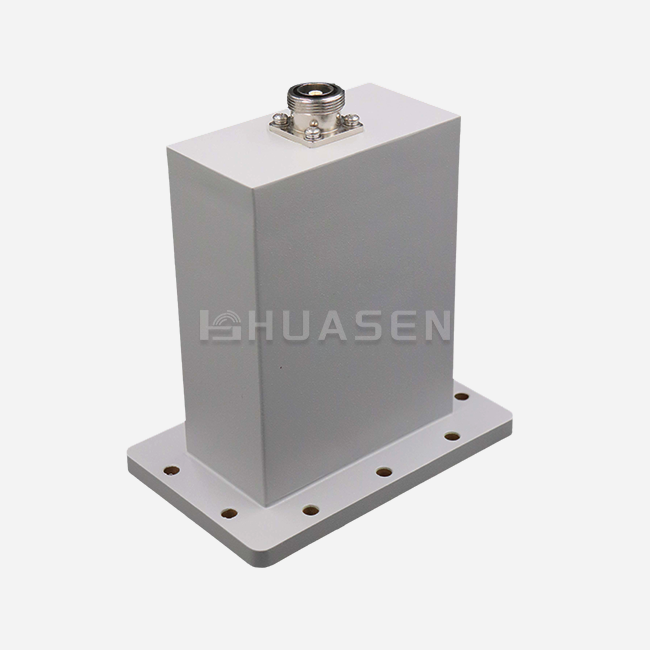
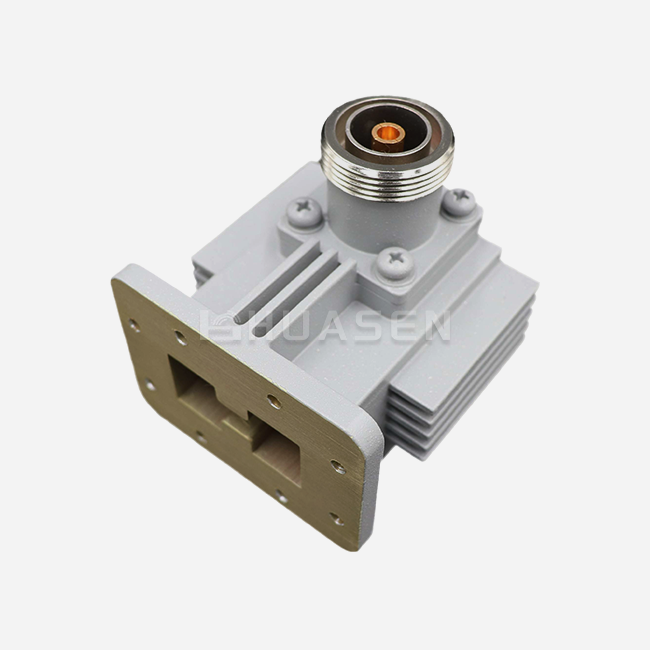
Junction architecture offers multiple geometries. I-type configurations provide straightforward two-way splits with minimal footprint. U-type designs fold the output arms back, saving rack space in densely packed transmitter cabinets. X-type and Y-type topologies enable three-way and four-way splitting with controlled amplitude distribution ratios—perhaps you need a 1:2:4 power split for a multi-beam antenna system. YU-type hybrid structures combine splitting with directional coupling, integrating functions that would otherwise require separate components.
Connector interface compatibility eliminates integration headaches. Whether your system uses SMA, Type-N, 7-16 DIN for lower frequencies, or precision 2.92 mm, 2.4 mm, and 1.85mm connectors for millimeter-wave applications, we engineer the transitions with controlled impedance matching. Waveguide flange options include cover flanges, choke flanges, and smooth-wall flanges, each serving specific pressurization, EMI shielding, or assembly requirements.
Power handling specifications receive particular attention. Average power ratings exceeding 200W and peak power capabilities above 2 kW suit most applications, but radar transmitters and directed energy systems demand higher thresholds. We've manufactured custom units rated for 10 kW continuous operation by optimizing internal geometry to minimize current concentration and employing forced-air cooling channels machined into the housing.
Functional features extend beyond basic splitting. Integrated monitoring ports allow you to sample a small fraction of the transmitted power for real-time performance verification without disrupting the main signal path. Built-in attenuators or phase trimmers enable field adjustment of amplitude balance and phase distribution, compensating for cable length variations or component aging in long-term deployments.
Environmental hardening addresses the outdoor and mobile installation challenges that telecommunications operators and maritime communication systems face daily. Conformal coating protects internal surfaces from salt fog corrosion. Hermetically sealed enclosures with pressurization valves prevent moisture ingress in tropical climates. Shock-mounted internal structures withstand the vibration profiles of aircraft, drones, and naval vessels, meeting DO-160 and MIL-STD-167 specifications when required.
Regulatory compliance documentation packages include test reports demonstrating conformance with RoHS material restrictions, REACH substance declarations, and conflict mineral sourcing transparency. Defense applications receive certificates of conformance citing applicable MIL-DTL specifications, with full material traceability back to mill certifications.
Branding customization transforms components into products that strengthen your market identity. Laser-etched logos, custom part numbering schemes, and color-coded identification bands help your customers immediately recognize your system components. Packaging solutions range from individual anti-static bags with foam inserts to custom-designed flight cases for delicate millimeter-wave assemblies shipping to remote installation sites.
The ODM Advantage: Co-Developing Next-Generation Waveguide Power Dividers
A North American system integrator approached us with a conceptual need: a compact, lightweight power divider for airborne radar that could withstand rapid temperature changes during high-altitude missions while maintaining phase stability across a 15% instantaneous bandwidth—substantially wider than typical waveguide component specifications allow.
Our ODM process began with collaborative electromagnetic modeling sessions. We proposed a novel iris-coupled design that broadened the matching bandwidth, while our thermal analysis identified aluminum alloy 6061-T6 as the optimal material, offering sufficient strength-to-weight ratio and thermal expansion characteristics matching the customer's antenna assembly. The prototype delivered an insertion loss of 0.25 dB, port-to-port isolation of 32 dB, and phase balance within ±1.2 degrees across the 33-38 GHz operational range—exceeding the initial specifications.
This co-development model accelerates innovation because we contribute solutions you might not encounter within your organization's core expertise. Our engineers have solved waveguide multipactor suppression challenges, designed thermally-compensated structures maintaining performance across 180°C temperature swings, and created modular architectures allowing field-replaceable sections to minimize repair downtime.
The intellectual property framework for the RF power divider remains flexible. Joint development agreements clearly delineate ownership rights, protecting your proprietary system architecture while allowing us to leverage manufacturing process innovations across other projects. Exclusive manufacturing arrangements ensure your competitive designs remain unavailable to rivals, while non-exclusive partnerships reduce per-unit costs through shared development investments.
Our Streamlined Customization Process for Waveguide Power Dividers
The journey begins with a detailed requirement consultation. Your application specifics—operating frequencies, input power levels, environmental conditions, mechanical constraints, and performance priorities—guide our technical proposal. We document every parameter: VSWR limits, isolation requirements, amplitude and phase balance tolerances, temperature coefficients, connector genders, mounting hole patterns, and finish specifications.
Preliminary design reviews present electromagnetic simulation results, 3D mechanical models, and preliminary material selections. This stage identifies potential challenges early—perhaps the desired mounting configuration creates resonance modes at specific frequencies, or the specified connector power rating conflicts with your system's peak pulse requirements. Collaborative problem-solving at this phase prevents expensive rework later.
Prototype fabrication typically completes within four to six weeks, depending on complexity and material procurement lead times. The prototype arrives with comprehensive test data: full two-port or multi-port S-parameter measurements across frequency, port-to-port isolation sweeps, and photographs documenting internal construction and external finish quality.
Design iteration cycles incorporate your feedback from prototype testing. Perhaps field trials revealed mechanical interference with adjacent components, or thermal testing identified unexpected expansion issues. We adjust dimensions, modify mounting provisions, or enhance cooling features, then produce revised prototypes until performance and integration requirements align perfectly.
Production transition establishes manufacturing documentation: detailed fabrication drawings with GD&T specifications, plating process parameters, assembly sequences, and inspection criteria. We establish Acceptable Quality Levels for dimensional tolerances, electrical performance parameters, and cosmetic finish standards. First article inspection reports verify that production tooling produces components matching prototype specifications before volume production commences.
Ongoing quality support includes statistical process control monitoring of critical parameters throughout production runs. Should component performance trend toward specification limits, we proactively implement corrective actions before non-conforming units occur. Long-term storage guidance and periodic recalibration recommendations help you maintain optimal system performance throughout the equipment's operational lifespan.
Benefits You Gain from Partnering with Huasen Microwave
Time-to-market acceleration stems from our parallel engineering approach. While your team finalizes system architecture, our engineers progress mechanical design and source long-lead materials. When a South Korean 5G infrastructure provider needed custom backhaul dividers coinciding with tower construction schedules, this concurrent engineering compressed the typically nine-month development cycle to five months, protecting their network launch timeline.
Cost optimization emerges from multiple sources. Eliminating intermediary distributors reduces per-unit pricing. Design-for-manufacturability recommendations—perhaps substituting a complex five-axis machined feature with a simpler two-piece bolted assembly—lower production costs without compromising performance. Volume-based pricing structures reward larger commitments while flexible minimum order quantities accommodate prototype phases and pilot deployments.
Technical risk mitigation proves invaluable. Our experience across telecommunications, radar, aerospace, and test instrumentation applications means we've encountered and solved the failure modes and integration challenges you're likely to face. We identify potential issues—thermal runaway in high-duty-cycle applications, multipactor breakdown at altitude, or passive intermodulation from dissimilar metal contacts—before they become field failures.
Supply chain resilience provides continuity and confidence. Dual-source material strategies, safety stock programs for critical components, and flexible production capacity protect against disruptions. When semiconductor shortages constrained connector availability industry-wide, our inventory planning and supplier relationships ensured continuous deliveries to committed customers while competitors faced months-long backorders.
Your brand strengthens when the components bearing your identity deliver exceptional performance and reliability. The waveguide power dividers we manufacture under your specifications become tangible proof of your commitment to quality, enhancing your reputation with end-users who depend on your systems for mission-critical communications, navigation, or defense applications.
Conclusion
Custom waveguide power dividers represent precision engineering solutions for demanding RF applications where standard catalog components cannot satisfy intersecting requirements of frequency coverage, power handling, environmental resilience, and mechanical integration. Huasen Microwave's OEM and ODM capabilities deliver end-to-end customization—from electromagnetic simulation and prototype development through volume production and ongoing quality support. Our manufacturing infrastructure, engineering expertise, and commitment to partnership enable telecommunications operators, defense contractors, aerospace manufacturers, and research institutions to deploy RF systems with confidence. The next breakthrough in your signal distribution architecture starts with a conversation about what's possible when component suppliers truly understand your challenges and possess the technical capabilities to solve them.
FAQ
Q1: What determines the minimum frequency a waveguide power divider can handle?
The waveguide cutoff frequency sets the lower boundary. Below the cutoff, the electromagnetic wave cannot propagate and exponentially attenuates. Waveguide selection must ensure that your lowest operational frequency exceeds the TE10 mode cutoff by approximately 25% to maintain acceptable VSWR and insertion loss characteristics across your specified bandwidth.
Q2: Can you integrate filtering functions directly into the power divider structure?
Absolutely. We've manufactured combination devices incorporating bandpass or bandstop filtering within the divider housing. This integration eliminates separate filter components, reducing system size, weight, and accumulated insertion losses while improving reliability by minimizing interconnections—a significant advantage for space-constrained applications like UAV communication payloads.
Q3: How do you ensure phase matching between output ports in production quantities?
Precision machining maintains dimensional consistency, which primarily determines electrical phase length. We measure phase deviation on every unit during final testing. Statistical process control monitors phase balance trends, triggering tooling inspection if measurements approach specification limits. Typical production spreads remain within ±2 degrees, with tighter tolerances achievable when applications demand.
Q4: What testing documentation accompanies custom waveguide power dividers?
Standard deliverables include individual unit test reports showing measured insertion loss, return loss, isolation, and phase balance across your specified frequency range. Additional documentation encompasses dimensional inspection reports, material certifications, and certificates of conformance. Specialized testing—power handling verification, environmental stress screening, or accelerated life testing—can be incorporated when procurement specifications require.
Partner with Huasen Microwave for Your Custom Waveguide Power Divider Manufacturing Needs
Building RF systems that operate reliably across years demands components engineered with precision and manufactured with discipline. Huasen Microwave brings three decades of microwave component expertise to every waveguide power divider we produce—whether you need three prototypes for laboratory evaluation or 3,000 units for infrastructure deployment. Our team understands the electromagnetic challenges, mechanical constraints, and certification requirements your projects face because we've solved these problems repeatedly across telecommunications, aerospace, radar, and testing applications worldwide.
Your competitive advantage grows when component suppliers function as genuine engineering partners rather than simple fabricators. We invite system integrators, equipment manufacturers, and research institutions to experience how collaborative OEM and ODM engagement transforms component procurement from transactional ordering into a strategic partnership. Reach out to our engineering team at sales@huasenmicrowave.com with your waveguide power divider specifications, application requirements, or conceptual challenges. As a specialized waveguide power divider manufacturer, we'll provide technical assessments, preliminary designs, and practical recommendations that move your project forward—no obligations, just the engineering conversation your system deserves.
References
1. Pozar, D. M. (2011). Microwave Engineering (4th ed.). Hoboken: John Wiley & Sons, Inc.
2. Montgomery, C. G., Dicke, R. H., & Purcell, E. M. (1948). Principles of Microwave Circuits. New York: McGraw-Hill Book Company.
3. Ishii, T. K. (1995). Handbook of Microwave Technology: Components and Devices (Vol. 1). San Diego: Academic Press.
4. Saad, T. S. (1971). Microwave Engineers' Handbook (Vol. 1). Dedham: Artech House.
5. Matthaei, G. L., Young, L., & Jones, E. M. T. (1980). Microwave Filters, Impedance-Matching Networks, and Coupling Structures. Norwood: Artech House.
6. Collin, R. E. (1992). Foundations for Microwave Engineering (2nd ed.). New York: IEEE Press.
Send Inquiry