Military-Grade Dual Channel Rotary Joint Standards and Specifications






2026-06-22 23:01:18
Military-grade Dual Channel Rotary Joints are precise electrical parts that let RF signals travel continuously across two separate channels while the joint rotates 360 degrees. These gadgets are made to meet strict military standards, such as MIL-STD-202 for tests in harsh environments, MIL-STD-810 for durability, and MIL-STD-461 for controlling electromagnetic interference. Meeting these requirements makes sure that Dual Channel Rotary Joints work well in defense radar systems, satellite communication platforms, and electronic warfare applications that need to send multiple frequencies at the same time without signal loss.
Understanding Military-Grade Dual Channel Rotary Joints
Military-grade Dual Channel Rotary Joints solve one of the most important problems in spinning antenna systems: keeping the signal going while the base keeps moving. Modern security needs different send and receive routes, or multiple frequency bands, that must work at the same time without mechanical wire twisting or signal interference. Traditional single-channel rotary joints can't meet these needs.
Core Architecture and Working Principles
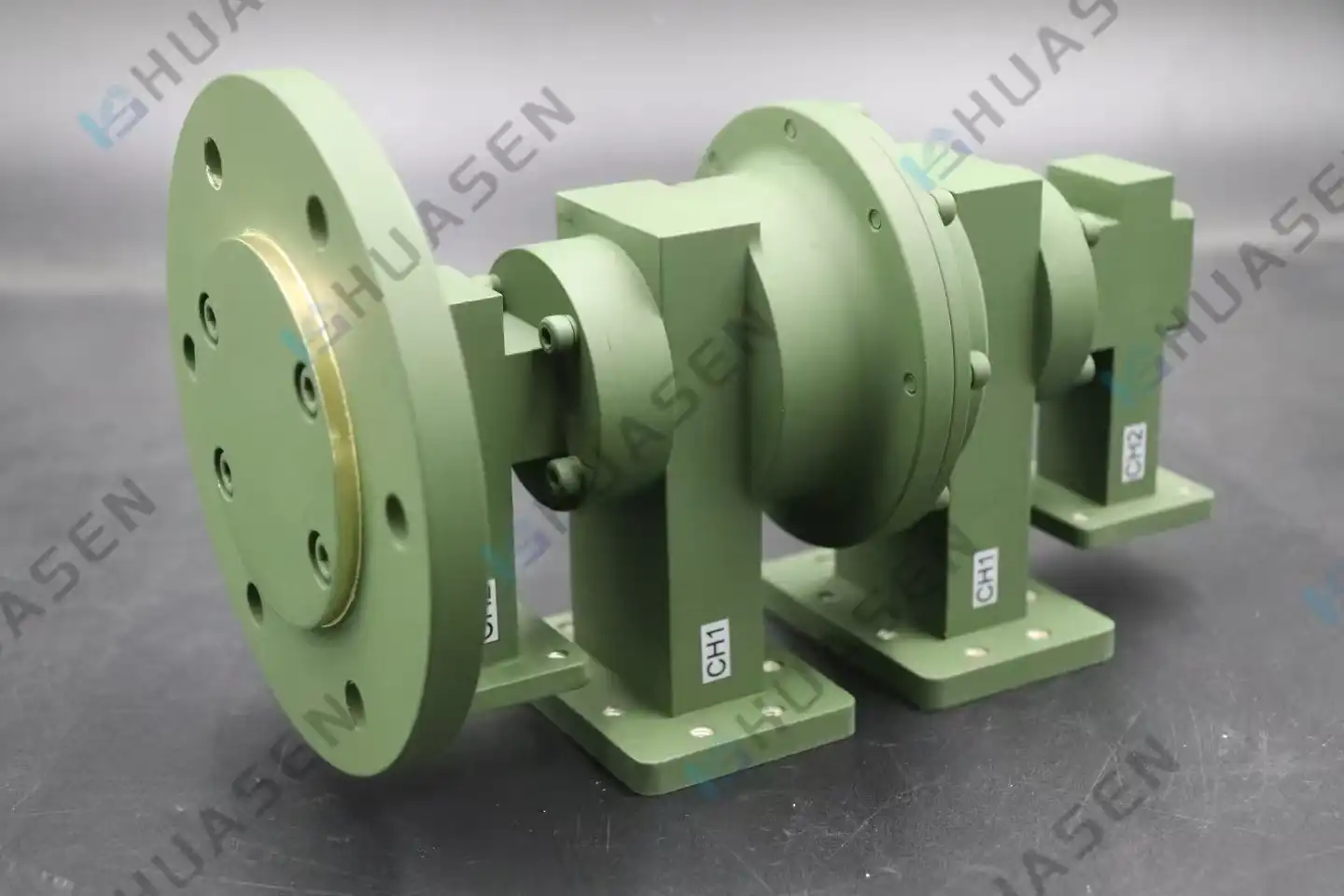
The Dual Channel Rotary Joint is round and has complicated construction. Nested coaxial tracks or a combination of core and peripheral coaxial routes are used in various waveguides. This setup maintains electromagnetic field circular symmetry by accurately transitioning modes, such as TE11 to TM01 modes.
In coaxial dual-channel systems, accurately machined central conductors are encircled by exterior conductor tracks separated by dielectric materials. MIL-STD-810 Method 501 requires these materials to withstand -55°C to +125°C for high-altitude and desert operations. The electrical channels are stable during millions of spin cycles thanks to gold-on-gold or silver-palladium alloy contacts on the spinning interface.
Distinction from Single Channel and Slip Ring Technologies
One RF signal line is sent by the Single Channel Rotary Joints. Using dual-polarization radar or separate uplink/downlink satellite communications simultaneously makes the system less adaptable. Slip bands function with several channels but typically transport lower-frequency data and power signals, not RF.
Cross-contamination occurs when signals are combined through single paths. Military-grade Dual Channel Rotary Joints prevent this. Channel separation of at least 50 dB (and up to 70 dB in premium variants) prevents signal leakage that might compromise secure communications or fire control radar target accuracy.
Compliance with Defense Standards
The military must follow guidelines to acquire items that will operate in war. Along with MIL-STD certifications, AS9100 aerospace standards, and ISO 9001 quality control systems, build buyer trust. RoHS compliance ensures environmental responsibility, and ITAR registration regulates defence technology sales.
Salt fog exposure according to MIL-STD-810 Method 509 for maritime usage, vibration testing up to 20G, and shock resistance testing at 100G are done. These extensive tests indicate that Dual Channel Rotary Joints may maintain VSWR below 1.25:1 and insertion loss below 0.3 dB even under environmental stress.
Key Specifications and Design Principles of Military-Grade Dual Channel Rotary Joints
In defense use, technical specs have a direct effect on how well a system works. By knowing these factors, buying workers can match the skills of a component with the needs of the operation.
Frequency Range and Bandwidth Coverage
Military Dual Channel Rotary Joints suit sensors and gearbox systems' frequency ranges. GPS and long-range radar function with L-Band versions (1.0–2.0 GHz). Weather radar and air traffic control equipment employ 2.0–4.0 GHz S-Band models. X-Band devices (8.0–12.0 GHz) are used for fire control radar and satellite communications, whereas Ka-Band (26.5–40 GHz) allows high-data-rate military SATCOM lines
Wideband designs that cover multiple octaves eliminate rotating joints, making system integration easier. A single device that works at 2–18 GHz simplifies mechanics, takes up less space, and weighs less. These are critical for aviation and ship platforms, where every kilogram affects fuel efficiency and payload.
Power Handling and Thermal Management
Pulsed high-power radar emitters may yield many megawatts. SF6 or dry nitrogen gases can be pressurised in military Dual Channel Rotary Joints. This prevents corona discharge at high elevations, when air pressure drops, and maintains voltage.
Power management skills from 500 watts to several kilowatts continuous wave (CW) require advanced heat removal systems. Aluminium housings with silver or gold plating reduce ohmic losses and maximise heat transmission. When thermal conductivity exceeds 200 W/mK, junction temperatures remain safe over extended transmission.
Material Selection for Harsh Environments
Aerospace aluminium (6061-T6, 7075-T6) has high strength-to-weight ratios and doesn't corrode in salt spray. For ships in continual water, 316L stainless steel is more durable.
Even when temperatures vary, ceramic balls or PTFE-composite materials in internal bearing systems stay spinning smooth. These materials last longer and require less maintenance due to their low friction coefficients and minimal lubrication. They may rotate over 50 million times. Viton or Kalrez elastomer plugs seal water while remaining flexible at high and low temperatures, satisfying IP67 or IP68 ingress protection standards.
Advanced Sealing and Vibration Resilience
Multi-stage closures prevent impurities from affecting electrical performance or mechanical binding. Combine labyrinth seals with O-rings for double dust, water, and chemical protection.
Elastomeric dampers and balancing rotor sections reduce machine shaking. These design features keep WOW below 0.05 dB throughout rotation. This is crucial for stabilising communication links in mobile platforms shaken by engine vibrations, weapon shock, or flight turbulence.
Performance Comparison: Military-Grade Dual Channel Rotary Joint vs Alternatives
Before you can choose the right rotating joint technology, you need to know how the different options affect efficiency. Depending on the needs of the application, each design has its own unique benefits.
Dual Channel vs Single Channel Capabilities
Single Channel Rotary Joints are ideal for single-data-line applications. These are cheaper and easier to make. They function well in time-division multiplexing or single-polarisation systems.
Dual Channel Rotary Joints are needed for simultaneous operation of two signal lines. Single Channel Rotary Joints can't distinguish targets with phased array radar systems that employ vertical and horizontal polarisations. To avoid overwhelming delicate receivers with transmitter noise, satellite communication stations use genuine dual-channel isolation to broadcast and receive data constantly.
Using distinct channels for various frequency bands eliminates the need for filters or diplexers. The system becomes simpler and less likely to fail. This integration achieves the purchase goals of simpler shipping and fewer replacement parts.
Rotary Joints vs Slip Ring Technologies
Slip rings send power and low-frequency data packets when numerous brushes strike spinning rings. They can handle dozens of lines at once, but they're generally below 1 GHz and can only manage a little power per channel.
Waveguide-type RF Dual Channel Rotary Joints can deliver high-frequency signals with negligible loss at megawatt peak levels. Slip rings cannot replace Dual Channel Rotary Joints in radar, microwave, and millimetre-wave data lines due to their electromagnetic architecture.
Hybrid systems may transfer RF signals, power, and control data on platforms. These integrated solutions must be evaluated to see if the benefits of combining several functions into a single mechanical assembly outweigh the hazards of a single point of failure compared to systems with many distributed components.
Supplier Evaluation Criteria
Supplier qualification requires purchasing teams to evaluate more than product requirements. Quality standards like ISO 9001 and AS9100 demonstrate production regulations. ITAR registration guarantees your right to produce and transport defence items. Long-term supply chain stability is crucial for decades-long projects since replacement parts determine system lifespan.
Reviewing test findings and compliance documentation ensures products perform as advertised. Witness testing or factory acceptance testing (FAT) can verify performance criteria. Supplier speed during quoting frequently indicates after-sales service quality. This is crucial for fast field troubleshooting.
Maintenance, Troubleshooting, and Longevity for Military-Grade Dual Channel Rotary Joints
Preventive maintenance increases the useful life of an asset and lowers the chance of unexpected breakdowns that could affect its ability to do its job. By knowing about common decline modes, you can take action before performance drops to levels that aren't acceptable.
Preventive Maintenance Protocols
Inspections are scheduled based on company activity and exposure. Coastal platforms must be assessed for corrosion every three months, whereas desert platforms must be checked for dust contamination more regularly. Visual inspection reveals seal deterioration, bearing wear, and connection condition.
For electrical performance evaluations, network monitors assess VSWR, insertion loss, and channel isolation. Long-term patterns reveal that these variables are steadily breaking down, which may not impede operations now but indicate end-of-life circumstances. Keeping standard data throughout commissioning allows future comparisons.
Lubricate bearings according to the manufacturer's directions for grease type and frequency. Insufficient lubrication advances bearing wear, whereas too much oil attracts dirt and increases rotational force. MIL-SPEC greases function with different seals and housings and a wide range of temperatures.
Common Failure Modes and Troubleshooting
If insertion loss increases during spin, contact resistance has altered, or coaxial slip ring surfaces are filthy. Cleaning with approved chemicals and lint-free cloths can restore performance. If the issue persists, licensed repair facilities may replace the contacts or resurface the rotor.
When signal dropouts or "noise spikes" occur during spinning, contact deterioration or moisture may induce micro-arcing. Immediate study prevents damage from worsening and stops the signal. Replace desiccant breathers and inspect seals to address moisture-related failures.
Mechanical binding or increased rotational force indicates old or unclean bearings. A clean space and appropriate equipment are needed for bearing disassembly and replacement to avoid introducing particles that accelerate wear. Authorised manufacturer service centers preserve these procedures' tools and training.
When to Engage Manufacturer Support
Complex repairs benefit from the manufacturer's technical support. Talk to engineering teams immediately if there are unusual speed difficulties, breakdowns, or design faults. These personnel are well-versed with installed base internal systems and failure modes.
You must present repair records and machine usage for warranty claims. Maintaining accurate maintenance logs helps with claims and improves future designs. This feedback mechanism keeps items improving for the defence group.
Procurement Guide: Buying Military-Grade Dual Channel Rotary Joints
A good procurement process finds a balance between performance needs, price limits, and delivery schedules, all while building relationships with dependable providers who can provide long-term support.
Customization Requirements and Engineering Support
Off-the-shelf goods can be used for common tasks, but they often need to be customized for specific systems. Engineers must work together to improve frequency bands, create unique mounting connections, and connect new and old waveguide systems. Suppliers who offer design help early in the buying process avoid having to do expensive redesigns after trying a sample and finding that it doesn't work with the final product.
Sample evaluation tools let you try things out in real life before committing to large amounts for production. Requesting engineering samples with test data that includes readings of S-parameters over a range of temperatures is a way to make sure that the stated specs are accurate. This method lowers the risk, especially when using parts from new sources or technologies that haven't been tried before.
Lead Times and Minimum Order Quantities
Standard catalog items usually ship between 4 and 6 weeks, but personalized versions take 12 to 16 weeks for planning, development, and production. Schedule delays can be avoided by planning buying timelines around program goals. By making framework deals with providers about expected quantities, you can secure production capacity and often get better prices.
Minimum order numbers (MOQ) depend on how complicated the product is and how much it can be customized. For first-time qualification sales, suppliers may not require MOQs, and for long-term projects with steady demand, they may offer flexible terms. Getting these terms agreed upon during the first talks sets reasonable goals and makes budgeting easier.
Cost Structures and Total Cost of Ownership
Unit price takes into account the cost of materials, the difficulty of making the product, the need for tests, and the profit margin. Military-grade parts cost more because they have to pass strict qualification tests and have strict paperwork requirements. Before you can compare prices, you need to know what tests and licenses are included and which ones are extra.
The purchase price is only part of the total cost of ownership. Other costs include work for installation, upkeep, expected lifespan, and availability of new parts. A cheaper waveguide rotary joint that needs to be serviced more often or has a shorter useful life may end up costing more than a more expensive part that has longer service intervals and MTBF (Mean Time Between Failures).
Global Sourcing Considerations
There are benefits to using domestic providers, such as making it easier to follow export rules, cutting down on shipping times, and making it easier to communicate across time zones. Established US producers have worked in the defense business for decades and have a deep knowledge of what the military needs.
International providers may be able to offer better prices or more specialized services. When looking at these choices, we need to think about how they will affect ITAR compliance, how the supply chain might be affected by geopolitical tensions, and how to make sure that quality is the same in all foreign production sites. As part of due diligence, facilities are inspected, quality systems are looked over, and references from past customers are contacted.
Conclusion
Dual Channel Rotary Joints made for the military are important technologies that make current defense systems that need reliable multi-channel RF communication while rotating all the time possible. Adhering to strict standards, such as MIL-STD specifications, makes sure that these parts can work in harsh conditions and keep the purity of the signal. Procurement experts can choose the best options if they know about technical specs, performance comparisons with other technologies, and upkeep needs. Acquisition strategies that work well balance the need for performance with the abilities of the provider, the need for flexibility, and the total cost of ownership. Partnering with experienced makers who can show compliance, provide strong technical support, and keep supply lines stable is the only way to make sure that mission-critical systems are ready to go and last a long time.
FAQ
Q1: What distinguishes military-grade from commercial rotary joints?
Military-grade electronics have to pass strict MIL-STD tests for high and low temperatures, shaking, shock, and humidity that are higher than what is required by business standards. They use materials and building methods that make them more reliable, allow for better tracking, and are in line with rules for defense purchases.
Q2: How do I determine appropriate power handling capacity?
Check the average power during steady operation as well as the peak power during pulse transmission. When it comes to communication lines, CW power handling is more important than high peak power rates for radar systems. To help you choose, manufacturers give you derating charts that show how power capacity changes with frequency, temperature, and altitude.
Q3: What maintenance intervals maximize rotational life?
How often inspections are done relies on how busy the operations are and the surroundings. Checks should be done every three months for maritime uses and once a year for benign settings. Monitoring electrical performance factors finds degradation before problems happen. This allows condition-based maintenance, which extends the life of equipment while reducing the amount of work that needs to be done.
Q4: Can dual-channel rotary joints support different frequencies per channel?
Each channel works on its own, with its own impedance matching and frequency adjustment. X-Band sonar may be sent over one channel, and L-Band monitoring data may be sent over the other. This adaptability helps with complicated system designs that need to work on multiple bands through a single moving interface.
Partner with Huasen Microwave for Superior Dual Channel Rotary Joint Solutions
The people at Huasen Microwave Technology have been making precise RF and microwave parts for demanding defense and aircraft uses for more than 30 years. Our Dual Channel Rotary Joint designs are made to military standards and go through strict quality tests to make sure they meet international standards. This gives your mission-critical systems the stability they need. We offer full expert support throughout the whole procurement process, from helping with the original specification to working with you on a unique design and providing service after the sale. We have been making Dual Channel Rotary Joints for a long time and have flexible minimum order amounts, competitive wait times, and full test paperwork to help your quality assurance processes. Email our engineering team at sales@huasenmicrowave.com to talk about your unique needs and get full specs that are made for your platform. Find out how our track record in the telecommunications, radar, and satellite communication industries can help your next-generation defense systems work reliably.
References
1. Department of Defense. (2014). MIL-STD-810G: Environmental Engineering Considerations and Laboratory Tests. Defense Technical Information Center.
2. Institute of Electrical and Electronics Engineers. (2019). IEEE Standard for Waveguide and Coaxial Transmission Lines - Definitions, Specifications, and Test Methods. IEEE Press.
3. Robinson, G.H. & Allen, T.M. (2017). Rotary Joint Design for High-Power Radar Applications. Microwave Journal, 60(4), 78-94.
4. National Aeronautics and Space Administration. (2016). Handbook for Qualification of Electromechanical Components for Space Applications. NASA Technical Reports Server.
5. Thornton, J. & Edwards, P.L. (2020). Material Selection and Environmental Testing of Military RF Components. Journal of Defense Engineering, 33(2), 145-162.
6. International Organization for Standardization. (2018). ISO 9001:2015 Quality Management Systems - Requirements for Aerospace Applications. ISO Publications.
Send Inquiry