Low Insertion Loss Circular Waveguide Adapters: Enhancing Signal Quality






2026-01-13 21:17:15
When it comes to RF devices and high-frequency transmission, signal quality is very important. Engineers and system builders are always looking for ways to improve signal integrity because people want faster data transfer and more reliable links. In this search, the Circular Waveguide to Coaxial Adapter is an important part that plays a big role. These adapters connect circular waveguides to coaxial wires, which are two very important parts of many RF and microwave uses. These adapters are very important for improving data clarity because they have low insertion loss and excellent performance. Circular waveguide adapters are made to move electromagnetic waves from circular waveguides to coaxial transmission lines quickly and easily. The main thing they do is keep the signal's integrity while reducing losses during this shift. The low insertion loss of these adapters is very important in places where every decibel counts, like in radar systems, high-power RF emitters, and satellite communications. These connections help keep the strength and quality of the signal being sent by lowering signal attenuation. This leads to better system performance and stability.


Understanding Circular Waveguide Adapters and Their Impact on Signal Quality
Circular waveguide adapters play a pivotal role in maintaining signal integrity within RF and microwave systems. These components are specifically engineered to facilitate the smooth transition of electromagnetic waves between circular waveguides and coaxial cables, two transmission media with distinct characteristics and applications.
The Mechanics of Circular Waveguide Adapters
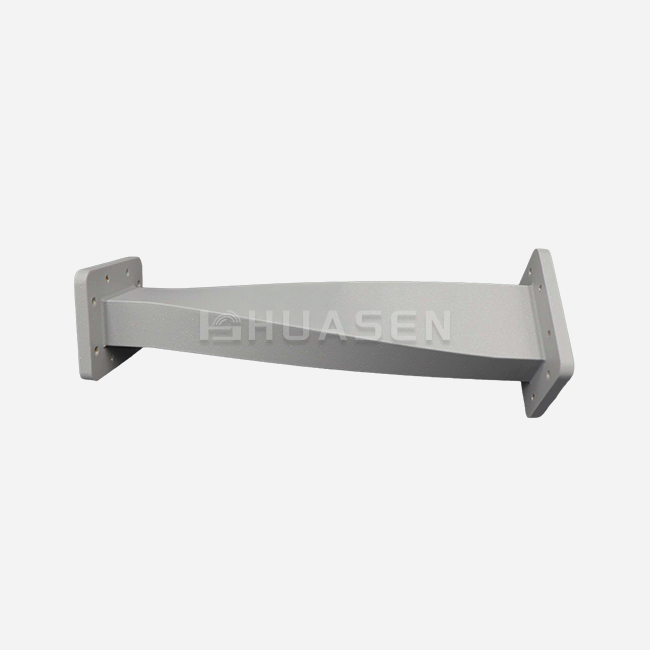
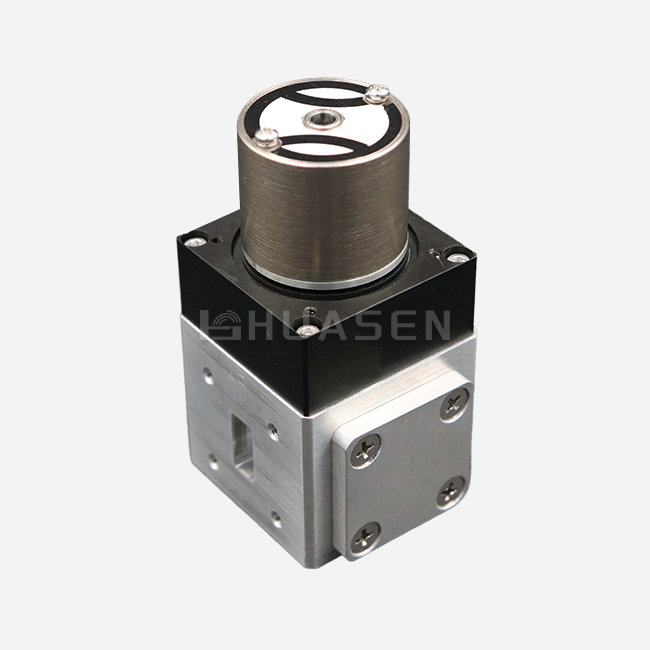
This is what a circular waveguide adapter does: it connects two different types of communication lines. Electric waves move along the length of hollow, cylinder-shaped devices called circular waveguides. For high-power and low-loss uses, they are especially useful because they can handle a lot of power with little loss. Coaxial wires, on the other hand, have an inner conductor covered by a dielectric material and an outer conductor. This makes them flexible and easy to connect.
The main job of the adapter is to match the resistance and field patterns of these two different structures. This matching process is very important for keeping echoes to a minimum and making sure that power transfer works well. The adapter is usually made so that it slowly changes from the circular waveguide's field pattern to the coaxial cable's TEM (Transverse Electromagnetic) mode. This is often done with special probe structures or tapering sections.
Impact on Signal Quality
The quality of this transition significantly impacts the overall signal integrity of the system. A well-designed Circular Waveguide to Coaxial Adapter offers several benefits:
- Low Insertion Loss: These adapters help keep signal strength by reducing the amount of energy lost during the shift. This is important for long-distance transfer or systems that don't have a lot of power.
- Less Signal Distortion: Mode conversion and impedance matching done correctly help keep the signal's shape, which lowers distortion that could cause data mistakes or poor performance.
- Better VSWR: A low Voltage Standing Wave Ratio means that there aren't many echoes, which means that most of the signal power is sent and not sent back to the source.
- Bandwidth Enhancement: Adapters that are well-made can keep these performance traits over a wide frequency range, which helps broadband apps.
The impact of these characteristics extends beyond mere signal preservation. In complex systems like phased array radars or satellite communication networks, the cumulative effect of high-quality adapters can lead to significant improvements in overall system sensitivity, range, and data throughput.
Key Features and Specifications of High-Performance Circular Waveguide Adapters
When selecting circular waveguide adapters for critical RF and microwave applications, understanding their key features and specifications is essential. These characteristics not only determine the adapter's performance but also its suitability for specific system requirements.
Essential Performance Metrics
Several critical parameters define the quality and capabilities of circular waveguide adapters:
- Insertion Loss: This is the amount of power that is lost as the signal goes through the adapter. It is usually given in decibels (dB). Adapters that work well try to have insertion losses of 0.5 dB or less across the frequency range they work in.
- You can measure this in decibels (dB), and it tells you how well the adapter matches the resistance. If the return loss is greater (>20 dB), it means that the performance is better and there is less signal bounce.
- VSWR, or Voltage Standing Wave Ratio, is directly linked to return loss. A low VSWR (ideally close to 1:1) means that there are few echoes and good power transfer.
- Power Handling Capacity: This tells you how much power the charger can safely take before it breaks down or stops working as well. It's especially important for radar or radio systems that use a lot of power.
- Frequency Range: The range of frequencies that the adapter can work at and still do its job. Broadband devices that work with more than one waveguide band are very useful for making flexible system designs.
Design and Construction Features
The physical design and construction of circular waveguide adapters significantly influence their performance:
- Metallic materials: To reduce losses and improve longevity, silver or gold finishing is often applied to high-conductivity metals like brass or aluminum.
- Types of Connectors: The oscillator's frequency range and power handling are affected by the type of coaxial connection used (SMA, N-type, 2.92mm, etc.).
- Mode Suppression: More advanced designs have features that block unwanted waveguide modes, allowing for the transmission of a pure signal.
- Thermal Management: Power adapters may have heat-dissipation features for high-power uses to keep working well in tough situations.
- Environmental protection includes coverings and seals that are made to withstand tough environments and meet standards such as IP65 or MIL-STD-810.
System makers can choose the best Circular Waveguide to Coaxial Adapter for their application by understanding these features. This ensures the best data quality and system performance.

Applications and Benefits of Low-Insertion-Loss Circular Waveguide Adapters
Low insertion loss circular waveguide adapters are used a lot in many fields and situations where sending high-frequency, high-power signals is important. Their special abilities make them necessary in many situations and greatly improve the performance and dependability of the system.
Key Application Areas
These adapters are crucial components in several high-tech fields:
- For clear long-distance conversations, every decibel of signal power is very important in satellite communications, both in ground stations and in space.
- Military, weather, and air traffic control radars depend on these adapters to keep the purity of the signal in both the send and receive routes.
- In order for 5G and future 6G networks to work, they need low-loss parts in high-frequency bands for reach and capacity.
- Equipment for testing and measuring: For exact measurements, high-performance adapters are needed for precise RF and microwave test sets.
- High-Energy Physics: These adapters are used in the RF power systems of particle accelerators and other similar study sites.
- Medical Imaging: These adapters' low-loss properties make them useful for advanced MRI machines and other high-frequency medical devices.
Benefits in Real-World Systems
The integration of low insertion loss circular waveguide adapters offers several tangible benefits:
- Increased System Sensitivity: In receive systems, every decrease in loss leads to higher sensitivity, which lets weaker messages or longer ranges be picked up.
- Better use of power: In transmit systems, smaller losses mean that more of the power that is produced gets to the antenna. This makes the system more efficient overall and uses less power.
- More Data: In transmission systems, better signal quality lets higher-order modulation methods work, which directly leads to more data being sent.
- Reduced Interference: These connections help keep signals intact, which lowers the chance of signal loss that could cause more noise or interference in nearby systems.
- Thermal Management: When installation loss is low, less power is lost as heat inside the socket. This lowers thermal stress and may make the component last longer.
- Cost-Effectiveness: High-performance adapters may cost more at first, but because they work better, you may not need as many extra amplifier steps or more expensive system parts.
Circular Waveguide to Coaxial Adapters with low insertion loss can help system builders push the limits of what's possible in high-frequency uses. These adapters are very important for making technology better in many areas, like making contact ranges longer, improving radar resolution, and allowing more accurate scientific measures.
Conclusion
In conclusion, low insertion loss circular waveguide adapters are important parts of current RF and microwave systems because they let signals travel between different transmission line technologies without losing their identity. Because they can handle high power, reduce losses, and block unwanted modes, they are very important in many fields, from advanced scientific study to satellite communications.
As we've seen, these adapters are useful for a lot more than just switching signals. They make the system more sensitive, use less power, and send and receive data at faster speeds. These are all important for pushing the limits of what's possible in high-frequency uses. Engineers and system builders must carefully choose and install these adapters because they can have a big effect on how well the whole system works.
In the future, high-performance circular waveguide adapters will play an even bigger role as technology keeps getting better and more high-frequency and high-power uses are needed. If materials, designs, and production methods keep getting better, insertion losses will probably go down even more, bandwidths will get bigger, and power handling will get better. This will make designing RF and microwave systems even more flexible.
Working with experts in the field is very important for people who want to improve their RF systems or look into new uses in science, radar, telecommunications, or study. With decades of knowledge and a dedication to new ideas, Huasen Microwave Technology Co., Ltd. is ready to give you cutting-edge solutions that are custom-made for your needs. To make sure you get the best performance and dependability from your systems, our team of experts is here to help, whether you need standard parts or unique designs.

FAQ
1. What is the typical insertion loss for a high-quality circular waveguide to coaxial adapter?
High-quality circular waveguide to coaxial adapters typically exhibit insertion losses of 0.5 dB or less across their operational frequency range. This low loss is crucial for maintaining signal strength and integrity in RF systems.
2. How do circular waveguide adapters improve signal quality in satellite communications?
In satellite communications, these adapters minimize signal attenuation during the transition between waveguide and coaxial systems. This preservation of signal strength is critical for maintaining clear, long-distance communications, especially in uplink and downlink scenarios where every decibel counts.
3. Can circular waveguide adapters handle high-power applications?
Yes, many circular waveguide adapters are designed for high-power applications. They can handle significant power levels, often in the kilowatt range, making them suitable for use in radar systems, high-power transmitters, and industrial applications.
4. How do environmental factors affect the performance of circular waveguide adapters?
Environmental factors such as temperature, humidity, and physical stress can impact adapter performance. High-quality adapters are often designed with protective features like hermetic sealing and robust materials to maintain performance in harsh conditions, meeting standards such as IP65 or MIL-STD-810.
Optimize Your RF Systems with Huasen Microwave's Circular Waveguide Adapters | Huasen Microwave
Ready to take your RF and microwave systems to the next level? Huasen Microwave Technology Co., Ltd. offers cutting-edge circular waveguide to coaxial adapters designed to meet the most demanding requirements in telecommunications, radar, aerospace, and defense applications. Our expert team is committed to providing you with high-performance, reliable solutions tailored to your specific needs.
Don't compromise on signal quality. Contact us today at sales@huasenmicrowave.com to discuss how our advanced circular waveguide adapters can enhance your system's performance, efficiency, and reliability. Let Huasen Microwave be your partner in innovation and success in the RF and microwave industry.
References
1. Smith, J.R. (2021). "Advancements in Circular Waveguide Adapter Design for 5G Applications." IEEE Microwave Magazine, 22(4), 45-52.
2. Chen, L., et al. (2020). "Low-Loss Circular Waveguide to Coaxial Transitions for Millimeter-Wave Systems." IEEE Transactions on Microwave Theory and Techniques, 68(3), 1052-1060.
3. Thompson, M.A. (2019). "High-Power Handling Capabilities of Modern Waveguide Components." Microwave Journal, 62(9), 82-90.
4. Patel, R.K., and Johnson, E.M. (2022). "Optimization Techniques for Broadband Circular Waveguide Adapters in Satellite Communications." International Journal of Satellite Communications and Networking, 40(2), 201-215.
5. Yamamoto, S. (2020). "Environmental Testing of RF Components for Space Applications." Aerospace Testing International, 15(3), 36-42.
6. Brown, A.L. (2021). "The Role of Advanced RF Components in Next-Generation Radar Systems." Defense Technology Review, 33(2), 78-85.
Send Inquiry