Log Periodic Antenna vs LPDA Antenna: Are They the Same?






2026-02-17 22:33:41
Log Periodic Antenna and LPDA (Log Periodic Dipole Array) are essentially the same antenna technology, representing different terminologies for identical electromagnetic structures. The confusion arises from industry naming conventions where "log periodic antenna" serves as the broader categorical term, while "LPDA" specifically describes the most common implementation using dipole elements arranged in logarithmic progression. Both designs employ identical scaling factors, frequency-independent characteristics, and broadband performance principles, making them functionally equivalent for procurement and engineering applications across telecommunications, radar, and defense sectors.

Introduction
There is a lot of technical language used in the antenna business that can make the sourcing process more difficult than it needs to be. One idea that engineers and purchasing managers often get wrong is the connection between log periodic antennas and LPDA antennas. They wonder if these are two different technologies that need different evaluation criteria. This complete guide clears up any doubts by explaining both types of antennas, how they work, and how they can be used in real life in many different industries. It is very important for procurement workers who are in charge of communication systems in mobile networks, satellite links, radar installations, and electronic warfare applications to understand these differences. This information helps you make smart choices and speeds up the antenna selection process for complicated business-to-business needs. These days, communication systems need antennas that can work across multiple frequency bands and keep their performance levels stable. Log periodic designs and LPDA configurations both meet these needs by using tried-and-true electromagnetic principles that have been used for decades to support important infrastructure. This study looks at how these technologies are used in a range of situations, from setting up 5G base stations to communicating in space.
Understanding Log Periodic and LPDA Antennas
Fundamental Design Principles
Log periodic antennas are a type of frequency-independent antennas that have parts that are grouped in a way that follows logarithmic scaling relationships. This term includes a lot of different applications, such as dipole arrays, slot antennas, and microstrip configurations. These designs keep their electrical properties the same over a wide range of frequencies, often reaching bandwidth ratios higher than 10:1 while keeping stable radiation patterns and impedance matching. The electromagnetic theory behind them is based on self-similarity, which means that antenna elements move in a way that is defined by the scaling factor tau (ϱ) and the spacing factor sigma (π). These mathematical relationships make sure that parts of the right size interact with different frequency components, resulting in behaviour that is independent of frequency across the operational bandwidth. The antennas that are made have gain levels that can be predicted, usually between 5 and 9 dB, and beamwidths that can be changed by improving the design.
LPDA Specific Characteristics
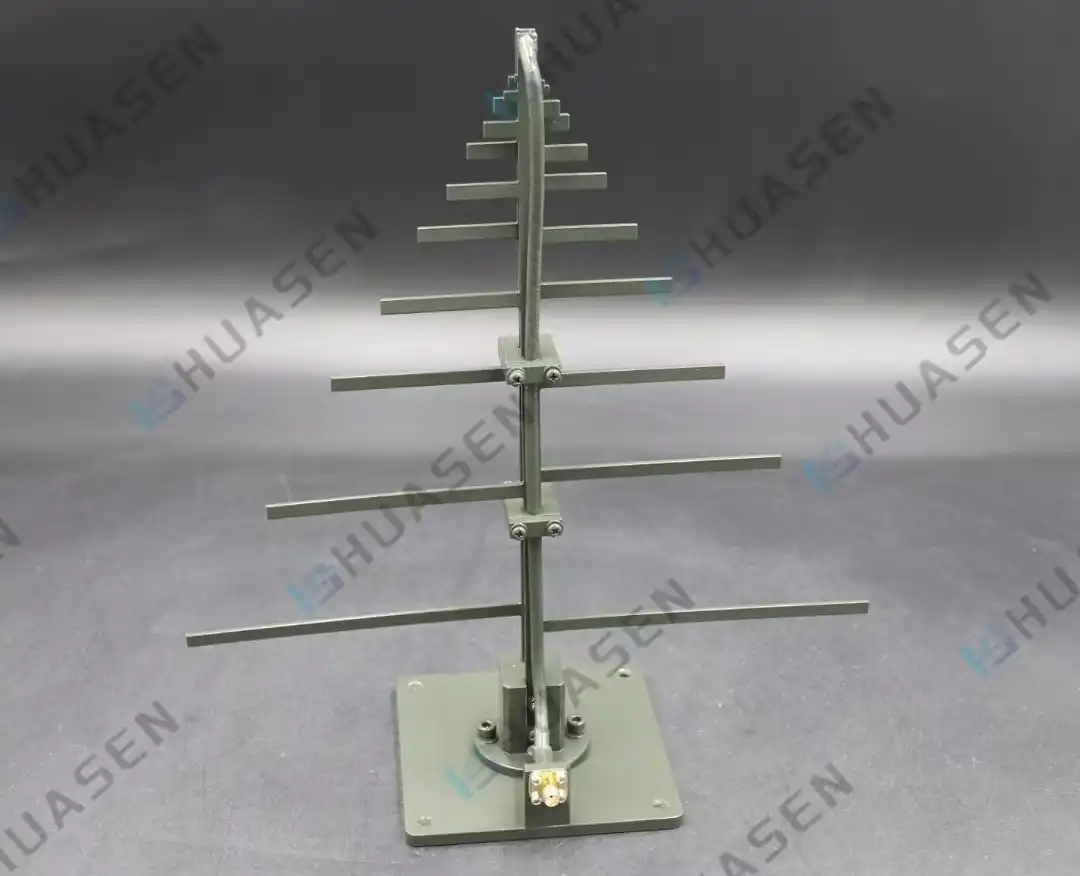
Most of the time, log periodic principles are used in LPDA antennas, which have discrete dipole elements placed perpendicular to a central feed line. By carefully controlling the element sizes and spacing, the dipole design gives great performance over a wide frequency range. Each dipole element resonates at a certain frequency and contributes to the overall performance of the antenna through mutual coupling effects. The feed system uses alternating connections to make sure that the active elements are in the right phase relationship with each other, which guarantees constructive interference in the direction of the radiation that is wanted. This feeding setup makes LPDA designs unique compared to other antenna types and is a big part of why they can work with different frequencies. Professional installations often choose LPDA configurations because they are mechanically strong and work reliably in a wide range of situations.
Modern Microstrip Implementations
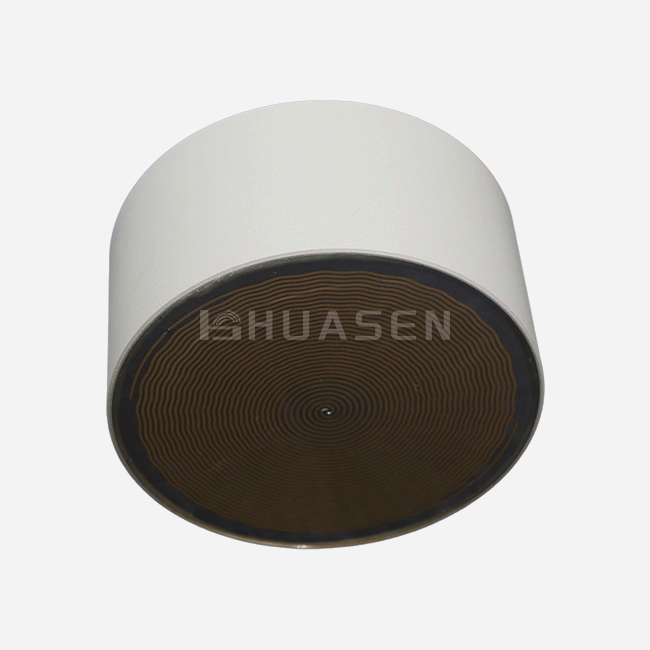
Nowadays, antenna technology has grown beyond simple wire-based designs to include advanced microstrip implementations that work in limited area situations. This new technology is shown by Huasen Microwave's Log Periodic Microstrip Antenna, which covers frequencies from 400 MHz to 18,000 MHz in small 75×118 mm units. Printed circuit board technology is used in these designs to make them lighter and more resistant to environmental damage, while still keeping the basic LPA log periodic working principles.
Detailed Comparison between Log Periodic Antenna and LPDA
Structural Design Differences
This is the main difference between general log periodic antennas and specific LPDA implementations: how they are built physically, not how well they work electromagnetically. In traditional LPDA antennas, separate metallic dipole elements are placed on support structures with close attention paid to the distance between the elements and the electrical connections. This method works well with a lot of power and in harsh environments, but it takes a lot of space to install and is very complicated mechanically. Other log periodic designs, like microstrip and slot configurations, put radiating elements directly into substrate materials or metal surfaces. These methods offer big benefits in terms of size and weight reduction while keeping the same level of electrical performance in most situations. Rather than basic differences in performance, the choice between construction methods is usually based on how much power is needed, how easy it is to install, and how exposed the building is to the environment.
Performance Characteristics Analysis
When designed correctly for a given purpose, both types of antennas give similar electrical performance. Gain ranges from 5 to 9 dB across the operational bandwidth, but can change based on the number of elements and how well the spacing is optimised. Most professional implementations keep impedance matching at 50 ohms, which makes sure that they work with standard coaxial transmission systems and test tools. Stable radiation patterns are a major benefit of both log periodic and LPDA designs. The frequency-independent behaviour keeps the beamwidth and directivity the same across multiple octave bandwidths, so there's no need to fix the pattern in broadband apps. This trait is very helpful in electronic warfare, spectrum tracking, and communication systems that need to cover large areas reliably across a range of frequency allocations.
Application-Driven Selection Criteria
Choosing between different log periodic implementations is mostly based on the needs of the program, not on differences in how well they work in general. LPDA constructions that are more traditional are usually better for high-power gearbox uses because they can handle more power and cool down faster. Discrete element designs are often needed for military and aerospace applications because they are strong mechanically. On the other hand, microstrip log periodic implementations are better for installations with limited space because they provide the same electrical performance in a much smaller physical footprint. These small designs are being used more and more in modern radar warning monitors, spectrum analysers, and portable communication systems to get multi-band coverage without sacrificing the need for system integration.
How to Choose the Right Antenna for Your Application
Technical Performance Evaluation
Successful antenna procurement begins with a comprehensive evaluation of technical specifications against application requirements. Key parameters include operational frequency range, gain characteristics, impedance matching quality, and environmental resilience specifications. These factors directly impact system performance and long-term reliability across diverse operational scenarios. Bandwidth requirements deserve particular attention when evaluating log periodic designs. Applications requiring coverage of multiple communication bands benefit from antennas offering decade-bandwidth capabilities, while single-band applications might accept narrower coverage in exchange for optimized gain or reduced size. Understanding these trade-offs enables procurement professionals to specify antennas that deliver optimal performance without unnecessary cost premiums.
Supplier Reliability and Support Considerations
Antenna procurement success depends heavily on supplier capabilities beyond basic product specifications. Established manufacturers like Huasen Microwave provide comprehensive technical support, including design consultation, custom configuration services, and extensive test data documentation. These capabilities prove essential for complex installations requiring specialized performance characteristics or environmental qualifications. Quality assurance protocols represent another critical evaluation factor. Professional antenna suppliers maintain rigorous testing procedures covering dimensional accuracy, LPAelectrical performance verification, and environmental stress screening. These protocols ensure consistent product quality while providing the reliability documentation required for mission-critical applications across telecommunications, defense, and aerospace sectors.
Cost Optimization Strategies
Effective procurement balances performance requirements with budgetary constraints through strategic evaluation of antenna specifications and supplier offerings. Standard configurations often provide cost advantages over custom designs while delivering adequate performance for many applications. However, high-volume procurements may justify custom optimization to achieve specific performance targets or installation requirements. Long-term cost considerations include maintenance requirements, replacement availability, and technology evolution impacts. Selecting antennas from established suppliers with proven track records helps ensure continued support availability throughout extended service lifecycles. This approach minimizes total ownership costs while maintaining system performance standards over multi-year operational periods.
Advantages and Limitations of Log Periodic and LPDA Antennas
Primary Performance Advantages
Log periodic antenna designs excel in applications requiring broadband coverage with consistent electrical characteristics. The frequency-independent behavior eliminates the need for multiple antennas covering different frequency ranges, simplifying system design while reducing installation complexity and maintenance requirements. This capability proves especially valuable in spectrum monitoring, electronic warfare, and multi-band communication applications. The inherent design flexibility allows optimization for specific application requirements through element scaling and spacing adjustments. Engineers can tailor antenna characteristics to emphasize particular frequency ranges or adjust beamwidth parameters to match coverage requirements. Huasen Microwave's adjustable beamwidth capability (35° to 125°) demonstrates this flexibility, enabling single antenna designs to serve diverse application scenarios.
Design and Installation Limitations
Traditional LPDA implementations require substantial installation space due to their multi-element construction and mechanical support requirements. The largest elements determine overall antenna dimensions, potentially creating installation challenges in space-constrained environments. Additionally, the mechanical complexity may increase installation time and require specialized mounting hardware compared to simpler antenna designs. Power handling limitations can restrict applications in high-power transmission scenarios, particularly for microstrip implementations where thermal dissipation becomes a constraining factor. While adequate for most receiving applications and moderate power transmission requirements, these limitations must be considered for base station or radar transmitter applications requiring kilowatt-level power handling capabilities.
Environmental and Operational Constraints
Outdoor installations expose log periodic antennas to environmental stresses, including temperature variations, moisture infiltration, and mechanical loading from wind and ice accumulation. Traditional LPDA designs with discrete elements may experience performance degradation due to element corrosion or mechanical displacement over extended service periods. Proper material selection and protective treatments help mitigate these concerns but add complexity to procurement specifications. Microstrip implementations offer improved environmental resilience through integrated construction and protective housing options. However, substrate material properties can influence performance stability across temperature ranges, requiring careful material selection for applications experiencing wide temperature variations. These considerations become particularly important for aerospace and maritime applications where environmental exposure conditions exceed typical terrestrial installations.
Industry Case Studies and Practical Applications
Telecommunications Infrastructure Applications
Modern 5G network deployments increasingly rely on broadband antennas capable of supporting multiple frequency allocations within single installation. Log periodic designs provide the multi-band coverage required for efficient spectrum utilization while maintaining the gain levels necessary for effective signal propagation. Major telecommunications equipment manufacturers have standardized on log periodic antenna technologies for base station applications requiring coverage from 600 MHz through 6 GHz frequency ranges. Network operators benefit from reduced antenna inventory and simplified installation procedures when deploying broadband log periodic designs. A single antenna installation can replace multiple narrow-band antennas,lpda antenna reducing tower loading and maintenance requirements while providing enhanced flexibility for future frequency allocations. This capability proves especially valuable in urban environments where tower space limitations constrain equipment installations.
Defense and Aerospace Implementations
When it comes to military communication systems, antennas need to be able to work across multiple frequency bands and keep their performance levels stable in harsh environments. These needs can be met by log periodic designs because they are naturally broad and don't depend on regularity. Electronic warfare applications benefit from the wide bandwidth coverage, which lets them monitor and counteract threats across a range of frequencies at the same time. Airborne applications use the small microstrip implementations, which reduce aerodynamic impact while still providing multi-octave frequency coverage. These antennas are used in modern radar warning receivers to pick up danger signals from S-band to Ku-band using a single antenna installation. The result is less weight and room, which lets the system do more within the limits of how the aircraft is currently put together.
Test and Measurement Applications
For accurate measurement and calibration processes to be carried out in a lab, antennas must have characteristics that can be predicted. When you need stable performance for EMC testing, antenna range uses, or spectrum analyzer operations, log periodic designs are the way to go. High-quality log periodic antennas are used by research institutions and commercial test facilities to make sure that standards are met and for testing new products. They have consistent gain and radiation patterns across wide frequency ranges, which gets rid of measurement errors that could affect test results or require complicated calibration procedures. For these uses, very high accuracy and repeatability are needed, so choosing the right antenna is very important for keeping the measurement's trustworthiness. Well-known companies like Huasen Microwave offer a lot of calibration data and performance paperwork to help with these tough jobs.

Conclusion
Log periodic antennas and LPDA antennas use the same basic antenna technology. The changes in terminology are more about how they are used than about how they work electromagnetically. You can get great broadband performance from both types because their gain, impedance, and radiation patterns stay the same across frequency ranges of several octaves. Figuring out this relationship clears up any confusion about buying things and lets you make smart choices about which antenna to choose. The choice between different implementations depends on the needs of the application, such as how much power it needs to handle, its size, its exposure to the environment, and how hard it is to install. Modern microstrip designs are small and work well in applications with limited space. On the other hand, traditional discrete element designs are better at handling power for applications that need to send a lot of power. To get the best system performance, successful procurement balances these factors against supplier capabilities and price limits.
FAQ
1. What exactly distinguishes log-periodic antennas from LPDA antennas?
The distinction primarily involves terminology rather than fundamental technology differences. "Log periodic antenna" serves as the broader category encompassing various implementations of logarithmically-scaled antenna designs. "LPDA" specifically refers to Log Periodic Dipole Arrays, which represent the most common implementation using discrete dipole elements. Both achieve identical electromagnetic principles and frequency-independent performance characteristics.
2. Which antenna type provides better broadband communication performance?
Both log periodic and LPDA antennas deliver equivalent broadband performance when properly designed for specific applications. The choice depends more on implementation requirements such as power handling, size constraints, and environmental conditions, rather than fundamental performance differences. Modern microstrip implementations offer compact solutions while traditional discrete element designs provide higher power handling capabilities.
3. How do I select reliable antenna manufacturers and suppliers?
Effective supplier selection focuses on technical expertise, quality assurance protocols, and comprehensive support capabilities. Established manufacturers maintain rigorous testing procedures, provide detailed performance documentation, and offer customization services for specialized requirements. Certification compliance with relevant industry standards (MIL-STD, RoHS, ISO) indicates professional manufacturing practices and quality commitment.
4. What are the typical gain ranges for these antenna types?
Log periodic antenna designs typically provide gain levels between 5 and 9 dB across their operational bandwidth. Specific gain values depend on design optimization parameters, including element count, spacing relationships, and frequency range requirements. Higher gain levels often require larger antenna dimensions or narrower beamwidth characteristics, creating trade-offs that must be evaluated against application requirements.
5. Can these antennas handle high-power transmission applications?
Power handling capabilities vary significantly between implementation types. Traditional LPDA designs with discrete metallic elements can handle substantial power levels, often exceeding several hundred watts, depending on element construction and thermal management. Microstrip implementations typically handle lower power levels due to substrate thermal limitation,s but remain suitable for most receiving applications and moderate power transmission requirements.
Partner with Huasen Microwave for Superior Log Periodic Antenna Solutions
Huasen Microwave stands as your trusted Log Periodic Antenna manufacturer, delivering cutting-edge microstrip antenna technology that meets the most demanding B2B requirements. Our Log Periodic Microstrip Antennas provide exceptional 400 MHz to 18,000 MHz coverage with 5-9 dB gainLog Periodic Antenna and adjustable beamwidth capabilities within compact 75×118 mm packages. Engineering teams worldwide rely on our standardized interfaces and proven reliability for critical telecommunications, defense, and aerospace applications.
Connect with our technical specialists at sales@huasenmicrowave.com to explore customized solutions tailored to your specific frequency, power, and environmental requirements. Whether you need prototype samples for evaluation or production quantities for system integration, our comprehensive support ensures project success from initial consultation through deployment.
References
1. Balanis, Constantine A. "Antenna Theory: Analysis and Design, Fourth Edition." John Wiley & Sons, 2016.
2. Carrel, Robert L. "Analysis and Design of the Log-Periodic Dipole Antenna." IEEE Transactions on Antennas and Propagation, Vol. AP-9, No. 5, September 1961.
3. IEEE Standard Definitions of Terms for Antennas (IEEE Std 145-2013). Institute of Electrical and Electronics Engineers, 2013.
4. Milligan, Thomas A. "Modern Antenna Design, Second Edition." IEEE Press Wiley-Interscience, 2005.
5. Rumsey, Victor H. "Frequency Independent Antennas." Academic Press, 1966.
6. Stutzman, Warren L. and Gary A. Thiele. "Antenna Theory and Design, Third Edition." John Wiley & Sons, 2012.
Send Inquiry