How to Specify a Coaxial Bandpass Filter for Your System






2026-06-30 21:28:58
Understanding the centre frequency, bandwidth needs, power handling ability, and working conditions of your system is all necessary before selecting a Coaxial Bandpass Filter. The first step is to decide what frequency range you want to use as your passband and how much insertion loss you are willing to accept. Usually, you want less than 1 dB to keep your link budget efficient. You should also think about out-of-band rejection depth, which is usually at least 60 dB to get rid of interference from channels next to it. Physical factors like the type of connection, the size of the housing, and how stable the temperature is have a direct effect on buying choices. You can choose a filter that works well and doesn't cost too much for 5G base stations, satellite uplinks, radar systems, and test instruments by comparing these technical specs to what the supplier can do, the minimum order quantity, and the delivery schedule.
Introduction
RF and microwave systems need precise filters to keep signals intact in spectrum settings that are getting more crowded. Coaxial Bandpass Filters act as guardians in these systems, letting only the frequency bands that are wanted through while reducing the amount of unwanted signals that cause confusion and lower performance. Specifying these parts correctly has a direct effect on how well the system works, how reliable it is, and how much the project costs.
This guide is for engineers, buying managers, system integrators, and OEM clients who need to find high-frequency filtering options. If you know how to choose the right filter, you can avoid costly redesigns and delays in the supply chain, whether you're building next-generation 5G infrastructure, setting up satellite communication links, or making radar systems. We'll talk about the basic technical concepts, methods for buying things, and design factors that help you make smart choices that meet both performance needs and business facts.
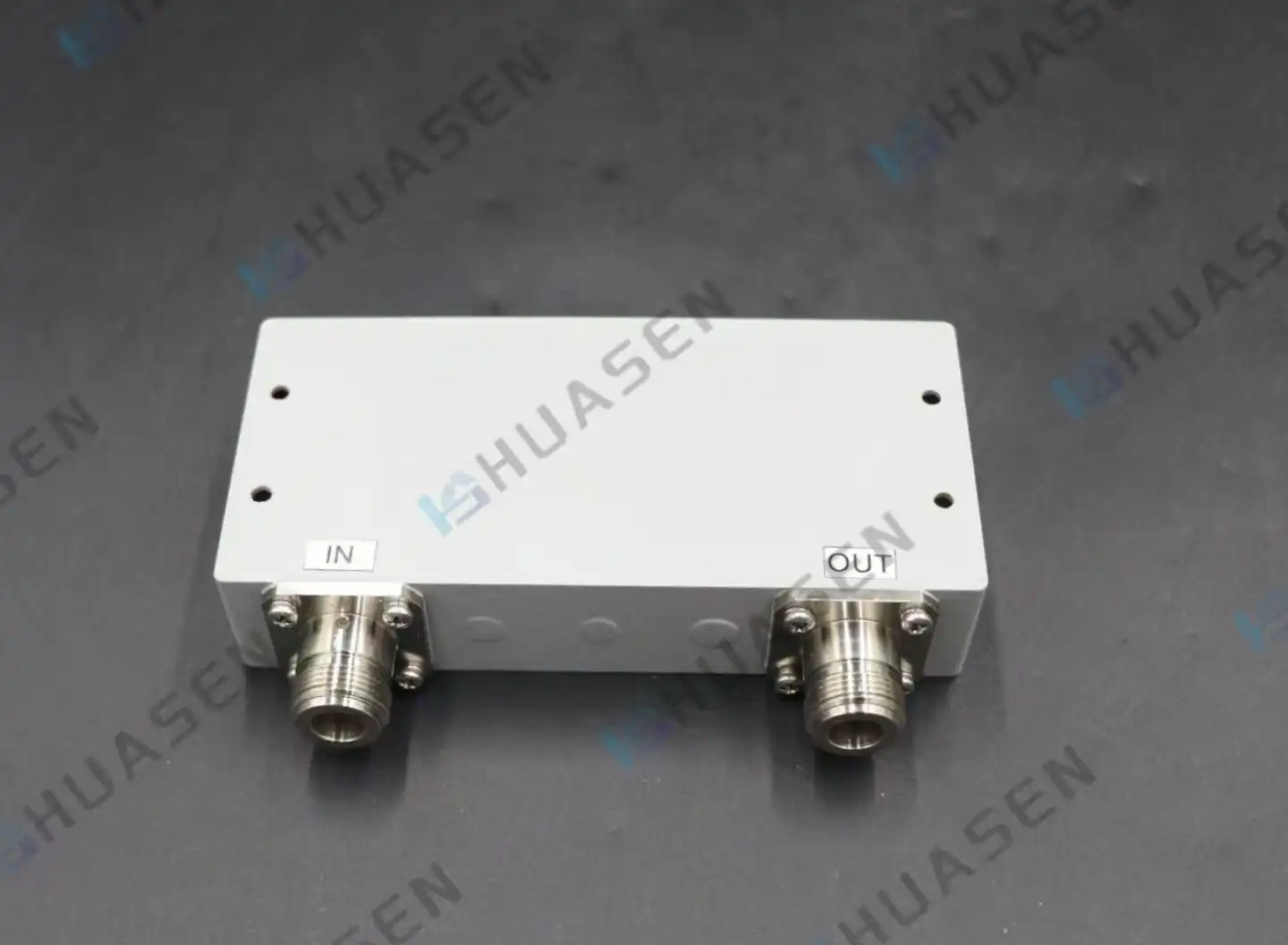
Understanding the Fundamentals of Coaxial Bandpass Filters
Core Construction and Operating Principles
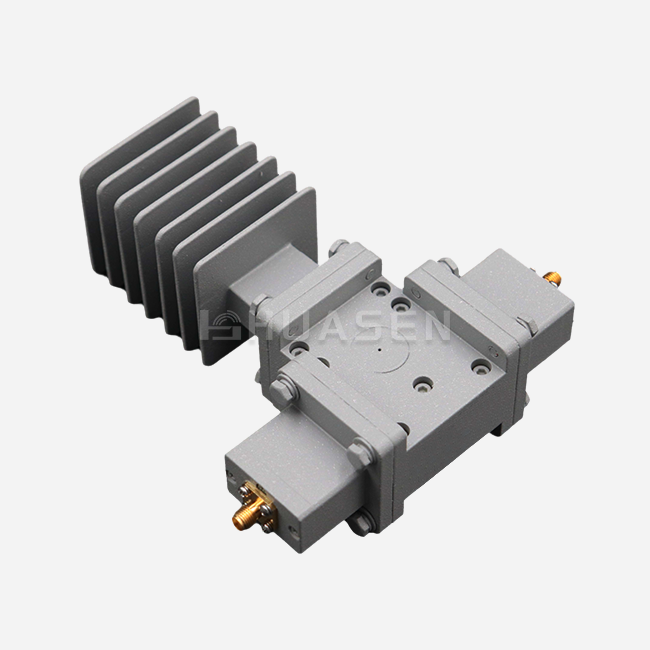
Coaxial Bandpass Filters use Transverse Electromagnetic (TEM) mode transmission within steel coaxial resonator structures. These devices work on the idea of distributed elements and usually use combline or interdigital topologies. This is different from lumped-element filters, which lose a lot of power at UHF and microwave frequencies. The coaxial resonators are made up of carefully machined metal holes made of aluminium or copper plated with silver. They have high Q factors that are not loaded, ranging from 500 to 5,000 based on the volume and treatment of the surface.
The resonators connect electromagnetically through holes or openings that were carefully planned. Bandwidth and passband form are set by this coupling process. The centre wires go into the hollow and make standing wave patterns at certain resonant frequencies. Tuning screws let you make changes after the product is made to account for grinding flaws and make sure the frequencies are perfectly aligned. The end result is a gadget that can pick out very specific frequency bands while keeping insertion loss low.
Critical Performance Parameters
Several standards describe how well a filter works and have a direct effect on how the system works. Insertion loss is a way to measure how weak a signal is in the passband, which is important for keeping the communication system link costs. The insertion loss of high-quality coaxial filters is less than 0.8 dB, which keeps the signal strong throughout the transmission chain.
In RF uses, return loss is usually 50 ohms, and it measures how well the filter impedance fits the system. When the return loss is low, echoes happen, which slow down power flow and can hurt sensitive parts. Across the passband, good filters keep return loss better than 20 dB.
Out-of-band rejection tells you how well the filter blocks out sounds that you don't want to hear. For example, cell phone base stations need rejection of 60 dB or more to keep listeners from becoming less sensitive to noise from transmitters. How quickly the filter changes from the passband to the stopband is shown by the quality factor (Q). When the spectrum is crowded, higher Q values allow for greater skirt selection, which is very important.
Power dealing is very important in situations where a lot of power is needed. Coaxial filters are great for this because they can handle continuous wave power from watts to kilowatts without breaking down due to heat. The strong metal construction efficiently gets rid of heat, unlike clay options that get dielectrically heated when high power is applied.
Advantages Over Alternative Technologies
Coaxial designs have better Q factors and can handle more power than microstrip filters while still being small. Microstrip filters have trouble with losses above 6 GHz and can't work in places with a lot of power. Ceramic screens are small, but they don't have the thermal stability or power capacity that base station equipment needs.
Although waveguide filters work very well, they take up a lot of room and cost a lot more. Coaxial Bandpass Filters are the best of both worlds because they offer waveguide-grade filtering in packages that are small enough to fit in tight spaces. This benefit stands out more in situations like Distributed Antenna Systems, where several filters need to fit into a small box.
Coaxial design is mechanically rigid, so it can handle vibration and shock in marine and aircraft settings. When put under mechanical stress, lumped-element filters with glued parts could break. Because they are so tough, coaxial filters are the best choice for radar in the air, communications on ships, and systems placed on vehicles.
Criteria for Specifying a Coaxial Bandpass Filter for Your System
Defining Operating Frequency and Bandwidth
Start the design process by clearly stating your centre frequency and the capacity you need. These settings are set by the communication protocols. For example, the 5G n77 band works at 3.3–4.2 GHz, and marine satellite stations use the X-band at around 8 GHz. Your filter needs to be able to handle the whole signal span plus some extra room for temperature changes and manufacturing flaws.
Narrower bandwidths need higher Q resonators, which makes them bigger and costs more. At 2 GHz, a 50 MHz bandwidth filter has a fractional bandwidth of 2.5%, which means that the resonator needs to be carefully designed. On the other hand, wideband filters that cover a 20% fractional frequency give up some rejection power but make impedance matching easier. Knowing about this trade-off helps you find the best balance between function, size, and price.
Power Handling and Environmental Robustness
Peak and average power needs have a big impact on filter selection. Base station duplexers handle broadcast powers of more than 100 watts all the time, which requires filters with strong heat management. It's important to choose the right material; silver-plated copper housings are better at conducting electricity and letting heat escape than aluminium ones.
The environmental requirements must match the conditions of the real placement. Temperature changes from -40°C to +85°C can happen in outdoor locations, so they need stable insulating materials and parts that match in terms of how much they expand and contract. For seafaring or coastal uses, you need hermetic seals and finishes that won't rust. Military standards, such as MIL-STD-810, require shock and pressure tests that regular screens can't handle.
Matching System Impedance and Connector Standards
As a rule, the system resistance (50 ohms) must match the design of the filter to keep echoes to a minimum. Make sure that the return loss numbers given are accurate for all of your working temperatures. Some makers only say how well their products work at room temperature, which means that matching isn't as good in the field.
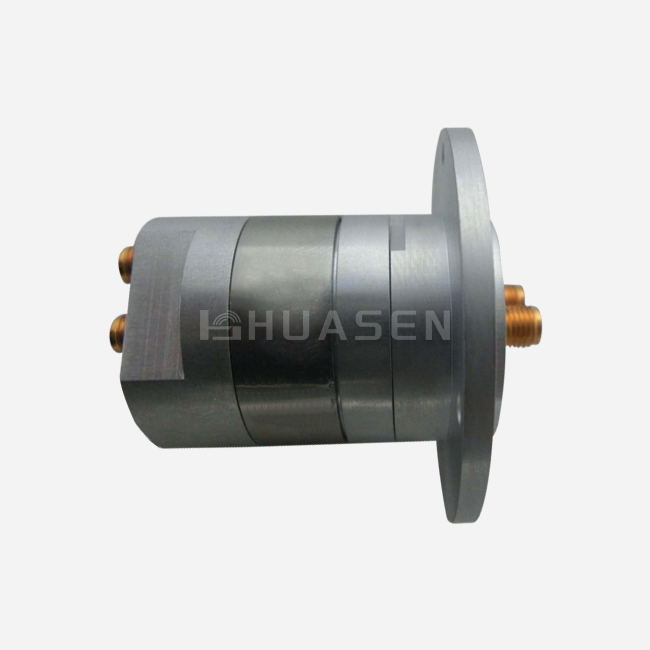
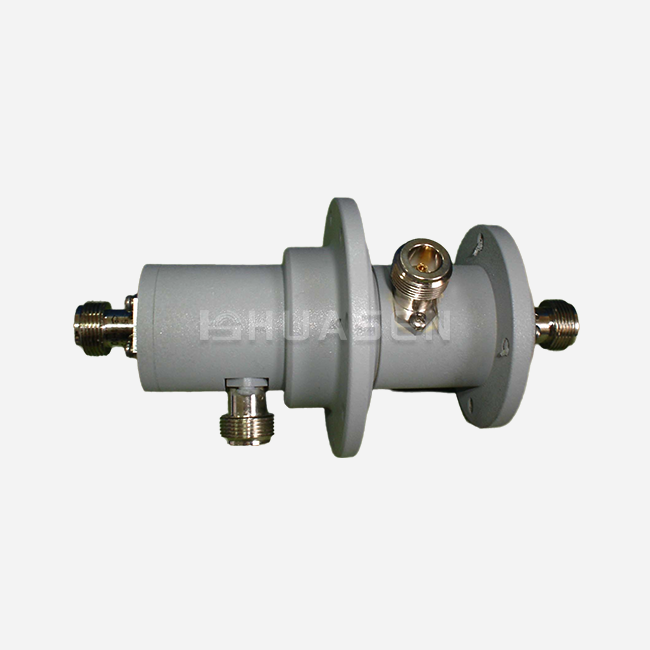
The types of connectors have a big effect on fitting and dependability. For lab tools and low-power uses, SMA connections work well. N-type plugs can handle more power and are better at withstanding bad weather for use outside. When it comes to cellular infrastructure, 7/16 DIN connections have the lowest passive intermodulation (PIM), which is when unwanted signals mess up channels that are next to each other. Checking early on that connectors are compatible saves a lot of money on changes that need to be made during system integration.
Practical Procurement Considerations
The costs of a project are affected by minimum order numbers, especially when custom designs are used. Catalogue filters usually come in small amounts and might not meet specific needs. While custom filters work better, they usually need to be ordered in groups of 50 to 100 units, and the lead time is 8 to 12 weeks.
Different providers use different pricing tactics. Some have bulk discounts at certain number levels, while others keep their prices the same no matter how much you buy. Ask for specific quotes that include engineering costs that don't happen again and again for unique designs. Think about the cost of samples. Reliable providers offer pre-production samples so that you can test them for quality before committing to full production runs.
Make sure there is clear information about basic details (Coaxial Bandpass Filter). Give detailed models that show how the parts will be mounted, how the connectors should be orientated, and how they need to be sealed against the environment. This lack of clarity leads to delays and possible redesigns. Work with providers who offer application engineering help to make the specs more precise based on their design and manufacturing skills.
Coaxial Bandpass Filter Design Basics and Optimisation Strategies
Filter Topology and Resonator Configuration
There are two main types of designs used in coaxial filter design: combline and interdigital. Each has its own benefits. Combline filters use alternate grounding and parallel resonators to make small layouts that work for narrow to intermediate bandwidths. Interdigital designs have resonators that are connected along their length, which makes out-of-band rejection better for wide frequency uses.
The working frequency is directly related to the size of the resonator. When their length is equal to a quarter wavelength at the centre frequency, quarter-wave resonators reverberate. At 2 GHz, this is equal to about 37.5 mm in the air. When you load dielectric, resonators get shorter, which makes the filter smaller overall but with a little more loss.
Bandwidth and passband form are controlled by how the resonators couple with each other. The binding strength can be changed by changing the aperture size, gap spacing, and probe position. When the connection gets tighter, the bandwidth goes up, but the discrimination goes down. Before spending a lot of money on making expensive metal housings, engineers use electromagnetic modelling tools to make sure that coupling structures work best.
Tuning and Production Validation Methods
Mechanical tuning screws go through each resonator and let the frequency be changed while the instrument is being made. Tuning fixes problems caused by machining limits, differences in materials, and uneven assembly. Technicians who are skilled use vector network analysers to measure S-parameters and keep changing the screws until the performance meets the requirements.
Automated tuning systems make it easier to make things consistently and increase production. Computer-controlled tuners measure the reaction of the filter, use optimisation techniques to figure out what changes need to be made, and then place the tuning elements automatically. This method cuts down on labour costs and mistakes made by people in high-volume production.
Designs are checked with electromagnetic modelling before they are made into real prototypes. Software programs like HFSS, CST, and Sonnet can model filter designs and guess how much insertion loss, return loss, and rejection there will be. Simulation cuts down on development time by finding mistakes in the design early on. But because materials have different properties and parts aren't always made perfectly, trying a sample is always the best way to make sure it works in the real world.
Optimisation Strategies for Enhanced Performance
To lower insertion loss, you need to pay attention to the circuit materials and surface finish. Silver coating reduces skin effect losses more than aluminium or brass that isn't coated. The thickness of the plating must be more than three skin layers at the lowest frequency of operation, which for microwaves is usually 3 to 5 microns. Electropolishing the surface before coating gets rid of the tiny rough spots that cause loss.
To get better out-of-band rejection, you need more resonators or filter steps that are stacked on top of each other. The transfer function gets a pole added by each resonator, which makes the rolloff slopes steeper. A system with five resonators can reject signals at rates close to 120 dB per decade, which is enough to block harmonics three octaves from the passband. But adding more resonators makes the system bigger, heavier, and more expensive, so a careful trade-off study is needed.
Performance in passive intermodulation (PIM) is very important in cellular infrastructure, where many high-power carriers work at the same time. PIM happens when nonlinear junctions, even very small surface oxides, mix carriers to make unwanted products. To get PIM levels below -150 dBc, you need materials that aren't magnetic, precise machining to keep gaps to a minimum, and controlled connection force during assembly.
Comparing Coaxial Bandpass Filters with Alternative Technologies
Performance and Application Trade-offs
Microstrip filters can be made very small, making them ideal for compact electronics and low-power units. Photolithographic fabrication on circuit boards lowers the price of making a lot of household products. It's easy to connect these filters to other flat circuits. But losses in the wire and insulator get a lot worse above 10 GHz, and the power handling stays at a few watts. Coaxial options are better for applications that need to be tough or handle a lot of power.
Ceramic screens are small because they are made of materials with a high dielectric constant. Dielectric resonators are very cheap and have high Q and good temperature stability. They are used in GPS sensors and the front ends of cell phones, where room is limited. But ceramics can't handle a lot of power and break easily when hit with mechanical shock. Metal cable housings are strong enough for base station uses that need to work continuously, even when they are vibrating.
When it comes to tough jobs, cavity filters are the best option. Machined metal holes have Q factors that are higher than 10,000 and can handle kilowatts of constant power. Cavity technology is used in military radar systems and broadcast combiners, where success supports the large size and cost. Coaxial Bandpass Filters are a good compromise between cavity performance and realistic size limits. They can be used in situations where moderate insertion loss is acceptable in return for small packaging.
Low-frequency uses below 500 MHz can benefit from lumped-element filters that use separate capacitors and inductors. At higher frequencies, parasitic effects on components make them work less well. Printed circuit boards can be integrated with surface-mount technology, which cuts down on building work. When frequency goes above 1 GHz, it's important to use distributed element designs, such as Coaxial Bandpass Filters, to keep performance stable and Q factors high enough.
Industry Brand Considerations
Manufacturers like Mini-Circuits built their names on having a large catalogue and quick shipping. Their stock designs work well for testing and small-scale production where customising isn't needed. MACOM focuses on providing high-quality parts for defence and aircraft uses, with a lot of qualification information and long-term supply promises. High-power combiners and custom filter options from brands like Reactel are used in the broadcast business.
Huasen Microwave Technology has been making RF components since 1993, so they have 30 years of technical experience. Their Coaxial Bandpass Filters work with frequencies from DC to 60 GHz, so they can be used in a wide range of situations, from 5G infrastructure to satellite stations. They are a good partner for both standard and special filter needs because they can do precise machining, have in-house testing facilities, and offer quick tech support.
When you evaluate suppliers, you have to look at their quality processes and licenses. Having ISO 9001 certification means that the production process is organised. MIL-STD qualification shows that you can meet strict military requirements. Compliance with RoHS provides care for the earth. Ask for approval test results that show how well the product works in conditions of temperature, humidity, and vibration that are similar to those in your application.
How to Procure the Right Coaxial Bandpass Filter: A Practical Guide
Identifying Qualified Manufacturers
Start evaluating suppliers by looking at their expert skills. Check product catalogues to make sure they cover the right frequency range, can handle the right amount of power, and offer customisation services. Manufacturers that specialise in the frequency band you want usually do a better job than generalists who try to cover a lot of ground.
Ask for design review meetings where tech teams can talk about the needs of your application. Qualified providers ask a lot of questions about the surroundings, nearby channel spacing, and the structure of the system. This conversation shows how knowledgeable they are and how willing they are to take the time to understand your needs before giving you a quote.
Facility surveys or virtual walks are good ways to look at the infrastructure of production (Coaxial Bandpass Filter). Modern machine centres with multi-axis CNC tools show that the company can make precise products. Having electroplating lines in-house lets you keep an eye on the quality of important surface processes. Commitment to regular production quality is shown by temperature-controlled building areas and test equipment that has been calibrated.
Leveraging Technical Resources and Sampling
Good providers give full datasheets with readings for all S-parameters, mechanical drawings, and environmental requirements. Ask for graphs that show insertion loss, return loss, and rejection over wider frequency ranges than the stated passband. The temperature coefficient data show that performance stays the same in all working situations.
Before making a real prototype, simulation models in the touchstone format let you look at the whole system. You can test how well filters work with amplifiers, mixers, and antennas by importing S-parameter files into your modelling system. Early on in the development process, this virtual prototyping finds problems like impedance mismatches or not enough rejection.
Sample buying checks that what the seller says is true and that it works with your system. Reliable makers offer evaluation samples at a fair price or let you borrow units to try. Allow enough time to fully characterise using your own test tools. Check how well it works at different temperatures, how well it handles power under real-world signal situations, and how well it fits mechanically into your assembly.
Building Long-term Supplier Relationships
Open and honest conversation is the key to building strong relationships. Use clear, industry-standard language to define requirements. Give suppliers some background on your application so they can understand what factors are important and what traits aren't. This makes things clear, which stops mistakes that slow down projects and cost more.
Quality compliance goes beyond just delivering the goods. Set up processes for inspecting new items to make sure they meet specifications. Check the quality systems of your suppliers on a regular basis, especially for large-scale output. Take quick action on nonconformances by using structured corrective action methods that find the root causes and put in place means to stop them from happening again.
Support after the sale is what sets great sellers apart from average ones. Having access to application experts who can help with integration problems, give advice on filter cascading, or fix speed problems that come up out of the blue is very helpful. Responding to customer questions, quickly processing urgent orders, and making it easy to return items all make buying processes run more smoothly.
Conclusion
Technical requirements must be balanced with realistic procurement factors when specifying Coaxial Bandpass Filters. Knowing basic factors like insertion loss, Q factor, bandwidth, power handling, and weather stability helps you make a choice that fits your system's needs. By comparing coaxial technology to other options, it becomes clear when this method is the best value.
Partnering with makers that offer scientific depth, consistent quality, and quick help is key to successful procurement. Communication of clear specifications, careful evaluation of samples, and organised relationships with suppliers all lower risk and speed up project timelines. When setting up 5G infrastructure, satellite ground stations, or aerospace systems, the right filter design has a direct effect on speed, dependability, and the success of the project. The ideas in this article give you a way to deal with the complicated technical issues and supply chain problems that come up when you need to find high-performance RF components.
FAQ
1. What distinguishes coaxial bandpass filters from microstrip designs?
Coaxial filters have better Q factors—usually 1,000 to 5,000 vs. 50 to 200 for microstrip—which means they can pick signals more precisely and lose less signal during insertion. The sealed metal frame can handle a lot more power—often kilowatts—than microstrip, which can only handle a few watts. Coaxial designs are more durable because they can handle vibrations and high temperatures that aren't good for printed circuit solutions.
2. How do we determine appropriate bandwidth and insertion loss specifications?
Bandwidth needs to be big enough to fit your signal spectrum plus some extra room for temperature changes and production flaws. Usually, a 10–20% cushion is enough. Insertion loss has a direct effect on the system link budget; to make up for every 0.5 dB of filter loss, the amplifier gain needs to be equal to that amount. You need to find a balance between higher loss and greater selection. Narrower bandwidths require higher Q resonators, which may slightly raise insertion loss.
3. Can manufacturers provide custom filters for non-standard frequencies?
Custom designs meet particular needs for power, frequency, and bandwidth that can't be met by standard catalogue goods. For unique filters, you can expect to have to order at least 50 to 100 units and wait 8 to 12 weeks for them to arrive. Engineering costs that don't happen again and again include design, modelling, prototyping, and making tuning fixtures. Custom solutions from DC to 60 GHz are what companies like Huasen Microwave do best.
Get Your Custom Coaxial Bandpass Filter Solution Today
With more than 30 years of experience making RF components, Huasen Microwave Technology offers precisely designed filtering options. Our range of Coaxial Bandpass Filters has insertion loss below 0.8 dB, out-of-band rejection above 60 dB, and frequency coverage from DC to 60 GHz. High-Q coaxial cavity design, silver-plated finishes, and thorough testing all work together to make sure that the product works reliably in a wide range of challenging situations.
Working with a skilled Coaxial Bandpass Filter maker makes it easier to buy things and speeds up the development of systems. Email our engineering team at sales@huasenmicrowave.com to talk about your particular needs, get detailed datasheets, or set up an evaluation sample. Customisation services let us deal with special frequency bands, connector setups, and power handling needs that standard goods can't meet. System programmers, equipment makers, and research institutions that need high-quality RF filtering solutions trust Huasen Microwave because we are dedicated to quick response times, consistent quality, and open communication.
References
1. Matthei, G.L., Young, L., and Jones, E.M.T. Microwave Filters, Impedance-Matching Networks, and Coupling Structures, Artech House Books, 1980.
2. Hong, J.S. and Lancaster, M.J. Microstrip Filters for RF/Microwave Applications, John Wiley & Sons, 2001.
3. Cameron, R.J., Kudsia, C.M., and Mansour, R.R. Microwave Filters for Communication Systems: Fundamentals, Design, and Applications, Wiley-Interscience, 2007.
4. Levy, R. "Filters for Communications Satellites," IEEE Transactions on Microwave Theory and Techniques, vol. MTT-29, no. 6, pp. 533-544, June 1981.
5. Hunter, I.C. Theory and Design of Microwave Filters, Institution of Engineering and Technology, 2001.
6. Rhodes, J.D. Theory of Electrical Filters, John Wiley & Sons, 1976.
Send Inquiry