How to Select a Dual Channel Rotary Joint for Aerospace Systems






2026-06-12 22:28:17
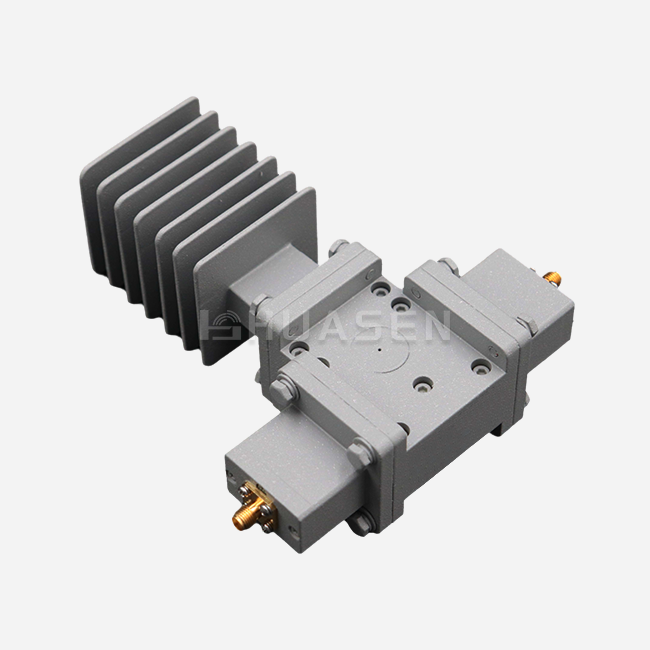
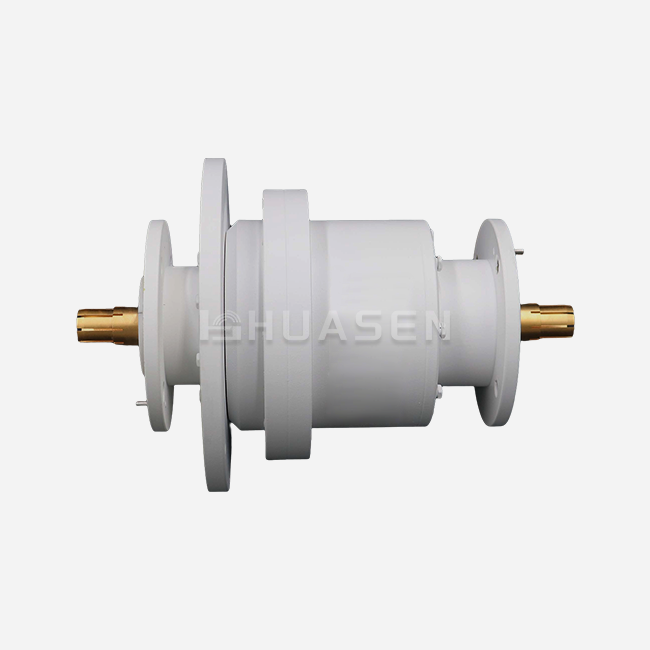
When choosing the right dual-channel rotary joint for aircraft systems, you need to pay close attention to the frequency range, power handling, rotary life, and how well it can handle the environment. These RF transmission devices allow a constant rotation of 360 degrees while keeping the signal strong across two separate channels. This is very important for radar pedestals, satellite tracking antennas, and test tools for avionics. Engineers in the aerospace industry have to find a balance between electrical performance measures like VSWR and mechanical longevity. They have to make sure that the part can handle high and low temperatures, vibration, and changes in altitude without affecting the accuracy of tracking or mission-critical messages.
Understanding Dual-Channel Rotary Joints in Aerospace Applications
A lot of the time, aerospace systems need to send RF signals constantly through rotating interfaces, where antennas or sensor arrays keep an eye on targets or satellite groups. A dual-channel rotary joint can handle this problem because it lets two separate signal lines go through a moving part without any signal loss or cable twisting.
Core Functions and Design Architecture
To keep the electromagnetic flow going while the parts are turning, they use either a circular waveguide or a coaxial structure. The inner channel is in charge of a certain frequency band or polarization, and the outer channel is in charge of a different band or transmit/receive line. This setup stops mechanical wire wrapping, which would otherwise limit rotation angles and make upkeep harder. To keep the circular symmetry of electromagnetic fields, different types of waveguides use mode transition methods to change between TE11 and TM01 modes. Coaxial designs depend on contact areas that are precisely machined and plated with valuable metals to keep dynamic resistance changes to a minimum.
Distinguishing Dual Channel from Alternative Solutions
Single-channel joints can only handle one RF path, which makes the system less flexible when it needs to work on two bands at the same time or have different send and receive paths. Three or more channel variants make things more complicated and expensive, and they take up more room, which is a very important factor in aerospace systems. Slip ring systems can handle more than one electrical circuit, but they usually have more insertion loss and a smaller frequency range than RF rotor joints that are designed specifically for that purpose. For many tracking and transmission tasks in aerospace, the dual-channel rotary joint configuration is the best mix of power and complexity.
Typical Aerospace Use Cases
Air traffic control radars use these dual-channel rotary joints so that they can look in the S-band and find weather in the X-band at the same time, while the antenna base keeps turning. Ship-based satellite stations need dual-channel rotary joint designs to keep the uplink and downlink working properly. This is because stable antennas follow moving satellites even when the ship pitches and rolls. They are used in radar systems on airplanes and drones that are placed on the nose or in pods. The antenna has to scan regardless of the orientation of the body. They are used on test ranges in instrumentation pedestals that keep track of different telemetry bands from test cars.
Key Selection Criteria for Aerospace Dual-Channel Rotary Joints
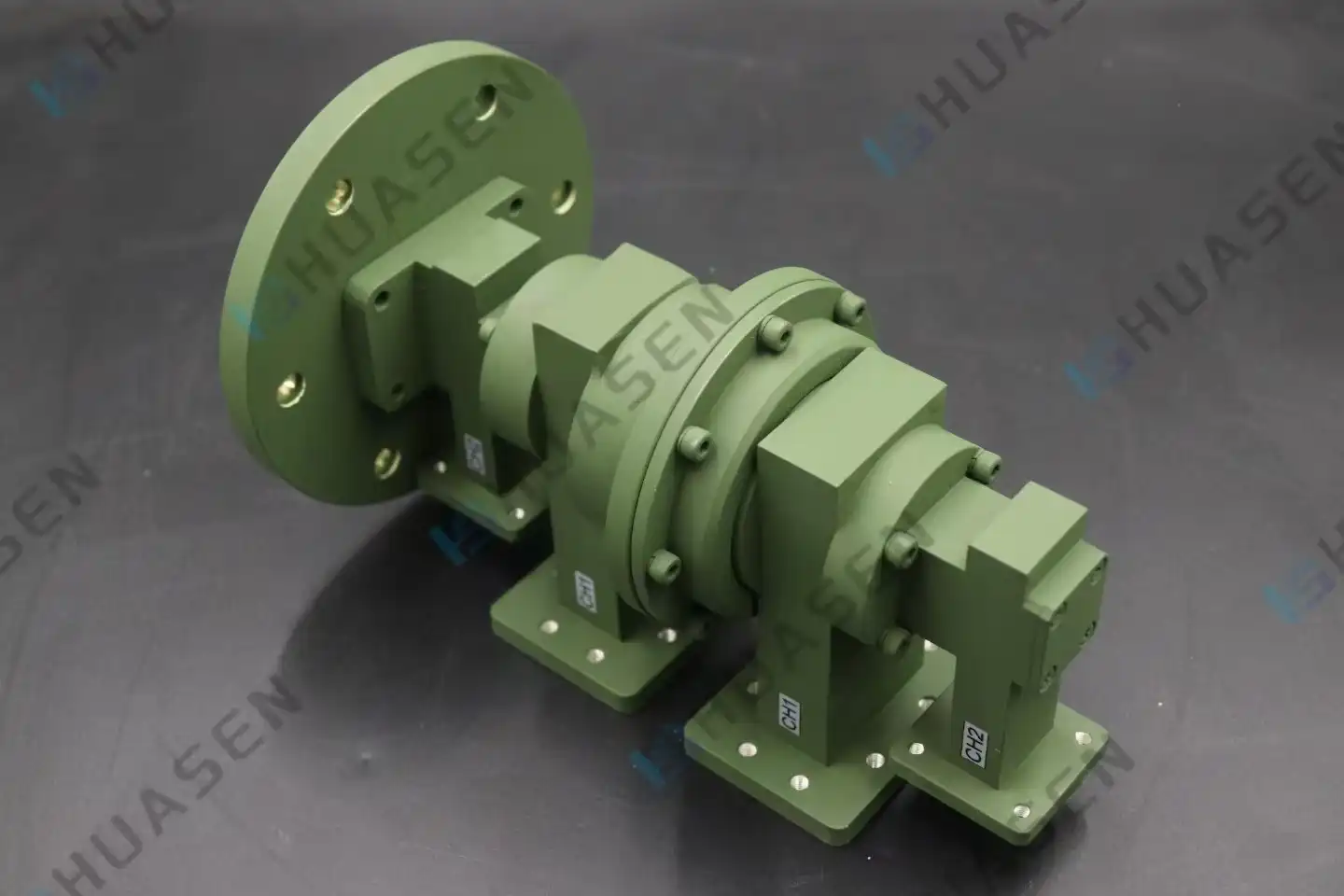
To make sure that the parts they buy meet operating needs for the whole time they're in use, procurement teams have to look at a lot of different performance factors. Standard industrial dual-channel rotary joints can't safely handle the harsh conditions that exist in aerospace settings.
Frequency Range and Bandwidth Coverage
Each channel needs to have enough space around it to cover the necessary working bands. L-band (1-2 GHz) is used for guidance and data, S-band (2-4 GHz) is used for air traffic surveillance, and X-band (8-12 GHz) is used for weather radar and precise tracking. For some systems, one channel needs to be optimized for Ku-band (12-18 GHz) satellite uplinks, and the other needs to be optimized for C-band (4-8 GHz) downlinks. Broadband designs that cover more than one octave make ordering simpler, but they might not work as well as band-specific designs. We check that the bandwidth specs given include sure VSWR and insertion loss limits for the whole range, not just the center frequencies.
Electrical Performance Parameters
Insertion loss has a direct effect on link costs and the amount of power that the sender needs. In certain frequency ranges, aerospace-grade joints keep insertion loss below 0.3 dB per channel, and luxury units get as low as 0.15 dB or better. VSWR less than 1.25:1 makes sure that power is transferred efficiently and reduces echoes that could harm transmitter finishes. Crosstalk that would lower receiver sensitivity or give radar systems false targets can't happen when channel separation is higher than 50 dB. To meet the requirements for electronic countermeasures, some military uses need 70 dB of separation. Peak power handling ability must be able to handle radar pulse peaks, which can reach megawatt levels, without voltage breakdown or arcing. This is especially important at high altitudes, where lower air pressure lowers the breakdown limits.
Mechanical Specifications and Environmental Resilience
The rotational speed numbers must be higher than the fastest antenna slew rates by a sufficient amount. For quick target capture, high-performance air defense radars may need to be able to handle 60 RPM and a certain amount of acceleration. Bearing designs with angular contact or crossed-roller configurations can handle big antenna systems and dual-channel rotary joint assemblies with precision and load capacity, and they keep rotating smoothly across a wide temperature range. Choosing the right materials is important for marine areas that are exposed to salt fog, which means using aluminum alloys with protected coatings or building with stainless steel. When temperatures range from -55°C at high altitude to +85°C in bright sunlight, they need to be matched with stable insulating materials and thermal expansion. MIL-STD-810 vibration and shock resistance ensures that people can survive moves in an airplane or on a ship.
Rotational Life and Maintenance Considerations
When properly kept, contact-based coaxial joints can last between 10 and 50 million revolutions. This is because the valuable metal contacts reduce wear. Since electromagnetic coupling happens across air gaps without mechanical friction, non-contacting waveguide designs might have an infinite circular life. Maintenance schedules and processes affect how available an operation is. For example, designs that need to be oiled or inspected on a regular basis make it harder for people in faraway locations to help. Sealed bearing systems that are lubricated for life require less upkeep, but they need to be proven reliable through accelerated life testing data.
Procurement Considerations for Aerospace Dual-Channel Rotary Joints
To find these specialized parts, you have to look at a supplier's skills beyond what is written in the specs. Aerospace projects need stable supply chains and quality assurance methods that set qualified makers apart from general industry suppliers.
Manufacturer Credentials and Certification Compliance
Suppliers with a good reputation keep quality management systems that are approved to AS9100 aerospace standards. This shows that they have process controls that go beyond what ISO 9001 requires. Certifications for parts may include MIL-STD-461 for electromagnetic compatibility, RoHS for environmental safety, and REACH for material safety. Some programs need manufacturers to be on lists of approved vendors by the government or the lead provider. We check to see if sources include full material tracking and proof of conformance with every shipment. This is important for aircraft users that need to control the configuration of parts.
Customization Capabilities and Engineering Support
Standard store items rarely meet all system needs without being changed. Some makers let engineers work together to improve frequency response, change flange connections to fit certain antenna mounts, or change power ratings for certain duty cycles. Having access to design help during system integration can help solve problems with impedance matching or mechanical envelope constraints before making a prototype. When compared to buying production quantities based only on datasheet specifications, sample programs that let you test performance in real-world working situations lower program risk.
Lead Times and Supply Chain Management
Custom aircraft dual channel Rotary joints usually take 12 to 16 weeks to make the first time, but they can be delivered faster for return orders. Programs with tight deadlines need providers who keep a stock of raw materials and offer choices for faster production. We check to see if makers have backup production sites to lower the risk of disruption from events in the area. Setting up blanket buy agreements that ensure stable prices and priority delivery is helpful for long-term production plans.
Pricing Structure and Total Cost Considerations
The price per unit depends on the frequency range, the amount of power it can handle, and the weather conditions. For X-band radar, high-power waveguide joints can cost up to $40,000. Lower-power coaxial units for monitoring use cost between $3,000 and $8,000. Volume savings are available for purchases of more than one unit, but because aircraft users have so many unique needs, they rarely reach commodity prices. The total cost of ownership includes the cost of replacement services, extra parts, and managing the possibility of programs becoming obsolete over many years.
Installation, Maintenance, and Technical Support for Aerospace Users
When integration and lifecycle management are done right, the return on investment is maximized, and task efficiency is maintained. Even high-quality parts break early if they are installed incorrectly and the electrical or mechanical connections are damaged.
Installation Best Practices
How flat and straight the mounting surface is has a direct effect on how smoothly the bearing rotates and how long it lasts in a waveguide rotary joint. Before putting the parts together, we suggest using precise measuring tools to make sure the flange sides meet the manufacturer's limits. It is very important to follow the torque specs for attaching bolts perfectly. Not enough torque can cause vibrations to loosen them, and too much torque can bend housings and bind bearings. To install an RF connector correctly and avoid hurting the dielectric insulators, you need torque wrenches that have been calibrated. Procedures for aligning waveguide flanges in a waveguide rotary joint make sure that the compression of the gasket seals the environment without creating gaps that raise VSWR.
Routine Maintenance Protocols
The frequency of inspections depends on how often they are used and how exposed they are to the surroundings. We take standard measures of insertion loss and VSWR right after installation, and then we track these parameters during planned maintenance to see if they slowly get worse before they break. A visual check can show that moisture is getting in through broken seals, that different metals are corroding, or that vibrations are causing mechanical damage. Following the manufacturer's instructions to avoid contamination, coaxial designs may need to have their contacts cleaned or replaced after a certain number of revolutions. Most sealed bearings don't need to be oiled, but keeping an eye on the rotating force shows when the bearings are wearing out and need to be replaced.
Technical Support and Warranty Coordination
Quick expert support helps figure out what's wrong with speed issues and plan how to fix them. We make sure that providers let customers talk directly to engineering staff instead of sending questions through general customer service lines. Most warranties cover problems with the way the product was made for 12 to 24 months. To avoid confusion, it's best to make sure that wear items like contacts or bearings are covered. Some sellers offer station repair services that fix up returned units to the way they were when they were first bought, which is cheaper than buying new ones. When a dual-channel rotary joint fails, it's important for operating systems to have access to emergency help.
Case Studies and Future Trends in Aerospace Dual-Channel Rotary Joints
Real-world examples show how choices about what to use affect how well a system works, and new technologies show what it might be able to do in the future.
Successful Deployment Examples
For a marine monitoring radar program to work, both S-band and X-band had to be used at the same time in salt fog 24 hours a day, seven days a week. The chosen waveguide dual-channel rotary joint had a coating that was resistant to rust and holes that were pressurized to keep moisture out. This allowed it to work continuously for five years with only regular checks. A small coaxial design was chosen for a mobile satellite station used for military communications that handles both Ku-band uplinks and Ka-band downlinks. The unit's MIL-STD-810 shaking qualification made it work reliably while being moved over rough terrain, keeping the link open during deployment.
Emerging Material Innovations
New dielectric materials can handle more power and have less loss slope, which lets them work at higher frequencies while being more efficient. When compared to regular PTFE barriers, ceramic-loaded plastics are lighter and more stable at a wider range of temperatures. Diamond-like carbon coatings are used to treat the surfaces of coaxial designs to make the contacts last longer. This means that high-duty-cycle uses can go longer between repair visits.
Smart Sensor Integration
The Dual Channel Rotary Joints of the future have sensors built in that check temperature, shaking, and RF operation in real time. Predictive maintenance algorithms look at patterns to guess when bearings or contacts will wear out or break. They then plan maintenance tasks to be done before problems stop operations. Wireless telemetry systems send diagnostic data from spinning parts without the need for extra slip rings. This makes integration easier and increases reliability.
Strategic Procurement Approaches
Aerospace businesses are forming long-term relationships with dual-channel rotary joint and waveguide rotary joint suppliers more and more, working together on product roadmaps that match the growth of platforms. Joint development projects split one-time engineering costs for specific versions, which speeds up supply and lowers unit prices. When suppliers are involved in the early stages of design, system layouts are optimized around the capabilities of the components, rather than having to be changed after the fact during integration.
Conclusion
In conclusion, when choosing aerospace-grade Dual Channel Rotary Joints, you have to find a balance between electrical performance, mechanical strength, and source dependability. For a procurement to go smoothly, task profiles must be matched with frequency coverage, power handling, and environmental standards. The credentials and support capabilities of the maker must also be checked. Installing and maintaining parts correctly will make them last longer, and new technologies offer better performance and tests that can predict problems before they happen. Strategic relationships with qualified suppliers let aircraft projects use tried-and-true methods while still being able to access new ideas.
FAQ
1. What differentiates waveguides from coaxial dual-channel rotary joints?
Waveguide designs work great for high-power, high-frequency tasks because they have lower insertion loss and could have an infinite spinning life because they don't require physical touch to couple. Coaxial versions are small and have a wider bandwidth all in one piece, making them good for multi-band systems that are short on room. Waveguide solutions usually cost more and need exact mechanical standards. Coaxial dual-channel rotary joints, on the other hand, only need contact repair every so often but are easier to integrate.
2. How do I verify compatibility with high-speed aerospace tracking systems?
Check that the rotational speed numbers include enough room above the fastest slew rates—a 50% range is suggested for acceleration tolerance. Check the bearing's load capacity to make sure it matches the antenna's mass and the wind's load. Make sure that the dynamic insertion loss variation (WOW) stays below 0.05 dB during spin so that the signal doesn't fade while the target is being tracked. Instead of depending only on the maximum rated speed, ask for test data that shows performance across the operating speed range.
3. What warranty terms should aerospace procurements expect?
Standard guarantees cover flaws in the way the product was made for 12 to 24 months after delivery. Make sure you know if the warranty covers wear parts like contacts and bearings, since some manufacturers don't cover these things. For important uses, you may be able to get longer guarantees, and depot repair agreements are a cost-effective way to keep things working after the warranty runs out.
Partner with Huasen Microwave for Aerospace-Grade Dual Channel Rotary Joint Solutions
Defense contractors and aerospace system designers trust Huasen Microwave as a reliable Dual Channel Rotary Joint provider that has been meeting mission-critical RF needs since 1993. Our engineering team works with your program experts to make sure that the frequency response, power ratings, and environmental standards are exactly what the platform needs. We keep our AS9100 certification up to date and provide a lot of test data that proves electrical and mechanical standards across all operating envelopes. Huasen Microwave makes sure that your rotating RF systems have the best signal integrity and operating reliability from the first conversation all the way through production and field support. Email our technical sales team at sales@huasenmicrowave.com to talk about your Dual Channel Rotary Joint needs and find out how our 30 years of microwave experience can help your aircraft idea.
References
1. Smith, J.R., and Anderson, K.L. (2021). Rotary Joint Design for Aerospace Radar Systems. Aerospace Engineering Publications.
2. Williams, M.T. (2020). RF Component Selection in Satellite Communication Terminals. Journal of Microwave Technology, Vol. 45, pp. 234-251.
3. Chen, H., and Roberts, P. (2022). High-Power Waveguide Rotary Joints: Performance and Reliability. IEEE Transactions on Aerospace Systems.
4. Thompson, D.A. (2019). Mechanical Design Considerations for Rotating RF Assemblies. Defense Electronics Review, Issue 12.
5. Martinez, C., and Lee, S. (2023). Emerging Technologies in Rotary Joint Manufacturing. International Conference on Microwave Components Proceedings.
6. Peterson, R.W. (2020). Procurement Strategies for Aerospace RF Components. Supply Chain Management in Defense Systems, Chapter 8.
Send Inquiry