How does dielectric constant influence microstrip antenna characteristics?






2026-02-17 22:33:38
The dielectric constant controls how electromagnetic waves move through Microstrip Antenna substrates. It has a direct effect on the resonant frequency, bandwidth, radiation patterns, and total efficiency. When electromagnetic energy moves through various dielectric materials, the wave speed slows down by a factor equal to the square root of the dielectric constant. This causes changes in frequency and resistance. Because of this relationship, engineers can exactly control antenna properties by choosing the right substrate materials. This makes choosing the right dielectric constant an important design parameter for improving performance in radar, telecommunications, Microstrip Antenna, and satellite communication systems.
Understanding the Role of Dielectric Constant in Microstrip Antennas
The dielectric constant represents a material's ability to store electrical energy in an electric field, serving as a fundamental parameter in patch antenna design and performance optimization. This property determines how electromagnetic waves interact with the substrate material beneath the radiating elements.
Physical Principles of Dielectric Behavior in RF Applications
Dielectric materials have properties that change with frequency and have a big effect on how signals travel. The wave speed slows down when radio frequency energy hits a dielectric medium, as shown by the equation v = c/√εr, where c is the speed of light, and εr is the relative dielectric constant. This slowing down of speed causes wavelength compression, which lets antennas be smaller while still having the same resonance properties. The dielectric constant and the tangent loss factor are closely linked. They both affect how energy is lost in the substrate. Rogers RT/duroid series or PTFE-based composites are examples of low-loss materials that keep power absorption to a minimum. This makes sure that radiation works well and gains performance. The dielectric constants of these materials are usually between 2.2 and 10.2, which gives designers a lot of freedom in matching size requirements with electrical performance.
Material Selection Impact on Antenna Performance
Different types of common base materials have different dielectric properties that affect how antennas work. With a dielectric constant of about 4.4, FR-4 is a cost-effective choice for industrial uses, but it loses more power at microwave frequencies. Rogers materials, which have dielectric values between 2.2 and 10.2, work better in tough situations that need low insertion loss and stable properties over a wide temperature range. Ceramic-filled surfaces have higher dielectric constants, which lets them get much smaller while still performing well enough. But these materials often make production more difficult and cost more, so design trade-offs need to be carefully thought through.
Impact Analysis: How Different Dielectric Constants Affect Microstrip Antenna Performance
Choosing the right substrate has effects on all aspects of an antenna's performance, affecting everything from its size to its radiation properties. To get the best results for each application, engineers must carefully balance these factors that affect each other.
Frequency Response and Bandwidth Characteristics
When the dielectric constant goes up, surface waves travel farther, which could change the radiation patterns and make the antenna less effective. These extra modes can make array elements couple up in ways that aren't wanted and make scan blindness happen in phased array apps. To solve these problems, engineers carefully choose the substrates and come up with new ways to build the feeding networks. The link between gain performance and dielectric properties is not simple. Higher dielectric factors make it possible for sizes to get smaller, but they may also make radiation less effective by increasing the loss of surface waves. The best balance relies on the needs of the application and the limitations of the system.
Radiation Pattern and Gain Considerations
When the dielectric constant goes up, surface waves travel farther, which could change the radiation patterns and make the antenna less effective. These extra modes can make array elements couple up in ways that aren't wanted and make scan blindness happen in phased array apps. To solve these problems, engineers carefully choose the substrates and come up with new ways to build the feeding networks .The link between gain performance and dielectric properties is not simple. Higher dielectric factors make it possible for sizes to get smaller, but they may also make radiation less effective by increasing the loss of surface waves. The best balance relies on the needs of the application and the limitations of the system.
Comparing Microstrip Antennas Using Different Dielectric Constants: Case Studies and Industry Examples
Real-world operations show how choosing the microstrip patch antenna's right dielectric constant affects the performance of a system in a wide range of situations. These examples show the real-world issues engineers have to think about when they are trying to make antenna designs work better for certain applications.
5G Base Station Implementation Analysis
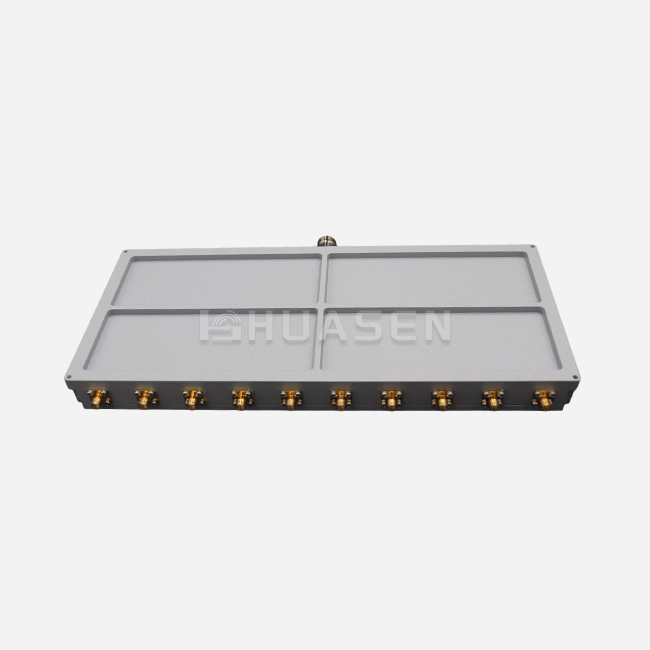
For modern 5G networks to work, they need antenna systems with high gain that can work across multiple frequency bands. Huasen Microwave's hybrid waveguide-microstrip transmission networks use specially designed dielectric materials to get gains of up to 23dB while keeping their small sizes. In these systems, substrates with carefully chosen dielectric constants are used to combine the need for high bandwidth with the need for small size. Array configurations with 2x2 to 8x8 pieces show that it can be used in a variety of deployment situations. The choice of dielectric materials allows for uniform performance across the L to Ku bands and supports a range of customisable polarisation configurations, such as two linear and two circular options.
Satellite Communication Terminal Optimization
Antennas for satellite stations need to be able to keep working well even when the environment changes. Low dielectric constant substrates are better at keeping their shape at low temperatures and are less sensitive to wetness, both of which are important for outdoor use. These materials allow for wider function, which can handle changes in frequency caused by Doppler shifts and effects of the atmosphere. Engineers can make thin, light profiles for mobile satellite terminals by using advanced materials. These profiles still have to be highly radiation efficient for a solid link to be established.
Military and Aerospace Applications
Antennas for defence systems must meet strict environmental and performance standards. Specialised substrates with controlled dielectric qualities make it possible to work at very high or very low temperatures while keeping the electrical stability. These materials make it easier to make conformal antenna arrays that fit into the body of an aeroplane without affecting its aerodynamic performance. Huasen Microwave's designs can be changed to fit specific military needs, such as providing the necessary beam shape and monopulse features for radar and electronic warfare uses.
Procurement and Manufacturing Considerations for Microstrip Antennas with Varied Dielectric Constants
Selecting appropriate suppliers requiresa comprehensive evaluation of technical capabilities, material expertise, and manufacturing quality controls. Procurement teams must understand how dielectric material choices impact both performance and cost structures.
Supplier Evaluation Criteria for Dielectric Materials
Evaluating potential suppliers demands thorough assessment of their material characterization capabilities and quality control processes. Suppliers must demonstrate precise control over dielectric constant tolerances, typically maintaining variations within ±0.05 for high-performance applications. Temperature coefficient specifications become critical for applications experiencing wide operating temperature ranges. Manufacturing capabilities directly influence achievable performance levels. Suppliers with advanced process controls can maintain consistent dielectric properties across production batches, ensuring repeatable antenna performance. Quality certifications, including MIL-STD and ISO compliance,e indicate adherence to stringent manufacturing standards essential for demanding applications.
Cost Analysis and Lead Time Considerations
Material costs vary significantly with dielectric constant and substrate complexity. Standard FR-4 materials provide cost-effective solutions for commercial applications, while specialized low-loss substrates command premium pricing. Procurement strategies must balance performance requirements with budget constraints, considering total system costs, including manufacturing complexity. Lead times for specialized dielectric materials can extend project schedules, particularly formicrostrip patch antennaparticularly, for custom formulations or exotic materials. Establishing strategic partnerships with material suppliers enables more predictable delivery schedules and potential cost reductions through volume commitments.
Supply Chain Risk Management
Diversified sourcing strategies mitigate risks associated with material availability and pricing fluctuations. Multiple qualified suppliers ensure continuity of supply while providing leverage in price negotiations. The geographic distribution of suppliers reduces risks associated with regional disruptions or trade restrictions. Quality agreements with suppliers should specify dielectric property tolerances, environmental testing requirements, and traceability documentation. These agreements protect against performance variations that could impact end-product reliability and customer satisfaction.
Optimization Techniques for Enhancing Microstrip Antenna Performance Through Dielectric Constant Engineering
Advanced engineering methodologies enable performance optimization beyond conventional design approaches. These techniques leverage sophisticated dielectric engineering to achieve superior antenna characteristics.
Multilayer Substrate Engineering
Layered dielectric structures provide unprecedented design flexibility, enabling optimization of multiple performance parameters simultaneously. By combining materials with different dielectric constants, engineers can create effective dielectric profiles that enhance bandwidth while controlling surface wave propagation. These structures support improved impedance matching and reduced mutual coupling in array configurations. Huasen Microwave's expertise in hybrid transmission networks demonstrates the potential of advanced dielectric engineering. Their systems achieve exceptional gain performance through optimized substrate selection and innovative feeding network designs that maximize efficiency while minimizing losses.
Metamaterial Integration Strategies
Metamaterial structures enable effective dielectric constant modification without changing substrate materials. These engineered structures can create artificial dielectric environments that enhance antenna performance beyond conventional material limitations. Applications include bandwidth enhancement, size reduction, and radiation pattern control. The integration of metamaterial concepts with traditional dielectric substrates opens new possibilities for antenna optimization. Engineers can fine-tune electromagnetic properties to meet specific performance targets while maintaining manufacturing feasibility and cost effectiveness.
Feeding Network Optimization
Dielectric constant variations require corresponding adjustments in feeding network designs to maintain optimal impedance matching. Advanced simulation tools enable precise modeling of dielectric effects on transmission line characteristics, ensuring minimal return loss and maximum power transfer efficiency. Impedance matching networks must account for frequency-dependent dielectric properties, particularly in broadband applications. Careful design of these networks ensures consistent performance across operational bandwidths while minimizing insertion losses that could degrade overall system efficiency.
Conclusion
When designing a microstrip antenna, the dielectric constant is one of the most important factors that affects everything from its physical size to its radiation properties. When engineers choose base materials, they have to carefully weigh the pros and cons of shrinking the size, improving bandwidth performance, and increasing radiation efficiency. Higher dielectric constants make it possible to make things smaller, but they may hurt speed and efficiency. Lower values, on the other hand, broadband microstrip antennas give better electrical performance but make things bigger. For antenna design to go well, you need to fully understand these connections and choose materials carefully so that they meet the needs of the application. Modern manufacturing techniques and advanced materials keep opening up new design options. This means that antenna solutions are getting more complex for demanding uses in the defence, aerospace, and telecoms industries.
FAQ
1. What dielectric constant range works best for broadband applications?
Materials with dielectric constants between 2.2 and 4.4 typically provide optimal bandwidth performance for broadband applications. These substrates offer favorable impedance characteristics and minimal dispersion effects across wide frequency ranges, making them suitable for applications requiring operational flexibility across multiple bands.
2. How does substrate thickness interact with dielectric constant effects?
Substrate thickness amplifies dielectric constant effects on antenna performance. Thicker substrates with high dielectric constants increase surface wave propagation and reduce radiation efficiency. Optimal thickness selection depends on the specific dielectric constant and desired performance characteristics, typically ranging from 0.5mm to 3.2mm for microwave applications.
3. Can different array elements use substrates with varying dielectric constants?
While technically feasible, using different dielectric constants across array elements creates phase and impedance mismatches that degrade overall performance. Consistent substrate properties across all elements ensure uniform radiation patterns and optimal array performance. Design flexibility is better achieved through element geometry variations rather than substrate material changes.
Partner with Huasen Microwave for Advanced Microstrip Antenna Solutions
Huasen Microwave Technology combines three decades of expertise with cutting-edge dielectric engineering to deliver superior antenna performance. Our hybrid waveguide-microstrip transmission networks achieve exceptional Microstrip Antennagains up to 23dB while maintaining ultra-lightweight, compact profiles essential for modern communications systems. We offer a comprehensive array of configurations from single patches to complex 8×8 arrangements, supporting diverse polarization options including dual linear and dual circular capabilities. Our customization expertise encompasses specialized applications like monopulse and beam shaping designs tailored to unique operational requirements. Contact our engineering team at sales@huasenmicrowave.com to discuss your specific dielectric optimization needs and discover how our advanced microstrip antenna manufacturer capabilities can enhance your system performance while meeting stringent delivery schedules and quality standards.
References
1. Balanis, Constantine A. "Antenna Theory: Analysis and Design." John Wiley & Sons, Fourth Edition, 2016.
2. Garg, Ramesh, et al. "Microstrip Antenna Design Handbook." Artech House Publishers, 2001.
3. Kumar, Girish and Ray, K.P. "Broadband Microstrip Antennas." Artech House Antennas and Propagation Library, 2003.
4. Lee, Kai Fong and Chen, Wai. "Advances in Microstrip and Printed Antennas." John Wiley & Sons, 1997.
5. Pozar, David M. "Microwave Engineering." John Wiley & Sons, Fourth Edition, 2011.
6. Wong, Kin-Lu. "Compact and Broadband Microstrip Antennas." John Wiley & Sons, 2002.
Send Inquiry