Benefits of Differential Phase Shift Circulator in RF






2026-02-16 21:23:38
Radio frequency (RF) systems require sophisticated components that can handle demanding operational requirements while maintaining signal integrity. The High Power Waveguide Differential Phase Shift Circulator represents a breakthrough in microwave technology, offering unprecedented performance in high-power applications. These devices utilize advanced phase shift differential techniques to route RF energy with exceptional efficiency, providing superior source protection and thermal management compared to conventional circulator designs. Their ability to handle megawatt-level peak powers while maintaining minimal insertion loss makes them indispensable for critical applications in radar, satellite communications, and industrial microwave systems.
Understanding Differential Phase Shift Circulators: Principles and Performance
Fundamental Operating Principles
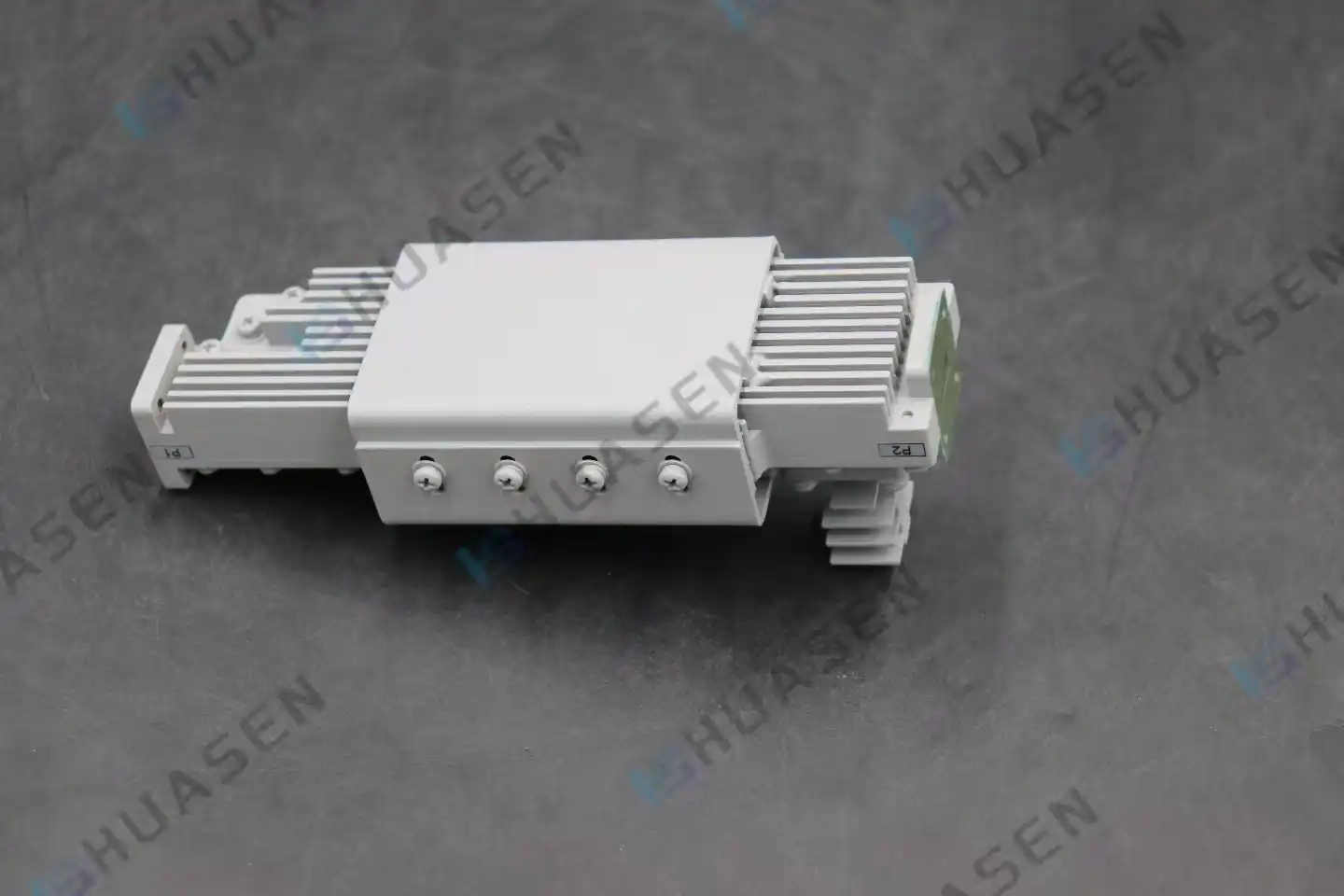
Waveguide Differential Phase Shift (DPS) circulators are different from traditional junction-based designs because they use a complex signal routing system to work. Instead of using ferrite resonance as traditional circulators do, DPS circulators use hybrid couplers along with two ferrite-loaded waveguide sections to make a 180-degree phase shift in the opposite way. This new design sends reflected energy into a high-power load instead of sending it back to the source. This protects expensive RF generators very well. Because the ferrite elements are spread out, they are better at getting rid of heat, so there aren't any of the problems that come up with single-point junction designs.
Key Performance Specifications
Because of how well they work, differential phase shift circulators are especially good for difficult tasks. In high-power systems, these devices keep energy waste to a minimum by having insertion loss values below 0.2 to 0.4 dB across their operating bandwidth. Strong source protection is provided by isolation values above 20 dB, and hot spots that could affect reliability are avoided by the spread thermal load. Choosing the right materials is a key part of getting these kinds of performance. High-quality aluminium or copper alloy building is very good at moving heat, and microwave-advanced ferrites like garnets and spinels keep their magnetic properties over a wide temperature range. Adding water-cooling channels lets the system run continuously at power levels between 1 MW and 50 MW peak power, based on the frequency band and the design needs.
Environmental and Operational Resilience
Modern differential phase shift circulators incorporate pressurization capabilities to handle extreme power levels safely. SF6 or nitrogen gas pressurization increases dielectric strength, preventing internal arcing under high peak power conditions. This feature becomes critical in applications where power densities exceed the breakdown threshold of air, typically around 30 kV/cm . The mechanical design accommodates standard waveguide flange specifications such as WR-284 and WR-90, ensuring compatibility with existing RF infrastructure. Rigorous quality standards, including MIL-STD-810 environmental stress testing, guarantee reliable operation in challenging industrial and military environments.

Core Benefits of High Power Waveguide DPS Circulators in RF Systems
Signal Integrity and Interference Reduction
High-power waveguide DPS circulators deliver substantial improvements in signal integrity through their exceptional isolation characteristics. By effectively routing reflected power away from sensitive sources, these devices minimize standing wave patterns that can cause signal distortion and amplitude variations. This capability proves essentialin High Power Waveguide Circulator in radar systems, where precise signal characteristics directly impact detection accuracy and range performance. The superior phase stability of DPS circulators contributes to enhanced system coherence, particularly important in phased array applications and coherent radar systems. Unlike junction circulators that may exhibit phase variations under thermal stress, the distributed design of DPS circulators maintains consistent phase relationships across their operational bandwidth.
Thermal Management and Reliability Advantages
One of the best things about differential phase shift technology is that the heat load is spread out. Traditional junction circulators focus heat on a single ferrite node, creating hot spots that make it harder to handle power and speed up the wear and tear on components. DPS circulators spread heat across several ferrite sections, which lets integrated cooling systems get rid of the heat effectively. Active water cooling systems keep the right temperature for operation even when they are running at full power all the time. For standard cooling requirements, flow rates must be recorded in gallons per minute, and deionised water must be used to keep the inlet temperatures below 35°C to avoid corrosion and scaling. This ability to control temperature directly leads to longer component lifecycles and less maintenance needs.
Application Versatility and Customization
High-power waveguide DPS circulators can be used in a wide range of RF applications because they are flexible. These devices work as duplexers in long-range air traffic control systems, handling megawatt-level send pulses while keeping sensitive received signals safe. Medical linear accelerators depend on DPS circulators to keep klystron sources safe from cavity reflections. This keeps beam output stable in life-critical situations. DPS circulators can handle continuous wave (CW) power, which is good for industrial microwave heating systems. Plasma fusion study centers use these to handle the very high power levels needed for long-term plasma generation. If a part fails, months' worth of experimental data could be lost.
Comparing High Power DPS Circulators with Other Circulator Types
Performance Metrics Analysis
When looking at different circulator technologies, a few important performance measures set differential phase shift designs apart from other options. For low-power uses, junction circulators are a cheap option, but they have big problems with managing heat and handling power. The concentricity of the ferrite design causes thermal bottlenecks that keep peak power well below the megawatt level that is needed. Faraday rotation circulators work well in low- to moderate-power situations, but they have trouble with bandwidth issues and are sensitive to temperature changes. Permanent magnet bias rules can make it harder to integrate systems because they limit their size and weight. This is especially true in aerospace applications where every gram counts.
Operational Mechanism Comparison
The fundamental operating principles reveal why DPS circulators excel in high-power environments. Junction circulators rely on ferrite resonance at a specific bias point, making them sensitive to temperature variations and magnetic field changes. DPS circulators achieve circulation through phase relationships that remain stable across broader operating conditions. Hybrid circulators attempt to combine advantages from different technologies but often compromise performance in pursuit of versatility. The complexity of hybrid designs can introduce additional failure modes while failing to achieve the power handling capabilities of purpose-built DPS systems.
Lifecycle and Maintenance Considerations
A study of differential phase shift technology's long-term dependability shows that it has significant benefits. The spread-out stress patterns slow down the rate at which parts break down, which increases the mean time between failures (MTBF) numbers compared to junction-based options. The maintenance needs are mostly for keeping the cooling system in good shape and not for replacing RF parts. You can be sure of long-term performance when you see certifications like ISO quality control systems and MIL-STD environmental testing. Because many DPS circulators are made up of separate modules, they can be serviced in the field without shutting down the whole system. This means that operations are interrupted as little as possible during maintenance.
Procurement Considerations for High Power Waveguide DPS Circulators
Supplier Evaluation Criteria
To find the right source for high-power waveguide differential phase shift circulators, you need to carefully look at their quality systems and production capabilities. ISO certification shows a dedication to consistent quality management, and experience in the microwave business shows that you know how to deal with the unique challenges of making high-frequency components. Because different apps have different needs, the ability to customise becomes even more important. Standard products can be changed by suppliers with their own design engineering to meet particular frequency ranges, power levels, and mechanical interface needs. This makes it easier to make changes, which speeds up development and ensures the best performance in target apps.
Technical Support and Service Quality
The complexity of high-power RF systems demands comprehensive technical support throughout the product lifecycle. Experienced suppliers provide design assistance during system integration, aHigh Power Waveguide Circulator,helping optimize impedance matching and thermal management strategies. Sample testing programs allow validation of performance specifications before committing to production quantities. Calibration and test data support become critical for maintaining system performance over time. Suppliers should provide detailed S-parameter measurements, power handling verification, and thermal characterization data. This documentation enables predictive maintenance strategies and helps identify potential issues before they impact system operation.
Cost Analysis and Procurement Strategies
While performance remains paramount in high-power applications, cost considerations influence procurement decisions, particularly for large-scale deployments. Volume pricing structures can provide significant savings for multi-unit purchases, making it important to accurately forecast long-term requirements. Lead time management becomes crucial given the specialized nature of high-power circulator manufacturing. Warranty terms and service agreements provide additional value beyond the initial purchase price. Comprehensive warranties covering both materials and workmanship offer protection against unexpected failures, while service agreements ensure rapid response to support requests. These factors contribute to total cost of ownership calculations that often favor premium suppliers with proven track records.
Future Trends and Innovations in High Power DPS Circulators
Materials Science Advancements
Emerging developments in ferrite materials promise enhanced performance characteristics for future DPS circulator designs. Advanced ceramic compositions offer improved temperature stability and reduced losses, enabling even higher power handling capabilities. Research into nanostructured magnetic materials may unlock performance levels previously considered unattainable. Superconducting technologies represent a potential paradigm shift for ultra-high-performance applications. While currently limited by cryogenic cooling requirements, superconducting circulators could eliminate insertion loss entirely while handling unprecedented power levels. The ongoing development of high-temperature superconductors may eventually make this technology practical for broader applications.
Integration with Next-Generation RF Infrastructure
The evolution toward 5G and eventual 6G communication networks creates new requirements for RF components. Higher frequency bands and massive MIMO antenna systems demand circulators with exceptional phase accuracy and minimal insertion loss. DPS technology provides a pathway to meet these stringent requirements while maintaining the reliability necessary for critical infrastructure. Satellite communication systems continue pushing power and frequency boundaries, driving demand for increasingly capable circulator technology. The growing commercial space industry requires components that combine high performance with cost-effectiveness, making advanced DPS designs attractive for next-generation satellite platforms.
Strategic Procurement Recommendations
Procurement managers should align their sourcing strategies with evolving technology trends to maintain competitive advantages. Early engagement with innovative suppliers enables access to cutting-edge developments while establishing relationships that support long-term collaboration. Technology roadmap discussions help ensure procurement decisions remain aligned with future system requirements. Investment in advanced circulator technology often provides returns through improved system efficiency and reduced maintenance costs. The superior reliability of modern DPS circulators can justify premium pricing through enhanced operational availability and extended service life.
Conclusion
High Power Waveguide Differential Phase Shift Circulators represent a significant advancement in RF component technology, offering unmatched performance in demanding applications. Their superior thermal management, exceptional power handling capabilities, and outstanding reliability make them the preferred solution for critical systems in radar, satellite communications, and industrial applications. The distributed design philosophy eliminates traditional limitations while providing the flexibility needed for diverse operational requirements. As RF systems continue evolving toward higher power levels and more demanding specifications, differential phase shift technology provides the foundation for next-generation performance.
FAQ
1. What distinguishes differential phase shift circulators from junction circulators?
The primary difference lies in power handling capability and thermal management. Junction circulators utilize a single triangular ferrite node that creates thermal bottlenecks, limiting power capacity. Differential phase shift circulators employ hybrid couplers with distributed ferrite sections, enabling megawatt-level power handling through superior heat dissipation.
2. What cooling requirements do high-power DPS circulators have?
Most high-power units require active water cooling systems with specific flow rates measured in gallons per minute. Inlet temperatures must remain below 35°C, using deionized or distilled water to prevent corrosion. Proper cooling system maintenance proves critical for maintaining performance and preventing component degradation.
3. Can DPS circulators operate without gas pressurization?
Operation without pressurization depends on power levels. When peak powers exceed air breakdown thresholds (approximately 30 kV/cm), pressurization with dielectric gases like SF6 or dry nitrogen becomes necessary to prevent internal arcing and catastrophic failure.
4. Why does insertion loss matter in high-power systems?
Even minimal insertion loss translates to significant heat generation in multi-megawatt systems. A 0.1 dB loss represents kilowatts of wasted energy, increasing thermal loads on cooling systems and reducing overall efficiency. Minimizing insertion loss proves crucial for both performance and operational cost considerations.
Partner with Huasen Microwave for Superior Circulator Solutions
Huasen Microwave Technology stands as your trusted High Power Waveguide Differential Phase Shift Circulator manufacturer, delivering three decades of engineering excellence in microwave component development. Our advanced manufacturing capabilities and rigorous quality control processes ensure exceptional performance in the most demanding applications. With comprehensive customization options, extensive testing facilities, and dedicated technical support, we provide complete solutions tailored to your specific requirements. Our experienced team collaborates closely with clients throughout the entire procurement process, from initial specification development through long-term maintenance support. Contact our technical specialists at sales@huasenmicrowave.com to discuss your high-power circulator requirements and discover how our innovative solutions can enhance your RF system performance.
References
1. Baden Fuller, A.J. "Microwave and Millimeter Wave Circulators and Isolators." IEEE Transactions on Microwave Theory and Techniques, Vol. 47, No. 9, 2001.
2. Helszajn, J. "The Stripline Circulator: Theory and Practice." Wiley-IEEE Press, 2008.
3. Pozar, David M. "Microwave Engineering, Fourth Edition." John Wiley & Sons, 2012.
4. Linkhart, Douglas K. "Microwave Circulator Design, Second Edition." Artech House Publishers, 2014.
5. Ishak, Waguih S. "Magnetostatic Wave Technology: A Review." Proceedings of the IEEE, Vol. 76, No. 2, 2003.
6. Adam, J.D. "Ferrite Devices and Materials." IEEE Transactions on Microwave Theory and Techniques, Vol. 50, No. 3, 2005.
Send Inquiry