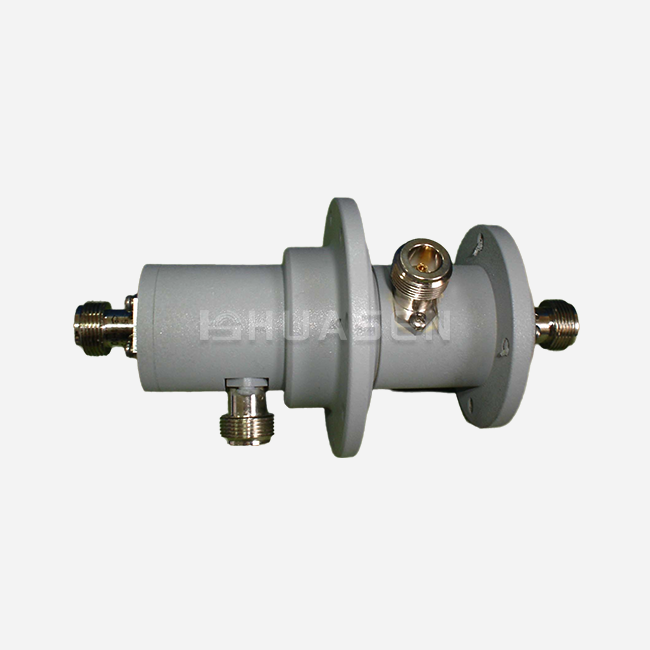
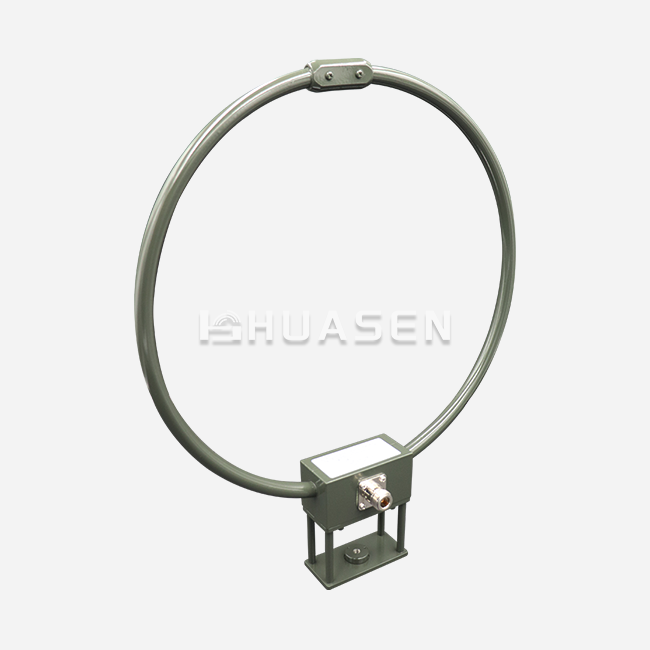
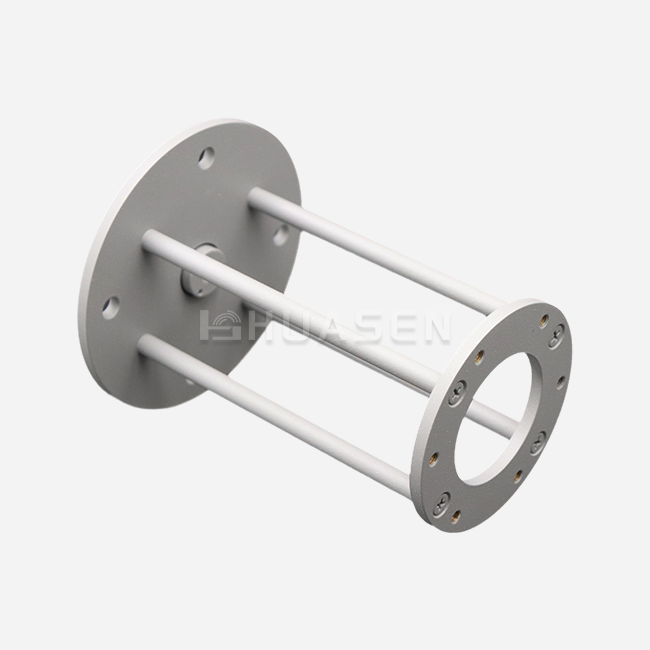
High Power Differential Phase Shift Circulator Overview






2026-04-14 21:33:48
When engineers are making plans for the next generation of radar systems, satellite communication networks, or industrial microwave installations, they often have to make a tough choice: how to keep expensive, high-power RF sources safe from harmful mirrored energy without affecting the integrity of the signal? The High Power Waveguide Differential Phase Shift Circulator is a beautiful way to solve this problem. These advanced four-port devices don't work like regular junction circulators, which focus energy on a center ferrite disc and risk overheating and performance loss. Instead, they spread power across split waveguide paths. Because of their design, they can handle continuous wave power of more than 100 kW and peak power of several megawatts. This makes them essential in situations where they must be reliable under high thermal and electromagnetic stress.
Introduction
Differential phase shift circulators are a big step forward in the engineering of RF components because they get around the problems that come with standard three-port designs. If you are a procurement worker looking for parts for 5G infrastructure, military radar arrays, or particle accelerators, you need to know how high-power waveguide circulators work and what their performance characteristics are. When these devices connect transmitters and antennas, they make sure that signals go in the right direction and that damaging reflections don't get to sensitive amplification stages. Since 1993, we've worked with system integrators in the defence, aerospace, and telecommunications industries, and we've seen how important it is to have the right circulator specification to avoid costly field failures. This detailed guide talks about the technical basics, pros and cons, possible uses, and buying factors that are most important when choosing high-power waveguide circulators for tough industrial settings.
Understanding the Principles of High Power Waveguide Differential Phase Shift Circulators
Electromagnetic Foundation and Phase Shift Mechanics
High power waveguide differential phase shift circulators work by changing phases in a way that isn't the same on both sides, using magnetically driven ferrite materials. When a signal comes in through Port 1, it is split evenly into two waveguide branches that each have precisely placed ferrite sections that are permanently magnetically biased. When the magnetic field lines up the ferrite domains, the way waves travel changes based on the direction they are traveling. This creates a controlled 90-degree difference in phase shift between the two lines. When these signals come back together at the output hybrid coupler, constructive interference sends all the energy to Port 2, while destructive interference stops it from going to Port 3. When you go backwards from Port 2, the phase relationships are the opposite, so energy goes to Port 3 instead of going back to Port 1. This basic unevenness makes it possible for signals to flow in only one way, without any moving parts or active circuitry.
Thermal Management Architecture
Thermal stability distinguishes differential phase shift circulators from junction types in high-power applications. The split-path geometry distributes thermal load across significantly larger waveguide surface areas, preventing localized hotspots that degrade ferrite magnetic properties. Most industrial units incorporate integrated cooling channels machined directly into waveguide walls adjacent to ferrite sections. Circulating coolant—typically distilled water or water-glycol mixtures at controlled flow rates between 2-5 liters per minute—maintains ferrite temperatures below critical Curie points where magnetic characteristics collapse.
Material Selection and Loss Minimization
To meet the requirements for insertion loss below 0.2 dB, careful material High Power Waveguide Circulator research is needed. To cut down on resistive losses, waveguide parts are made of high-conductivity copper or aluminium alloys with silver or gold electroplating on the outside. Ferrite materials are made up of special mixtures that balance saturation magnetisation, loss slope, and stability at high and low temperatures. Manufacturers carefully choose garnet-based ferrites for certain frequency bands so that they have the right amount of magnetic anisotropy for phase shifting and low absorption at working power levels. It is important to pay close attention to the dielectric interfaces inside the device to keep the voltage from dropping. A lot of high peak power circulators have ports for pressurisation that let them work in different levels of dry nitrogen or sulphur hexafluoride gas. This pressurisation greatly raises the dielectric breakdown limits, which lets megawatt-level pulses pass through without internal arcing, which would hurt waveguide surfaces or lower performance.

Comparing High Power Waveguide Circulators With Other Technologies
Structural Distinctions From Junction Circulators
All signal lines are focused on a single ferrite disc at the intersection of two waveguides. This makes it possible to make beautiful three-port devices with small footprints. This shape works great for low-power tasks, but it has serious problems when the power level goes up. A strong electromagnetic field concentrates on the center ferrite, making heat faster than passive conduction can get rid of it. As the temperature rises, the ferrite resonance properties change, making isolation worse and insertion loss higher in a self-accelerating thermal runaway situation. Differential phase shift circulators get rid of this problem by distributing power evenly across the space. Each ferrite section takes about half of the total power, and the waveguide walls around the ferrite are directly cooled from the outside. It is possible for this system to work continuously at power levels that would destroy junction designs in seconds. The trade-off is bigger sizes and more expensive parts, but this is necessary when the reliability of the system rests on being able to handle high power for a long time.
Power Capacity Trade-offs
Lower power circulators, those with an average rating of less than 1 kW, usually use coaxial or stripline construction, have small sizes, and are cheap to make. When room is limited and power levels are kept low, these devices work well in test equipment, small cell base stations, and lab instruments. As the need for power rises to several kilowatts, waveguide construction is needed to control power density and keep acceptable loss rates. Moving from middle to high power designs is more complicated than just making the designs bigger. Engineers need to think about how skin depth affects working frequencies and make sure that the walls are thick enough to carry RF currents without getting too hot. To keep the electricity flowing and stop leakage, flange joints need to be precisely machined. This is especially important at higher frequencies, where millimeter-scale gaps create big breaks.
Frequency Band Performance Characteristics
The operating frequency has a big effect on the design and function of a circulator. X-band circulators (8–12 GHz) are probably the most well-developed technology. They are widely used in military and marine radar systems. Because of their moderate frequency, they can be made with acceptable tolerances and cover a wide bandwidth, often more than 20% of the fractional bandwidth. Ku-band units (12-18 GHz) need more precise manufacturing because their wavelengths are shorter, but they have a wider absolute bandwidth that works well for satellite communication systems. Lower frequency circulators that work in S-band (2-4 GHz) or L-band (1-2 GHz) can handle a lot of power—tens or hundreds of kilowatts continuously—because their larger sizes make it easier to get rid of heat. In places where long-range monitoring needs a lot of transmit power, like weather radar and air traffic control systems, these devices are the norm. Millimeter-wave circulators that work above 20 GHz have to deal with higher insertion loss due to rougher conductor surfaces and tighter manufacturing tolerances. However, improvements in precise machining keep pushing the limits of performance.
Practical Applications and Benefits of High Power Waveguide Circulators
Radar System Integration
Modern phased array radars need circulators to keep expensive high-power waveguide circulator solid-state or vacuum tube amplifiers safe from situations where the antennas don't match up. When radar antennas are working, they meet changing impedance because the beam steering changes, planes fly through the detection volume, or ice builds up on the radome surfaces. Without isolation, reflected power can go back to the output stages of the transmitter, which could damage them right away or speed up long-term wear and tear. To stop this, differential phase shift circulators are put between the transmitters and the antenna feeds to send the reflected energy to fully rated dummy loads. During regular operation, the system keeps giving off heat from reflected power in a controlled way. Monitoring the power to the circulator Port 3 gives operators real-time information about the health of the antenna, letting them know if it's icing up or if there's any mechanical damage that needs fixing. Military radar applications have different needs than business systems. When electronic countermeasures are hit by jamming signals at frequencies outside of their usual operating bands, they need to work reliably. Environmental qualifications that meet MIL-STD-810 standards make sure that the system can work in conditions like high and low temperatures, shock, vibration, and humidity that would damage industrial parts. Because these are such strict requirements, defence procurement usually chooses circulators from well-known brands with a history of dependability rather than choosing based only on price.
Industrial Microwave Systems
When microwaves are used in manufacturing to heat, dry, or make plasma, they need circulators that can handle high power all day without needing to be serviced. Ceramic sintering ovens that work at 2.45 GHz can run nonstop for months, with 75–100 kW of power going into load spaces that change temperature. As the material moves through the heating zone, the circulator has to deal with changes in impedance while keeping the magnetron safe during the whole thermal cycle. Food processing uses have their own unique problems to solve. Coolant leaks that could contaminate goods are illegal because of strict rules about leak detection systems and sealing. Steam, particles, and changes in temperature that happen during operation often damage seals and corrode surfaces. These problems can be fixed with stainless steel construction and sealed cooling systems, but they cost more than laboratory-grade parts.
Telecommunications Infrastructure
Fifth-generation cell phone networks use huge MIMO antenna arrays with dozens or even hundreds of broadcast chains working at the same time. Even though the power levels of each part are still low—often below 100 watts—the whole system is a big investment in infrastructure that needs to be protected. Circulators in base station transmitter chains keep power amplifiers from being affected by antenna reflections that come from the surroundings or mistakes in installation. Reliability is very important when it comes to telecommunications deployment because it saves money. Extreme temperature changes, water getting in, and limited entry for maintenance are all problems that tower-mounted equipment has to deal with. For these locations, the circulators are designed to have hermetic sealing, passive cooling through the integration of a heat sink, and voltage breakdown margins that can handle transients caused by lightning. When the average time between failures is more than 15 years, the lifetime of the parts is aligned with the plan for infrastructure depreciation. This keeps expensive truck rolls from being needed to replace parts too soon.
Procurement Guide for High Power Waveguide Differential Phase Shift Circulators
Technical Specification Evaluation
A good procurement process starts with making sure that the specifications match the needs of the application with items that are available. Coverage of frequencies must include operational bands with enough room for manufacturing flaws and changes in the surroundings. A radar that works at 9.3 to 9.5 GHz might need a circulator that works at 9.0 to 9.8 GHz to make sure that specs are met across production lots and temperature ranges. Power ratings need to be carefully interpreted. Peak power specs show how well a device can handle pulses, which is important for radar and accelerator uses. The thermal design and cooling needs are based on average or CW power levels. These specs are related to each other based on the duty cycle. For example, a signal with a 10% duty cycle and a 100 kW peak level will average 10 kW, but the circulator has to be able to handle sudden peak levels without arcing. Make sure that both grades match the features of your transmitter. Insertion loss has a direct effect on how well the system works and how much it costs to run. For every 0.1 dB of circulator loss, about 2.3% of the send power is lost as heat, which means that more prime power and cooling capacity are needed. In a 50 kW transmitter, cutting the circulator loss from 0.3 dB to 0.2 dB restores over 1 kW, which is a big amount of power when multiplied by the number of channels that are always on. Compare the requirements for loss to the extra costs that come with higher performance grades.
Supplier Assessment Criteria
When judging possible suppliers, you need to look at more than just their technical datasheets. You also need to look at their manufacturing capabilities, quality systems, and financial stability. Manufacturers that have been around for a while usually keep their ISO 9001 certification as a minimum quality management standard. Customers in the defence or aircraft industries may need AS9100 certification to show that they have extra process controls. Ask for quality proof like test reports, material certifications, and process capability studies that show consistent manufacturing performance. The availability of technical help affects long-term satisfaction. Can the provider help with electromagnetic simulations while the system is being put together? Are they able to make custom changes to common designs to fit different mounting or interface needs? When engineering is easy to reach during the quotation process, it's often a sign that support will be quick to respond when problems arise during production. We've built our business on working closely with customers from the beginning of the design process all the way through installation and commissioning. Lead times vary a lot in this field. Standard catalogue items from distributors may ship within weeks, but unique designs take 12 to 16 weeks from the time you place your order until you get them. More than assembly time, the plan is driven by long-lead parts like specialised ferrites or precisely machined waveguide sections. Getting suppliers involved early on in the planning stages of a project keeps schedule risks from happening because of the limited supply of parts.
Compliance and Certification Requirements
For military projects, it's important to follow the MIL-DTL-85528 standards, High Power Waveguide Differential Phase Shift Circulator, which cover things like electrical performance, environmental qualification, and quality assurance. This military standard spells out how to test devices, what they must be accepted as working, and what kind of paperwork is needed to make sure they can handle operational settings. Commercial versions of military plans often work just as well without having to go through a lot of paperwork, which saves money for uses outside of defence. Export rules affect buying things from other countries. Some countries or organisations may not be able to get high-power radio parts because of the International Traffic in Arms Regulations (ITAR) or the Export Administration Regulations (EAR). Check the standards for export licenses early on in the procurement process to avoid delays or noncompliance issues. As global rules get stricter, environmental compliance has become more important. Sometimes, domestic makers can make versions that don't need ITAR that can be used internationally without any problems with licensing. RoHS rules limit the use of dangerous materials in electronics sold in the European Union. This changes how materials are chosen and how products are made. The REACH standards add more safety rules for chemicals. Make sure that the supplier's paperwork meets the needs of the market it's going to, especially if the goods are going to Europe or Asia, where environmental standards are very strict.
Leading Brands and Suppliers in Waveguide Circulators
The microwave component industry encompasses global corporations, specialized manufacturers, and regional suppliers, each offering distinct advantages for different procurement scenarios. TE Connectivity leverages massive scale and vertical integration, producing circulators alongside connectors, antennas, and cable assemblies for complete RF system solutions. Their broad product portfolio suits large system integrators seeking single-source convenience and volume pricing. Amphenol's microwave division combines acquisition-driven product diversity with engineering depth in specialized niches. Their circulator offerings span commercial and military specifications, with customization capabilities addressing unique form factors or performance requirements. Companies needing moderate production volumes with engineering collaboration often find Amphenol's business model aligns well with their procurement approach. Narda and Pasternack represent established brands within the test equipment and component distribution ecosystem. These companies maintain extensive catalogs of standard products with quick-turn availability supporting laboratory applications and prototype development. Their strength lies in the breadth of selection and responsive order fulfillment rather than custom engineering for production applications. Flann Microwave specializes in high-precision waveguide components for metrology and test equipment, where dimensional accuracy and electrical repeatability outweigh cost considerations. Their circulators find homes in national standards laboratories and component testing facilities requiring reference-grade performance. Huasen Microwave Technology has earned recognition across telecommunications and aerospace sectors through its commitment to engineering excellence and customer partnership. Since our founding in 1993, we've developed expertise in high-power waveguide components that protect critical systems in the harshest environments. Our manufacturing combines precision CNC machining, proprietary ferrite formulations, and rigorous testing protocols, ensuring every circulator meets specifications across its operational lifetime.
Conclusion
Selecting high-power waveguide differential phase shift circulators demands balancing technical performance, environmental ruggedness, and commercial considerations within project constraints. These sophisticated devices protect valuable RF infrastructure through elegant electromagnetic engineering, distributing thermal loads and maintaining signal integrity under conditions that overwhelm simpler designs. Whether deploying 5G networks, upgrading weather radar installations, or developing next-generation defense systems, the circulator specification profoundly influences system reliability and lifecycle costs. Successful procurement requires understanding operational principles, accurately translating application requirements into technical specifications, and partnering with suppliers offering both product quality and engineering support throughout the project lifecycle.
FAQ
1. How do I select the correct frequency range for my application?
Match circulator frequency coverage to your transmitter operating band with a margin for tolerances and environmental drift. A general guideline specifies circulator bandwidth encompassing transmit frequency plus 5-10% on each side. Wider bandwidth circulators provide flexibility for future system upgrades but may sacrifice insertion loss or isolation performance compared to narrow-band optimized designs. Confirm specifications at band edges, as performance typically degrades away from the center frequency.
2. What distinguishes circulators from isolators in waveguide systems?
Circulators route signals directionally through three or four ports, enabling bidirectional system operation or reflection monitoring. Isolators represent simplified two-port devices blocking reverse propagation while passing forward signals with minimal loss. Structurally, isolators often comprise circulators with Port 3 internally terminated into a matched load. Choose circulators when you need access to reflected power for monitoring or when protecting devices operating bidirectionally. Isolators suit applications needing simple unidirectional transmission with compact packaging.
3. Does temperature affect circulator durability and performance?
Temperature influences both immediate performance and long-term reliability. Ferrite magnetic properties vary with temperature, shifting resonance frequencies and affecting isolation bandwidth. Most specifications include temperature coefficients quantifying these variations. Extreme temperatures accelerate seal degradation, potentially allowing moisture intrusion or coolant leaks. Operating circulators within rated temperature ranges maximizes lifespan, while thermal cycling during testing reveals manufacturing defects before field deployment.
Partner With Huasen Microwave for Your High Power Waveguide Differential Phase Shift Circulator Requirements
Our engineering team at Huasen Microwave understands the critical role these components play in your system architecture. With over three decades of manufacturing experience serving telecommunications, aerospace, and defense industries, we've refined our processes to deliver consistent quality, meeting the most demanding specifications. Whether you need standard catalog items or custom designs addressing unique integration challenges, our applications engineers provide technical consultation, ensuring optimal component selection from project inception through production deployment.
We maintain a comprehensive inventory of common waveguide sizes and frequency bands, enabling rapid prototyping and reduced lead times compared to fully custom solutions. Our quality management systems meet ISO 9001 standards, with MIL-STD qualification programs available for defense applications. As a high-power waveguide differential phase shift circulator supplier, we provide complete test data, including insertion loss, isolation, and VSWR measurements across temperature and frequency ranges, giving you confidence in performance before installation.
Contact our team at sales@huasenmicrowave.com to discuss your specific requirements. We'll work with you to evaluate options, provide competitive quotations, and deliver solutions that protect your RF systems reliably for years to come.
References
1. Baden Fuller, A.J. (1987). Ferrites at Microwave Frequencies. London: Peter Peregrinus Ltd. Institution of Electrical Engineers.
2. Linkhart, Douglas K. (2008). Microwave Circulator Design (2nd ed.). Norwood, MA: Artech House.
3. Helszajn, Joseph (2000). The Stripline Circulators: Theory and Practice. Hoboken, NJ: Wiley-IEEE Press.
4. Pozar, David M. (2011). Microwave Engineering (4th ed.). Hoboken, NJ: John Wiley & Sons.
5. Schloemann, Ernst (1988). "Circulators for Microwave and Millimeter-Wave Integrated Circuits." Proceedings of the IEEE, 76(2), 188-200.
6. Fay, C.E., and Comstock, R.L. (1965). "Operation of the Ferrite Junction Circulator." IEEE Transactions on Microwave Theory and Techniques, 13(1), 15-27.
Send Inquiry