End Launch Waveguide to Coaxial Adapter for RF Testing






2026-02-14 22:12:51
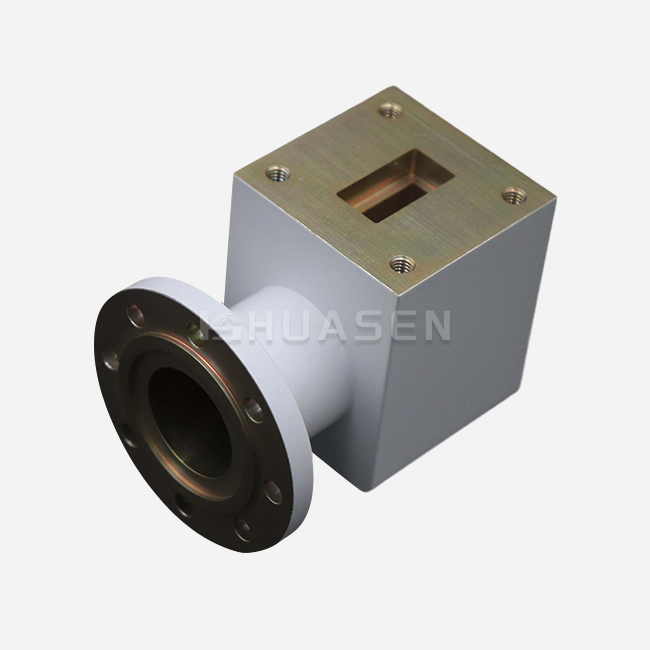
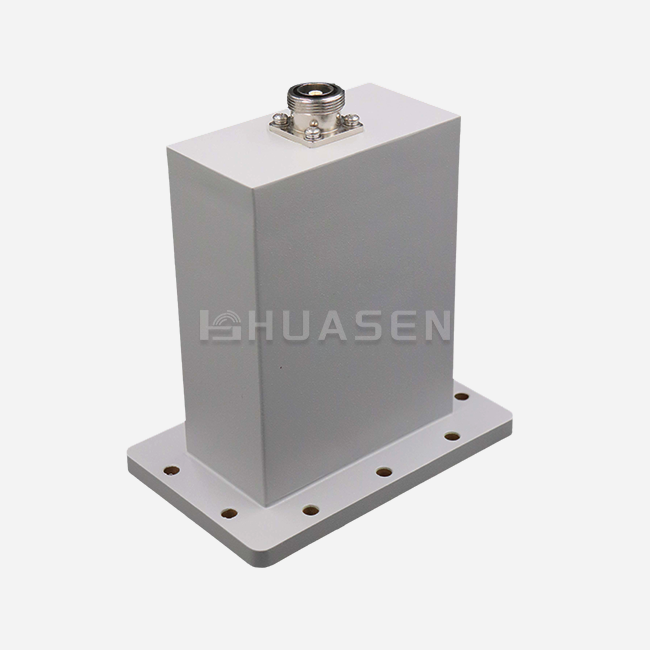
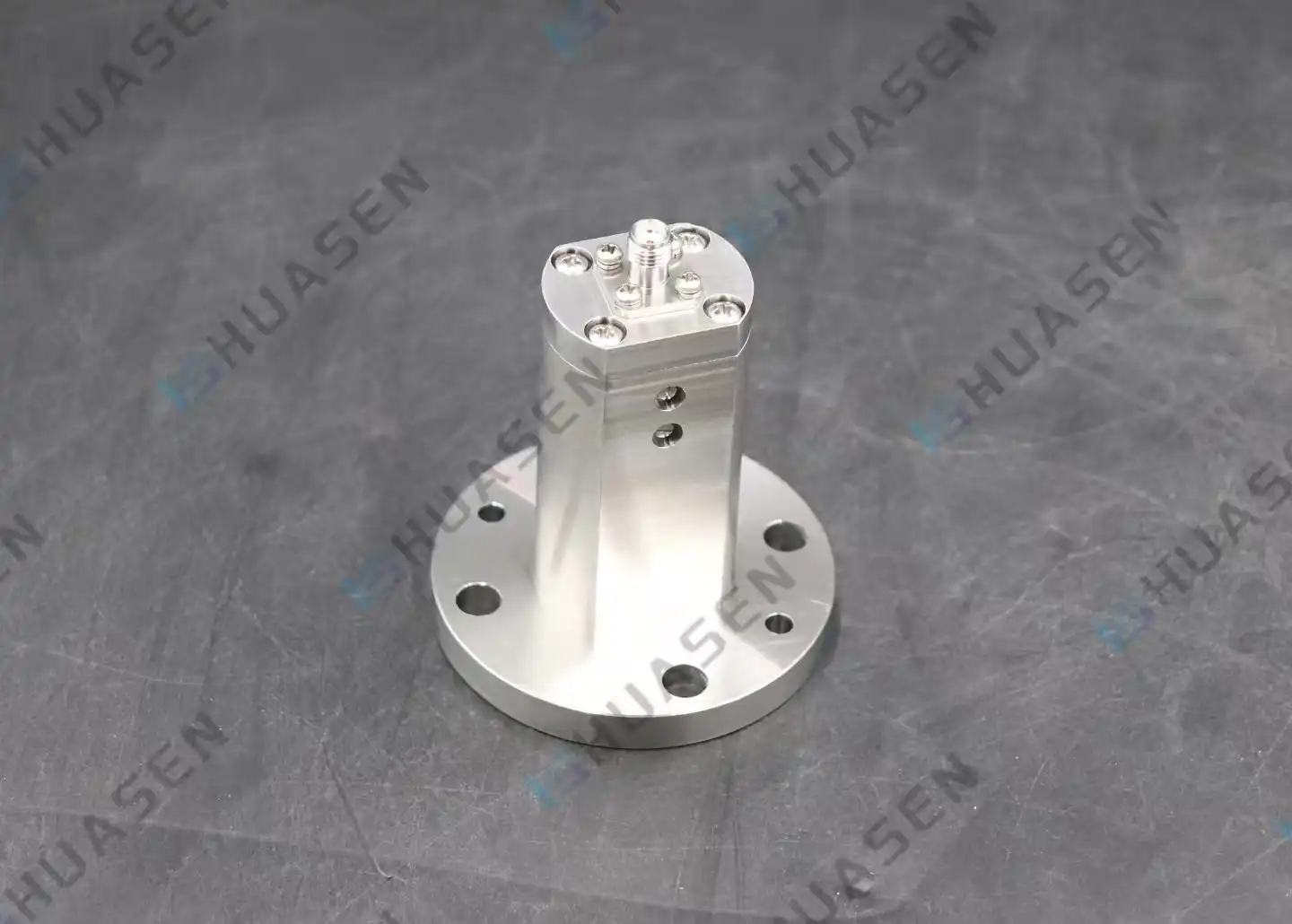
The End Launch Waveguide to Coaxial Adapter for RF Testing is a very important precision part that moves microwave energy smoothly between coaxial connections and rectangular waveguide transmission lines. These adapters use inline geometry configurations to ensure the best impedance matching and the highest level of signal integrity in harsh measurement settings. In contrast to standard right-angle designs, end launch adapters offer small mechanical connections that make system integration more efficient in a wide range of RF testing scenarios. Professional engineers and procurement specialists depend on these parts to get accurate measurements in high-frequency testing situations where room is limited, and signal integrity is very important.
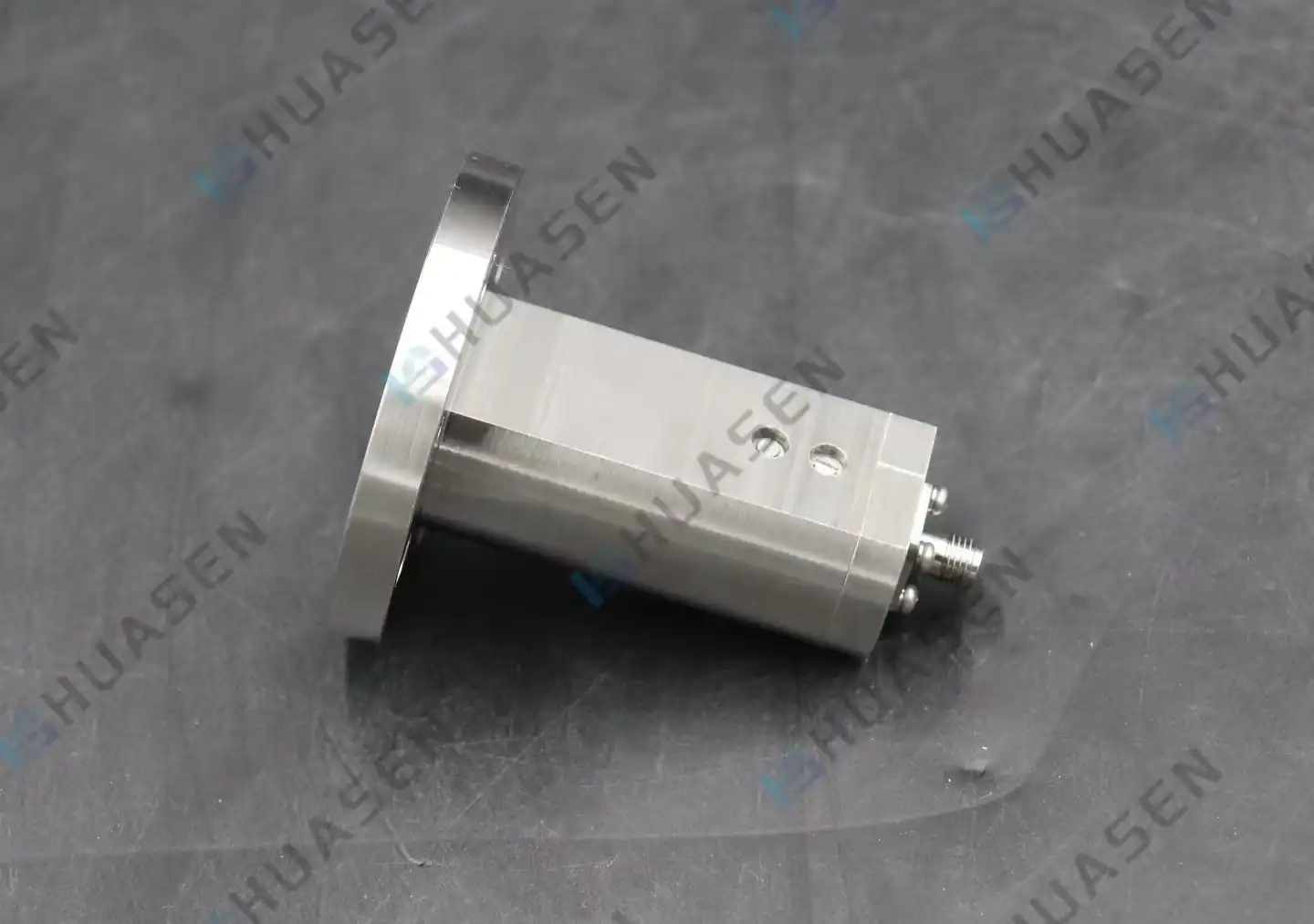
Introduction
This complete guide tells global B2B buyers everything they need to know about end launch waveguides to coaxial adapters, which are necessary parts that connect waveguide systems to current RF testing gear. These well-thought-out interfaces are essential to satellite communications, telecommunications infrastructure, radar systems, and advanced measurement labs all over the world. Knowing the technical specs and performance traits of these adapters helps you make smart purchasing decisions that have a direct effect on system reliability and measurement accuracy. This guide talks about the important things you should think about when buying things, whether you're upgrading old test tools or adding new RF measurement capabilities. The content strikes a good mix between technical detail and useful application advice. This helps procurement teams get through the tricky process of choosing high-frequency components while making sure that the best value and performance are met with operational needs.
Understanding End Launch Waveguide to Coaxial Adapters
Basic Structure and Operating Principles
End launch waveguides to coaxial adapters function as precision transition devices that convert electromagnetic energy between two fundamentally different transmission line architectures. The waveguide operates in TE10 mode, supporting unbound electromagnetic field propagation, while the coaxial interface maintains TEM mode characteristics with its bounded field structure. This transition occurs through carefully engineered probe mechanisms or stepped impedance transformations that preserve signal integrity across the interface. The adapter's internal geometry incorporates precision-machined elements that gradually transform the field distribution from the rectangular waveguide's dominant mode to the coaxial line's characteristic impedance environment. This transformation minimizes reflection losses while maintaining broadband performance across the operating frequency range. Advanced designs utilize tapered sections and optimized probe positioning to achieve exceptional VSWR performance, typically ranging from 1.15:1 to 1.35:1 across the full waveguide bandwidth.
Frequency Coverage and Performance Benefits
Modern end launch adapters support extensive frequency ranges spanning from 0.3 GHz to 110 GHz, accommodating diverse application requirements across multiple microwave and millimeter-wave bands. This broad coverage eliminates the need for multiple adapter types in multi-band testing scenarios, simplifying inventory management while reducing procurement complexity. The adapters maintain consistent electrical performance across their operating bandwidth,coax waveguideensuring reliable measurement repeatability in critical applications. Enhanced signal integrity represents a primary advantage of end launch designs, particularly in applications where phase stability and amplitude accuracy are crucial. The inline configuration reduces mechanical stress on coaxial cables during testing procedures, minimizing phase variations that could compromise measurement accuracy. This stability proves especially valuable in automated test environments where consistent mechanical positioning ensures repeatable results across multiple measurement cycles.
Durability and Installation Advantages
The compact mechanical interface design of end launch adapters significantly enhances system integration efficiency, particularly in high-density test configurations where space optimization is essential. Unlike bulky right-angle adapters, end launch designs maintain minimal footprint requirements while providing robust mechanical connections that withstand repeated mating cycles. Quality adapters typically support over 500 mating cycles while maintaining electrical specifications within acceptable tolerances. Installation simplicity represents another key advantage, with end launch adapters requiring minimal alignment procedures compared to more complex interface types. The direct inline connection approach reduces the potential for installation errors while enabling faster system setup and reconfiguration. This efficiency translates directly into reduced labor costs and improved productivity in both laboratory and production environments.
Comparing End Launch Waveguide Adapters with Other Types
Performance Parameter Analysis
When evaluating end launch adapters against traditional right-angle and flange-mounted alternatives, several critical performance factors emerge that influence selection decisions. End launch designs typically achieve lower insertion loss values due to their optimized internal geometry, with typical losses remaining below 0.3 dB across the operating bandwidth. This performance advantage becomes increasingly significant at higher frequencies, where even small losses can substantially impact measurement accuracy.VSWR performance comparisons reveal that end launch adapters often outperform right-angle designs, particularly in applications requiring broadband coverage. The inline probe configuration enables more precise impedance matching optimization, resulting in lower reflection coefficients across the frequency band. However, right-angle adapters may offer advantages in specific installation scenarios where space constraints favor perpendicular orientations over inline configurations.
Application Compatibility Considerations
Different adapter types serve coax waveguidedistinct application requirements based on mechanical constraints and electrical performance priorities. End launch adapters excel in applications where linear space is available but lateral clearance remains limited, such as in rack-mounted test systems or compact antenna feed networks. The design particularly suits automated test equipment where consistent mechanical positioning ensures measurement repeatability. Flange-mounted adapters provide superior mechanical stability in high-vibration environments but require additional mounting hardware that increases system complexity. Probe adapters offer field-replaceable convenience but may sacrifice electrical performance compared to permanently integrated designs. Understanding these trade-offs enables procurement professionals to select optimal solutions based on specific operational requirements rather than purely performance specifications.
High-Frequency Versus Low-Frequency Models
Frequency-specific design considerations significantly impact adapter performance and cost structures. High-frequency models operating above 40 GHz require precision machining tolerances that increase manufacturing complexity and associated costs. These adapters typically utilize specialized materials and surface treatments to minimize skin effect losses that become dominant at millimeter-wave frequencies. Low-frequency designs benefit from relaxed manufacturing tolerances while maintaining excellent electrical performance, resulting in more cost-effective solutions for applications below 18 GHz. However, even low-frequency models require careful attention to mechanical precision to ensure consistent electrical characteristics across production lots. Quality manufacturers maintain tight tolerance controls regardless of frequency range to ensure reliable performance in demanding applications.
Installation, Troubleshooting, and Maintenance Guide
Step-by-Step Installation Procedures
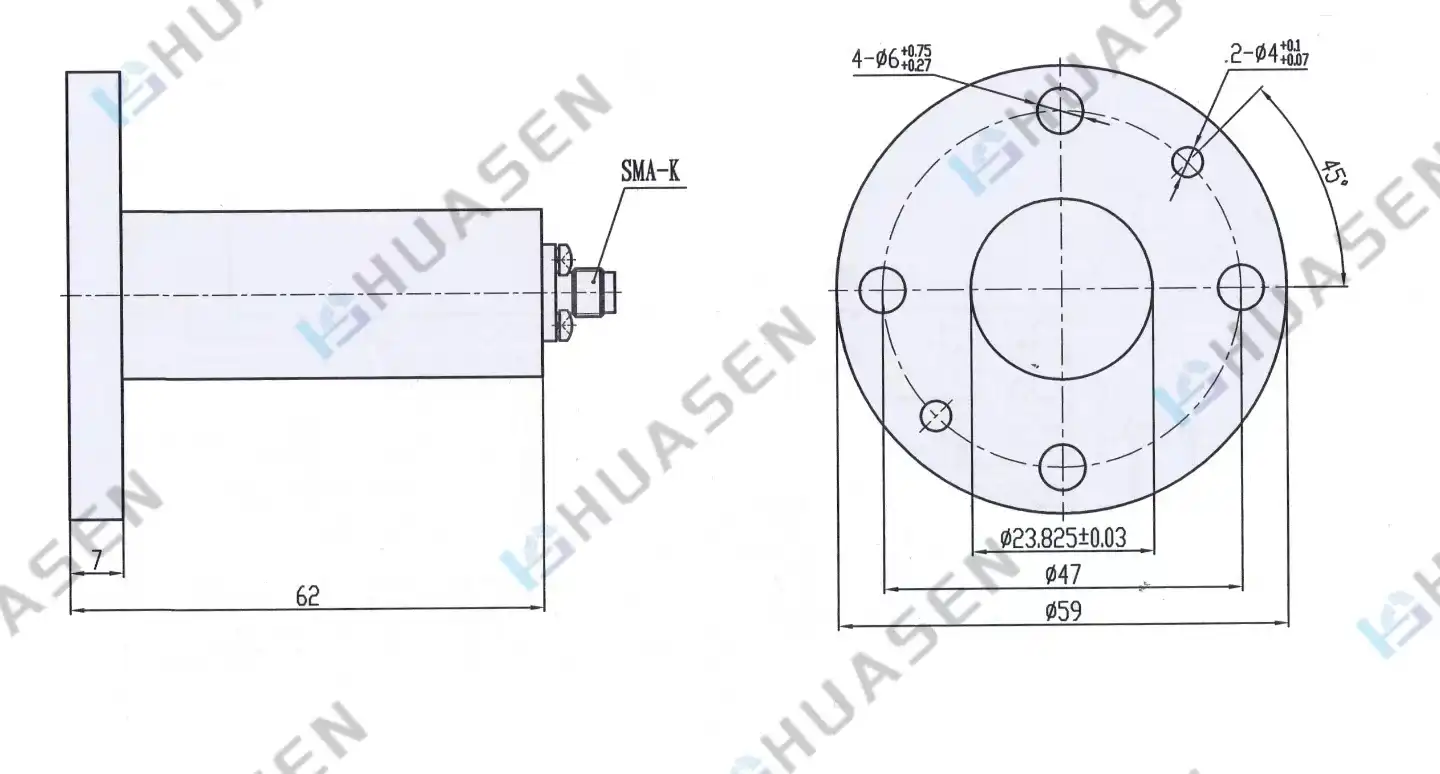
Proper installation begins with a thorough inspection of both the adapter and mating interfaces to ensure clean, undamaged connections. Waveguide flanges should be examined for flatness and proper gasket placement, while coaxial connectors require inspection for pin alignment and thread condition. Any contamination or mechanical damage can significantly degrade electrical performance and should be addressed before proceeding with installation. The connection sequence follows established RF best practices, beginning with loose assembly to verify proper alignment before applying final torque specifications. Waveguide connections typically require uniform torque application across mounting screws to ensure proper gasket compression and electromagnetic seal integrity. Coaxial connections demand precise torque control to prevent connector damage while ensuring reliable electrical contact. Over-tightening can cause permanent deformation that compromises future mating cycles.
Common Troubleshooting Scenarios
High VSWR numbers usually mean that the installation wasn't done right or that a part is breaking down, which needs to be systematically diagnosed. To start troubleshooting, waveguide adapters, make sure you're applying the right amount of torque, and look for obvious contamination or damage to the machine. Connection problems that come and go are often caused by not cleaning properly or worn connector surfaces that need to be replaced or fixed. Signal loss problems that go beyond certain limits are usually caused by technical issues or parts wearing out. Systematic replacement testing can find the broken parts, and a close eye examination will usually show damage or contamination that is easy to see. Things in the environment, like changing temperatures or being exposed to vibrations, can slowly hurt performance, which shows up as loss or VSWR values going up over time.
Technical Datasheet Interpretation
Understanding important factors is needed to make sure that end launch adapters are used correctly and work as expected. Insertion loss specifications describe how much the adapter weakens the signal, usually in decibels (dB) across the working frequency range. Better performance is shown by lower numbers. Good adapters keep losses below 0.3 dB across their full bandwidth. The VSWR specifications measure how well the adapter matches impedances; lower numbers mean better matching and lower reflection losses. The type of coaxial connection determines how much power it can handle, not the waveguide interface itself. It is important to keep this in mind so that voltage breakdown limits are not exceeded. Operating temperature ranges and environmental requirements make sure that the right product is used in tough situations where heat cycling or contamination exposure may happen.
Procurement and Sourcing Strategies for B2B Clients
Supplier Evaluation and Selection Criteria
To successfully buy adapters, you need to do more than just compare prices. You also need to carefully evaluate the capabilities of each seller. Quality certifications like ISO 9001 show that quality management systems are well-established. Other certifications, like those for the RF industry, show that a company has specialised knowledge in making high-frequency parts. Suppliers' past work in similar situations can tell you a lot about how well they can consistently meet high performance standards. When evaluating a company's manufacturing capabilities, you should look at its precision machining equipment, its ability to measure things, and its quality control procedures. Suppliers who have their own Vector Network Analysers can give more test data and keep a closer eye on quality standards for electrical specs. Also, suppliers that offer design support and customisation services can be very helpful when it comes to making sure that adapter specs are perfect for each application.
Cost Optimization and Budget Management
Understanding what causes costs is important for making good budget plans and negotiating tactics. The choice of material has a big effect on price. Copper offers better electrical performance but costs more than aluminium options. Gold plating and other surface treatments make things more resistant to corrosion and improve their electrical performance, but they also make each item much more expensive than a standard finish. When buying in bulk, volume pricing becomes important because many suppliers offer big discounts for large orders. To find the right balance between stocking costs and unit price savings, you need to carefully look at how things are used and how much space is needed. Custom specs usually come with higher prices, but they may offer better performance or integration benefits that make the extra money worth it.
Quality Assurance and Supply Chain Management
By setting clear quality standards, you can be sure that all the parts you give will work the same way. Specifications should be very exact and include electrical parameters, mechanical tolerances, waveguide adapters,and environmental needs that are unique to the application. Incoming inspection procedures should use calibrated test equipment to check that critical parameters are in line with specifications. Reliability in the supply chain is important for keeping operations going, especially in situations where adapter failures can cause a lot of downtime. Building relationships with multiple qualified suppliers gives you backup choices and pushes prices down. Price stability and guaranteed availability can come from long-term supply agreements, but the supplier's financial stability and market situation need to be carefully looked at.
Why Choose Huasen Microwave's End Launch Waveguide to Coaxial Adapter Solutions
Advanced Design and Manufacturing Excellence
The End Launch Waveguide to Coaxial Adapters (WECA) from Huasen Microwave are the result of 30 years of RF engineering experience and precision production skills. Our small mechanical interface design makes system integration more efficient and delivers great electrical performance in a wide range of challenging situations. The adapters have advanced probe designs and optimised impedance transformations that make them better at VSWR and insertion loss than other options. We use precise CNC machining centers that can keep the tight tolerances needed for high-frequency performance during the manufacturing process. Calibrated Vector Network Analysers are used to test each device thoroughly and make sure it meets electrical standards. When you combine advanced design methods with strict quality control, you get consistent performance that meets the tough needs of current RF testing applications.
Comprehensive Frequency and Power Coverage
Because our adapters cover a wide range of frequencies, from 0.3 GHz to 110 GHz, they are flexible and can meet a wide range of application needs within the same product line. This wide range of support gets rid of the hassle of handling different types of adapters and guarantees top performance across many microwave and millimeter-wave bands. The average power handling ranges from 5 to 100 watts, which works for both low-power measurement tasks and higher-power system testing needs. Our engineering team tweaks each frequency band design to get the best performance possible within the limits of the waveguide size. This way of optimising makes sure that customers get adapters that are perfectly matched to their needs, instead of designs that aren't up to par because they're trying to cover too wide a bandwidth range. The end result has better performance qualities that make measurements more accurate and the system more reliable.
Material Quality and Surface Treatment Options
High-quality aluminium or copper materials used in construction are the basis for great electrical and motor performance. When we choose materials for a job, we look at how well they carry electricity and how stable they are mechanically, as well as how much they weigh and how much they cost. Copper construction is better at conducting electricity in demanding situations, while aluminium construction is lighter for portable or aerospace uses. Surface treatment options like oxidation, silver plating, and gold plating improve both resistance to corrosion and high-frequency electrical performance. Gold plating is the best way to protect against corrosion and make sure that contacts stay in place. This is especially useful in harsh environments or for long-term keeping. Silver plating has good electrical performance at a moderate cost, and oxidation treatments offer basic protection for standard lab environments. These materials and treatment combinations solve production problems related to contact reliability, long-term performance stability, and exposure to the environment. The better rust resistance makes sure that the adapter's electrical properties stay the same over its useful life, and the better conductivity cuts down on losses that could affect the accuracy of measurements.
Conclusion
End Launch Waveguide to Coaxial Adapters are important parts of modern RF testing environments because they connect waveguide systems to coaxial measurement tools. This guide gives you a thorough look at performance traits, installation needs, and buying options. This helps you make smart choices that have a direct effect on system dependability and measurement accuracy. Huasen Microwave's advanced adapter solutions blend thirty years of engineering know-how with precise manufacturing skills to provide top-notch performance in a wide range of situations. These adapters are the best choice for demanding RF testing needs where performance and stability can't be compromised because they cover a wide range of frequencies, are built to last, and can be customised in a lot of ways.
FAQ
1. What frequency ranges do End Launch Waveguide to Coaxial Adapters typically support?
End Launch Waveguide to Coaxial Adapters support frequency ranges from 0.3 GHz to 110 GHz, depending on the specific waveguide size and design. Each adapter is optimized for specific waveguide bands, such as X-band (8.2-12.4 GHz) or Ka-band (26.5-40 GHz), to ensure maximum performance within the intended frequency range.
2. How do these adapters compare to right-angle designs in terms of performance?
End Launch adapters typically offer lower insertion loss and better VSWR performance due to their optimized inline geometry. They provide space advantages in linear configurations but may require more axial space compared to right-angle designs. The choice depends on specific mechanical constraints and electrical performance requirements.
3. What power handling capabilities can I expect from these adapters?
Power handling typically ranges from 5 to 100 watts average power, with the limitation usually determined by the coaxial connector rather than the waveguide interface. Peak power handling depends on the connector type and internal geometry, with careful consideration required to prevent voltage breakdown.
4. Are custom specifications available for specialized applications?
Yes, most manufacturers offer customization options, including specific frequency ranges, connector types, flange configurations, and special materials or coatings. Custom designs require detailed application analysis but can provide optimized performance for unique requirements.
5. What maintenance procedures are recommended for optimal performance?
Regular cleaning of connector interfaces, periodic VSWR verification, and proper storage in controlled environments help maintain optimal performance. Torque specifications should be followed during installation, and components should be inspected for contamination or mechanical damage before each use.
Partner with Huasen Microwave for Superior RF Testing Solutions
Huasen Microwave Technology stands ready to support your RF testing requirements with our comprehensive End Launch Waveguide to Coaxial Adapter solutions. Our experienced engineering team provides personalized consultation to ensure optimal component selection for your specific applications. Whether you require standard configurations or custom designs, our manufacturing capabilities and quality assurance processes deliver reliable performance that meets demanding industry standards. Contact our technical sales team at sales@huasenmicrowave.com to discuss your requirements and explore how our End Launch Waveguide to Coaxial Adapter supplier capabilities can enhance your testing operations.
References
1. Pozar, David M. "Microwave Engineering, Fourth Edition." John Wiley & Sons, 2012. Chapter 4: Microwave Network Analysis.
2. Collin, Robert E. "Foundations for Microwave Engineering, Second Edition." IEEE Press, 2001. Chapter 7: Waveguides and Cavities.
3. IEEE Standard 287-2007. "IEEE Standard for Precision Coaxial Connectors (DC to 110 GHz)." Institute of Electrical and Electronics Engineers, 2007.
4. Hickman, R.W. and Thompson, D.C. "Waveguide-to-Coaxial Adapters for Millimeter-Wave Applications." IEEE Transactions on Microwave Theory and Techniques, Vol. 45, No. 8, 1997.
5. Blackwell, L.A. and Kotzebue, K.L. "Semiconductor-Diode Parametric Amplifiers." Prentice-Hall Series in Solid State Physical Electronics, 1961. Appendix C: Waveguide-Coaxial Adapters.
6. Marcuvitz, Nathan. "Waveguide Handbook." MIT Radiation Laboratory Series, Volume 10. McGraw-Hill, 1951. Chapter 5: Discontinuities in Waveguides.
Send Inquiry