End Launch Waveguide to Coaxial Adapter Explained






2026-06-08 22:25:00
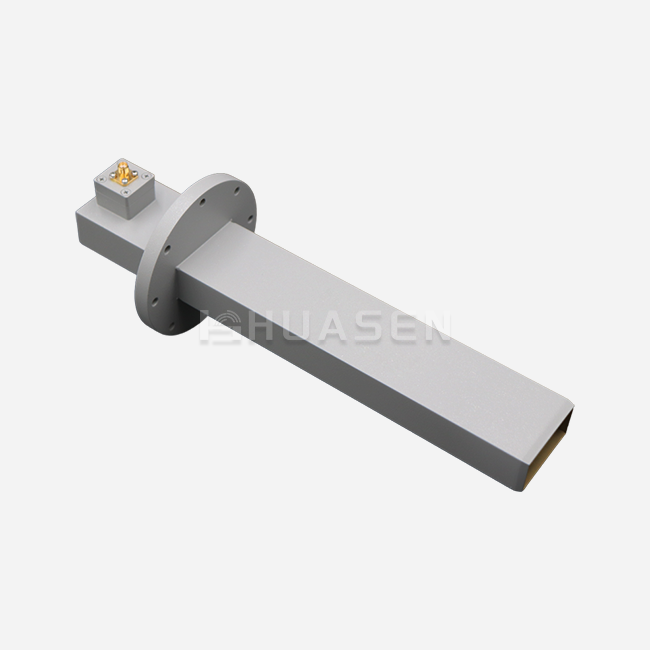
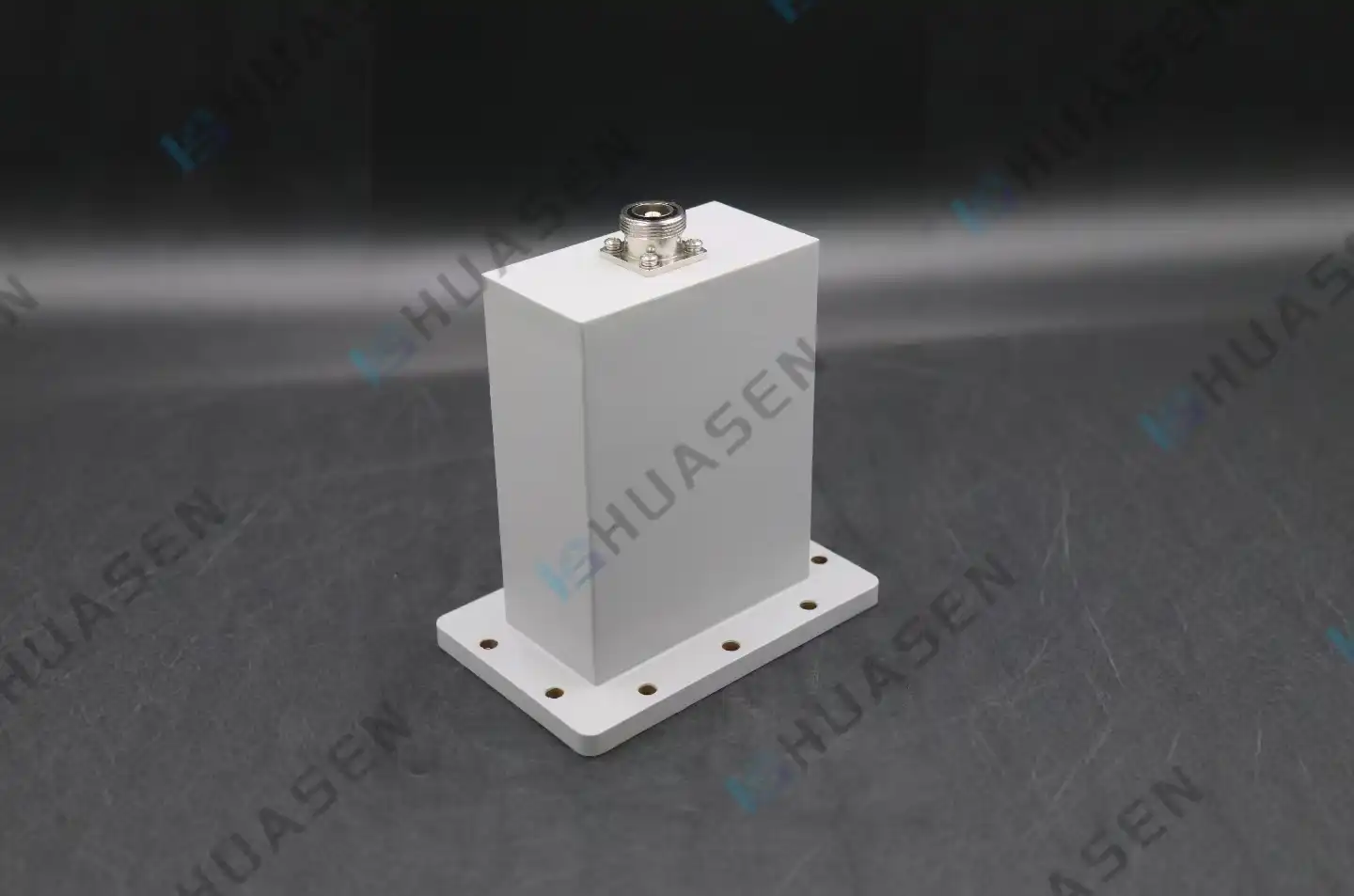
It's a precise RF inactive part called an "end launch waveguide to coaxial adapter" that moves microwave energy from a rectangular waveguide transmission line to a coaxial interface with an inline shape. In contrast to right-angle designs, this adapter uses probe or stepped transition methods to line up the coaxial connection in a straight line with the waveguide's propagation direction. This arrangement makes the best use of the room in high-density antenna arrays, where turns aren't possible and reduces signal reflections to a minimum. Across a wide range of frequencies, it connects waveguide systems to normal 50-ohm coaxial equipment, making sure that the impedances are matched and that power flow is maximized with minimal insertion loss.
Understanding End Launch Waveguide to Coaxial Adapters
What Makes These Adapters Essential?
RF systems need end launch waveguide to coaxial adapters to change electromagnetic waves from waveguide structures working in TE10 mode to coaxial forms using TEM mode propagation. This conversion keeps the signal's purity at frequencies from 0.3 GHz to 110 GHz, which is why they are so important to current communication systems.
Impedance matching is what the adapter does for a living. The characteristic impedance of waveguides changes with frequency and is usually a lot higher than the normal 50-ohm resistance of coaxial systems. Signal echoes get a lot worse without proper matching, which wastes power and makes the system less effective. Adapters like these have transition structures, which are usually stepped ridges or tapered probes, that are carefully intended to change the field distribution from one transmission medium to another.
Physical Construction and Material Science
Aluminum or copper is used by Huasen Microwave to make these adapters because they are good at conducting electricity and are stable. The base material chosen varies with the needs of the application. For example, aluminum is lighter for airborne uses, while copper is better at dissipating heat for high-power ground installations.
Surface treatments are very important for long-term function. In normal situations, oxidation coatings guard against damage from the climate. At microwave frequencies, silver plating lowers surface resistance, which in turn lowers insertion loss. Gold plating is the best way to protect against corrosion and contact resistance, which is very important for outdoor and marine telecom systems that are constantly at risk from salt fog and humidity.
The small mechanical link design makes system interaction go more smoothly. Engineers like this feature when they have to work with equipment racks that don't have a lot of room or radio feed networks where every millimeter is important. The inline shape gets rid of the physical footprint cost that comes with right-angle changes. This lets base station front-ends and radar systems pack more components into smaller spaces.
Electrical Performance Characteristics
In high-frequency devices, signal loss is the main thing to worry about. Across their working frequency, good adapters have an insertion loss of less than 0.2 to 0.5 dB. Precision machining that keeps dimensional tolerances close and optimal transition shapes that stop mode conversion losses are what make this work so well.
Voltage Standing Wave Ratio (VSWR) tests show how well the adapter fits the impedance of the two communication media. Most professional-grade units have VSWR values higher than 1.25:1, and the best ones get as low as 1.15:1. These specs have a direct effect on how well the system works. For example, a VSWR of 1.5:1 means that about 4% of the power is mirrored, which builds up as it goes through different parts of a signal chain.
Types and Technical Specifications of Launch Waveguides to Coaxial Adapters
Frequency Band Classifications
There are normal waveguide bands in the microwave spectrum, and each one has its own size and frequency range needs. WR-90 waveguide standards are used in most radar and satellite communication systems, which use X-band adapters (8.2-12.4 GHz). Versions in the Ku band (12.4–18 GHz) are used by direct broadcast satellite systems and fast wireless backup lines. New 5G millimeter-wave networks and point-to-point microwave links can use Ka-band devices (26.5-40 GHz). V-band and W-band choices cover frequencies between 60 and 110 GHz, which is useful for radar, electronic countermeasures, and advanced 6G study.
For each frequency band, the internal shape needs to be exact. The lower operational limit is set by the waveguide's cutoff frequency, and the upper border is set by the start of higher-order modes. Adapters must stay in single-mode operation throughout their designated range to keep signals from getting messed up and performance from being unreliable.
Connector Interface Options
The choice of coaxial connector has a big effect on both efficiency and fitness for use. SMA plugs are most common in lab tests and low-power transmission gear. They can handle up to 18 GHz of power and about 100 watts at lower frequencies. N-type plugs are strong mechanically and can handle more power, making them good for base station setups and outdoor use. K-connections can handle frequencies up to 40 GHz, and special 2.92mm and 2.4mm connectors can handle millimeter waves.
In most systems, the choice of connection is what slows down the power flow. The waveguide part can easily handle kilowatts of RF energy, but the end launch waveguide to coaxial adapter, specifically the center pin and dielectric insulator of the coaxial connection, limits the amount of power that can be used. The highest safe working power is based on the breakdown voltage of the dielectric and the center conductor's ability to remove heat. This is especially important for radar emitters and high-power communication amplifiers.
Power Handling and Thermal Considerations
Adapters from Huasen Microwaves have average power levels ranging from 5 to 100 watts, so they can be used in a wide range of situations. Versions with less power work well in receiver front ends and spectrum analysis gear where signal levels need to be kept low. Medium-power adapters are used by test tools and transmission transmitters. High-power types are used in radar sites and electronic warfare systems where the highest and lowest power needs are too much for the parts to handle.
When the average power goes above 50 watts, thermal control becomes very important. The adapter has to get rid of the heat that is caused by circuit losses and dielectric heating without going over the maximum temperature that the material can handle. The best thermal performance comes from copper construction with silver plating. Aluminum models, on the other hand, need more conservative power derating or active cooling in long-term high-power uses.
How to Choose the Right End-Launch Waveguide to Coaxial Adapter?
Matching System Requirements
Before you can choose the best end launch waveguide to coaxial adapter, you need to carefully look at how your RF system works. The frequency range is the most important parameter. Your adapter needs to cover the whole working bandwidth, plus extra room for component tolerances and temperature changes. For radar systems that use set frequencies, narrower-band adapters that are designed for minimum VSWR at certain places may work. But for wideband communication systems, performance must be uniform across multiple octave ranges.
Power dealing needs should be carefully thought through. Figure out both the high power during pulse operation and the average power during regular transmission. Radar systems with long duty cycles and transmission boosters that work all the time put a lot of stress on their thermal limits. Think about the high temperatures in the area. For example, an adapter that is designed for 100 watts at 25°C might only work with 70 watts at 55°C in desert or tropical settings.
Standard Versus Custom Solutions
Off-the-shelf adapters are easy to get and don't cost much per unit. They are great for testing, small production runs, and uses that have standard needs. Catalog items from well-known brands go through a lot of testing and come with a lot of information, like S-parameter measures, dimensional drawings, and results of outdoor tests.
Specialized needs that normal goods can't meet can be met by custom-engineered solutions. Custom development is often needed for non-standard frequency bands, unique connector pairings, built-in features like bias tees or DC blocks, and strict environmental requirements. For custom projects, Huasen Microwave brings 30 years of design experience and offers technical help from the first idea to approval testing.
The cost-benefit analysis is based on the amount of production and how important the application is. Custom connections need an upfront technical expense, but they give you the best efficiency. The cost of creation is spread out over thousands of pieces when you buy a lot of them, which makes custom solutions more cost-effective. When even small gains in speed have a big effect on the system's abilities, mission-critical apps are the ones that need custom development.
Supplier Evaluation Criteria
Choosing a dependable provider lowers the risks in the supply chain and makes sure that quality is always the same. Precision CNC cutting, controlled electroplating processes, and standardized test equipment are some of the things that set professional makers apart from component brokers when it comes to manufacturing. If you can, visit the supplier's facilities or ask for specific quality documents.
The ability to provide technical help sets excellent providers apart from average ones. Pre-sales engineering helps make the best product choices and find early signs of possible merger problems. Sample test programs let you make sure they work in your system before committing to large-scale production. Support after the sale, such as calibration data, debugging tips, and guaranteed service, keeps your investment safe and cuts down on downtime.
Dependability in delivery affects both project plans and the cost of stock. Lead times for items such as a waveguide to coaxial adapter range from a few weeks for basic versions to several months for unique designs. Schedule confusion is kept to a minimum by working with established providers who have a history of reliability and clear communication. Backup buying strategies keep important applications from being dependent on a single provider.
Installation, Troubleshooting, and Maintenance Guide
Proper Installation Procedures
Careful planning of the interface is the first step to a successful end launch waveguide to coaxial adapter installation. Check the sides of the waveguide flanges for damage, flatness, and cleaning. Get rid of any dirt, rust, or burrs that are stopping the proper fitting. Check the flange alignment pins and make sure that the matching flanges are the same type. Using different types of flanges together can lead to RF leakage and measurement mistakes.
Follow the manufacturer's instructions for the right amount of torque to be applied to attaching parts. Under-tightening leaves holes in the seals that let air in and hurt the electrical contact, letting RF leak through. When you tighten something too much, you could damage the threads, the base, or the contacts between the connectors. Installing things correctly and consistently requires torque wrenches that are set to the right levels.
Diagnosing Common Problems
Protecting the environment is important, especially for operations that take place outside. Weatherproof boots or shrink tubes keep water out of coaxial links. Having a good grounding stops static electricity and lightning harm. The way the connectors are mounted should keep water from pooling on the connections. Outdoor systems should be inspected and re-sealed on a regular basis to keep them in good shape.
A high VSWR value means that there are impedance gaps that make the system work less well. Using accurate vector network sensors to measure helps find the problem's location. If the VSWR goes up quickly across all frequencies, it could mean that there are technical issues, such as loose contacts, broken center pins, or dirty interfaces. Frequency-dependent VSWR peaks show resonances caused by wrong wire lengths or problems inside the adapter.
When there are mechanical problems, links can drop out or the signal can't be sent at all. Connector wear from joining and unmating many times, rust from being in the environment, and fatigue caused by vibrations can damage center pins or solder joints. Damage that can be seen with the naked eye is easy to spot, and intermittent contacts can be found by carefully spinning the connection while it is being measured.
Preventive Maintenance Practices
When heat escape isn't good enough in high-power situations, thermal problems happen. If the plating changes color, the dielectric insulators melt, or the middle conductors bend, this is a sign of heat stress. Monitoring the temperature during activity finds warming before it causes a catastrophic failure. Thermal problems can be fixed by lowering the power level, making the cooling better, or replacing parts with ones that can handle more power.
Regular checks find problems as they start to happen before they become system crashes. Visual checks done once a month find physical damage, worn connectors, and environmental damage. Cleaning gets rid of dust and other contaminants that have built up and hurt the performance of electrical parts. Clean connecting ports with isopropyl alcohol and lint-free swabs that don't leave behind any residue.
Periodic readings of VSWR and insertion loss are used to check the performance of the coax waveguide and set benchmark data for trend analysis. Gradual speed loss is a sign of problems that need to be fixed. System dependability is maintained by recalibration or replacement of adapters every year in important applications. Damage can be avoided during installation and upkeep by using the right handling techniques. Keep the weight of the wire off of the adapter connections by supporting it. Keep extra adapters in a safe place with caps that cover both ports. Do not drop or hit anything that could damage internal structures that can't be seen from the outside.
Conclusion
In demanding RF and microwave systems used in radar, aircraft, telecommunications, and test equipment, end launch waveguide to coaxial adapters are key contact parts. Procurement pros can make smart choices that improve system performance while keeping costs and delivery times under control by learning about their technical properties, selection criteria, and how to properly apply them. With a wide range of products covering frequencies from 0.3 to 110 GHz and power levels from 5 to 100 watts, along with modern materials and precise production, Huasen Microwave meets the needs of many industries. Strategic relationships with suppliers based on technical know-how and reliable performance offer long-term value that goes beyond buying individual parts.
FAQ
1. What limits power handling in these adapters?
The power limit is set by the coaxial link, not the waveguide part. Breakdown voltage of the connector's dielectric insulator and the center pin's ability to remove heat set useful power limits. Waveguides can handle kilowatts of power with ease, but SMA connections usually limit systems to less than 100 watts of steady power.
2. How does end launch geometry differ electrically from right-angle designs?
Both can change the mode from TE10 waveguide mode to TEM coaxial mode. End launch waveguides to coaxial adapters need more complicated internal machining, and they usually use stepped ridges to match the broadband resistance in inline arrangements. Backshort setting is easier on right-angle models. End launch waveguide to coaxial adapter designs are a little more expensive, but they offer better mechanical integration for straight plans where turns aren't possible.
3. Can these adapters operate in vacuum environments?
If you give the right details, yes. For vacuum uses, you need materials that are compatible with thermal vac and use solid low-outgassing dielectrics like Rexolite instead of regular PTFE. This stops problems with outgassing that hurt performance and pollute vacuum systems in science and satellite gear.
4. Are these adapters bidirectional?
Of course. They work the same way whether they are sending from coax to waveguide or getting from waveguide to coax because they are passive mutual devices. As long as the power levels stay within the stated limits of the coaxial connector, performance stays the same in both directions.
Partner with Huasen Microwave for Superior Adapter Solutions
The engineers at Huasen Microwave have been making waveguide-to-coaxial transfers better for 30 years. Our line of End Launch Waveguide to Coaxial Adapters works reliably in telecommunications, military, and aerospace uses around the world from 0.3 GHz to 110 GHz. We offer full technical help, rapid prototyping, unique design, and quick response times throughout the entire lifecycle of your project. Our team is ready to help you get the most out of your system, whether you need regular store items delivered right away or solutions that are specially designed to meet your needs. Email us at sales@huasenmicrowave.com to talk about your needs with experienced engineers who know how hard it can be to buy things from other businesses. We are a reliable End Launch Waveguide to Coaxial Adapter maker that offers low prices, quality certifications, and on-time shipping schedules that help you keep your projects on track.
References
1. Pozar, David M. "Microwave Engineering, 4th Edition." John Wiley & Sons, 2011.
2. Marcuvitz, Nathan. "Waveguide Handbook." MIT Radiation Laboratory Series, McGraw-Hill, 1951.
3. Saad, Theodore S. "Microwave Engineers' Handbook, Volume 1." Artech House, 1971.
4. Montgomery, C.G., Dicke, R.H., and Purcell, E.M. "Principles of Microwave Circuits." MIT Radiation Laboratory Series, McGraw-Hill, 1948.
5. Rizzi, Peter A. "Microwave Engineering: Passive Circuits." Prentice Hall, 1988.
6. Collin, Robert E. "Foundations for Microwave Engineering, 2nd Edition." IEEE Press, 2001.
Send Inquiry