Dual Polarized Horn Antenna vs Single Polarized Horn Explained






2026-06-26 17:01:26
Understanding the main differences between a dual polarized horn antenna and a dual polarized horn antenna can make a big difference in how well your system runs. Two different polarisation waves can be sent and received at the same time through a single opening on a dual polarized horn antenna. This doubles the channel capacity without adding any extra room. Single polarised models only deal with one polarisation plane, which makes them simple but limits their usefulness. This difference impacts how well bandwidth is used, how well isolation works, and how hard it is to put in radar, satellite, and telecommunications apps.
Understanding Polarization in Horn Antenna Design
Polarisation tells us how electromagnetic waves move through space and how they change. One-polarized horn antennas only send out energy in one direction, either up, down, or side to side. This simple method works well in situations where signal lines stay stable and interference is kept to a minimum.
Dual polarisation technology changes this idea in a big way. These antennas allow for separate radiation along two straight lines by using an Orthogonal Mode Transducer (OMT). The OMT divides received signals into vertical and horizontal parts, which allows them to be sent at the same time without interference.
Three core technical differences:
- Channel capacity—Dual systems transmit twice the data volume through identical aperture dimensions
- Isolation performance—Advanced OMT designs achieve polarization isolation exceeding 30dB
- System complexity—Dual configurations require sophisticated feed networks versus single-port simplicity
If you need maximum spectral efficiency for 5G backhaul links, dual-polarized configurations prove essential. For basic point-to-point communications with ample bandwidth, single-polarized antennas reduce costs effectively.
How Dual Polarized Horn Antennas Achieve Superior Performance
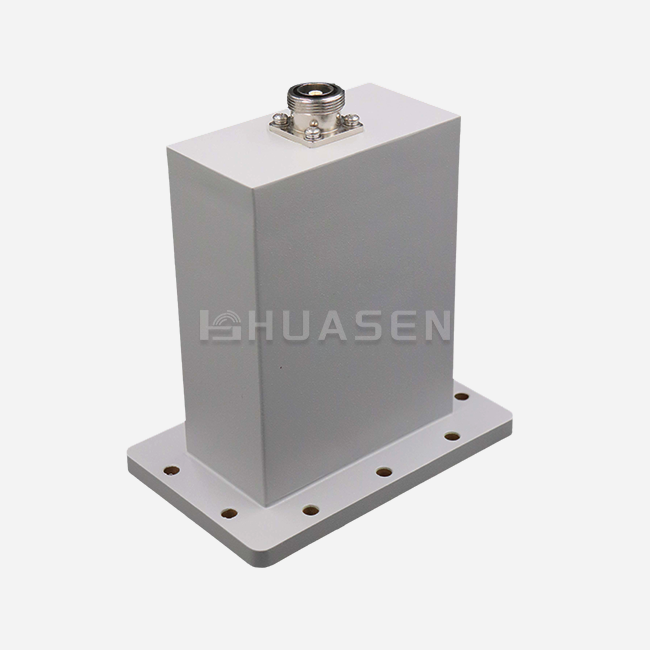
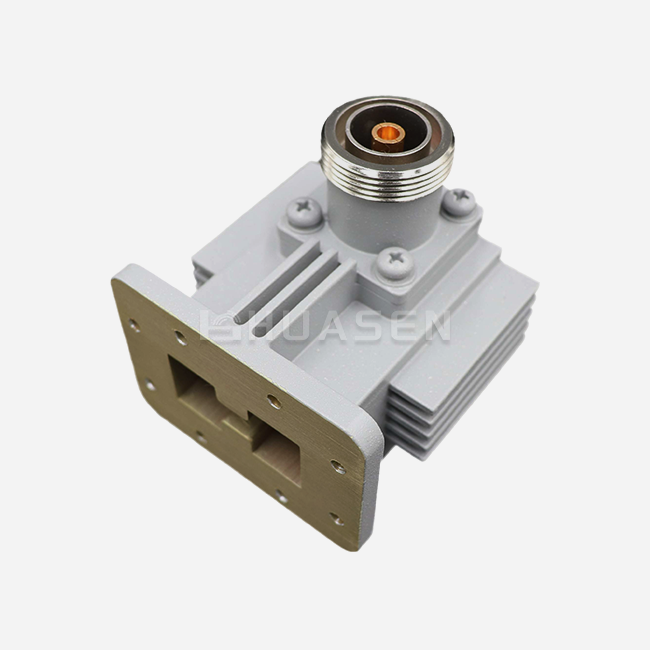
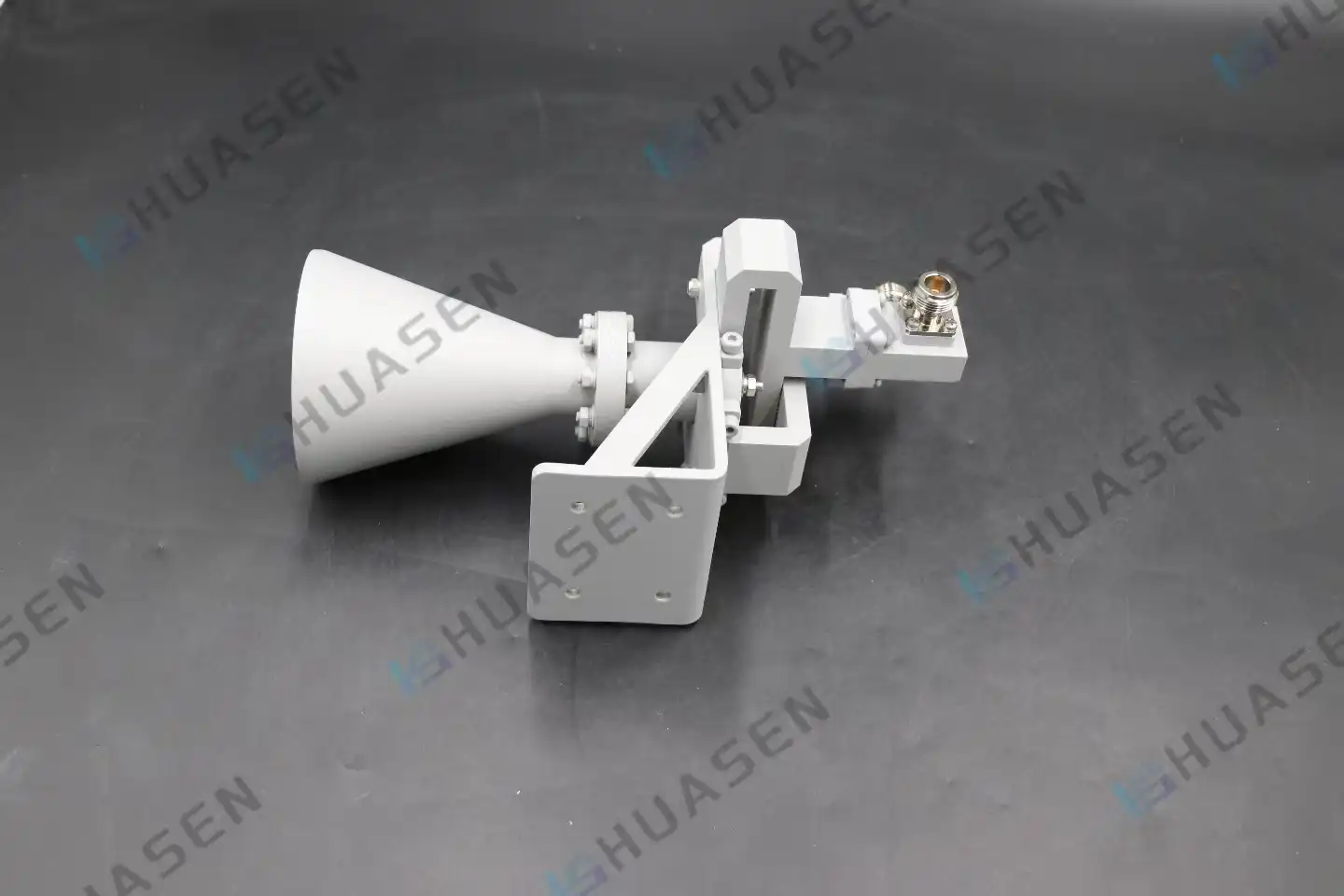
The engineering behind dual polarization involves precise mechanical design and electromagnetic theory. Huasen Microwave's dual-polarized horn antenna employs two distinct OMT architectures, each addressing specific bandwidth requirements.
Conventional OMT Design:
This approach uses stepped or ridged waveguide sections to separate polarization modes. The structure remains relatively compact, making manufacturing straightforward. However, bandwidth is typically limited to 5% or less of the center frequency. Return loss measurements show VSWR values below 1.5 across operational bands, ensuring efficient power transfer. Applications include narrowband radar systems and fixed satellite communications, where frequency stability matters most.
Symmetrical Feed OMT Design:
Widebands up to 40% of the center frequency can be achieved with the advanced symmetrical arrangements of this Dual Polarized Horn Antenna. Balanced coupling structures are used in this design to keep the polarisation pure over a wide frequency range. Isolation between ports is higher than 30dB, which stops signal loss that hurts the performance of a MIMO system. The manufacturing process for this unit requires tighter standards and more precise cutting, which is reflected in the cost of the parts.
Test data from Huasen Microwave's production facilities demonstrates consistent performance:
- Insertion loss: < 0.3 dB at mid-band frequencies
- Port-to-port isolation: 32- 38 dB across operational bandwidth
- Cross-polarization discrimination:> 28 dB at boresight
If you need wideband coverage for multi-frequency base stations, symmetrical OMT designs deliver the flexibility. Narrowband applications benefit from conventional OMTs' cost advantages.
Comparing Single and Dual Polarized Antenna Configurations
| Performance Metric | Single Polarized | Dual Polarized (Conventional OMT) | Dual Polarized (Symmetrical OMT) |
|---|---|---|---|
| Bandwidth | 10-20% | ≤5% | ≤40% |
| Isolation | N/A | 25-28dB | 30-38dB |
| VSWR | <1.4 | <1.5 | <1.3 |
| Weight (relative) | 1.0x | 1.3x | 1.5x |
| Manufacturing Complexity | Low | Medium | High |
| Typical Gain | 15-25dBi | 15-25dBi | 15-25dBi |
Physical dimensions vary based on frequency band and gain requirements. A 10 GHz single-polarized horn might measure 150mm in aperture, while equivalent dual-polarized versions add 20-30% length to accommodate OMT structures.
Environmental resilience plays a crucial role in outdoor deployments. Huasen Microwave integrates weatherproof sealing, corrosion-resistant materials, and temperature-stable dielectrics. Units survive temperature ranges from -40°C to +65°C while maintaining electrical specifications. Vibration testing per MIL-STD-810 confirms mechanical integrity for airborne and maritime installations.
If you need compact solutions for space-constrained drone platforms, single-polarized designs minimize payload weight. Base station deployments demanding capacity gains justify dual-polarized system complexity.
Application Scenarios Driving Antenna Selection
Mobile Communications Infrastructure
5G and emerging 6G networks rely heavily on MIMO systems and beamforming arrays. Dual polarization doubles the number of spatial streams without expanding the antenna footprint. Base station front-ends incorporate these antennas to achieve multi-gigabit throughput. Polarization diversity also combats fading in urban environments where multipath propagation distorts signals.
Field measurements show 30-40% capacity improvements when upgrading from single to dual polarized configurations in dense deployment scenarios. The RF front-end complexity increases, requiring dual low-noise amplifiers and separate phase shifters for each polarization path.
Satellite and Telecommunications Links
Geostationary satellite ground stations employ large-aperture dual-polarized horns for maximum gain and isolation. Circular polarization conversion often follows the horn aperture using waveguide polarizers. Maritime communications demand robust construction; Huasen Microwave's marine-grade antennas feature sealed feed networks and UV-resistant radomes.
Ka-band and Ku-band frequency ranges benefit from wideband OMT designs, accommodating multiple satellite channels through single antenna installations. This reduces tower loading and wind resistance compared to multiple single-polarized antennas.
Radar and Electronic Countermeasures
Military radar systems exploit polarization diversity for target discrimination. Dual-polarized configurations measure both co-polarized and cross-polarized returns, revealing target geometry and composition. High power handling becomes critical—antennas must withstand peak powers exceeding 10kW without breakdown.
Huasen Microwave's high-power variants incorporate specialized dielectric materials and thermal management. Pulse testing validates performance under realistic operational stresses. Impedance matching across waveguide interfaces maintains signal integrity throughout RF circuits.
Communications Testing and Calibration
Laboratory environments require reference antennas with stable, predictable characteristics. Single-polarized horns serve as gain standards for antenna range measurements. Dual-polarized versions enable polarization purity testing and antenna pattern validation.
Research institutions value the measurement repeatability—horn antennas maintain specifications over decades with minimal drift. Connector standards, including SMA, K-type, and WR-series waveguide flanges, ensure compatibility with test equipment.
If you need versatile test equipment supporting multiple polarization scenarios, dual polarized horns reduce equipment inventory. Dedicated single-polarized references provide absolute calibration accuracy.
Key Advantages of Huasen Microwave's Dual Polarized Horn Antenna
Selecting the right antenna supplier impacts project timelines, system reliability, and long-term operational costs. Huasen Microwave Technology Co., Ltd. brings over three decades of specialized experience to every component:
- Proven bandwidth performance: Symmetrical OMT designs deliver verified 40% bandwidth with polarization isolation consistently exceeding 30dB across production batches
- Comprehensive frequency coverage: Product lines span 1-110GHz, supporting everything from sub-6GHz 5G bands to millimeter-wave backhaul and satellite communications
- Exceptional isolation metrics: Advanced waveguide design achieves 32- 38 dB port-to-port isolation, critical for dense MIMO deployments and high-order modulation schemes
- Precision VSWR control: Manufacturing tolerances maintain VSWR ≤1.5 even in wideband configurations, ensuring maximum power transfer and minimal signal reflection
- Dual bandwidth architectures: Choose between narrowband conventional OMT (≤5%) for cost-sensitive projects or wideband symmetrical designs (≤40%) for multi-frequency applications
- Environmental hardening: All outdoor models pass IP67 sealing tests, operate across -40°C to +65°C ranges, and survive 15G vibration per aerospace standards
- High power capacity: Specialized dielectric materials and thermal design enable continuous power handling up to 500W and peak powers beyond 10kW for radar applications
- Flexible connector options: Standard interfaces include SMA, N-type, K-connector, and WR-series waveguide flanges, plus custom adapter configurations
- Compliance certification: Products meet MIL-STD-810, ISO 9001, and RoHS requirements with full test documentation and traceability
- Rapid customization capability: In-house design teams modify frequency response, polarization types, gain profiles, and mechanical mounting within 2-3 week prototyping cycles
- Complete test data packages: Every antenna ships with measured patterns, VSWR curves, isolation plots, and calibration coefficients for immediate system integration
- Application engineering support: Technical specialists assist with system-level design, matching network optimization, and installation best practices throughout project lifecycles
- Stable supply chain management: Vertically integrated manufacturing ensures consistent availability even during component shortages affecting broader electronics markets
- Competitive total cost of ownership: Balanced pricing between performance and affordability, with volume discounts for system integrators and OEM partnerships
If you need antennas that integrate seamlessly into existing infrastructure while future-proofing for bandwidth expansion, Huasen Microwave's proven track record reduces deployment risk.
Making the Right Choice for Your Application
System architects face multiple decision factors beyond pure RF performance. Installation constraints often dictate antenna selection as much as electrical specifications.
Space and weight limitations: Aircraft, UAVs, and spacecraft platforms impose strict mass budgets. Single-polarized designs minimize payload impact. Ground-based installations accommodate larger dual-polarized systems more easily.
Budget considerations: Initial component costs represent one aspect. Consider total system expenses, including dual RF chains, additional signal processing, and testing complexity for dual-polarized implementations. Large-volume purchases benefit from economies of scale.
Future capacity planning: Networks evolve rapidly. Installing dual-polarized infrastructure now avoids costly retrofits when traffic demands increase. The incremental cost over single-polarized options often justifies the flexibility.
Environmental exposure: Outdoor deployments in coastal, desert, or arctic regions demand proven environmental resilience. Material selection and sealing integrity determine long-term reliability more than initial electrical performance.
The Dual Polarized Horn Antenna certification requirements are set by defense contracts, aviation authorities, and telecommunications regulators, which impose specific testing standards. Verify compliance documentation matches your project mandates early in procurement.
If you need immediate deployment with minimal system changes, single-polarized antennas integrate quickly. Strategic infrastructure investments favor dual-polarized flexibility despite higher initial complexity.
Technical Support That Accelerates Your Project Success
Component selection represents just the beginning of successful system deployment. Huasen Microwave's engineering support extends throughout project lifecycles.
Design assistance includes electromagnetic simulation validation, ensuring antenna patterns complement your specific installation geometry. Mounting bracket customization addresses unique mechanical interfaces. Sample trial programs allow performance verification in actual operating environments before committing to production quantities.
Calibration data support proves invaluable for testing and measurement applications. Detailed S-parameter files, radiation pattern cuts, and phase center locations integrate directly into system models. This documentation reduces commissioning time and troubleshooting effort.
After-sales service maintains system uptime through technical consultation and rapid component replacement. A stable supply chain backed by decades of manufacturing expertise ensures availability for maintenance and expansion.
If you need a partner who understands the complete signal chain from antenna aperture to baseband processing, Huasen Microwave's depth of experience accelerates your path from concept to operational deployment.
Conclusion
The choice between dual-polarized and single-polarized horn antennas depends on bandwidth requirements, capacity demands, and system complexity tolerance. Dual polarization delivers superior spectral efficiency and future-proof flexibility through advanced OMT technology. Single-polarized designs offer simplicity for applications where one polarization plane suffices. Huasen Microwave's comprehensive product portfolio addresses both scenarios with proven performance, environmental resilience, and responsive technical support that transforms component selection into system success.
Partner with a Trusted Dual Polarized Horn Antenna Manufacturer
Huasen Microwave stands ready to transform your communication system challenges into competitive advantages. Whether you're deploying next-generation 5G infrastructure, upgrading satellite ground stations, or developing advanced radar systems, our dual polarized horn antenna solutions deliver the performance, reliability, and support your project demands. Our engineering team provides customized designs matching your exact frequency, bandwidth, and environmental specifications. Request detailed specifications, schedule a technical consultation, or obtain quotations by contacting our sales team at sales@huasenmicrowave.com. Let three decades of microwave expertise work for your success.
References
1. Balanis, Constantine A. "Antenna Theory: Analysis and Design, Fourth Edition." John Wiley & Sons, 2016.
2. Milligan, Thomas A. "Modern Antenna Design, Second Edition." IEEE Press Series on Electromagnetic Wave Theory, 2005.
3. Clarricoats, P.J.B. and Olver, A.D. "Corrugated Horns for Microwave Antennas." IEE Electromagnetic Waves Series, 1984.
4. Uher, Jiri, Bornemann, Jens, and Rosenberg, Uwe. "Waveguide Components for Antenna Feed Systems: Theory and CAD." Artech House, 1993.
5. Rao, S. "Parametric Design and Analysis of Multiple-Ridged Waveguide Phased-Array Antenna." IEEE Transactions on Antennas and Propagation, Vol. 60, No. 8, 2012.
5. Chen, Zhining and Liu, Duixian. "Broadband Antenna Technology for Satellite and Space Communications." Journal of Electromagnetic Waves and Applications, Vol. 28, No. 15, 2014.
Send Inquiry