Directivity Coupler Comparison: Microstrip vs Coaxial Designs






2026-04-22 21:34:33
Your RF system's signal quality, Directivity Coupler, depends on which microstrip or coaxial Directivity Coupler you choose. Microstrip designs work best in small, high-frequency PCB-based applications because they offer great performance with a small footprint. Coaxial couplers, on the other hand, are better at handling power and being resistant to environmental damage for radar, satellite, and telecommunications equipment that is placed in the field. The best way to choose components for 5G networks, aircraft sensors, and lab test equipment is to understand their unique electrical properties, such as their directivity figures, insertion loss profiles, and frequency stability, as well as their mechanical and purchasing aspects.
Understanding Directivity Couplers: Principles and Types
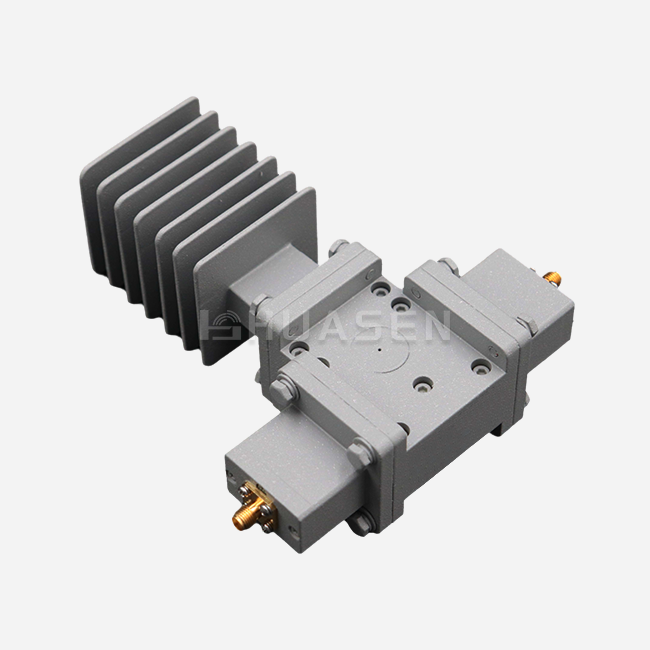
As an inactive microwave device, a Directivity Coupler takes a proportional sample of electromagnetic energy moving through a transmission line. This sampled signal lets you measure power, keep an eye on VSWR, and do reflectometry without getting in the way of the main signal flow too much. Three important factors determine how well the device works: coupling factor (the ratio of input power to coupled power), isolation (the difference between output ports' attenuation), and directivity (the difference between isolation and coupling, which shows how well the device can tell the difference between forward and reflected waves).
Core Operating Principles
A portion of the RF energy that moves through the coupler's mainline pairs to the secondary path through electromagnetic field contact. Different types of couplers use different ways to connect. For example, microstrip couplers use parallel transmission line segments on dielectric plates, while coaxial couplers use circular wires with air or solid dielectrics. High directivity—often more than 40 dB in precision units—means that the linked port only reacts to waves that are moving forward and ignores signals that are being reflected. In order to avoid damage to equipment and mistakes in measurements, it is important to be able to tell the difference between incident and reflected power in load-matching analysis and amplifier safety circuits.
Microstrip Coupler Architecture
In microstrip designs, conductive lines are deposited on dielectric surfaces such as FR-4 or Rogers RT/duroid. The parallel-coupled line design controls the distance and length of the traces to achieve a Directivity Coupler. Some of the benefits are that they are small and light, that they can be made in large quantities at low cost using photolithography, and that they can be easily integrated into printed circuit systems. Most of the time, operating frequencies range from DC to 40 GHz, but substrate dispersion and production errors can limit the bandwidth. Branch-line and Lange coupler designs meet specific needs for bandwidth and coupling in test instruments and wireless infrastructure.
Coaxial Coupler Construction
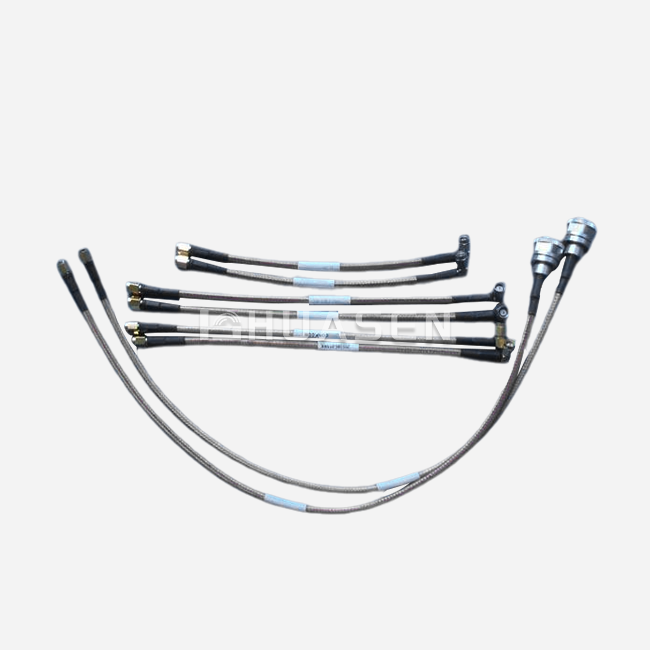
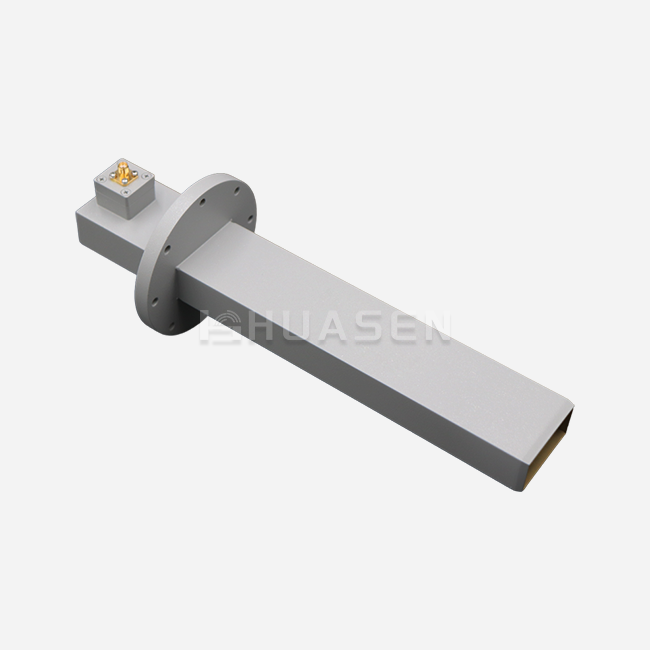
Using a coaxial transmissiondirectivity of a directional coupler line form, the coaxialdesignputs the connection structure inside a cylinder-shaped metal housing. Slots, probes, or coupled sections are used in the coupling process between circular wires. Copper, brass, or metal plated in gold or silver are good choices for construction materials because they provide good insulation, low insertion loss, and strong mechanical stability. Coaxial couplers can handle a lot more power (kilowatts to megawatts) than microstrip couplers. This is why high-power radar devices, satellite earth stations, and broadcast systems that work from 500 MHz to 50 GHz can't work without them.

Microstrip vs Coaxial Directivity Couplers: Technical Comparison and Performance Evaluation
To improve performance, Directivity Coupler properties must be matched to the needs of the product. The next comparison makes it clear how electrical specifications and physical characteristics affect system integrators' and equipment makers' choices about what to buy.
Electrical Performance Metrics
Directivity and Coupling Accuracy: Coaxial couplers usually have directivity values between 35 and 60 dB across their stated bandwidth. This is because they are better at blocking electromagnetic waves and are made with tighter standards. Most microstrip designs provide 20–35 dB of directivity, which is good enough for most laboratory and telecommunications uses but might be too weak for precision measurement. Coupling flatness, which is the change in the coupling factor across frequency, stays within ±0.5 dB for well-designed coaxial units. However, material dispersion effects can cause microstrip versions to vary by ±1.0 dB. Frequency Range and Bandwidth: Microstrip couplers have wider relative bandwidths and can often achieve octave or multi-octave performance (2:1 to 10:1 frequency ratios) by carefully optimizing their geometry. Coaxial designs work best in certain frequency ranges (X-band, Ku-band, and Ka-band) because their cylinder shape naturally helps dominant mode transmission. Microstrip options are better for wideband uses that need a range from 2 to 18 GHz with modest directivity. In the 8–12 GHz range, narrowband and high-directivity needs make cable versions more suitable. Insertion Loss and VSWR: Because the conductors are bigger and there is more air between them, coaxial communication lines have smaller inherent loss at microwave frequencies. At 10 GHz, the typical insertion loss for coaxial couplers is 0.1 to 0.3 dB, while the typical number for microstrip versions is 0.3 to 0.8 dB. In cascaded systems or high-sensitivity sensor groups, this difference matters a lot. The mainline VSWR standard shows how little the coupler affects the signal integrity. Most coaxial units get better than 1.15:1, while microstrip designs get 1.25:1 to 1.40:1, based on the quality of the substrate and the connector contacts.
Mechanical and Environmental Considerations
Physical Dimensions and Weight: Microstrip couplers dramatically reduce size and weight, which is important for tools that will be used in space, the air, or on the go. A 10 GHz microstrip coupler takes up about 15x8x2 mm of space on a PCB and weighs less than 1 gram. They weigh between 50 and 100 grams and are 40 mm long, 20 mm wide, and 15 mm thick. Microstrip devices can be soldered directly onto circuit boards along with other parts, but coaxial units need to be mounted on a panel with threaded connections, which takes up valuable chassis room. Environmental Resilience: Coaxial design naturally offers better defense against water entry, changes in temperature, and mechanical shock. Designs that are hermetically sealed meet MIL-DTL-3928 standards for use in the military and at sea, and they work reliably from -55°C to +125°C with little performance loss. For outdoor use, microstrip couplers need a conformal covering or enclosure, and the substrate's thermal expansion can change the coupling properties over a wide temperature range. Vibration resistance strongly favors coaxial designs; PCB-mounted microstrip devices may experience solder joint wear in platforms with a lot of vibration, such as helicopters or protected vehicles.
Procurement and Supply Chain Factors
Cost Structure: Because they can be made automatically and work with integrated circuits, microstrip couplers start at $15 to $50 per unit when bought in bulk. The price of coaxial versions ranges from $150 to $800, based on the frequency, power rating, and level of accuracy. Rapid PCB development can get custom microstrip designs ready for production in 4 to 6 weeks, but coaxial tooling takes 8 to 12 weeks. To figure out the total cost of ownership, you have to include the cost of assembly work. For example, microstrip units automatically put other SMT components next to them, but coaxial installation requires manually tightening connectors and testing for radio frequency interference. Customization Capabilities: Microstrip technology lets you change the frequency, coupling factor, and form factor by simply changing the layout. Using electromagnetic modeling tools and making PCBs in-house speeds up design changes. Precision machining is needed for coaxial customizing, which means that special tools and tighter quality control are needed. Customized connection types (SMA, 2.92mm, K-connector) and mounting arrangements can be made with both technologies. However, the microstrip directivity of a directional couplercan make samples faster for low-volume orders.
Choosing the Best Directivity Coupler for Your Application: Criteria and Use Case Matching
Analysis of the application is the first step in strategic Directivity Coupler selection. This involves matching technical needs with budget and practical limits.
Application Segmentation and Needs Analysis
Laboratory Testing and Calibration: Directivity, frequency coverage, and connection consistency are important to research centers and equipment makers. To set up measurement reference planes, vector network analyzer test sets use precise coaxial couplers with 45+ dB directivity. Microstrip alternatives work well for automatic test equipment that needs hundreds of channels in small spaces, but they have a little less directivity to save space. It is very important that the calibration stays stable over time and changes in temperature. Coaxial designs work better in metrology-grade uses over the long term. Manufacturing and Production Testing: Electronics companies that make a lot of products put microstrip couplers right on the PCBs of those products so that they can be tested right away. Mobile device assembly lines use these built-in sensors to check the RF power during final assembly, so they don't need to connect any extra test equipment. Even though microstrips don't have very high directivity requirements, they are still a good choice because they are cheap per unit and can be put together automatically. Getting rid of connecting connections that are easy to dirty and wear out improves production. Field Deployment and Infrastructure: Base station installations, satellite earth ports, and radar sites need to be able to handle a lot of power and work in harsh conditions. Coaxial couplers can handle changes in temperature, wetness, and transients caused by lightning. In the broadcast path of a normal cellular macro site, coaxial couplers with a rating of 500W continuous and 2kW peak power are used. Forward and reflected power are monitored to keep amplifiers safe from antenna mismatch. Maintenance times are longer than ten years if the units are properly sealed to stop corrosion and silent intermodulation degradation.
Critical Selection Metrics
Bandwidth needs determine the choice of design. Broadband microstrip designs or multiple narrowband coaxial units work best for applications that need to cover multiple frequency bands at the same time, like multi-carrier base stations that handle 700 MHz to 2.7 GHz. Different designs have different ways of handling power. Microstrip can only lose 10–50W before the base heats up and performance starts to drop. Coaxial structures, on the other hand, can handle kilowatt levels thanks to better thermal management and bigger conductor cross-sections. In equipment bays with a lot of other equipment, microstrip integration is better because it takes up less space. However, coaxial mounting points are easier to use for retrofitting older systems.
Supplier Landscape and Brand Considerations
Werlatone makes high-power coaxial couplers for the broadcast and defense markets. They can split frequencies and make them more durable for tough settings. Anritsu makes precise coaxial test port couplers that are built into network testers and are set to standards that can be tracked. Mini-Circuits makes most of the market microstrip couplers. They offer cost-effective solutions for telecoms infrastructure and have large databases of parametric selection options. Keysight Technologies offers both types, with a focus on measuring-grade directivity and phase accuracy for use in aircraft test applications. Each seller keeps up regional delivery networks that help with technical support, testing samples, and keeping records of compliance.
Integrating Microstrip and Coaxial Directivity Couplers: Circuit Design and Practical Deployment
Choosing the right components is only half of the implementation process. The other half is making sure that the circuit is properly integrated and installed so that the performance requirements are met for the Directivity Coupler.
Design Principles for Microstrip Integration
The structure of the PCB has a big effect on theDirectivity Couplerandhow well the microstrip coupler works. To keep the impedance (usually 50 ohms) steady along the signal line, you have to carefully figure out the trace width using the material height and dielectric constant. Having a continuous ground plane below the coupler gets rid of unwanted resonances and keeps the coupling level. Putting up a fence around the gadget stops electromagnetic waves from getting into nearby circuits, which keeps the separation requirements. Connector changes create breaks; compensating ends or tapered pieces keep the VSWR decline to a minimum. As part of thermal management, copper pour allocation is used to spread heat, and component spacing keeps heat from interfering with each other during high-duty-cycle operation.
Coaxial Coupler Installation Guidelines
When pressure is applied correctly to coaxial links, they stay mechanically stable and make good RF contacts. Following the numbers given by the maker (usually 8 to 12 inch-pounds for SMA and 25 to 30 for Type-N) keeps the connectors from over-compressing, which can damage the dielectrics, or under-tightening, which can cause contact to break. Limiting the bend radius of flexible coaxial cables stops impedance changes and phase instability. Keeping the minimum 5x cable diameter curve also keeps the signal's integrity. In places with a lot of shocks, panel fixing needs gear that stops vibrations. To keep the coupler's separation performance, the cable route should avoid runs that are parallel to high-power lines.
Common Integration Challenges and Solutions
Standing waves are caused by impedance differences at coupler ports, which lowers the effective directivity. Network modeling tools find breaks in the network early on, and time-domain reflectometry is used to confirm prototypes and find their exact places. When there isn't enough grounding, ground loops and common-mode currents form that mess up linked signals. These effects can be lessened with star grounding systems and specialized RF ground returns. Narrowband applications are affected by frequency drift caused by temperature. Using temperature-stable materials, such as PTFE composites, or setting up thermal adjustment networks keeps performance stable in all kinds of environments.
Real-World Deployment Case Studies
A 5G massive MIMO base station has 64 microstrip couplers on a single PCB that track the power that each radio element sends out. The small design made the insertion loss 0.15 dB consistent across channels, which allowed for accurate beamforming tuning. Environmental testing proved that the performance would not change after 1000 temperature cycles from -40°C to +85°C, which is what is required for carrier deployment. Coaxial couplers watch over a 5kW traveling wave tube amplifier in a Ka-band satellite transfer system. The 60 dB directivity requirement lets you find changes in VSWR of as little as 0.1 dB, which can mean that the antenna is detuned or the radome is damaged. This early warning system stopped three amplifier failures during the first year the unit was used, which made the higher-cost component investment worth it by avoiding the costs of downtime.
Conclusion
For PCB-integrated test and communications equipment, microstrip Directivity Coupler designs are the smallest and least expensive option. Coaxial designs, on the other hand, offer better power handling, environmental resilience, and directivity performance for field-deployed infrastructure and precision metrology. The success of the selection depends on how well the electrical requirements (bandwidth, insertion loss, and directivity) match up with the mechanical limitations and working conditions. The technical comparison shows that microstrip works better in light, automatic assembly situations, while coaxial works better in tough environments that need long-term dependability. By knowing these differences, procurement professionals can improve system performance and keep total purchase costs low throughout the lifetime of a product.
FAQ
1. What determines the maximum frequency a directivity coupler can handle?
Upper frequency boundaries are set by the physical measurements in relation to the wavelength. As the substrate thickness and trace width get closer to the minimums needed for production, microstrip couplers can hit 40 to 50 GHz while keeping the resistance under control. Depending on the connection cutoff frequencies and the size of the inner conductor, coaxial systems can go up to 67 GHz. For specific millimeter-wave uses, waveguide couplers can work at speeds of hundreds of gigahertz.
2. How does insertion loss affect system performance?
Every decibel of insertion loss lowers the signal power that can be used, which lowers the sensitivity of the receiver and the effective transmitted power of the emitter. Losses build up in a straight line in cascaded systems. A 0.5 dB coupler loss in a base station receive link immediately lowers cell coverage by about 6%, which means that more money needs to be spent on infrastructure. Link budgets are better with low-loss designs, which is why they cost more.
3. Can directivity couplers handle pulsed radar signals?
For pulsed uses, the peak power level is very important. As long as the average power stays below the temperature limits, coaxial couplers can handle megawatt peak powers with microsecond pulse widths. Above kilowatt peaks, microstrip designs run the risk of dielectric breakdown and metal damage. For radar transmitter tracking uses, making sure to include both high and average power, as well as duty cycle, is important.
Partner with Huasen Microwave for Precision RF Components
For thirty years, Huasen Microwave has been making Directivity Coupler units that meet the strict needs of the defense, aircraft, and telecommunications industries. Our product line includes waveguides, coaxial, and custom hybrid designs. All of them are made to work well in a wide range of harsh situations. Our applications engineering team can help you with your qualification processes by giving you specific technical advice, sample evaluation programs, and calibration data for things like choosing parts for next-generation 5G infrastructure or improving old radar systems. As a directivity coupler maker with ISO 9001 certification and MIL-STD compliance, we make sure that every unit meets published standards before it is shipped by enforcing strict quality control throughout production. Email our team at sales@huasenmicrowave.com to talk about your unique needs and find out how our customization options can help you get the most out of your RF system design.
References
1. Pozar, D. M. (2011). Microwave Engineering (4th Edition). Hoboken, NJ: John Wiley & Sons, Inc.
2. Rizzi, P. A. (1988). Microwave Engineering: Passive Circuits. Englewood Cliffs, NJ: Prentice Hall.
3. Howe, H. (1974). Stripline Circuit Design. Dedham, MA: Artech House.
4. Kneppo, I., & Fabian, J. (1991). Analysis and Design of Directional Couplers. Prague: Academia Publishing House.
5. Gupta, K. C., Garg, R., Bahl, I., & Bhartia, P. (1996). Microstrip Lines and Slotlines (2nd Edition). Boston, MA: Artech House.
6. Matthaei, G. L., Young, L., & Jones, E. M. T. (1980). Microwave Filters, Impedance-Matching Networks, and Coupling Structures. Norwood, MA: Artech House.
Send Inquiry