Directional Coupler vs Power Splitter: Key Differences in RF Applications






2026-05-25 22:28:44
When constructing RF systems for telecommunications, radar, or satellite connections, choosing a directional coupler or power splitter affects signal integrity, monitoring, and system dependability. A directional coupler samples a percentage of electromagnetic power in a given direction while isolating it from reverse signals for real-time monitoring without disturbing the main signal route. Instead, power splitters optimise antenna array and transmitter chain signal dispersion by dividing incoming RF power equally or unequally among numerous output ports. Understanding these fundamental operating distinctions helps procurement teams choose components that meet project specifications, whether signal diagnostics or power distribution are priorities.
Understanding Directional Couplers and Power Splitters
What is a Directional Coupler?
A directional coupler is a precise passive device that extracts a limited, predictable amount of RF power from transmission lines. Engineers can diagnose forward (incident) and backwards (reverse) waves using this component, unlike simple taps. Directivity measures how well it isolates forward from reverse signals (usually 30-40 dB in quality units); coupling factor measures the power ratio sampled (10, 20, or 30 dB); and insertion loss measures the main path signal attenuation (usually below 0.5 dB).
Consider a 100-watt 5G base station transmitter. A 20 dB directional coupler monitors 1 watt while allowing 99 watts to reach the antenna and detects impedance mismatch-induced reflected power. Distributed Antenna System (DAS) operators require constant insight into forward power levels and antenna health without stopping service. Even in severe electromagnetic settings, the device's directivity prevents reflected signals from contaminating forward power readings.
What is a Power Splitter?
Power splitters divide one input signal into many output signals, either equally or in predefined ratios. Two-way, three-way, four-way, and eight-way splits distribute input power proportionally to output ports. Resistive splitters use impedance-matching networks to isolate output ports but lose efficiency due to heat dissipation, while reactive (Wilkinson) splitters use quarter-wave transmission line sections to minimise insertion loss and maximise power transfer efficiency.
Technical trade-offs matter plenty. Resistance splitters can approach 6 dB; however, a 2-way reactive splitter normally contributes 3.5 dB insertion loss (theoretical minimum 3 dB from power division + 0.3-0.5 dB from component losses). Reactive systems have narrow to moderate bandwidths (20-30% fractional bandwidth), whereas resistive devices encompass multi-octaves. Multi-antenna MIMO base station builders use low-loss reactive splitters to retain transmit power among antenna elements, affecting the 5G coverage radius and data performance.
Core Operational Differences
Main difference: purpose and signal flow architecture. Directional couplers collect samples without disturbing impedance matching or power division, offering practically transparent main signal route functioning. For Automatic Level Control (ALC) loops and VSWR protection circuits in high-power transmitters, their four-port arrangement (input, through, linked, isolated) monitors forward and reflected power simultaneously.
Three-port or multi-port power splitters divide power without directional sensitivity. They cannot discriminate between forward and backwards waves, making them unsuitable for reflection measurements but good for feeding many antennas from one source. System architects use directional couplers for diagnostic visibility in radar calibration and amplifier linearisation and power splitters for equitable signal distribution across parallel RF paths in phased arrays and multi-sector base stations.

Technical Comparison: Performance and Applications
Frequency Range and Insertion Loss Characteristics
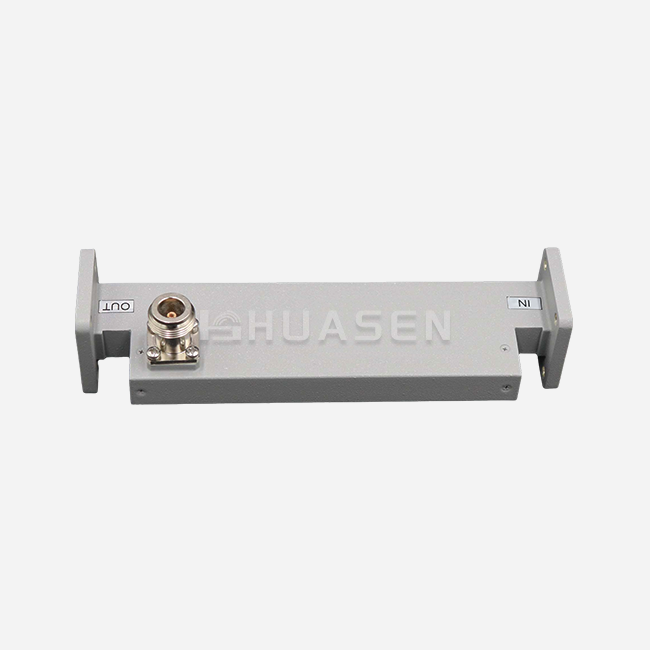
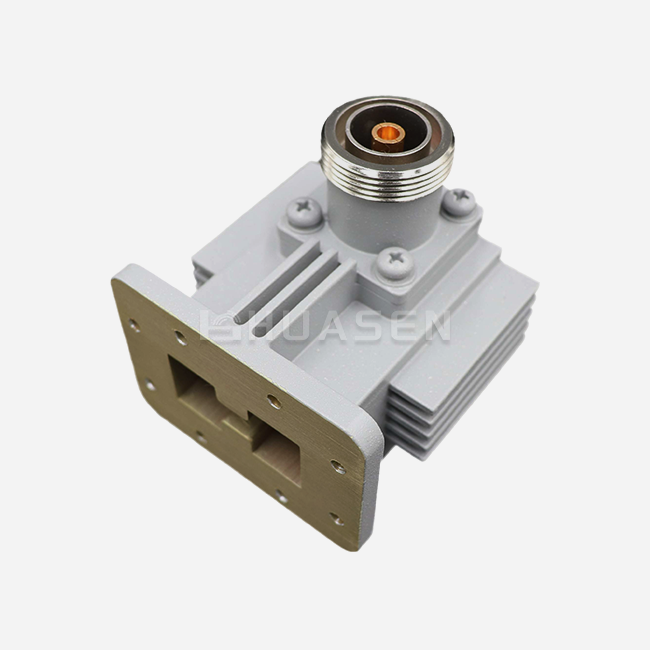
Directional couplers have frequency-dependent coupling flatness; thus, their measured power ratio is stable across bands. Werlatone and Huasen Microwave provide high-performance coaxial versions with ±0.5 dB coupling variation from 500 MHz to 6 GHz, including cellular, ISM, and C-band satellite frequencies. Air-dielectric broadwall waveguide couplers assist radar and electronic warfare applications at millimetre-wave (18-110 GHz) frequencies. Impedance matching and low-loss dielectric materials keep premium directional couplers' insertion loss below 0.2 dB, which is important because every tenth of a decibel affects link budgets in long-haul microwave backhaul systems.
Power splitters face different restrictions. Quarter-wave transformer proportions are electrically ideal for reactive Wilkinson systems with octave or sub-octave bandwidths. A 2.4 GHz WiFi 2-way splitter performs well but degrades quickly outside this range. Resistive splitters provide decade bandwidths (0.5-5 GHz) with 6-7 dB insertion loss, making them acceptable for broadband test labs but impractical for power-sensitive transmission chains. System integrators designing multi-band base stations (1.8 GHz, 2.1 GHz, and 2.6 GHz concurrently) must carefully match splitter bandwidth parameters—unlike a directional coupler—to avoid excessive loss or impedance mismatch that exceeds -15 dB return loss.
Directivity, Isolation, and Signal Integrity
A directional coupler's ability to differentiate forward and reflected signals affects measurement accuracy. A 40 dB coupler with 50 watts forward and 0.5 watts reflected (VSWR 1.5:1) leaks just 0.005 watts forward into the reflected port, reading—negligible inaccuracy. Precision applications like Vector Network Analyser (VNA) calibration and antenna tuning require precise return loss data to maximise impedance matching, but lower directivity (20-25 dB) makes it difficult. Military-grade couplers sustain directivity from -40°C to +85°C, which is crucial for avionics radar systems that experience high-temperature cycling during flight.
Power splitters prioritise isolation between output ports to prevent signal crosstalk when outputs feed distinct antennas or receivers. Wilkinson systems use balanced resistor networks to exclude reflected signals from one antenna from coupling into other feeds and corrupting MIMO spatial multiplexing by 20-25 dB. Inter-antenna interference lowers LTE/5G signal-to-noise ratios and cell capacity due to insufficient separation. Test labs assessing RF components under various load situations use this isolation to prevent measurement corruption when one port has a mismatched load, and others are matched to 50 ohms.
Real-World Application Scenarios
Directional couplers dominate transmitter monitoring tasks in telecommunications infrastructure. A 5G Massive MIMO base station transmitting 200 watts per channel samples 0.2 watts for digital pre-distortion (DPD) algorithms to linearise power amplifiers and suppress out-of-band emissions using 30 dB couplers. Directivity enables precise feedback even when antenna conditions vary owing to ice loading or physical damage, while minimal insertion loss protects radiated power. For a 64-element antenna panel, power splitters are needed to distribute signals equally and ensure beam-steering precision within ±5 degrees.
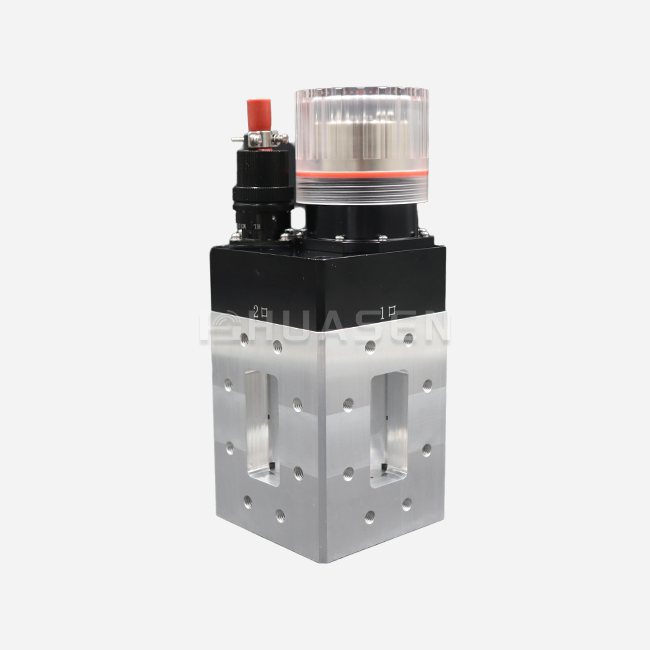
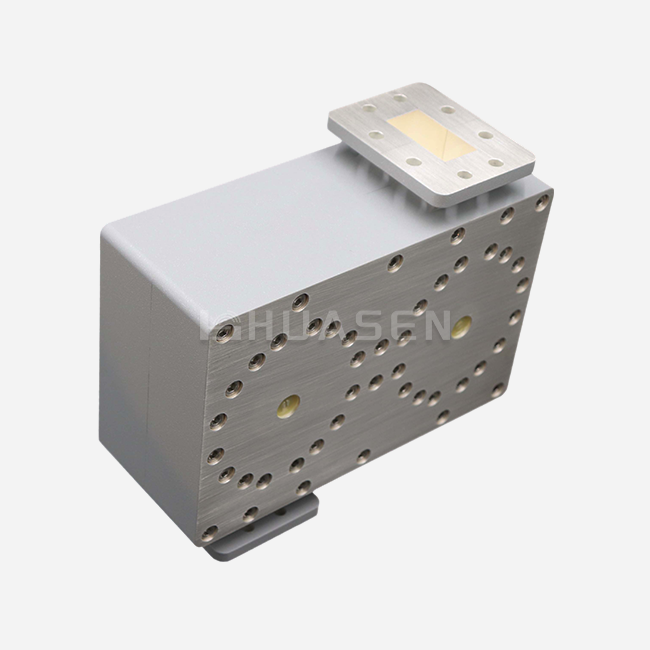
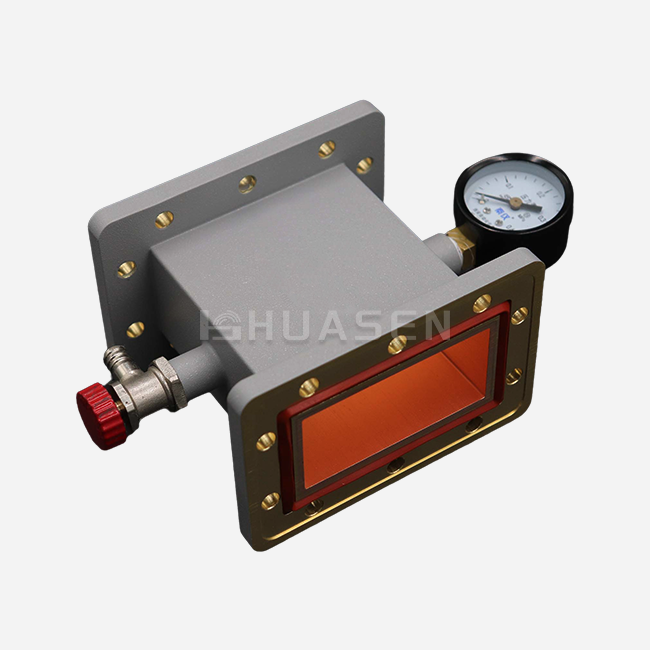
Aerospace radars require plenty of electricity. Weather radar transmitters with 25 kW peak pulses use waveguide directional couplers with 50 dB directivity to monitor output and identify pressurised transmission line arc defects before catastrophic breakdown. Silver-plated brass broad-wall couplers with sapphire windows can tolerate high power densities for months without losing calibration accuracy. The radar receiver employs resistive power splitters to supply several processing channels for Doppler filtering and clutter reduction when broadband coverage (X-band 8-12 GHz) overrides efficiency concerns at sub-watt signal levels.
Types and Variants: Tailoring to Specific RF Needs
Coaxial Directional Coupler Form Factors
Due to their small size and wide frequency coverage, coaxial systems dominate commercial applications. SMT couplers (5x5 mm) power smartphone front-end modules and enhance battery life using closed-loop control algorithms. Base stations and test equipment can use connectorised variations with SMA, N-type, or 7-16 DIN interfaces for 10 dB to 50 dB coupling and directivity above 35 dB. Our offering includes devices from 0.5 to 26 GHz with power levels from 20 watts (laboratory usage) to 500 watts CW (industrial heating applications). Silver-plated brass structure and PTFE dielectrics give Huasen Microwave's coaxial directional couplers IP67 environmental sealing for marine and outdoor telecom systems where salt spray and humidity threaten dependability.
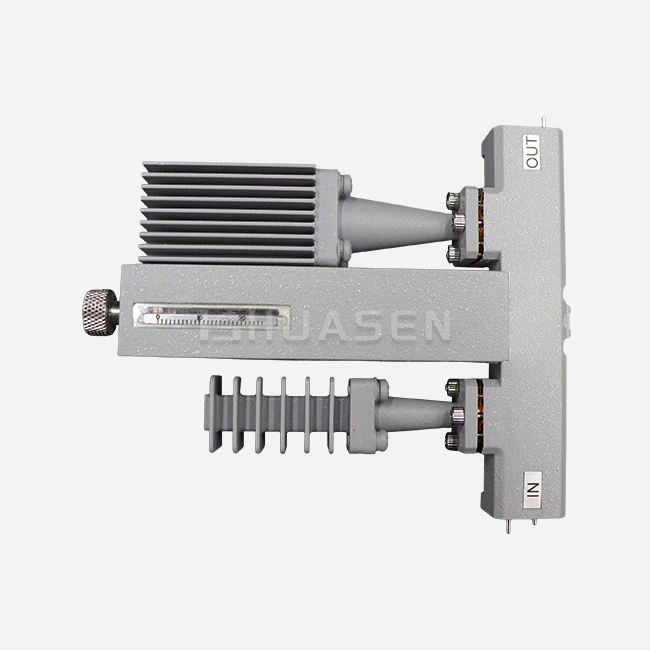
Specialised versions meet niche needs. VSWR monitoring in antenna tuning equipment is simplified by bi-directional couplers that sample forward and reflected waves using two connected ports. Ultra-wideband variants encompassing 0.5-18 GHz enable fighter aircraft multi-mission electronic warfare pods with a single hybrid coupler for observation, jamming, and communication. Broadcast transmitters and industrial plasma generators use 5 kW CW couplers with larger coaxial lines (7/8-inch or 1-5/8-inch diameters) and forced-air cooling to prevent dielectric breakdown and connector damage.
Power Splitter Configurations
For narrow-to-intermediate-bandwidth, reactive Wilkinson splitters are standard. For equal phase and amplitude, a 3-way splitter feeding a tri-sector cellular site (120-degree antenna separation) employs three output ports with precision-matched transmission line lengths. When one antenna covers a bigger service area or needs higher gain to compensate for cable losses, 2:1 or 3:1 split ratios improve power distribution. Proper PCB architecture or air-stripline construction is necessary to preserve ±0.3 dB port-to-port amplitude balance and ±3 degrees of phase, which impact antenna pattern symmetry and coverage uniformity.
Wideband test setups benefit from resistive splitters. Spectrum analysers and oscilloscopes are fed via a decade-bandwidth resistive splitter in a lab testing amplifier gain from 100 MHz to 6 GHz. Signal generators can readily compensate for the 6 dB insertion loss with larger output levels. Monopulse radar tracking systems and balanced amplifier topologies that eliminate even-order distortion use hybrid couplers (90-degree or 180-degree types) to combine and divide beams. Phase-sensitive applications like I/Q modulators and image-reject mixers in software-defined radios benefit from quadrature hybrids, ensuring ±2-degree phase precision to reduce constellation error and bit error rate reduction in complicated modulation schemes.
Procurement Guide: Selecting the Right Component for Your Project
Essential Specification Parameters
The top priority is frequency compatibility. Match the component's range to your system's operating bands, allowing for harmonic content if nonlinear devices (amplifiers and mixers) emit out-of-band signals that need monitoring or filtering. For compliance testing, a base station broadcasting at 2.6 GHz with a third harmonic at 7.8 GHz needs a directional coupler above 8 GHz to catch spurious emissions. Directivity depends on measurement precision: lab settings need 40+ dB, whereas field monitoring may handle 30 dB. Cascaded three 0.3 dB couplers contribute approximately 1 dB, decreasing the transmitter's effective radiated power below regulatory minimums. Include cumulative effects in insertion loss budgets.
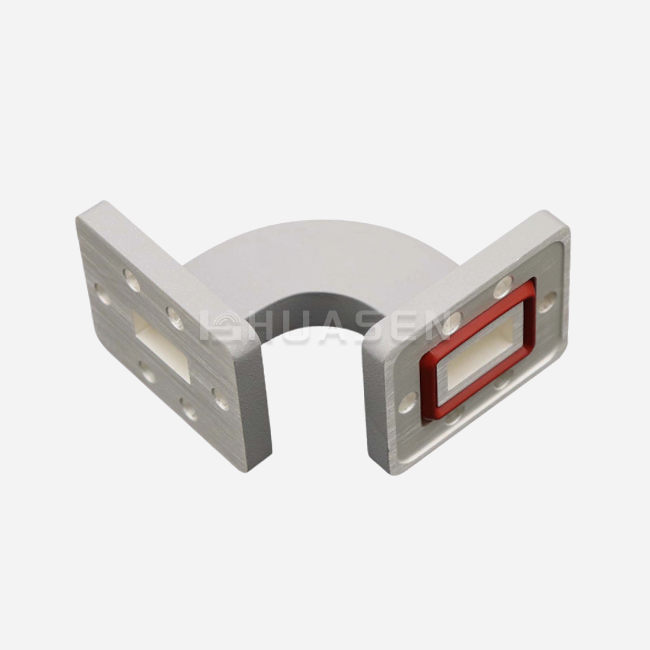
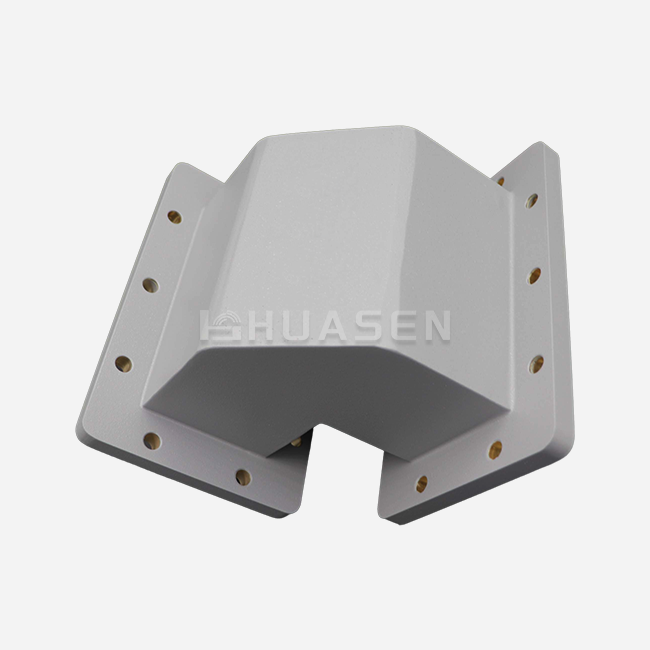
Physical packaging affects installation. In small-cell radios and IoT gateways, surface-mount couplers fit space-constrained PCB assemblies, whereas bulkhead-mount connectorised devices facilitate field repair in outdoor macro locations. UG-series and CPR waveguide flanges must match the infrastructure to prevent expensive adapters that cause loss and VSWR discontinuities. To avoid arc damage during pulse operation, a radar transmitter with 1 kW average and 10 kW peak needs a coupler rated for peak power. In shipboard, aircraft, and desert telecom installations, IP65/IP67 dust and water ingress and MIL-STD-810 vibration and thermal stress certifications prevent premature failure.
Balancing Cost and Quality Assurance
Performance levels affect component pricing. Simple 20 dB, 1 GHz couplers from Richardson RFPD cost roughly $50 for a lab prototype. Established manufacturers like Pasternack and Fairview Microwave provide military temperature ranges and enhanced directivity for field-deployable equipment for $200–$500. Werlatone, Huasen Microwave, and Narda-MITEQ offer $1,000+ premium solutions for aerospace and defence contracts that need MIL-STD-202, REACH/RoHS, and batch traceability for audit trails. When considering downtime, truck rolls, and manpower, a $100 coupler that fails after six months costs more than a $400 one that lasts ten years.
Quality indicators include datasheet completeness (S-parameters throughout full temperature ranges), STEP models for mechanical design verification, and hybrid coupler manufacturer assistance for bespoke configurations. These are quality markers. Reliable providers offer sample assessment programmes so engineers may test performance in real-world systems before ordering. Suppliers like Digi-Key and Mouser guarantee authenticity and warranty coverage in commodity markets plagued by counterfeit components. When building equipment with a 10-15 year service life, using components from manufacturers with decades of operating history decreases obsolescence risk and streamlines maintenance contract replacement parts procurement.
Conclusion
Selecting directional couplers or power splitters depends on whether your RF system monitors signals or distributes power. Directional couplers are essential for transmitter control loops, VSWR prevention, and precision measurements in complicated telecommunications and radar infrastructures because they sample forward and reflected waves separately. Power splitters optimise antenna feeds and distribution networks where power allocation is more important than directional sensitivity by effectively dividing signals across many outputs. Directivity, insertion loss, bandwidth, and environmental criteria must be matched to system requirements and operating circumstances for procurement success. Partnering with experienced manufacturers provides customised solutions, reliable supply chains, and technical support that turns component selection into a strategic advantage, improving system performance, reliability, and ROI in demanding industrial applications.
FAQ
1. Can I use a power splitter instead of a directional coupler for monitoring transmitter output?
Power splitters lack the directional coupler's sensitivity required for accurate monitoring. VSWR measurements are difficult because they distribute power evenly across outputs without discriminating between forward and reflected signals. A splitter may sample transmitter output to indicate power but not antenna impedance mismatches or reflected power levels, which safeguard amplifiers. The linked port of a directional coupler samples only forward power, while the isolated port catches reflections, allowing for thorough transmitter diagnostics that power splitters are unable to provide.
2. What directivity level is sufficient for base station monitoring applications?
Practical base station transmitter monitoring requires 30-35 dB directivity. This level maintains reflected power accuracy within ±0.5 dB at 1.5:1 antenna VSWR, a common alert threshold. High directivity (40+ dB) is essential for finer measurement precision or to detect small impedance changes for predictive maintenance algorithms that detect connection corrosion or radome deterioration before catastrophic antenna failure.
3. How do environmental conditions affect coupler and splitter performance?
Dielectric characteristics and mechanical dimensions change at severe temperatures, affecting frequency response and directivity. For outdoor telecom and aerospace applications that thermally cycle daily, military-grade components must maintain specifications from -40°C to +85°C. Poor sealing allows moisture to damage interior conductors and modify impedance, increasing insertion and return loss. In tough marine and industrial settings, IP67 or hermetic components last longer than commercial-grade counterparts, preventing costly field replacements and service disruptions.
Partner with Huasen Microwave for Precision RF Solutions
Strategic system reliability and performance may be gained by choosing the proper directional coupler provider. From specification consulting to custom design and volume manufacturing, Huasen Microwave delivers 30 years of RF engineering knowledge to every project. Our MIL-STD-810-compliant coaxial and waveguide directional couplers have industry-leading directivity (up to 50 dB), low insertion loss (below 0.2 dB), and environmental resistance. Our technical team works together to improve designs for your unique needs, whether you need wideband telecommunications components, high-power radar, or miniature aerospace gear. Contact our technical sales team at sales@huasenmicrowave.com to discuss your project needs, request evaluation samples, or explore customisation options that match your system design and increase performance.
References
1. Pozar, David M. Microwave Engineering, 4th Edition. Hoboken: John Wiley & Sons, 2012.
2. Collin, Robert E. Foundations for Microwave Engineering, 2nd Edition. New York: McGraw-Hill, 1992.
3. Froehner, W. H. "Wideband Directional Couplers Using Multi-Section Coupled Lines." IEEE Transactions on Microwave Theory and Techniques, vol. 43, no. 6, 1995, pp. 1295-1302.
4. Wilkinson, Ernest J. "An N-Way Hybrid Power Divider." IRE Transactions on Microwave Theory and Techniques, vol. 8, no. 1, 1960, pp. 116-118.
5. Kumar, Anil and Singh, Rajesh. "Design and Analysis of Broadband Directional Couplers for Wireless Communication Systems." International Journal of RF and Microwave Computer-Aided Engineering, vol. 28, no. 4, 2018.
6. MIL-DTL-3922/53E: Coupler, Directional, Radio Frequency, Coaxial. U.S. Department of Defense Interface Standard, 2015.
Send Inquiry