Differential Phase Shift Isolator vs Standard Designs






2026-03-01 22:25:41
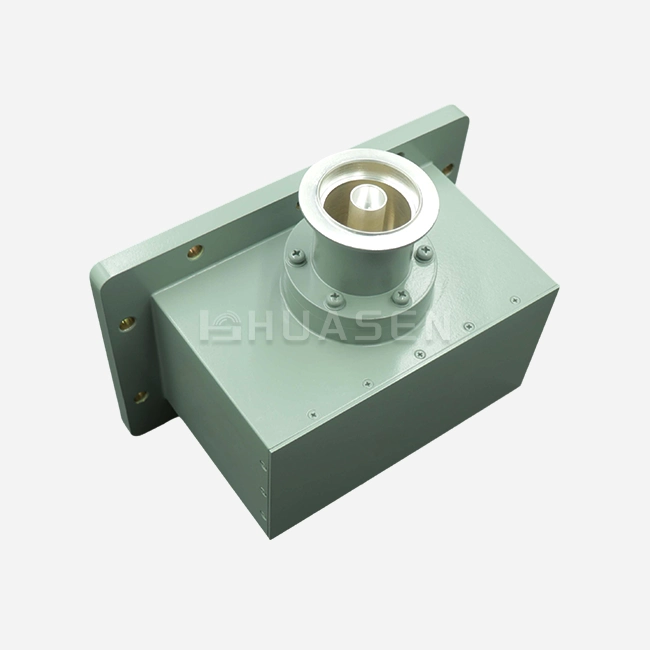
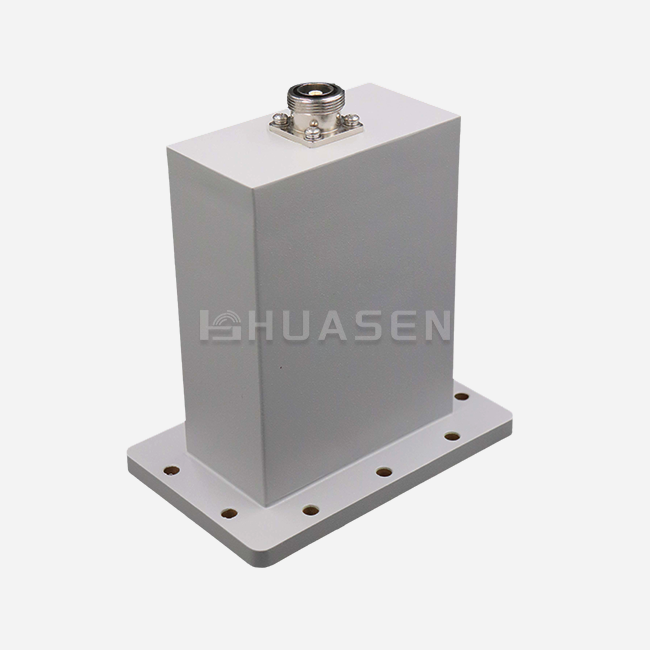
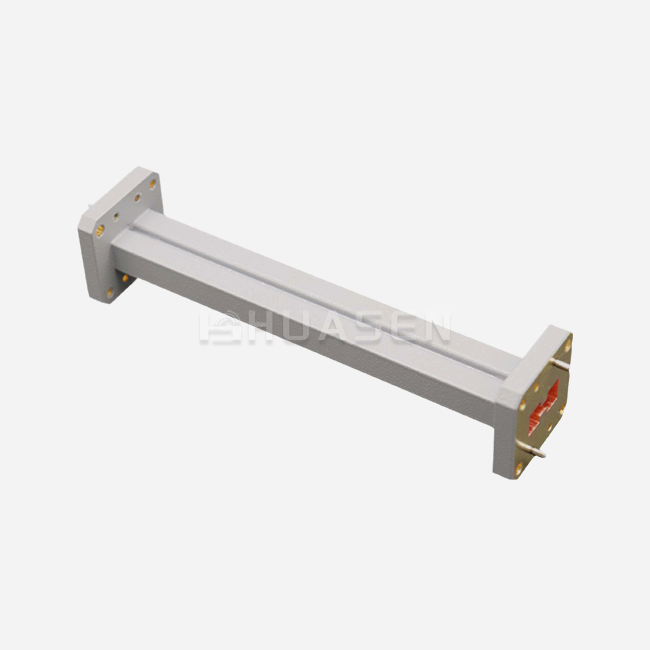
When evaluating isolation technologies for high-power RF applications, engineers face a critical choice between differential phase shift isolators and conventional Faraday-based designs. The High Power Waveguide Differential Phase Shift Isolator represents a revolutionary advancement in protecting sensitive RF sources from destructive reflections. Unlike traditional isolators that absorb energy within internal ferrite materials, differential phase shift technology redirects reflected energy to external termination loads, enabling operation at kilowatt to megawatt power levels while maintaining exceptional thermal stability and performance reliability across demanding industrial applications.
Understanding Waveguide Isolators and Their Working Principles
Fundamental Concepts of Waveguide Isolation Technology
Waveguide isolators are very important safety parts in RF and microwave systems. They work like one-way valves, letting signals go forward but stopping dangerous reflections. Impedance mismatches or load changes can hurt expensive RF sources like klystrons, magnetrons, and travelling wave tubes. These devices protect them. Insertion loss, isolation ratio, and voltage standing wave ratio (VSWR) are the main performance measures that show how well an isolator works. They are all very important for system efficiency and source protection.To make non-reciprocal phase relationships between forward and backward travelling waves, standard isolators mostly use Faraday rotation principles and magnetised ferrite materials. When an applied magnetic field is perpendicular to the direction of RF transmission, the ferrite material has different permeability values for circularly polarised waves that move clockwise and anticlockwise. This separates the signals by absorbing them within the ferrite structure.
Advanced Differential Phase Shift Technology
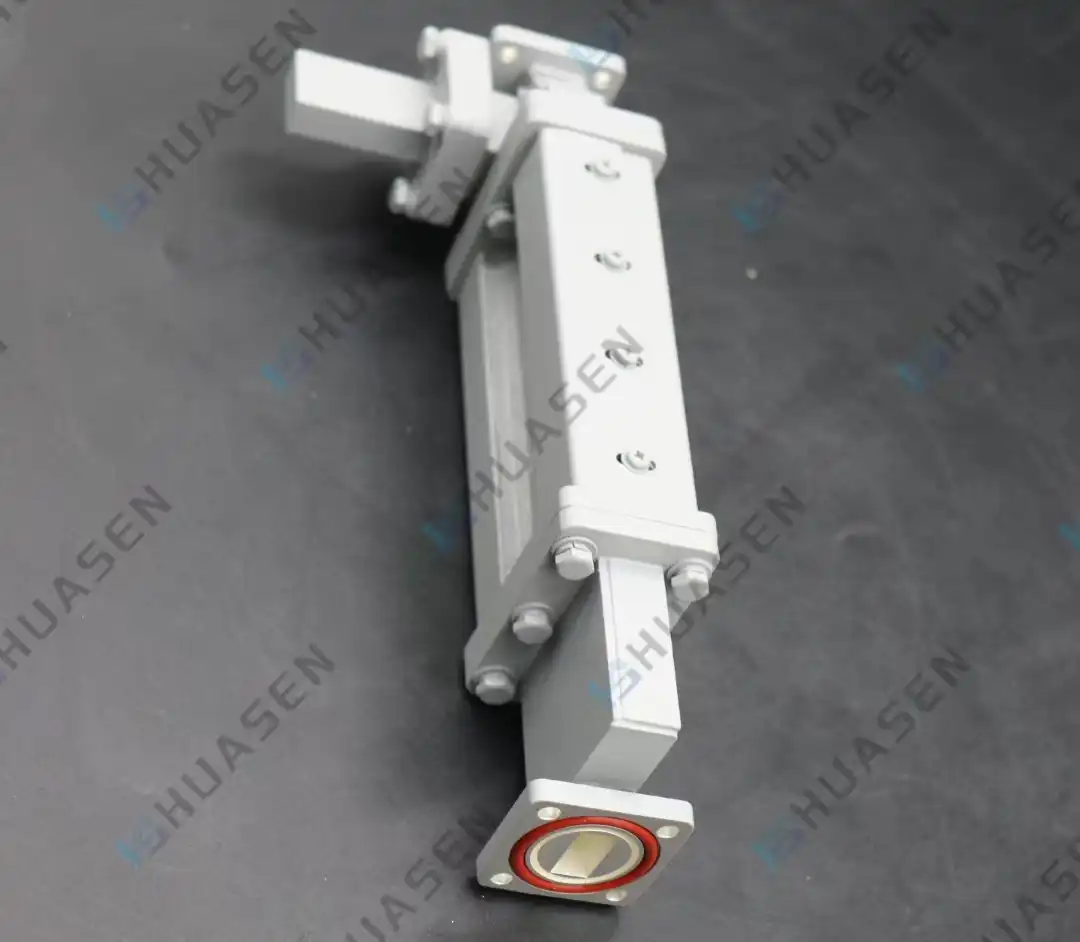
Differential phase shift isolators operate through a fundamentally different mechanism that addresses the thermal limitations inherent in traditional designs. These sophisticated devices employ a four-port topology incorporating a folded hybrid tee, dual ferrite waveguide sections, and a short-slot hybrid configuration. The core innovation lies in the non-reciprocal phase-shifting capability that directs reverse-traveling waves into an external high-power termination load rather than absorbing energy within the device itself. This architectural approach enables the High Power Waveguide Differential Phase Shift Isolator to handle substantially higher power levels without experiencing thermal runaway or ferrite detuning. The external load arrangement allows for efficient cooling strategies, including water-glycol circulation systems that can dissipate kilowatt-class thermal loads. The ferrite materials, typically high-grade yttrium iron garnet or lithium ferrite compositions, are strategically positioned within the waveguide walls to achieve precise phase shift characteristics while maintaining thermal stability across extended operating periods.
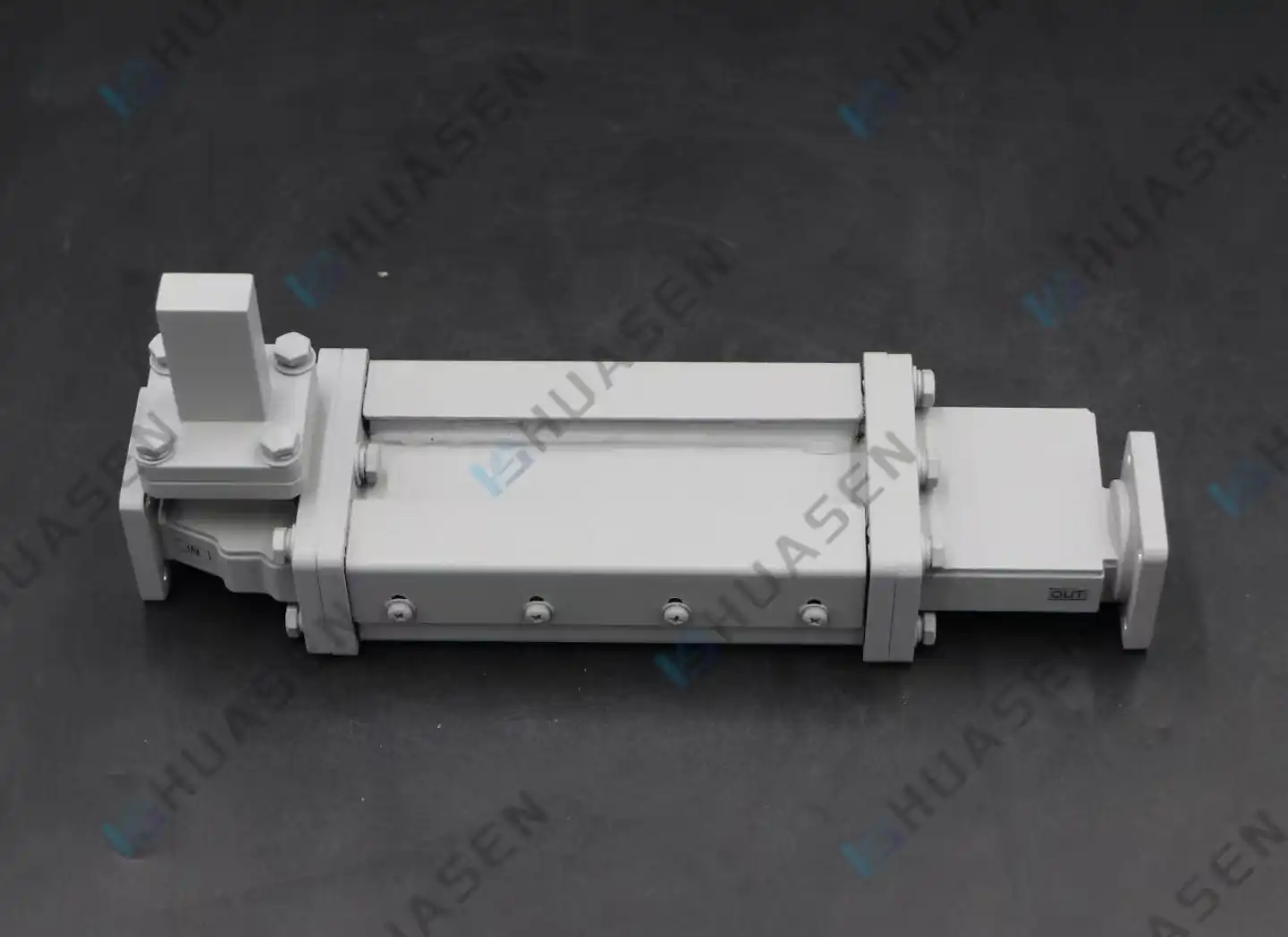
Comparative Analysis: Differential Phase Shift Isolators vs Standard Designs
Performance Characteristics and Operational Advantages
When you compare the performance of differential phase shift and standard isolator designs, you can see that differential phase shift designs are much better in many important operating areas. Differential phase shift isolators usually have insertion losses of less than 0.3 dB, which is a lot less than traditional designs, which usually have losses of 0.5 dB or more. This lower insertion loss directly leads to less self-heating and a more efficient system as a whole. This is especially important in high-power gearbox situations where even small losses can create big thermal loads. Differential phase shift technology also does a great job with isolation, consistently providing isolation ratios above 20 dB across a wider frequency range compared to standard designs. The external load architecture offers better impedance matching and reflection suppression, which leads to better isolation. The VSWR stays below 1.2:1 throughout the working bandwidth, which ensures the best power transfer and prevents standing waves that could damage components or cause the voltage to drop.
Thermal Management and Power Handling Capabilities
In high-power situations, differential phase shift isolators are better than other options because they can handle heat better. Standard Faraday-based isolators have major problems when mirrored energy has to be absorbed by ferrite materials inside the device. This causes the temperature to rise, which can hurt performance or even cause the device to fail. The features of the ferrite materials change with temperature. If they get too hot, the isolation performance could go down, and the insertion loss could go up. Differential phase shift isolators get around these thermal problems by sending reflected energy to external terminal loads that are cooled by water or forced air. In this configuration, the average power can range from 1 kW to over 100 kW, and the peak power can hit megawatt levels. The outside cooling system keeps the ferrite's temperature in the best range for operation, protecting its magnetic qualities that are needed for reliable isolation. Using SF6 or dry nitrogen to pressurise the housing also stops voltage breakdown at high peak power levels, making sure stable operation in tough environments.
Selecting the Best High Power Waveguide Isolator for Your Application
Critical Procurement Considerations
Procurement decisions for high-power waveguide isolators require careful evaluation of multiple technical and operational factors. Power handling requirements represent the primary consideration, encompassing both average and peak power specifications that must align with system operating conditions. The frequency range specification must provide adequate bandwidth coverage while maintaining performance parameters across the entire operational spectrum. Engineers should evaluate insertion loss requirements against system link budgets, recognizing that lower insertion loss directly improves overall system efficiency and reduces thermal management challenges.VSWR specifications impact system impedance matching and standing wave formation, making this parameter crucial for high-power applications where voltage breakdown risks increase with poor matching conditions. Environmental considerations, including temperature range, humidity resistance, shock tolerance, and vibration immunity, become particularly important for outdoor installations or mobile platforms where harsh operating conditions are expected.
Customization Options and Supplier Partnerships
The complexity of high-power RF systems often necessitates customized isolator solutions tailored to specific application requirements. Differential phase shift isolators offer extensive customization possibilities, including frequency band optimization, power handling scaling, mechanical interface modifications, and cooling system integration. OEM collaboration opportunities enable the development of application-specific solutions that address unique technical challenges while maintaining cost-effectiveness for volume production. Establishing partnerships with reputable manufacturers ensures access to consistent quality components and reliable supply chain support. Experienced suppliers provide valuable technical consultation during the design phase,High Power Waveguide Differential Phase Shift Isolator,helping optimize isolator specifications for specific applications while avoiding common pitfalls that could impact performance or reliability. The availability of comprehensive testing data, including calibration reports and environmental qualification documentation, supports system integration and regulatory compliance requirements.
Deployment and Thermal Management in High Power Environments
Advanced Cooling Strategies and Material Innovations
Managing heat in places with a lot of power needs complex cooling plans that can handle both steady-state and changing heat loads. Differential phase shift isolators use high-tech materials and cooling methods that are made to keep working properly even when temperatures are very high. The external load design makes it possible to build large cooling systems that can handle the large amounts of heat dissipation needed for reflected energy absorption. Water-glycol cooling systems are good at getting rid of heat so that high-power machines can run continuously. The circulation rates and temperatures of the coolant are adjusted to work best with the power level and the surroundings. When designing the cooling system, it's important to think about both regular loads and fault situations where the external load might use up all of the transmitter's power. Modern materials, like special ferrite compositions and high-conductivity thermal surfaces, make sure that heat moves quickly while keeping electrical performance stable as temperatures change.
Real-World Case Studies and Performance Validation
Experiences with using differential phase shift isolators in industry show that they work better in tough operational settings. Differential phase shift isolators have been used in linear accelerator setups for medical and industrial purposes at multi-kilowatt power levels for long periods of time without any performance degradation. These systems are better because they are more thermally stable, which stops changes in beam energy that could happen with regular isolators that are sensitive to temperature. Differential phase shift technology has been proven to work reliably in weather radar uses using S-band and C-band frequencies, even when the duty cycle is constant, and the environment changes. Being able to handle peak powers in the megawatt class while keeping performance parameters constant means that the system will work reliably during important weather monitoring operations. Extreme reflected power situations, where changes in load impedance can put a lot of thermal stress on protective components, have been shown to work well with plasma heating systems in fusion research facilities.
Procurement Guide for High Power Differential Phase Shift Isolators
Streamlined Acquisition Processes
The procurement workflow for high-power differential phase shift isolators begins with comprehensive technical requirements gathering, including detailed specifications for power handling, frequency coverage, environmental conditions, and interface requirements. Engineering teams should collaborate closely with High Power Waveguide Differential Phase Shift Isolatorprocurement specialists to ensure all technical and commercial requirements are properly documented and communicated to potential suppliers. The evaluation process should include technical capability assessment, quality system verification, and supply chain reliability analysis. Pricing structures for high-power isolators typically reflect the sophisticated engineering and specialized materials required for reliable performance. Volume purchasing arrangements can provide significant cost advantages, particularly for system integrators or OEM applications requiring multiple units. Lead time considerations become important for project planning, as high-power isolators often require custom manufacturing or extensive testing that can extend delivery schedules beyond standard component availability timeframes.
Long-Term Partnership Benefits
Building long-term relationships with suppliers of isolators has many benefits that go beyond the original cost of procurement. Access to application engineering experts is ensured by ongoing technical help throughout the product lifecycle, from developing the initial specifications to deploying the product in the field and providing maintenance support. Suppliers with a wide range of products can offer system-level optimisation advice that could lower costs while increasing performance. Making sure that products are always available is important for keeping systems running, especially in situations where downtime costs a lot of money or time. Established providers keep extra inventory and production capacity to meet customer needs. This lowers the chance of long outages caused by missing parts. Talking to supplier technical teams on a regular basis makes sure that you know about any changes or problems with products that are becoming obsolete that might affect your long-term plans for system maintenance.
Conclusion
When it comes to high-power waveguide applications, differential phase shift isolators are a big step up from standard designs. They offer better thermal management, better power handling, and higher reliability in harsh operating conditions. The external load architecture lets power levels range from kilowatts to megawatts while keeping high performance levels such as stable VSWR, low insertion loss, and high isolation. Because of these benefits, differential phase shift technology is the best choice for high-stakes situations where parts can't fail, like in radar systems, linear accelerators, and plasma heating systems. The successful integration of these high-tech parts into complicated RF systems depends on a thorough analysis of technical needs, supplier capabilities, and long-term support issues. As power levels rise in many areas, differential phase shift isolators offer the temperature stability and performance dependability needed to safeguard important RF sources and keep the system running at its best.
FAQ
1. What distinguishes differential phase shift isolators from junction isolators?
Junction isolators utilize Y-junction configurations with energy absorption occurring within small ferrite disks, limiting power handling capabilities due to thermal constraints. Differential phase shift isolators employ bridge network topologies that redirect reflected energy to external loads, enabling significantly higher average power operation. The external load arrangement allows for efficient cooling strategies that maintain stable performance under high-power conditions where junction isolators would experience thermal failure.
2. Why do high-power applications require liquid cooling for external loads?
External loads in differential phase shift isolators absorb reflected energy that can represent substantial power levels under fault conditions or high-VSWR scenarios. When antenna systems fail or impedance mismatches occur, the external load may absorb nearly 100% of the transmitter power output. Water-glycol cooling systems provide the thermal capacity necessary to manage kilowatt-class heat dissipation efficiently while maintaining safe operating temperatures and preventing thermal damage to the termination components.
3. Can differential phase shift isolators operate without pressurization systems?
Low peak power applications can operate successfully without pressurization, relying on standard atmospheric conditions for dielectric strength. However, megawatt-class peak power operation requires pressurized environments using dielectric gases such as SF6 to increase dielectric strength within the waveguide structure. Pressurization prevents internal arcing that could cause catastrophic failure or performance degradation under high peak power conditions, ensuring reliable operation across the full power range specification.
4. What bandwidth characteristics do high-power differential phase shift isolators provide?
These isolators typically offer bandwidth coverage of 10-20% of the center frequency, providing adequate spectrum coverage for most radar and accelerator applications. While this bandwidth may be narrower than some low-power junction devices, it represents an acceptable trade-off for the enhanced power handling capabilities and thermal stability. The bandwidth specification can often be optimized during the design phase to match specific application requirements while maintaining optimal performance parameters.
5. How does temperature variation affect isolator performance?
Ferrite materials exhibit temperature-dependent properties that can impact isolation and insertion loss characteristics if not properly managed. Excessive heating can cause ferrite properties to approach the Curie temperature limit, resulting in degraded performance. Differential phase shift isolators incorporate thermal management systems that maintain ferrite temperatures within optimal operating ranges, preserving the magnetic properties essential for consistent isolation performance across extended operating periods and varying environmental conditions.
Partner with Huasen Microwave for Advanced High Power Waveguide Differential Phase Shift Isolator Solutions
Huasen Microwave Technology delivers cutting-edge High Power Waveguide Differential Phase Shift Isolator solutions engineered for exceptional performance in demanding RF applications. With over three decades of expertise in high-frequency microwave and millimeter-wave component development, our engineering team provides comprehensive technical support from initial specification through deployment and ongoing maintenance. Our advanced manufacturing capabilities enable customization options, including frequency optimization, power scaling, and thermal management integration tailored to specific application requirements. Contact our technical sales team at sales@huasenmicrowave.com to discuss your high-power isolation requirements and discover why leading system integrators choose Huasen Microwave as their trusted High Power Waveguide Differential Phase Shift Isolator supplier for mission-critical applications.
References
1. Baden Fuller, A.J. "Microwave and Millimeter Wave Ferrite Devices and Applications." IEEE Transactions on Microwave Theory and Techniques, vol. 42, no. 6, pp. 1034-1043, 1994.
2. Pozar, David M. "Microwave Engineering, Fourth Edition." John Wiley & Sons, New York, 2012, Chapter 9: Waveguide Components and Applications.
3. Harvey, A.F. "Microwave Engineering Handbook: Passive Microwave and Millimeter Wave Components." Academic Press, London, 1998.
4. Lax, Benjamin and Button, Kenneth J. "Microwave Ferrites and Ferrimagnetics." McGraw-Hill Book Company, New York, 1962.
5. Montgomery, Carol G., Dicke, Robert H., and Purcell, Edward M. "Principles of Microwave Circuits: Radiation Laboratory Series Volume 8." McGraw-Hill Book Company, 1948.
6. Helszajn, Joseph. "Microwave Planar Passive Circuits and Filters." John Wiley & Sons, Chichester, 1994.
Send Inquiry