Coaxial Load: VSWR, Power Rating & Connector Type Guide






2026-07-24 16:24:43
Selecting the right termination device is essential for RF system integrity and transmitter protection. A coaxial load acts as a precision passive component that absorbs microwave energy while matching system impedance—typically 50 ohms. Understanding VSWR, power rating, and connector compatibility ensures your testing setup delivers accurate measurements without risking equipment damage. This guide walks procurement managers and RF engineers through the critical specifications that influence component selection, system reliability, and long-term operational efficiency.
Understanding Coaxial Loads: Definition, Working Principles & Applications
What is a coaxial load?
At the end of a transmission line, a coaxial termination is an inactive RF part that is meant to soak up electromagnetic energy. By showing an impedance that is the same as the system's characteristic impedance, it reduces reflections that would hurt signal quality or damage active parts like power amplifiers. The device changes receiving RF energy into heat, which gets rid of standing wave ratio problems that hurt the accuracy of measurements and the safety of the emitter. In many professional settings, these components are simply referred to as 'coaxial loads'.
Core Types and Working Principles
There are three main configurations that are used for different tests and operating situations:
- Coaxial Matched Load: This arrangement keeps the impedance matching exact over certain frequency bands. When a small application needs DC-to-mid-frequency performance with little low-frequency bounce, resistive types work best. Absorbing types use microwave-absorbing materials that work well in high-frequency settings where resistive parts would cause too many unwanted side effects.
- Coaxial Unmatched Load: These parts are used in special calibration sets and impedance verification processes to test how well a system works when conditions aren't ideal. They do this by purposely having impedance that isn't matched.
- Coaxial Open/Short Circuit Terminals: These calibration standards give known reflection coefficients that are needed to calibrate vector network analysers and check transmission lines.
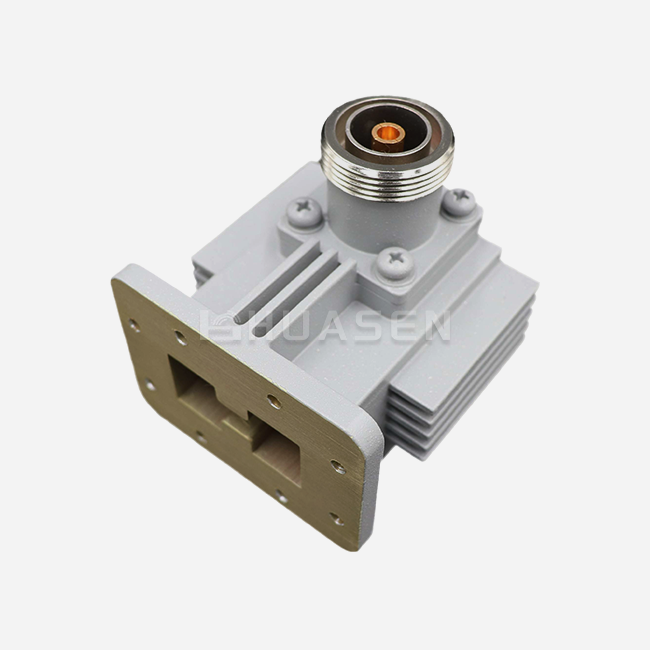
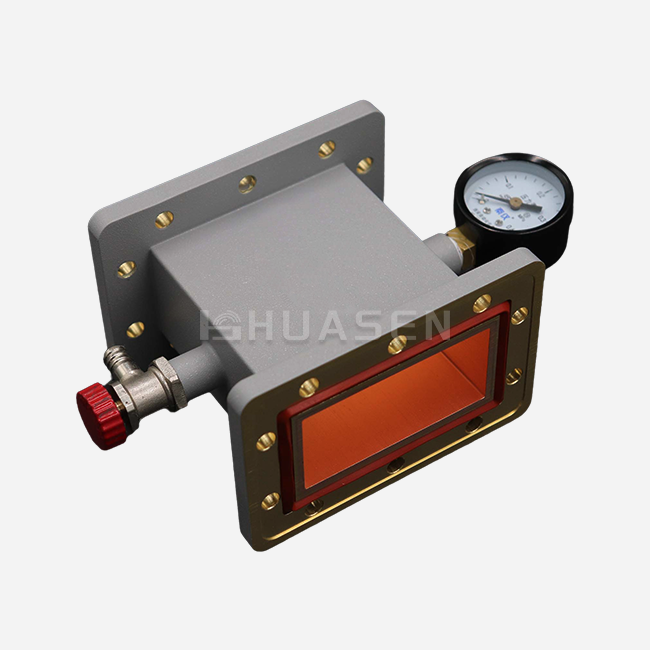
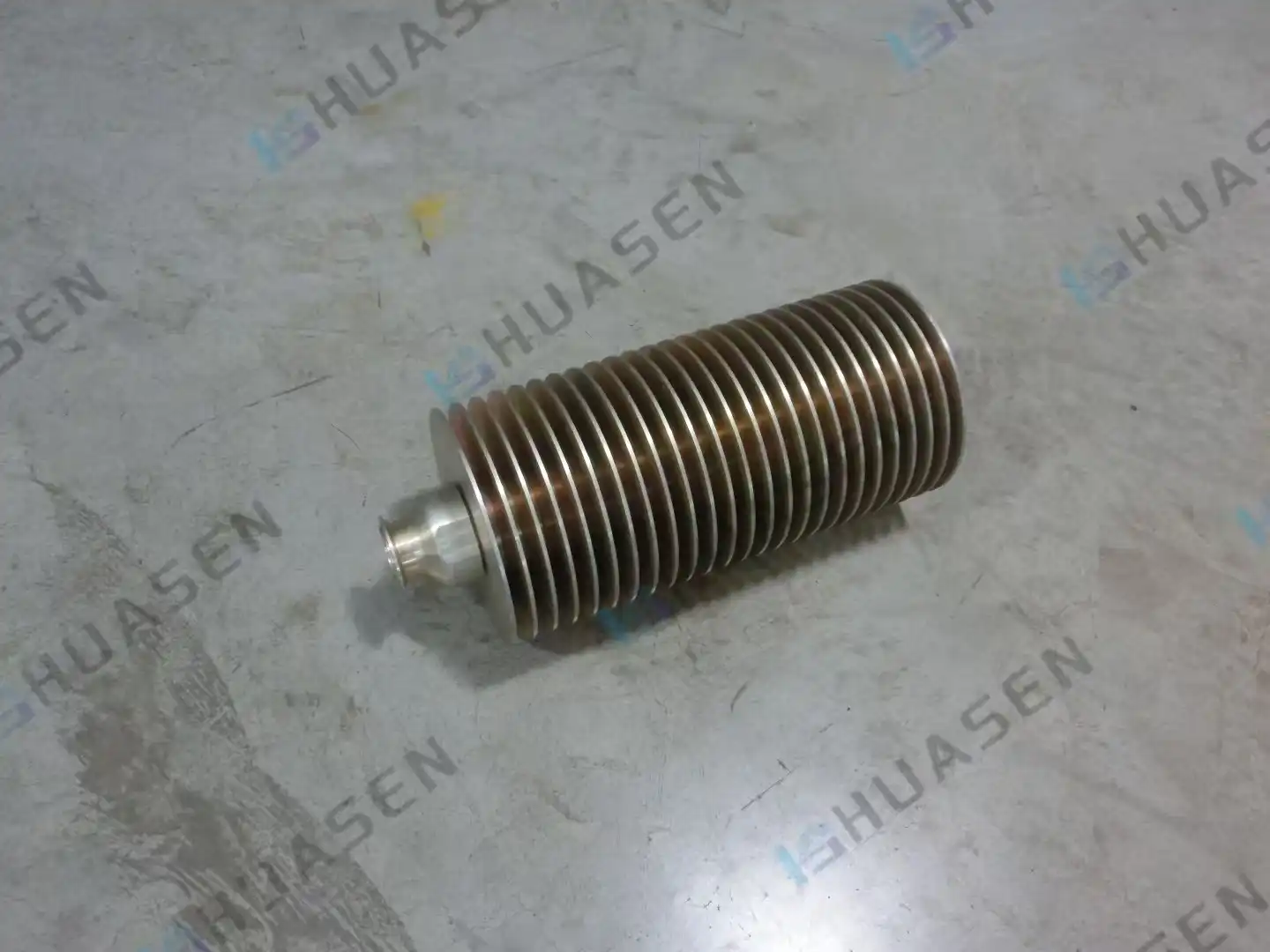
Specialised builds are needed for high-power uses. Plate-type designs spread heat stress over a bigger surface area, while water-cooled versions can handle long periods of high power use in transmitter testing situations.
Industry Applications
Terminations separate empty ports in hybrid combiners and directional couplers in distributed antenna systems, which is important for telecommunications infrastructure. For repair on base stations, you need dummy loads that can safely absorb the full transmitter power while they are being aligned and tested without sending out interference.
These parts are used in radar front-end protection circuits and electronic countermeasure equipment in aerospace and defence systems. Precision loads are needed in laboratories to calibrate measuring tools and characterise RF parts that are still being developed.
Broadcasting facilities use high-power terminations when setting up and maintaining transmitters. This lets engineers check performance metrics at full output while still following rules about not sending out unauthorised signals.
Technical Insights: VSWR, Power Rating & Connector Types Explained
Understanding VSWR and Its Impact
Voltage Standing Wave Ratio measures how well a coaxial load takes in energy from an outside source instead of sending it back to the source. A VSWR of 1.0:1 means that there is no reflection at all, while higher numbers mean that there is more reflection. Commercial-grade terminations usually have a VSWR of 1.20 or less across their operating bandwidth, while a VSWR of 1.03 or less achieves very low reflection in a precision laboratory setting.
Reflected energy is bad for many reasons: it lowers the effective emitted power, messes up measurements in test sets, and stresses out amplifier output stages thermally. System integrators need to check VSWR across the whole frequency range because performance often drops at the edges of the band.
Power Rating Considerations
Safe working limits are set by the average and peak power standards. The average power rating shows how much power can be continuously lost in a steady state, while the peak power rating shows how much power can be handled during pulsed operation or modified signals.
Table 1: Power Rating Categories and Applications
| Power Class | Average Power | Peak Power | Typical Applications |
|---|---|---|---|
| Not Much Power | ≤2W | ≤50W | Testing in the lab and review of parts |
| Level 5 Power | 2W to 50W | 50W to 500W | Testing the base station and watching the broadcast |
| Powerful | 50W to 400W | 500W to 5000W | Maintaining the transmitter and checking the radar |
When there is a lot of power, thermal management becomes very important. When the load in the lab is less than 10W, natural airflow is enough. But when the power level goes up, forced air cooling or liquid cooling systems are needed. Manufacturers give derating curves that show less power handling as the temperature rises. At 85°C, the curves usually show a 50% drop compared to the baseline ratings at 25°C.
Connector Type Selection
Interface compatibility has a direct effect on frequency range, power handling, and how long something will last mechanically. Each series of connectors has its own benefits:
- N-Type (N-J): It has a strong mechanical design that can handle high-power uses up to 11 GHz. It is widely used in base station infrastructure and broadcast equipment because it is resistant to weather and works well when installed outside.
- SMA (SMA-J): A standard lab link that works from DC to 18 GHz and has a small size. It can be used to connect test tools and for low- to medium-power tasks where space is limited.
- 2.92mm (K-compatible): Covers frequencies up to 40 GHz and is physically compatible with SMA footprints. Millimeter-wave testing is used in satellite communications and 5G research, and precision cutting helps with this.
- 7/16 DIN: This type is best for high-power, low-PIM uses in cellular infrastructure. It works well with electricity and stays stable in harsh conditions, which makes it perfect for outdoor base station parts.
To make sure that installation standards and maintenance times are met, procurement teams must check the mating cycle rates, interface type (threaded/bayonet), and connector gender (male/female).
How to Choose the Best Coaxial Load for Your RF Testing Needs?
Defining Your Requirements
Systematic requirement analysis is the first step in choosing the right components. Write down the characteristic impedance, working frequency range, and worst-case power values for your system, including peak transients. The requirements for VSWR should match the requirements for measurement accuracy. For example, tighter tolerances are needed for laboratory calibration than for field service applications.
Environmental factors affect how long a component lasts. For installations outside, you need weatherproof enclosures with the right IP ratings to keep out moisture and dust. Specifications for temperature cycling must include changes of temperature during different seasons. In mobile platforms or equipment rooms with a lot of foot traffic, vibration and shock protection become very important.
Comparing Similar Components
Understanding the differences between types of related components stops specification mistakes. The roles of dummy loads and coaxial loads are the same, so the terms are usually used interchangeably. Attenuators are different because they let signals pass through but weaken them gradually instead of completely blocking them. This means that they can't be used to end communication lines.
Broadband loads can handle many octaves, but they might not work as well as narrowband designs that are made to work with specific frequency bands. System designers have to find a mix between the need for more accurate measurements and making the inventory easier to manage.
Procurement Strategies
For large-scale deployments, bulk buying deals can save you a lot of money. Getting in touch with manufacturers that can make custom frequency ranges, power ratings, or connector configurations cuts down on costs per unit and speeds up project timelines.
For lead time management to work, manufacturers need to know how much they can make. Standard catalogue items usually ship within a few days, but items made to order may take 6 to 8 weeks to make. Creating smart inventory buffers keeps projects from getting behind schedule during the launching phases of equipment.
Table 2: Procurement Decision Matrix
| Application Type | VSWR Requirement | Power Consideration | Connector Priority |
|---|---|---|---|
| Setting up the VNA | ≤1.03 | Low (2W) | Exact interface matching |
| Testing the base station | ≤1.20 | Medium to High (25W to 100W) | Low PIM, weatherproof |
| Maintenance on the Transmitter | ≤1.25 | High (100W to 400W) | Rated for a lot of power, heat management |
Maintenance, Testing & Troubleshooting of Coaxial Loads
Verification Procedures
Regular performance evaluation keeps measurement trust high and extends the life of components. By measuring return loss across frequency bands, vector network analysers give a full picture of a system. When you compare these measurements to the initial measurements taken during startup, you can see degradation trends before they become too bad for the system to work.
Thermal imaging finds hotspots that mean an internal component is failing or there isn't enough cooling. Temperature rise below rated power should be in line with what the manufacturer says—too much heating could mean contamination, connector degradation, or damage to the resistive element in the coaxial load.
Common Failure Modes
Contact resistance and reflection go up when connectors are mated over and over again. Damaged threads, bent centre pins, or rust that would affect electrical function should be seen with the naked eye. Isopropyl alcohol cleaning methods get rid of contaminants without hurting plating or insulating materials.
Thermal cycling stress causes resistive elements to break down slowly over time. Changes in performance usually show up as higher VSWR or less power-handling ability. Replacement times rely on how harsh the duty cycle is. For example, laboratory loads that work occasionally at low power may last for decades, but high-power transmitter loads need to be replaced every so often.
Case Study: Resolving Measurement Anomalies
During normal tests, a satellite communications centre ran into problems with its power amplifier that couldn't be explained. The investigation showed that the reference load's VSWR dropped from 1.10 to 1.45 in key frequency ranges. Moisture getting in through a broken weatherproofing seal led to internal corrosion, which raised the reflection coefficient.
By replacing it with an outdoor-rated unit that is sealed against the elements, the measurements became more accurate, and the amplifier safety trips stopped happening. Implementing routine inspections every three months stopped the problem from happening again by catching seal degradation before it let water in.
Market Overview & Trusted Brands for Coaxial Loads
Industry-Leading Manufacturers
Established providers have decades of experience with radio frequency (RF) technology and a wide range of products that can be used in a variety of situations. Times Microwave has a reputation for making tough, reliable parts that can work in harsh environments. Mini-Circuits has a large catalogue with a lot of products for lab use. They serve quickly and have reasonable prices.
Pasternack specialises in shipping standard configurations the same day, which helps with urgent purchases during equipment commissioning or emergency repairs. Huber+Suhner provides high-precision Swiss-made parts for aircraft and defence uses that need strict quality certifications.
Since 1993, Huasen Microwave has become a master in making high-frequency microwave and millimetre-wave parts. Our Coaxial Load product line covers DC to 60 GHz, has very low reflections (VSWR ≤ 1.03), and can handle up to 400W on average and 5000W at its peak. It works with N-J, SMA-J, and 2.92-J connections, so it can be used in a variety of situations in radar, aircraft, and telecommunications.
Procurement Channels and Support
When you work directly with a manufacturer, you can get access to special engineering tools and better prices. Authorised distributors keep stock locally, which speeds up delivery and provides technical support for choosing the right parts and figuring out how to put them together.
By putting all quotes and orders in one place, online procurement platforms make the buying process easier. Evaluation tools that let you try a sample before committing to a large order lower the risk of not meeting specifications and make sure that the performance works in real-world settings.
Warranty coverage and return policies vary significantly between suppliers. A lifetime warranty that covers all production flaws shows that the maker trusts the product and keeps procurement investments safe. How quickly technical support responds to pre-sales questions and problems after delivery has a direct effect on the success of the project.
Conclusion
To choose the right RF terminations, you have to weigh their electrical performance, mechanical sturdiness, and cost. The VSWR specs must match the requirements for measuring accuracy, and the power levels should include safety margins that take into account changes in the ambient temperature and peak transients. Connector compatibility makes sure that the system works well and that the frequency range coverage meets its needs. Strategies for buying things that focus on trusted manufacturers, unique capability testing, and full support services lower risk and raise the total cost of ownership. Systematic repair routines and performance testing processes protect the accuracy of measurements and increase the service life of parts used in defence, aerospace, and telecommunications.
FAQ
1. What distinguishes a coaxial load from a dummy load?
The two terms mean the same thing: termination devices that absorb RF energy and match the impedance of the system. "Dummy load" typically refers to high-power transmitter terminations, whereas "coaxial load" covers a wider range of applications in test labs and laboratories.
2. How does connector type affect frequency range?
Frequency limits are set by the size and dielectric features of the material. Up to 18 GHz, SMA connectors work reliably, and 2.92 mm connectors cover up to 40 GHz. When it comes to 7/16 DIN, handling power and low-PIM performance below 7.5 GHz are more important than the highest frequency increase.
3. Why do power ratings decrease at elevated temperatures?
The amount of heat lost depends on the difference in temperature between the air around the resisting elements and the elements inside. As the temperature rises, the thermal gradient decreases, which makes heat movement less effective. To keep parts from breaking, power derating is needed.
4. Can standard loads function in outdoor base station environments?
Laboratory-grade parts aren't waterproof or resistant to rust enough to be used outside. Choose models that have the right IP ratings, housings that are resistant to UV light, and sealed connector interfaces that are made to withstand environmental exposure.
Partner with a Trusted Coaxial Load Manufacturer
Huasen Microwave Technology delivers precision RF terminations engineered for demanding telecommunications, aerospace, and defence applications. Our three-decade track record demonstrates consistent quality and technical innovation across DC to 60 GHz frequency ranges. Whether you require standard catalogue items or custom specifications addressing unique system constraints, our engineering team provides comprehensive design support from initial consultation through production delivery. Contact sales@huasenmicrowave.com to discuss your requirements with experienced application engineers who understand the critical role precision terminations play in system reliability. As a vertically integrated coaxial load supplier, we control manufacturing quality while maintaining competitive pricing structures that benefit volume purchasers. Request detailed specifications and quotations that address your specific VSWR, power rating, and connector requirements.
References
1. Pozar, David M. Microwave Engineering, 4th Edition. Wiley, 2011.
2. Collin, Robert E. Foundations for Microwave Engineering, 2nd Edition. IEEE Press, 2001.
3. Agilent Technologies. "Fundamentals of RF and Microwave Power Measurements." Application Note 64-1A, 2000.
4. Rohde & Schwarz. "VSWR and Return Loss Measurement Basics." Technical White Paper, 2018.
5. IEEE Standards Association. "IEEE Standard for Precision Coaxial Connectors." IEEE Std 287-2007.
6. Weinschel Associates. "Precision Coaxial Terminations for Metrology Applications." Technical Bulletin Series, 2015.
Send Inquiry