Best Waveguide Rotary Joint Designs for High-Frequency Radar Systems






2026-05-06 21:06:47
When engineers choose parts for high-frequency radar systems, they have to deal with a big problem: keeping the signal strong while moving antenna units all the time. This issue can be fixed by the best waveguide rotary joint designs, which allow microwaves to pass through both stationary and moving parts without any issues. These highly precise devices use advanced mode conversion methods and non-contacting choke mechanisms to achieve very low insertion loss (usually below 0.5 dB) across a wide frequency range from X-band to Ka-band, while keeping VSWR values below 1.5:1 throughout 360 degrees of rotation. This makes them essential for radar tracking systems, satellite communications, and electronic warfare platforms.
Understanding Waveguide Rotary Joints and Their Operating Principles
Waveguide rotary joints are electromechanical connections that let electromagnetic waves pass through a border that is moving. These devices have special internal designs that keep their electrical performance stable, unlike coaxial wires that twist and break down when turned.
Mode Conversion Technology
The main idea behind how it works is to change waveguide modes that are rectangular into circular modes that are rotationally symmetric. The TE10 mode can be sent through a standard rectangular waveguide, but this mode pattern is not rotationally invariant. Inside the joint, well-thought-out transitions change this to circular modes like TE01 or TM01, which keep their field patterns no matter what place they are in rotation. This mode change is very important for single-channel waveguide rotary joints that are used by radar and fire control systems for main monitoring.
Choke Mechanism Design
Most high-performance joints use choke designs that don't touch instead of moving contact methods. At an exact distance from the rotating interface, the choke mechanism forms an electrical short circuit. This lets energy flow across an air gap that is only a few thousandths of an inch wide. This contactless action gets rid of friction-related wear, increases the component's useful life beyond 100 million spins, and keeps its electrical properties constant over its entire service life.
Signal Path Continuity
To keep impedance matched while rotating, parts must be manufactured with very tight tolerances, measured in microns. Any break in the waveguide's internal shape causes echoes that lower signal quality and raise VSWR. To keep resistance losses as low as possible, high-conductivity materials like copper-beryllium alloys or aluminium with a silver coating are used on the inside. When it comes to long communication chains, insertion loss builds up, and these material choices directly address that problem.
Key Design Considerations for High-Frequency Radar Applications
To design waveguide rotary joints for radar use, you have to balance a lot of technical factors with real-world operating needs. The planning process starts with choosing a frequency band and ends with steps to protect the Earth.
Frequency Band and Waveguide Sizing
Picking the right waveguide standard is the first step in making a good design. The WR-90 waveguide, which has internal measurements of 0.900 by 0.400 inches, works best for X-band radar that operates at 8.2-12.4 GHz. This idea is expanded with double-ridge aluminium-ridge waveguide rotary joints, which have internal ridges that lower the cutoff frequency. This lets a single device cover a wide frequency range, like 6–18 GHz. This solves the very important problem of having various parts to meet different frequency needs.
Bandwidth levels directly affect how flexible a system is. Standard rectangular waveguides have bandwidth ratios of about 1.5:1, while ridge-loaded versions get as high as 3:1 or more. This wide-spectrum feature is especially useful for system designers who work on electronic warfare platforms, where a waveguide rotary joint gets rid of the need for multiple transmission lines and makes the system simpler overall.
Power Handling Requirements
When they are burst, -ridgepulsed, high-power radar emitters that use travelling pulsed, travelling-wave tubes or klystrons can produce peak powers of more than a few megawatts. The waveguide rotary joint has to be able to handle this much power without arcing, breaking, or getting too hot. There are a lot of things that affect peak power rates, such as the working frequency, waveguide size, pressurisation method, and quality of the internal surface finish.
By increasing the breakdown barrier, pressurisation with dry air or sulphur pressurisation with hexafluoride gas greatly increases the amount of power that can be handled. When not under pressure, a WR-90 joint could handle 100 kilowatts of peak power. When under 15 PSI of pressure, the same design could safely send over 500 kilowatts. For long-range monitoring, radar and missile tracking uses where emitter power can't be lowered, this is an important thing to think about.
Environmental Protection Standards
Radar sites outside have to deal with water getting in, corrosion from salt spray, high temperatures, and mechanical vibrations. Maritime radar systems that are used on military ships have to deal with especially tough conditions that need IP67 sealing protection. The rotary joint case needs to have environmental seals that keep it solid during constant spinning and keep water and other contaminants from getting to the inside parts.
For business uses, temperature resistance standards usually cover -40°C to +85°C. For military and aerospace systems, they go up to -55°C to +125°C. To get solid performance in these temperature ranges, you need to pay attention to the material you choose, its thermal expansion coefficients, and how well it works with other seal compounds. Protecting against corrosion with Alodine or special coats stops damage in naval settings, where salt spray speeds up metal oxidation.
Mechanical Integration Parameters
System designers often have a harder time meeting electrical requirements than they do meeting physical placement limits. Because antenna pedestal systems are small, they need rotating joints that are designed to be as short as possible and have the best length-to-diameter ratios. How easy it is to integrate depends on whether the mounting flange works with normal waveguide connections, whether they are UG-style or custom-made.
The size of the antenna stability motor and the system's inertia are both affected by weight. For aerospace uses on robotic aerial vehicles, it is important to use lightweight materials like aluminium alloys that keep the structure rigid under vibration and shock loading according to MIL-STD-810 environmental testing procedures. The motor design also needs to be able to handle different placement positions, such as flat, vertical, or angled.
Comparative Analysis: Waveguide Rotary Joints vs. Alternative Solutions
Waveguide vs. Coaxial Rotary Joints
Coaxial rotary joints have an inner conductor that rotates inside an outer conductor. This makes them easier to build and smaller than waveguide rotary joint options. But coaxial systems can't work well at higher frequencies because of losses in the wire skin effect and dielectric absorption in the insulating material. When the frequency goes above 18 GHz, coaxial insertion loss rises quickly and the ability to handle power drops.
Bandwidth levels directly affect how flexible a system is. Standard rectangular waveguides have bandwidth ratios of about 1.5:1, while ridge-loaded versions get as high as 3:1 or more; rotary waveguide joints/waveguide joints can be included in such designs. This wide-spectrum feature is especially useful for system designers who work on electronic warfare platforms because it gets rid of the need for multiple transmission lines and makes the system simpler overall.
Waveguide vs. Slip Ring Assemblies
Slip rings use moving brush contacts to send electrical signals. This works well for DC power and low-frequency messages, but not so well for high-frequency RF transmission. The mechanical contact link makes electrical noise, loses performance over time because of wear, and can't keep the controlled impedance environment needed for microwave propagation.
Waveguide rotary joints get around these problems with a way to move energy without touching anything. Continuously running air traffic control radar systems need designs that don't touch them to be reliable over time. Maintenance times range from months for slip rings to years for properly defined waveguide joints, directly addressing system users' worries about operational costs.
Waveguide vs. Fibre Optic Rotary Joints
Fibre optic rotary joints are a new technology that converts radio frequency signals to optical signals and then sends radar signals optically. While this method might have some benefits, like not being affected by electromagnetic interference and being lightweight, it also adds more complexity because it needs E-O and O-E conversion units. These processors add insertion loss, use power, generate heat, and add more places where the signal chain can go wrong.
Direct waveguide transfer keeps the signal's purity without changing the format, which makes the system simpler and more reliable overall. Waveguide technology is more mature than newer fibre optic options because it has been used in the field for decades and has been shown to work well. This gives people faith in its long-term viability.
Leading Waveguide Rotary Joint Designs and Brands in the Market
There are a number of companies that make microwave parts whose goods have become standards for quality and performance. Getting to know their products and services helps procurement workers find good providers.
Pasternack has a huge selection of waveguide rotary joints that cover frequency bands from L-band to Ka-band. Standard types can be shipped right away. Their goods focus on being compatible with common fastener standards and offer cost-effective options for uses where customisation is not needed. The company's strong points are fast shipping and easy access to technical documents. This makes them a reliable source for replacement parts and making prototypes.
Huber+Suhner focuses on making high-precision products for important defence and space uses. Their waveguide rotary joints are made with high-tech materials and production methods that give them great VSWR performance (often below 1.2:1) across a certain bandwidth. The Swiss business is a favourite provider for defence contractors who need certified parts with full traceability paperwork because they have a good reputation for quality control and following international military standards.
KJZ specialises in making unique designs for specific radar uses, like fire control systems on ships and air monitoring radar that is mounted on the ground. Their engineering team works closely with clients to make sure that the electrical and mechanical settings are just right for each platform. Large system integrators often have trouble with customisation because standard catalogue goods can't meet all of their clients' specific needs. This collaborative method solves that problem.
Since our company started in 1993, Huasen Microwave Technology has been a leader in high-frequency microwave parts for more than 30 years. We make single-channel and double-ridge waveguide rotary joints that are used around the world in military systems, aircraft radar systems, and communication infrastructure. Because we have technical skills, we can change frequency bands, power ratings, and mechanical connections to exactly what our customers want. Quality assurance methods that are in line with MIL-DTL-3928 standards make sure that mission-critical applications are reliable.
During the selection process of rotary waveguide joints/waveguide joints, not only should electrical specs be looked at, but also the skills of the seller, such as how quickly they can provide technical help, how long it takes to make the product, what the guarantee covers, and whether they offer service after the sale. Manufacturers that have been around for a while keep new parts in stock and provide calibration data that can be traced back to national standards. These are both very useful throughout the life of a radar system.
Conclusion
To choose the best waveguide rotary joints for high-frequency radar systems, you have to balance a lot of technical factors, such as frequency covering, power handling, environmental protection, and mechanical integration limits. Knowing how mode conversion and choke systems work on a basic level lets you judge different designs more accurately. Comparative testing shows that waveguide solutions work better than coaxial, slip ring, and new fibre optic options for tough radar tasks that need to send a lot of power with little loss.
Established makers offer tried-and-true designs and full technical support, but wholesalers offer a wide range of customisation options. The right repair methods, like regular checks, using the right lubricants, and protecting the environment, make parts last a lot longer and make sure they work reliably in a wide range of challenging situations. Buying high-quality rotary gearbox parts is a good idea because they improve radar sensitivity, make upkeep easier, and make the system last longer.
FAQ
1. What frequency ranges do waveguide rotary joints typically support?
Waveguide rotary joints come in a range from 1 GHz to 110 GHz, and some types are better for standard radar bands than others. L-band joints work for air traffic control radar at 1-2 GHz, S-band models work for monitoring at 2-4 GHz, and X-band designs work for fire control systems at 8-12 GHz. Ku-band joints let you communicate via satellite at 12-18 GHz, and Ka-band models work for millimetre-wave radar at 26-40 GHz. Double-ridge waveguide rotary joints offer wider bandwidth and can cover more than one band in a single component. For example, they can cover frequencies from 6 to 18 GHz, which is the range of frequencies used in electronic warfare.
2. How do I choose between single-channel and multi-channel rotary joints?
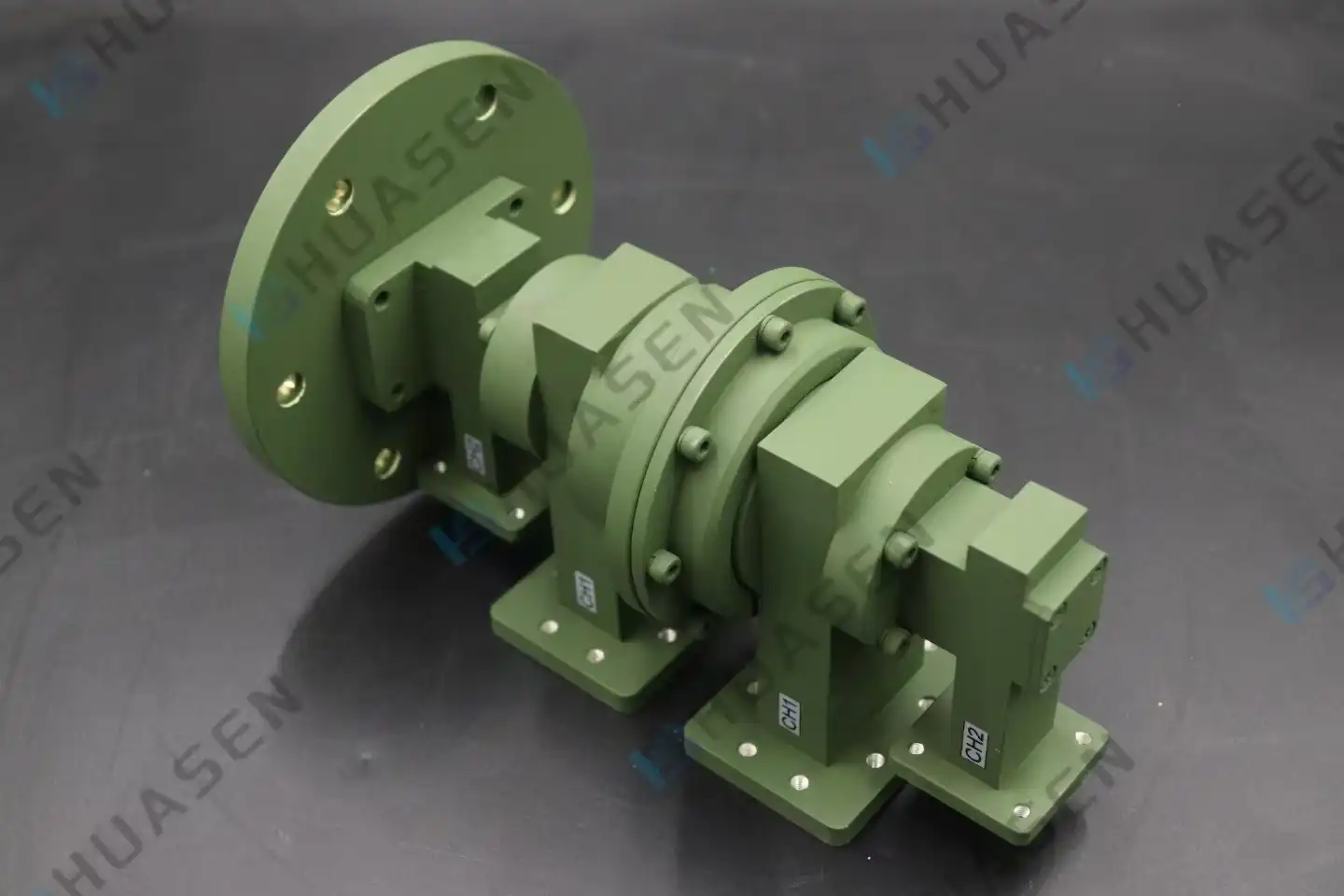
Single-channel waveguide rotary joints send only one frequency band through a single waveguide line. This makes them easy to use, less expensive, and more reliable for radar uses. Multi-channel designs use more than one separate waveguide line in the same mechanical setup. This lets different frequency bands be sent at the same time or on separate channels for sending and receiving. If your radar works in a certain frequency band and has different duplexers that don't spin, choose a single-channel design. Choose multi-channel joints for phased array radar that needs more than one feed network or for systems that don't have enough room to put multiple separate rotating joints.
3. What distinguishes waveguide rotary joints from slip rings in radar applications?
Waveguide rotary joints use direct energy transfer to send high-frequency electromagnetic waves through hollow metal wires. This lets them work at microwave and millimetre-wave frequencies with little power loss. Slip rings use sliding mechanical contacts that work well for DC power and low-frequency data, but they make noise electrically and lose a lot of information at radar frequencies. Radar emitters that use gigahertz bands and kilowatt levels of power need waveguide technology because it works better, as it doesn't touch anything and controls the electromagnetic environment.
Partner with Huasen Microwave for Superior Waveguide Rotary Joint Solutions
Huasen Microwave Technology offers waveguide rotary joint options that are carefully designed and backed by more than 30 years of experience making high-frequency microwave parts. Together with radar system designers, our experienced engineering team creates unique rotary joints that work best for your frequency bands, power needs, and environmental conditions. We can help you with solutions that meet strict military and business requirements, whether you need single-channel transmission for air traffic control radar or double-ridge broadband designs for electronic warfare systems.
As a reliable company that makes waveguide rotary joints for defence contractors, telecom companies, and research institutions around the world, we have strict quality control procedures that make sure we meet MIL-DTL-3928 and MIL-E-5400 standards. Our production skills allow us to make both small prototypes for development projects and large amounts for operational deployments, and our pricing structures for buying in bulk are cheap.
To talk about your radar system needs, email our expert sales team at sales@huasenmicrowave.com. To make sure the integration goes smoothly, we offer thorough datasheets, performance test data, and application tech help. Before placing a large order, ask for evaluation samples to make sure they work in your unique working setting. Find out how our knowledge of waveguide rotary joints can improve the performance and dependability of your radar system while lowering its total cost of ownership.
References
1. Matthaei, George L., Leo Young, and E.M.T. Jones. "Microwave Filters, Impedance-Matching Networks, and Coupling Structures." Artech House Books, 1980.
2. Leong, Kai Chang. "Waveguide Rotary Joints: Design and Performance Analysis for High-Power Radar Applications." IEEE Transactions on Microwave Theory and Techniques, vol. 58, no. 4, 2010, pp. 891-898.
3. Skolnik, Merrill I. "Radar Handbook, Third Edition." McGraw-Hill Professional, 2008.
4. Pozar, David M. "Microwave Engineering, Fourth Edition." John Wiley & Sons, 2011.
5. Hansen, Robert C. "Phased Array Antennas, Second Edition." John Wiley & Sons, 2009.
6. Military Specification MIL-DTL-3928: "Joints, Rotary, Radio Frequency, Coaxial and Waveguide." U.S. Department of Defense Interface Standard, 2015.
Send Inquiry