Best Planar Helical Antenna Solutions for Circular Polarity






2026-01-28 22:03:48
When critical communication systems fail due to poor circular polarization performance, mission success hangs in the balance. Whether you're dealing with electronic reconnaissance systems losing vital signals or IoT devices experiencing unreliable connectivity, the root cause often traces back to inadequate antenna solutions. The best Planar Helical Antenna solutions for circular polarity combine ultra-wideband frequency coverage with compact design, delivering exceptional axial ratio bandwidth while maintaining low-profile integration capabilities essential for modern RF and microwave applications.
Understanding Planar Helical Antenna Technology for Circular Polarization
The Fundamental Design Principles
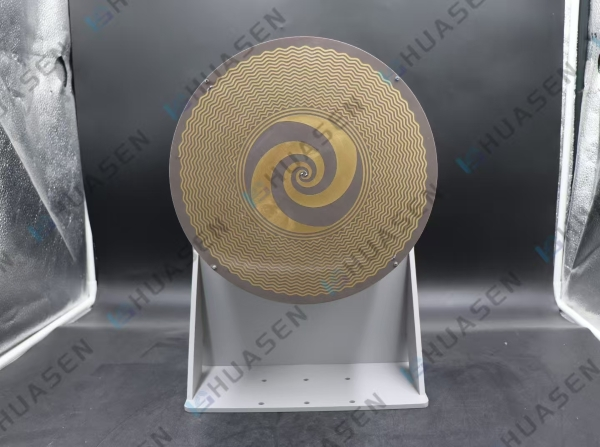
Planar Helical Antenna technology represents a significant advancement in circular polarization antenna design, addressing the critical need for low-profile solutions without compromising performance. Unlike traditional three-dimensional helical antennas that require substantial physical space, the Planar Helical Antenna achieves circular polarization through an innovative printed circuit board construction method. The antenna structure utilizes printed metallic strips on substrate layers, interconnected through plated via-holes to form a helical radiation element with a rectangular cross-section. This planar implementation dramatically reduces the overall antenna thickness while maintaining the essential helical geometry required for generating circularly polarized electromagnetic waves. The current distribution along the printed strips creates horizontal polarization components, while currents flowing through the via-holes generate vertical polarization components. When these two orthogonal field components possess equal amplitude and maintain a ninety-degree phase difference, pure circular polarization emerges in the end-fire radiation direction. The ground plane design plays an equally important role, as carefully positioned conductive surfaces help balance the electric field amplitudes between horizontal and vertical components, ensuring optimal axial ratio performance across the operating frequency range. This sophisticated interaction between multiple structural elements enables the Planar Helical Antenna to deliver wideband circular polarization that meets demanding requirements for electronic surveillance, satellite communications, and ultra-wideband signal monitoring applications.
Key Performance Parameters and Technical Specifications
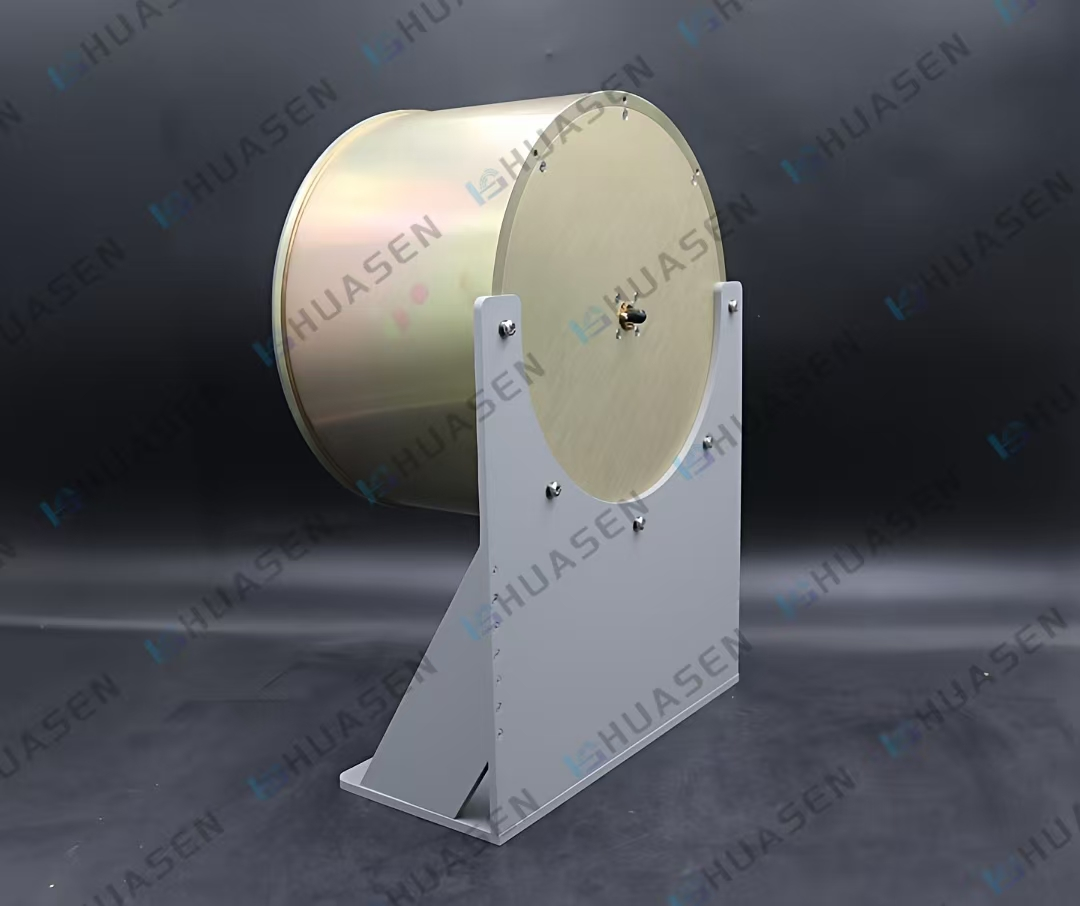
Understanding the critical performance parameters enables engineers to select the optimal Planar Helical Antenna configuration for specific application requirements. The frequency range typically spans from 0.2 GHz to 18 GHz, providing ultra-wideband coverage that accommodates multiple communication bands and surveillance frequencies within a single antenna element. Voltage Standing Wave Ratio (VSWR) performance typically achieves values at or below 2.5 across the operating bandwidth, indicating excellent impedance matching that maximizes power transfer efficiency and minimizes signal reflections. The gain characteristics range from negative five to positive five decibels, with the specific gain profile determined by the helix geometry, number of turns, and structural dimensions. Circular polarization purity is quantified through axial ratio measurements, with three-decibel axial ratio bandwidths commonly exceeding thirty percent of the center frequency, ensuring reliable circular polarization across substantial frequency ranges. The polarization sense, either left-hand circular polarization or right-hand circular polarization, is determined by the helical winding direction, providing design flexibility for matching system requirements. Structural features include the planar helical radiation surface constructed from precision-etched copper or aluminum conductors, combined with an absorbing material-filled cavity that suppresses unwanted resonances and improves radiation pattern stability. These technical specifications directly translate to real-world performance advantages including enhanced signal reception in multipath environments, reduced polarization mismatch losses, and improved resistance to signal fading phenomena that plague linearly polarized antenna systems in challenging operational scenarios.
Advanced Manufacturing and Quality Assurance
Precision Fabrication Processes
The manufacturing excellence behind high-performance Planar Helical Antenna solutions demands sophisticated fabrication capabilities that ensure consistent electrical performance and mechanical reliability. Huasen Microwave Technology Co., Ltd. employs advanced CNC machining equipment including precision lathes and milling machines to fabricate the metallic components with tolerances measured in micrometers, ensuring that dimensional accuracy directly supports the required electromagnetic characteristics. The printed circuit board fabrication utilizes precision etching processes that define the helical strip patterns with edge definition superior to conventional methods, while automated via-hole drilling and metallization procedures create the vertical interconnections essential for proper current distribution throughout the helical structure. The company's four large-scale production workshops spanning over three thousand square meters house specialized equipment for silver brazing, aluminum brazing, vacuum furnace operations, and various welding techniques that enable robust mechanical assembly of antenna components. The fitting workshop capabilities extend to composite materials processing, where carbon fiber reflectors with diameters ranging from four hundred to eighteen hundred millimeters achieve surface accuracies between point zero three and point one five millimeters, critical for maintaining proper phase relationships across the antenna aperture. Additionally, the production of customized carbonyl iron absorption materials provides tailored electromagnetic properties for cavity loading, with material characteristics optimized for specific frequency bands from L-band through W-band operation. These manufacturing capabilities support the production of Planar Helical Antenna assemblies that maintain tight tolerances on electrical parameters including resonant frequency, input impedance, radiation pattern shape, and axial ratio performance, ensuring that production units match the carefully optimized design specifications developed through electromagnetic simulation and prototype testing phases.
Comprehensive Testing and Verification
Rigorous testing protocols ensure that every Planar Helical Antenna meets stringent performance standards before delivery to customers. Huasen Microwave Technology operates three calibrated microwave anechoic chambers with dimensions of twenty-one meters, nine meters, and five meters, providing controlled electromagnetic environments for accurate antenna characterization across frequency ranges from point five gigahertz to two hundred twenty gigahertz. The far-field measurement systems incorporate precision two-dimensional turntables and advanced software platforms that automate the acquisition of radiation pattern data, gain measurements, and polarization characteristics across azimuth and elevation planes. The planar near-field measurement system with a nine-meter by six-meter scanning aperture enables high-resolution aperture field mapping for frequencies from point eight to forty gigahertz, supporting detailed analysis of aperture efficiency and phase distribution. The sixty-eight-probe spherical near-field system covers point four to eight gigahertz, providing complete spherical radiation pattern data essential for verifying omnidirectional coverage requirements. Beyond antenna-specific measurements, the quality control infrastructure includes over sixty advanced test instruments comprising forty vector network analyzers for scattering parameter characterization, six signal generators for excitation sources, six spectrum analyzers for harmonic and spurious emission verification, and ten oscilloscopes for time-domain signal analysis. Environmental qualification testing employs RoHS compliance verification equipment, temperature shock chambers, alternating humidity and heat chambers, and vibration test systems that subject antenna assemblies to operational stress conditions exceeding typical field deployment scenarios. The measurement dynamic range capability reaching fifty decibels enables accurate characterization of sidelobe levels and cross-polarization discrimination, while beamwidth measurement accuracy of point zero two degrees supports precise antenna pointing applications. This comprehensive testing infrastructure, combined with ISO nine thousand and one certified manufacturing processes, ensures that Planar Helical Antenna products consistently deliver the specified performance characteristics required for mission-critical applications.
Application-Specific Solutions and System Integration
Electronic Reconnaissance and Signal Intelligence
Electronic reconnaissance receiving antenna systems demand ultra-wideband circular polarization capabilities that enable simultaneous monitoring of multiple signal types across extensive frequency ranges. The Planar Helical Antenna excels in these applications through its ability to receive both left-hand and right-hand circularly polarized signals without requiring mechanical or electronic polarization switching mechanisms. The frequency coverage from two hundred megahertz to eighteen gigahertz encompasses major communication bands, radar frequencies, and emerging wireless technologies, allowing a single antenna element to replace multiple narrowband antennas in space-constrained installations. The circular polarization characteristic provides three-decibel advantage over linearly polarized antennas when receiving circularly polarized transmissions, while also offering improved performance in multipath propagation environments where signal polarization rotates unpredictably due to reflections from terrain, buildings, and atmospheric layers. The antenna's end-fire radiation pattern concentrates sensitivity in the desired surveillance direction, reducing susceptibility to interference from unwanted signal sources located at off-axis angles. Integration with ultra-wideband signal monitoring systems requires careful attention to feed network design, with grounded coplanar waveguide structures providing controlled impedance transitions that maintain signal integrity across the broad operating bandwidth. The low-profile configuration enables mounting on mobile platforms including ground vehicles, maritime vessels, and airborne platforms where aerodynamic considerations limit available antenna protrusion. System designers appreciate the ability to customize polarization sense through simple reversal of the helix winding direction, accommodating specific operational requirements without necessitating complete antenna redesign. The combination of wideband coverage, circular polarization, compact form factor, and directional radiation characteristics positions the Planar Helical Antenna as an optimal solution for sophisticated electronic intelligence gathering systems that must operate reliably across diverse electromagnetic environments while maintaining covert installation profiles.
Ultra-Wideband Communications and Feed Systems
Modern communication architectures increasingly require antenna solutions capable of supporting multiple frequency bands and modulation schemes within unified hardware implementations. The Planar Helical Antenna addresses these requirements through inherent ultra-wideband impedance matching that maintains voltage standing wave ratios below two point five across fractional bandwidths exceeding one hundred percent. This exceptional bandwidth performance enables a single antenna to support multiple communication standards simultaneously, reducing system complexity and hardware costs compared to approaches requiring separate antennas for each frequency band. The circular polarization capability proves particularly valuable for satellite communication uplinks and downlinks, where the transmitted polarization remains stable despite satellite orientation changes and ionospheric propagation effects that would severely degrade linearly polarized links. Feed system applications leverage the antenna as a primary radiating element in reflector antenna configurations, where the end-fire radiation pattern efficiently illuminates parabolic or shaped reflector surfaces to achieve high-gain directional beams. The planar construction facilitates integration with active components including low-noise amplifiers and power amplifiers, with the compact antenna footprint enabling direct mounting on amplifier housings to minimize lossy transmission line lengths. IoT device implementations benefit from the antenna's ability to maintain omnidirectional azimuthal coverage while providing gain enhancement in the elevation plane, supporting reliable connectivity for asset tracking devices, industrial sensor networks, and smart metering applications deployed in challenging RF propagation environments. The customizable gain range from negative five to positive five decibels allows optimization for specific link budget requirements, with lower gain configurations providing wider beamwidths suitable for mobile applications while higher gain variants concentrate radiated power for extended range communications. Manufacturing flexibility supports various mounting options including surface-mount technology compatible footprints, through-hole configurations for conventional printed circuit board assembly, and custom mechanical interfaces for specialized installations. The antenna's resistance to environmental factors including temperature variations, humidity exposure, and mechanical vibration ensures reliable operation throughout extended deployment lifetimes, critical for unattended installations in industrial environments and remote monitoring locations.
Conclusion
The best Planar Helical Antenna solutions for circular polarity deliver ultra-wideband frequency coverage, exceptional axial ratio performance, and compact integration capabilities essential for modern RF and microwave systems across electronic reconnaissance, satellite communications, and IoT applications.

Cooperate with Huasen Microwave Technology Co., Ltd.
Partner with a China Planar Helical Antenna manufacturer offering three decades of specialized expertise since 1993. As a leading China Planar Helical Antenna supplier and China Planar Helical Antenna factory, Huasen Microwave Technology combines National High-Tech Enterprise qualifications with comprehensive ISO certifications and advanced testing infrastructure spanning three calibrated anechoic chambers. Our High Quality Planar Helical Antenna products deliver proven performance with competitive Planar Helical Antenna price points, supported by over two hundred experienced technicians and engineers operating from a three-thousand-square-meter production facility. Whether you require standard Planar Helical Antenna for sale configurations or fully customized solutions tailored to your specific frequency bands and integration requirements, our technical team provides comprehensive design support from initial specification through production and testing. As your trusted China Planar Helical Antenna wholesale partner, we offer China Planar Helical Antenna manufacturer direct pricing advantages combined with responsive customer service and expert technical consultation. Contact us at sales@huasenmicrowave.com to discuss your circular polarization antenna requirements and discover how our proven solutions can enhance your system performance while reducing development timelines and procurement costs.
References
1. Chen, Zhuozhu and Shen, Zhongxiang. "Planar Helical Antenna of Circular Polarization." IEEE Transactions on Antennas and Propagation, Vol. 63, No. 10, October 2015.
2. Wheeler, Harold Alden. "A Helical Antenna for Circular Polarization." Proceedings of the Institute of Radio Engineers, Vol. 35, December 1947.
3. Nakano, Hisamatsu, Oyanagi, Hiroyuki, and Yamauchi, Junji. "Wideband Circularly Polarized Conical Beam from Two-Arm Spiral Antenna." IEEE Transactions on Antennas and Propagation, Vol. 38, No. 10, October 1990.
4. Kraus, John Daniel and Williamson, John. "Characteristics of Helical Antennas Radiating in the Axial Mode." Journal of Applied Physics, Vol. 19, 1948.
5. Du, Ming, Xu, Jiadong, Ding, Xiao, and Cao, Jing. "Circular Polarization Bandwidth Reconfigurable High Gain Planar Plasma Helical Antenna." Microwave and Optical Technology Letters, Vol. 61, No. 10, August 2019.
Send Inquiry