Best OEM Waveguide Attenuator Manufacturers for Precision Control






2026-01-28 22:11:59
When your satellite ground station experiences signal distortion, your radar system delivers inconsistent readings, or your aerospace telemetry equipment faces power overload issues, the underlying problem often stems from inadequate signal attenuation solutions. Engineers and procurement specialists in telecommunications, defense, and aerospace industries understand that selecting the right Waveguide Attenuator manufacturer directly impacts system reliability, measurement accuracy, and mission-critical performance outcomes.

Understanding Waveguide Attenuator Technology and Manufacturing Excellence
The Critical Role of Waveguide Attenuators in High-Frequency Systems
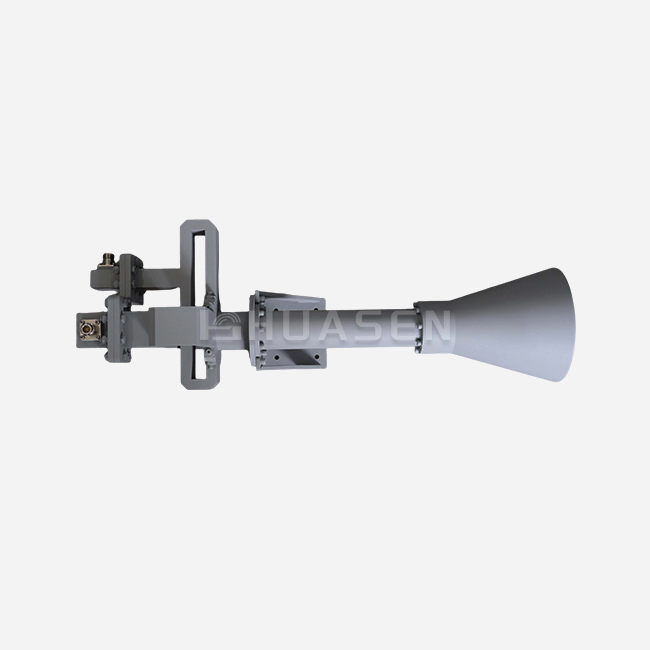
Waveguide Attenuators serve as essential passive components in microwave and millimeter-wave systems, designed to reduce electromagnetic signal strength by predetermined values without introducing distortion or compromising signal integrity. Unlike coaxial attenuators, waveguide-based solutions excel in high-power applications where thermal management and precision control become paramount. In radar installations, satellite communication uplinks, electronic warfare systems, and aerospace telemetry applications, these components prevent receiver saturation, protect sensitive equipment from damage, and ensure accurate power level matching between different system segments. The engineering sophistication behind Coupled Fixed Waveguide Attenuator designs involves carefully positioned resistive elements within waveguide structures that absorb electromagnetic energy while maintaining excellent voltage standing wave ratio performance across specified frequency bands. Modern manufacturing processes employ precision CNC machining, advanced material selection including anodized aluminum and silver-plated copper, and rigorous testing protocols to achieve attenuation accuracy within fractions of a decibel across operational temperature ranges spanning from negative fifty-five to one hundred twenty-five degrees Celsius.
Manufacturing Capabilities That Define Industry Leaders
The distinction between ordinary suppliers and best-in-class Waveguide Attenuator manufacturers becomes evident when examining production infrastructure and technical capabilities. Leading facilities maintain comprehensive machining workshops equipped with multi-axis CNC lathes, CNC milling machines, electrical discharge machining equipment, and wire-cutting systems capable of achieving tolerances measured in microns. Advanced manufacturers operate specialized composite materials workshops where carbon fiber reflectors with diameters ranging from four hundred to eighteen hundred millimeters are fabricated with surface accuracy between zero point zero three and zero point fifteen millimeters. Professional fitting workshops employ over forty specialized waveguide fitters skilled in silver brazing, aluminum brazing, vacuum furnace operations, TIG welding, and heat treatment processes that ensure hermetic sealing and long-term reliability. The development and production of high-loss carbonyl iron absorption materials represents another critical capability, as these customized absorbing elements serve as fundamental components in waveguide matching loads, high-directional couplers, isolators, circulators, and attenuators operating across L-band through W-band frequency ranges. Manufacturers maintaining production areas exceeding three thousand square meters, employing over two hundred experienced staff members, and supporting multiple specialized work teams demonstrate the scale and commitment necessary to deliver consistent quality for high-volume orders while maintaining flexibility for custom OEM configurations.
Technical Specifications and Performance Parameters for Coupled Fixed Waveguide Attenuators
Attenuation Accuracy and Frequency Response Characteristics
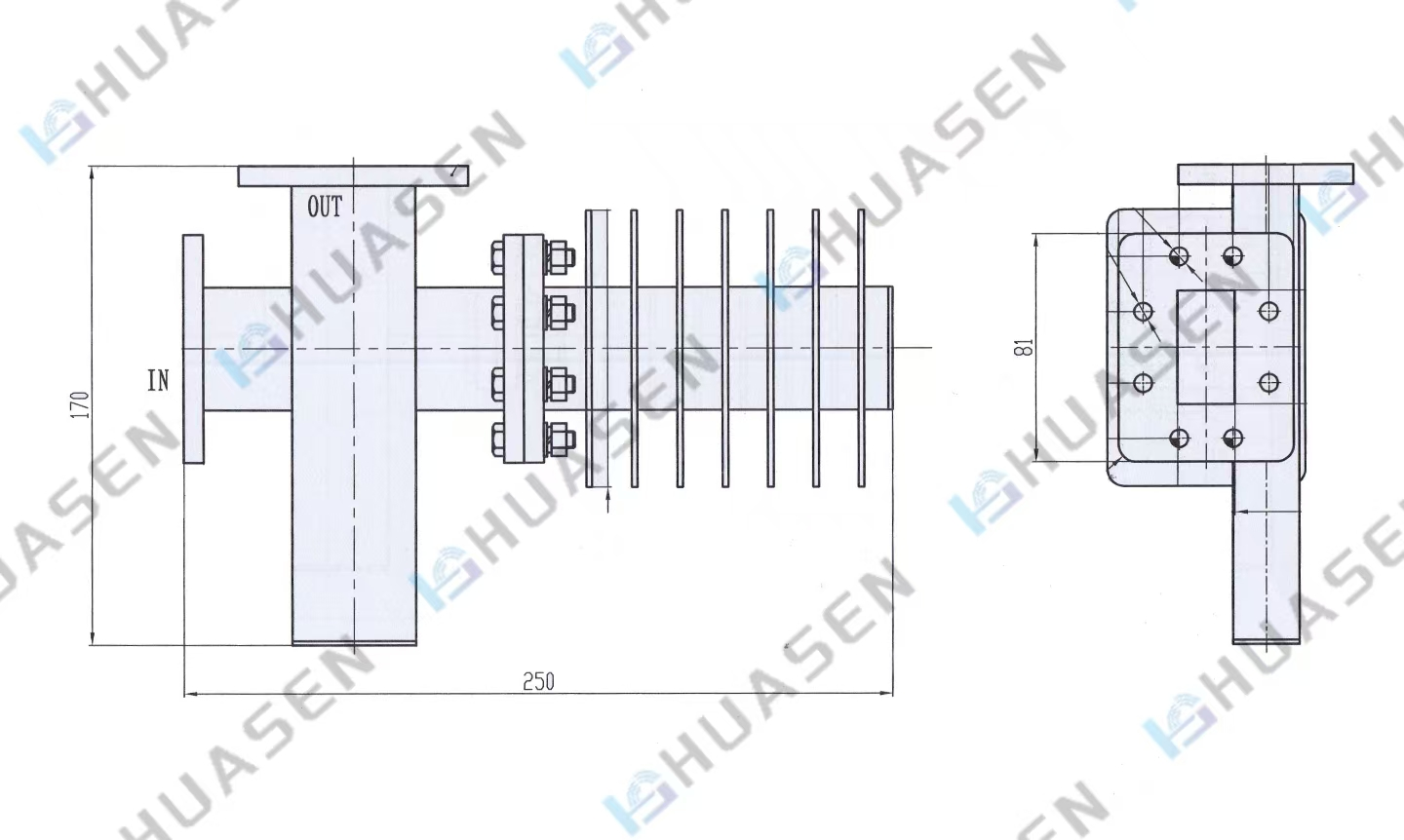
The Coupled Fixed Waveguide Attenuator represents a sophisticated approach to precision signal control, employing high-directionality, low-coupling frequency response coupler designs that deliver exceptional performance in broadband applications and attenuation standards for high-precision measurement environments. Professional-grade units typically offer attenuation ranges spanning from three to sixty decibels, with frequency response characteristics that vary based on selected attenuation values to optimize performance across specific operational requirements. For three-decibel attenuation configurations, frequency response typically maintains accuracy within plus or minus one point eight decibels, while six-decibel units achieve tighter tolerances of plus or minus one decibel across specified frequency bands. Higher attenuation values from ten through sixty decibels demonstrate even more impressive frequency response characteristics, maintaining accuracy within plus or minus zero point seventy-five decibels throughout operational frequency ranges. This exceptional frequency response stability ensures that Waveguide Attenuator components deliver predictable, repeatable performance across changing environmental conditions, temperature cycling, and long-term continuous operation. Voltage standing wave ratio specifications typically achieve values of one point two or better, ensuring minimal signal reflection and optimal power transfer efficiency throughout the signal chain. The broad frequency range coverage extending from zero point nine six gigahertz through one hundred twelve gigahertz enables single attenuator designs to serve multiple applications and system architectures without requiring frequency-specific component substitutions.
Material Selection and Construction Quality Standards
Superior Waveguide Attenuator manufacturers recognize that material selection directly impacts long-term reliability, thermal performance, power handling capacity, and environmental resistance characteristics. High-quality units employ precision-machined aluminum with anodized surface treatments that provide excellent corrosion resistance, effective heat dissipation, and lightweight construction suitable for aerospace applications where every gram matters. Copper construction with silver or gold plating represents the premium choice for applications demanding maximum conductivity, minimal insertion loss, and superior thermal conductivity for high-power continuous operation. Flange configurations adhering to industry-standard specifications including FDP, FBP, and FUGP designs ensure compatibility with existing waveguide infrastructure and facilitate straightforward integration into complex microwave systems. The hermetic sealing techniques employed in manufacturing processes prevent moisture ingress and environmental contaminant penetration that could degrade electrical performance over time or compromise reliability in harsh operating environments. Manufacturing facilities implementing ISO nine thousand one quality management systems, environmental management certifications, and occupational health and safety standards demonstrate organizational commitment to consistent quality, continuous improvement, and responsible manufacturing practices. Components meeting RoHS compliance requirements and REACH regulations satisfy increasingly stringent environmental standards required for products distributed in European markets and other regulated jurisdictions worldwide.

Application-Specific Requirements Across Defense, Aerospace, and Telecommunications
Electronic Warfare and Military Radar System Integration
Defense contractors and military system integrators face unique challenges when specifying Waveguide Attenuator components for electronic warfare platforms, missile guidance radar, airborne surveillance systems, and ground-based air defense installations. These applications demand components that maintain precise attenuation values despite extreme temperature cycling, high-vibration environments, electromagnetic interference, and rapid thermal transients associated with high-power pulsed operation. Coupled Fixed Waveguide Attenuator designs incorporating ruggedized construction, vibration-resistant mounting interfaces, and conformal coating protection satisfy MIL-STD-810 environmental testing requirements that simulate battlefield conditions, maritime deployment, and aerospace platform integration scenarios. The ability to provide custom attenuation values tailored to specific system architectures enables optimal receiver protection, transmitter output control, and signal chain optimization without compromising operational flexibility. Manufacturers offering MIL-SPEC compliance documentation, ITAR registration for controlled technology transfer, and security clearances for classified program support represent essential partners for defense prime contractors and government agencies. Rapid scalability for production volume increases during program ramp-up phases, coupled with configuration management processes that maintain component traceability and revision control, ensures supply chain stability for multi-year defense programs spanning development, low-rate initial production, and full-rate production phases.
Satellite Communication Ground Stations and Aerospace Telemetry
Satellite communication ground station operators require Waveguide Attenuator solutions that deliver exceptional long-term stability, minimal phase variation across operational frequency bands, and reliable performance throughout years of continuous operation in outdoor environments exposed to temperature extremes, solar radiation, precipitation, and atmospheric contaminants. The high directivity characteristics of Coupled Fixed Waveguide Attenuator designs minimize coupling losses and maintain signal integrity in receive chains processing weak signals from geosynchronous satellites operating tens of thousands of kilometers above Earth's surface. Uplink transmit chains benefit from precision attenuation that prevents transponder saturation, enables accurate power level calibration, and facilitates compliance with regulatory requirements limiting off-axis radiation and adjacent satellite interference. Aerospace telemetry systems on launch vehicles, aircraft test platforms, unmanned aerial vehicles, and spacecraft employ Waveguide Attenuator components in flight test instrumentation, range safety systems, and data downlink architectures where component failure could compromise mission objectives or threaten flight safety. The compact form factors, low weight specifications, and rugged construction characteristics of professionally manufactured attenuators enable integration into space-constrained avionics bays, externally mounted antenna systems, and pressurized equipment compartments throughout the vehicle. Manufacturers providing detailed technical documentation including scattering parameters measured across full operational frequency ranges, third-party calibration reports traceable to national metrology standards, and comprehensive environmental test data facilitate qualification processes required before component approval for flight-critical applications.
Comprehensive Testing Infrastructure and Quality Assurance Capabilities
Microwave Anechoic Chamber Facilities and Far-Field Measurement Systems
Leading Waveguide Attenuator manufacturers invest substantially in testing infrastructure that enables comprehensive electrical performance verification, environmental qualification, and long-term reliability assessment under conditions simulating actual operational environments. Microwave anechoic chamber facilities with dimensions ranging from five meters through twenty-one meters provide controlled electromagnetic environments where antenna radiation patterns, coupling characteristics, and system-level performance can be analyzed without interference from external signals or reflections from surrounding structures. The availability of multiple chamber sizes enables optimization of measurement accuracy across different frequency ranges, with larger chambers supporting far-field measurements at lower frequencies where wavelength dimensions require greater separation distances between transmit and receive antennas. Far-field test systems incorporating two-dimensional turntables, precision positioning equipment, and automated software control enable efficient characterization of directional components, phased array antennas, and complex assemblies requiring multiple angular orientations. Frequency coverage extending from two gigahertz through two hundred twenty gigahertz across different chamber configurations ensures that Coupled Fixed Waveguide Attenuator components can be thoroughly evaluated across their specified operational bands without requiring external test facility access. Planar near-field measurement systems with scanning frame dimensions of nine meters by six meters and frequency coverage from zero point eight through forty gigahertz complement far-field capabilities by enabling detailed amplitude and phase distribution mapping across aperture antennas and complex radiating structures.
Advanced Test Equipment and Calibration Laboratory Resources
The breadth and sophistication of test instrumentation maintained by professional manufacturers directly impacts their ability to verify component specifications, diagnose performance anomalies, and provide customers with comprehensive test data supporting qualification and acceptance processes. Facilities equipped with over forty vector network analyzers spanning frequency ranges from low gigahertz frequencies through one hundred ten gigahertz enable thorough scattering parameter measurements including insertion loss, return loss, directivity, and coupling factor characterization across narrow frequency increments throughout operational bands. High-frequency test capabilities extending to three hundred twenty gigahertz using specialized spectrum analyzers and three-millimeter-wave signal generators position manufacturers at the forefront of millimeter-wave and sub-terahertz component development serving emerging applications in automotive radar, fifth-generation wireless communications, and atmospheric sensing systems. Environmental test chambers including temperature shock chambers, alternating humidity and heat chambers, and vibration test systems enable qualification testing that verifies component reliability under thermal cycling, moisture exposure, mechanical shock, and sustained vibration profiles matching or exceeding application-specific requirements. Coordinate measuring machines and optical measurement instruments ensure that mechanical dimensions, flange flatness, and assembly tolerances meet stringent specifications preventing waveguide discontinuities that could degrade electrical performance. The maintenance of calibration records traceable to recognized national metrology laboratories and participation in measurement assurance programs demonstrates commitment to measurement accuracy and provides customers confidence that reported specifications reflect actual component performance rather than measurement uncertainty or systematic calibration errors.
Conclusion
Selecting the optimal Waveguide Attenuator manufacturer requires careful evaluation of technical capabilities, manufacturing infrastructure, quality systems, and application-specific expertise that distinguish industry leaders from commodity suppliers in the competitive microwave components marketplace.
Cooperate with Huasen Microwave Technology Co., Ltd.
Founded in 1993, Huasen Microwave Technology Co., Ltd. stands as a premier China Waveguide Attenuator manufacturer with three decades of proven expertise serving global telecommunications, radar, aerospace, and defense markets. As a certified China Waveguide Attenuator supplier, we maintain ISO 9001 quality management system certification while operating advanced production facilities with over three thousand square meters of manufacturing space. Our comprehensive China Waveguide Attenuator factory capabilities include precision CNC machining workshops, specialized fitting operations employing over forty experienced waveguide technicians, composite materials fabrication centers, and three calibrated microwave anechoic chambers supporting testing from zero point five through two hundred twenty gigahertz. We offer High Quality Waveguide Attenuator solutions with competitive Waveguide Attenuator price structures through China Waveguide Attenuator wholesale programs supporting both low-volume prototyping and high-volume production requirements. Our Coupled Fixed Waveguide Attenuator products deliver attenuation ranges from three through sixty decibels with exceptional frequency response accuracy, supporting applications across aviation, aerospace, satellite communications, electronic warfare, and fifth-generation wireless infrastructure. Browse our extensive catalog of Waveguide Attenuator for sale options or contact our technical team at sales@huasenmicrowave.com to discuss custom OEM configurations, request detailed specifications, or initiate an inquiry for your precision microwave component requirements today.
References
1. Microwave Engineering: Passive Circuits - Authors: Peter A. Rizzi - Publisher: Prentice Hall - Focus on waveguide component design and attenuation principles
2. RF and Microwave Passive and Active Technologies - Authors: Mike Golio and Janet Golio - Publisher: CRC Press - Comprehensive coverage of attenuator applications in modern systems
3. Foundations for Microwave Engineering - Authors: Robert E. Collin - Publisher: Wiley-IEEE Press - Theoretical foundations of waveguide propagation and signal control
4. Microwave Measurements and Techniques - Authors: Thomas S. Laverghetta - Publisher: Artech House - Detailed discussion of precision attenuation standards and measurement methods
5. Handbook of Microwave Component Measurements - Authors: Joel P. Dunsmore - Publisher: Wiley - Industry reference for characterizing passive microwave components including attenuators
Send Inquiry