Antenna Near Field Measurement Probe Calibration: Why It's Essential






2026-01-17 23:38:18
When your antenna testing results show unexpected deviations or your expensive measurement system delivers inconsistent readings, the problem often traces back to one critical factor that many engineers overlook until it's too late. Without proper Antenna Near Field Measurement Probe calibration, even the most sophisticated testing equipment becomes unreliable, leading to costly redesigns, failed compliance tests, and compromised product performance. This comprehensive guide reveals why calibration isn't just important but essential for achieving accurate antenna characterization results that you can trust.
Understanding Antenna Near Field Measurement Probe Calibration Fundamentals
Calibration of Antenna Near Field Measurement Probe systems represents a critical process that ensures measurement accuracy and reliability across all testing scenarios. The calibration procedure establishes the relationship between the probe's electrical response and the actual electromagnetic field it measures, accounting for probe characteristics that can significantly influence measurement outcomes. In practical terms, an uncalibrated probe introduces systematic errors that propagate through the entire measurement chain, affecting everything from amplitude readings to phase measurements and ultimately compromising the accuracy of far-field pattern predictions derived from near-field data.
The complexity of Antenna Near Field Measurement Probe calibration stems from multiple factors that must be addressed simultaneously. First, the probe itself possesses inherent directional characteristics and frequency-dependent responses that vary across its operational bandwidth. These characteristics must be thoroughly documented and compensated for during the measurement process. Second, environmental factors including temperature variations, humidity changes, and electromagnetic interference can alter probe performance over time, necessitating regular recalibration to maintain measurement integrity. Third, the physical integration of the probe into the measurement system introduces additional variables such as cable effects, connector losses, and positioning system interactions that require careful characterization and compensation.
Modern Antenna Near Field Measurement Probe calibration methodologies employ sophisticated techniques to capture the complete response characteristics of the probe across its entire frequency range and angular coverage. These techniques typically involve measuring the probe's response to known reference fields generated by carefully characterized sources. The calibration data establishes correction factors that are applied during subsequent measurements to remove probe-induced distortions from the acquired data. High-quality calibration procedures achieve remarkable accuracy levels, enabling measurement uncertainties below 0.5 dB for amplitude and a few degrees for phase measurements, which proves essential for applications demanding precise antenna characterization such as satellite communication systems, 5G base station development, and aerospace radar applications.
The Impact of Calibration on Measurement Accuracy
The relationship between calibration quality and measurement accuracy becomes immediately apparent when comparing calibrated versus uncalibrated measurement results. An Antenna Near Field Measurement Probe operating without proper calibration can introduce errors ranging from 1 to 3 dB in amplitude measurements and 10 to 30 degrees in phase measurements, depending on the probe design and frequency range. These errors manifest as distortions in the reconstructed far-field patterns, including incorrect gain values, shifted beam directions, inaccurate sidelobe levels, and erroneous cross-polarization discrimination. For applications where antenna performance directly impacts system functionality such as telecommunications infrastructure or defense radar systems, such errors prove unacceptable and can lead to system failures or performance degradation.

The economic implications of inadequate calibration extend beyond measurement accuracy to encompass development costs, time-to-market delays, and potential regulatory compliance failures. Consider a telecommunications equipment manufacturer developing 5G base station antennas where specifications demand precise beam steering and sidelobe control. Measurements performed with improperly calibrated Antenna Near Field Measurement Probe equipment could indicate specification compliance when the actual antenna performance falls short, leading to expensive product recalls or field failures after deployment. Conversely, calibration errors might falsely indicate non-compliance for antennas that actually meet specifications, resulting in unnecessary redesign iterations and delayed product launches. The cost of implementing comprehensive calibration procedures pales in comparison to these potential consequences, making calibration not merely a technical requirement but a business imperative.
Key Calibration Methods for Antenna Near Field Measurement Probe Systems
Multiple calibration approaches have been developed to address the diverse requirements of different measurement scenarios and probe configurations. The most fundamental method involves amplitude calibration, which establishes the relationship between the probe's output voltage or power reading and the actual field strength at the probe location. This calibration typically employs a known reference antenna or field source positioned at a carefully controlled distance from the Antenna Near Field Measurement Probe. By measuring the probe's response to this known field and comparing it to theoretical predictions, calibration coefficients are derived that enable accurate field strength determination during subsequent measurements. Advanced amplitude calibration procedures account for frequency-dependent variations, polarization effects, and angular response characteristics, creating comprehensive calibration datasets that cover the probe's entire operational envelope.
Phase calibration represents an equally critical aspect of Antenna Near Field Measurement Probe characterization, as accurate phase measurements prove essential for near-field to far-field transformations. Phase calibration establishes the electrical phase reference for the measurement system, accounting for cable lengths, component delays, and probe-specific phase responses. The calibration procedure typically involves measuring phase relationships using known reference signals or characterized antenna standards. Modern measurement systems often incorporate automated phase calibration routines that periodically verify and adjust phase references to compensate for thermal drift and component aging. The phase calibration accuracy directly impacts the quality of far-field pattern reconstruction, with phase errors as small as 5 degrees potentially causing noticeable distortions in computed patterns, particularly affecting sidelobe levels and null depths.
Polarization calibration addresses the probe's ability to accurately distinguish between different polarization states of the measured field. For Antenna Near Field Measurement Probe systems designed for dual-polarization measurements, polarization calibration becomes particularly important as it ensures proper isolation between orthogonal polarization channels and accurate characterization of cross-polarization levels. The calibration procedure involves exposing the probe to known polarization states and measuring the response in each polarization channel. Cross-polarization isolation better than 25 dB represents a typical requirement for high-quality probes, and this performance level must be verified through careful calibration procedures. Applications involving circularly polarized antennas or antennas with stringent cross-polarization requirements demand especially rigorous polarization calibration to ensure measurement reliability.
Temperature Compensation and Environmental Considerations
Environmental factors, particularly temperature variations, significantly influence Antenna Near Field Measurement Probe performance and necessitate specialized calibration approaches. Temperature changes affect multiple probe characteristics including physical dimensions due to thermal expansion, electrical properties of materials, and component responses. These temperature-induced variations can introduce measurement errors that accumulate over extended measurement sessions or when comparing data acquired under different environmental conditions. Advanced calibration methodologies incorporate temperature compensation techniques that either characterize probe behavior across a range of operating temperatures or employ real-time compensation based on continuous temperature monitoring. High-end measurement probes integrate temperature sensors that provide feedback to the measurement system, enabling dynamic correction of temperature-induced errors and ensuring consistent measurement accuracy regardless of environmental conditions.
The implementation of effective temperature compensation requires understanding the specific mechanisms through which temperature affects probe performance. For waveguide-based Antenna Near Field Measurement Probe designs, thermal expansion alters the waveguide dimensions and consequently shifts the probe's frequency response. For coaxial probe configurations, temperature affects dielectric properties of insulating materials and conductor dimensions, influencing both amplitude and phase characteristics. Comprehensive calibration procedures characterize these temperature dependencies across the probe's operational temperature range, typically spanning from -20°C to +50°C for commercial applications or wider ranges for specialized military or aerospace applications. The calibration data enables precise correction of temperature-induced errors, maintaining measurement accuracy within specified tolerances across the entire environmental operating envelope.

Maintaining Calibration Integrity Through Regular Verification
Establishing initial calibration represents only the first step in maintaining measurement system accuracy over time. Antenna Near Field Measurement Probe systems require periodic verification and recalibration to account for component aging, mechanical wear, environmental exposure, and potential damage from handling or transportation. Industry best practices recommend calibration verification at intervals ranging from monthly for intensive production environments to annually for research laboratory applications, with the specific interval determined by factors including measurement criticality, environmental conditions, and system usage patterns. Verification procedures typically involve simplified measurements using stable reference standards that quickly confirm whether the probe maintains its calibration within acceptable tolerances or requires comprehensive recalibration.
The verification process for Antenna Near Field Measurement Probe systems employs various techniques depending on the measurement application and available resources. Simple verification might involve measuring a stable reference antenna and comparing results to baseline data acquired immediately after calibration. More sophisticated verification procedures measure multiple reference targets covering different aspects of probe performance including amplitude accuracy, phase stability, polarization discrimination, and frequency response flatness. Any deviations exceeding predetermined thresholds trigger full recalibration procedures to restore measurement system accuracy. Modern measurement facilities often maintain comprehensive calibration records documenting verification results over time, enabling trend analysis that can predict when recalibration becomes necessary before measurement accuracy degrades to unacceptable levels.
Field Recalibration Capabilities and Limitations
While laboratory calibration facilities provide optimal environments for achieving maximum calibration accuracy, practical considerations sometimes necessitate field recalibration capabilities. Organizations operating multiple measurement sites or conducting measurements at customer locations benefit from portable calibration equipment and procedures enabling on-site calibration without returning Antenna Near Field Measurement Probe systems to centralized calibration facilities. Field recalibration procedures must balance the desire for comprehensive calibration against practical limitations including available equipment, environmental control, and time constraints. Well-designed field calibration procedures achieve accuracy levels approaching laboratory calibration, typically within 0.2 to 0.5 dB for amplitude and 2 to 5 degrees for phase measurements, sufficient for most practical applications while minimizing system downtime and transportation costs.
The implementation of effective field recalibration for Antenna Near Field Measurement Probe systems requires careful planning and appropriate equipment selection. Portable calibration kits typically include compact reference sources, precision attenuators, phase standards, and measurement verification targets along with detailed procedures guiding technicians through the recalibration process. Training requirements for field calibration personnel exceed those for routine measurement operations, as calibration requires deeper understanding of measurement principles and potential error sources. Organizations establishing field calibration capabilities must invest in both equipment and personnel development to achieve reliable results, but this investment typically proves worthwhile for applications where measurement system availability critically impacts operations.
Advanced Calibration Techniques for Specialized Applications
Certain applications demand calibration approaches beyond standard procedures to address unique measurement challenges or achieve exceptional accuracy levels. Planar near-field measurement systems operating at millimeter-wave frequencies, where wavelengths shrink to a few millimeters, require positioning accuracy approaching tens of micrometers and correspondingly precise calibration. The Antenna Near Field Measurement Probe calibration for these systems must account for positioning errors, probe vibration, and mechanical stability with unprecedented precision. Advanced calibration methodologies employ laser tracking systems, interferometric position verification, and multiple reference measurements to achieve the necessary accuracy. These sophisticated calibration approaches enable reliable measurements at frequencies extending to 110 GHz and beyond, supporting development of emerging applications including automotive radar, 5G millimeter-wave communications, and terahertz imaging systems.
Spherical near-field measurement systems present additional calibration challenges due to the complexity of probe motion over a spherical surface and the mathematical transformations required for far-field pattern reconstruction. Calibration procedures for spherical near-field Antenna Near Field Measurement Probe systems must address positioning accuracy in both azimuthal and elevation axes, account for probe rotation alignment errors, and verify the probe receiving pattern characteristics that directly influence the quality of spherical wave mode expansion used in the near-field to far-field transformation. Comprehensive calibration of spherical systems involves measuring multiple reference antennas with known patterns, comparing measured results to theoretical predictions, and iteratively refining calibration parameters to minimize discrepancies. The complexity of these calibration procedures reflects the sophistication of spherical near-field measurement capability, which enables complete antenna characterization over the full 4π steradian sphere, essential for applications including satellite antennas, omnidirectional antennas, and complex multi-beam antenna systems.
Broadband Probe Calibration Challenges
Antenna Near Field Measurement Probe systems designed for broadband operation covering multiple frequency bands present unique calibration challenges stemming from frequency-dependent behavior across the operational bandwidth. A probe covering frequency ranges from 0.4 GHz to 40 GHz, for example, must maintain consistent performance despite dramatic wavelength changes from 750 mm at the low end to 7.5 mm at the high end. Calibration procedures for such broadband probes require measurements at numerous frequency points throughout the operational range, characterizing amplitude response flatness, phase linearity, polarization purity, and pattern stability as functions of frequency. The resulting calibration dataset becomes extensive, potentially including thousands of individual calibration coefficients that must be properly organized and efficiently applied during measurement operations.
The design of broadband Antenna Near Field Measurement Probe systems often employs multiple probe elements optimized for different frequency sub-bands, with automatic or manual selection of the appropriate probe element based on the measurement frequency. This multi-probe approach complicates calibration as each probe element requires individual characterization, yet the overall system must provide seamless measurement capability across frequency transitions between probe elements. Calibration procedures must verify not only the performance of individual probe elements but also the continuity and consistency of measurements across frequency band transitions. Advanced calibration techniques employ overlapping frequency ranges between adjacent probe elements, measuring reference targets in the overlap regions to establish correction factors ensuring smooth transitions and consistent measurement results across the entire system bandwidth.
Industry Standards and Best Practices for Probe Calibration
International standards organizations have developed comprehensive guidelines governing Antenna Near Field Measurement Probe calibration procedures to ensure consistency and traceability across different measurement facilities worldwide. The IEEE Standard 1720 provides detailed recommendations for near-field antenna measurement systems including calibration requirements, verification procedures, and uncertainty analysis methods. Similarly, IEC standards address electromagnetic compatibility testing applications that often employ near-field probes, establishing calibration requirements ensuring measurement comparability across different testing laboratories. Adherence to these standards provides confidence that measurement results meet internationally recognized quality criteria and enables valid comparisons between measurements performed at different facilities or times.
The implementation of standards-compliant calibration for Antenna Near Field Measurement Probe systems requires establishing traceability to national or international measurement standards. Calibration procedures must employ reference standards with known accuracy traceable to organizations such as the National Institute of Standards and Technology or equivalent national metrology institutes. Documentation of calibration procedures, equipment used, environmental conditions, and uncertainty estimates proves essential for demonstrating compliance with quality standards such as ISO 9001 or aerospace-specific requirements like AS9100. Organizations serving regulated industries including telecommunications, aerospace, and defense must maintain rigorous calibration documentation demonstrating continuous compliance with applicable standards, supporting regulatory approval processes and customer qualification requirements.
Uncertainty Analysis and Error Budgets
Comprehensive calibration of Antenna Near Field Measurement Probe systems includes detailed uncertainty analysis quantifying the confidence level associated with measurement results. Uncertainty analysis systematically evaluates all potential error sources including calibration reference accuracy, environmental variations, positioning errors, signal-to-noise limitations, and computational approximations inherent in near-field to far-field transformations. Each error source contributes to the overall measurement uncertainty budget, with the combined effect typically expressed as an expanded uncertainty value providing a specified confidence level, usually 95%, that the true value falls within stated bounds. Well-executed calibration procedures supported by thorough uncertainty analysis enable measurement uncertainties below 0.3 dB for gain measurements and 1 to 2 degrees for pattern angle measurements, sufficient for virtually all practical antenna development and compliance testing applications.
The development of realistic uncertainty budgets for Antenna Near Field Measurement Probe systems requires both theoretical analysis and experimental validation. Theoretical uncertainty contributions can be calculated based on known equipment specifications, calibration reference accuracy, and mathematical properties of transformation algorithms. However, experimental validation through repeated measurements of stable reference antennas provides essential verification that theoretical uncertainty estimates align with actual measurement repeatability and reproducibility. Discrepancies between theoretical and experimental uncertainty values indicate unaccounted error sources requiring investigation and potential refinement of calibration procedures. Organizations performing critical measurements invest significant effort in developing comprehensive uncertainty budgets, as this analysis directly supports the defensibility of measurement results in regulatory proceedings, contractual disputes, or technical investigations of product performance issues.
Huasen Microwave's Approach to Probe Calibration Excellence
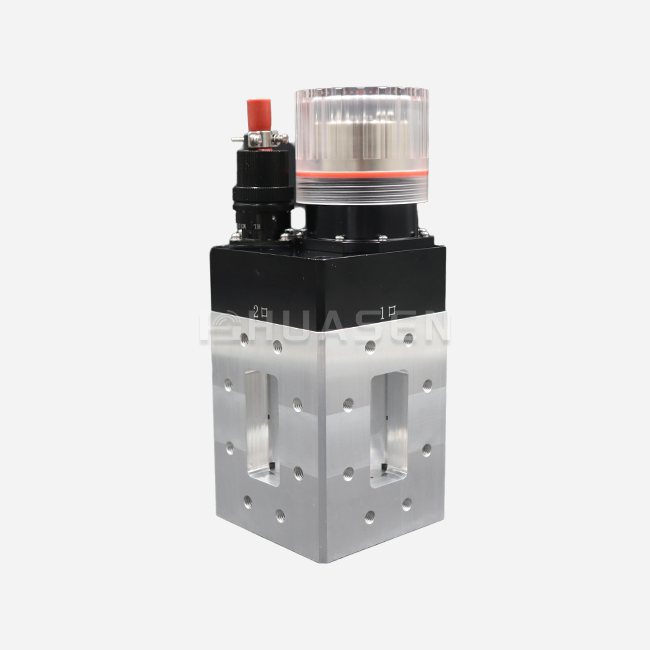
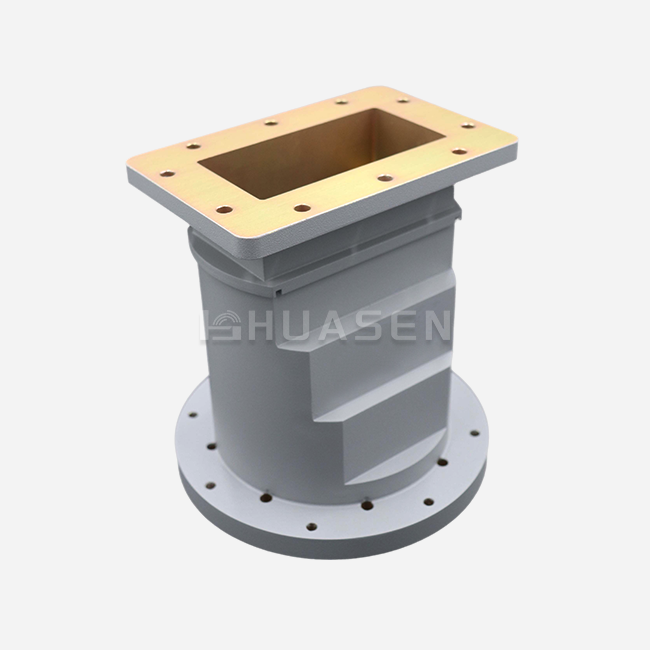
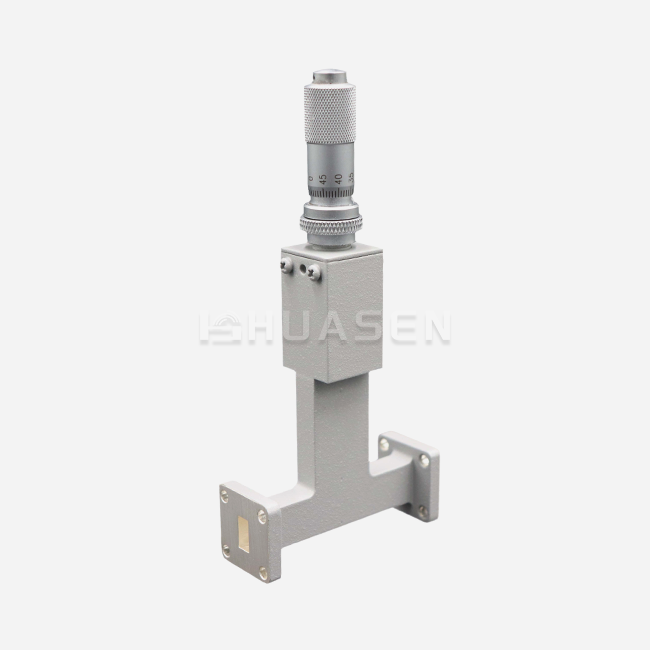
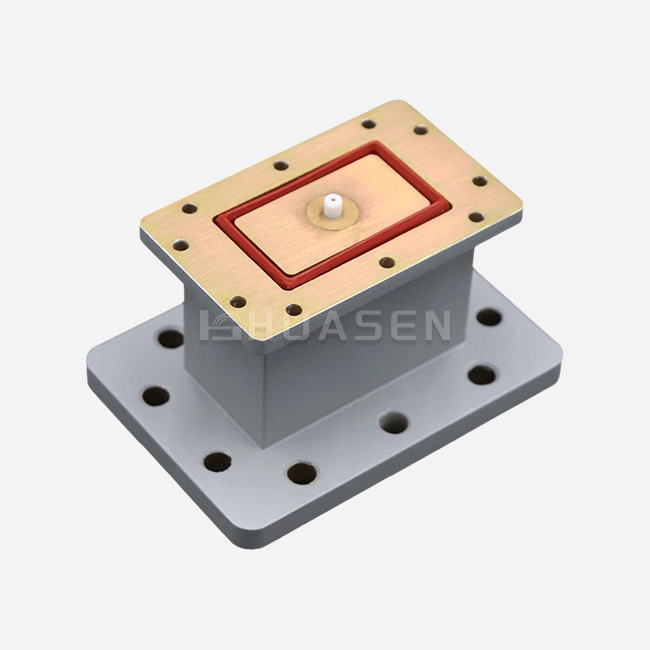
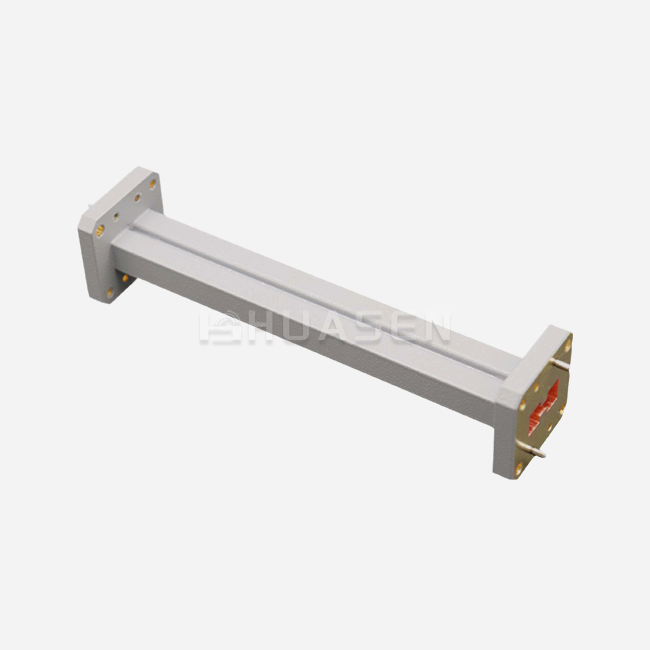
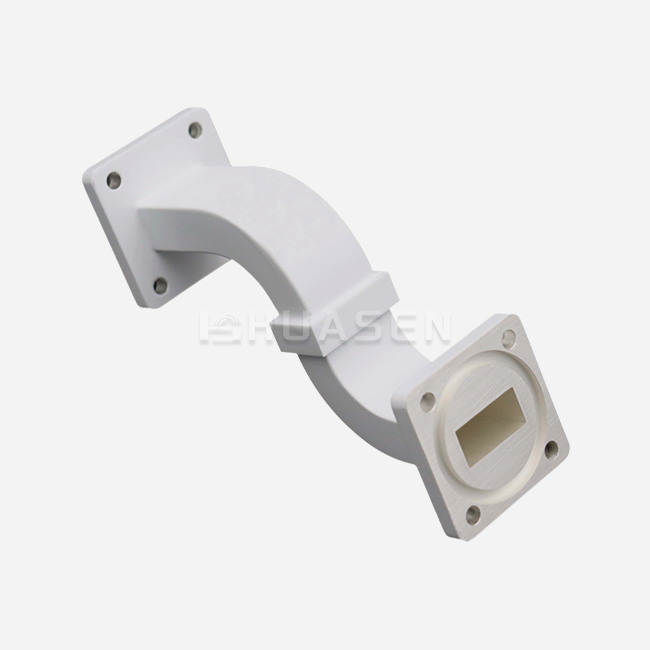
Huasen Microwave Technology Co., Ltd. manufactures Antenna Near Field Measurement Probe systems incorporating advanced calibration features that simplify achieving and maintaining measurement accuracy. Our comprehensive probe portfolio includes orthogonal feed probes, waveguide orthogonal feed Type I probes, waveguide termination feed probes, coaxial symmetric dipole probes, dual-polarization near-field measurement probes, and broadband near-field measurement probes, each designed with calibration-friendly features enabling efficient characterization procedures. All probes feature cross-polarization isolation exceeding 25 dB across their operational frequency ranges spanning from 0.49 GHz to 112 GHz, ensuring accurate polarization measurements without extensive calibration adjustments. Standard connector options including K, SMA-K, and 2.92-K connectors facilitate integration with industry-standard calibration equipment and measurement systems.
The precision engineering inherent in Huasen Microwave Antenna Near Field Measurement Probe products directly supports calibration stability and long-term measurement accuracy. Our probes utilize high-grade aluminum with oxide coating or copper with silver and gold plating, materials selected specifically for dimensional stability, corrosion resistance, and consistent electrical properties across varying environmental conditions. Advanced orthogonal feed technology and precision-machined waveguide structures ensure repeatable frequency response characteristics that remain stable between calibration intervals. Gold-plated connectors provide enhanced conductivity and corrosion resistance, minimizing contact resistance variations that could introduce measurement errors. Every probe undergoes rigorous testing at each production stage to verify conformance with design specifications before delivery, providing customers with products requiring minimal adjustment during initial calibration and exhibiting excellent long-term stability.
Comprehensive Testing Infrastructure Supporting Calibration Services
Huasen Microwave Technology Co., Ltd. operates extensive testing facilities enabling comprehensive Antenna Near Field Measurement Probe calibration services for our customers. Our measurement infrastructure includes three microwave anechoic chambers with dimensions of 21 meters, 9 meters, and 5 meters, each calibrated by the Metrology Laboratory of Xi'an Electronic Engineering Research Institute. The 9-meter chamber provides internal dimensions of 9m length by 6m width by 3m height with frequency coverage from 2 GHz to 220 GHz, while the 5-meter chamber measures 5m by 3m by 3.5m covering 3 GHz to 220 GHz. These facilities support far-field calibration measurements using two-dimensional turntables and sophisticated software test systems, enabling precise characterization of probe receiving patterns essential for accurate near-field measurement applications.
Additional measurement capabilities include one planar near-field measurement system with 9m by 6m effective scanning frame travel covering 0.8 GHz to 40 GHz, a 68-probe spherical field system spanning 0.4 GHz to 8 GHz, and three external test sites with distances of 2000m, 300m, 30m, and 60m covering 30 MHz to 110 GHz. Our extensive instrumentation inventory encompasses over 60 advanced testing instruments including 40 vector network analyzers, 6 signal generators, 6 spectrum analyzers, 10 oscilloscopes, noise analyzers, frequency counters, power meters, 110 GHz vector network analyzers, 320 GHz spectrum analyzers, and 3mm wave signal generators. This comprehensive measurement infrastructure enables Huasen Microwave to provide factory calibration services achieving industry-leading accuracy levels, delivering calibrated Antenna Near Field Measurement Probe systems with complete documentation supporting customer quality assurance requirements and regulatory compliance obligations.
Conclusion
Antenna Near Field Measurement Probe calibration represents an essential foundation for achieving reliable antenna characterization results across telecommunications, aerospace, defense, and research applications. Proper calibration procedures ensure measurement accuracy, enable traceability to international standards, and provide confidence in measurement results supporting critical product development and compliance verification decisions.
Cooperate with Huasen Microwave Technology Co., Ltd.
As a leading China Antenna Near Field Measurement Probe manufacturer, China Antenna Near Field Measurement Probe supplier, and China Antenna Near Field Measurement Probe factory, Huasen Microwave Technology Co., Ltd. offers High Quality Antenna Near Field Measurement Probe for sale at competitive Antenna Near Field Measurement Probe prices. Partner with us for China Antenna Near Field Measurement Probe wholesale solutions backed by three decades of RF and microwave expertise. Our National High-Tech Enterprise credentials, ISO certifications, and comprehensive testing capabilities including calibrated anechoic chambers and advanced instrumentation ensure exceptional product quality and measurement reliability. Contact our technical team at sales@huasenmicrowave.com to discuss your specific measurement requirements and discover how our precision-engineered probes can enhance your testing capabilities. Bookmark this resource for future reference when addressing calibration challenges.
References
1. Yaghjian, A. D. - An Overview of Near-Field Antenna Measurements - IEEE Transactions on Antennas and Propagation
2. Joy, E. B. and Paris, D. T. - Spatial Sampling and Filtering in Near-Field Measurements - IEEE Transactions on Antennas and Propagation
3. Hansen, J. E. - Spherical Near-Field Antenna Measurements - IET Electromagnetic Waves Series
4. Newell, A. C. - Error Analysis Techniques for Planar Near-Field Measurements - IEEE Transactions on Antennas and Propagation
5. Gillespie, E. S. - Special Issue on Near-Field Scanning Techniques - IEEE Transactions on Antennas and Propagation
Send Inquiry