Why Pyramidal Horn Antenna Is Popular for RF Testing?






2026-04-01 22:17:24
Because it can measure very accurately and point in the right direction, Pyramidal Horn Antenna technology has become the gold standard for RF testing in the defence, aerospace, and telecoms industries. These special antennas get rid of important impedance matching problems that come up with regular testing gear, giving constant VSWR performance below 1.5:1 over a wide range of frequency bands. Their pyramidal shape makes controlled beam patterns that are needed for accurate signal characterisation. This makes them essential for EMC compliance testing, antenna calibration, and material characterisation tasks where measurement accuracy has a direct effect on system performance and product certification.
Understanding Pyramidal Horn Antennas: Theory and Design
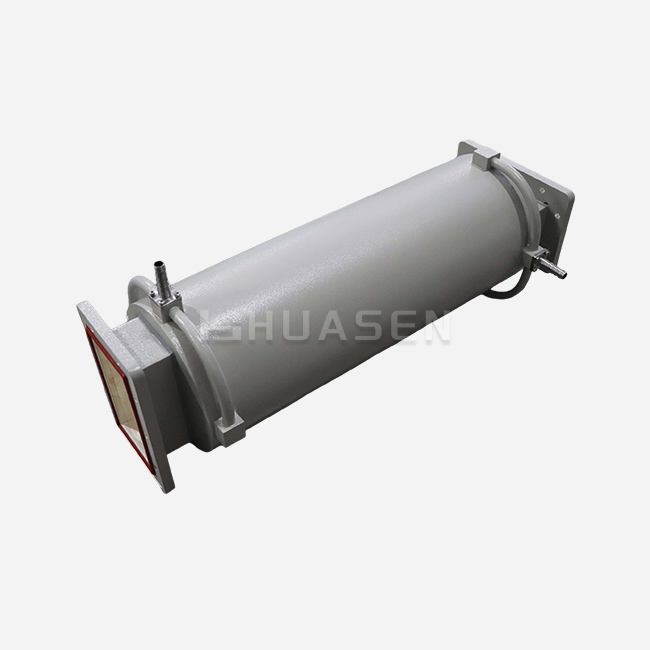
The fundamental design of pyramidal horn antennas represents a sophisticated engineering solution for transforming guided electromagnetic waves into free-space radiation. These antennas function as impedance transformers, gradually transitioning from the confined waveguide environment to free space through their distinctive flared geometry that expands in both electric and magnetic field planes.
Geometric Principles and Radiation Characteristics
The pyramidal shape makes a controlled aperture that keeps phase mistakes across the antenna opening to a minimum. To get the best gain while keeping the beam symmetric, engineers figure out flare angles and opening sizes. The design usually gets gains of 10 dBi to 25 dBi, and the half-power beamwidths make it easy to change the direction of the signal for testing purposes. The radiation pattern comes from making sure that the opening size and flare length are just right. When the flare length is longer than what is ideal for a given aperture, phase mistakes get worse, which could hurt the quality of the beam. On the other hand, not having enough flare length leads to bad impedance matching and lower performance. This fine balance is what makes precise production so important for reliable performance.
Material Selection and Construction Quality
Pyramidal horn antennas made today are made of high-quality aluminium, copper, or brass and have special finishes on the outside. Gold or silver finishing lowers skin effect losses and stops oxidation, which can slow down electrical performance over time. The internal surface finish has a direct effect on insertion loss, which is why quality control is so important for keeping performance factors in check. At higher frequencies, manufacturing margins become more important because changes in size of a few hundredths of a millimetre can have a big effect on how something resonates. Because of this need for accuracy, trustworthy makers put a lot of money into quality control and measuring things.
Why Pyramidal Horn Antennas Are Ideal for RF Testing
The widespread adoption of pyramidal horn antennas in RF testing stems from their ability to address multiple technical challenges simultaneously. Their inherent design characteristics make them uniquely suited for demanding measurement environments where accuracy and repeatability remain paramount.
Superior Measurement Stability and Reproducibility
Testing laboratories value pyramidal horn antennas for their exceptional measurement consistency. Unlike dipole or patch antennas that may exhibit pattern variations due to pyramidal antenna mounting effects or environmental factors, horn antennas maintain stable radiation characteristics across diverse testing conditions. This stability translates directly into measurement repeatability, enabling engineers to compare test results across different sessions with confidence. The controlled beam patterns eliminate many variables that complicate RF measurements. When testing device radiation patterns or conducting EMC evaluations, the predictable horn antenna characteristics serve as a reliable reference, allowing engineers to isolate and characterise the device under test without uncertainty about the test antenna's behaviour.
Wide Frequency Coverage and Versatility
Modern pyramidal horn designs operate across impressive frequency ranges, often spanning multiple octaves within single units. This broad bandwidth capability addresses the industry's need for comprehensive testing solutions that cover multiple communication bands without requiring antenna changes. A single X-band horn antenna can effectively test systems from 8.2 GHz to 12.4 GHz, encompassing various radar and satellite communication frequencies. The frequency versatility becomes particularly valuable for system integrators working with multi-band equipment. Rather than maintaining separate antenna inventories for different frequency ranges, organisations can standardise on horn antennas that cover their entire testing spectrum, reducing equipment costs and simplifying test procedures.
High Power Handling Capabilities
Pyramidal horn antennas excel in high-power testing scenarios where other antenna types might fail. Their robust construction and absence of internal dielectric components enable power handling limited primarily by air breakdown voltages rather than component thermal limits. This capability proves essential for testing high-power transmitters, radar systems, and base station equipment where realistic power levels must be maintained during evaluation. The power handling advantage extends to pulse testing applications common in radar development. Horn antennas can withstand the peak power levels associated with pulsed RF signals without the component degradation that might affect antennas containing ferrite or dielectric elements.

Comparing Popular Pyramidal Horn Antenna Models for B2B Buyers
Understanding the landscape of available pyramidal horn antenna options helps procurement teams make informed decisions aligned with their specific testing requirements. The market offers solutions ranging from cost-effective standard models to precision-engineered speciality units designed for demanding applications.
Performance Specifications and Trade-offs
When evaluating horn antenna options, several key specifications require careful consideration. Gain specifications typically range from moderate values around 15 dBi for compact units to high-gain configurations exceeding 20 dBi for applications requiring maximum directivity. Beamwidth characteristics inversely correlate with gain, creating trade-offs between sensitivity and spatial resolution.VSWR performance represents another critical specification, with premium units achieving values below 1.2:1 across their operating bandwidth. This low VSWR ensures efficient power transfer and minimal measurement uncertainty. Cross-polarisation discrimination, typically ranging from -20 dB to -30 dB, becomes crucial for polarisation-sensitive measurements and EMC testing applications.
Customisation Capabilities and Engineering Support
Leading manufacturers recognise that many testing applications require specialised antenna configurations. Customisation options often include modified frequency ranges, specialised mounting configurations, and enhanced environmental protection for outdoor testing. These modifications address specific customer pain points while maintaining the fundamental performance advantages of the pyramidal horn design. Technical support capabilities vary significantly among suppliers, with some offering comprehensive design assistance and measurement validation services. Organisations planning complex testing systems benefit from suppliers who provide simulation support, custom calibration data, and ongoing technical consultation throughout project implementation.
Cost Considerations and Value Engineering
Pricing structures for pyramidal horn antennas reflect the precision engineering required for their manufacture. While standard catalogue items offer cost-effective solutions for routine testing, specialised units command premium pricing justified by their enhanced performance capabilities. Bulk purchasing options and long-term supplier relationships can provide significant cost advantages for organisations with ongoing antenna requirements. Total cost of ownership calculations should include factors beyond initial purchase price, such as calibration requirements, maintenance needs, and expected service life. Premium antennas often provide superior long-term value through reduced maintenance requirements and extended operational life.
Procurement Guide: How to Buy the Right Pyramidal Horn Antenna for RF Testing
Successful procurement of pyramidal horn antennas requires systematic evaluation of technical requirements, supplier capabilities, and project constraints. The decision-making process benefits from understanding how antenna specifications align with intended applications and testing objectives.
Technical Specification Alignment
The first step in the procurement process is to clearly define frequency needs, which should include both main operating bands and possible future needs for growth. The gain requirements should match the sensitivity needs of the readings that are going to be taken, and the beamwidth requirements should allow for the accurate testing of space. The VSWR goals should match the goals for measurement accuracy and the system's sensitivity. When using high-power transmitters, apyramidal antenna,or doing pulse testing, power handling requirements become very important. Figuring out the maximum and average power needs helps make sure that the antennas chosen can handle the stresses of operation without losing their performance. Specifications for the environment, such as temperature ranges and humidity levels, must fit the conditions in which the product is meant to be used.
Supplier Evaluation and Quality Assurance
Suppliers with a good reputation give a lot of paperwork, like test data, calibration certificates, and thorough specifications. Some signs of quality are ISO certification, being able to trace back to national standards, and having detailed quality control processes. Suppliers should show that they can make things by showing proof of their facilities' certifications and quality system records. Case studies and references from past customers can tell you a lot about how reliable a seller is and how well a product works in real life. Help with design and troubleshooting is an example of technical help that becomes important for complicated projects or specialised applications.
Delivery and Support Considerations
Delivery dates are very important when buying things because project timelines often depend on how quickly antennas can be delivered. Standard catalogue items usually have shorter lead times, while customised units may need longer times to be made. There are choices for fast delivery and processing, so you can meet urgent needs with ease. Support after delivery includes services for calibration, repair, and expert advice. Knowing what the guarantee covers and how to fix it will help make sure that the antenna is available for a long time. Some suppliers have maintenance and calibration tools that make it easier to keep track of antennas.
Future Trends and Innovations in Pyramidal Horn Antenna Technology
The evolution of pyramidal horn antenna technology continues to be driven by advancing simulation capabilities, material innovations, and changing application requirements. These developments promise enhanced performance, reduced costs, and expanded application possibilities across diverse testing scenarios.
Advanced Design Optimisation and Simulation
New electromagnetic modelling tools make it possible to optimise horn antenna designs with a level of accuracy that has never been seen before. Engineers can now model complex relationships between the shape of an antenna and its performance, which lets them make designs that go beyond what was previously possible in terms of performance. These modelling tools cut down on the time needed for development while improving the accuracy of predictions for custom antenna projects. Machine learning algorithms are becoming more and more useful for design optimisation because they can find the best mixtures of parameters that would otherwise be missed by traditional analytical methods. This computer intelligence lets you try out new design ideas while still making sure they can be made and don't cost too much.
Material Science Advances and Manufacturing Innovation
New materials could potentially make antennas work better and lower the cost of making them. Modern methods of metallisation make surfaces more conductive while also making them lighter and cheaper. Adding technologies to production makes it possible to make parts with complicated inside shapes that weren't possible with traditional methods of machining. These new ways of making things are especially helpful for high-frequency uses, where it can be hard to keep standard tolerances. 3D printing technologies allow for fast prototyping, which speeds up the development of custom antennas and lowers the cost of making tools for unique designs.
Integration with Automated Testing Systems
The addition of horn antennas to automatic testing systems is a major step toward making measurements more accurate and efficient. Robotic positioning systems allow exact control over antenna placement and orientation, which lowers measurement error and operator dependence. Automated calibration processes make sure that the reference standards are always the same from one test session to the next. Software integration makes it possible for antenna positioning, measurement equipment control,Pyramidal Horn Antenna and data analysis tools to work together without any problems. This integration cuts down on testing time while making measurements more accurate and documenting better.
Conclusion
Pyramidal Horn Antennas are popular in RF tests because they offer a unique mix of accurate measurements, frequency flexibility, and dependability in operation. These antennas meet important needs in the industry for precise, repeatable readings in a wide range of testing situations, such as figuring out EMC compliance and characterising high-power systems. Because they are well-made, have a wide frequency range, and are very good at pointing, these tools are essential for businesses that need to take accurate RF readings. Pyramidal horn antennas are still important parts of current RF testing equipment, even though testing needs are changing to include higher frequencies and more demanding applications.
FAQ
1. What frequency ranges work best with pyramidal horn antennas for RF testing?
Pyramidal horn antennas operate effectively across frequency ranges from L-band through sub-terahertz applications, with specific models optimised for bands such as X-band (8.2-12.4 GHz), Ku-band (12.4-18 GHz), and K-band (18-26.5 GHz). The lower frequency limit depends on the connecting waveguide cutoff frequency, while upper limits are constrained by manufacturing tolerances and material properties.
2. How do I determine the appropriate gain and beamwidth for my testing application?
Gain requirements typically range from 15-25 dBi, depending on measurement sensitivity needs, with higher gains providing better signal-to-noise ratios but narrower beamwidths. For near-field testing, moderate gains around 15-18 dBi often provide optimal spatial resolution, while far-field measurements may benefit from higher gains approaching 20-25 dBi for maximum sensitivity.
3. Can pyramidal horn antennas be customised for specific testing requirements?
Yes, reputable manufacturers offer customisation options including modified frequency ranges, specialised mounting configurations, enhanced environmental protection, and adjusted gain characteristics. Custom designs typically require 6-12 weeks for development and manufacturing, with engineering support provided throughout the specification and validation process.
4. What power levels can pyramidal horn antennas handle safely?
Power handling capabilities depend on antenna size and frequency, but most standard units handle continuous power levels from 50 watts to several kilowatts. Peak power handling for pulsed applications often exceeds continuous ratings by 10-20 dB, making them suitable for radar testing and high-power transmitter evaluation applications.
5. How often do pyramidal horn antennas require calibration or maintenance?
Well-manufactured horn antennas typically require calibration verification annually or biannually, depending on application criticality. Maintenance involves periodic cleaning of internal surfaces and inspection of flange interfaces. Proper storage and handling can extend calibration intervals while maintaining measurement accuracy and traceability requirements.
Partner with Huasen Microwave for Premium Pyramidal Horn Antenna Solutions
Huasen Microwave Technology delivers industry-leading pyramidal horn antenna manufacturer solutions backed by over three decades of RF engineering excellence. Our precision-engineered antennas feature superior VSWR performance, wide bandwidth coverage,Pyramidal Horn Antenna and exceptional build quality that meets the demanding requirements of modern RF testing applications. With comprehensive customisation capabilities spanning L-band through millimetre-wave frequencies, our engineering team collaborates closely with clients to develop antenna solutions perfectly aligned with their testing objectives. Contact our technical specialists at sales@huasenmicrowave.com to discuss your pyramidal horn antenna requirements and discover how our proven expertise can enhance your RF testing accuracy and efficiency.
References
1. Balanis, Constantine A. "Antenna Theory: Analysis and Design, Fourth Edition." Wiley, 2016.
2. IEEE Standard 149-2021. "IEEE Recommended Practice for Antenna Measurements." Institute of Electrical and Electronics Engineers, 2021.
3. Milligan, Thomas A. "Modern Antenna Design, Second Edition." IEEE Press Series on Electromagnetic Wave Theory, 2005.
4. Rudge, Alan W. "The Handbook of Antenna Design, Volume 1." Institution of Engineering and Technology, 1986.
5. Silver, Samuel. "Microwave Antenna Theory and Design." MIT Radiation Laboratory Series, Boston Technical Publishers, 1964.
6. Stutzman, Warren L. "Antenna Theory and Design, Third Edition." John Wiley & Sons, 2012.
Send Inquiry