Standard gain horn antenna vs Other Reference Antennas






2026-03-31 21:42:04
There is no doubt that the standard gain horn antenna is the best reference antenna for metrology uses when it comes to accurate RF measurements. These precision-engineered devices, standard gain horn antennas, unlike broadband test antennas or dipole references, have theoretical gain curves that fit measured performance very well. Their pyramidal or conical horn shape makes their radiation patterns predictable and their performance stable across certain waveguide frequency bands. This makes them essential for calibrating antennas, checking for EMC, and verifying RF systems where measurement error needs to be kept to a minimum.
Understanding Standard Gain Horn Antennas
Standard gain horn antennas represent the pinnacle of precision in RF measurement technology, serving as the fundamental reference for establishing absolute gain measurements in laboratory and field environments. These meticulously engineered devices operate on well-established electromagnetic principles, where the horn's geometric dimensions directly determine its radiation characteristics and gain performance.
Operating Principles and Design Fundamentals
Horn antennas have electromagnetic qualities that come from their ability to change guided waves from square or round waveguides into radiation that travels through empty space. Because the horn structure gradually flares, it makes a smooth impedance shift that reduces reflections and increases directional gain. Using electromagnetic theory, the aperture sizes and flare angles are carefully determined to achieve certain gain values across certain frequency ranges. Building materials are very important for keeping the electromagnetic integrity and long-term stability. A high-quality aluminium alloy is very good at conducting electricity and is also very light, which is important for portable measurement devices. For millimeter-wave uses where skin depth effects are important, precision-milled copper types offer better conductivity. To keep potential gain performance and reduce resistive losses, the inside surfaces are often plated with silver or gold.
Frequency Coverage and Versatility
These reference antennas demonstrate remarkable versatility across the electromagnetic spectrum, spanning from UHF frequencies through millimeter-wave bands. Each antenna design corresponds to specific waveguide standards, ensuring compatibility with existing test equipment while maintaining measurement traceability. The frequency coverage typically extends from 700 MHz to beyond 110 GHz, accommodating diverse applications from cellular communications to automotive radar systems.
Calibration Methodologies and Measurement Accuracy
Calibration procedures for standard gain horn antennas follow rigorous protocols established by national measurement institutes. Each antenna undergoes individual calibration rather than type testing, ensuring that the specific unit's performance matches theoretical calculations within tight tolerance bands. NIST-traceable calibration certificates provide gain uncertainty specifications typically ranging from ±0.3 dB at lower frequencies to ±0.5 dB at millimeter-wave frequencies, significantly outperforming alternative reference antenna types.
Comparing Standard Gain Horn Antennas with Other Reference Antenna Types
The landscape of reference antennas encompasses various designs, each optimized for specific measurement scenarios and application requirements. Understanding the distinctions between these antenna types enables informed procurement decisions that align with technical objectives and budget constraints.
Pyramidal Horn Antennas vs Standard Gain Horns
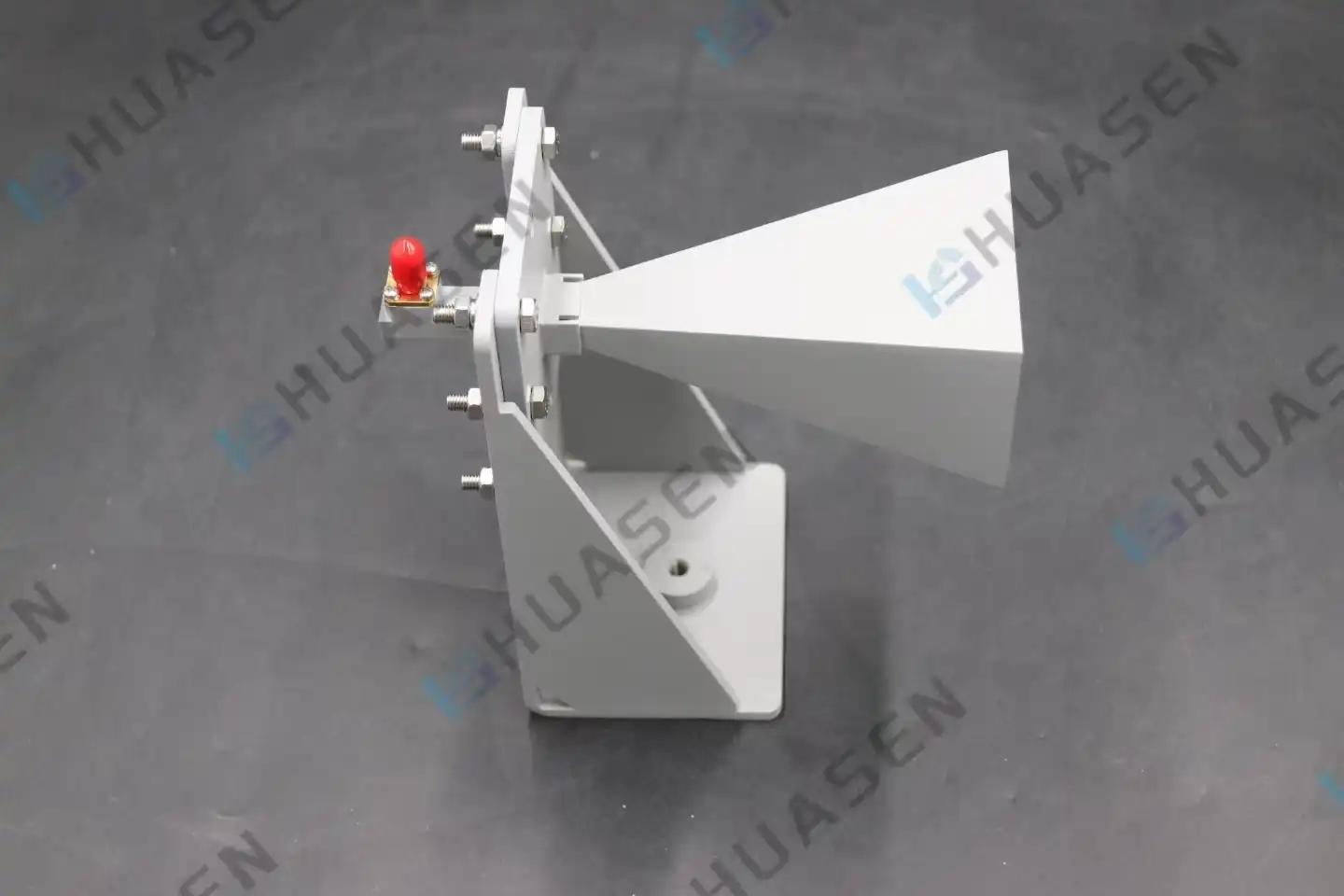
Pyramidal horn antennas share structural similarities with standard gain horn antennasbut often prioritize broader bandwidth over precise gain accuracy. While pyramidal designs can cover multiple waveguide bands simultaneously, they sacrifice the measurement precision that characterizes true standard gain references. The broader bandwidth comes at the cost of higher VSWR variations and less predictable gain performance across the frequency range. Standard gain horn antennas, in contrast, focus on single waveguide band coverage with exceptional gain accuracy. This design philosophy ensures that the antenna's performance can be calculated from geometric parameters using established electromagnetic theory, providing inherent traceability without relying solely on empirical calibration data.
Sectoral Horn Antennas and Beam Characteristics
Sectoral horn antennas feature flaring in only one plane, creating fan-shaped radiation patterns useful for specific testing configurations. These antennas provide wider beamwidths in one plane while maintaining narrow patterns in the perpendicular plane. However, their asymmetric radiation characteristics limit their utility as universal reference standards for antenna measurements requiring symmetric illumination patterns. The symmetric radiation patterns of standard gain horn antennas make them ideal for precise gain transfer measurements and antenna range calibration. Their predictable beamwidth characteristics enable accurate field strength calculations and ensure consistent measurement conditions across different test scenarios.
Dipole Antennas and Measurement Limitations
Dipole antennas represent the simplest reference antenna category, offering omnidirectional radiation patterns in the plane perpendicular to the dipole axis. While these antennas provide excellent phase center stability and broad frequency coverage, they lack the directional gain necessary for many precision measurement applications. The omnidirectional characteristics of dipoles make them unsuitable for applications requiring high field intensities or precise beam direction control. Standard gain horn antennas address these limitations by concentrating radiated energy within well-defined angular regions, enabling higher field strengths and better signal-to-noise ratios in measurement systems.
Advantages and Challenges of Standard Gain Horn Antennas
Standard gain horn antennas deliver exceptional performance characteristics that make them the preferred choice for precision measurement applications. However, like all engineering solutions, they present certain challenges that procurement professionals must consider when evaluating their suitability for specific applications. The primary advantages of these precision instruments center on their measurement accuracy and repeatability. Here are the core advantages that distinguish them from alternative reference antenna types:
- Exceptional Gain Accuracy: Theoretical gain calculations match measured performance within ±0.3 dB uncertainty, providing reliable reference standards for antenna measurements and EMC testing applications.
- Stable Radiation Patterns: Symmetric radiation characteristics remain consistent across temperature variations and aging, ensuring long-term measurement reliability without frequent recalibration requirements.
- Wide Dynamic Range: High directional gain enables measurements of low-gain antennas while maintaining adequate signal-to-noise ratios in noisy electromagnetic environments.
- Physics-Based Performance: Gain values derive from geometric parameters rather than empirical calibration alone, providing inherent traceability to fundamental electromagnetic principles.
These advantages directly address common measurement challenges in RF testing laboratories and antenna development facilities, where precision and repeatability are paramount for regulatory compliance and product development.
Environmental Sensitivities and Mitigation Strategies
Despite their robust design, standard gain horn antennas exhibit sensitivities to environmental conditionsstandard gain horn antennas that can affect measurement accuracy. Temperature fluctuations cause thermal expansion of the horn structure, potentially altering aperture dimensions and shifting gain performance. Humidity variations can affect surface conductivity, particularly on unplated surfaces, leading to increased resistive losses. Mitigation strategies include environmental conditioning of test facilities and proper storage procedures. Temperature-controlled anechoic chambers minimize thermal effects during critical measurements, while appropriate surface treatments protect against corrosion and conductivity degradation. Regular visual inspections help identify physical damage or surface contamination that could compromise performance.
Physical Size and Integration Considerations
The physical dimensions required to achieve specific gain values can present integration challenges in space-constrained applications. Longer horn lengths provide higher gain but may require larger anechoic chambers or test ranges. The weight of precision-machined horns can stress mounting hardware and positioning systems, particularly in automated test configurations. Careful system design considers these physical constraints while maintaining measurement accuracy. Modular test setups accommodate various horn sizes, while robust positioning systems handle the mechanical loads associated with larger antennas. These considerations ensure that the benefits of precision measurements outweigh the practical challenges of implementation.
How to Choose the Right Reference Antenna for Your B2B Needs
Selecting the optimal reference antenna requires a systematic evaluation of technical requirements, operational constraints, and long-term strategic objectives. The decision process must balance performance specifications with practical considerations such as budget limitations, delivery timelines, and supplier capabilities.
Defining Application Requirements and Performance Criteria
Before choosing an antenna, it's important to be clear about what measurements and performance standards are needed. The basic type of antenna is based on the frequency bands it covers, while the gain needs determine the exact horn dimensions and design parameters. Specifications for beamwidth affect how well an antenna works with different measurement shapes and test range configurations. Operating conditions have a big effect on choosing an antenna. When used outside, things need better rust protection and a wider temperature range than when they are used in a lab. Mobile apps focus on making things that are small and light, with strong mechanical designs that can handle the stresses of movement.
Supplier Evaluation and Partnership Considerations
A successful antenna procurement goes beyond technical specifications and includes the abilities of the supplier and the possibility of a long-term relationship. Manufacturers that have been around for a while and have a good track record offer benefits in terms of quality consistency, technical help, and the reliability of the supply chain. Customisation is important when standard products can't meet the needs of a certain application. Warranty terms and calibration support services vary a lot between providers, which affects the total cost of ownership over the antenna's useful life. Quick technical support helps fix problems with applications and makes sure that antennas work well in complicated measurement systems. These reasons often make it worth paying more for goods made by reputable companies that offer full support services for their products.
port services.

Practical Guidance on Standard Gain Horn Antenna Procurement
Navigating the procurement landscape for precision RF measurement equipment requires understanding the various sourcing channels and their respective advantages. The choice between direct manufacturer relationships and distributor partnerships can significantly impact product availability, customization options, and ongoing support services.
Direct Manufacturer vs Distributor Procurement Strategies
When looking for custom solutions or making long-term supply deals for multiple projects, having direct relationships with manufacturers can be helpful. Manufacturers usually have more technical knowledge and can meet unique needs that distributors might not be able to. But minimum order quantities and longer lead times can make it hard to make smaller purchases or meet pressing needs. Distributor relationships are great for getting standard products quickly and at a good price for smaller amounts. Distributors that have been around for a while keep inventory buffers that let them deliver quickly for popular frequency bands and gain specifications. The downsides are fewer customisation choices and maybe not as much technical support as with a direct manufacturer relationship.
Customization Considerations and Lead Time Management
Most of the time, standard gain horn antennas need to be changed to fit certain frequency bands or the needs of the mechanical link. Custom frequency ranges, specialised connector types, or environmental protection levels can make delivery times weeks or months longer, based on how many changes need to be made. To keep project schedules, good procurement planning takes these longer delivery times into account. Getting suppliers involved early on in the design process helps with planning lead times and may show other solutions that require less customisation. Clear documentation of specifications cuts down on the number of times they need to be changed and helps make sure that goods delivered meet application requirements on time.
Post-Purchase Support and Calibration Services
Precision measuring tools are valuable for a lot more than just the money you spend on them. They also comestandard with gain horn antennas with ongoing support services and calibration upkeep. Suppliers with a good reputation will give you full calibration papers that include a full uncertainty analysis and measurement traceability paperwork. Regular recalibration services help keep measurements accurate over the antenna's useful life. Technical support services are especially helpful when adding antennas to complicated measurement systems or fixing problems with performance. Having access to measurement experts and application engineers can help shorten project timelines and improve system performance. These support services are often what set high-end sellers apart from cheaper ones that might hurt the project's long-term success.
Conclusion
When you look at standard gain horn antennas next to other types of reference antennas, it's easy to see that standard gain horn antennas are better for tasks that need accurate readings and reliable performance. Standard gain horns have better physics-based performance than other reference antenna systems in terms of gain accuracy, stable radiation patterns, and gain accuracy. Even though their size and environmental sensitivity can be problems, these issues can be solved by using the right mitigation techniques and picking the right suppliers. Precision reference antennas are an investment that pays off in the form of more accurate measurements, compliance with regulations, and long-term operational dependability that helps RF development and testing programs run smoothly.
FAQ
1. What factors influence gain measurement accuracy in standard gain horn antennas?
Gain measurement accuracy depends on several critical factors, including antenna alignment precision, calibration methodology, and environmental conditions during testing. Mechanical alignment tolerances affect the radiation pattern symmetry and peak gain direction, while temperature variations can alter the physical dimensions and electromagnetic performance. Proper calibration procedures using NIST-traceable standards ensure measurement uncertainty remains within specified limits, typically ±0.3 dB to ±0.5 dB depending on frequency range and antenna design.
2. How do frequency range implications affect antenna selection for specific applications?
Frequency range selection determines the fundamental antenna design parameters, including waveguide compatibility, physical dimensions, and gain characteristics. Each standard gain horn antenna covers a specific waveguide band with optimized performance, requiring multiple antennas for broadband applications. Higher frequency ranges generally require smaller physical dimensions but may exhibit higher measurement uncertainty, while lower frequencies demand larger antennas with correspondingly increased mounting requirements and facility constraints.
3. Is customization feasible for standard gain horn antennas operating in atypical frequency bands?
Customization capabilities vary among manufacturers but generally accommodate special frequency requirements within reasonable electromagnetic design limits. Custom frequency bands may require modified horn dimensions, specialized waveguide interfaces, or alternative construction materials to achieve desired performance specifications. Lead times for customized antennas typically extend beyond standard products, ranging from several weeks to months, depending on the complexity of modifications required and the manufacturer's capabilities.
Partner with Huasen Microwave for Precision Standard Gain Horn Antenna Solutions
Huasen Microwave brings three decades of specialized expertise in microwave and millimeter-wave component manufacturing to your precision measurement challenges. Our comprehensive portfolio of standard gain horn antennas delivers the measurement accuracy and reliability that demanding applications require,standard gain horn antennas backed by rigorous quality control and NIST-traceable calibration services.
As a trusted standard gain horn antenna manufacturer, we understand the critical importance of measurement precision in your testing and calibration operations. Our engineering team collaborates closely with customers to optimize antenna specifications for specific applications while maintaining competitive pricing and reliable delivery schedules. Connect with our technical specialists at sales@huasenmicrowave.com to discuss your requirements and discover how our proven solutions can enhance your measurement capabilities and project success.
References
1. Balanis, Constantine A. "Antenna Theory: Analysis and Design, Fourth Edition." John Wiley & Sons, Hoboken, New Jersey, 2016.
2. IEEE Standard for Definitions of Terms for Antennas. IEEE Std 145-2013 (Revision of IEEE Std 145-1993). Institute of Electrical and Electronics Engineers, 2014.
3. Milligan, Thomas A. "Modern Antenna Design, Second Edition." John Wiley & Sons, Hoboken, New Jersey, 2005.
4. Stutzman, Warren L. and Gary A. Thiele. "Antenna Theory and Design, Third Edition." John Wiley & Sons, Hoboken, New Jersey, 2012.
5. Love, A.W. "Electromagnetic Horn Antennas." IEEE Press Selected Reprint Series, Institute of Electrical and Electronics Engineers, New York, 1976.
6. American National Standards Institute. "American National Standard for Electromagnetic Compatibility - Radiated Emission Measurements in Electromagnetic Interference (EMI) Control - Calibration of Antennas (9 kHz to 40 GHz)." ANSI C63.5-2017, 2017.
Send Inquiry