Parabolic Antenna Evolution and Modern Applications






2026-04-01 22:17:26
The development of parabolic antenna technology is one of the most important steps forward in the sending and receiving of electromagnetic waves. In the past, antennas had trouble focusing in the right direction and getting strong signals. But parabolic reflectors changed the way wireless communications worked by focusing electromagnetic energy with a new level of accuracy. Modern parabolic antenna systems have changed from simple dish shapes to complex dual-polarised ones that can support 5G networks, satellite communications, and mission-critical radar uses in many different industries.
Evolution of Parabolic Antennas and Their Design Principles
The development of parabolic antenna technology emerged from the fundamental need to overcome the limitations of early antenna designs. Traditional dipole and monopole antennas suffered from omnidirectional radiation patterns that wasted energy in unwanted directions, resulting in poor signal-to-noise ratios and limited communication range. The introduction of parabolic reflector geometry solved these critical challenges by focusing electromagnetic waves into highly directional beams.
Mathematical Foundation and Reflector Geometry
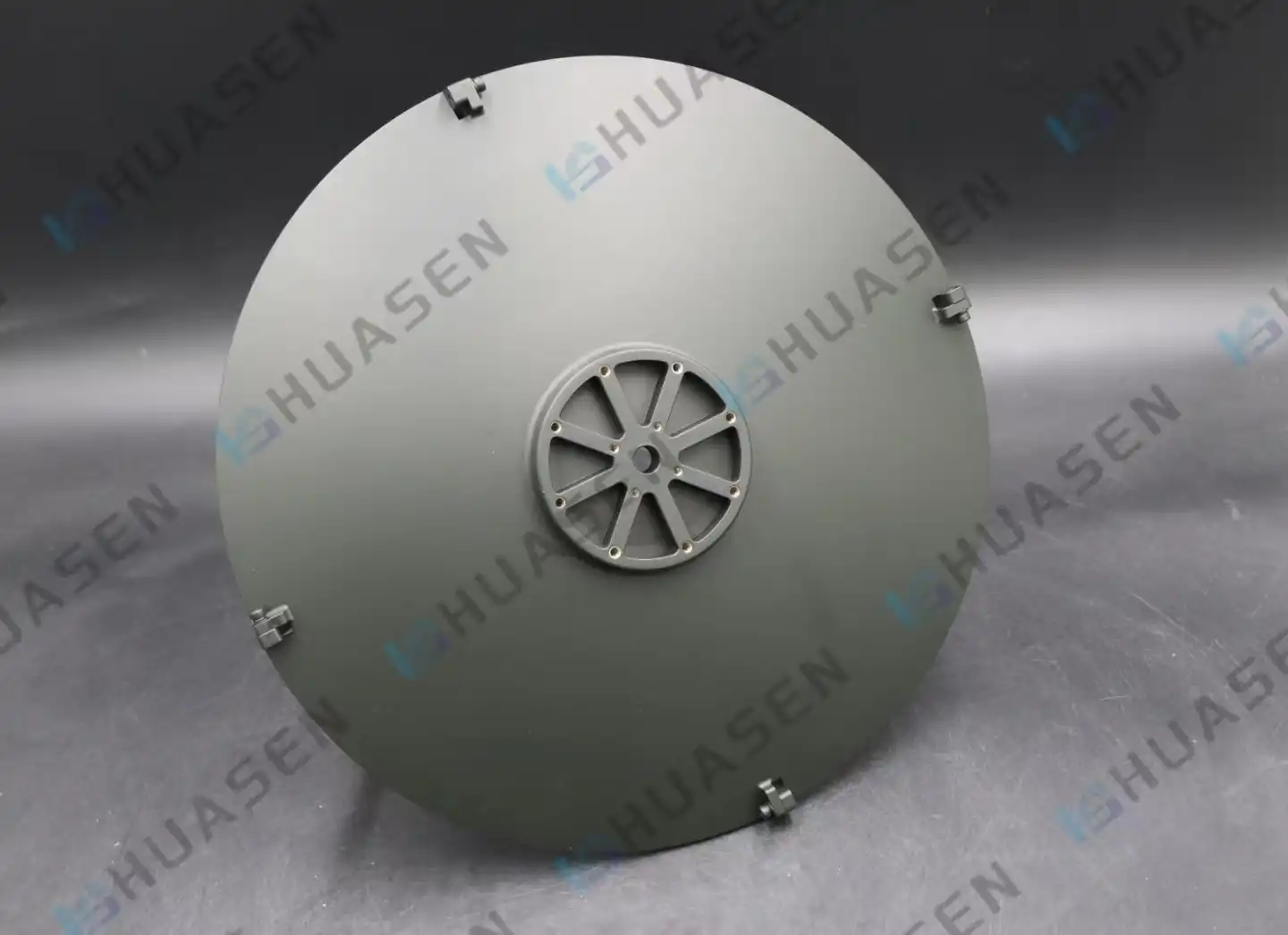
The parabolic reflector works by following a basic geometric rule: all electromagnetic waves that hit the surface of the reflector come together at a single focus point. This level of mathematical accuracy makes it possible for very high gain, which can be anywhere from 20 dBi to over 40 dBi based on the reflector diameter and frequency of operation. The equation for the link between reflector size and gain is G = (4π × A × η) / λ², where A is the effective aperture area, η is the aperture efficiency, and λ is the wavelength. Modern reflectors are made of precision-formed aluminium, and the surface accuracy needs to be better than µ/16 to keep working well across the frequency range that was meant. Any surface irregularities that are bigger than these limits cause phase mistakes that lower the antenna's performance and add unwanted sidelobes. Computer-controlled forming methods are now used in manufacturing to get the very precise surfaces needed for high-frequency applications.
Feed System Integration and Polarisation Control
Modern parabolic antennas can support dual-polarisation, which practically doubles spectral efficiency. The feed system is another important change in the design of parabolic antennas. Modern feed horn designs keep the right amount of light spreading across the reflector surface while reducing spillover losses that lower the system's total efficiency. Cross-polarisation discrimination (XPD) performance above 30 dB ensures that orthogonal polarisation channels have clean signal separation. Modern feed systems have advanced polarisation rotation devices that allow field-adjustable polarisation alignment without having to move the antenna completely. This feature is necessary to keep cross-polarisation separation at its best in dual-polarised MIMO setups, where signal purity has a direct effect on how fast data can be sent.
Modern Applications and Advantages of Parabolic Antennas
Parabolic antenna technology has become fundamental infrastructure across numerous industries, parabolic reflector antennas driving innovations in telecommunications, radar systems, and satellite communications. The superior directional characteristics and high-gain performance of parabolic reflectors offer compelling advantages over alternative antenna technologies in applications requiring long-distance communication links.
5G and Cellular Backhaul Networks
Mobile network operators increasingly rely on parabolic antenna systems for high-capacity cellular backhaul applications. The exceptional gain and narrow beamwidth characteristics enable reliable communication links spanning 50+ kilometres while maintaining the signal quality necessary for 5G data rates. Dual-polarised configurations support 2×2 MIMO and Cross-Polarisation Interference Cancellation (XPIC) technologies that double link capacity without requiring additional spectrum allocation. The integration of parabolic antennas in 5G backhaul networks addresses spectrum scarcity challenges while reducing infrastructure costs. A single dual-polarised parabolic antenna can replace two separate single-polarised systems, significantly reducing tower loading, wind resistance, and lease expenses. This consolidation proves particularly valuable in dense urban deployments where tower space commands premium pricing.
Satellite Communications and VSAT Networks
Parabolic reflectors are still the best choice for satellite communication uses that need to connect reliably across large areas of land. The high-gain properties make it possible to communicate effectively with geostationary satellites 36,000 kilometres above the Earth's surface using a parabolic reflector antenna. This is possible despite the fact that satellite links have a lot of path loss. Modern VSAT networks use advanced parabolic antennas with automatic pointing systems that keep the satellite tracking working well even if the platform moves. Stabilised parabolic antenna platforms that can adapt to the movement of a ship or plane are especially useful for maritime and aviation uses. These systems use three-axis stabilisation devices and GPS-based pointing algorithms to keep in touch with satellites even when they're working in tough conditions.
Radar and Defence Applications
For surveillance and tracking, both military and private radar systems use parabolic antenna technology to get the range and accuracy needed for direction. The narrow beamwidth properties make it possible to accurately separate targets while reducing interference from other sources. Target classification is improved by dual-polarisation skills that look at polarimetric signatures that show material properties and object orientation. Large parabolic reflectors are used in weather radar networks to pick up patterns of precipitation over large areas. This information is very important for making weather predictions and sending out dangerous weather alerts. The high-gain performance lets you pick up weak radar returns from faraway weather events while still keeping enough angular sharpness for accurate storm tracking.
How to Choose the Best Parabolic Antenna for Your Business Needs
Selecting appropriate parabolic antenna solutions requires careful evaluation of technical specifications, environmental requirements, and long-term operational considerations. B2B procurement decisions must balance performance requirements with cost constraints while ensuring compatibility with existing infrastructure and future expansion plans.
Technical Specification Assessment
Frequency range compatibility represents the primary selection criterion, as parabolic antenna performance varies significantly across different operational bands. Wide bandwidth designs accommodate multiple communication standards within a single antenna system, reducing inventory complexity and installation costs. Gain specifications must align with link budget requirements, considering path loss, receiver sensitivity, and regulatory power limitations.VSWR performance below 1.5:1 across the operational bandwidth ensures efficient power transfer and minimises reflected energy that can damage transmitter components. Port-to-port isolation exceeding 30 dB becomes critical for dual-polarised applications where cross-channel interference directly impacts system capacity. These specifications require verification through comprehensive test data provided by reputable manufacturers.
Environmental Durability and Mechanical Design
Outdoor installations demand robust mechanical construction capable of withstanding extreme weather conditions, including high winds, ice loading, and temperature cycling. Survival wind ratings often exceed 200 km/h for tower-mounted installations, requiring careful attention to mounting hardware and structural integration. Corrosion resistance becomes particularly important for coastal or industrial environments where salt spray or chemical exposure threatens long-term reliability. Radome selection impacts both RF performance and environmental protection, with modern designs utilising UV-stabilised materials that maintain transparency across operational frequencies while providing weather sealing. IP67 ingress protection ratings ensure feed system components remain protected from moisture infiltration that can cause performance degradation or complete failure.
Procurement and Installation Best Practices for B2B Clients
Successful parabolic antenna procurement requires strategic vendor selection, comprehensive technical validation, parabolic reflector antennasand professional installation practices that ensure optimal system performance. B2B clients must establish clear evaluation criteria that encompass both technical capabilities and long-term support requirements.
Vendor Qualification and Technical Validation
Manufacturers with a good reputation provide detailed test reports that show they meet all the necessary standards, such as ETSI Class requirements for sidelobe reduction and regulatory emission masks. Measurements taken in an anechoic chamber confirm the performance of the radiation pattern, and tests done in the environment prove the durability under certain working conditions. Long-term project success depends on how stable the supply chain is and how well the country can support the project. This is especially true for applications that use key infrastructure. Incoming inspection methods that check antenna specifications before installation should be part of quality assurance processes. VSWR and isolation performance can be checked with a vector network analyser, and the reflector surface accuracy and feed orientation can be checked mechanically. In the field, these steps of proof keep systems from breaking down in expensive ways and make sure they work the way they were supposed to.
Professional Installation and Alignment Procedures
Precision installation methods have a direct effect on how well a parabolic antenna works, and as the frequency goes up, the alignment requirements get stricter. To get the best pointing accuracy and polarisation orientation, professional installers use special tools like spectrum analysers and precise alignment tools. When it comes to dual-polarised systems, where cross-polarisation discrimination rests on precise feed orientation, bad alignment can lead to a big drop in performance. Before buying equipment, site survey methods should check for potential obstructions, multipath interference sources, and structural sufficiency. RF path analysis software can guess how well a link will work by looking at data about the landscape and the weather. This lets you place antennas and set up your system in the best way possible. These steps will make sure that the installation goes smoothly and that the system works well for a long time.

Future Trends and Innovations in Parabolic Antenna Technology
Emerging technologies continue advancing parabolic antenna capabilities through materials innovation, manufacturing precision improvements, and intelligent beamforming integration. These developments address evolving market demands for higher performance, reduced size, and enhanced adaptability across diverse operational environments.
Advanced Materials and Manufacturing Techniques
When compared to standard aluminium reflectors, carbon fibre composite reflectors are much lighter while still having the precise surface needed for high-frequency operation. Additive manufacturing lets you make complicated feed horn geometries that improve the efficiency of lighting and lower the cost of production for specific uses. These new materials are especially useful in mobile and aerospace uses where weight limits affect how the whole system is designed. Using computer-controlled forming and measurement systems in precision production leads to surface accuracy close to »/32, which makes it possible to work at millimetre-wave frequencies that weren't possible with traditional building methods. Automated assembly methods make sure that the quality is always the same and lower the cost of production for large orders.
Integration with Smart Beamforming and MIMO Technologies
When you mix an active electronically scanned array (AESA) with parabolic reflectors, you get the best of both worlds: reflector antennas with a high aperture efficiency and phased arrays with beam agility. These hybrid setups let you quickly change the beam's direction without moving any parts, but they still have the gain benefits of aparabolic antennathat come with big aperture systems. Software-defined beamforming algorithms change radiation patterns on the fly to get the best results as propagation conditions change. Massive MIMO systems that use parabolic mirror feeds make communication links that are very directional and can do spatial multiplexing, which greatly improves spectral efficiency. These advanced configurations need advanced signal processing skills but offer point-to-point communication that uses capacity gains that have never been seen before.
City improvements for point-to-point communication applications.
Conclusion
The development of parabolic antennas has completely changed modern wireless communications, making long-distance links more reliable and important for keeping our world linked. From simple reflectors to complex dual-polarised systems, these antennas keep giving 5G networks, satellite communications, and radar the high-gain directional performance they need. When you combine advanced materials, precise manufacturing, and clever beamforming technologies, you can expect more innovations that will help solve new problems in spectrum efficiency and network capacity. Knowing about these changes in technology helps people make smart purchasing choices that improve performance while keeping costs low in a wide range of business settings.
FAQ
1. What advantages do parabolic antennas offer over other directional antenna types?
Parabolic antennas provide superior gain performance and excellent front-to-back ratios compared to Yagi arrays or panel antennas of similar size. The parabolic reflector geometry achieves higher aperture efficiency, typically 60-80%, while maintaining low sidelobe levels that reduce interference susceptibility. This performance advantage becomes particularly significant for long-distance communication links where every decibel of additional gain extends operational range or improves link margin.
2. How does dual-polarisation capability enhance parabolic antenna performance?
Dual-polarised parabolic antennas enable simultaneous transmission and reception on two orthogonal polarisation planes, effectively doubling spectral efficiency within the same frequency allocation. This capability supports 2×2 MIMO operations and Cross-Polarisation Interference Cancellation (XPIC) technologies that increase data throughput without requiring additional spectrum. The cross-polarisation discrimination performance exceeding 30 dB ensures clean signal separation between channels.
3. What environmental factors should be considered for outdoor parabolic antenna installations?
Environmental durability requirements include wind loading calculations, ice accumulation potential, temperature cycling effects, and corrosion resistance for the specific installation environment. Survival wind ratings typically exceed 200 km/h for tower installations, while operational wind limits ensure acceptable performance during normal weather conditions. UV exposure, salt spray, and atmospheric pollution can degrade antenna components over time, requiring appropriate material selection and protective coatings.
4. How critical is installation accuracy for parabolic antenna performance?
Installation precision directly impacts parabolic antenna performance, with alignment accuracy requirements becoming increasingly stringent at higher operating frequencies. Angular pointing errors of just 0.1 degrees can result in 3 dB signal loss at Ka-band frequencies. Dual-polarised systems require additional attention to polarisation alignment, as rotation errors degrade cross-polarisation discrimination and reduce MIMO effectiveness. Professional installation using proper alignment tools ensures optimal performance achievement.
Partner with Huasen Microwave for Advanced Parabolic Antenna Solutions
Huasen Microwave Technology leverages over three decades of RF engineering expertise to deliver precision-engineered parabolic antenna systems that meet the demanding requirements of modern telecommunications infrastructure. Our comprehensive product portfolio includes high-performance reflectors, advanced feed systems, and complete antenna assemblies designed for 5G backhaul, satellite communications, and mission-critical radar applications. As a trusted parabolic antenna manufacturer, we provide end-to-end technical support from initial system design through installation and ongoing maintenance services. Contact our engineering team at sales@huasenmicrowave.com to discuss your specific requirements and discover how our proven antenna solutions can optimise your communication infrastructure performance while reducing the total cost of ownership.
References
1. Stutzman, Warren L., and Gary A. Thiele. "Antenna Theory and Design." John Wiley & Sons, 2012.
2. Balanis, Constantine A. "Antenna Theory: Analysis and Design, Fourth Edition." Wiley, 2016.
3. Milligan, Thomas A. "Modern Antenna Design, Second Edition." John Wiley & Sons, 2005.
4. IEEE Standards Association. "IEEE Standard for Definitions of Terms for Antennas." IEEE Std 145-2013.
5. Kraus, John D., and Ronald J. Marhefka. "Antennas: For All Applications, Third Edition." McGraw-Hill Education, 2001.
6. Love, Adrian W. "Reflector Antennas." IEEE Press Selected Reprint Series, 1978.
Send Inquiry