Why Engineers Use Waveguide Sliding Load in Labs?






2026-03-05 22:08:40
Engineers rely on waveguide sliding loads in laboratory environments because these precision instruments solve critical measurement challenges that fixed terminations simply cannot address. Unlike static loads that present unchanging impedance values, a Waveguide Sliding Load incorporates a mechanically repositionable tapered absorbing element within a waveguide section, enabling phase manipulation while maintaining constant reflection magnitude. This unique capability allows engineers to separate error terms in vector network analyzer calibrations, achieve superior directivity measurements, and perform accurate impedance tuning across high-frequency applications. The device serves as the gold standard for metrology-grade measurements in millimeter-wave frequencies, making it indispensable for research institutions and testing laboratories demanding maximum measurement accuracy.
Understanding Waveguide Sliding Load: Definition, Principles, and Benefits
Understanding the fundamental principles behind waveguide sliding load technology reveals why these devices have become essential tools in modern engineering laboratories. The core innovation lies in their ability to provide controlled phase variation without altering reflection magnitude, a capability that transforms how engineers approach high-frequency measurements and calibrations.
Core Technology and Operating Principles
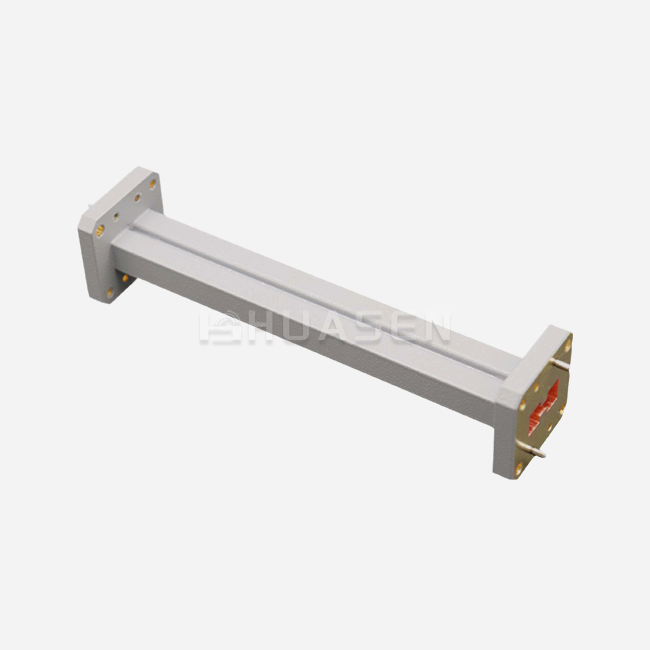
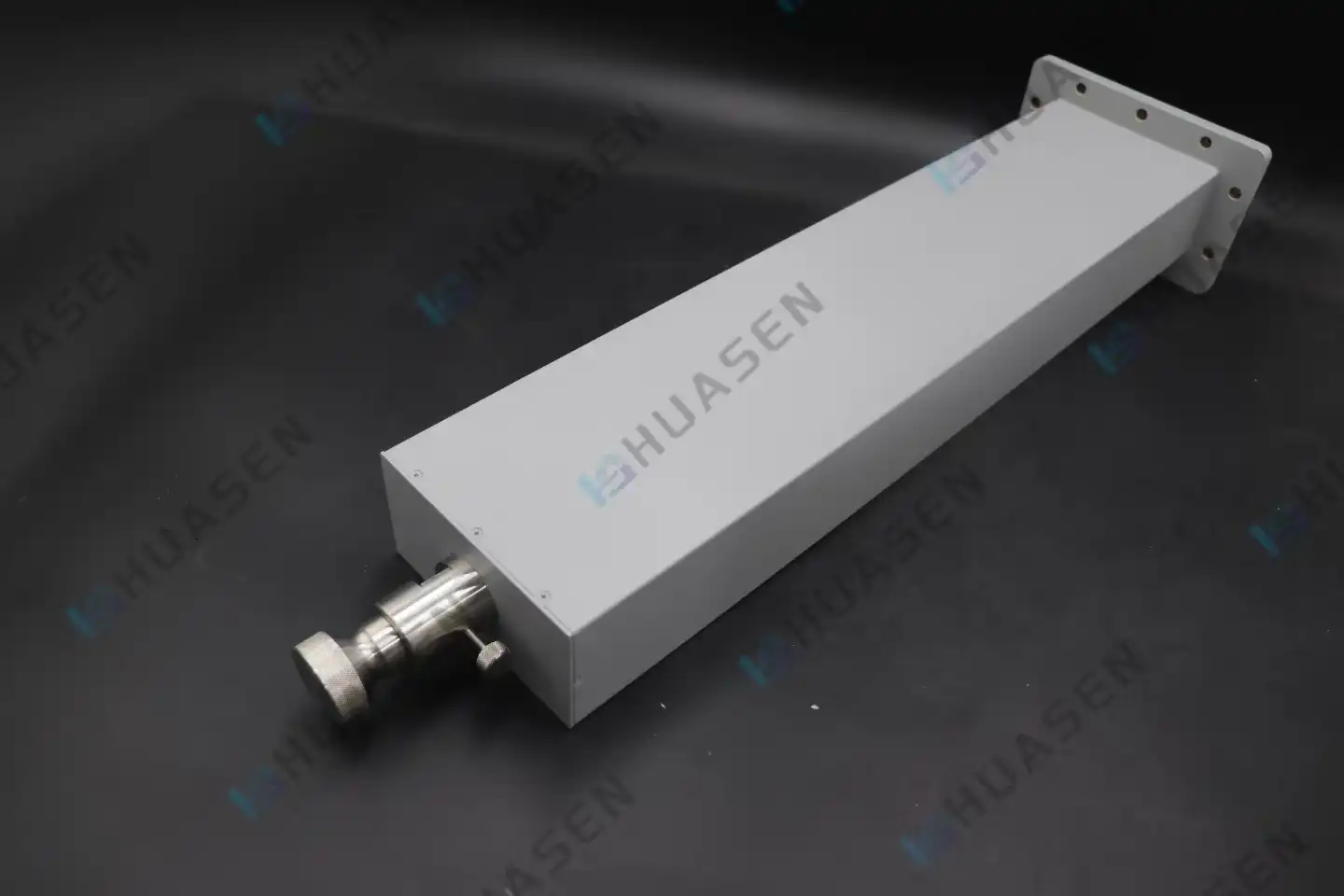
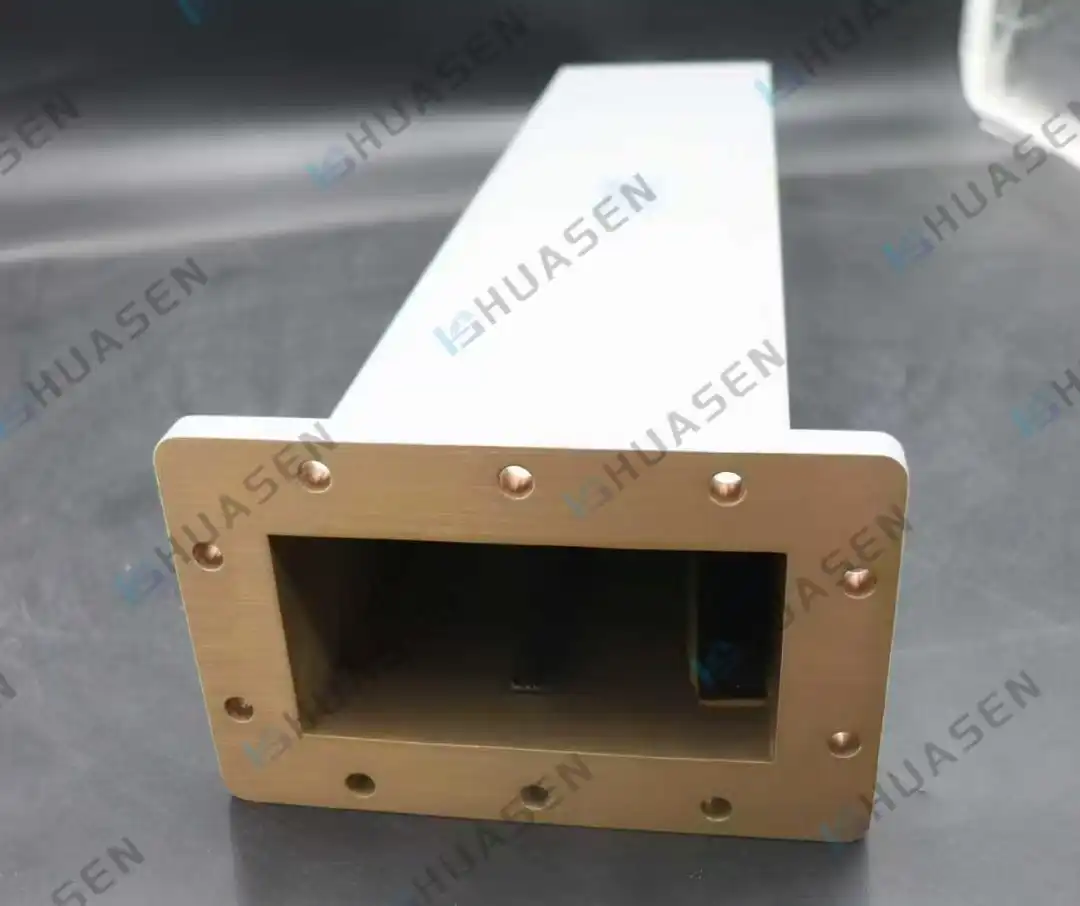
The waveguide sliding load operates on a sophisticated principle that distinguishes it from conventional fixed terminations. The device consists of a tapered absorbing element housed within a precision waveguide section, designed to move mechanically along the transmission axis. This movement capability allows engineers to introduce precise phase variations while maintaining consistent reflection characteristics. The key advantage emerges from the mathematical relationship between phase rotation and measurement accuracy. When the absorbing element moves at least one-half wavelength at the lowest operating frequency, it creates a complete 360-degree phase rotation. This movement enables the separation of test port directivity errors from load performance, utilizing advanced calibration techniques that significantly improve measurement precision.
Precision Measurement Benefits
Modern laboratory environments demand exceptional measurement accuracy, particularly when working with millimeter-wave frequencies where traditional fixed loads reach their physical limitations. The sliding mechanism addresses this challenge by enabling what engineers call "circle fitting" calculations. The vector network analyzer takes measurements at multiple slide positions, typically five to seven distinct points, and fits a circle to these measurements to determine the geometric center on a Smith Chart. This mathematical approach effectively synthesizes a "perfect load" with impedance matching capabilities far superior to premium fixed alternatives. The technique removes source match and directivity errors that would otherwise compromise measurement integrity. Research has demonstrated that properly implemented sliding load calibrations can achieve directivity improvements of 20-30 dB compared to conventional fixed load methods.
Equipment Longevity and Operational Efficiency
The mechanical design of qualitysliding loads incorporates advanced rail systems that prevent lateral movement during operation, ensuring consistent performance over extended periods. This stability translates into reduced maintenance requirements and extended equipment lifespan compared to alternative testing solutions. Engineering teams report significant reductions in recalibration frequency and improved measurement repeatability when incorporating sliding loads into their testing protocols.
Applications and Installation of Waveguide Sliding Load in Labs
The versatility of waveguide sliding loads extends across numerous laboratory applications, from fundamental research to production quality control. Understanding these applications helps procurement professionals and engineers identify optimal integration opportunities within their specific operational contexts.
Metrology-Grade Vector Network Analyzer Calibration
Research and development laboratories rely heavily on sliding loads for establishing measurement traceability in one-port and two-port calibration setups. The device serves as the foundation for millimeter-wave frequency calibrations, where measurement accuracy directly impacts product development timelines and specificationwaveguide terminationcompliance. The calibration process involves positioning the sliding element at predetermined intervals while the VNA firmware calculates impedance circle parameters. This methodology enables engineers to achieve measurement uncertainties below 0.01 dB in magnitude and 0.5 degrees in phase across broad frequency ranges. Such precision proves crucial when characterizing next-generation 5G and 6G components, where small measurement errors can lead to significant system performance degradation.
Directional Coupler Directivity Verification
Manufacturing quality control processes extensively utilize sliding loads for directional coupler characterization through ripple test methodologies. The sliding action creates distinctive ripple patterns on return loss measurements, with ripple amplitude directly correlating to coupler directivity performance. This technique separates coupler characteristics from load performance, providing accurate directivity measurements essential for certifying high-specification radar and communication components. Quality assurance teams can rapidly assess coupler performance across production batches, identifying units that meet stringent directivity requirements. The measurement technique typically requires 10-15 slide positions to generate sufficient data for statistical analysis, completing comprehensive directivity characterization in minutes rather than the hours required by alternative methods.
High-Power System Stability Testing
Engineers working with klystrons, magnetrons, and solid-state amplifiers employ sliding loads as mechanical tuners to simulate varying load conditions. The device enables systematic testing of amplifier stability under different phase mismatch conditions, ensuring reliable operation when connected to antenna arrays experiencing dynamic impedance variations. This application proves particularly valuable for aerospace and defense applications where amplifier stability must be maintained across extreme environmental conditions and varying load impedances. The controlled phase variation capability allows engineers to map stability boundaries and optimize amplifier designs for robust performance.
Installation Guidelines and Best Practices
Successful sliding load implementation requires careful attention to environmental factors and mechanical setup procedures. Laboratory environments should maintain stable temperature conditions, as thermal expansion can affect slide positioning accuracy and measurement repeatability. The installation process begins with thorough flange inspection and cleaning procedures following MIL-DTL-3928 specifications. Proper flange contact eliminates interface-related measurement errors that could negate the precision benefits of the sliding mechanism. Mounting systems must provide adequate mechanical support while allowing unrestricted slide movement across the full travel range. Calibration verification procedures should be established to confirm proper operation before critical measurements. These procedures typically involve checking reflection stability across the travel range and verifying micrometer accuracy through known position measurements.
Comparing Waveguide Sliding Load with Alternative Load Types
Equipment selection decisions require a comprehensive understanding of how sliding loads compare with alternative termination technologies. Each approach offers distinct advantages depending on specific application requirements and operational constraints.
Performance Comparison with Fixed Loads
Fixed loads provide simplicity and cost advantages but encounter fundamental physical limitations at high frequencies. Manufacturing tolerances and material properties prevent fixed loads from achieving perfect impedance matching across broad frequency ranges. The resulting measurement uncertainties can compromise calibration accuracy and introduce systematic errors in component characterization. Sliding loads overcome these limitations through their mathematical calibration approach. While individual slide positions may exhibit VSWR values similar to premium fixed loads, the circle fitting algorithm extracts a virtual perfect match that surpasses any physically realizable fixed termination. This advantage becomes increasingly significant at millimeter-wave frequencies where the wavelength approaches manufacturing tolerance limits. Cost considerations favor fixed loads for routine applications where moderate measurement accuracy suffices. However, the improved measurement capability of sliding loads often justifies their higher initial cost through reduced measurement uncertainty and enhanced product development efficiency.
Advantages Over Precision Attenuators
Precision attenuators offer variable reflectionmagnitude but lack the phase control capability essential for advanced calibration techniques. While attenuators serve valuable roles in system testing and signal level adjustment, they cannot provide the error term separation capabilities that make sliding loads indispensable for metrology applications. The combination of magnitude and phase control would require complex attenuator and phase shifter combinations, introducing additional insertion loss and measurement uncertainty. Sliding loads achieve equivalent functionality through a single device with superior accuracy and stability characteristics.
Material Selection Impact on Performance
The choice of waveguide materials significantly influences sliding load performance and longevity. Aluminum construction provides excellent conductivity and machinability at moderate cost, making it suitable for general laboratory applications. However, aluminum surfaces require careful protection from corrosion in humid environments. Stainless steel offers superior environmental resistance and mechanical durability, particularly valuable for outdoor testing or harsh laboratory conditions. The higher material density provides enhanced mechanical stability, though increased weight may complicate mounting and positioning systems. Specialized alloys and surface treatments further enhance performance in demanding applications. Silver or gold plating reduces surface resistance and prevents oxidation, particularly critical for millimeter-wave applications where surface roughness significantly impacts electrical performance.
How to Choose and Procure the Right Waveguide Sliding Load for Your Lab
Successful procurement requires systematic evaluation of technical specifications, supplier capabilities, and long-term support requirements. Understanding these factors enables informed decisions that optimize both immediate performance and future operational flexibility.
Critical Technical Specifications
Frequency coverage represents the primary selection criterion, as waveguide sliding loads are typically designed for specific waveguide bands. Common configurations include WR-90 for X-band applications (8.2-12.4 GHz), WR-28 for Ka-band (26.5-40 GHz), and specialized variants extending beyond 110 GHz for emerging millimeter-wave waveguide terminationapplications.VSWR specifications indicate the fundamental matching capability of the device. Premium sliding loads achieve VSWR values better than 1.05:1 across their operating bands, with metrology-grade units reaching 1.01:1 or better. These specifications directly impact measurement uncertainty and calibration accuracy. Travel range must accommodate at least one-half wavelength movement at the lowest operating frequency to ensure complete phase rotation. Insufficient travel range prevents proper circle fitting calculations and compromises calibration effectiveness. Micrometer resolution typically ranges from 0.01 to 0.001 mm, with finer resolution enabling more precise positioning and improved measurement repeatability.
Supplier Evaluation and Quality Assurance
Supplier selection requires careful evaluation of manufacturing capabilities, quality systems, and technical support infrastructure. Established manufacturers with ISO 9001 certification and documented quality management systems provide greater assurance of consistent product performance and reliable delivery schedules. Technical support capabilities become crucial during installation and initial calibration phases. Suppliers offering comprehensive documentation, calibration data, and responsive engineering support enable faster implementation and troubleshooting when needed. The availability of customization services allows adaptation to specific laboratory requirements and unique applications. References from similar organizations provide valuable insights into supplier performance and product reliability. Contacting existing customers can reveal practical implementation challenges and long-term satisfaction with both product performance and supplier support.
Budget Considerations and Value Analysis
Pricing structures vary significantly based on frequency range, precision requirements, and customization needs. Standard waveguide band configurations typically offer the best value, while specialized frequency ranges or enhanced precision specifications command premium pricing. Bulk purchase opportunities may provide cost advantages for organizations requiring multiple units or planning facility expansions. However, the specialized nature of these devices often limits volume discounts compared to more common laboratory equipment. Warranty terms and service support availability influence the total cost of ownership beyond the initial purchase price. Comprehensive warranties covering both mechanical and electrical performance provide protection against manufacturing defects and early failures. Service support availability ensures continued operation throughout the device's operational lifetime.
Ensuring Optimal Performance and Future-Proofing Your Lab Equipment
Maximizing the return on sliding load investments requires proactive management approaches that address both immediate operational needs and evolving technology requirements. Strategic planning ensures these precision instruments continue delivering value as laboratory capabilities expand and measurement requirements advance.
Performance Monitoring and Maintenance Strategies
Regular performance verification procedures maintain measurement accuracy and identify potential issues before they impact critical testing activities. Monthly checks should include reflection stability verification across the travel range, micrometer calibration confirmation, and flange condition inspection. The reflection stability test involves measuring VSWR at multiple slide positions and confirming that the magnitude remains constant while the phase varies linearly with position. Deviations from expected behavior indicate mechanical wear or contamination requiring immediate attention. Early detection prevents measurement errors and extends equipment operational life. Micrometer accuracy verification uses precision gauge blocks or laser interferometry to confirm positioning accuracy. Any backlash or positioning errors compromise measurement repeatability and may require mechanical adjustment or replacement of drive components.
Technology Evolution and Upgrade Planning
The millimeter-wave frequency spectrum continues expanding with 5G, 6G, and emerging wireless technologies driving demand for higher frequency capabilities. Procurement strategies should consider frequency roadmaps and potential future requirements when selecting current equipment. Modular design approaches enable incremental capability expansion without replacing entire systems. Some manufacturers offer interchangeable waveguide sections that extend frequency coverage while retaining existing drive mechanisms and control systems. This approach reduces upgrade costs and maintains operator familiarity with existing procedures. Software integration capabilities become increasingly important as laboratory automation advances. Sliding loads with computer-controlled positioning and automated measurement sequences enable higher throughput testing and reduced operator workload. Planning for these capabilities during initial procurement simplifies future automation implementation.
Optimization Through Continuous Improvement
Feedback from laboratory personnel provides valuable insights for optimizing procedures and identifying enhancement opportunities. Regular review sessions can reveal workflow improvements, training needs, and potential application expansions that maximize equipment utilization. Documentation of measurement procedures and calibration techniques ensures consistent results across different operators and shifts. Standardized procedures reduce measurement variability and enable meaningful comparison of results over time. Collaboration with equipment manufacturers often reveals application techniques and optimization approaches developed by other users. Many manufacturers maintain user groups or technical forums where engineers share experiences and best practices.
Conclusion
Waveguide sliding loads have established themselves as indispensable tools in modern engineering laboratories, providing measurement capabilities that conventional fixed terminations simply cannot match. Their ability to separate error terms through controlled phase variation makes them essential for achieving the measurement accuracy demanded by today's advanced communication and radar systems. The mathematical precision enabled by circle fitting algorithms, combined with the mechanical reliability of modern sliding mechanisms, delivers measurement performance that justifies the investment for any laboratory serious about high-frequency characterization. As wireless technologies continue advancing toward higher frequencies and tighter specifications, the role of sliding loads in ensuring measurement traceability and accuracy will only become more critical.
FAQ
1. What makes sliding loads superior to high-precision fixed loads?
Physical manufacturing limitations prevent fixed loads from achieving perfect impedance matching at high frequencies. Sliding loads overcome this constraint through mathematical calibration techniques that synthesize virtual perfect matches with performance exceeding any physically realizable fixed termination.
2. How does minimum operating frequency relate to travel range?
The sliding element must move at least one-half wavelength at the lowest operating frequency to achieve complete phase rotation. Insufficient travel range prevents proper circle fitting calculations and compromises calibration effectiveness.
3. Can sliding loads handle high-power applications?
Sliding loads are precision measurement instruments designed for calibration rather than power dissipation. Typical power ratings range below 50W CW, making them unsuitable for high-power dummy load applications where dedicated terminations are required.
4. What factors determine calibration frequency requirements?
Metrology laboratories typically require annual calibration cycles. However, the connector condition should be inspected before each use, and immediate recalibration becomes necessary if slide linearity degrades or the VSWR varies during movement.
5. Why is circle fitting software capability important?
The mathematical algorithm analyzes measurements from multiple slide positions to determine the geometric center of the impedance circle. Poor mechanical stability prevents accurate circle fitting, resulting in increased residual errors and compromised calibration performance.
Partner with Huasen Microwave for Superior Sliding Load Solutions
Huasen Microwave Technology has delivered exceptional waveguide components to engineering laboratories worldwide since 1993, combining three decades of expertise with cutting-edge manufacturing capabilities. Our precision-engineered sliding loads meet the demanding requirements of metrology-grade Waveguide sliding loads applications while providing the reliability and consistency that laboratory professionals require. Each unit undergoes rigorous quality testing to ensure VSWR specifications better than 1.05:1 and mechanical stability that maintains measurement accuracy over thousands of positioning cycles. When you need a trusted waveguide sliding load manufacturer, our experienced engineering team provides comprehensive support from initial specification through installation and ongoing service. Contact our specialists at sales@huasenmicrowave.com to discuss your specific requirements and discover how our sliding load solutions can enhance your laboratory's measurement capabilities.
References
1. IEEE Standard 1478-2020, "IEEE Recommended Practice for Measurement of Waveguide Components."
2. Rytting, David K., "Network Analyzer Error Models and Calibration Methods," Microwave Journal Technical Articles, 1998
3. Engen, Glenn F., "A (Historical) Review of the Six-Port Measurement Technique," IEEE Transactions on Microwave Theory and Techniques, Vol. 45, No. 12, December 1997
4. Blackham, David V., "Sliding Load Calibration for Extending OSLT Calibrations," IEEE MTT-S International Microwave Symposium Digest, 1993
5. Heuermann, Holger, "Advanced Calibration Techniques for Network Analyzers," Microwave Engineering Europe, March 2002
6. Military Specification MIL-DTL-3928, "Waveguide, Rigid, Rectangular, Straight Sections and Bends," Department of Defense Interface Standard, 2018
Send Inquiry