What Is Pyramidal Horn Antenna and When to Use It?






2026-05-06 21:06:45
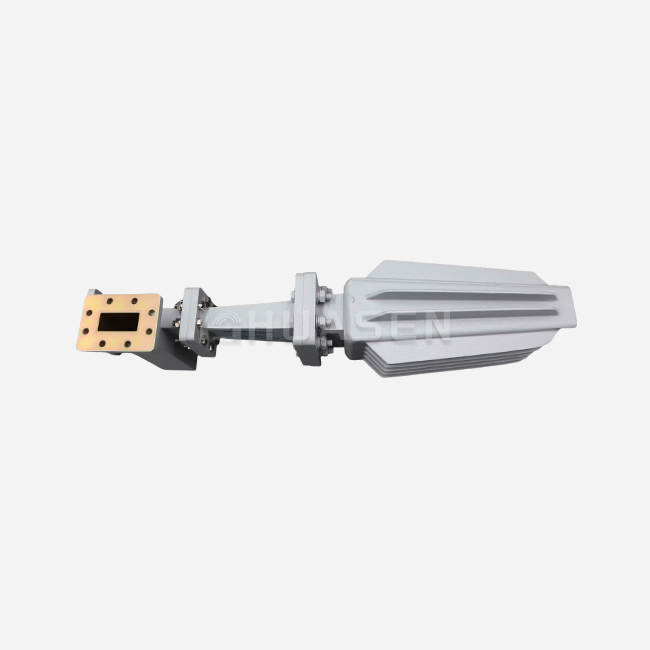
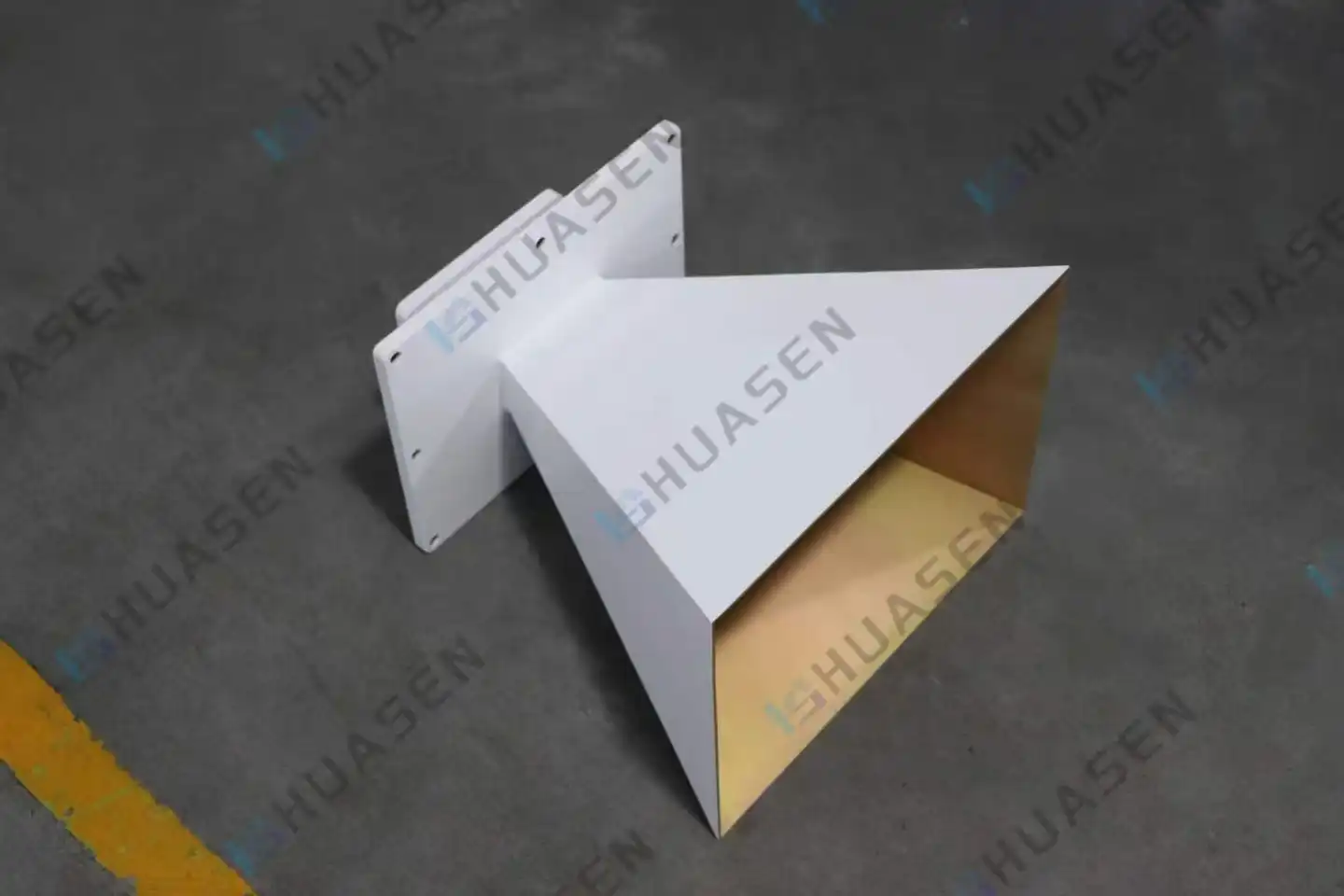
Pyramidal horn antennas are a type of waveguide aperture antenna that sends out electromagnetic energy at microwave and millimetre-wave frequencies. It has a unique structure with a rectangular waveguide that gradually flares outward in both the electric and magnetic field lines, making an opening in the shape of a pyramid. This curved shape changes the impedance from the waveguide to the impedance of empty space, which is about 377 Ohms. The antenna reduces impedance mismatch, which cuts down on signal reflections and boosts power transfer efficiency. This makes it essential for users that need high directivity, stable gain, and low VSWR in tough RF settings.
Understanding the Pyramidal Horn Antenna
At its core, the pyramidal horn antenna solves one of the most important problems in radio frequency engineering: how to effectively send electromagnetic waves from waveguides that are limited in area. Simple open-ended waveguides have a lot of reflections and cannot control the direction of the waves very well. This antenna, on the other hand, adds a controlled flare that changes wave transmission modes easily.
Physical Structure and Materials
The building process starts with a waveguide feed that is carefully polished. These are usually made of high-conductivity aluminium alloys or oxygen-free copper. The waveguide part is connected to the curved horn body, which grows in a way that is the same in both the E-plane (direction of the electric field) and the H-plane (direction of the magnetic field). Surface treatments like chemical passivation or silver plating are used on high-performance models to lower skin-effect losses and improve corrosion resistance. This is especially helpful in maritime communication systems and outdoor radar installations where durability in harsh environments is a must.
The lens size and flare angle are not chosen at random. Engineers use standard methods to figure out these factors while balancing aperture phase error against aperture area to find the "optimum gain". Larger apertures give more gain but cause phase inconsistencies across the radiating surface. The pyramidal shape perfectly balances these opposing factors, making the radiation properties consistent across the working span.
Working Principles and Design Parameters
As electromagnetic waves move through the waveguide feed, they hit the cross-section that is slowly getting bigger. This growth lowers the strength of the electric field while keeping the energy constant. This lets the wave couple easily flow into empty space without any abrupt breaks that would cause reflections. Because it is rectangular, the rectangular opening sends out a directional beam with clear patterns in the E-plane and H-plane, usually with slightly different beamwidths.
The opening width and height, the flare length, and the flare angle are all important design factors. A flare that is longer and has softer angles lowers phase error and improves VSWR, but it makes the antenna bigger and heavier. Design experts at testing sites and satellite ground stations carefully choose these factors based on the frequency range, the gain they want (10 to 25 dBi is common), and the limitations of the mounting. The connection between these factors and antenna performance is based on well-known electromagnetic theory. This lets us make accurate guesses about gain without having to do a lot of prototyping, which is very helpful for procurement teams that are working on short development plans.
Key Technical Advantages
Because the antenna is made of a single piece of metal that has been shaped and has no moving parts inside, it is very reliable and can handle a lot of power. These antennas can handle both continuous wave power levels and high peak pulse power, with waveguide arcing voltage being the main limit. They don't use resistive loads or dielectric materials that break down easily when heated. Because they are so strong, they can be used for radar emitters and high-power EMC tests, where failure of the equipment is not acceptable.
VSWR performance of the pyramidal horn antenna is usually less than 1.5:1 across the working band, which means that power is transferred efficiently with little energy being lost. This low VSWR makes sure that the transmission amplifiers don't have to work as hard and that the full amount of power that is sent hits the target or test sample. Engineers like that the antenna has pure linear polarisation and cross-polarisation separation of more than 25 dB, which means that orthogonally polarised signals don't cause much crosstalk. This is an important feature in communication environments with a lot of other signals.
When and Where to Use a Pyramidal Horn Antenna?
To figure out when to use this type of antenna, you have to match its built-in features with specific operating needs. The pyramidal horn antenna works very well in situations that need precise performance, high directivity, and wideband operation.
EMC and EMI Compliance Testing
These antennas are used as a standard for checking radiated emissions and protection in electromagnetic compatibility labs. Facilities that are authorised to test according to CISPR, IEC, or MIL-STD standards depend on the antenna's stable radiation patterns and easy-to-calculate gain. When testing for immunity, like in car ISO 11451 protocols, the horn directs radio frequency energy at the object being tested, setting the exact field strengths needed for certification. As a result of the antenna's ability to create strong fields without losing power in unwanted directions, test times are cut down, and amplifier power needs are cut down, which helps high-volume testing operations keep costs down.
When measuring emissions from electrical systems, the antenna's phase centre steadiness across its bandwidth is very helpful. Test engineers can safely set up tools at certain distances because they know that the antenna will always behave electrically the same way. This reliability gets rid of measurement error that would have needed expensive retesting or delays caused by regulators.
Radar and Satellite Communication Systems
Pyramidal horn antennas are used as feed elements for parabolic reflector systems in ground stations that serve satellite telemetry and radar sites. The horn lights up the mirror surface with a controlled taper, which makes the opening work as well as possible while reducing spillover loss as much as possible. This improved lighting pattern forms the secondary radiation pattern, lowering side-lobe levels that are needed to block interference and find weak targets in a lot of background noise.
The antenna is built to last and works reliably even in salty settings, which is good for military ships' maritime communication systems. When these antennas have the right protective radomes and coatings that don't rust, they can keep their signals strong even when the temperature changes and the antenna moves. They meet the strict MIL-STD-810 weather requirements that defence companies require.
Antenna Range Calibration and Measurement
As gain transfer standards, these antennas are used in study and measurement labs. To find unknown antenna gains, the "three-antenna method" involves measuring the received power between two antenna pairs, with the features of at least one antenna being known for sure. This reference comes from the pyramidal horn antenna's theoretically calculable gain, which can be found by looking at its physical measurements. This lets prototype antennas be accurately described without having to use outside calibration services. This feature cuts down on development costs and speeds up the time it takes to get new wireless systems on the market for equipment makers.
In labs that study materials, horns (such as pyramidal antennas) are used in free-space dielectric measurement sets to send focused beams through samples of materials to find out their permittivity and loss tangent. The narrow beamwidth reduces scattering around the edges of the sample, which makes measurements more accurate for quality control tasks in production lines for composite materials.
Procurement Insights: How to Buy Pyramidal Horn Antennas for Your Business?
To find the right provider, you need to look at more than just the technical specs. You also need to think about things like shipping reliability, the ability to make changes, and help after the sale.
Identifying Reputable Manufacturers
Well-known companies like ETS-Lindgren, Keysight Technologies, and Amphenol keep full lines of products that cover all common frequency bands, from L-band to millimetre-wave. These companies offer thorough technical information, such as measured gain patterns, VSWR curves, and power handling specs. The information is backed up by calibration papers that can be traced back to national standards. Reviewing this documentation before making a buy choice helps tech teams make sure that the product meets the needs of the system and avoids problems that could cost a lot to fix.
New pyramidal horn antenna suppliers, especially those with strong engineering backgrounds and industrial methods that are ISO 9001-certified, often offer low prices and easy customisation. When looking for new vendors, trying sample units on a bench or in the field lowers the risk. This is especially true for large-scale projects where supply chain stability is very important.
Understanding Pricing Variables
Costs of antennas go up or down depending on frequency, strength, and material choice, including pyramidal antennas. Larger lower-frequency antennas need more raw materials and more time to be machined, which drives up the cost per unit. Gold plating and other surface treatments are more expensive, but they improve performance in low-loss uses or increase service life in corrosive environments, making them a good investment for offshore platforms or coastal radar sites.
Requests for customisation, like non-standard waveguide flanges, speciality mounting clamps, or wider frequency coverage, need engineering analysis and tooling changes, which affect both prices and delivery times. When you involve providers early on in the design process, you can compare the pros and cons of unique features and standard catalogue items, which helps you get the best overall programme costs.
Compatibility and Integration Checks
Making sure that the waveguide link works with the system stops integration delays. Standard waveguide names (WR-90, WR-62, etc.) give exact information about the waveguide's internal dimensions and flange patterns. However, it's best to check the bolt-hole sites and the gasket needs to avoid errors in the field. When suppliers send dimensioned models in STEP or IGES formats, they can be integrated with CAD, which finds interference problems before the hardware comes.
Specifications for power handling should be carefully looked over. The manufacturers set boundaries for both average power (continuous wave) and peak power (pulsed operation). For uses with high-power radar emitters, the antenna must be able to handle peak power levels with enough safety margins. This includes taking into account VSWR-induced reflections that raise internal field strengths beyond what can be calculated using simple transmission calculations.
Warranty and After-Sales Support
Suppliers with a good reputation back up their products with guarantees that cover problems with the way they were made and performance that doesn't match what was promised. Buying things is safer when you know about guarantee terms like how long they last, what kinds of failure they cover, and how to return items. Long-term value comes from suppliers who offer calibration services and repair services. This is especially true for test equipment that needs to be recertified on a regular basis under ISO 17025 or similar quality standards.
Total cost of ownership is affected by the provision of technical help, including for pyramidal antennas. Application engineering help from suppliers speeds up system development by helping with antenna placement and selection. Having access to field service reps who can fix installation problems or train users speeds up project completion, especially for complicated multi-antenna arrays or deployment settings that aren't well known, such as those involving pyramidal antennas.
Conclusion
Pyramidal horn antennas have been used for a long time and have been shown to work well in situations where solid directional radiation is needed. Because they are strong, have impedance-matching geometry, and have factors that can be calculated theoretically, they are essential tools for EMC tests, satellite communications, radar systems, and precise measurements. Knowing how the antenna works physically, what kinds of uses it can serve, and how it compares to other designs lets buying teams make smart choices that meet technical needs and stay within budget. Working with skilled makers that offer full technical support and open customisation options is the best way to make sure that systems work well together and last for a long time in tough industrial and defence settings.
FAQ
1. What gain range can I expect from standard pyramidal horn antennas?
Depending on the aperture size and working frequency, most pyramidal horn antenna types have gains of 10 to 25 dBi. When the frequency goes up, bigger openings make more gains, but they also get bigger and heavier. Looking at maker gain charts that plot frequency against gain helps match the antenna choice to the link budget needs.
2. Can these antennas be customised for specific frequency bands?
Manufacturers often change the dimensions and shape of waveguides to get the best performance for frequency bands that aren't common. Giving exact information like centre frequency, bandwidth, targeted gain, and VSWR targets helps engineering teams come up with the best designs. When compared to stock items, custom antennas usually take four to eight weeks longer to deliver.
3. How do I compare gain and radiation pattern data between suppliers?
Ask for pattern data that shows how gain changes with angle in both E-plane and H-plane cuts. Reliable providers show pattern stability by plotting at different frequencies across the working band. Pattern quality can be seen in beamwidth specs (half-power points) and side-lobe levels. When you compare these factors across companies, you can see that their performance is different, which is why prices vary.
4. What determines the low-frequency limit of operation?
The lower working limit is set by the waveguide feed's cutoff frequency. Signals below the cutoff level weaken quickly and don't spread well. Making sure the waveguide sizes are right for the frequency range you want to use guarantees proper operation. The frequency ranges that manufacturers list are workable, taking into account both cutoff limits and pattern loss at band edges.
Partner with Huasen Microwave for Your Pyramidal Horn Antenna Needs
The people at Huasen Microwave Technology have been designing and making high-frequency parts for more than 30 years. Our Pyramidal Horn Antenna product line gives system integrators and test centres the performance, dependability and customisation options they need. We are a reliable maker of Pyramidal Horn Antenna for 5G infrastructure, military projects, and defence uses around the world. Our in-house skills include precision machining, RF testing, and environmental approval. Our research team works closely with clients to find the best antenna specs. This makes sure that the antennas work well with your waveguide systems and meet strict VSWR and power handling requirements. Email our expert sales team at sales@huasenmicrowave.com to talk about the needs of your project, get full datasheets, or set up evaluation units for samples. We're happy to take your questions about both stock items and solutions that are specially designed to solve your specific operating problems.
References
1. Balanis, Constantine A. "Antenna Theory: Analysis and Design." 4th Edition. Wiley, 2016.
2. Milligan, Thomas A. "Modern Antenna Design." 2nd Edition. IEEE Press, 2005.
3. Silver, Samuel. "Microwave Antenna Theory and Design." MIT Radiation Laboratory Series, Volume 12. McGraw-Hill, 1949.
4. Olver, A.D., et al. "Microwave Horns and Feeds." IEEE Electromagnetic Waves Series, 1994.
5. IEEE Standard 149-2021. "IEEE Recommended Practice for Antenna Measurements." Institute of Electrical and Electronics Engineers, 2021.
6. Kraus, John D. and Marhefka, Ronald J. "Antennas for All Applications." 3rd Edition. McGraw-Hill, 2002.
Send Inquiry