What Is a Coaxial Directional Coupler and How Does It Work in RF Systems?






2025-11-18 21:23:38
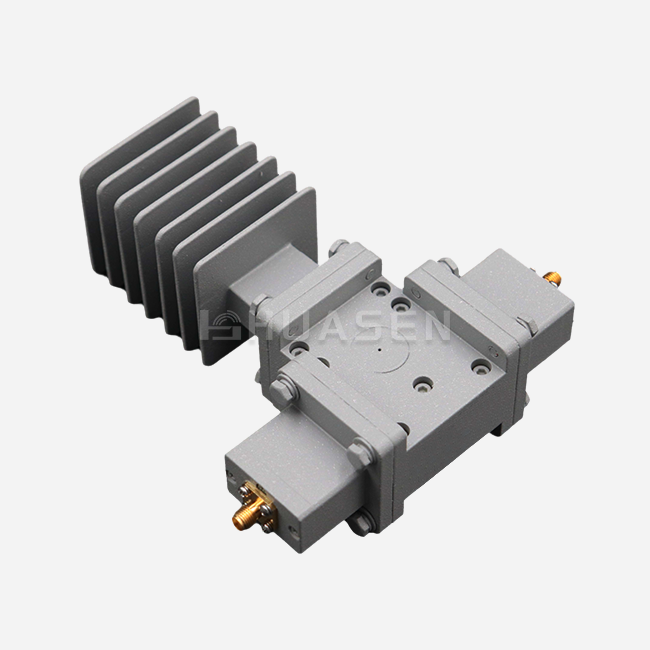
A coaxial directional coupler is an important part of radio frequency (RF) systems; it helps with power control and data analysis. This inactive gadget is made to pick out a small part of the electromagnetic wave that is moving through a transmission line. This lets RF signals be precisely measured and watched. Basically, a coaxial directional coupler is a special kind of power splitter that sends a small amount of power from the input to a secondary port while keeping the purity of the primary signal. Because it can tell the difference between forward and backward moving waves, it is an important part of many RF systems, from radar systems to telephones. An electromagnetic coupling concept is what makes a coaxial directional coupler work. The device's carefully designed structures make it sensitive to direction. These couplers use exact shapes and materials to separate incoming and mirrored signals. This lets you see how well the system is working and lets you do important things like tracking power, injecting signals, and matching loads. As we learn more about how coaxial directional couplers work and what they're used for, we'll see how these seemingly simple devices make current RF systems much more reliable and efficient.
Fundamentals of coaxial directional coupler operation
Before you can understand how a coaxial directional coupler works on the inside, you need to know how it works in general. The gadget works by using electromagnetic connection between two communication lines to point in a certain direction. This coupling happens through holes or openings that were carefully planned to let a limited amount of energy move from the main line to the linked line.
Electromagnetic coupling mechanism
Emitting electromagnetic waves together is what makes a coaxial directional coupler work. Emitting electromagnetic fields that go beyond the wire is caused by an RF signal traveling through the main transmission line. You can pick up some of this field by putting a secondary circuit close to the main line. This will make the linked line current. Small holes, long lines, and the frequency of the signal are some of the things that change how strong this connection is.
Directional sensitivity
It is different from a simple power splitter because a coaxial directional coupler can tell the difference between waves moving forward and waves moving backward. This directional awareness is made possible by placing and designing the connection structure in a smart way. The device can be made to improve coupling in one way while decreasing it in the other by carefully managing the phase relationships between the paired signals. Because of this, there is a high level of directivity, which lets the coupler precisely measure the flow of power in a certain way along the transmission line.
Key parameters
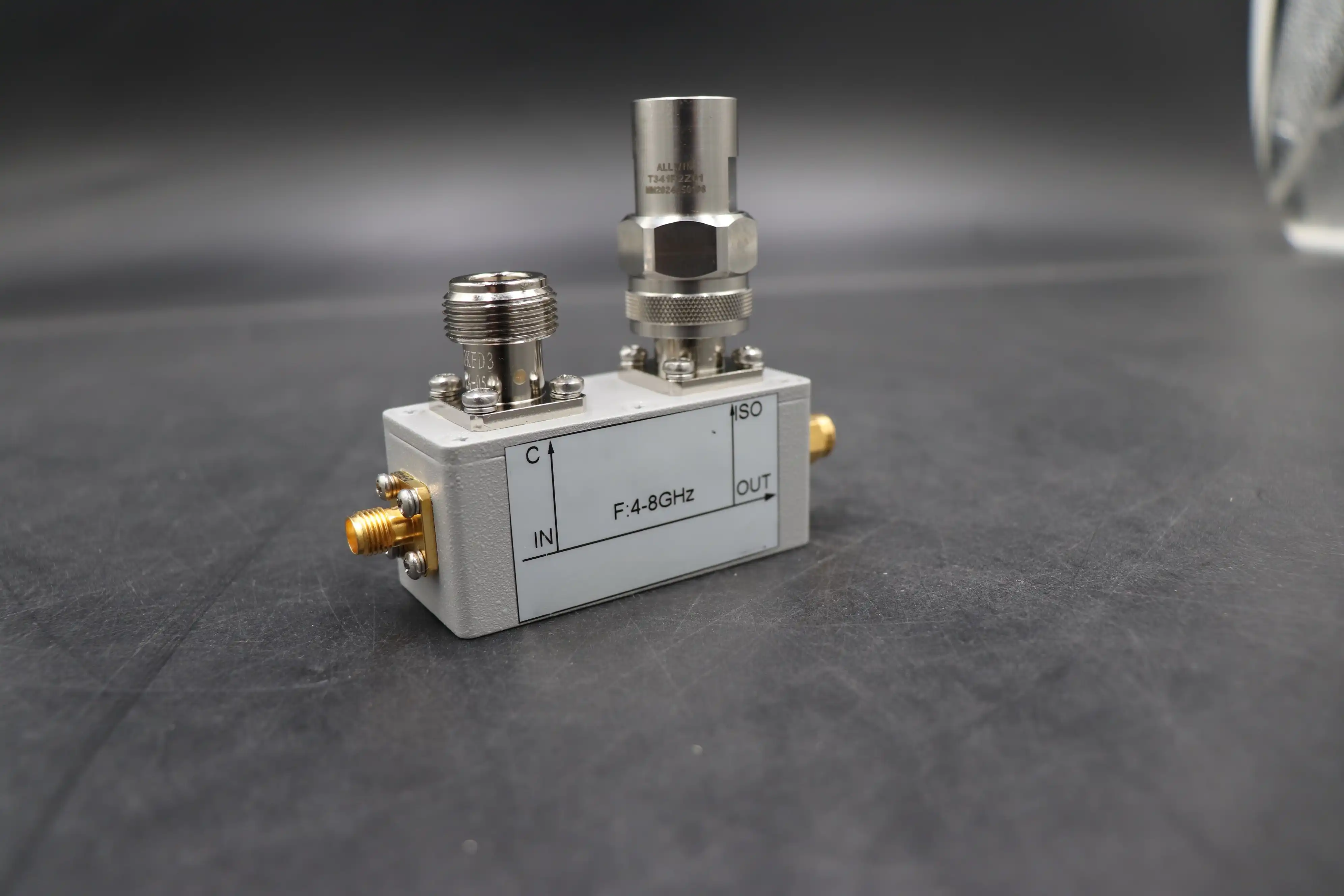
A coaxial directional coupler's success is based on a number of important factors, including:
- Coupling factor: This shows how much power is at the linked port compared to the input power. It is usually given in decibels (dB).
- Directivity is a way to rate how well the coupler separates data going in different directions; higher numbers mean better performance.
- What is insertion loss? It is the amount of power that is lost in the main transmission line because of the connection.
- You can look at a frequency band to see what frequencies the coupler will still work with.
You need to know these things to choose the right link and make sure the system works well.
How does a coaxial directional coupler enable measurement of forward & reflected waves?
One of the best things about a coaxial directional coupler is that it can measure both forward and reflected waves in a transmission line. This feature is important for many RF tasks, like checking power levels, matching impedances, and diagnosing problems with systems. Let's look at how these gadgets do this very important job.
Dual-directional coupling
A lot of coaxial directional couplers are made to work in both directions, with two coupled ports in addition to the main input and output ports. One of the linked ports is set to sample the wave that is moving forward, and the other is set to sample the wave that has been turned around. With this setup, you can see both the incoming signals and the signals that are backwards at the same time. This shows you how power flows through the system as a whole.
Signal sampling and analysis
When an RF signal travels through the main line of a coaxial directional coupler, a small portion of the forward-traveling wave is coupled to the forward sampling port. Similarly, any reflected signal resulting from impedance mismatches or discontinuities in the system will be sampled at the reverse coupling port. Engineers can learn a lot about how well the system works by checking the power levels at these ports:
- Forward power measurement: shows how much power is being sent to the load.
- Measurement of reflected power: Shows how much resistance difference there is or if there are any problems in the transmission line.
- Return loss calculation: The return loss can be found by comparing the forward and mirrored power. This shows how well the system is aligned.
Applications in system optimization
The ability to measure forward and reflected waves enables several critical applications in RF system optimization:
- Matching impedance: Engineers can change matching networks to reduce reflections and increase power flow by keeping an eye on mirrored power.
- Finding faults: Quick changes in the mirrored power can show that there are new faults or that the transmission line or antenna system is getting worse.
- Power control: The forward power reading in receivers can be used as input to keep the output power fixed even when the load changes.
Because of these features, coaxial directional couplers are necessary to make sure that RF systems work well, are reliable, and are efficient in a lot of different situations.
Use cases of coaxial directional couplers in communication systems
Coaxial directional couplers are used in a lot of different communication systems. They are very important for both designing the systems and keeping them running smoothly. Because they are reliable and can be used in a lot of different situations, they are important in many RF and microwave uses. Let's look at some of the most important situations where these gadgets are very useful.
Telecommunications infrastructure
In the world of telecommunications, coaxial directional couplers are essential for base stations and network tools to work well:
- Monitor power: Couplers keep an eye on the output power of emitters all the time to make sure they stay within the limits set by regulations and keep the signal strength at its best.
- For feed-forward amplification, couplers sample the input signal to provide feed-forward correction, which boosts stability and efficiency in more advanced power amplifier designs.
- Network analysis: Couplers make it easier to measure network factors during installation and upkeep, which helps workers get the most out of the system.
Radar systems
Coaxial directional couplers are very important for radar uses because they do many important things, such as
- Transmit/receive isolation: Couplers help keep sent and received signals separate in single-antenna radar systems, which keeps sensitive receiving parts safe.
- Power leveling: Couplers allow precise control of output power by sampling the broadcast signal. This makes sure that the radar always works the same way.
- System calibration: Directional couplers make internal calibration easier, which keeps radar readings accurate over time.
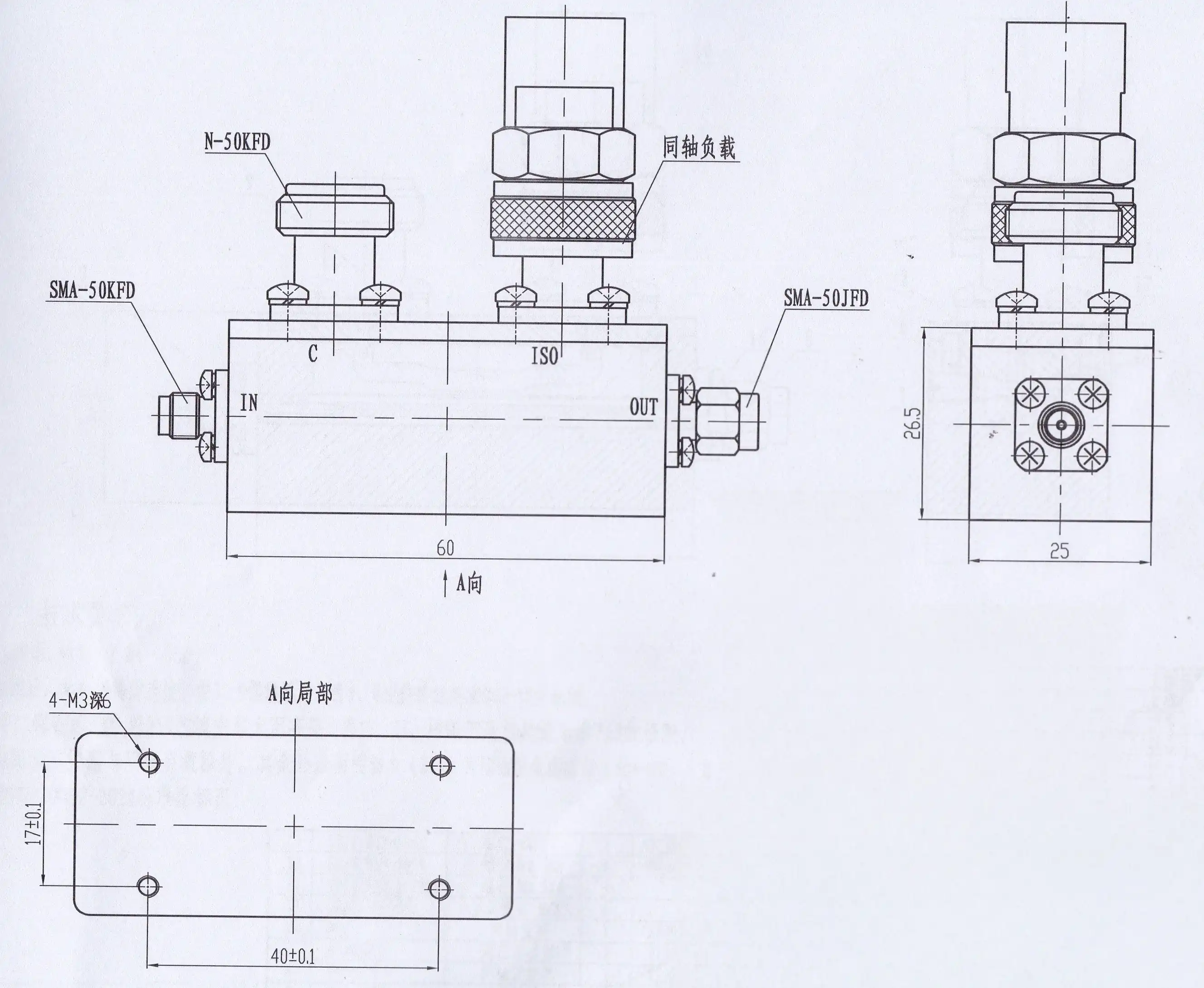
Test and measurement equipment
A very important part of RF testing and measurement is the coaxial directional coupler.
- Vector network analyzers: Couplers are used to record both incoming and mirrored signals, which lets S-parameters and other network properties be measured.
- Power meters: High-directivity couplers let you precisely measure both transmitted and received power in different radio frequency (RF) systems.
- Signal generators: Couplers make it possible to level out the output power very precisely over a wide frequency range.
Satellite communications
Coaxial directional couplers have special qualities that make them useful for satellite communication systems:
- Uplink power control: Couplers keep an eye on the power of uplink signals and let changes happen automatically to account for changes in the environment.
- Redundancy switching: Couplers make it easier to set up multiple transmitting systems in satellite ground stations, which makes them more reliable.
- Monitoring interference: Couplers allow the finding and study of possible interference sources by sampling incoming signals.
Coaxial directional couplers are very important in modern transmission systems, as shown by this wide range of uses. When it comes to engineers and workers in a lot of different fields, these tools are essential because they let them measure RF signals accurately and in real time.
Conclusion
RF systems need coaxial directional couplers because they make it possible to sample signals, measure power, and keep an eye on the whole system in a way that nothing else can. An engineer can tell a lot about how well a system is working by the difference between waves that are moving forward and waves that are moving backward. So they can fix bugs, make it work better, and make sure it always does in all kinds of cases. RF technology still needs these bendable parts to work better in many areas, like radar systems, satellite communications, and the building blocks for phone systems.
FAQ
1. What frequency range do coaxial directional couplers typically cover?
Coaxial directional couplers can cover a wide range of frequencies, typically from a few MHz to 40 GHz or higher. The specific range depends on the design and intended application. For instance, Huasen Microwave's couplers offer frequency coverage from 0.03 to 40 GHz, catering to a broad spectrum of RF applications.
2. How do I choose the right coupling factor for my application?
Selecting the appropriate coupling factor depends on your specific requirements. Factors to consider include the power level of your system, the sensitivity of your measurement equipment, and the desired signal-to-noise ratio. Coupling factors typically range from 10 to 50 dB, with lower values providing stronger coupled signals but potentially higher insertion loss.
3. Can coaxial directional couplers handle high power levels?
Yes, many coaxial directional couplers are designed to handle high power levels. For instance, Huasen Microwave offers high-power couplers (CHPC series) that can support average power levels up to 500W, making them suitable for demanding applications in radar and high-power communication systems.
4. What is the difference between a single-directional and a dual-directional coupler?
A single directional coupler has one coupled port and is designed to sample signals traveling in one direction (usually forward). A dual-directional coupler, like Huasen Microwave's CDC series, has two coupled ports, allowing simultaneous sampling of both forward and reverse traveling waves. This makes dual-directional couplers particularly useful for applications requiring monitoring of both incident and reflected signals.
Enhance Your RF Systems with Huasen Microwave's Coaxial Directional Couplers | Huasen Microwave
Are you ready to improve the performance of your RF system with high-quality coaxial directional couplers? Huasen Microwave Technology Co., Ltd. has a wide selection of couplers that are made to meet the toughest needs in radar, aircraft, military, and telecommunications. Precision engineering and decades of knowledge in the field go into making our goods, which are the most reliable and work the best.
We have the right coupler for your project, whether you need normal tracking options, the ability to handle high power, or the ability to work in both directions. Our team of experts is ready to help you choose the right part to make your system work better and more accurately.
Don't settle for less when it comes to critical RF components. Contact us today at sales@huasenmicrowave.com to discuss your specific needs and discover how Huasen Microwave's coaxial directional couplers can take your RF systems to the next level. Let's innovate together and push the boundaries of what's possible in RF technology!
References
1. Smith, J. (2021). "Advanced Techniques in RF Measurement Using Directional Couplers." IEEE Microwave Magazine, 22(3), 45-52.
2. Johnson, R. C. (2019). "Coaxial Directional Couplers: Theory and Applications in Modern Communication Systems." Wiley-IEEE Press.
3. Zhang, L., et al. (2020). "High-Performance Broadband Coaxial Directional Couplers for 5G Applications." IEEE Transactions on Microwave Theory and Techniques, 68(7), 2831-2840.
4. Brown, A. (2018). "Directional Couplers in Radar Systems: Enhancing Detection and Measurement Accuracy." Radar Systems Engineering Journal, 15(2), 112-125.
5. Liu, Y., & Chen, X. (2022). "Novel Designs for Miniaturized Coaxial Directional Couplers in Satellite Communication Systems." Progress In Electromagnetics Research, 175, 131-142.
6. Martinez, S. (2020). "Practical Applications of Coaxial Directional Couplers in RF Test and Measurement Equipment." Test & Measurement World, 42(4), 28-35.
Send Inquiry