Waveguide Twist in Radar Feed Networks






2026-04-10 22:34:03
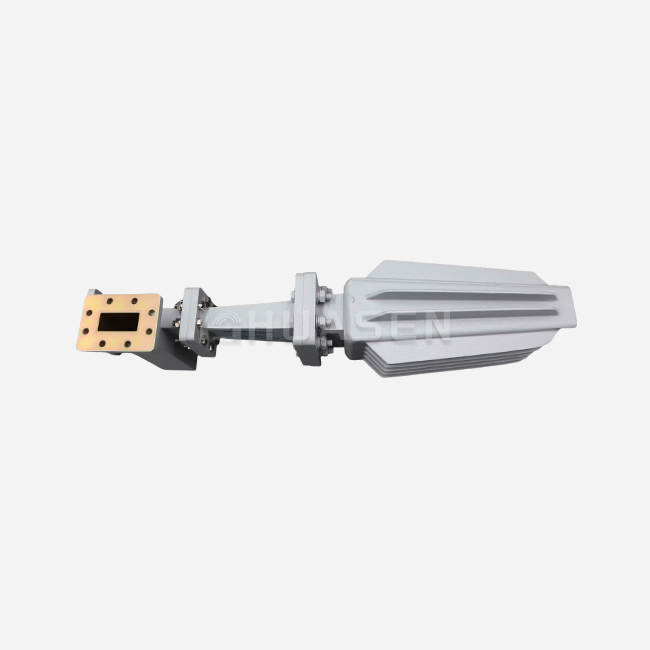
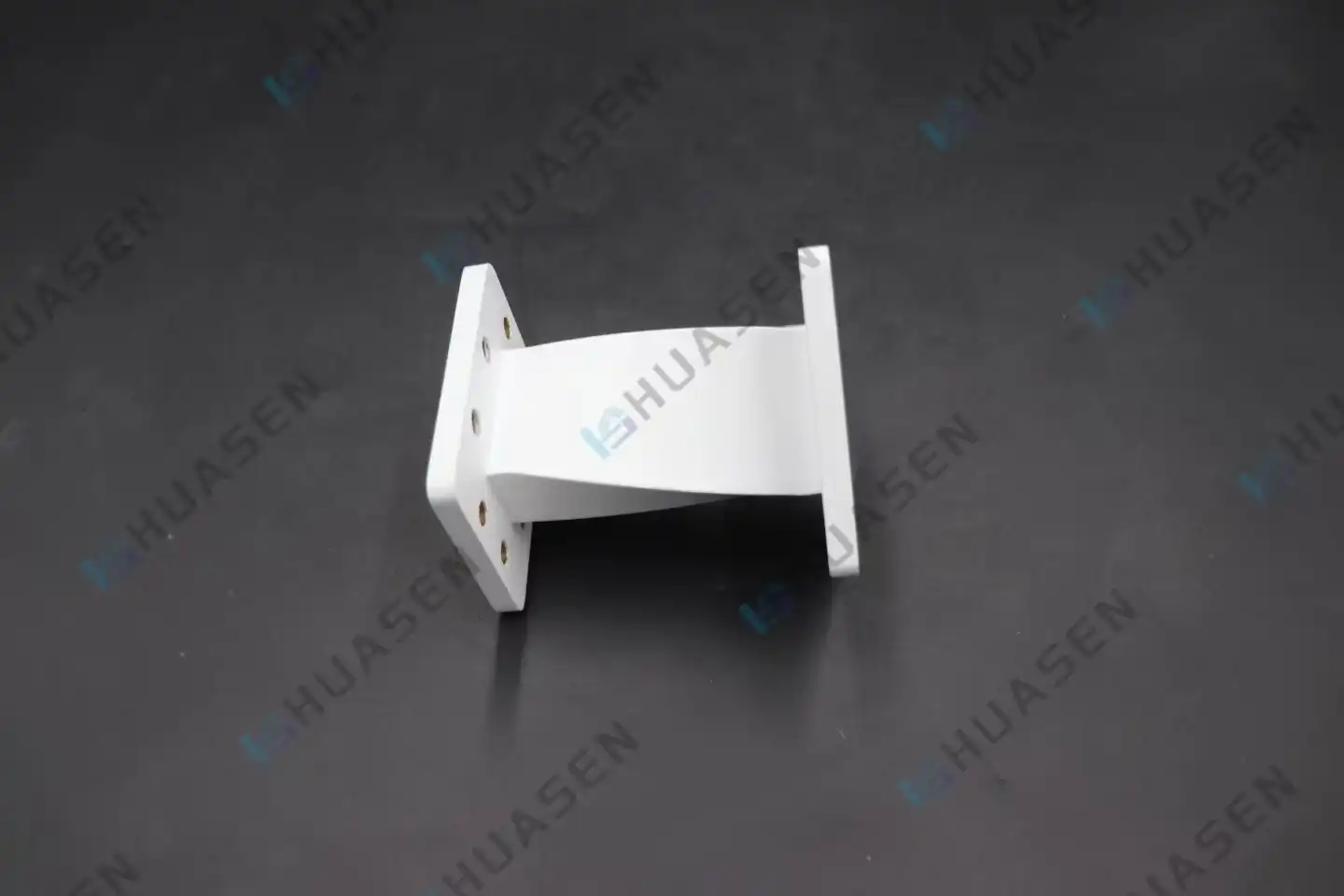
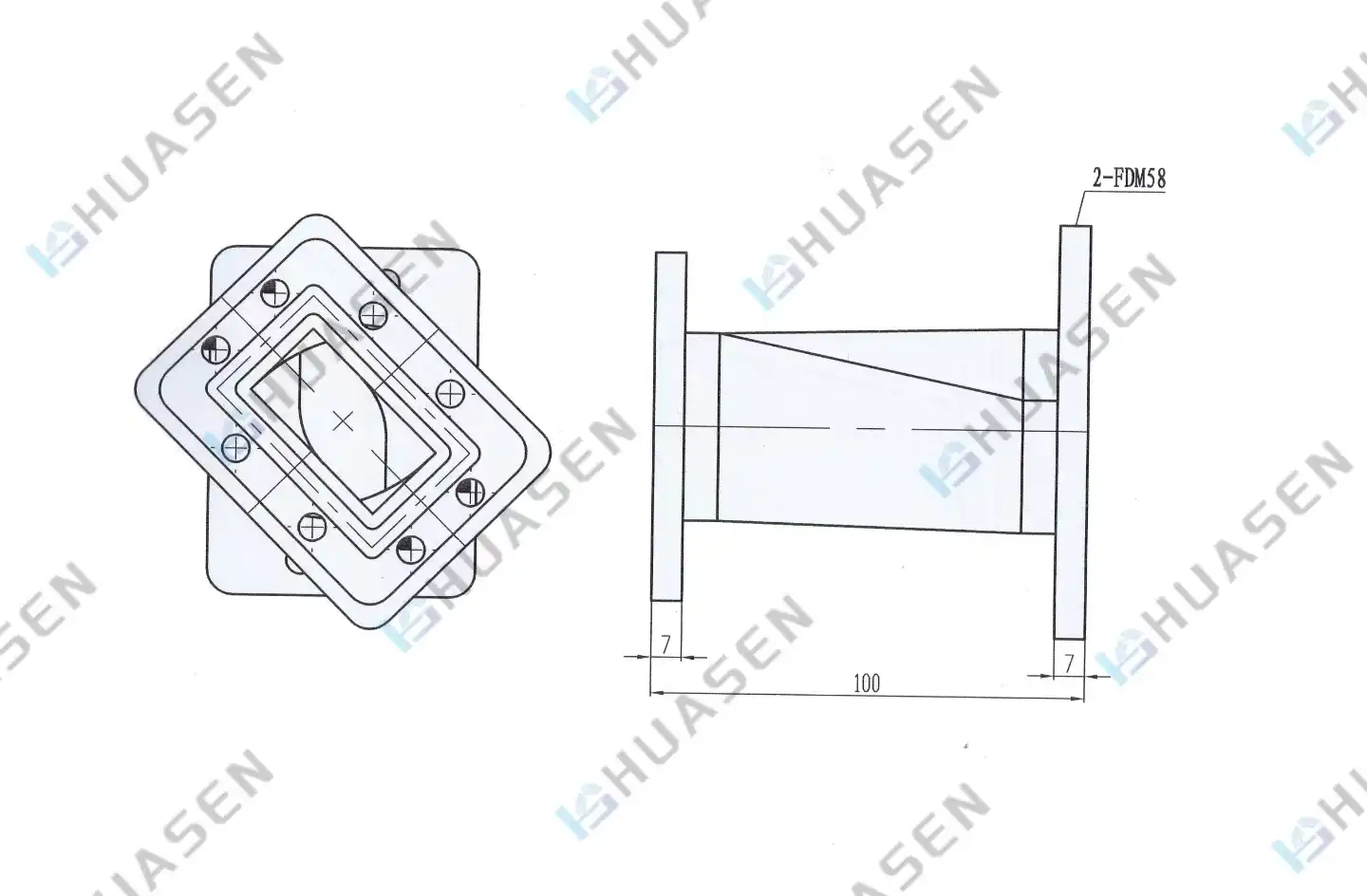
In radar feed networks, the Waveguide Twist is a special kind of passive microwave part that rotates the polarisation direction of electromagnetic waves (usually the main TE10 mode) within the transmission line. It does this by physically rotating the waveguide cross-section, usually by 45° or 90°. This allows seamless connections between waveguide sections where flanges are placed orthogonally or where precise polarisation alignment is needed to keep the signal's integrity and reduce transmission losses.
Understanding Waveguide Twists in Radar Feed Networks
Core Functionality and Operating Principles
These carefully made parts solve one of the most important problems in RF routing: how to change the polarisation direction without losing signal quality. The gadget changes the dominant mode's electric field vector to match the mechanical rotation angle. This makes sure that the input polarisation is exactly in line with what the output needs. This process keeps the impedance constant along the transmission line, which stops reflections that would hurt system performance otherwise.
Frequency Compatibility and Bandwidth Considerations
When radar feed networks work, they mostly use X-band (8–12 GHz) and Ku-band (12–18 GHz) frequencies, so they need parts that work the same way in all of these areas. The internal geometry has a big impact on the bandwidth. For example, continuously tapered designs can cover a wider range of frequencies than stepped configurations, which are smaller but have smaller operating bands. Engineers have to weigh the physical limits of their system against the frequency performance that is needed when choosing these parts.
Material Selection and Construction Quality
Material choice directly impacts both electrical function and environmental durability. Copper that doesn't contain oxygen is still the best base material because it conducts electricity so well. The surface treatments used depend on the purpose. When you silver plate something, you reduce insertion loss and increase its power-handling ability. This makes it perfect for high-performance radar systems. For maritime or coastal sites where protecting the environment is more important than small differences in electrical performance, aluminium structures with chromate conversion coatings offer better corrosion resistance.
Critical Performance Parameters
When buying something, insertion loss is one of the characteristics that is looked at the most closely. Insertion loss for high-quality units is usually less than 0.05 to 0.1 dB across their working bandwidth. This makes the part almost invisible when figuring out link budgets. Metrics like return loss and VSWR (Voltage Standing Wave Ratio) show how well the Rectangular Waveguide Twist device matches impedances—values above 20 dB return loss show great performance, reducing signal reflections that could lower radar sensitivity or range. Power handling capability varies a lot between design approaches. Higher peak and average power levels can be handled by continuous twist shapes because they don't have any sharp internal edges where electric field concentrations can cause arcing. Systems that need to send many kilowatts of power, like ground-based surveillance radars or high-energy particle accelerators, need designs that can twist continuously and have the choice to use nitrogen or SF6 gas for pressurisation.
Comparing Waveguide Twist with Alternative Components
Functional Distinctions from Related Components
Understanding when to specify a twist versus alternative components prevents costly procurement mistakes. Waveguide bends change the physical direction of the transmission path but preserve the polarization orientation, making them unsuitable when polarization rotation is required. Polarization rotators can adjust the polarization angle electronically but introduce complexity, cost, and potential failure points that passive twists avoid. Phase shifters modify the wave's temporal characteristics rather than its spatial orientation, serving entirely different system functions. The mechanical simplicity of twist components delivers reliability advantages that resonate with system integrators managing long-term operational costs. With no active elements or moving parts, these passive devices achieve decades-long service life with minimal maintenance requirements, particularly valuable in inaccessible installations like satellite payloads or offshore communication platforms.
Rigid Versus Flexible Twist Configurations
Rigid twist assemblies dominate high-performance applications where electrical specifications take priority. These precisely machined units maintain tight tolerances on internal dimensions, delivering superior VSWR performance and higher power handling. The fixed geometry suits installations where the transmission path remains static, such as permanent ground station equipment or avionics installations with defined routing paths. Flexible waveguide twists address different operational requirements, particularly where vibration isolation or alignment adjustments are necessary. Maritime radar systems on vessels experiencing continuous motion benefit from flexible sections that absorb mechanical stress without transmitting it to sensitive components. The trade-off involves accepting slightly higher insertion loss—typically 0.15-0.25 dB—and reduced power handling compared to rigid counterparts. Procurement professionals must weigh these performance compromises against the installation and maintenance advantages flexible designs provide.
Selecting the Right Waveguide Twist for Radar Applications
Matching Specifications to System Requirements
The selection process begins with defining the operational frequency range. X-band radar systems operating at 9-10 GHz require WR-90 waveguide standards, while Ku-band satellite communications demand WR-75 sizing. Ordering components outside the intended frequency range results in severe performance degradation, including excessive insertion loss and potential power handling limitations that could damage equipment or compromise mission-critical operations. Physical dimensions extend beyond the waveguide aperture size. Installation space constraints in airborne platforms or compact ground systems may dictate whether stepped or continuous twist designs are feasible. Stepped configurations achieve 90-degree rotation in shorter physical lengths, sometimes as compact as 2-3 times the waveguide width, making them valuable where every centimeter matters. Continuous twists require approximately 5-8 times the waveguide width but deliver superior electrical performance. Environmental specifications separate components suitable for laboratory use from those capable of surviving operational deployments. Temperature cycling requirements for aerospace applications typically span -55°C to +85°C, demanding thermal expansion matching and material stability. Coastal installations require robust corrosion resistance through appropriate plating and sealing. Vibration and shock specifications become critical for mobile platforms—drones, naval vessels, and ground vehicles all impose mechanical stresses that inferior components cannot withstand.
Custom Versus Standard Configurations
Standard catalog components offer immediate availability,Rectangular Waveguide Twist, and lower unit costs, making them attractive for established designs or rapid prototyping. Manufacturers maintain an inventory of common configurations like 90-degree WR-90 twists with UG flanges, enabling shipment within days rather than weeks. The limitation comes when system architecture demands non-standard rotation angles, specialized flange types, or integrated features like pressure windows or mode suppressors. Custom manufacturing addresses these unique requirements but introduces lead time and cost considerations. Typical custom orders require 6-12 weeks for design validation, tooling, and production, with minimum order quantities often starting at five or ten units. The investment pays dividends when the alternative involves compromising system performance or redesigning entire assemblies around available standard parts. Engineers should engage potential suppliers early in the design phase, leveraging their application expertise to optimize specifications before committing to custom tooling.
Applications and Benefits of Waveguide Twists in Radar Feed Networks
Critical Use Cases Across Industries
Satellite communication ground stations exemplify the complex routing challenges these components solve. Between the block upconverter and the antenna feed assembly, the signal path often requires multiple direction changes and polarization adjustments to accommodate the physical layout of equipment racks and antenna positioning. A properly specified twist ensures the transmitted signal arrives at the feed horn with correct polarization alignment, maximizing cross-polarization discrimination and preventing interference with adjacent transponders. Airborne radar systems face severe space and weight constraints within radomes and fuselages. The transmitter assembly may mount horizontally to optimize center-of-gravity positioning, while the antenna array scans vertically. This geometric mismatch requires 90-degree polarization rotation within a confined 3D space where standard bends cannot satisfy both the mechanical routing and polarization requirements. Twist components enable designers to solve these simultaneous constraints without compromising RF performance or adding excessive weight to the aircraft. Military electronic countermeasure systems demand rapid deployment and reliable operation under battlefield conditions. Mobile radar installations must route high-power signals through equipment shelters and mounting structures with unpredictable geometries. The ability to adjust polarization orientation independently of mechanical bends provides system architects with design flexibility that shortens development cycles and simplifies field modifications when operational requirements evolve.
Performance Benefits and Operational Advantages
Reduced polarization mismatch directly translates to improved radar performance. When the transmitted signal's polarization matches the target cross-section and the receiving antenna's sensitivity axis, the detection range increases while the false alarm rates decrease. Even a 1 dB improvement in polarization efficiency can extend detection range by 10-15% in typical weather radar applications, representing substantial operational value without requiring increased transmitter power. Maintenance accessibility improves when system designers can orient equipment flanges to face accessible directions rather than being dictated purely by RF considerations. Technicians performing routine inspections or emergency repairs appreciate being able to work on flanges oriented horizontally or at convenient angles rather than overhead or in cramped recesses. This seemingly minor consideration reduces maintenance time and improves safety during field service operations.
Procurement Guide for Waveguide Twists
Sourcing Strategy and Supplier Evaluation
Identifying qualified suppliers requires assessing both technical capabilities and business reliability. Manufacturers with documented quality management systems certified to ISO 9001 or AS9100 standards demonstrate commitment to consistent production processes. Companies serving defense or aerospace markets typically maintain these certifications as prerequisite qualifications, providing procurement professionals with confidence in manufacturing controls and traceability. Technical support capabilities separate vendors who simply sell catalog parts from partners who contribute to design success. Leading suppliers employ application engineers who can assist with component selection, review system integration challenges, and provide electromagnetic simulation support during the design phase. Access to test data for specific frequency bands, power levels, and environmental conditions enables engineers to validate performance before committing to production quantities. Customization capabilities become critical when standard products cannot meet system requirements. Suppliers with in-house precision machining, electroplating, and testing facilities offer shorter lead times and better quality control compared to those outsourcing these operations. The ability to iterate custom designs rapidly during the development phase accelerates project timelines and reduces the risk of specification mismatches that only become apparent during system integration.
Pricing Factors and Lead Time Management
The cost of parts shows how hard it is to make things precisely. Standard WR-90 or WR-75 twists in popular configurations usually cost between $800 and $2,500 each, but this depends on the specifics and the number of units ordered. Custom designs cost more, anywhere from $3,000 to $8,000 per unit, and tooling costs can add another $5,000 to $15,000 for unusual shapes that need special fixtures or mandrels. If you buy more than 10 to 20 units, you can get big discounts, and when you buy 50 to 100 pieces, you might even see a 20–30% drop in the price of each unit. Early on in the program, managers should talk to suppliers about setting up blanket buy orders or scheduled deliveries that lock in good prices while still letting them change the inventory as needed. This method works especially well for projects that have production runs that last more than one year or deployment plans that are spread out over several years. Lead times for standard and custom parts are very different. Catalogue items from reputable sellers can usually be shipped within two to five business days if they are in stock. This means they can be used to make prototypes or as repairs in a hurry. Custom configurations need design review cycles, material sourcing, machining operations, plating processes, and final testing. All of these steps take between 8 and 14 weeks from the time the order is placed until the product is delivered. Projects with tight deadlines need to keep these dates in mind or risk costly program delays.
Certification Requirements and Compliance
International military and space projects require that certain standards be met, such asWaveguide Twist,which has a direct effect on the buying of parts. MIL-STD-348 sets the mechanical interface dimensions for rectangular waveguides. This makes sure that parts from different makers can work together. Following this standard keeps expensive integration failures from happening when flanges or apertures don't physically fit together, even though they have the same nominal waveguide size description. Certifications from environmental testing confirm performance under operational stresses. MIL-STD-810 certification shows that the item can withstand harsh temperatures, high or low humidity, salt fog, vibrations, and mechanical shocks that are common in military deployments. For business aerospace uses, RTCA DO-160 standards are used to meet similar environmental conditions for installations in the air. Instead of accepting vendor statements without supporting data, procurement specifications should clearly ask for these certifications and test reports. RoHS compliance deals with limits on dangerous substances in electronics, affecting parts that will be sold in stores or sent to countries in the European Union. While pure copper and aluminium build automatically meet the requirements, extra care must be taken with plating methods and flange gasket materials to make sure that no restricted substances show up in the bill of materials. Vendors that sell to customers all over the world usually make sure their manufacturing processes are compliant, but specific verification stops customs delays or market access restrictions.
Building Long-Term Supplier Relationships
Strategic relationships with component suppliers provide benefits that go beyond single purchases. By building relationships with chosen vendors, you can work together on design reviews where suppliers can give their manufacturing input during the development phase. This could help you find ways to cut costs or improve performance before the designs are finalised. This early involvement shortens development cycles and lowers the chance of having to do expensive redesigns to fix problems with manufacturability that were found late in the program. Here are some relationship management practices that have real-world benefits: Regular communication keeps both parties up to date on how their needs and abilities are changing. Business reviews every three months provide a chance to talk about future programs, capacity planning, and technology roadmaps. Volume commitments let suppliers see how much is being made, which lets them spend in specialised tools or better inventory placement, which cuts down on lead times for future orders. Performance metrics that keep track of on-time delivery, quality issues, and how quickly technical support responds provide a solid base for ongoing talks about how to make things better. After-sales support is especially useful when problems arise in the field or changes need to be made to the system. Suppliers who keep detailed records on how their products are made can track individual production lots when they need to look into strange behaviour. Having access to expert staff who know the original design speeds up troubleshooting and cuts down on downtime. Some makers offer field service support or can send engineers to customer sites to help with integration. These are very useful during important program milestones or operational deployments.
Conclusion
Waveguide twists represent essential infrastructure components in radar feed networks where polarization control and mechanical routing flexibility determine system performance. Procurement success demands understanding the technical specifications that affect signal integrity, evaluating the trade-offs between standard and custom configurations, and establishing relationships with suppliers capable of supporting both immediate needs and long-term program requirements. Engineers and procurement professionals who invest time in mastering these selection criteria position their organizations to deploy radar systems that achieve superior performance while managing cost and schedule constraints effectively.
FAQ
1. What distinguishes step twist from continuous twist designs?
Step twist configurations use internal impedance steps to achieve polarization rotation over shorter physical lengths, making them valuable in space-constrained installations. Continuous twist designs employ gradual geometric transitions that deliver superior VSWR performance and higher power handling capacity but require longer mounting lengths. The choice depends on whether physical compactness or maximum electrical performance takes priority in your specific application.
2. How does rotation direction affect installation?
The mechanical orientation—whether left-hand or right-hand rotation—must match your physical flange alignment requirements. While electrically equivalent for signal transmission, the incorrect mechanical handedness prevents proper flange mating without stressing the waveguide assembly. Providing detailed installation drawings to your supplier during the quotation phase ensures you receive components with the correct mechanical configuration.
3. Can these components operate in vacuum environments?
Properly designed units function reliably in a vacuum when manufactured with low-outgassing materials and appropriate venting provisions. Aerospace applications commonly specify this capability, requiring special attention to trapped volumes within flange interfaces and surface treatment processes. Specify vacuum compatibility explicitly in your procurement documentation to ensure the manufacturer validates degassing characteristics and includes necessary vent holes.
4. What power ratings should I expect?
Continuous twist designs typically handle peak power levels matching the waveguide's fundamental breakdown threshold—often several hundred kilowatts for X-band sizes. Step twist configurations may exhibit 10-20% lower power ratings due to field concentrations at internal discontinuities. High-power applications benefit from pressurization using dry nitrogen or SF6, which significantly increases breakdown thresholds for pulsed radar transmitters.
Partner with Huasen Microwave for Your Waveguide Twist Requirements
Huasen Microwave Technology Co., Ltd. brings three decades of RF component manufacturing expertise to your radar feed network challenges. As an established waveguide twist manufacturer, we specialize in custom solutions for X-band, Ku-band, Waveguide Twist,and millimeter-wave applications with insertion loss specifications meeting the most demanding military and aerospace requirements. Our engineering team provides comprehensive design support, simulation analysis, and prototype development services, ensuring your component specifications align perfectly with system performance objectives. We maintain ISO 9001 certification and support MIL-STD and RoHS compliance for global program requirements. Contact our technical sales team at sales@huasenmicrowave.com to discuss your specific application parameters, request test data, or arrange sample evaluation units that demonstrate our commitment to quality and performance.
References
1. Marcuvitz, Nathan. "Waveguide Handbook." Institution of Engineering and Technology, 1986.
2. Balanis, Constantine A. "Advanced Engineering Electromagnetics." John Wiley & Sons, 2012.
3. Pozar, David M. "Microwave Engineering." John Wiley & Sons, 2011.
4. Saad, Theodore S. "Microwave Engineers' Handbook, Volume 1." Artech House Publishers, 1971.
5. Skolnik, Merrill I. "Radar Handbook." McGraw-Hill Education, 2008.
6. Collin, Robert E. "Foundations for Microwave Engineering." IEEE Press, 2001.
Send Inquiry