Layout Optimization of Antenna Diplexers in RF Test Benches






2026-04-09 21:01:09
Layout optimisation of antenna diplexers in RF test benches is a big problem that impacts the accuracy of measurements and the dependability of the system. An RF diplexer is an inactive three-port device that lets two different frequency bands use the same antenna port without interfering with each other. Layout optimisation that is done right reduces insertion loss, improves port-to-port isolation, and makes sure that impedance matching is done across all operational bandwidths. This has a direct effect on test repeatability and signal integrity in challenging RF evaluation settings.
Understanding RF Diplexers in Antenna Systems
What Is an RF Diplexer and How Does It Work?
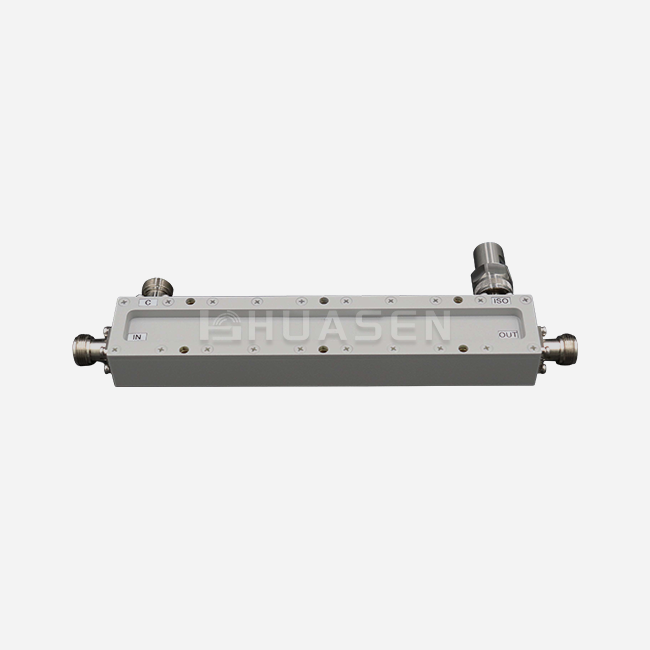
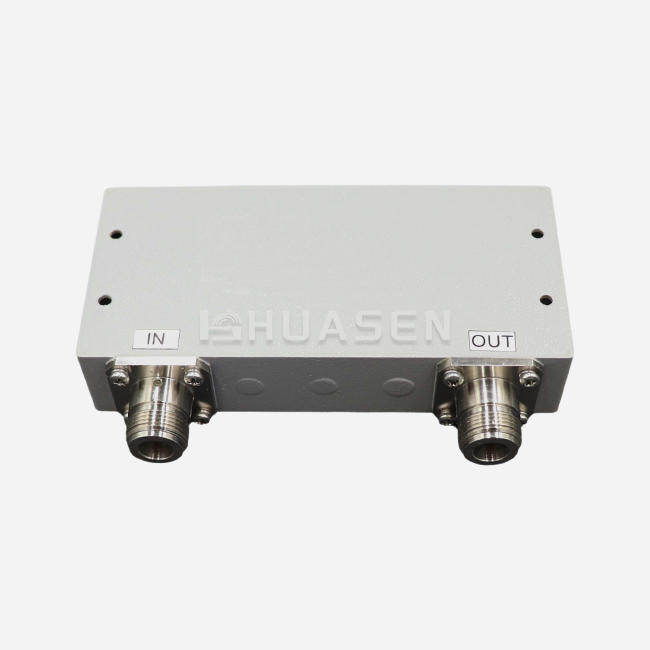
An rf diplexer is a frequency-selective routing device that decides whether to combine or split signals based on their spectral content. A diplexer uses filter networks to send low-frequency signals to one side and high-frequency signals to another. This is different from simple power splitters, which split signals regardless of frequency. This selective behaviour depends on bandpass and band-reject filter designs that work together to keep paths very separate. The main port usually links to an antenna or signal source, while the two branch ports connect to test equipment, receivers, or transmitters that work in different frequency bands.
Diplexers Versus Duplexers and Multiplexers
Knowing the differences between these gadgets helps procurement teams choose the right part. Duplexers let you send and receive signals at different frequencies at the same time through a single receiver. They are often found in radio transceivers. Diplexers split signals that are already there or mix signals from different sources without caring about when they were sent. Multiplexers take this idea one step further by controlling three or more frequency bands. Each device is best for a certain type of system design, and picking the wrong type will lower performance, which will affect the accuracy and throughput of the test bench.
Core Technical Parameters for Procurement Evaluation
Several factors need to be taken into account when considering diplexers for test bench integration. Insertion loss measures how much the signal is weakened along each line. It usually falls between 0.3 dB and 2 dB, but this depends on how complicated the design is. Isolation between ports, which in high-quality designs is often greater than 40 dB, stops signal leakage that messes up readings. Return loss, also known as VSWR, shows how well the impedance matching works. Values below 1.3:1 are considered good. The frequency range tells you the limits of its operation, and the power handling capacity tells you if it's good for high-power tests. For both lab and field deployments, environmental requirements like temperature stability and connector durability ofantenna diplexersare very important.

Challenges in Layout Design of Antenna Diplexers on RF Test Benches
Signal Integrity Issues and Their Origins
The PCB trace route that adds unwanted parasitic elements is the first part of the layout design that can be hard. Trace inductance and capacitance change the way a filter works by changing the cutoff frequency and slowing down the roll-off rate. If the ground plane isn't connected properly, it can create return current paths that connect signals from neighbouring traces, making isolation less effective. By putting it close to sensitive filter nodes, you create breaks that reflect energy, which raises insertion loss. When these small mistakes in design add up, they turn a theoretically sound diplexer schematic into a poorly working physical application that makes test measurements less reliable.
Frequency Band Interactions and Coupling Effects
When frequency response features from different channels overlap, they create fuzzy areas where signal routing is hard to predict. If the skirts of the filters aren't steep enough, energy from one band leaks into channels next to it, which messes up the test findings. When input and output traces are electromagnetically coupled, they go around the planned filter paths and create extra signal paths that weaken isolation. These effects are made worse by how close the components are placed. For example, high-Q inductors and capacitors send out fields that interact with nearby circuit elements. Layout strategies that physically separate key nodes and use shielding techniques are based on understanding these coupling mechanisms.
Impact on Measurement Precision and Throughput
Test bench performance measures that are important to labs and factories are directly hurt by a bad diplexer layout. When insertion loss goes up, dynamic range goes down. This makes it harder to identify low-power signals or devices with high attenuation. When isolation is broken, strong signals can dull receivers or get into measurement lines that weren't meant to be there, giving false results that need to be tested again. Impedance mismatches cause standing waves that change with the length of the cable and the torque of the connection. This makes measurements less accurate, which makes calibration attempts more difficult. These problems with reliability make tests take longer, use less equipment, and raise running costs.
Principles and Best Practices for Layout Optimization
Layer Stacking and Grounding Strategies
Effective PCB layer stacking establishes the foundation for superior RF diplexer performance. A four-layer stackup with signal-ground-power-signal configuration provides continuous ground planes that minimize return path inductance. Placing diplexer circuits on outer layers facilitates component mounting while inner ground planes provide shielding between top and bottom circuits. Multiple via stitching around filter sections connects ground planes at λ/20 intervals, preventing resonant modes that compromise isolation. Dedicated ground returns for each diplexer port avoid shared impedance coupling that allows signals to interact through ground plane currents.
Component Placement and Trace Routing Techniques
Strategic component positioning minimizes parasitic coupling and optimizes signal flow. Placing input and output connectors on opposite board edges maximizes physical separation, reducing direct electromagnetic coupling. Filter components are arranged in logical sequence following signal flow, avoiding trace crossovers that introduce capacitive coupling. Maintaining consistent trace impedance requires width adjustments that compensate for discontinuities at vias and component pads. Curved traces with gradual bends rather than sharp angles reduce current density concentrations that radiate electromagnetic energy. These deliberate placement decisions transform theoretical filter designs into practical implementations that meet performance specifications.
Shielding and Electromagnetic Interference Mitigation
Implementing effective shielding controls field interactions between diplexer sections and adjacent circuitry. Metal enclosures around filter sections create Faraday cages that contain electromagnetic fields, preventing radiation from reaching nearby components. Ground-connected shield walls soldered to board-level ground planes establish partitions between channels, improving isolation by 15 dB to 25 dB compared to unshielded layouts. Absorptive materials placed inside shield compartments dampen resonances that develop in enclosed cavities. These shielding strategies prove particularly valuable in compact test bench designs where circuit density makes physical separation impractical.
Real-World Case Study: Laboratory Test Bench Upgrade
A telecommunications testing laboratory experienced measurement repeatability issues traced to inadequate diplexer layout. The original design exhibited 18 dB isolation between 1.8 GHz and 2.4 GHz channels, insufficient for accurate interference testing. Redesigning the layout with dedicated ground planes, shield compartments, and optimized trace routing improved isolation to 47 dB while reducing insertion loss from 1.8 dB to 0.9 dB. Measurement uncertainty decreased by 60%, enabling the laboratory to expand its testing capabilities and reduce qualification times for customer products. This tangible improvement demonstrates thatantenna diplexerlayout optimization directly enhances operational effectiveness and competitive positioning.
Comparative Evaluation and Selection Criteria for RF Diplexers in Test Benches
Performance Comparison: Diplexers, Duplexers, and Multiplexers
Selecting between these device types requires understanding application-specific requirements. Diplexers excel in test benches, separating receiver sensitivity measurements from transmitter output testing, offering excellent isolation at moderate cost. Duplexers suit transceiver testing where simultaneous transmission and reception occur, providing optimized performance for paired frequency bands. Multiplexers accommodate multi-band testing scenarios but introduce complexity and higher insertion loss. Cost considerations favor diplexers for dual-band applications, with pricing ranging from $50 to $500 depending on frequency range and power handling, compared to $150 to $1,200 for equivalent multiplexers.
Critical Selection Parameters
Frequency range compatibility tops the selection criteria, ensuring the diplexer covers all required test bands with an adequate margin. Insertion loss directly impacts measurement sensitivity, with values below 1 dB preferred for most applications. Isolation requirements depend on signal level differences between channels, with 40 dB to 50 dB sufficient for moderate-power testing while high-power radar applications demand 60 dB or greater. Power handling capacity must accommodate peak and average levels with safety margins, accounting for mismatch conditions that increase reflected power. Connector types should match existing test equipment, avoiding adapters that introduce additional loss and reflections.
Supplier Landscape and Brand Considerations
Mini-Circuits maintains a strong market presence with extensive diplexer catalogs covering DC to 26 GHz, offering rapid prototyping through online design tools and reliable global distribution. Pasternack provides off-the-shelf solutions with same-day shipping, valuable for urgent project timelines. Anaren specializes in high-isolation designs using ceramic filter technology, suitable for demanding military and aerospace applications. Murata excels in compact surface-mount diplexers for space-constrained test fixtures, while MACOM offers high-power variants handling kilowatt-level signals. Qorvo delivers broadband designs with flat insertion loss characteristics across wide frequency spans. Each supplier brings distinct advantages, matching specific procurement priorities around performance, delivery speed, customization capability, and cost targets.
Implementation and Verification of Optimized Antenna Diplexer Layouts
Design Translation and Prototyping Process
Translating optimized layouts into physical prototypes, theRF diplexer begins with careful schematic capture using RF-specific CAD tools that model distributed elements and parasitic effects. Component models must include package parasitics provided by manufacturers, ensuring simulation accuracy. PCB layout tools with electromagnetic field solvers verify trace coupling and resonance modes before fabrication. Prototype fabrication using controlled-impedance processes and specified dielectric materials maintains design intent. Assembly requires precision placement and soldering techniques that avoid thermal damage to sensitive filter components. This methodical progression from simulation to physical implementation minimizes costly iterations while maintaining schedule commitments.
Validation Testing and Performance Verification
Verification of all aspects shows that physical diplexers work as expected in all kinds of environments. Using calibrated vector network analysers to measure VSWR ensures that all ports have the same impedance across all frequency bands. Insertion loss testing measures how much information is lost along each path and compares the results to design goals and supplier requirements. Measurements of isolation between ports show unwanted coupling, and swept-frequency testing shows resonances or false reactions. Validation of power handling puts devices through their rated levels while keeping an eye on temperature rise and parameter stability. These organised tests create records that help with approval processes and set standard levels of performance for production units.
Continuous Improvement and Future-Proofing Strategies
Adding feedback methods lets improvements be made over time as new needs arise. By comparing real performance to predictions, modelling gaps are found that lead to better designs in the future. Tracking field breakdowns shows that environmental stresses weren't taken into account enough in the initial design, which leads to improvements in reliability. Keeping an eye on how communication standards change, like 6G millimeter-wave bands, helps with the development of next-generation diplexers. Keeping in touch with component makers lets you get new technologies like LTCC and HTCC filter designs that offer better performance in smaller packages before anyone else. This method looks to the future to make sure that test benches can keep up with changing testing needs as technology changes.
Conclusion
When you pay careful attention to grounding, insulation, component placement, and trace routing, layout optimisation of antenna diplexers greatly improves the performance of an RF test bench. By knowing the technical differences between diplexers and other similar devices, you can choose the right parts for your purpose. Fixing layout problems that affect signal integrity and isolation leads to measured gains in measurement accuracy and testing speed. When procurement teams evaluate providers, they should look at how well they meet performance standards, how well they can customise products, and how reliable their supply chains are. Using proven design methods and strict testing procedures ensures that installations of multiplexers meet the tough operating needs in radar, aerospace, telecommunications, and research.
FAQ
1. What frequency ranges do RF diplexers typically cover?
RF diplexers span frequencies from low VHF bands around 30 MHz through millimeter-wave ranges exceeding 40 GHz. Common configurations separate cellular bands like 700-960 MHz from 1710-2690 MHz, or divide WiFi spectrum at 2.4 GHz and 5 GHz boundaries. Satellite communication diplexers often work in C-band, X-band, and Ku-band regions. Custom designs address specialized requirements, including radar bands and emerging 5G millimeter-wave allocations. Selection depends on specific test bench applications and the devices under evaluation.
2. How much isolation between ports is necessary for accurate testing?
Isolation requirements vary with application signal levels and measurement sensitivity needs. General-purpose testing typically requires 40 dB to 50 dB isolation between ports to prevent cross-channel interference. High-dynamic-range measurements benefit from 55 dB to 65 dB isolation when characterizing receivers with strong adjacent-channel signals. Military and radar applications with extreme power differences demand 70 dB or greater isolation. Evaluating worst-case signal level scenarios determines appropriate isolation specifications during procurement.
3. Can diplexers handle high-power transmitter testing?
Specialized high-power diplexers accommodate testing applications involving transmitters generating hundreds of watts to several kilowatts. These designs employ cavity filter construction with robust mechanical assembly, superior thermal management, and careful attention to voltage breakdown and passive intermodulation effects. Standard surface-mount diplexers typically limit to 10 watts continuous or 100 watts peak, suitable for most receiver and low-power transmitter testing. Matching power handling specifications to actual test requirements avoids component damage and ensures measurement validity.
Partner With Huasen Microwave for Superior RF Diplexer Solutions
Huasen Microwave Technology delivers precision-engineered RF diplexer components backed by three decades of RF and microwave expertise serving telecommunications, aerospace, and defense industries. Our customizable diplexer designs address demanding requirements for wide bandwidth coverage, minimal insertion loss below 0.8 dB, and isolation exceeding 50 dB across critical frequency bands. As an established RF diplexer manufacturer, we provide comprehensive technical support, including design consultation, sample evaluation, and calibration data to accelerate your test bench optimization projects. Our ISO-certified manufacturing processes ensure consistent quality and reliable supply chains supporting high-volume procurement needs. Contact our engineering team at sales@huasenmicrowave.com to discuss your specific test bench requirements and receive tailored diplexer solutions that enhance measurement accuracy while controlling project costs.
References
1. Pozar, David M. Microwave Engineering, 4th Edition. John Wiley & Sons, 2012.
2. Matthaei, George L., Leo Young, and E.M.T. Jones. Microwave Filters, Impedance-Matching Networks, and Coupling Structures. Artech House Publishers, 1980.
3. Ludwig, Reinhold, and Gene Bogdanov. RF Circuit Design: Theory and Applications, 2nd Edition. Prentice Hall, 2009.
4. Bhat, Bharathi, and Shiban K. Koul. Stripline-Like Transmission Lines for Microwave Integrated Circuits. New Age International Publishers, 1989.
5. Hong, Jia-Sheng and M.J. Lancaster. Microstrip Filters for RF/Microwave Applications. John Wiley & Sons, 2001.
6. Gupta, K.C., Ramesh Garg, Inder Bahl, and Prakash Bhartia. Microstrip Lines and Slotlines, 3rd Edition. Artech House Publishers, 2013.
Send Inquiry