Waveguide Loop Coupler Performance Verification for Radar and RF Labs






2026-05-09 21:29:43
Waveguide Loop Coupler testing is a top priority in radar and RF laboratories. These meticulously constructed passive devices assess electromagnetic power going through waveguide transmission lines using a loop probe that interacts with the magnetic field. Maintaining adequate sample accuracy, insertion loss, and directivity is crucial. This affects system dependability in mission-critical contexts, including military radar sites, satellite ground stations, and sophisticated communications testing facilities. Buying teams may avoid costly system failures and maintain operational preparedness by validating these components.
Understanding Waveguide Loop Couplers: Theory and Applications
Fundamental Operating Principles
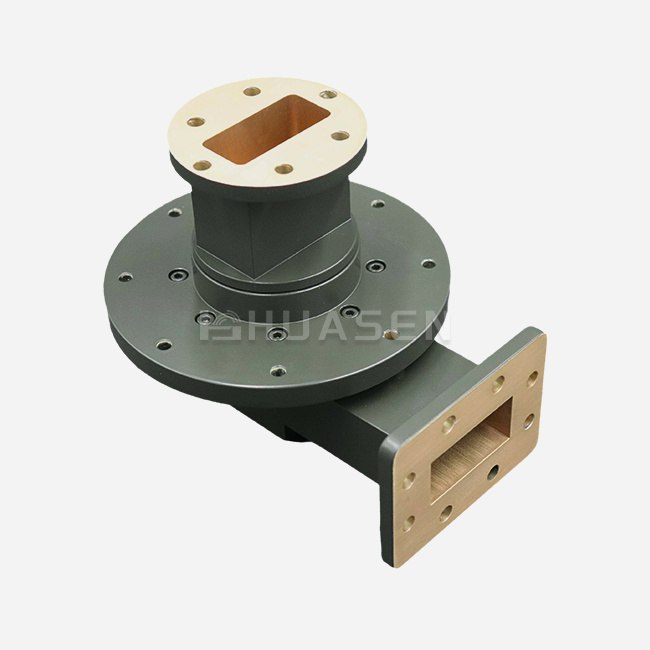
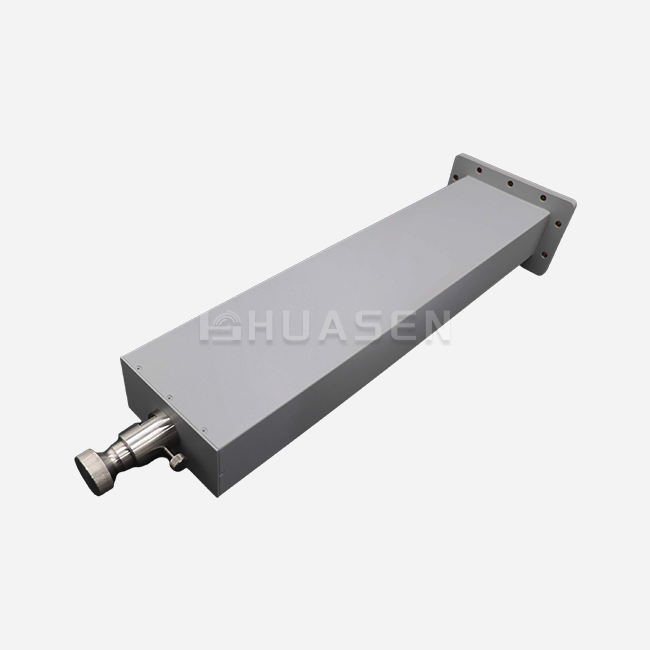
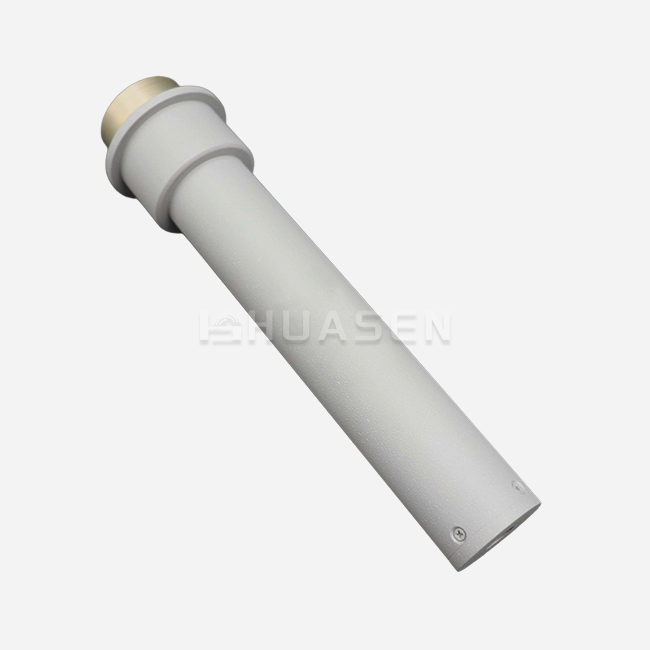
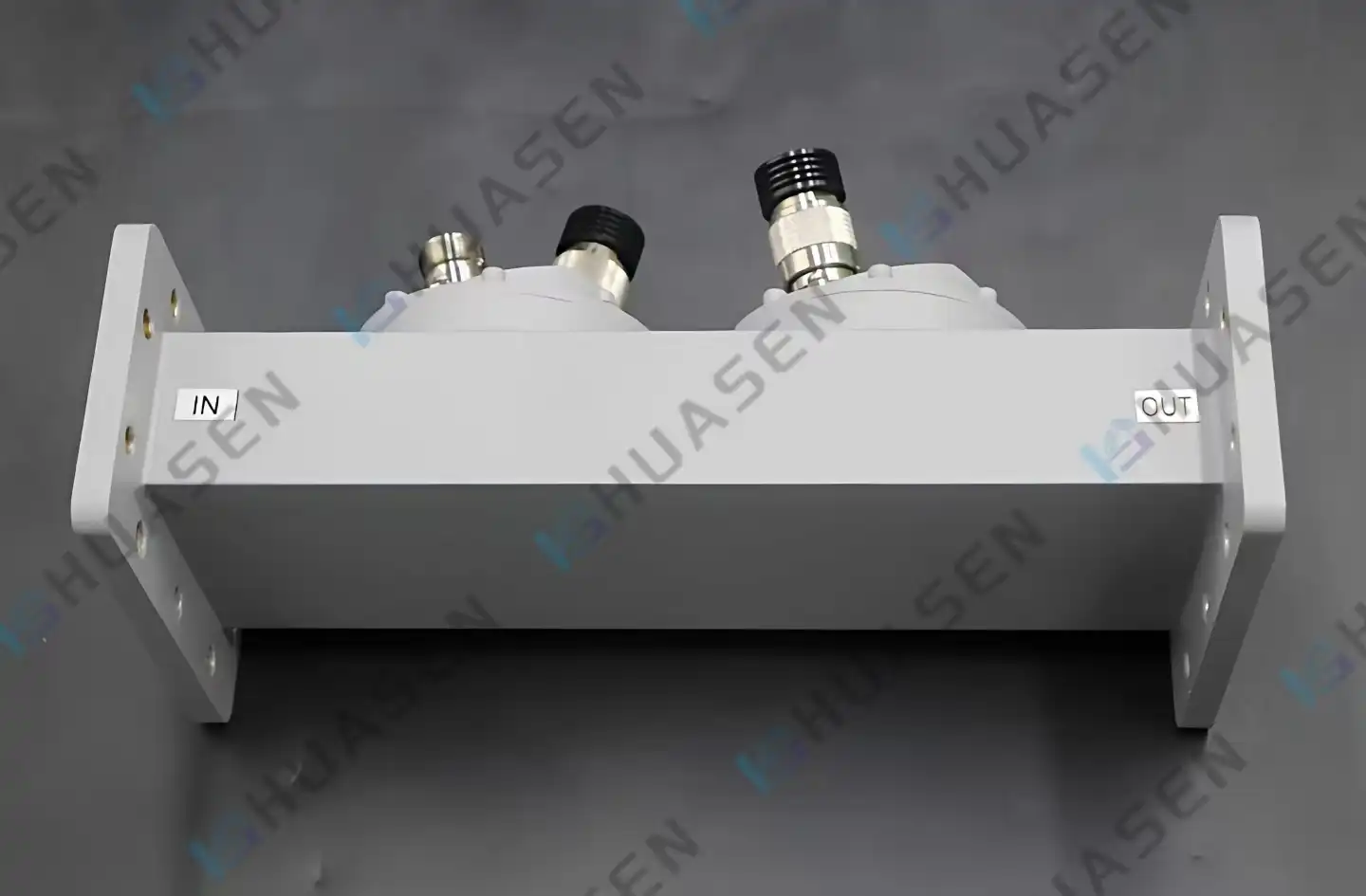
Waveguide Loop Couplers use electrical loops in waveguide channels. This allows the loop element to detect H-field magnetic flux lines. This magnetic coupling approach is distinct from electric field probes, making it suitable in high-power applications where voltage breakdown is risky. A coaxial output signal with SMA, N-type, or TNC connectors is generated from the gathered energy. This lets you observe the primary transmission line without interfering.
Loops must be properly placed and oriented inside the waveguide for the design to operate. The coupling factor depends on the magnetic field contact strength. Engineering gives this figure in decibel rates to demonstrate power from the main line to the linked port. Huasen Microwave Waveguide Loop Couplers can couple signals from 20dB to 60dB for a variety of tracking purposes.
Critical Performance Parameters
Three key elements determine loop coupler selection. Power loss in the primary transmission line is measured by insertion loss. This is crucial since every tenth of a decibel affects system performance. Power measurements for automated level control circuits and safety systems are accurate due to coupling factor precision. For testing VSWR in high-power radar receivers, the device's directivity demonstrates how effectively it can distinguish forward and reflected waves.
Modern X-band and higher-frequency radar systems require parts that don't degrade with temperature, vibration, or humidity. Sealing integrity is crucial in maritime communication systems and outdoor base stations, where moisture may cause catastrophic failures.
Application Domains
Airborne radar systems have space, weight, and shock protection challenges. Fighter aircraft radar waveguide loop couplers must withstand strong G-forces while maintaining tight coupling precision. Longer multi-hole directional couplers are too narrow to address installation issues like loop designs.
In particle accelerator RF distribution networks, ultra-high vacuum compatibility and phase stability are greater than in most telecommunications applications. Radiation therapy linear accelerators (LINACs) need excellent RF tracking to provide the optimum dosage. Any coupling drift affects patient safety.
Performance Verification: Key Metrics and Testing Procedures
Essential Measurement Parameters
The Voltage Standing Wave Ratio (VSWR) is one of the best ways to tell how well two impedances fit. As long as the coupled port VSWR stays below 1.25 across the operating bandwidth, Huasen Microwave's Waveguide Loop Couplers meet the trunk VSWR requirements of 1.1 or better. These numbers mean that the return loss is more than 26dB on the trunk and 19dB on the secondary port. This makes sure that there is very little signal reflection that could mess up readings or create standing wave patterns.
In broad uses, measurement accuracy is based on how flat the coupling is across a certain frequency range. To meet radar calibration standards, a device with a 20% fractional bandwidth must keep the coupling fluctuation within 0.5dB. Specifications for directivity—usually a minimum of 15dB for good loop couplers—keep forward power signals separate from reflected power signals. This lets you do accurate VSWR calculations and keeps emitters safe from antenna errors.
Vector Network Analyser Testing
The first step in laboratory testing is to use known standards to calibrate a precision vector network analyser (VNA). Full two-port calibration gets rid of systematic mistakes in wire assemblies and connections, lowering the range of measurements to less than 0.1dB. Engineers connect the major ports of the Waveguide Loop Coupler to ports one and two of the VNA. They then measure the S21 transmission coefficient to figure out how much insertion loss there is across the frequency sweep.
For coupling factor testing, the coupled port must be connected to port three, and the separated port must be terminated with a precise 50-ohm load. Measurements of S31 show how much coupling there is, while measurements of S41 show how well separation and directivity work. Changing the temperature during these tests, which cover -40°C to +85°C, proves that the material is thermally stable for use in outdoor settings and high-altitude aircraft uses.
Power Handling Validation
High-power testing shows that Waveguide Loop Couplers can handle practical stress without breaking down. Progressive power testing methods gradually raise the input power while keeping an eye on the output from the linked port and looking for corona discharge, outgassing, or thermal runaway. Pulse power testing imitates the duty cycles of a radar transmitter to make sure that the highest power rates match the manufacturer's requirements.
According to MIL-STD-810 guidelines, Huasen Microwave tests Waveguide Loop Couplers for external stress by exposing them to humidity, going through temperature shocks, and shaking them. These approval processes make sure that the sealing works well and that the mechanical integrity is intact. This eases buyers' worries about the trustworthiness of the product over time in harsh field conditions.
Comparing Waveguide Loop Couplers with Other Coupler Types
Cross-Guide Directional Couplers
Cross-guide couplers work better over a wider range of frequencies because they have multiple holes that let energy flow between waveguide parts that are not parallel to each other. Even though these devices have better bandwidth features (often reaching 40% fractional bandwidth), they need to be installed over much longer distances and in larger spaces. Waveguide Loop Couplers have small sizes that make them perfect for radar systems that are limited in space, because every cubic inch adds weight.
Insertion loss comparisons reveal complex trade-offs. Cross-guide systems usually have a mainline loss of 0.1 to 0.2dB, but optimised Waveguide Loop Coupler units work just as well or better when they are made for narrow to intermediate bandwidths. The magnetic coupling device naturally reduces mainline disturbance more than aperture-based designs, which leads to better efficiency in high-power emitter chains.
Coaxial Directional Couplers
Coaxial couplers are most common in lower-frequency systems and uses that need to match impedances in a wide range of ways. Standard connector connections make it easier to use these devices in fast development settings, where they are useful. When you need to handle more power than coaxial cable can handle, like when you need to handle more than a few kilowatts of continuous wave power or peak powers that are getting close to megawatt levels in burst radar systems, you need Waveguide Loop Couplers.
Scalable frequency is another thing that sets them apart. Waveguide parts naturally work with millimetre-wave frequencies, which are too high for coaxial communication lines because of the losses they cause. For frequency bands above 26 GHz, all Ka-band and V-band radar systems use waveguide designs. This means that Waveguide Loop Couplers are the best way to connect these systems.
Resistive and Hybrid Couplers
In order to get better broadband performance and a smaller size, resistive coupler designs sacrifice efficiency by adding loss on purpose through resistive elements. Hybrid couplers are useful for applications that need accurate power division or quadrature phase relationships. Examples include balancing mixers and phased array feed networks. Monitoring uses need Waveguide Loop Coupler units because they have low insertion loss, which keeps the sender working efficiently while getting enough sample power for measurement circuits.
The directional qualities of Waveguide Loop Couplers are better than resistive designs; they can separate forward and backwards power samples by 15dB or more. This edge in directivity is very important in radar systems, where monitoring reflected power sets off safety circuits that keep magnetrons or travelling wave tubes from getting damaged by antenna mismatches.
Procuring High-Quality Waveguide Loop Couplers: What B2B Clients Should Know
Supplier Qualification Criteria
Before choosing a vendor, you should look at their production skills and quality control systems. ISO 9001 certification is a basic guarantee of process control, while AS9100 certification shows experience in the aerospace and defence business. Huasen Microwave was founded in 1993 and has been in business ever since. This shows that the company is stable and has a lot of scientific knowledge that new companies can't match.
Professional sellers can be told apart from commodity vendors by test data documents. Measured S-parameter plots across temperature ranges, power handling validation reports, and mechanical drawings with tolerance specs should all be included in full datasheets. Before committing to production numbers, procurement teams should ask for sample units with calibrated test results so that other people can check them for their Waveguide Loop Coupler requirements.
Certification and Following the Rules
Environmental and performance standards are very strict for military and aircraft uses. MIL-STD-461 electromagnetic compatibility testing makes sure that Waveguide Loop Coupler units don't give off too much radiation or get messed up by outside signals. RoHS and REACH compliance deals with limits on dangerous substances for accessing the European market and meeting environmental responsibility obligations.
Performance claims are backed up by the fact that measurements can be traced back to national standards through approved testing laboratories. Calibration certificates that can be tracked back to NIST for insertion loss, coupling factor, and VSWR measurements are legal proof in regulated businesses and meet audit trail standards in defence contracting settings.
Custom Engineering Support
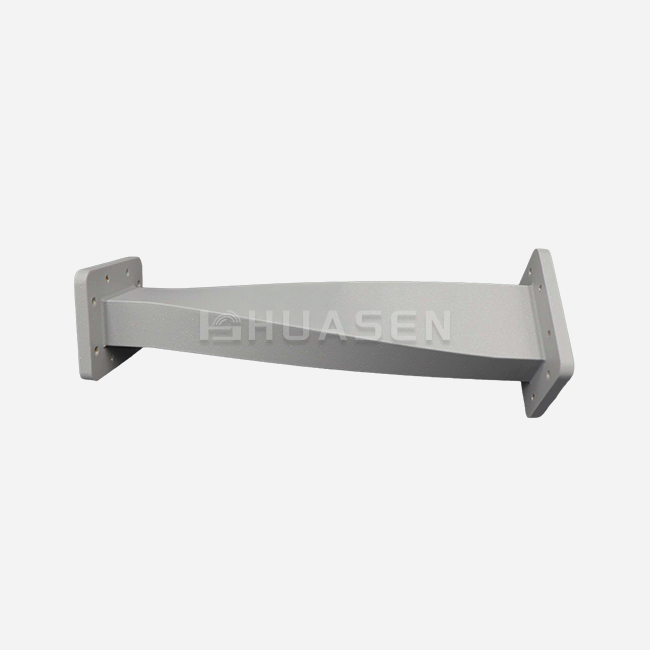
Standard catalogue items work for most uses, but solutions that are specifically made for radar devices are often needed. The research team at Huasen Microwave works with customers to make Waveguide Loop Coupler designs that work best for their specific frequency bands, coupling values, or mechanical interfaces. Custom waveguide flange choices, with compatibility ranging from BJ9 to BJ140, make sure that current waveguide runs and antenna systems work with no problems.
Prototype sampling programmes let you test things out before you spend money on tools and commit to production. Throughout the lifecycle of a product, responsive technical help answers questions about installation, how to read measurements, and how to fix problems. These extra services set skilled makers apart from simple distributors of parts, especially when working with complicated RF systems where small exchanges can have a big effect on performance as a whole.
Pricing and Lead Time Considerations
Unit price takes into account how hard the plan is, how much the materials cost, and how many are made. To make Waveguide Loop Couplers with tighter coupling values, manufacturing tolerances have to be more accurate, which changes how much they cost. Blanket orders and bulk buy deals lower the cost per unit while making sure that production programmes that last for years have a steady supply.
Lead time management weighs the costs of keeping goods against the risk of running out of them. Standard product configurations from well-known companies like Huasen Microwave usually ship within two to four weeks. Custom designs, on the other hand, need eight to twelve weeks for engineering, tooling, and approval testing. These dates are taken into account in strategic buying planning, especially when helping to develop new radar systems and meet targets for delivering prototypes.
Enhancing Waveguide Loop Coupler Performance for Optimal Radar and RF Lab Results
Installation Best Practices
How the Waveguide Loop Coupler is mounted directly affects how accurate the measurements are and how long it lasts. When connecting waveguide flanges, it's important to pay close attention to the seal choice, bolt torque requirements, and surface flatness. When you over-tighten, you put mechanical stress on the waveguides, which can change their cross-sections and make the VSWR performance worse. Not enough torque lets RF leak out and creates safety risks in high-power systems.
The quality of the coupled port terminal affects both the directivity measures and the noise floor of the system. It is important to have precise 50-ohm terminations with VSWR standards better than 1.15 across the working span to stop reflections that hurt directivity. When used for measurements, low-noise amplifiers that are attached to coupled ports need to have a stable input impedance so that load-pulling effects don't change the coupling factor values.
Calibration and Maintenance Schedules
Periodic checking keeps measuring trust high over long periods of operation. Every year, traceable reference standards are used for testing processes that find small changes in performance that can be caused by things like contamination, mechanical wear, or getting older. Keeping track of the past of calibrations allows for trend analysis, which lets you guess when parts are getting close to the end of their useful life before they break.
Visual inspection methods find early warning signs of damage to the environment. The covering surfaces on flanges should not rust or get damaged in any way that would weaken the RF connection. Coupled port plugs need to be checked for pin wear, insulator cracks, or contamination that raises VSWR and makes measurements less accurate.
System-Level Optimisation
To add Waveguide Loop Couplers to complicated radar designs, you need to make sure that the impedances of all the signals in the chain are matched. When you switch from a waveguide to a coaxial transmission line, there are possible mismatch points where reflections meet and cause measures of the frequency response to ripple. Time-domain reflectometry finds breaks in the signal, which helps with fixing the problem by choosing the right adapter or adding a custom-matched network.
When cables are routed carefully, electromagnetic coupling between linked ports and main transmission lines is kept to a minimum. Near-field interactions that break down directivity requirements can't happen when there is physical separation. Shielded cases around coupled port connections make isolation even better. This is especially important in small radar systems where the number of components makes EMC performance difficult.
New field testing results from a project to upgrade a Ka-band marine radar show that the sensitivity has improved after old multi-hole couplers were replaced with better Waveguide Loop Coupler designs. The 0.3dB drop in insertion loss led to a 7% increase in range, which is a big benefit for coastal monitoring uses. Along with better directivity that made the transmitter's safety circuits work better, the system's uptime went up by 15% because there were fewer false alarms and repair events.
Conclusion
Verifying the performance of Waveguide Loop Couplers is the first step towards safe radar and RF lab work. These important parts are made to meet strict requirements by going through strict testing methods that check for insertion loss, coupling accuracy, VSWR, and directivity factors. Engineering teams can come up with the best solutions when they know the basic rules of operation, the benefits of one connection technology over another, and the right way to buy them. The best ways to install things, planned calibration plans, and system-level optimisation strategies all work together to make measurements more accurate and extend the life of parts. This protects investments and improves operating capabilities in defence, aerospace, and communications applications.
Frequently Asked Questions
1. Can coupling factors be field-adjusted after installation?
Some Waveguide Loop Coupler designs have probes that can be rotated or adjusted in depth, which lets field workers fine-tune coupling values by ±3dB. This ability to be adjusted is helpful when setting up the system because it lets you balance the sensitivity of the monitor with the dynamic range needs. Long-term stability is better with fixed-coupling designs, so they are better for situations where recalibration is hard to do or where mechanical adjustments pose too many reliability risks.
2. What differentiates loop couplers from aperture-based directional couplers?
Inductive coupling is how Waveguide Loop Couplers work with magnetic field components. Capacitive coupling is how opening designs work with electric field energy. This basic difference makes each type of coupler better in its own way: loop designs have small footprints that are good for setups with limited room, while aperture couplers offer better performance over a wider bandwidth. Power handling skills make loop designs better for high-power radar emitters that need to keep voltage breakdown risks to a minimum. When making choices about purchases, people should weigh these trade-offs against the needs of the system.
3. How do the elements around a coupler affect how well it works?
Changes in temperature can change the dielectric qualities and physical dimensions, which can change the coupling factors and VSWR features. Good makers, like Huasen Microwave, say how well their products work across a range of operating temperatures and give exact drift rates. When exposed to humidity, designs that aren't well sealed run the risk of internal condensation, which can lead to catastrophic arcing events at high power levels. Vibration and shock loads can break solder joints or loosen mechanical connections, slowly lowering electrical performance until it fails completely.
Partner with Huasen Microwave for Precision Loop Coupler Solutions
Huasen Microwave makes waveguide loop couplers that are designed to work in radar and RF labs that are very strict about performance dependability. Our devices have great sealing qualities that keep them working even in harsh outdoor situations and temperature swings. These parts meet strict standards for military, aircraft, and telecommunications use because they can couple up to 60dB, have a mainline VSWR of 1.1 or better, and have directivity greater than 15dB. Our product line works with waveguide standards ranging from BJ9 to BJ140, so it can be used with a wide range of frequency bands and system designs. We have been making waveguide loop couplers since 1993 and have a lot of knowledge. We offer full technical support, custom engineering services, and flexible delivery dates. Email our team at sales@huasenmicrowave.com to talk about your specific needs and get full specs that are made to fit your buying needs.
References
1. Pozar, David M. Microwave Engineering, 4th Edition. Hoboken: John Wiley & Sons, 2012.
2. Saad, Theodore S. Microwave Engineers' Handbook, Volume 1. Dedham: Artech House, 1971.
3. Collin, Robert E. Foundations for Microwave Engineering, 2nd Edition. New York: McGraw-Hill, 1992.
4. Montgomery, Carol G., Robert H. Dicke, and Edward M. Purcell. Principles of Microwave Circuits. London: Peter Peregrinus Ltd., 1987.
5. Baden Fuller, A.J. Microwaves: An Introduction to Microwave Theory and Techniques, 3rd Edition. Oxford: Pergamon Press, 1990.
6. Harvey, A.F. Microwave Engineering. London: Academic Press, 1963.
Send Inquiry