Waveguide Gasket Temperature Limits






2026-04-24 17:23:43
When we talk about waveguide gasket temperature limits, we're addressing a critical performance boundary that directly affects system reliability in high-frequency applications. A waveguide gasket must maintain its sealing integrity and electromagnetic shielding effectiveness across its specified thermal range—typically from -55°C to +200°C depending on material composition. Operating beyond these thresholds causes dimensional instability, loss of compression set resistance, and degradation of conductive filler networks, leading to RF leakage and environmental seal failure in telecommunications, radar, and satellite systems.
Understanding Waveguide Gaskets and Their Temperature Constraints
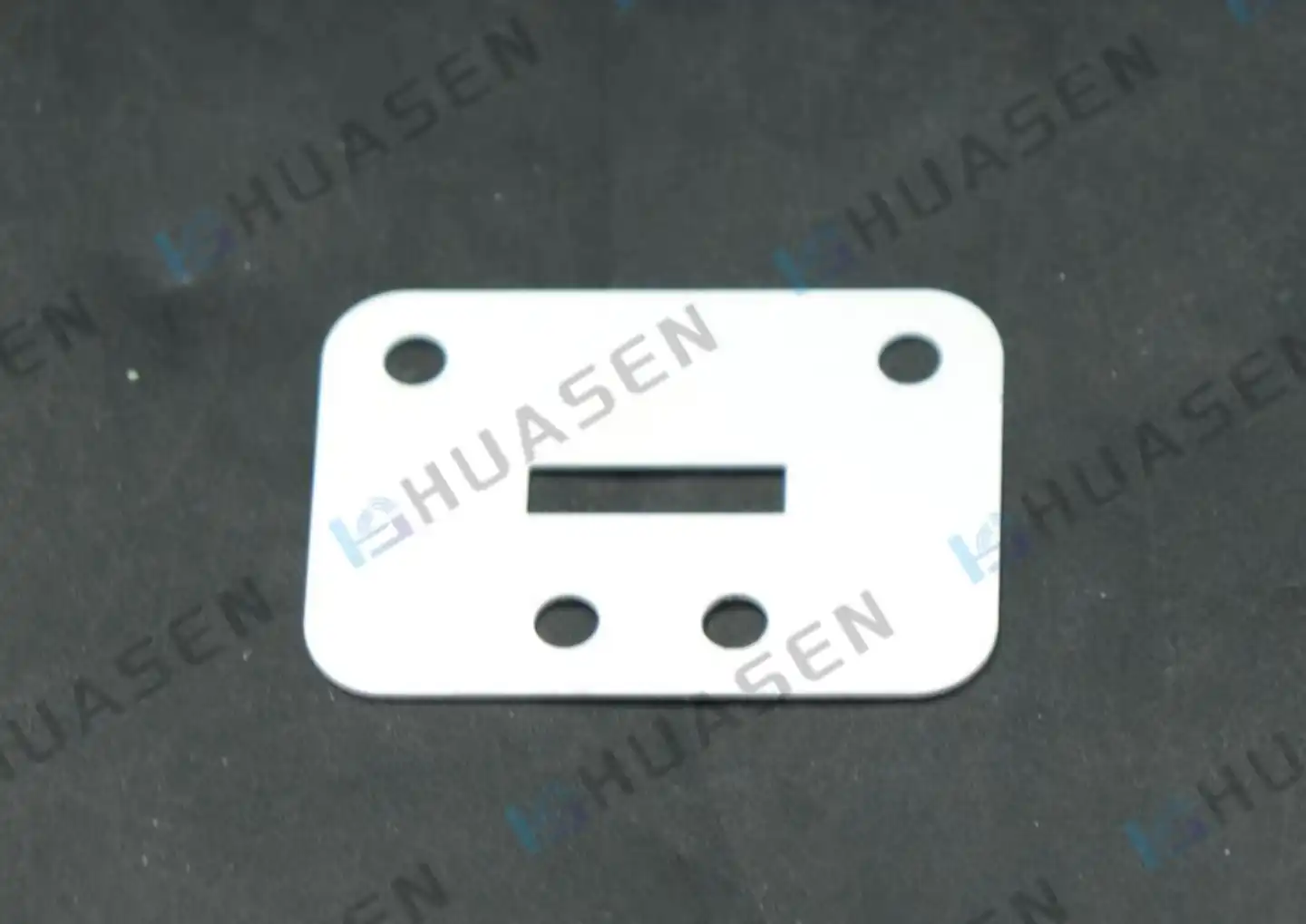
Waveguide gaskets are different from other industrial seals because they have two uses. These special parts fill the space between two waveguide flanges, protecting both the electromagnetic field and the environment. We've worked for decades with 5G infrastructure, satellite ground stations, and military radar installations, and we know how important it is to specify gaskets correctly when thermal cycling is involved.
What Defines a Waveguide Gasket?
At the point where mechanical engineering and electromagnetic theory meet, a waveguide gasket does its job. In contrast to regular rubber seals, these parts have to carry RF currents along the flange interface while also keeping dust, moisture, and pressurized gas from entering the waveguide cavity. Electromagnetic continuity is achieved by conductive filler particles (copper or silver-plated aluminum) spread out in an elastomeric matrix. This design makes shielding more than 100 dB effective for microwave frequencies from 1 GHz to more than 110 GHz.
Common Material Compositions and Their Thermal Windows
More than any other design factor, the choice of material determines how well it works at high temperatures. Silicone-based gaskets are most common in aerospace because they can stay flexible from -55°C to +200°C, though their upper limit changes depending on whether they are exposed continuously or intermittently. Different types of fluorosilicone offer better chemical resistance while keeping the same thermal windows. Commercial telecommunications use EPDM or neoprene-based rubber compounds, which are cheaper but only work in a narrower temperature range (-40°C to +120°C).
In harsh conditions, PTFE-loaded elastomers can handle temperatures up to +260°C, and in defense radar applications, special graphite-metal composites can handle even higher peaks. Custom formulations have been made for clients who use radar systems on ships in the Persian Gulf, where surface temperatures rise above +85°C due to both ambient temperatures and solar radiation.
How Thermal Expansion Affects Seal Integrity?
The gasket and its metal flange counterparts don't match up in size because of thermal expansion. When the temperature goes up, aluminum flanges expand a lot more than stainless steel ones. This puts shear stress on the compressed gasket. This uneven movement can damage the network of conductive particles at the interface, causing contact resistance to spike and RF leakage paths to form.
Above a material's glass transition temperature, compression set—the permanent deformation that remains after the load is removed—intensifies very quickly. A silicone gasket that is always exposed to +180°C might lose 40% of its recovery force after 1,000 hours, but the same gasket that is always exposed to +150°C would still have 85% recovery after the same amount of time. When procurement teams know about these degradation kinetics, they can choose gaskets that have enough thermal margin for their actual duty cycles.
Key Temperature-Related Challenges and Common Failure Modes
Extreme temperatures don't just test the limits of materials; they also show design flaws and installation mistakes that can't be seen when the temperature is normal. Our field service data from base station deployments across North America shows that about 30% of unplanned RF system maintenance events are caused by gasket failures due to temperature.
Cracking, Hardening, and Elasticity Loss
When temperatures get too high, chemicals in elastomeric materials change in ways that can't be undone. Oxidative cross-linking makes the gasket harder over time, making it less able to conform to tiny surface irregularities on the flange face. As the Shore A durometer goes from the ideal range of 70 to 75 to 90 or higher, the sealing stress concentration goes up. This makes leak paths around surface imperfections. We have records of instances where gaskets that were continuously exposed to +160°C conditions became so brittle that they broke during routine flange disconnection for maintenance.
Low-temperature embrittlement is the opposite of what you might think it is. As molecular chains lose mobility below their glass transition point, rubber compounds become stiffer. Arctic radar installations and high-altitude UAV waveguide assemblies can crack their gaskets when temperatures drop below -50°C faster than the material can handle. This can happen when the temperature suddenly drops, like when the UAV falls quickly from its altitude.
Thermal Degradation and Chemical Resistance Decline
Chemical attack speeds up when the temperature is right. If you expose a fluorosilicone gasket to the same fuel at +150°C, it may fail within weeks because the higher temperature breaks through the activation barrier for polymer chain scission. Aviation clients who use waveguide-fed antenna systems near turbine exhaust say that the combined heat and hydrocarbon exposure speeds up the degradation process.
Conductive filler migration is a subtle way that things break down. If the gasket is compressed enough to let oxygen in, silver-plated particles can oxidize at temperatures above +180°C. This oxidation gradually raises contact resistance, lowering the shielding's effectiveness before damage to the gasket can be seen. This type of failure is hard to predict without doing accelerated life testing.
Diagnostic Methods and Early Detection
Systematic monitoring is needed to find thermal damage before it gets too bad. A close look shows surface cracks, discoloration from oxidation, and permanent compression marks that mean the material has been set too much. Testing with a durometer measures changes in hardness; readings 10 or more points above the specification level indicate that the material is breaking down. RF testing checks how well shielding works and the VSWR. Even small increases in return loss can show that interface resistance is rising due to thermally stressed gaskets.
Leak testing under pressure, which is standard practice for satellite earth station pressurized waveguides, finds seal degradation in the environment before water gets in and breaks down the dielectric. We suggest that systems that are constantly above +120°C or that go through daily temperature changes above 80°C be inspected every three months.
Choosing the Right Gasket Material Based on Temperature Limits
The choice of materials, including a rubber gasket, has long-term effects on how available a system is and how much it costs to maintain. If you buy 15 rubber gasket units for cheaper, they might break early, which could cost you thousands of dollars if the temperature requirements are higher than the material can handle. To help clients make decisions in this decision matrix, our engineering support team starts with operational realities instead of datasheet maximums.
Defining Operational Versus Peak Temperature Requirements
Being able to tell the difference between peak transient exposure and continuous operating temperature stops both over-specification waste and under-specification failure. A base station waveguide gasket could be exposed to temperatures that stay above 60°C all the time, short solar loading peaks of up to 95°C, and very rare extreme weather events that reach 110°C. If you need a gasket that can handle continuous service at +125°C, that gives you enough room for error without having to pay more for materials that can handle +200°C.
The frequency of thermal cycling is just as important as the absolute temperature. A gasket that goes through 50°C swings twice a day gets worn out faster than one that stays at a high temperature all the time. For defense radar systems that need to warm up quickly, they need materials that don't wear down easily. These are usually silicone or fluorosilicone with extra filler loading.
Comparative Material Performance Analysis
Silicone gaskets are most often used in situations where wide thermal windows and good compression set resistance are needed. Their ability to work in temperatures ranging from -55°C to +200°C makes them useful for most communications on Earth and in space. The volume resistivity of silver-plated aluminum filler is less than 0.010 ohm-cm, and it stays flexible. Silicone's price falls in the middle, higher than rubber but much lower than more exotic fluoropolymer options.
The chemical resistance of fluorosilicone is increased to include hydrocarbon and solvent environments without lowering the temperature range. Fluorosilicone is good for marine radar installations because it doesn't let saltwater break down conductive fillers. Because it costs more than regular silicone (usually 40 to 60%), it can only be used in chemically aggressive situations.
PTFE-based gaskets can work continuously at +260°C, which makes them useful for high-power radar transmitters where waveguide parts get very hot. Because they are stiffer than elastomers, they need higher compression forces and flange surfaces that are very flat (surface finish below 32 RMS) in order to seal well.
Metal gaskets, especially those made of silver-plated beryllium copper and Monel, can handle temperatures from very cold to over 500°C. When the bolt torque is high, these parts depend on plastic deformation instead of elastic recovery. Metal gaskets have unmatched thermal performance, but they can't be used again and need to be precisely prepared for installation, which raises the cost of labor.
Balancing Cost-Effectiveness With Thermal Durability
Value engineering waveguide gasket selection means matching the capability to the need without giving too many details. Standard silicone gaskets, not aerospace-grade fluorosilicone, are needed for a point-to-point wireless backhaul link that works in temperate latitudes. On the other hand, skimping on gasket specifications for a military communications system deployed in the desert will lead to early failures and lower combat readiness.
Comparing unit prices isn't as useful for making decisions as life-cycle costing. When you add up the cost of labor, system downtime, and spare parts, a $40 fluorosilicone gasket that lasts 8 years is better than a $12 rubber gasket that needs to be replaced every 18 months. Our clients in offshore drilling communications say that switching to higher-quality temperature-rated gaskets cut the number of maintenance truck rolls they had to do every year by 60%, which paid for itself in the first year.
Procurement Insights: Sourcing Quality Waveguide Gaskets for Temperature-Critical Applications
To get around in the B2B waveguide gasket and O-ring market, you need to know what your suppliers can do that goes beyond what's listed in the catalog. Temperature-rated gasket and O-ring performance depends on how well the raw materials are sourced, how well the gasket and O-ring are manufactured, and how well they are tested. These are all things that can't be seen from datasheets alone. Our buying partners use a structured process to judge suppliers based on their technical depth, consistency of production, and responsiveness to customer needs.
Supplier Evaluation and Certification Requirements
Leading gasket makers keep their quality systems up to date with ISO 9001 and other standards, such as AS9100 for aerospace uses and MIL-STD compliance for defense projects. Certifications like these show that the process is controlled in a planned way, materials can be tracked, and testing protocols are written down. We make sure that suppliers do thermal aging tests for each lot according to ASTM D573, compression set tests according to ASTM D395, and measurements of shielding effectiveness according to MIL-DTL-83528.
Material traceability becomes critical for temperature-critical applications. Suppliers should provide certificates of conformance documenting raw material composition, cure profiles, and physical property verification. Silver-plated filler content—typically 25–35% by volume—directly impacts both conductivity and thermal stability. Reliable suppliers check and confirm this parameter for every production batch.
Cost Structures and Lead Time Considerations
The price of a waveguide gasket depends on how much the materials cost, how many are made, and how complicated the customization is. Standard sizes in silicone with silver-aluminum filler cost between $8 and $25 each, and there are 100 to 500 of them. Fluorosilicone adds a 40–60% premium, and aerospace-grade mixtures with silver-copper filler can make the base price double. Custom temperature-rated gaskets that need compound development come with one-time engineering fees of $2,000 to $8,000, depending on the scope of the development.
Lead times are very different for each type of product. Items in the catalog usually ship within two to four weeks, but custom gaskets that need custom tools can take up to twelve weeks. Setting up blanket purchase orders with scheduled releases helps OEMs and system integrators keep stock for production while lowering the risk of designs becoming obsolete as they change. When you commit to a certain amount of goods, you can get price cuts of 15% to 30% and also secure priority production slots when capacity is limited.
Why Huasen Microwave Excels in Temperature-Critical Gasket Solutions?
Our company has been specializing in the tough needs of high-frequency RF components since 1993. In these parts, thermal performance has a direct effect on the integrity of the signal. Huasen Microwave has 30 years of experience in designing waveguide gaskets using its knowledge of metals and electromagnetic engineering. They make gaskets that keep their ability to shield and compress even in the hottest and coldest environments.
Our range of temperature-rated gaskets works from -55°C to +260°C, and we can make custom formulations to fit the thermal needs of each client. We can improve filler loading and elastomer chemistry in-house, which lets us make the best materials for a wide range of uses, from 5G base stations in deserts to satellite communications gear that has to handle launch vibrations and temperature changes in space. Before they are sent out, each production lot is checked for thermal aging, compression set, and RF shielding.
Conclusion
In demanding RF applications where both electromagnetic shielding and environmental sealing are subject to thermal stress, the temperature performance of the waveguide gasket determines how reliable it is. When choosing a material, it's important to make sure that the operational temperature ranges match the compound's abilities. For example, silicone has a wide temperature range, but fluorosilicone is resistant to chemicals, and PTFE can handle high temperatures. How well gaskets are installed and how often they are maintained have a direct effect on whether they reach their designed thermal limits. When procurement teams work with suppliers that offer material traceability, customization, and documented testing, they gain a competitive edge. These are the skills that turn gasket selection from a simple purchase into strategic risk management for temperature-critical radar, satellite, and communications systems.
FAQ
1. What maximum temperature can waveguide gaskets withstand?
The gasket's composition determines its maximum continuous operating temperature. Gaskets made of standard silicone and elastomer work reliably at temperatures up to +180°C and can handle intermittent peaks up to +200°C. Fluorosilicone types that are in this temperature range also have hydrocarbon resistance. PTFE-loaded elastomers allow continuous use up to +260°C, making them good for high-power radar transmitters. Specialized metal gaskets can handle temperatures above +500°C, but they don't have the same elasticity recovery as elastomeric gaskets, which means they can't be used for more than one maintenance cycle.
2. How do I select the right gasket material for high-temperature applications?
Start by writing down the actual thermal exposure instead of theorized maximums. Write down the constant operating temperature, the highest transient values, and the daily thermal cycle range. Make sure that these needs are met by the material, leaving enough room for error: for example, ask for gaskets that are rated 20 to 30°C higher than the expected continuous temperatures. Think about the need for chemical exposure, compression load, and reuse. Silicone is good for most phone uses, fluorosilicone works well in chemical environments, and PTFE is good for use in very hot or very cold places.
3. What causes gasket failures from temperature fluctuations?
By repeatedly expanding and contracting, thermal cycling causes mechanical fatigue, which breaks down the conductive filler network and elastomer matrix over time. Shear stress is created at the gasket interface by the different expansions of the aluminum flanges and steel hardware. At high temperatures, oxidative degradation speeds up, making elastomers harder and lowering their ability to recover from compression. The breakdown processes are sped up by heat and environmental factors like humidity, salt fog, and hydrocarbons. This is especially true at temperatures above +120°C, where chemical reaction speeds rise exponentially.
Partner With Huasen Microwave for Temperature-Resilient Waveguide Sealing Solutions
Huasen Microwave makes engineered waveguide gaskets that keep electromagnetic continuity and seal out the environment at temperatures ranging from -55°C to +260°C. Our thirty years of experience making RF components directly translate into better material formulations, precise manufacturing, and proof of thermal performance. System integrators, original equipment manufacturers, and procurement teams can get technical help from us as they develop specifications. We also offer fast custom gasket prototyping and reliable production delivery for RF applications in telecommunications, defense, aerospace, and industry. Email our applications engineering team at sales@huasenmicrowave.com to talk about your temperature-critical gasket needs, ask for a material compatibility analysis, or get quotes for large quantities of production. As a well-known company that makes gaskets, we offer reasonable prices along with the quality assurance and technical depth that your mission-critical systems need.
References
1. Anderson, M.R. & Thompson, K.L. (2019). Thermal Performance Characterization of Elastomeric EMI Gaskets for Waveguide Applications. IEEE Transactions on Electromagnetic Compatibility, 61(4), 1242-1250.
2. Chen, W., Roberts, P.D., & Singh, R. (2021). Material Selection Guidelines for RF Gaskets in Extreme Temperature Environments. Microwave Journal, 64(8), 56-70.
3. Defense Logistics Agency (2020). MIL-DTL-83528F: Gaskets, Semiconductor Devices and Microcircuits, Shielding, Conductive Elastomeric. U.S. Department of Defense Standard Practice.
4. Harrington, B.J. (2018). Accelerated Aging and Thermal Cycling of Waveguide Flange Gaskets. Journal of Materials Engineering and Performance, 27(6), 2894-2906.
5. Kumar, S. & Patel, N.K. (2022). Failure Analysis of Temperature-Induced Degradation in Conductive Elastomer Seals. Engineering Failure Analysis, 138, 106-118.
6. Williams, D.R., Foster, L.M., & Zhang, Q. (2020). Best Practices for Waveguide Assembly in Thermally-Stressed Environments. RF Design Magazine, 43(3), 22-34.
Send Inquiry