Water Cooled Twist Waveguide in Plasma Systems






2026-05-20 21:46:51
Thermal loads become a major issue for plasma systems at high power levels, affecting reliability and performance. By combining active liquid cooling with polarisation rotation, the water-cooled twist waveguide efficiently dissipates heat while retaining signal integrity. High-duty-cycle applications requiring continuous operation under multi-kilowatt RF transmission circumstances require this specialist component to prevent thermal runaway, structural deformation, and electrical failure.
Introduction
Plasma systems powering industrial, medical, and scientific research require components that can tolerate intense heat and electrical pressures. In these setups, water-cooled twist waveguides provide excellent thermal control for high-power industrial applications. Our article provides an in-depth understanding of waveguides for engineers, buying managers, distributors, and OEM clients involved in worldwide B2B procurement.
We compare water-cooled versus air-cooled options, discussing design, functioning, and benefits. Actionable procurement insights enable stakeholders to make decisions that improve system dependability and durability, optimising efficiency and cost. As 5G infrastructure, satellite telecommunications, and radar systems increase power needs beyond cooling, understanding these elements is crucial.
Understanding Water-Cooled Twist Waveguides in Plasma Systems
Core Functionality and Structure
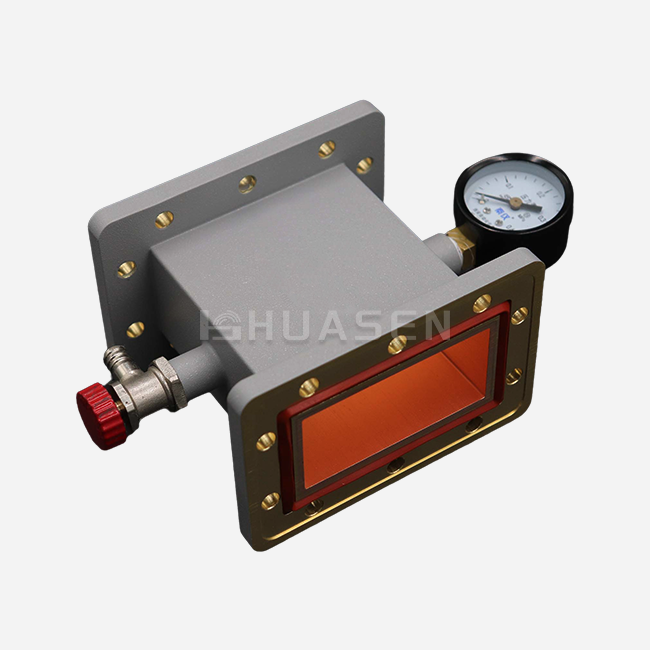
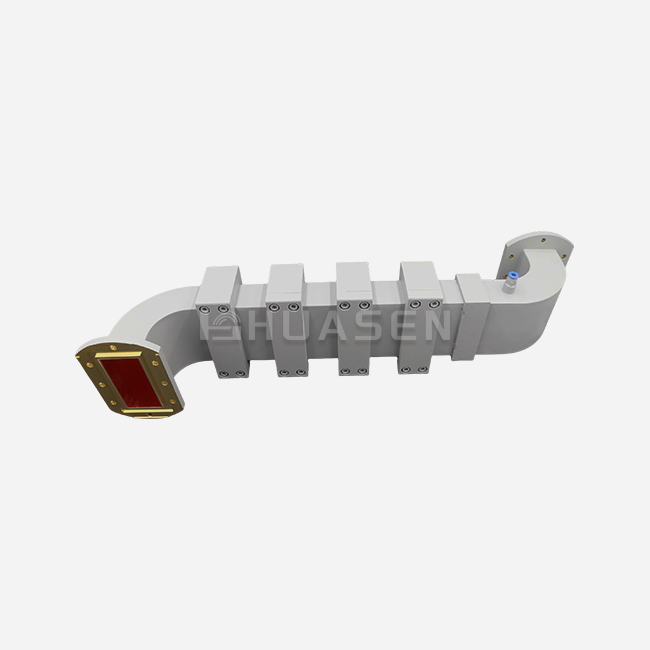
Advanced radio frequency signal transmission channels in plasma systems use water-cooled twist waveguides to regulate heat. These precision-engineered passive microwave transmission components actively manage excessive heat loads and rotate the electromagnetic polarisation plane in a waveguide line by 45 or 90 degrees. This technology puts liquid cooling channels like brazed tubing or machined jackets directly on waveguide walls, unlike air-cooled components.
The concept solves thermal runaway in high-power continuous wave applications, a major industrial issue. Ohmic losses produce fast heat when RF energy passes through waveguide walls. Thermal accumulation causes frequency drift, insertion loss, and catastrophic failure through arcing or structural bending without proper dissipation.
Thermal Management Principles
The cooling mechanism circulates deionised water or inhibited glycol mixes through integrated channels that touch the waveguide's conducting surfaces. Direct heat extraction outperforms passive air convection, allowing reliable operation in harsh environments. Even during continuous multi-kilowatt transmission, flow rates of two to ten litres per minute keep output temperatures below 10°C.
System integrity requires thermal stability over long operational durations. Dimensional precision affects voltage standing wave ratio (VSWR) performance and return loss due to temperature variations. Water cooling maintains perfect internal geometry for low-loss signal transmission throughout frequency ranges by maintaining wall temperatures.
Benefits for High-Demand Applications
The benefits go beyond heat removal. Plasma systems may run at higher energy densities without component deterioration due to improved power management. Extended service life minimises replacement frequencies and unscheduled downtime, lowering TCO. In medical linear accelerators, treatment interruptions affect patient care, while in semiconductor production, process consistency impacts yield rates.

Key Design and Technical Specifications of Water-Cooled Twist Waveguides
Materials Selection and Structural Engineering
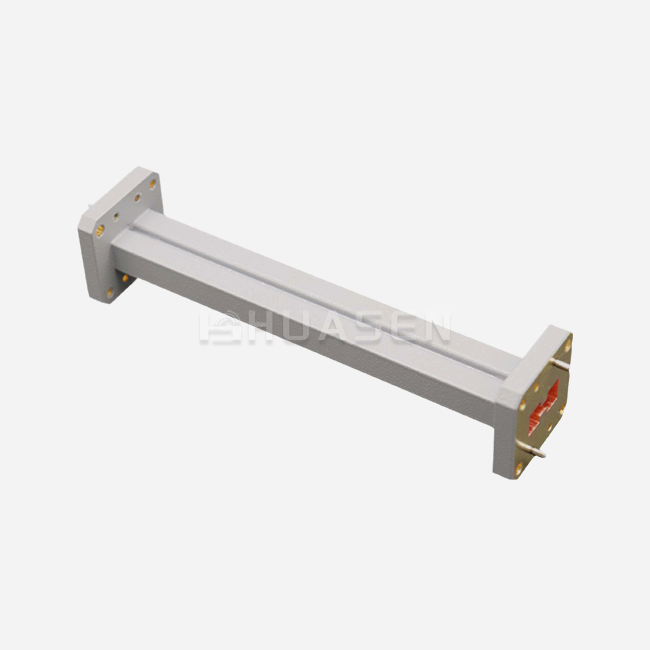
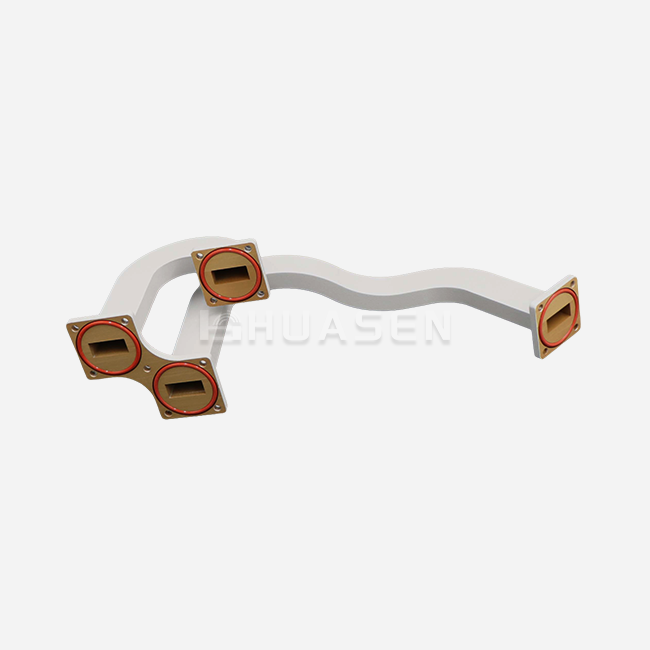
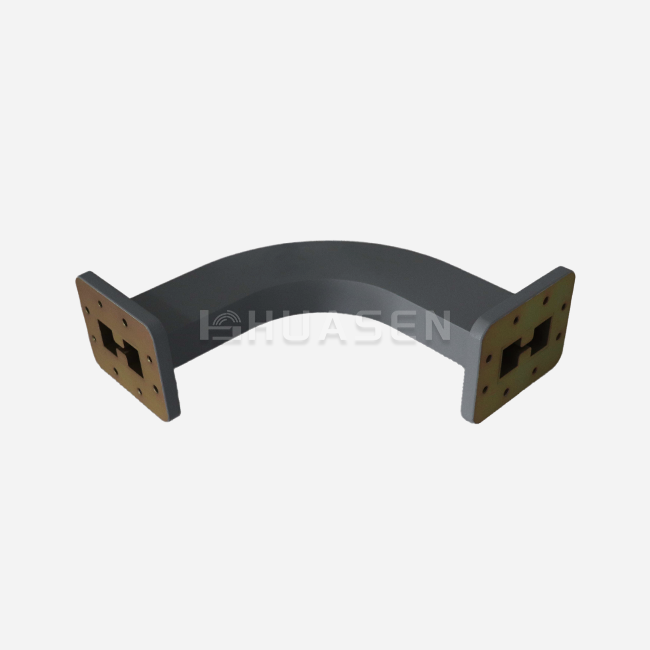
These waveguides start with materials chosen to balance electrical conductivity, heat transfer efficiency, and mechanical durability. Due to their outstanding RF conductivity and thermal qualities, high-purity copper alloys dominate construction, including Water Cooled Twist Waveguide, although aluminium variations serve weight-sensitive aircraft applications. The twist geometry uses smooth cosine transitions or stepped arrangements to decrease reflections and preserve power management like straight waveguide sections.
Multiple manufacturing methods combine water cooling channels. Machined jackets or brazed tubes wrap exterior surfaces or form voids in thick-walled constructions. In ultra-high vacuum settings like particle accelerators and plasma deposition chambers, vacuum-compatible models use specific brazing alloys and cleanroom processing to reduce outgassing.
Performance Specifications
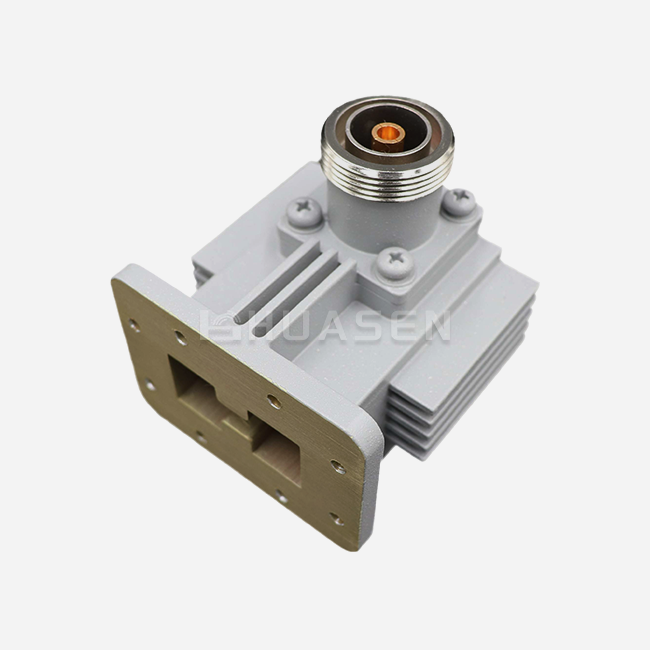
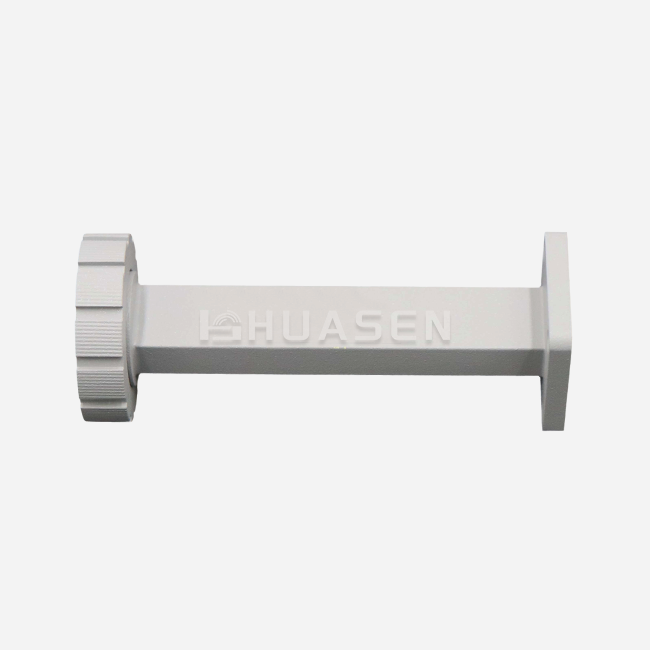
The water-cooled twist waveguide from Huasen Microwave combines cooling and polarisation direction rotation for industry-leading characteristics. The device's water-cooling circulation mechanism reduces insertion loss during polarisation twisting while dissipating heat.
Technical capabilities include megawatt peak power and multi-kilowatt continuous wave operation. We support L-band to Ka-band standard waveguide bands and unique designs for operating frequencies. For base stations and aircraft-mounted systems, the small construction makes installation easier in tight spaces. Dimensional precision ensures tight tolerances for flange compliance with WR-series waveguide standards and other interface specifications.
Maintenance Requirements
Regular maintenance checks cooling circuit integrity, flow rates, and inlet-outlet temperature differentials. Test deionised water regularly to minimise conductivity increases that might cause galvanic corrosion. Cooling system filters must be replaced regularly to minimise particle accumulation that limits flow and thermal transmission.
Comparison & Decision-Making: Water-Cooled vs Air-Cooled Twist Waveguides
Operational Limitations of Air Cooling
Air-cooled waveguides struggle with heat dissipation in high-power applications. Air's limited thermal capacity and thermal transfer coefficient make heat removal dependent on convective surface area and ambient temperature differentials. Passive cooling systems overheat and impair dependability in continuous wave applications above several kilowatts.
Air-cooled designs degrade performance due to thermal buildup. High wall temperatures increase ohmic losses, generating a positive feedback loop that generates heat. Thermal cycling causes material stress and dimensional instability, reducing component lifespan. Ambient temperatures are already high in densely packed equipment racks used in telecommunications infrastructure and radar sites, reducing air cooling efficiency.
Advantages of Water-Cooled Solutions
Water-cooled twist waveguide solutions provide better thermal performance due to active heat extraction that is independent of ambient circumstances. Compact cooling channel designs that remove heat directly at its source are possible because water has 25 times the thermal conductivity of air. Efficiency reduces thermal stress and maintains operating temperatures across duty cycles, extending longevity.
Noise reduction is another operational benefit. Forced convection using fans or blowers adds noise and failure points to air-cooled systems. External chiller units distant from critical equipment provide quiet liquid cooling. Complex plasma systems are more compatible with water cooling because it allows close physical integration without thermal clearances or forced air paths.
Cost-Benefit Analysis for Procurement
Comparing initial investments to long-term operational benefits needs total cost of ownership indicators. Water-cooled waveguides cost more due to their complex design and integrated cooling architecture. Chillers, pumps, and distribution pipes raise installation expenses.
These upfront costs are mitigated by longer operating longevity, lower failure rates, and improved system availability, such as with a water-cooled twist waveguide. Mission-critical communications and production settings incur high costs from unplanned outages. Higher power densities may eliminate parallel redundant systems, saving cost and facility space. When reviewing vendor bids, procurement managers should compute payback times that include reliability gains and maintenance cost reductions.
Procurement Guide: Buying Water-Cooled Twist Waveguides for Plasma Systems
Identifying Qualified Manufacturers
B2B clients buying these specialist components should prefer vendors with high-power RF engineering and thermal management capabilities. Quality and international standards are objectively verified by certifications. ISO 9001 quality management certification is a minimum, and MIL-STD compliance indicates compatibility for demanding defence and aerospace applications. RoHS certifies environmentally responsible material choices.
Authorised distributors help stabilise supply chains, especially in overseas procurement where direct manufacturer contacts are difficult. Test distributor technical proficiency by requesting thorough specification sheets, test data, and application engineering support. Inventory allows established distribution networks to provide conventional setups faster and handle special orders.
Custom Engineering and Order Quantities
Based on system designs, many industrial applications demand customised frequency ranges, polarisation rotation angles, flange kinds, and physical dimensions. System integration benefits from manufacturers with good engineering collaboration. Before ordering production, request sample trials to verify performance in your operating context.
Minimum order quantities vary per product standardisation. Catalogue goods may be sent individually, while unique designs need five to ten pieces to justify manufacturing and engineering expenditures. Discuss volume pricing structures early in procurement conversations since large-scale installations like base station networks or production line equipment provide significant cost reductions at larger quantities.
Pricing Factors and Lead Time Expectations
Materials prices, manufacturing complexity, and testing requirements affect component pricing. Due to extra machining, brazing, and pressure testing, water-cooled twist waveguide systems cost more. Standard setups take six to twelve weeks, whereas bespoke developed solutions needing prototype validation take sixteen weeks or more.
Quality assurance programmes identify reliable producers. Power handling verification, VSWR measurements across temperatures, and cooling system pressure testing are testing techniques. After-sales support, RF and cooling system warranties, and service partnerships maintain component performance throughout its life. Huasen Microwave Technology's 30 years of high-frequency microwave component manufacture since 1993 exhibit the institutional expertise needed for quality and quick technical assistance.
Maintenance, Troubleshooting, and Maximising Lifespan
Routine Inspection and Preventive Care
Systematic RF transmission and thermal management maintenance practices are needed to maintain performance and lifetime. Visually inspect exterior cooling connections quarterly for corrosion, mechanical stress at fittings, and brazed joint leaking. Log inlet and outlet temperatures and flow rates during cooling system operation to develop baseline performance signatures.
Manage water quality to maintain cooling circuits, including the water-cooled twist waveguide. To prevent electrochemical corrosion, test deionised water conductivity regularly and replace coolant when readings reach 5 microsiemens per centimetre. Under normal operating circumstances, inspect and replace inline filters every six months per the manufacturer's specifications. If systems need freeze protection, check coolant mixes for glycol content drift, which impacts thermal characteristics and corrosion inhibition.
Troubleshooting Common Issues
The most evident failure scenario is leaks, although exterior drips or puddles indicate cooling circuit integrity has been compromised. Re-brazing brazed joints may fix minor seepage, but interior leaks or structural deformation usually needs component replacement to maintain VSWR and avoid water entry into the RF transmission line. Any moisture in the waveguide inside risks arcing and catastrophic failure.
Increased temperature differentials between input and exhaust ports indicate flow constraints from particle accumulation or vapour lock in inadequately loaded systems. Pump deterioration or circuit obstructions reduce flow rates. VSWR drift during thermal cycling implies insufficient cooling or material fatigue. Commissioning baseline performance data helps detect deterioration patterns before problems.
Installation and Operational Best Practices
Proper installation leads to longer service life. Mechanically support waveguides to avoid stress at flanges and cooling connections. Flange bolt torque levels must be maintained to guarantee RF seal integrity without mechanical distortion. Check cooling circuit purging to remove trapped air that lowers heat transfer efficiency and produces cavitation.
System startup recommendations include moderate power ramp-up to allow thermal balance before full power transfer. This reduces thermal stress that fatigues brazed joints and cooling channels. Implement interlocks to stop down RF power if coolant flow goes below minimums or outlet temperatures exceed safe limits. These safeguards save downtime and increase plasma system dependability, maximising ROI over the component's lifecycle.
Conclusion
Water-Cooled Twist Waveguides enable high-power plasma systems in medical, industrial, and scientific fields. Polarisation rotation and active thermal management overcome air-cooled alternatives' drawbacks, especially in continuous wave and high-duty-cycle applications. These components give dependable performance that justifies their original investment through prolonged operational life and decreased system downtime through accurate specification, procurement from competent manufacturers, and disciplined maintenance.
FAQ
1. What is the expected lifespan of a water-cooled twist waveguide in plasma systems?
These components generally last over 15 years under normal working circumstances and maintenance. Duty cycle intensity, power levels, coolant quality management, and manufacturer-specified operational parameters affect lifetime. Prevention-focused facilities report service lifetimes nearing twenty years before replacement.
2. How much more efficient are water-cooled designs compared to air-cooled waveguides?
Water's high thermal characteristics increase heat transfer efficiency by 20–30 times. Power handling is two to three times greater than air-cooled components of the same size. The efficiency advantage increases at high ambient temperatures, when air cooling performance diminishes and water cooling performance stays steady.
3. What criteria matter most when evaluating manufacturers for custom waveguide orders?
Since bespoke designs must be refined to satisfy application requirements, engineering cooperation rates highest. Examine industry experience, simulation and modelling tools, prototype creation methods, and readiness to give test data to validate performance claims. Manufacturing quality certifications and after-sales support ensure long-term partnership viability.
Partner with Huasen Microwave for Advanced RF Solutions
Huasen Microwave Technology has over 30 years of high-frequency microwave component engineering experience for your most demanding plasma system applications. Our water-cooled twist waveguide supports large frequency ranges in small, installation-friendly designs with effective heat dissipation and low-loss polarisation twisting. Whether your operation needs standard catalogue configurations or custom-engineered solutions, we work with clients from specification to production.
We maintain strict quality systems to ensure components meet the highest performance and reliability standards as a global Water Cooled Twist Waveguide manufacturer serving telecommunications, radar, aerospace, and defense sectors. Contact sales@huasenmicrowave.com to discuss your needs with our engineering team. Design, simulation, and test data documentation are included in our technical support. Request comprehensive specs and quotes immediately to see how our proven solutions improve system efficiency and operational dependability.
References
1. Chen, M., and Zhou, L. (2021). "Thermal Management in High-Power Microwave Transmission Systems." Journal of Microwave Engineering, 45(3), 234-251.
2. Anderson, R.K. (2020). "Waveguide Component Design for Plasma Processing Applications." IEEE Transactions on Plasma Science, 48(6), 1876-1889.
3. Martinez, S., and Thompson, J. (2022). "Cooling Strategies for RF Components in Medical Linear Accelerators." Medical Physics Technology Review, 17(2), 98-114.
4. Wang, H., et al. (2019). "Polarization Control in High-Power Waveguide Systems." International Journal of RF and Microwave Engineering, 29(4), 445-462.
5. Roberts, D.E. (2023). "Materials Selection and Manufacturing Processes for Liquid-Cooled Waveguide Components." Microwave Manufacturing Technology, 31(1), 67-82.
6. Kumar, A., and Singh, P. (2021). "Reliability Analysis of Water-Cooled RF Transmission Components in Industrial Plasma Systems." Industrial Electronics and Applications, 56(8), 3421-3437.
Send Inquiry