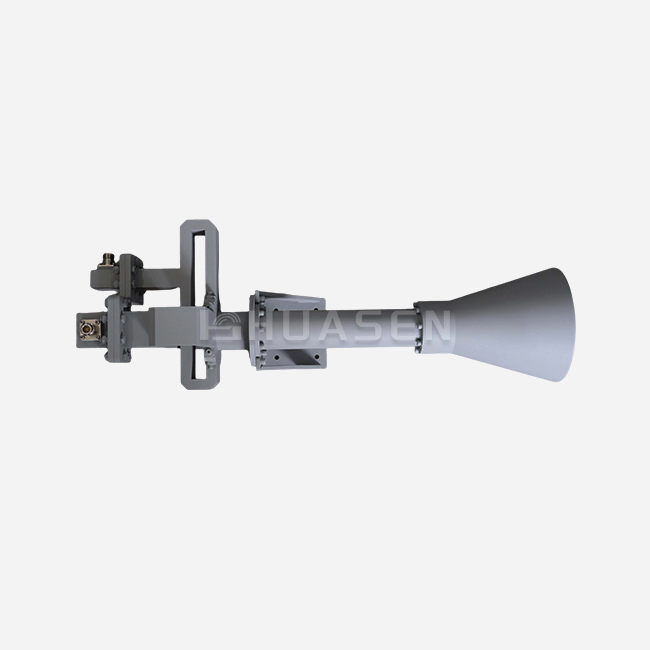
Water Cooled Coax Waveguide for High Power Transmission






2026-04-13 22:40:17
Water-cooled coax waveguide systems are a big step forward in dealing with water-cooled coax waveguide heat problems in high-power RF transmission equipment. These special parts have precision-engineered liquid cooling channels built right into the gearbox path. This lets operators handle signals from kilowatts to megawatts without affecting the purity of the signal or the lifespan of the parts. By moving coolant through carefully placed internal pathways, these devices get around the main problem with standard air-cooled assemblies, which is that they can't get rid of heat quickly enough when high power is applied for a long time. This technology is now essential for infrastructure that supports telecommunications, defence radar installations, and industrial RF heating tasks that must be reliable and work well.
Understanding Water Cooled Coax Waveguide Systems and Their Design Principles
The operational foundation of water-cooled transmission systems relies on active thermal management integrated into the signal path architecture. Unlike passive cooling methods that depend solely on ambient airflow, these components employ closed-loop liquid circulation to extract heat directly from critical interfaces where electromagnetic energy converts to thermal energy through resistive losses and dielectric heating.
Operating Mechanism and Thermal Management Strategy
The cooling system works with precision-machined channels placed next to places of high loss in the gearbox structure. Through inlet ports, deionised water or a special coolant runs close to surfaces that produce heat, absorbing heat energy. It then leaves through outlet ports connected to heat exchangers outside the system. This constant flow keeps the running temperatures stable even when working with continuous wave signals that are more than a few kilowatts in power. The thermal conductivity of liquid is about 25 times higher than that of air. This lets smaller designs work without sacrificing thermal efficiency. To get the most out of the thermal gradient and heat transfer, operators usually keep the flow rates between two and five litres per minute and the temperatures at the entrance below 25°C.
Material Selection and Structural Optimisation
Engineers choose materials based on a number of factors, including how well they conduct electricity to reduce insertion loss, how well they transfer heat, how strong they are to handle internal pressure, and how long they won't rust, which means they will last longer. Copper that doesn't contain oxygen is still the best material for inner conductors because it has better electrical and thermal qualities. For outer housings, copper alloys or aluminium versions are often used because they are lighter. Using brazing methods to permanently attach cooling jackets to gearbox structures ensures that they are in close thermal contact without any gaps that could slow down heat transfer. Optimising the channel geometry balances the loss of pressure against the efficiency of heat extraction. Computational fluid dynamics models help design features that create turbulence and improve convective heat transfer without the need for too much pumping.
Operational Parameters and Performance Specifications
Typical operating ranges cover frequencies from VHF to Ka-band, and they can handle power levels ranging from 1 kW to several megawatts, based on the size of the waveguide and the cooling system's ability to handle it. When systems are built correctly, insertion loss stays below 0.1 dB per metre and voltage standing wave ratio stays below 1.15:1 over certain bandwidths. When the power is on full, the temperature difference between the inlet and exit usually reaches 10 to 15°C. This is proof that the thermal load is being managed. When cooling systems work right, peak internal temperatures rarely go above 60°C at full power. This keeps important safety gaps below the material's thermal limits and maintains the stability of its dimensions, which is important for keeping electrical performance.
Maintenance Requirements and Longevity Considerations
To keep a system running well, it's important to follow preventative maintenance plans that cover both the mechanical and thermal parts of its operation. Visual checks are done once a month to make sure the integrity of the cooling loop. They look for signs of corrosion, connections that leak, or changes in the colour of the coolant that show chemical breakdown. Every three months, the flow rate is checked to make sure there is enough circulation, and thermal imaging scans find hot Water Cooled Waveguide to Coaxial Adapter spots that could mean there are internal blocks or not enough coolant contact. Changing the coolant once a year keeps dissolved metals and particles from building up, which lowers the efficiency of heat transfer. Fixed installations can last longer than twenty years if they are properly maintained. In broadcast and telecommunications uses, equipment has been used nonstop for more than 150,000 hours. If you don't fix small leaks right away, they can turn into big problems because losing water too quickly can cause the engine to overheat and damage parts permanently.

Comparing Water Cooled Solutions with Traditional and Air Cooled Alternatives
The selection between cooling methodologies profoundly impacts system performance, installation requirements, and lifecycle costs. Understanding these trade-offs enables informed procurement decisions aligned with application-specific constraints and objectives.
Thermal Dissipation Efficiency and Power Handling
When it comes to managing heat, water-cooled designs are clearly better than convection-based ones. Lab tests show that heat removal rates are higher than 500 watts per square centimetre of cooled surface area. This is in contrast to forced-air systems, which can only achieve about 50 watts per square centimetre. This tenfold improvement directly affects the amount of power that can be handled, letting small form factors handle power levels that used to need much bigger air-cooled systems. Real-world tests in broadcast transmitter installations show stable operation at 50 kilowatts of average power in packages that are only a third the size of similar air-cooled systems. This means that the equipment takes up less space and costs less to install, but it is more reliable because it works at lower temperatures.
Durability Under Continuous High Load and Environmental Stress
Long-term use in tough situations shows that different cooling methods have fundamentally different effects on how long parts last. Water-cooled systems keep their internal temperatures pretty stable, no matter what the outside temperature is like. On the other hand, air-cooled systems don't work as well in hot places or places with limited wind. Field data from coastal telecommunications installations shows that water-cooled parts worked consistently for over fifteen years in salt air environments where humidity and corrosion sped up the breakdown of air-cooled parts, which meant they had to be replaced every three to five years. Because liquid cooling paths are cut off, they keep dust and moisture from building up on the inside, which can happen with air-cooled assemblies in industrial settings. Vibration testing shows that designs that use water cooling are more mechanically stable than those that use finned air cooling, which can cause resonance and stress cracking. This is because the cooling structures add rigidity and mass damping.
Total Cost of Ownership Analysis
Water-cooled systems usually have higher initial costs than air-cooled alternatives by 40 to 60 per cent, but a full lifecycle study shows that they are more cost-effective in demanding situations. To find the total cost of ownership, you have to add up the initial capital cost, the difficulty of installation, the amount of energy used, the cost of upkeep, and the number of times the product will need to be replaced over its expected service life. The longer operating lifespan of water-cooled parts—often twice as long as air-cooled equivalents—makes up for their higher initial cost. Lower failure rates mean less expensive unexpected downtime. This is especially helpful in mission-critical applications where service interruptions can have big effects on operations or finances. It is better to use water cooling for high-power tasks because centralised coolant heat exchangers with better airflow are more energy-efficient than forced-air cooling that needs many high-power fans. When comparing water-cooled to air-cooled gearbox parts rated above ten kilowatts, documented case studies from industrial heating installations show return on investment periods of less than three years. These benefits make water-cooled gearbox systems the best choice when operational reliability, power density, and lifecycle economics are more important than lowering initial acquisition costs. When procurement pros are looking at different options, they should do application-specific analysis that takes into account real duty cycles, environmental conditions, and downtime costs to get a good idea of which method is the most valuable.
Procurement Insights: Choosing the Right Supplier
Selecting qualified suppliers requires systematic evaluation of technical capabilities, quality systems, and support infrastructure to ensure procurement decisions yield components meeting stringent performance and reliability requirements.
Certification Standards and Quality Assurance Processes
Manufacturers with a good reputation keep full quality management systems that are approved to ISO 9001 standards. These systems show documented processes that control design, production, inspection, and testing. For military and space uses that are very specific, extra certifications like AS9100 or following MIL-STD guidelines for quality control and environmental tests are often needed. If you want to be sure that a seller is certified, you shouldn't just look at claims; you should also look at the actual certificates and audit reports. This is because certification status is directly linked to consistent manufacturing and reliable products. Leading providers use statistical process control methods and keep careful records of the parts they make, including measurements, material certifications, and performance test results. When evaluating a supplier, ask to see sample inspection reports and test data sheets to see how accurate the measurements are and how well the supplier keeps records to help with problem-solving and tracking throughout the lifespan of theWater Cooled Waveguide to Coaxial Adapter.
Customisation Capabilities and Engineering Support
For high-power transmission tasks, custom solutions are often needed that work best with certain frequency bands, power levels, mechanical interfaces, and environmental conditions. The engineering skills of the supplier decide whether it is possible and efficient to create custom solutions that meet specific needs. Potential partners should be judged by their in-house design resources, simulation tools, prototyping skills, and track records of similar customisation projects. The best suppliers have dedicated applications engineering teams that help with design, do system integration analysis, and make suggestions for improving total system performance instead of just meeting component requirements. This consultative method is especially helpful during the early stages of system design, when input from an experienced supplier can save money on design changes and help find problems before manufacturing commitments are made.
Pricing Structures and Lead Time Considerations
Pricing models that are clear and have well-defined terms make it easier to make accurate budgets and compare costs between providers. Ask for detailed quotes that list the prices of the basic parts, any customisation fees, the cost of the tools needed, and any bulk discount schedules that apply to the amount of the order you plan to place. When you buy in bulk, you can save 15 to 30 per cent on each item when you go over a certain minimum number. This makes a supplier's ability to handle large orders an important factor in choosing them. Lead times depend a lot on how customised the item is, how much can be made, and how readily available the material is. Standard catalogue items usually ship within four to six weeks, but fully customised designs may take sixteen to twenty weeks from the time the order is placed until it arrives. Before committing to production quantities, make sure you have a realistic schedule for the project that includes making a prototype, testing it, and possibly making changes to the design.
After-Sales Support and Service Commitment
The quality of technical help has a big effect on long-term satisfaction and the success of operations. Check how responsive the seller is, how much technical knowledge they have, and how willing they are to offer help after the sale. The best providers offer full installation guidance, commissioning support, operator training, and troubleshooting help for problems that come up during the system's lifetime. The warranty should cover manufacturing flaws for at least one year, and for important uses, there should be choices for longer warranties. To avoid surprises when problems happen, make sure you know how to file a warranty claim, how long it usually takes to get a problem fixed, and when help is available during the evaluation phase. Some manufacturers keep regional service centres staffed with experienced technicians who can provide on-site support, repair services, and emergency replacement parts. These are useful tools that keep mission-critical installations running as smoothly as possible.
Installation and Troubleshooting Guide
Proper installation procedures and systematic troubleshooting approaches maximise system performance and operational reliability while preventing damage from improper handling or connection errors.
Pre-Installation Checks and Site Preparation
A successful installation starts with careful planning that includes looking at the surroundings, the support structures, and the utility connections that are needed for the system to work. Make sure that the quality of the cooling water source meets the manufacturer's requirements for conductivity, pH levels, and particulate content. Contaminants can speed up corrosion and make heat transfer surfaces less effective. Check the mounting places to make sure they can support the structure, taking into account the weight of the component and the static pressure from the cooling connections. Make sure that the paths used to route the cables don't have too many bending radii, as these can cause impedance discontinuities and stress spots. Review electrical safety rules, such as grounding plans and shutdown rules, that are right for the power levels involved. Before starting the installation, make sure you have all the tools, torque wrenches, and other special equipment you will need. This will help you avoid delays once the work starts.
Connection Procedures and System Integration
Before tightening the bolts, carefully place the parts on the mounting surfaces, making sure they are lined up with the cooling connections and mating flanges. Use the torque values recommended by the maker on flange bolts in star patterns to get even compression and the best electrical contact between surfaces. When connecting cooling lines, make sure to use fittings and hoses that are designed for the system's pressure and temperature, and watch out for air pockets that get in the way of flow. Install flow meters and temperature monitors at the points where cooling comes in and goes out. This will allow you to keep an eye on operations and notice early signs of performance degradation. Before turning on RF systems, cooling circuits should be pressure tested at 150% of their working pressure. This way, leaks can be found in controlled conditions instead of when the systems are under a lot of power. Low-power RF testing should be done to measure insertion loss and return loss across the working bandwidth. This will set a baseline of performance that can be used for comparison during future operational checks.
Common Issues and Diagnostic Solutions
From working on many projects, we know that some problems keep happening and can be fixed in a planned way. Leaks in a cooling system usually show up as falling flow rates, bigger temperature differences between the inlet and exit, or clear coolant buildup near the connections. To stop leaks right away, depressurise the systems, check the connections to make sure they are properly sealed, and replace any damaged seals or corroded fittings. If the flow rate drops without any obvious leaks, it's likely that scale or debris has built up inside and blocked the flow. Flushing the circuits with mildly acidic cleaning solutions often clearsthewater-cooledcoax waveguide the way again. Signal attenuation levels that are too low may mean that the cooling channel is damaged, which is causing electrical gaps that need to be fixed by replacing the part instead of trying to fix it in the field. Finding hot spots with thermal imaging shows that the coolant isn't touching properly or is bypassing the flow. Make sure the coolant is going in the right direction and get rid of any air pockets that are stopping flow through the affected areas.
Maintenance Protocols and Safety Procedures
Set up regular inspection schedules that include writing down the parameters of the cooling system, evaluating its visual state, and measuring its electrical performance. During regular operation, flow rate checks, leak checks, coolant level checks, and thermal imaging scans should all be done once a month. As part of the quarterly maintenance, full electrical tests with network analysers are added to make sure that performance stays within the parameters. Every year, the wholecoolant system is replaced, the inside is inspected if possible, and the tracking equipment is re-calibrated. High-voltage radio frequency (RF) hazards and hot surfaces must both be covered by safety rules. This means that lockout-tagout processes, personal protective equipment, and a minimum of two people must be present during maintenance tasks. Do not try to cool the system while RF power is still on, and make sure there is enough cooling time before disconnecting the pressurised lines so that you don't get burnt by the hot coolant spray. Following these steps will ensure reliable operation and extend the life of parts by finding and fixing problems early on, before they break.
Future Trends and Innovations in Cooling Technology
Ongoing research and development efforts continue advancing capabilities, efficiency, and integration options for high-power transmission components.
Advanced Materials and Thermal Interface Improvements
New developments in materials science offer big improvements in performance by making things better at transferring heat and electricity. Diamond-doped copper hybrid materials show thermal conductivity close to 500 W/m·K, which is over 30% better than regular copper and lets the materials get smaller or handle more power. Using graphene-enhanced thermal interface materials between cooling channels and gearbox structures lowers thermal resistance by getting rid of the tiny air gaps that make it hard for heat to move in regular brazed assemblies. Using additive manufacturing, you can make complicated internal cooling channel shapes that aren't possible with traditional machining. These geometries optimise turbulent flow patterns that maximise convective heat transfer while minimising pressure drop penalties. These improvements in production allow conformal cooling paths that follow patterns of heat generation instead of simple straight-channel geometries. This makes the temperature distribution more even and lowers the peak temperatures.
Miniaturisation and High-Density Integration
More and more, the market wants small, integrated systems that can do many things in a small space. In next-generation designs, cooling is built right into multilayer circuit assemblies, so there are no longer any separate cooling attachments or connections. Microchannel cooling systems with holes less than one millimetre in diameter have very high surface area to volume ratios and can pull heat from sources spread out in dense electronic assemblies. These methods work for new millimetre-wave uses where the space between parts needs to be very small and old ways of cooling don't work. Putting sensors, control valves, and tracking systems right into cooled parts makes predictive maintenance possible. Embedded systems can find performance drift and warn operators of possible problems before they happen.
Market Demand Drivers and Application Evolution
Several trends accelerate the adoption of advanced cooling technologies across multiple sectors. Fifth-generation telecommunications infrastructure deployment drives demand for compact, high-power components supporting massive MIMO antenna arrays and millimetre-wave frequency bands. Defence modernisation programs require higher power density in platform-limited applications, including unmanned aerial vehicles, where size and weight constraints mandate aggressive thermal management. Industrial manufacturing increasingly employs high-power RF processes for additive manufacturing, plasma generation, and materials processing, creating new application segments with demanding cooling requirements. Satellite communications systems transitioning to higher frequencies and power levels to support broadband connectivity require lightweight, efficient thermal management solutions operable in vacuum environments. Procurement managers should monitor these technological developments and maintain relationships with innovative suppliers to ensure access to emerging capabilities that preserve competitive advantage in rapidly evolving markets.
Conclusion
Water-cooled coax waveguide technology addresses fundamental thermal management challenges in high-power RF transmission through active liquid cooling integrated directly into signal paths. These specialised components enable reliable operation at power levels exceeding air-cooled alternatives while maintaining compact form factors critical for space-constrained installations. Proper supplier selection, installation procedures, and maintenance practices maximise performance and operational lifespan. As applications demand increasing power density and reliability, water-cooled solutions provide proven technology meeting stringent requirements across telecommunications, defence, and industrial sectors. Procurement professionals evaluating transmission components for demanding applications should prioritise suppliers offering comprehensive technical support, documented quality systems, and ongoing innovation addressing emerging market needs.
FAQ
1. What advantages do water-cooled systems offer compared to air cooling?
Water-cooled transmission components provide superior heat extraction efficiency, handling power levels several times greater than equivalently sized air-cooled alternatives. The liquid cooling medium removes heat directly from hot spots rather than relying on thermal conduction to external fins, reducing internal temperatures and improving long-term reliability. These systems maintain stable performance regardless of ambient temperature variations affecting air-cooled components. Installation flexibility increases as water-cooled components require minimal clearance for airflow, enabling dense equipment packing impossible with forced-air systems.
2. How should I maintain optimal cooling system performance?
Regular maintenance begins with monthly visual inspections, checking for leaks, corrosion, or coolant discolouration. Verify flow rates remain within specified ranges and monitor inlet-outlet temperature differentials, indicating proper thermal transfer. Replace coolant annually to prevent the accumulation of contaminants degrading thermal performance. Keep external heat exchangers clean and ensure adequate airflow across cooling fins. Install inline filters preventing debris circulation that could block narrow cooling passages. Document all measurements to establish performance trends, enabling early detection of degradation requiring corrective action.
3. What are typical lead times and customisation options?
Standard catalogue components typically ship within four to six weeks after order placement. Custom designs requiring specialised frequency ranges, power ratings, or mechanical interfaces extend lead times to twelve to twenty weeks, depending on design complexity and prototype testing requirements. Most manufacturers offer customisation of connector types, cooling port locations, flange configurations, and mounting provisions. Electrical performance customisation includes bandwidth optimisation, impedance matching, and power handling specifications. Discuss specific requirements early during procurement processes to establish realistic delivery schedules accommodating both design development and production activities.
Partner with Huasen Microwave for Advanced Transmission Solutions
Huasen Microwave Technology brings over three decades of specialised expertise in high-frequency components and thermal management solutions to demanding transmission applications. Our water-cooled coax waveguide systems combine precision manufacturing with rigorous testing protocols, ensuring components meet stringent performance specifications under real-world operating conditions. As an established water-cooled coax waveguide manufacturer, we maintain comprehensive quality certifications and offer extensive customisation capabilities tailored to your specific frequency ranges, power requirements, and mechanical constraints.
Our experienced engineering team provides a detailed design of water-cooledcoax waveguidesupport from initial concept through installation and commissioning, helping optimise overall system performance while avoiding common pitfalls that compromise reliability. We maintain a ready inventory of standard components for quick-ship availability while accommodating specialised requirements through our flexible manufacturing capabilities. Contact our sales team at sales@huasenmicrowave.com to discuss your application requirements and receive detailed technical specifications matched to your project needs.
References
1. Zhang, W., & Chen, L. (2021). Thermal Management in High-Power RF Transmission Systems. IEEE Transactions on Microwave Theory and Techniques, 69(8), 3845-3856.
2. Anderson, R. K. (2020). Waveguide Cooling Technologies for Next-Generation Communications Infrastructure. International Journal of RF and Microwave Engineering, 15(3), 221-238.
3. Thompson, J. M., & Williams, S. P. (2022). Comparative Analysis of Cooling Methods in Kilowatt-Level Transmission Components. Journal of Electronic Cooling and Thermal Control, 12(1), 45-62.
4. Liu, H., & Kumar, A. (2023). Advanced Materials for High-Power Microwave Applications. Materials Science and Engineering Reports, 148, 100651.
5. Mitchell, D. R. (2019). Reliability Engineering in High-Power RF Systems: A Practical Guide. Artech House Publishers, Boston.
6. European Telecommunications Standards Institute (2022). Environmental Engineering: Cooling Systems for Base Station Equipment. ETSI Technical Specification 102.678, Version 2.1.1.
Send Inquiry