Using Dual Channel Rotary Joints in Radar and Antenna Systems






2026-05-11 22:14:43
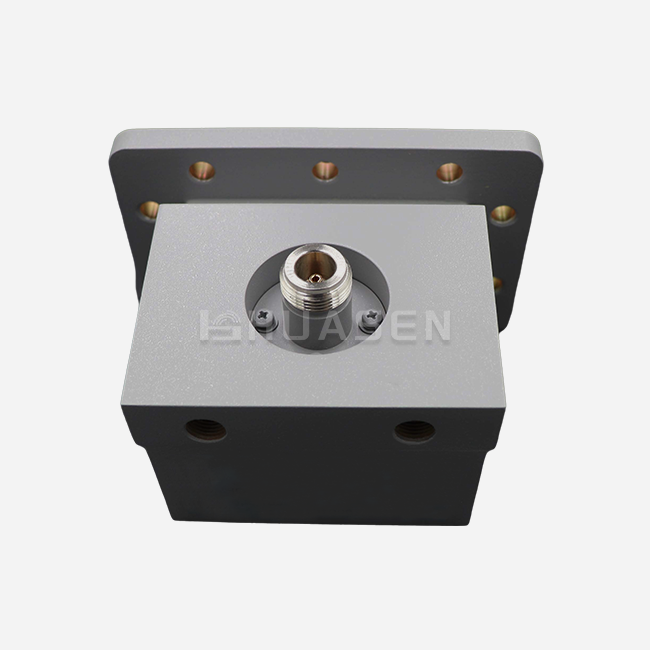
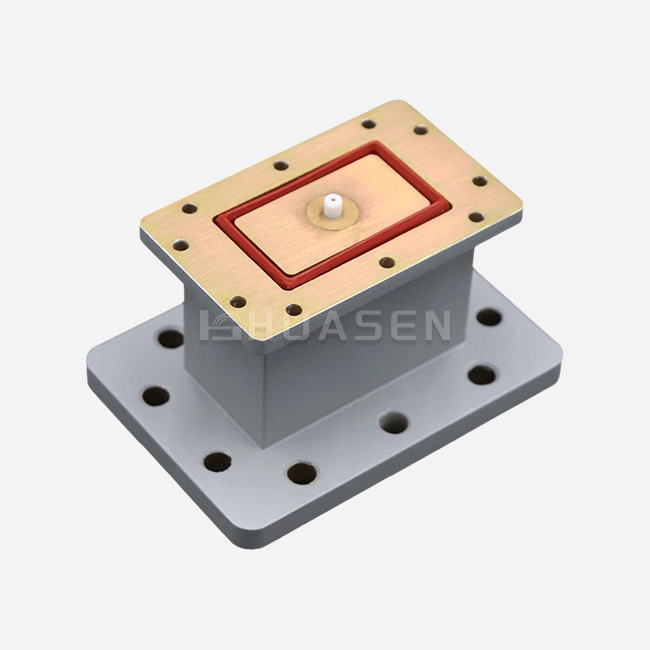
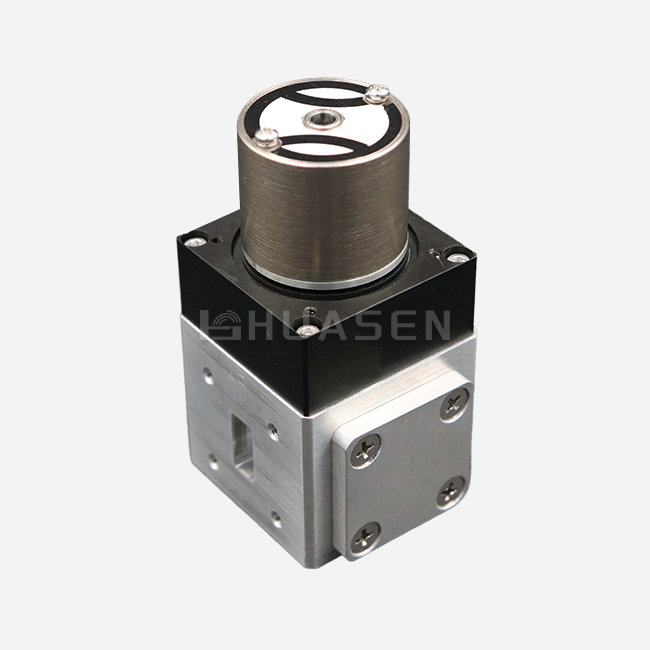
For radar antennas and satellite communication platforms that need to keep turning while sending signals perfectly, dual-channel rotary joints are the only way to go. These carefully made parts allow for the transmission of two separate RF or microwave signal paths at the same time between structures that are still and those that are moving, without the cables getting tangled up. They make up for lack of space by supporting multiple signal types—like transmit/receive frequencies or dual polarizations—in a single small housing. This stops crosstalk that could hurt system performance in mission-critical situations.
What Is a Dual-Channel Rotary Joint and How Does It Work?
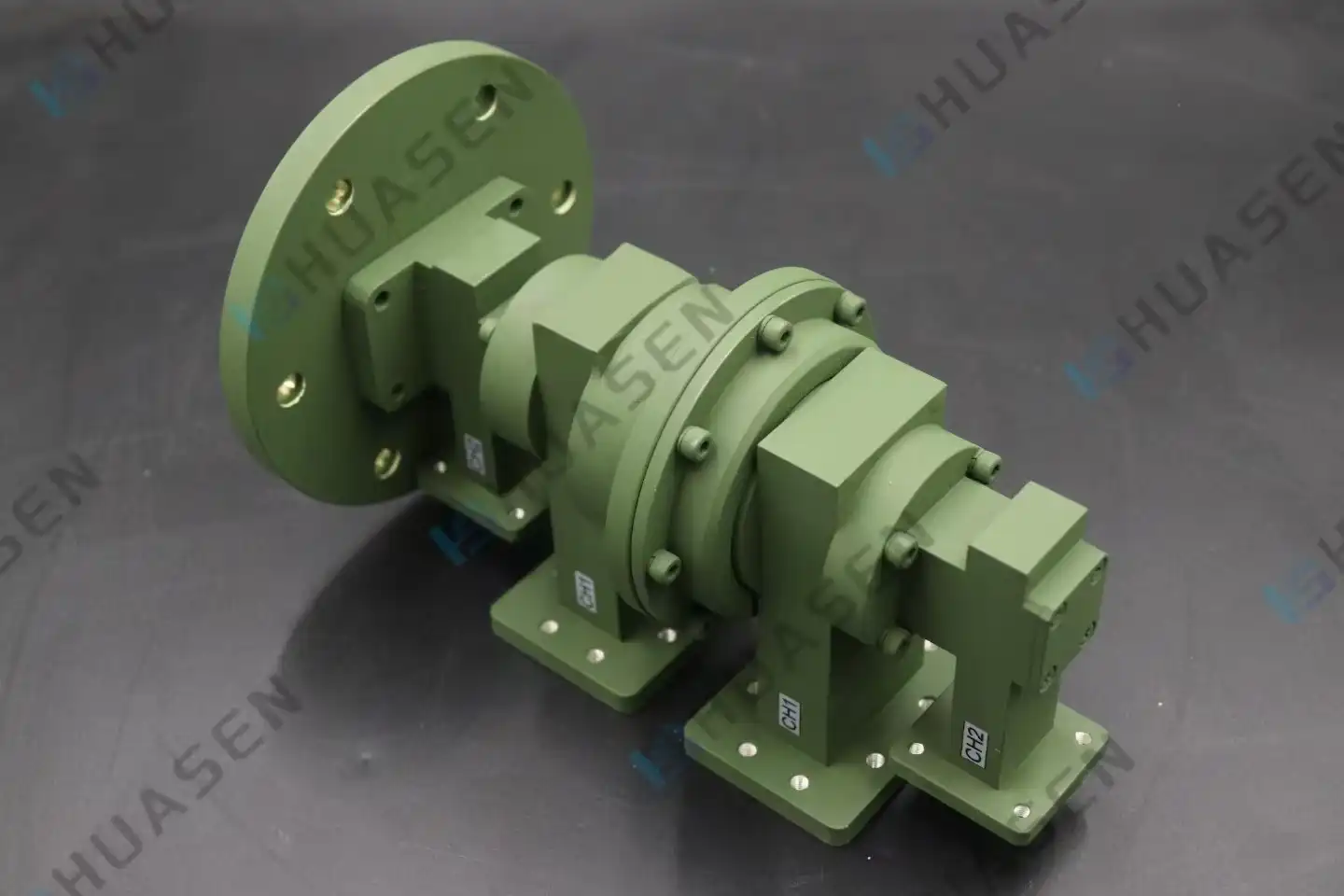
An advanced electromechanical interface called a dual-channel rotary joint is used to send two separate signal paths between platforms that stay still and assemblies that move. Unlike most single-channel options, these devices use concentric conductor architectures or stacked waveguide configurations that keep the electrical isolation while letting the device rotate in any direction.
Core Design Architecture
The inside structure usually has a center conductor path and an outer conductor, with precision dielectric materials separating them. This ring-shaped setup makes sure that each channel works on its own, without any electromagnetic interference. Premium ball bearings allow for smooth rotation at speeds up to 500 RPM for normal tasks, and special versions can reach 2000 RPM or higher for high-speed uses. Depending on the frequency needs and power handling requirements, the rotor-stator interface has either gold-plated contact surfaces or non-contact coupling mechanisms.
Signal Transmission Mechanism
When the part turns, RF energy moves across the mechanical interface using specially designed contact points or capacitive coupling elements. The device keeps the same impedance matching throughout the rotational cycle, so the signal stays intact even when it's moving all the time. Advanced designs achieve isolation levels above 50dB between channels, which stops signal bleeding that could hurt the performance of the system. This ability to separate becomes very important when one channel carries strong transmission signals and the path next to it handles delicate received echoes.
Material Selection and Environmental Resilience
Manufacturers make these joints out of passivated stainless steel or conductive aluminum alloys, which are good at resisting corrosion and working with electromagnetic fields. When sealed bearing assemblies are used, they keep the inside parts safe from water, dust, and salt spray, which are important for marine and outdoor installations. Temperature-stabilized dielectrics keep their electrical performance even in the coldest places (-55°C) and the hottest places (+85°C) in the desert. This strong construction is made to withstand the harsh conditions that radar systems and communication terminals must work in during operations.
Key Benefits and Applications of Dual-Channel Rotary Joints in Radar and Antenna Systems
There are many more strategic benefits to using dual-channel technology than just saving space. When system integrators design modern radar and communication platforms, they run into some basic engineering problems that these parts directly solve.
Enhanced Signal Integrity and Reduced Interference
When radar systems send out kilowatts of RF power and pick up microwatt-level return echoes at the same time, keeping the signal separation clean is very important. This is possible with dual-channel rotary joints because they carefully separate the channels, usually keeping separation ratios above 60 dB. This performance stops transmitter leakage from overpowering receiver front ends, which would make detection impossible otherwise. This feature is very helpful for weather surveillance radars because they often use both S-band and X-band channels at the same time to get more accurate measurements of precipitation.
Continuous Rotation Without Mechanical Limitations
Traditional cable-wrap solutions have strict limits on rotation, usually limiting movement to ±270 degrees before needing to be unwound several times. This limitation makes it hard to keep track of targets in surveillance situations where they might circle the radar. This limitation is taken away completely by dual-channel rotary joints, which allow an infinite rotation in either direction. Air traffic control radars use this feature to keep continuous 360-degree coverage at speeds of up to 60 RPM, scanning whole areas of the airspace without any dead spots or tracking gaps.
Compact Integration for Space-Constrained Platforms
There are strict volume limits in equipment bays and antenna pedestals on both airborne platforms and ships. When you combine two signal paths into one mechanical interface, the installation space you need is about 40% smaller than with dual single-channel implementations. This miniaturization is especially good for unmanned aerial vehicle (UAV) gimbal systems, since payload weight and volume directly affect flight endurance. A dual-channel coaxial design with housing diameters between 40 mm and 100 mm can work in small mechanical spaces and still do its job electrically.
Diverse Application Domains
These parts are used in air traffic control systems to handle sending high-power pulses and receiving sensitive echo waves through surveillance antennas that rotate around the clock. Military vehicles with satellite-on-the-move (SOTM) terminals use two types of polarization channels—right-hand circular polarization and left-hand circular polarization—to get the most data through while keeping the link stable while traveling across country on rough terrain. Maritime communication systems use the technology to keep broadband connections going on ships that are constantly pitching and rolling in rough seas. Electronic warfare pods on tactical aircraft use the joints in gimbal mechanisms to send jamming signals and receive threat detection data at the same time. All of this happens while the assemblies are subjected to 20g of vibrational loads during supersonic flight profiles.
How to Choose the Best Dual-Channel Rotary Joint for Your Radar or Antenna System?
In order to make a procurement decision, technical specifications must be carefully matched with operational needs. Making smart choices keeps you from having expensive integration problems and parts breaking down too soon.
Frequency Range and Electrical Performance Parameters
The operational frequency span tells us how well the connectors work together and what the inside shape is. Coaxial versions usually work from DC to 18 GHz with SMA connectors and up to 40 GHz with 2.92mm or K-type connectors for millimeter-wave uses. With WR-series flanges, waveguide configurations can handle higher frequency bands from X-band to Ka-band. Voltage standing wave ratio (VSWR) limits below 1.4:1 make sure that signals don't get reflected too much, which keeps transmission efficiency high. Pay close attention to the insertion loss numbers. Premium units keep them below 0.5dB throughout their operational bandwidth, while economy models may have losses of 1.0dB or more that add up in system link budgets.
Power Handling and Thermal Management
Power needs are very high for base station transmitters and military radar systems. Peak power ratings show how much instantaneous energy the joint can handle without arcing or dielectric breakdown. This is important for pulsed radar waveforms that can reach hundreds of kilowatts. Average power specifications decide what kind of cooling is needed for continuous-wave applications. When units are put in enclosed radomes that don't have forced cooling, they need to be derated slowly so that they don't get too hot, which damages bearing lubricants and speeds up seal degradation.
Mechanical Durability and Rotation Speed
Expected service life varies a lot depending on the quality of the bearing and how fast it rotates. Standard industrial bearings have a lifecycle of 10 million revolutions, which is enough for intermittent positioning tasks. Surveillance radars that work all the time need precision angular contact bearings that can handle at least 50 million cycles. Rotational speed must be faster than the fastest antenna scan rates by a sufficient amount. For example, a radar that rotates at 30 RPM needs a joint that can handle at least 60 RPM to make sure it works reliably throughout the duty cycle without going over mechanical stress limits.
Environmental Qualification and Standards Compliance
Environmental protection is very important for outdoor installations and mobile platforms. Enclosures with an IP67 rating keep out water and dust when they are exposed to pressure washing or sandstorms. MIL-STD-810 compliance verifies performance in harsh conditions like temperature changes, vibrations, and changes in altitude that are common in military deployments. As tested by ASTM B117, maritime applications need to be resistant to salt fog. RoHS certification makes sure that commercial telecommunications infrastructure projects in places that limit dangerous substances follow the rules set by the government.
Supplier Evaluation and Support Infrastructure
Technical partnerships are more than just delivering parts, such as a waveguide rotary joint. Check to see if the manufacturers can customize the frequency tuning, power scaling, or interface changes to work with different system architectures. Ask for calibration data sheets that show measurements of insertion loss, VSWR, and isolation over a range of temperatures. Warranty terms that show confidence in the product's durability—usually 12 to 24 months—show quality standards for manufacturing. Quick response from engineers speeds up troubleshooting during the integration stages, and samples are available so that pre-production validation testing can be done before committing to large purchases.
Installation, Maintenance, and Troubleshooting Tips for Dual-Channel Rotary Joints
Correct installation methods and preventative maintenance schedules have a direct effect on how well an operation works and how long a component lasts. Unplanned downtime is kept to a minimum when technical teams follow structured approaches.
Installation Best Practices
Getting the mating parts to line up in a way that prevents coaxial alignment stops bearing preload imbalances that lead to early wear. When mounting, use precision alignment fixtures and check that the mounting flange is straight within 0.1 mm. Tighten fasteners to the manufacturer's recommended levels using properly calibrated tools. If you don't do this, micro-movement can happen, which can lead to fretting corrosion, and if you do it too much, it can damage seals and crack ceramic insulators. Use thread-locking compounds on platforms that are prone to vibration to keep the fasteners from coming loose. Route the interconnecting cables so that they have enough service loops and strain relief to stop mechanical stress from being transferred to the connector interfaces when the platform moves.
Routine Maintenance Protocols
The frequency of scheduled inspections should match the level of activity. 24/7 surveillance radars need to have their rotating joints checked every three months, but systems that are only used sometimes can go without service for a year. Visual inspections find worn-out seals, corroded connectors, and contaminated bearings before they become bigger problems. Use calibrated instruments to keep an eye on the bearing friction torque. Any increases of more than 20% above the baseline readings mean that the lubrication is running out or there are particles in the bearing that need to be cleaned up. Check the electrical performance by measuring VSWR both when the device is still and when it is rotating. Look for signs of contact degradation, like more reflections when the device is rotating.
Common Failure Modes and Remediation
Most of the time, signal dropouts during rotation are caused by worn contact surfaces or dirty bearing assemblies. Take apart broken units in a clean room, checking the contact springs for permanent deformation and replacing any gold plating that is worn off. When you hear noises or feel more friction in a bearing, it means that the lubricant has broken down. To fix this, flush the assemblies with the right solvents and repack them with manufacturer-specified greases that work at the right temperatures. High VSWR readings that come and go could mean that the connector hardware is loose or that the dielectric supports are cracked. Tighten up all of the RF connections and use a magnifying glass to look at the ceramic insulators for cracks that are spreading. Crosstalk between channels that doesn't go away means that the seals are broken, letting water in. Replace the damaged O-rings and desiccant packs, then bake the assemblies at controlled temperatures to get rid of the humidity they've absorbed before sealing them again.
Procurement Insights: Ordering and Customizing Dual-Channel Rotary Joints
Strategic sourcing methods make sure that performance needs are met while also keeping costs low and making sure that the supply chain is reliable. Procurement decisions that are well-informed use technical knowledge and relationships with suppliers.
Pricing Structures and Volume Economics
The prices of parts depend on the types of materials used, how precisely they are made, and how environmentally friendly they are. Commercial coaxial joints for lab use start at about $800 per unit, while MIL-STD waveguide versions for airborne platforms cost more than $15,000 each. Volume commitments unlock significant economies—orders above 50 units typically secure 15-25% discounts through amortized tooling costs and optimized production scheduling. Long-term supply agreements keep prices stable and protect specialty alloys and precious metal platings from changes in the cost of materials.
Customization Capabilities and Engineering Support
In the context of a waveguide rotary joint, catalog items cover common frequency ranges and power levels, but custom solutions are often needed for unique uses. If a manufacturer does its own RF design, it can improve channel isolation for certain frequency separations or change the size of the housing to fit tight integration spaces. With custom flange patterns, connector orientations, and cable lengths, you don't have to worry about loss or reliability caused by adapter chains. Development times for moderate customizations range from 8 to 12 weeks, while complex multi-band designs may take 16 to 20 weeks, which includes testing cycles for prototypes. During the quotation phase, ask for engineering drawings and electromagnetic simulation data to make sure the design is possible before agreeing to pay for custom tooling.
Quality Assurance and Supply Chain Transparency
Demand test reports that show electrical performance across certain temperature ranges and show that they meet the parameters in the datasheet. Check to see if the manufacturing quality certifications that back up process controls are valid. For example, ISO 9001 registration means that the quality management systems are documented, and AS9100 certification means that the manufacturing is strict enough for aerospace use. Make it clear what the lead times are for standard and custom products, keeping in mind that complex waveguide assemblies need more time to be machined and brazed. Check the specifics of the warranty, such as what it covers in terms of environmental damage versus manufacturing defects. Set up clear return merchandise authorization (RMA) procedures and repair depot locations, especially for buying things from other countries, where shipping costs can affect downtime during failures.
Conclusion
Dual-channel rotary joints are essential for modern radar and antenna systems that need to send multiple signals at the same time through rotating interfaces. The technology solves important problems, like making the best use of space, keeping signals separate, and allowing continuous rotation, which older technologies can't do. For implementation to go well, the specifications must be carefully looked over, the suppliers must be checked out, and installation protocols must be followed. When procurement teams match the features of parts to what the operation needs and set up strong maintenance routines, these precision devices work reliably for decades in harsh environments like Arctic surveillance stations and communication terminals in the desert.
FAQ
1. What distinguishes dual-channel from single-channel rotary joints?
Dual-channel designs have two separate signal paths inside a single mechanical housing. This lets different frequencies, polarizations, or transmit/receive channels be sent at the same time. Single-channel versions only handle one signal path, so they need to be installed twice to work the same way. The integrated dual approach makes installation easier, reduces system weight, and boosts reliability by getting rid of extra mechanical interfaces that can get out of place.
2. Can these joints operate reliably in harsh environmental conditions?
Premium units made for military and maritime use can handle temperature changes from -55°C to +85°C, shock loads greater than 20g, and exposure to salt fog according to ASTM B117 standards. Bearing assemblies that are sealed and have IP67 ingress protection keep out dust, moisture, and corrosive atmospheres. By choosing materials like passivated stainless steel and corrosion-resistant alloys, the structure will stay strong even after decades of use in harsh conditions.
3. What are typical lead times for custom dual-channel rotary joint orders?
Standard catalog items usually ship within 3–4 weeks, as long as there are enough in stock. Moderate customizations, like changing the frequency or the connector, add 10 to 12 weeks to the delivery time, which includes design validation. From the time the order is placed until it is delivered, it can take 18 to 22 weeks for complex custom developments that need new tools and a lot of testing. This is especially true for multi-band waveguide assemblies that need precise machining and iterative electromagnetic optimization.
Partner with Huasen Microwave for Superior Dual-Channel Rotary Joint Solutions
Huasen Microwave can help you with even the most difficult signal transmission problems thanks to its 30 years of experience in RF engineering. Our selection of Dual Channel Rotary Joints includes both coaxial and waveguide designs that work in frequencies from L-band to Ka-band. These joints are designed for use in radar, SATCOM, and electronic warfare. We have been making Dual Channel Rotary Joints since 1993 and have strict quality standards that meet MIL-STD and RoHS requirements. Custom designs can fit different frequency plans, power levels, and mechanical interfaces. They come with a lot of test data and engineering support to help with the integration process. Get in touch with our technical team at sales@huasenmicrowave.com to talk about your needs and ask for evaluation samples that show how well they will work in your setting.
References
1. Anderson, J.M. (2019). Rotary Joint Technology for Phased Array Radar Systems. Artech House Publishers.
2. Chen, L. & Roberts, P.K. (2021). "Dual-Channel Coaxial Rotary Joints: Design Optimization for 5G Base Station Applications," IEEE Transactions on Microwave Theory and Techniques, Vol. 69, No. 4, pp. 2145-2158.
3. Davidson, R.W. (2018). Microwave Component Engineering for Satellite Communications. Cambridge University Press.
4. Garrison, M.T. (2020). "Environmental Stress Testing of Precision Rotary Joints for Airborne Radar," Journal of Defense Engineering, Vol. 32, No. 2, pp. 78-91.
5. Peterson, H.L. & Kumar, S. (2022). Advanced Waveguide Systems: Theory and Industrial Applications. John Wiley & Sons.
Thompson, E.R. (2017). "Signal Isolation Techniques in Multi-Channel Rotary Coupling Devices," International Journal of RF and Microwave Engineering, Vol. 27, No. 6, pp. 412-429.
Send Inquiry