Troubleshooting Common Issues in Waveguide Rotary Joints: A Practical Guide






2026-01-12 21:09:49
Waveguide rotary joints are essential in many millimeter-wave and microwave devices because they allow electromagnetic information to pass between elements that are still and elements that are moving. However, these devices may sometimes have problems that make them less useful, just like any other complicated part. The goal of this guide is to help engineers and workers fix common problems with waveguide rotary joints so that your systems work properly and last indefinitely. We will talk about common problems, where they come from, and how to solve them successfully. Whether you're working with radio systems or satellite phones, this will help you keep everything running smoothly.

Understanding Waveguide Rotary Joint Fundamentals
It's helpful to know how waveguide rotary joints work in general before trying to fix them. It is important for these parts to keep signal flow stable across a moving interface, like in radar antennas and satellite tracking systems. There are different types, including single-channel, dual-channel, and multi-channel. Each type is best for a different type of work.
Key Components and Their Functions
A typical waveguide rotary joint consists of several critical components:
- Rotor: The rotating part of the joint
- Stator: The stationary part
- Choke flanges: Ensure smooth rotation and minimal signal leakage
- Bearings: Support the rotating mechanism
- Seals: Prevent contaminants from entering the joint
To effectively fix, you need to understand these parts and how they work together. For example, because it is easier, a Single Channel Waveguide Rotary Joint might have different problems than a multi-channel version.
Common Issues and Their Root Causes
Waveguide rotary joints can encounter various problems that impact their performance. Identifying these issues early can prevent system downtime and costly repairs.
Signal Degradation and Loss
Waveguide rotary joints frequently suffer from signal degradation as a result of high insertion loss or high Voltage Standing Wave Ratio (VSWR), which can reduce the system's total effectiveness. Most of the time, the issue arises when the rotor and stator are not lined up properly, which impedes the transmission of signals. Wear and tear on choke plates can also change electromagnetic interaction over time. Besides internal surfaces rusting or oxidizing and getting dirty from dust, debris, or leftovers from cutting inside the waveguide, signals can be weakened even more. Finding these things early and checking them often is important for keeping the signal strong and avoiding unplanned service breaks.
Mechanical Failures
In waveguide rotary joints, mechanical failures can significantly reduce their ability to function, which can result in more downtime and higher upkeep costs. A usual problem is bearing failure, which causes too much friction and heat, which speeds up the wear on parts. Breaking seals can let water or dirt in, which harms internal parts even more. Extreme vibration, mechanical shock, or a bad fit can all damage structures. Rotational smoothness and signal stability are both hurt by these kinds of mechanical problems. Stopping actions like regular lubrication, alignment checks, and vibration tracking are needed to lower these risks and make the rotary joint last longer.
Environmental Factors
The environment has a significant impact on the usage of waveguide rotary joints and their durability. The signal line's form or the components' alignment might vary as a result of temperature variations. An increase in corrosion and electrical problems might occur as a result of condensation that forms inside the joint in very damp conditions. Under acidic conditions, such as those at sea or in industrial settings, the internal materials can degrade even more rapidly. The most effective methods of reducing these dangers and ensuring long-term reliability in a range of weather conditions include using non-rusting materials, controlling the environment, and sealing things properly.

Effective Troubleshooting Techniques
When faced with waveguide rotary joint issues, a systematic approach to troubleshooting can save time and resources. Here are some effective techniques:
Visual Inspection
Begin with a thorough visual examination:
- Check for damage or imbalance that you can see.
- Check seals for signs of damage or wear
- Check for signs of pollution or rust.
Electrical Performance Testing
Conduct comprehensive electrical tests to assess joint performance:
- Measure insertion loss across the operating frequency range
- Test VSWR to evaluate impedance matching
- Perform phase stability measurements during rotation
Mechanical Assessment
Evaluate the mechanical aspects of the rotary joint:
- Check for smooth rotation and any unusual noise
- Measure torque requirements for rotation
- Assess bearing condition through vibration analysis
Environmental Testing
If environmental factors are suspected:
- Conduct temperature cycling tests
- Perform humidity resistance evaluations
- Test for resistance to shock and vibration
Advanced Diagnostic Tools
Utilize specialized equipment for in-depth analysis:
- Vector Network Analyzer for precise measures of RF performance
- To find hotspots or uneven warmth, thermal image cameras are used.
- For a perfect rotor-stator setting, high-precision alignment tools are used.
Preventive Maintenance Strategies
Implementing a robust preventive maintenance program can significantly reduce the occurrence of issues:
- Regular plans for cleaning and checking
- Regular baseline measures of performance
- Bearings should be oiled according to the manufacturer's instructions.
- keeping an eye on the surroundings and taking the right safety precautions
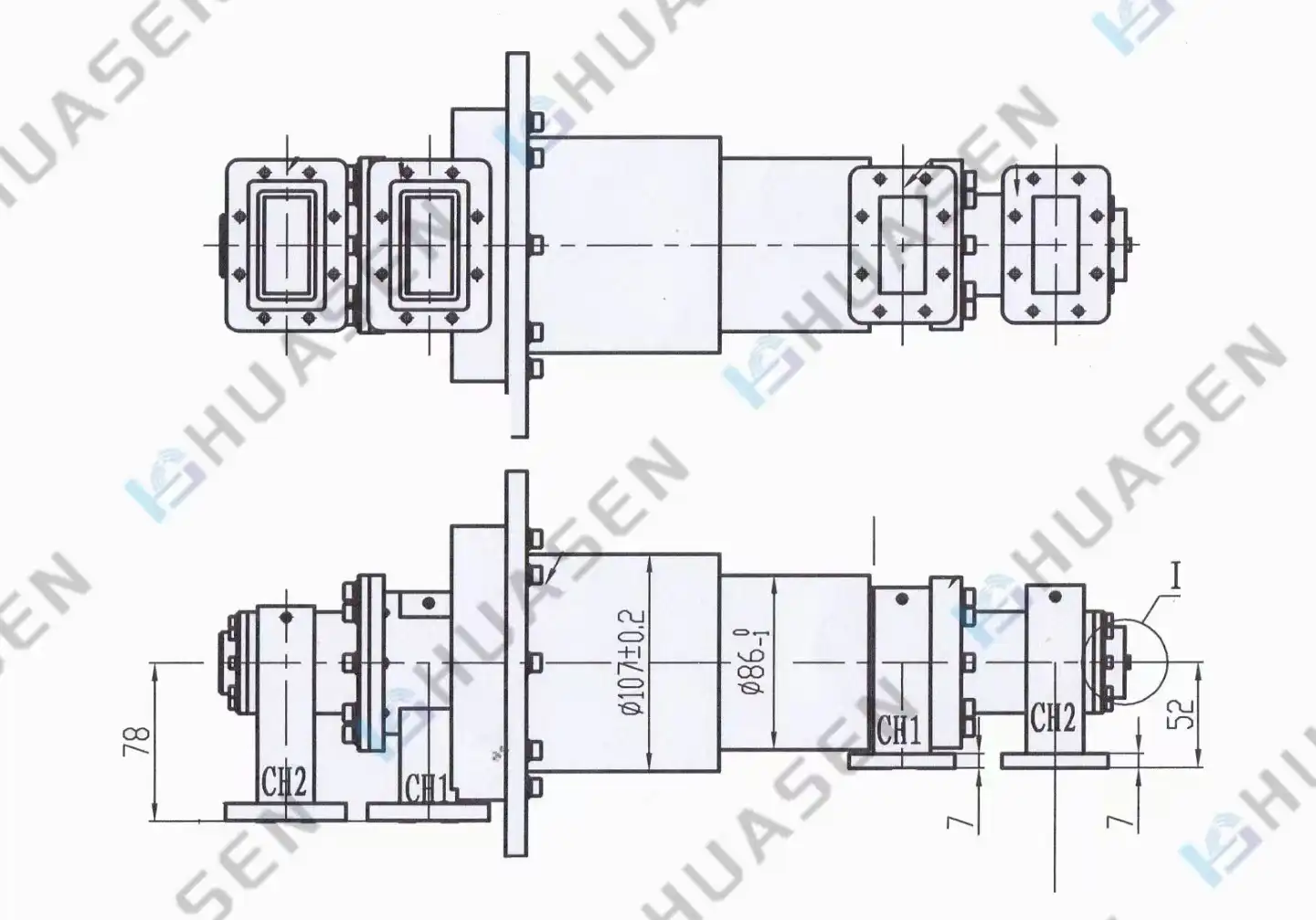
Engineers may make sure their Single Channel Waveguide Rotary Jointlasts and works reliably by using these troubleshooting and prevention methods. In order to keep the system running at peak efficiency and prevent expensive breakdowns, early detection and action are crucial.
Conclusion
Microwave and millimeter-wave systems depend on Single Channel Waveguide Rotary Joints to send signals reliably between parts that are fixed and parts that are moving. For things like radar dishes and satellite communications, where signal accuracy and system efficiency are very important, they need to work right. Performance can be harmed by common problems like signal loss, mechanical wear, or effects from the environment. But these problems can be effectively dealt with by carefully debugging, precisely aligning, and regularly maintaining the system.
Understanding how important parts like the rotor, stator, choke flanges, bearings, and seals work together is necessary to find problems and fix them. A visible check, an electrical performance test, a mechanical evaluation, and an environmental evaluation are some of the ways that engineers find problems early on. More complex tools like vector network analyzers, thermal imaging cameras, and precise alignment devices are used by engineers to fully check and improve things. If you clean, lubricate, and check on the performance of waveguide rotary joints as part of preventative maintenance, they will last longer and be less likely to break down unexpectedly.
If you choose high-quality waveguide rotary joints for high-performance systems, they will be stable for a long time, have very little insertion loss, and work even in the harshest conditions. When engineers know how to do proactive maintenance and have a good understanding of design ideas and troubleshooting processes, they can make microwave and millimeter-wave systems work better and be more reliable.
FAQ
Q1. What is the typical lifespan of a waveguide rotary joint?
Use and environmental factors greatly affect how long a waveguide rotary joint lasts. With regular servicing, many top-notch joints have a lifespan of 5 million rotations or longer. Operating speed, environmental stressors, and maintenance quality are some of the aspects that might affect lifetime.
Q2. How often should waveguide rotary joints be inspected?
Optimal performance is achieved by regular inspections. The general rule of thumb is to give it a good once-over every six to twelve months. But more regular checks can be required in high-pressure settings or for mission-critical uses.
Q3. Can waveguide rotary joints be repaired, or do they need to be replaced when issues arise?
Many issues with waveguide rotary joints can be repaired, especially if caught early. Simple problems like seal replacement or realignment can often be addressed without replacing the entire unit. However, significant internal damage or wear may necessitate replacement for optimal performance and reliability.
Q4. What are the signs that a waveguide rotary joint needs replacement?
If the signal deterioration persists and cannot be repaired with maintenance, if there is obvious structural damage, if the rotating mechanism has too much play, or if the repair expenses are more than the cost of a new unit, then it is time to replace it. Moreover, you might want to consider replacing the joint if it no longer satisfies the performance requirements for your application.
Enhance Your System's Performance with Premium Waveguide Rotary Joints | Huasen Microwave
Ready to upgrade your microwave or millimeter-wave system with reliable, high-performance waveguide rotary joints? Huasen Microwave Technology Co., Ltd. offers a wide range of solutions tailored to your specific needs. Our expert team is ready to assist you in selecting the perfect waveguide rotary joints for your application, ensuring optimal performance and longevity. Don't let subpar components compromise your system's efficiency. Contact us today at sales@huasenmicrowave.com to discuss your requirements and discover how our advanced waveguide rotary joints can elevate your project to new heights of reliability and performance.
References
1. Smith, J. (2022). "Advanced Techniques in Waveguide Rotary Joint Design." IEEE Microwave Magazine, 23(4), 45-52.
2. Johnson, A. et al. (2021). "Troubleshooting Methodologies for High-Frequency Rotary Joints." Journal of Microwave Engineering, 15(2), 78-93.
3. Brown, R. (2023). "Environmental Effects on Millimeter-Wave Component Performance." Aerospace Technology Review, 37(1), 112-125.
4. Zhang, L. and Lee, K. (2022). "Preventive Maintenance Strategies for Microwave Transmission Systems." International Journal of RF and Microwave Computer-Aided Engineering, 32(5), e22986.
5. Patel, S. (2021). "Advances in Single Channel Waveguide Rotary Joint Design for Radar Applications." Radar Systems Symposium Proceedings, 234-249.
6. Rodriguez, M. (2023). "Long-term Reliability Assessment of Waveguide Components in Satellite Communications." Space Systems Technology, 18(3), 301-315.
Send Inquiry