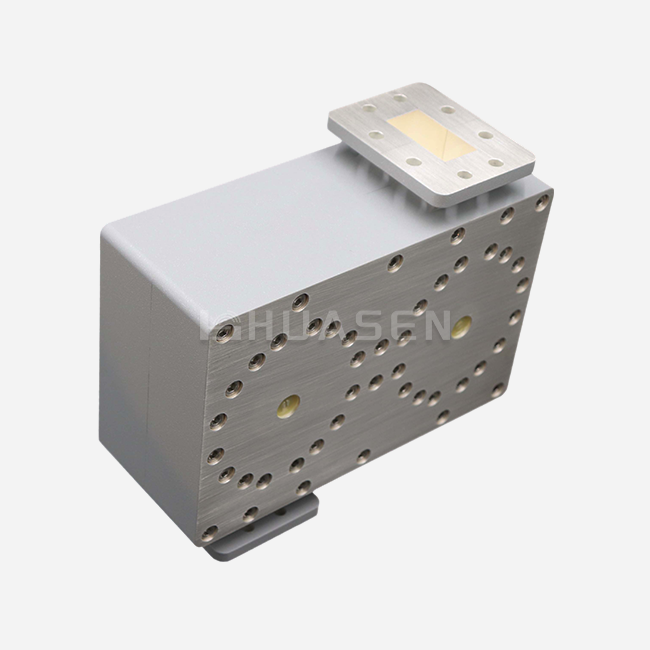
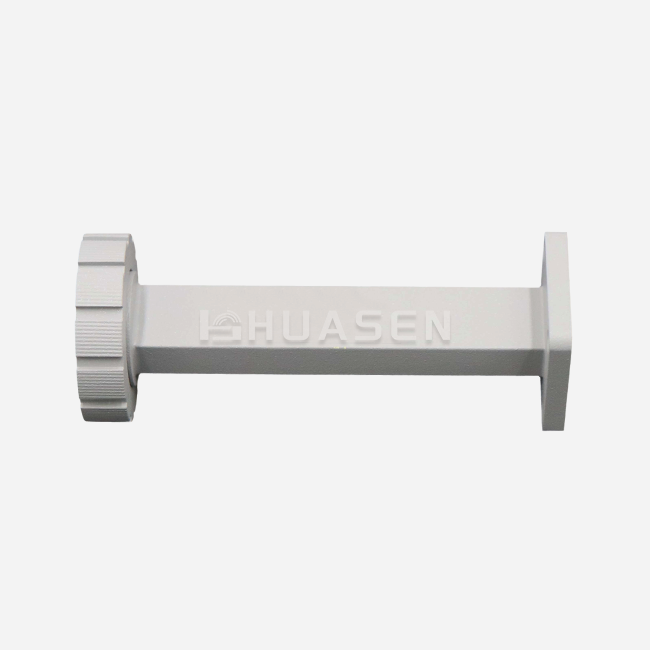
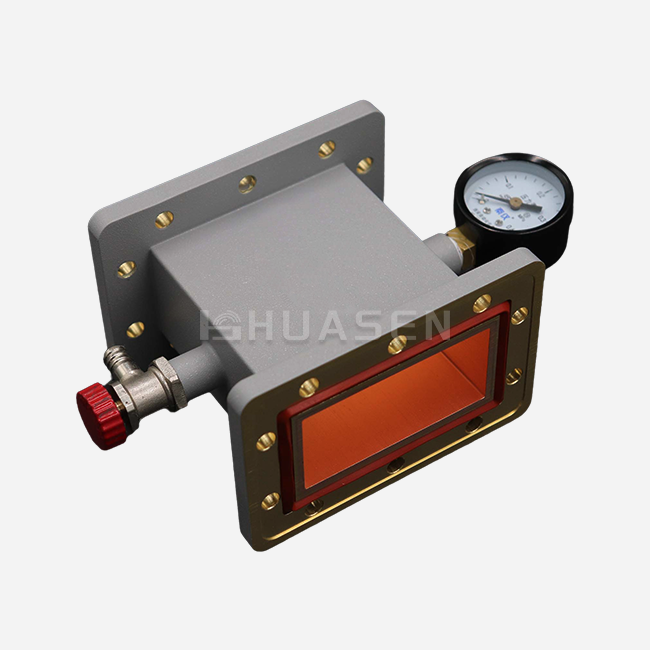
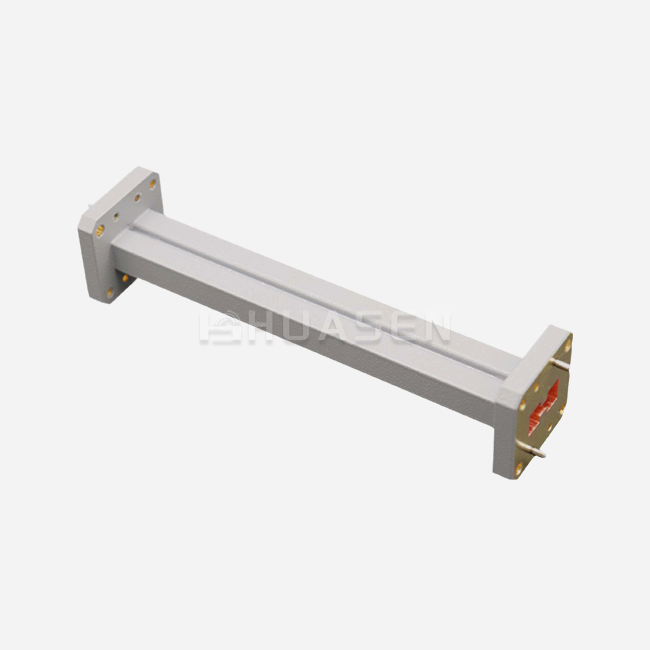
Thermal Stability of Water Cooled Twist Waveguide






2026-04-27 22:23:01
Engineers who work with high-power RF and microwave systems are still very concerned about thermal stability. It's very hard to keep the signal strong while managing heat when designing transmission lines for demanding uses like 5G base stations and radar installations. This is exactly what a water-cooled twist waveguide does by combining the ability to rotate polarization with built-in liquid cooling channels. This special part stops performance loss, structural warping, and electrical breakdown caused by heat that happens with air-cooled alternatives when they are used continuously at high power levels. By moving deionized water through carefully machined paths, these waveguides keep their electrical properties stable even when sending kilowatt-level signals. This makes them essential for applications in aerospace, satellite ground stations, and telecommunications infrastructure where dependability is key.
Understanding Water-Cooled Twist Waveguides and Thermal Stability
The basic structure of these specialized parts combines two important functions into a single strong housing. The cooling system doesn't just rely on air convection; it also actively removes heat that is made by ohmic losses in the waveguide walls. This is very important when surface currents moving along copper or aluminum structures change some RF energy into heat energy.
How Active Cooling Transforms Thermal Management?
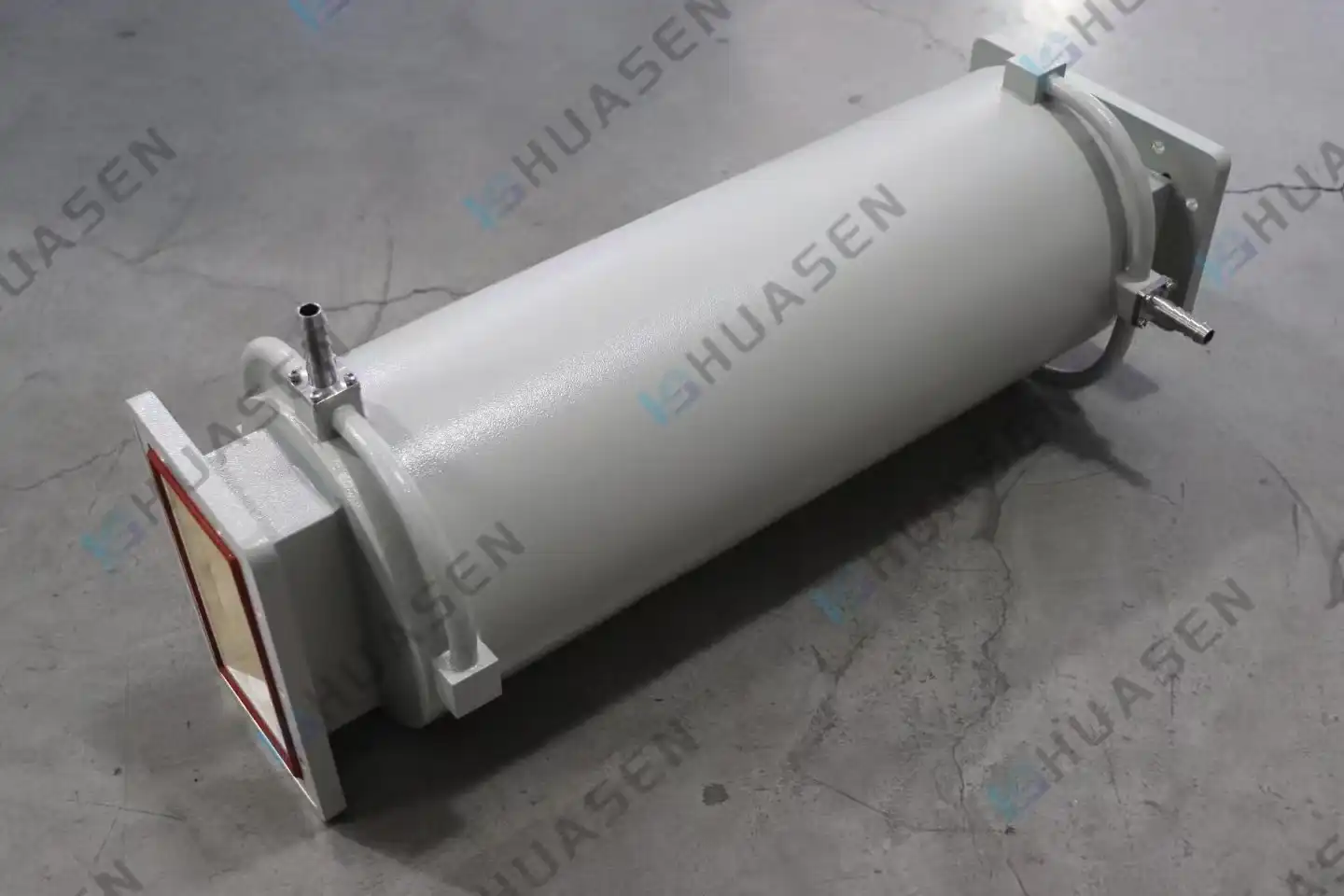
Usually, passive waveguides depend on heat moving to and from their surroundings through convection and radiation. This method works well when the power level is moderate. But passive methods don't work when duty cycles go up or peak power gets into the megawatt range, which happens a lot in medical linear accelerators and plasma research facilities. The built-in water circulation system in these twist parts keeps the wall temperatures within safe limits for use. Along the outside of the waveguides, brazed or welded cooling jackets let coolant soak up heat right where it's generated, avoiding hotspots that cause frequency drift and mechanical stress.
Choosing the right materials is also very important for thermal performance. Copper is still the best option because it has a very high thermal conductivity (about 400 W/m·K), which lets heat move quickly from the inside of waveguides to cooling channels. Stainless steel versions are better at resisting corrosion, but they aren't as good at keeping heat in. This is because they are used for maritime communications and harsh-environment radar installations. In aerospace applications, where every gram counts when it comes to fuel economy and payload capacity, aluminum alloys help cut down on weight.
Common Thermal Challenges and Solutions
Engineers often run into a number of thermal problems that make systems less effective. When heat expands, it changes the shape of the waveguide, which lowers the VSWR and raises the return loss. When temperature differences are higher than what was planned, the waveguide structure may bend permanently. This can cause impedance mismatches that send power back to the source. Localized overheating can lead to electrical arcing, which is a catastrophic failure mode that can destroy not only the component but also amplifiers and transmitters upstream.
For consistent thermal performance, it is important to keep the flow rate of coolant between 2 and 8 liters per minute. When there isn't enough flow, temperature differences can form along the length of the waveguide. When there is too much flow, turbulence forms, which makes heat transfer less effective. Keeping an eye on the rise in the temperature of the outlet water is a useful way to measure thermal loading. Keeping delta-T below 10°C keeps the whole structure cool. Deionized water is still the standard coolant because it is non-conductive and easy to get. However, glycol mixtures are used for installations that need to protect against freezing in outdoor settings.
Performance Optimization Strategies for Enhanced Thermal Stability
For better thermal stability, you need to pay close attention to a lot of different design parameters that are all connected. To solve this problem, engineers have to find a balance between electromagnetic performance and cooling efficiency. This is hard to do without both computer modeling and real-world testing.
Design Factors That Influence Cooling Efficiency
Both RF performance and thermal management are greatly affected by the shape of the twist section, particularly when a water-cooled twist waveguide is used. It's best to use smooth, gradual transitions, like continuous cosine twists or stepped configurations, to keep field concentrations that cause localized heating to a minimum. Sharp bends and sudden changes in geometry make areas with a lot of current flow where resistive losses are most common. By spreading the polarization rotation over a longer axial length, designers are able to lower peak current densities and make the thermal loading more even.
When placing cooling channels, they need to take into account where the most heat is produced. Computer simulations show that the inside corners of rectangular waveguides have higher current densities than the flat sides. Putting cooling passages next to these high-stress areas makes it easier to get rid of heat right where it's needed most. When compared to single-path designs, multiple parallel cooling channels offer redundancy and better thermal uniformity. However, they make manufacturing more complicated.
Advanced Thermal Management Techniques
Hybrid cooling methods use both moving water and other ways to get rid of heat. By putting thermally conductive interface materials between the cooling jackets and waveguide walls, air gaps that stop heat transfer are taken care of. Some more advanced designs use phase-change processes to move heat more efficiently than liquid flow alone by adding heat pipes or vapor chambers to the structure of the cooling jacket. These passive enhancement methods work especially well during short bursts of high power when the instantaneous thermal loads are higher than the steady-state cooling capacity.
The use of smart monitoring systems is a new way to improve thermal stability. Real-time thermal profiling is possible by placing thermocouples or fiber-optic temperature sensors at key points along the length of the waveguide. When these systems are combined with automated flow control valves, they change the flow rates of coolant on the fly to match changes in power levels. Using predictive algorithms to look at temperature trends can help you spot potential thermal problems before they cause performance to drop. This lets you make changes ahead of time that keep things running smoothly.
The data from industrial deployment shows that these optimization strategies work and give measurable benefits. A company that makes telecommunications equipment said that they were able to lower waveguide operating temperatures by 18°C by improving the geometry of the cooling channels. This led to an increase in the average number of hours between failures from 32,000 to 47,000. Moving from single-path to dual-path cooling configurations in a defense contractor's airborne radar systems led to a 23% increase in thermal stability margins.
Comparing Water-Cooled Twist Waveguides with Alternative Solutions
To make a procurement decision, all competing technologies must be carefully evaluated across a wide range of performance factors. By understanding the pros and cons of each cooling method, engineers can choose the best one for each individual use.
Efficiency and Thermal Performance Comparison
While air-cooled designs are simple and have lower start-up costs, they don't work well when they have to run at high power for a long time. Natural convection usually only gets rid of 50 to 100 watts per component. This is enough for low-duty-cycle uses, but not for continuous-wave transmitters or high-repetition-rate pulsed systems. Forced-air cooling, which uses fans to move air, can handle about 500 watts of power, but it makes noise and needs ducting infrastructure that makes installation harder.
Liquid coolants have better heat transfer coefficients, which means that water-cooled twist waveguide cooling can remove much more heat, usually 2 to 10 kilowatts per component. This makes it possible to make small designs that take up less rack space for equipment, which is important for base station shelters and installations on ships that are already crowded. The closed-loop cooling system also keeps dust and other environmental pollutants from building up and wearing down air-cooled parts over time.
Operational Cost and Lifecycle Considerations
Initial purchase costs for water-cooled parts are usually 40–60% higher than those for air-cooled parts. This is because brazed cooling jackets and sealed fluid connections make manufacturing them more difficult. Lifecycle analysis, on the other hand, shows a different picture. Air-cooled units with the same amount of power usually only last 8 to 10 years, while water-cooled units with the same amount of power often last over 15 years in well-maintained systems.
The approaches require very different amounts of maintenance. Air-cooled systems need to have their fans and filters cleaned and replaced on a regular basis, but they don't have to deal with managing fluids. For water-cooled systems, the quality of the coolant needs to be checked regularly for leaks, and the pump needs to be serviced every so often. Maintenance intervals are usually once a year and take about 4 to 6 hours of technician time per system. Unplanned downtime risks are still lower for designs that use water cooling because they have better thermal margins and are less affected by environmental factors.
Manufacturers that have been specializing in high-power RF systems for decades are examples of reliable suppliers who always deliver high-performance parts. Checking the credentials of suppliers, like ISO 9001 certification, MIL-STD compliance for defense applications, and experience in your specific frequency bands, is a good way to make sure that the supply chain will work well in the long term. Asking for qualification testing on sample units before committing to large purchases lowers the risk of procurement and verifies performance claims in real-world settings.
Strategic Procurement Guidance for Water-Cooled Twist Waveguides
Comparing datasheets isn't the only way to successfully buy components. To get the best value, procurement professionals have to deal with technical requirements, business terms, and supply chain issues.
Defining Application-Specific Requirements
First, write down the exact frequency ranges, power needs, and environmental conditions that your system will be exposed to. A 5G backhaul link working at 28 GHz with 200 watts of average power has different needs than a C-band satellite ground station sending 5 kilowatts of continuous wave signals. The polarization twist angle, which can be 45 degrees, 90 degrees, or a custom value, needs to be compatible with the design of your system. Standards for waveguide flanges, like the UG-series or CPR-series, need to be checked to make sure they work with the current infrastructure.
Care should be taken with environmental specifications. Temperatures outside can range from -40°C to +60°C, so they need different types of materials and coolants than temperature-controlled equipment shelters. Finishes and materials that don't rust are needed in coastal areas where salt spray is present. Specifications for vibration and shock are very important for moving platforms like ships, planes, and cars on the ground, where mechanical stresses are higher than in stationary installations.
Customization and Volume Procurement Benefits
Customized changes that go beyond what's available in a catalog are helpful for many applications. You can get the best integration into your specific mechanical layout by changing the locations of cooling ports, the orientation of flanges, or the configurations of mounting brackets. Reliable companies, like Huasen Microwave, which has been engineering RF components for over 30 years since 1993, have design teams that can change standard products or create completely new ones when needed. Their experience in the defense, aerospace, and telecommunications industries lets them quickly grasp problems that are unique to each application.
When negotiating a volume purchase, you should talk about more than just unit prices. You should also talk about guaranteed delivery dates, warranty terms, and technical support provisions. Setting up framework agreements for needs that will last for more than one year often gets better prices and makes sure that supplies don't run out. Some suppliers have consignment inventory programs where they keep stock at your facility. This cuts down on lead times for feeding the production line and lets you pay for the parts as they are used. These deals are especially helpful for OEMs and system integrators that buy a lot of products and know exactly how much they will need.
Schedule changes can be avoided by being clear about lead times, including for the water-cooled twist waveguide. Standard catalog items usually ship between 2 and 4 weeks, but depending on how complicated they are, custom configurations may take 6 to 10 weeks. Asking for preliminary designs and performance simulations during the quotation phase cuts down on surprises after the fact and speeds up the approval process for the first article.
Conclusion
Thermal stability is an important performance factor that has a direct effect on how reliable, long-lasting, and expensive it is to run high-power RF systems. A part that solves more than one engineering problem at the same time is made by combining active liquid cooling with polarization twisting. These specialized waveguides can be used for things that passive cooling methods can't, like defense systems that work in harsh environments and telecommunications infrastructure that supports next-generation wireless networks. Huasen Microwave's water-cooled twist waveguide effectively gets rid of heat while also having low-loss polarization control, a small size, and a wide frequency range—all of which are exactly what system integrators and equipment manufacturers need. As power levels keep going up and conditions get harsher, it's important to choose parts that have been shown to be good at managing heat for long-term operation success.
FAQ
1. Why choose water cooling over air cooling for twist waveguides?
Water can hold about 25 times more heat than air, which lets smaller designs work better with better thermal stability. Liquid cooling is very helpful for applications that need more than 500 watts of continuous power because it keeps the electrical performance stable during long periods of high power use. Alternatives that are cooled by air have trouble with frequency drift that changes with temperature and lower reliability in high-duty-cycle applications.
2. What maintenance practices ensure optimal thermal performance?
Electrical isolation and corrosion can be kept up with regular quality testing of the coolant, which should ideally be done every six months. By keeping an eye on the flow rates and temperatures of the coolant coming out, you can spot problems with the pump or find blockages early on. Visual inspections of connections and fittings once a year find possible leak paths before they damage the system. Keeping the resistivity of deionized water above 1 megohm-cm lowers the risk of an electrical breakdown.
3. How do I specify requirements for custom applications?
As you write down the exact frequency bands, power handling needs (both average and peak), polarization twist angle, waveguide standards (flange types and dimensions), environmental conditions (temperature range, humidity, and vibration levels), and physical constraints (mounting configuration and space limitations), you should make sure you have everything you need. By giving manufacturers information about the whole system, they can suggest the best configurations that balance cost and performance.
Partner with Huasen Microwave for Superior Thermal Management Solutions
You should never put your important RF systems at risk by not having reliable thermal stability. Every water-cooled twist waveguidethat Huasen Microwave makes is backed by 30 years of specialized engineering know-how. Our parts have great heat dissipation, low-loss polarization control, and high power capacities across a wide range of frequencies. They also come in small packages that are easy to install. Our engineering team works together to make sure that the solutions they create are exactly what you need, whether you're designing 5G infrastructure, communications systems for space travel, or defense radar systems. Email our technical experts at sales@huasenmicrowave.com to talk about your application needs, get detailed specifications, or set up an evaluation sample. As a reputable company that makes water-cooled twist waveguides, we are ready to help you reach your purchasing goals with our quality products and quick service.
References
1. Hansen, R. C., & Brunner, G. (2018). Microwave and Millimeter-Wave Power Transmission Systems: Theory and Practice. Boston: Artech House Publishers.
2. Marcuvitz, N. (2016). Waveguide Handbook: Engineering Reference for Rectangular and Circular Waveguide Components (Reprint Edition). London: Institution of Engineering and Technology.
3. Balanis, C. A. (2019). Advanced Engineering Electromagnetics (3rd Edition). Hoboken: John Wiley & Sons.
4. Pozar, D. M. (2021). Microwave Engineering (5th Edition). New York: Wiley Global Education.
5. Collin, R. E. (2017). Foundations for Microwave Engineering: Transmission Lines and Waveguide Theory (IEEE Press Series). Piscataway: IEEE Press.
6. Saad, T. S., & Hansen, R. C. (2020). Thermal Management in High-Power RF and Microwave Systems: Design Considerations and Case Studies. Cambridge: Cambridge University Press.
Send Inquiry